continued… At this point, the museum focused on the three branches of the Army — calvary, artillery and infantry — and the logistics involved in moving the army for battles.
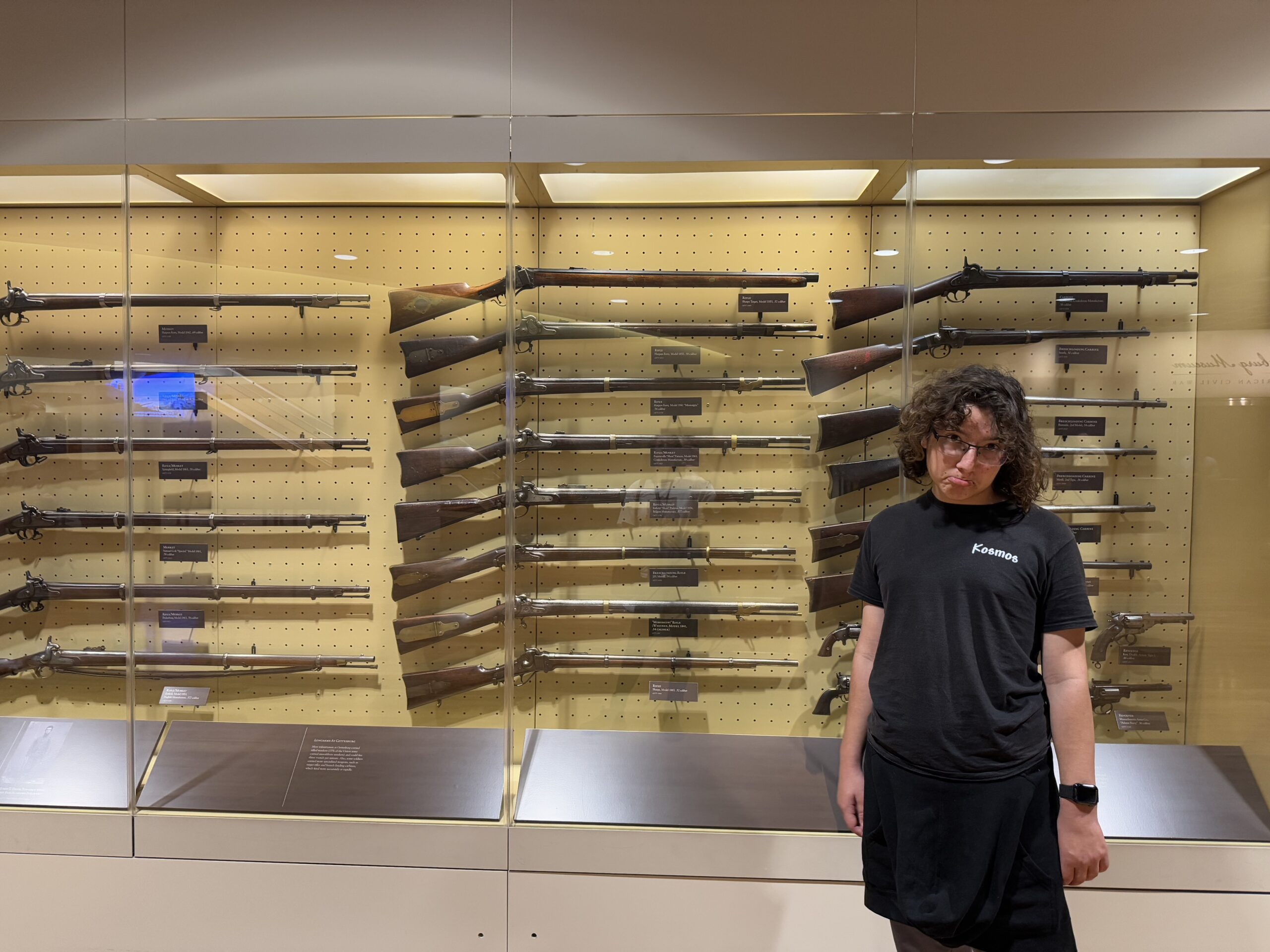
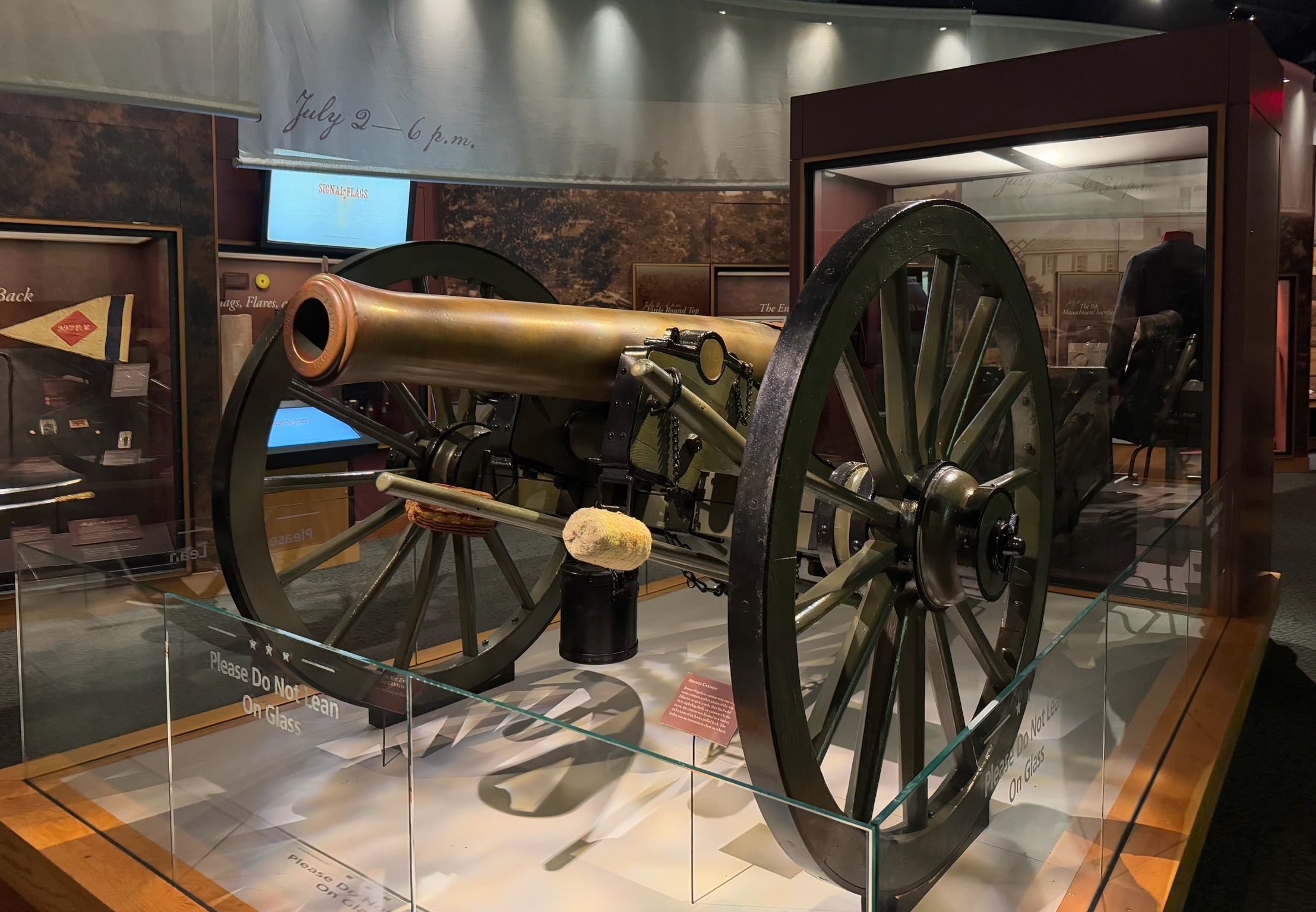
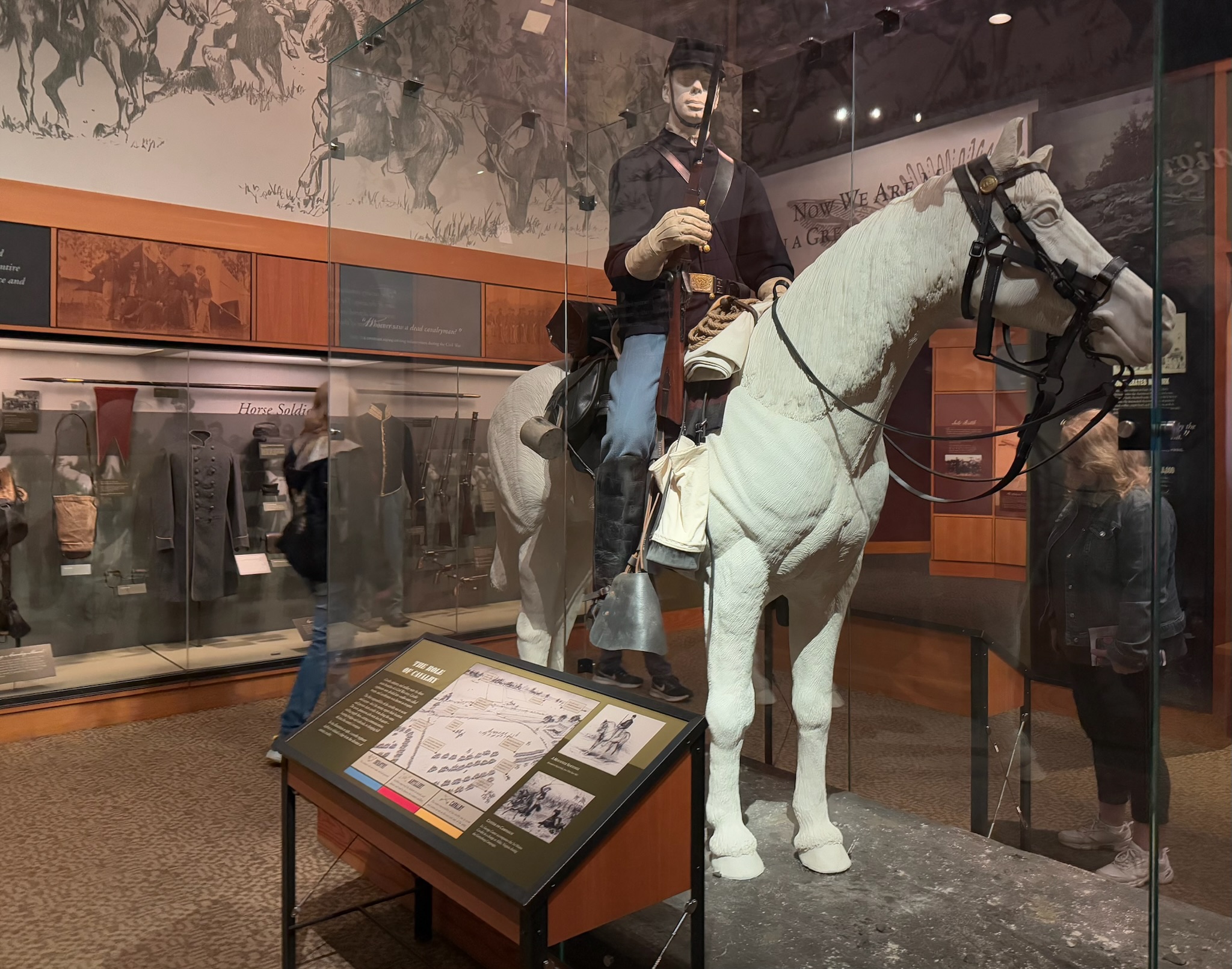
The infantry’s job was to take and hold ground — essentially to run into the enemy lines for direct combat to physically push them backwards and thus win that ground. The two sides fired on one another at point blank range and often engaged in hand to hand combat. The artillery units supported the infantry units in attack and defense and tried to destroy the enemy’s artillery — they were the ones who manned the cannons, which were fired from a distance. The calvary were on horses and primarily acted as scouts and screeners, finding the enemy, reporting their locations, and preventing the other side’s Calvary from doing the same. Infrequently, the calvary raided supply lines, cut communications, burned bridges and railroads, and charged full tilt into the enemy’s calvary.
In June of 1863, as the Confederate army marched towards Pennsylvania, the calvary men continually clashed. In a three-week span, nearly 2,500 calvary men were killed, wounded, captured or missing in both armies. The worst of it happened at the Battle of Brandy Station, Virginia on June 9, 1863, when the Union calvary launched a surprise attack on the Confederate calvary. 20,000 men were involved, making it the largest calvary battle of the Civil War. The battle lasted for about 10-hours and the Union fared better than the Confederacy. Up until that point, the Confederacy had usually fared better, and this battle showed that the Union was becoming a more formidable opponent.
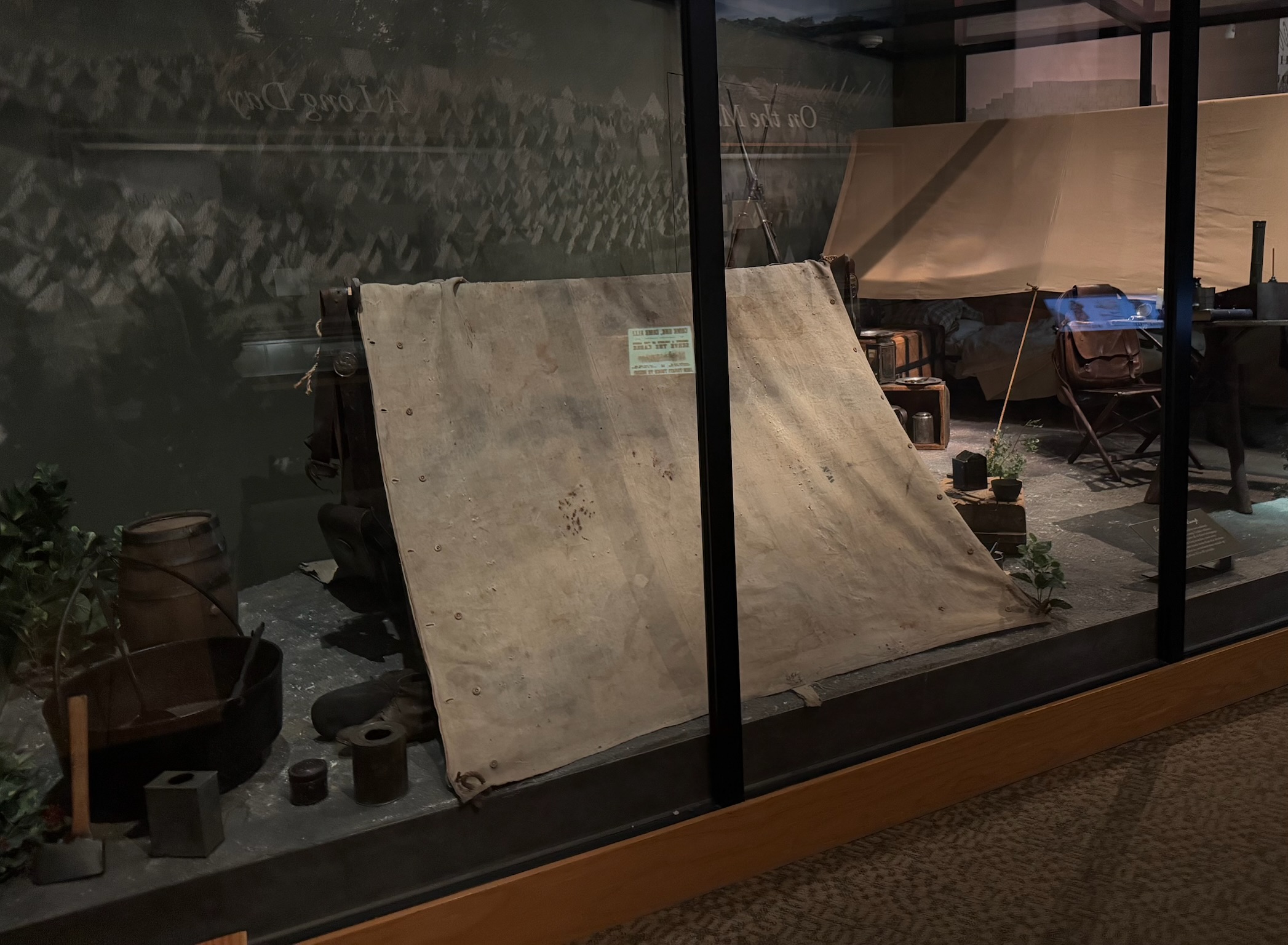
The logistics on both sides of marching hundreds of thousands of soldiers over such long distances was daunting. The signs explained how the majority of each day was spent marching, sometimes starting at 0200, and often they marched in horrible weather. The men were underfed, had few supplies or comforts, and were exhausted. Men falling down from exhaustion was common; some units had an ambulance following it to pick up the men who couldn’t continue on. Many men died of exhaustion on the sides of the roads.
We remembered reading at the children’s museum in Columbia, Pennsylvania that the locals had known the Confederate army was coming and had burned down the bridge across a large river on the south side of town to prevent the Civil War soldiers from passing through; that detour had added many miles to the Confederates’ march. Columbia probably wasn’t the only town to try to sabotage the marchers.
The signs didn’t say how the Union knew the Confederates were going to Pennsylvania; we assumed it must be through the spy network. But the Union didn’t know which city/town they were going to. The cities and towns in Pennsylvania started preparing. Free black people fled, afraid they’d be captured and enslaved by the Confederates. In Philadelphia, a militia unit formed. In small towns such at Gettysburg, money was moved out of banks, merchants shipped goods from stores to Philadelphia for protection, residents hid valuables and livestock, and many men fled, fearing they’d be mistaken for a soldier and shot or rounded up as a captive.
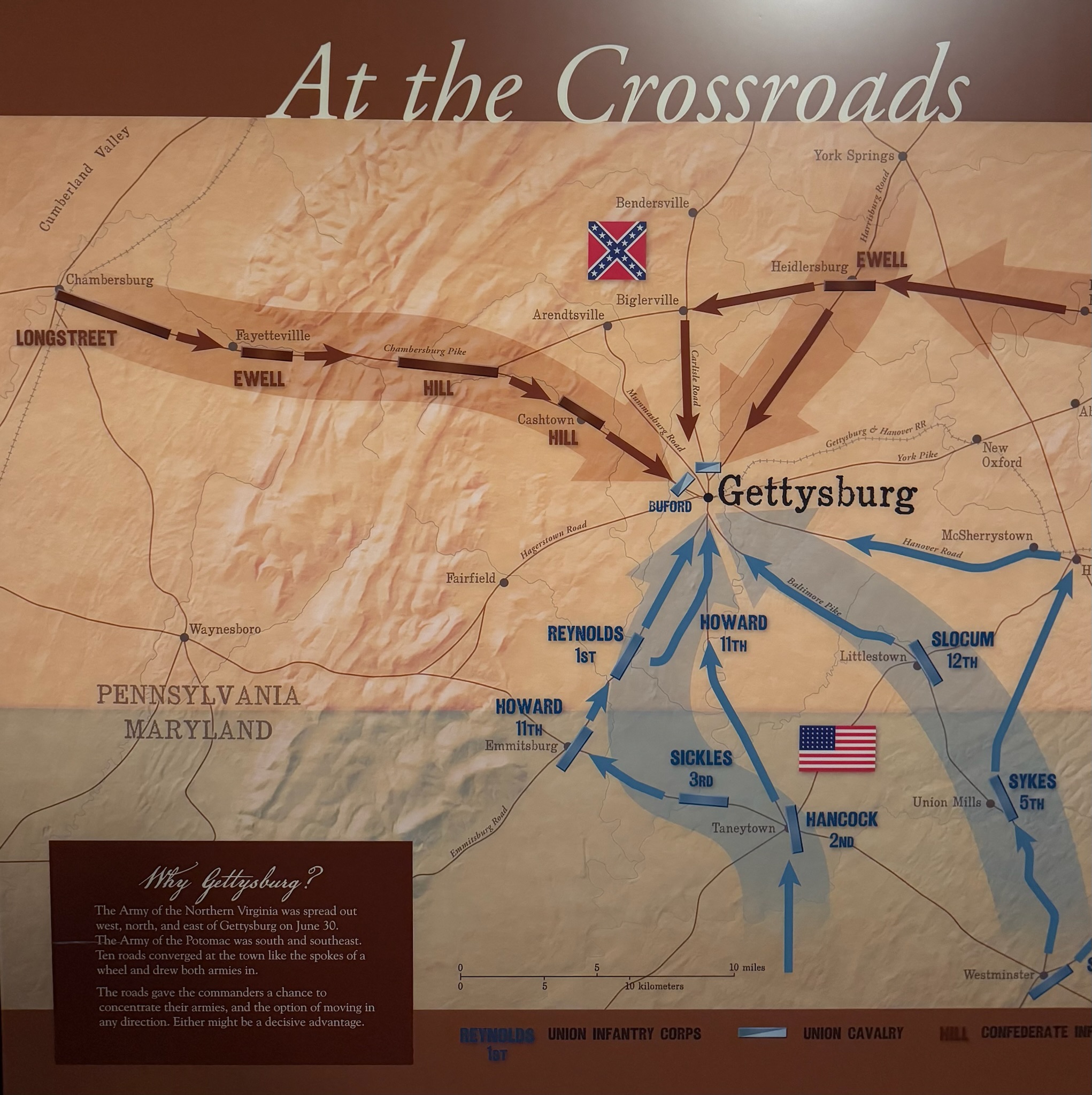
Both sides were trying to amass as many soldiers as possible in one place, so the soldiers were all marching towards each other. By June 30, 1863, it was clear the clash was coming soon — the only question was exactly where. Union General George Meade knew there were 50,000 Confederate troops to the west, north and east of Gettysburg. The Union had troops to the south and southeast. General Lee thought that the Union troops were still in Maryland; he hadn’t realized there were Union troops near Gettysburg. It looked like 10 different roads converged in/near Gettysburg — on the map it almost looked like the hub of a wheel. The troops were marching towards each other and were destined to meet at the crossroads.
The Battle of Gettysburg began at dawn on July 1, 1863, when a trigger-happy Union calvary man stationed outside Gettysburg fired on a line of 7,000 Confederate soldiers who were marching towards the town. The leaders on neither side had wanted the battle to begin yet — both wanted to wait until there were more troops amassed on their side. But once the first shot was fired, the battle was on. Even though the calvary was greatly outnumbered, they dismounted from their horses, formed a line, and shot at the advancing soldiers. The goal was to slow the Confederates down to buy more time for the rest of the troops. Union troops soon reached the battlefield to reinforce the calvary, and likewise, Confederate reinforcement also soon arrived.
The fighting spread out, including into the town itself. By the end of the first day, 3,000 men lay dead in the fields around the town. Roughly 13,000 were wounded or captured. At this point, the Confederates had pushed the Union soldiers north and seemed poised to win the battle. But Union troops occupied the high ground to the south of town, and spent the night digging in and setting up barricades.
On the morning of July 2, Lee ordered the Confederates to attack both sides of the Union line, believing that if his troops had one more victorious day, they’d win the entire battle. Lee’s three Generals were reluctant. This was a risky venture since the Confederates had no idea how many troops were on the Union side, the Confederate troops were already exhausted from the fighting yesterday, and the Generals wanted to move to better ground. But they obeyed Lee’s orders. The attack on one side of the line began at 1530, the other at 1600. At 1800, fighting began at a third location.