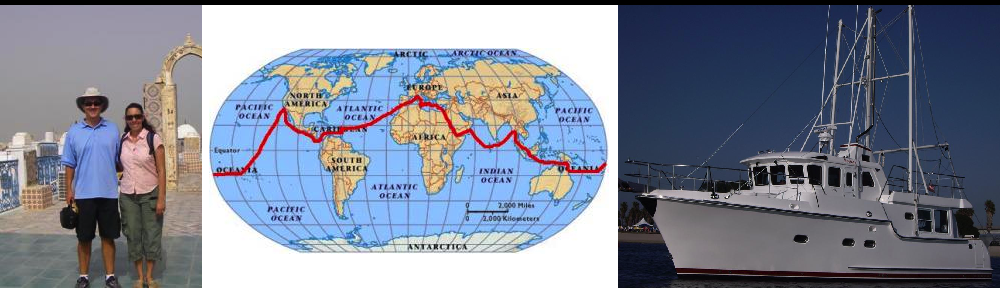
continued… From there, we went out to the platform. We climbed the stairs to the top floor. The top floor was enclosed. There was an exterior walkway around three sides with nice views. This was looking northwest.
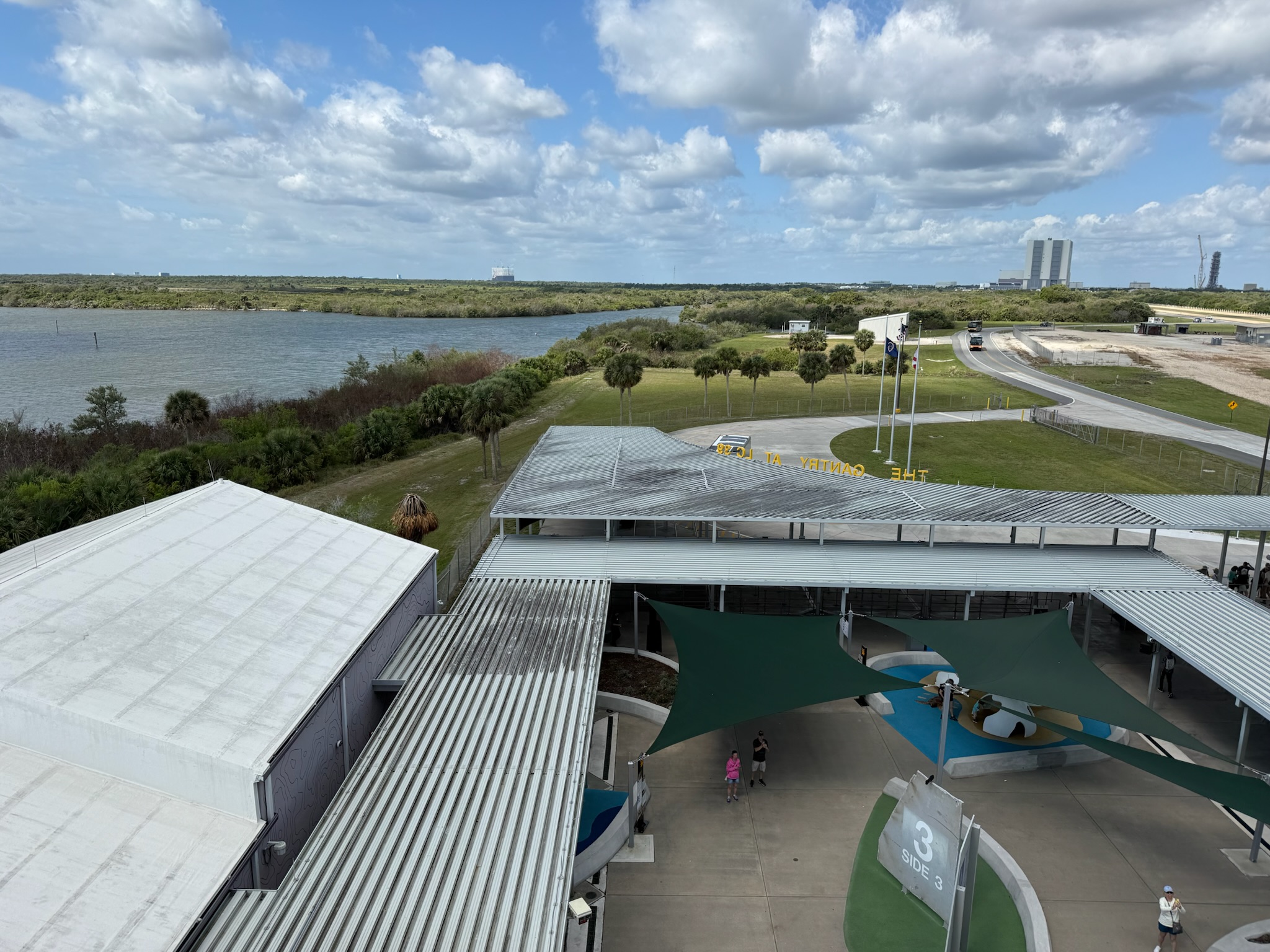
Looking southeast, towards Cape Canaveral (the strip of land along the Atlantic shore where the launches were done).
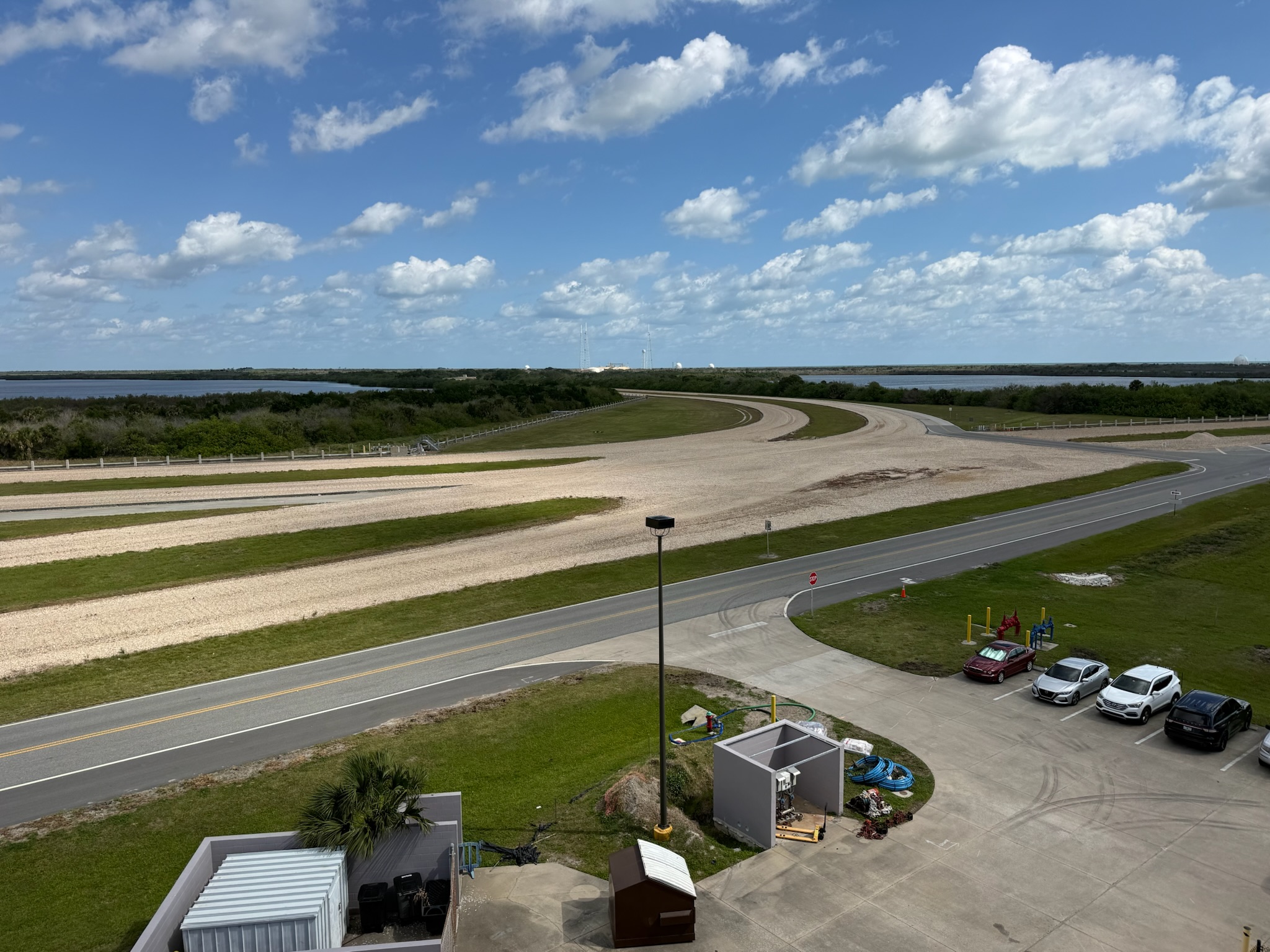
There was a SpaceX facility just to the west of the above photo. Here was a zoom in of it.
The interior area was a single room. The room was full of monitors that had assorted interactive programs that taught about building rockets and executing space missions.
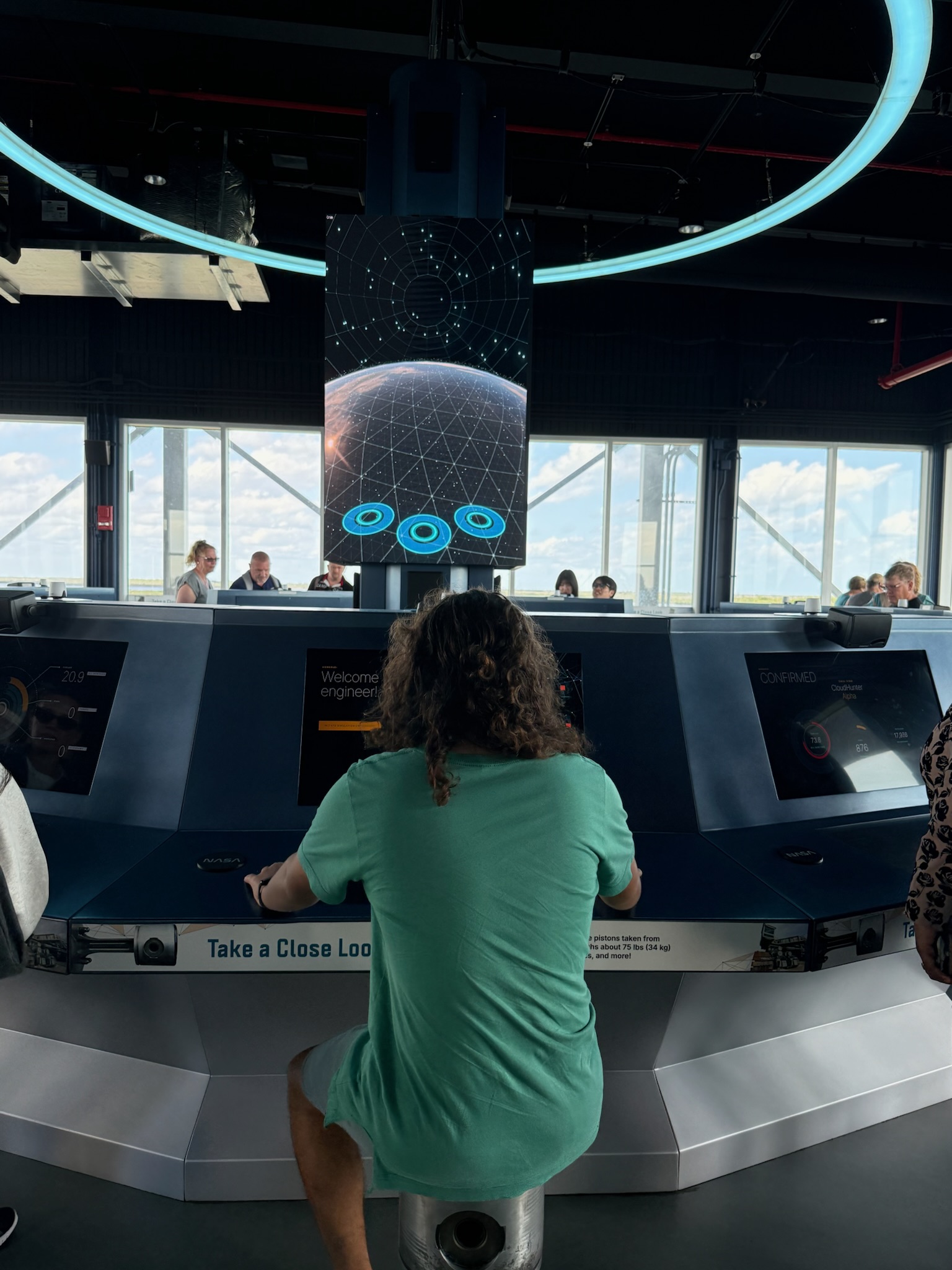
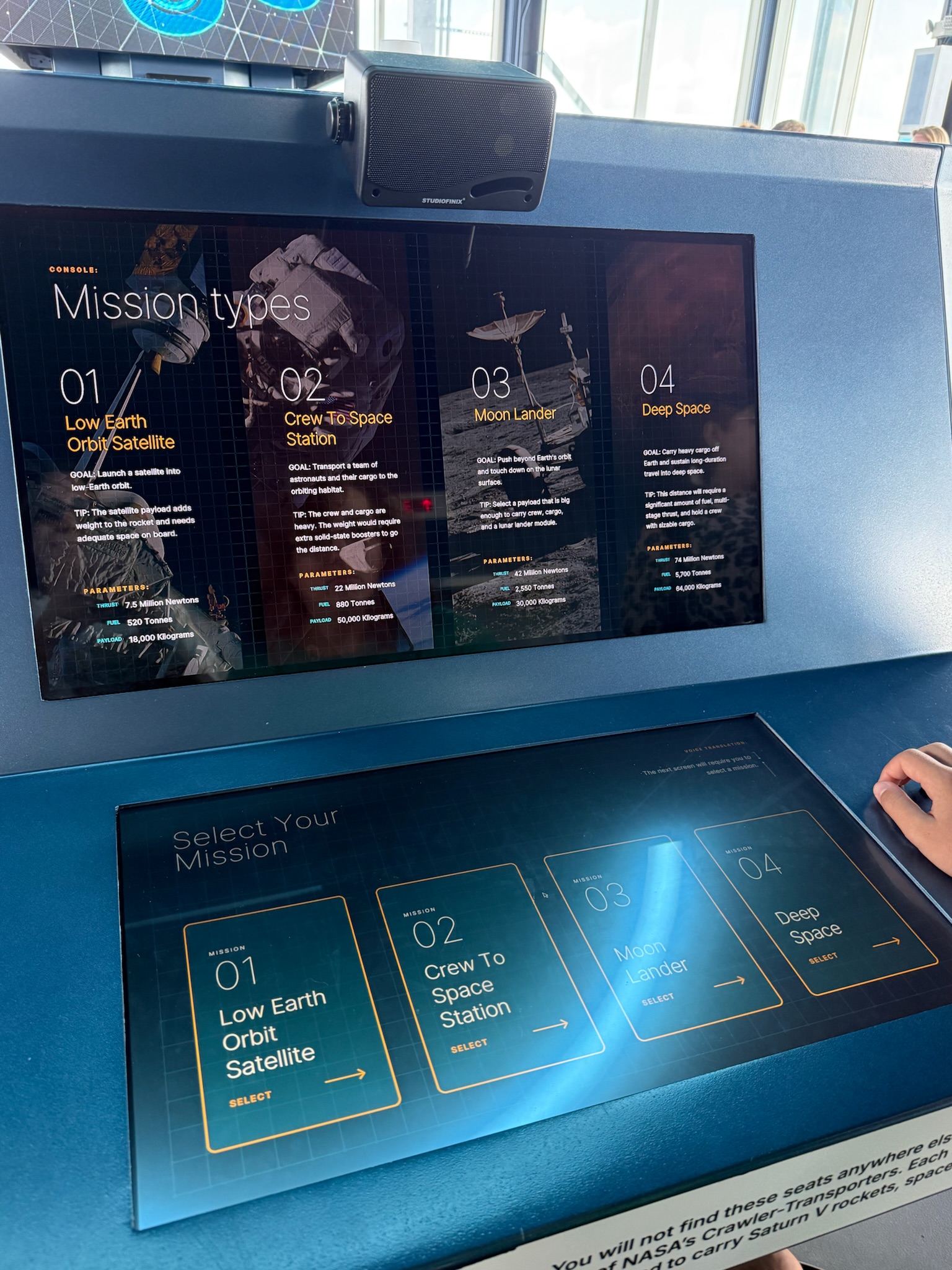
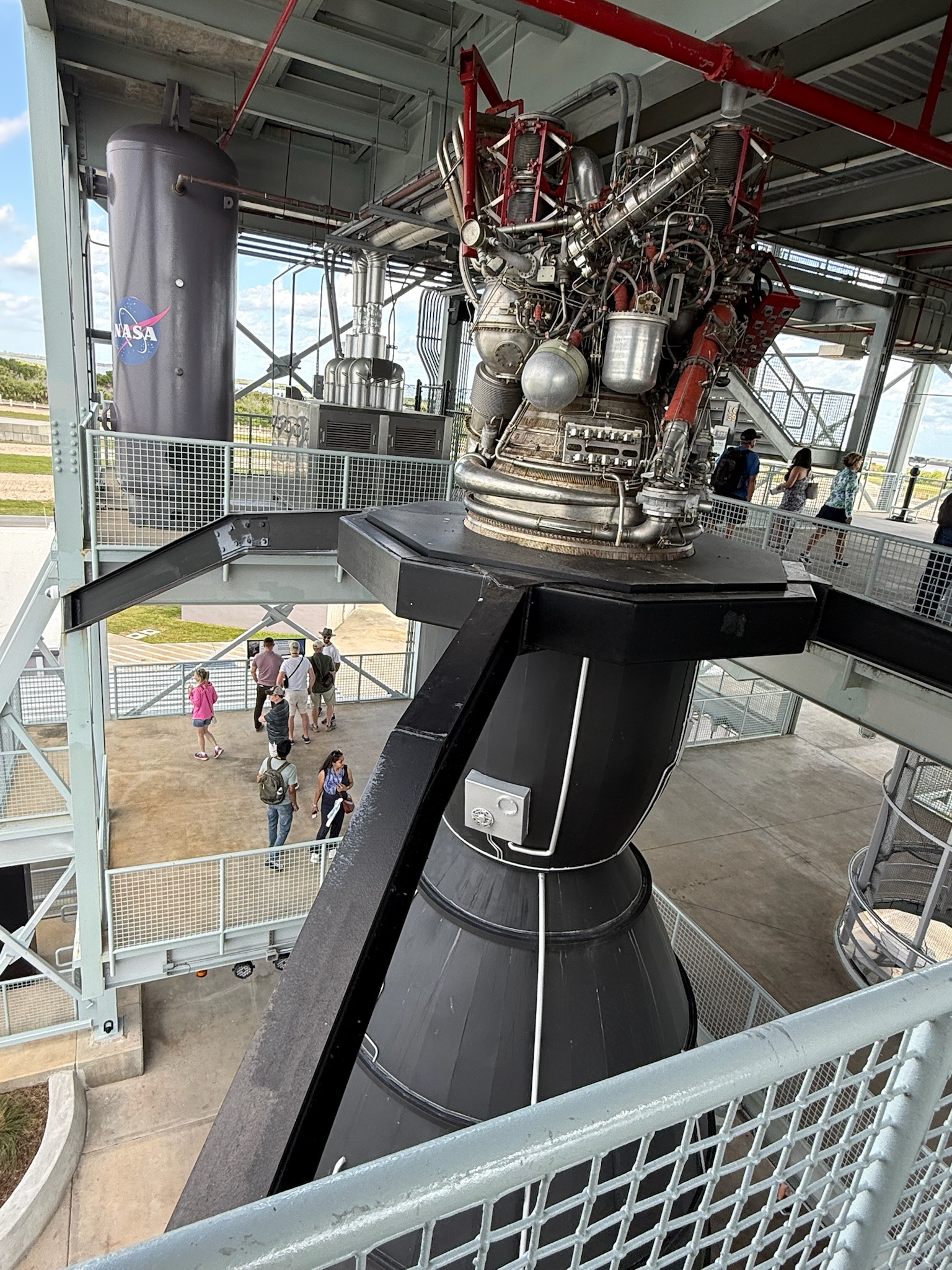
After playing with the various programs for a while, we went down to the third floor, where we got a close up view of the engine. According to the sign, it was real components of a J-2, which powered the second and third stages of the Saturn V rocket.
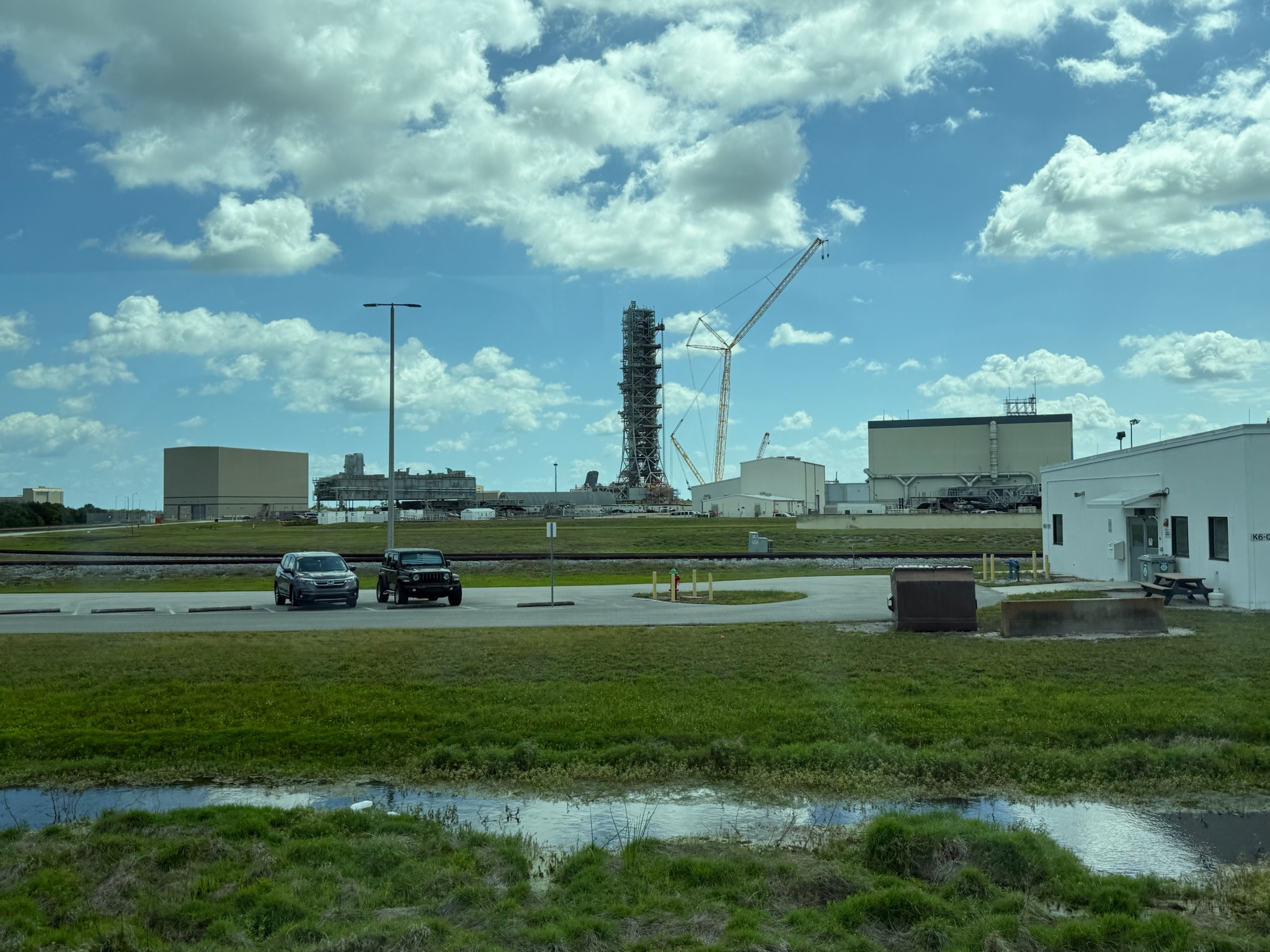
We got in line for the next bus. We only had to wait about 5-minutes to board the bus, then a few more minutes before the bus took off. The bus wound around the Artemis complex and the driver pointed out more of the infrastructure was that hadn’t been mentioned on the way in. We are fuzzy on the details, but here were some of the photos. Because of the weight/sensitivity of some of the materials, NASA had a special transport system. These were the tracks for it.
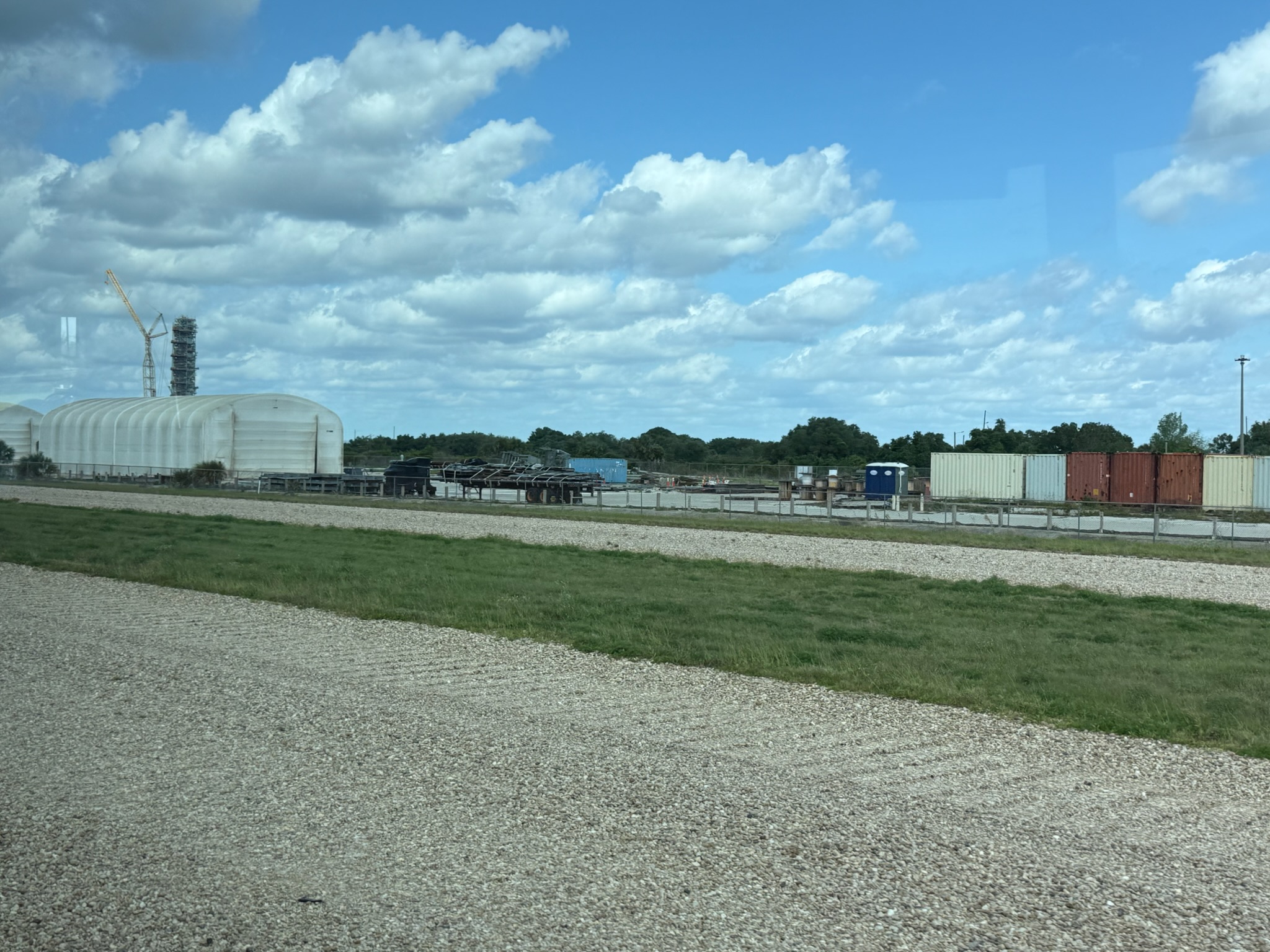
A different view of the launchpad.
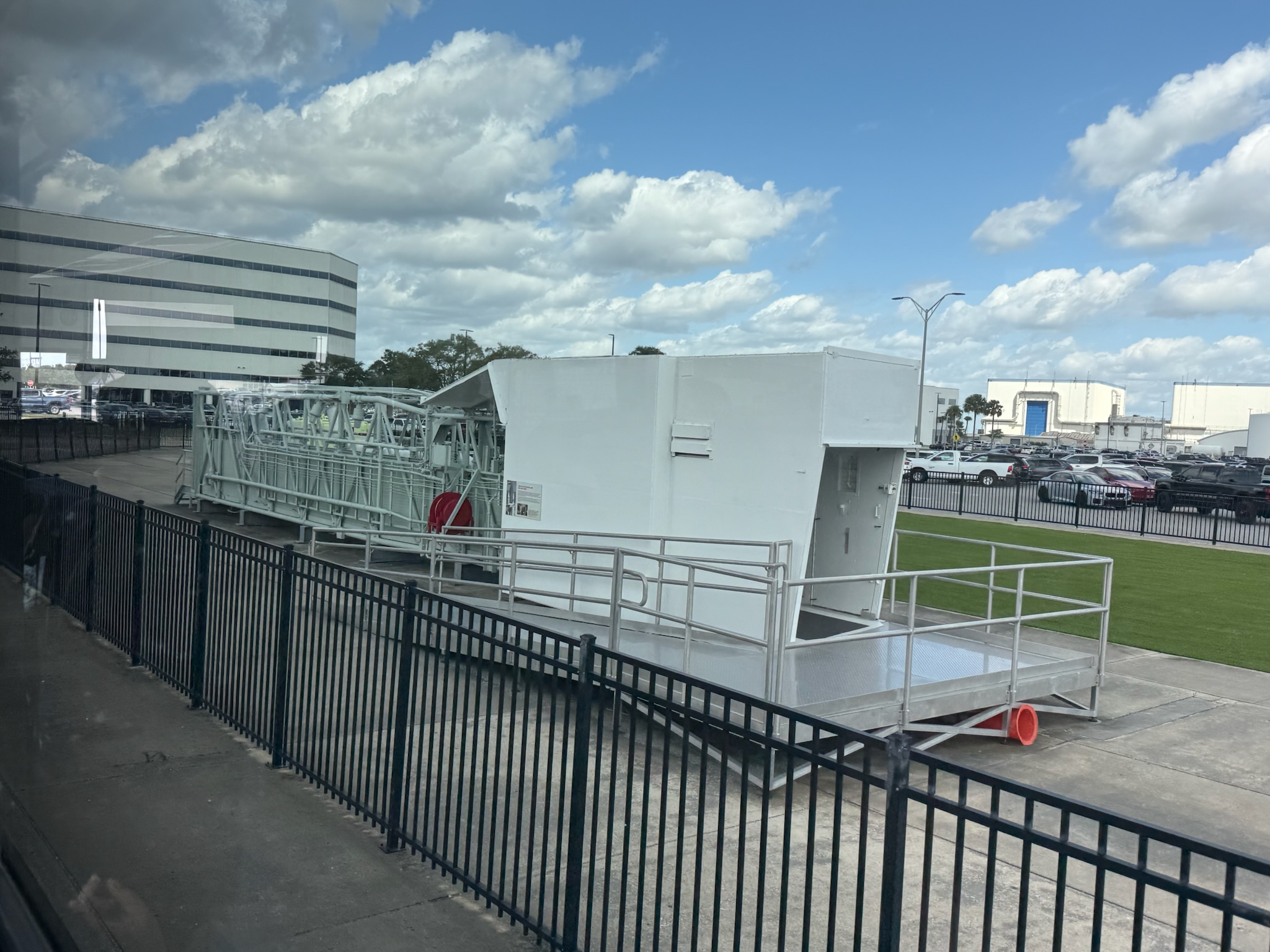
They had several retired pieces of equipment that was now used as exterior decor.
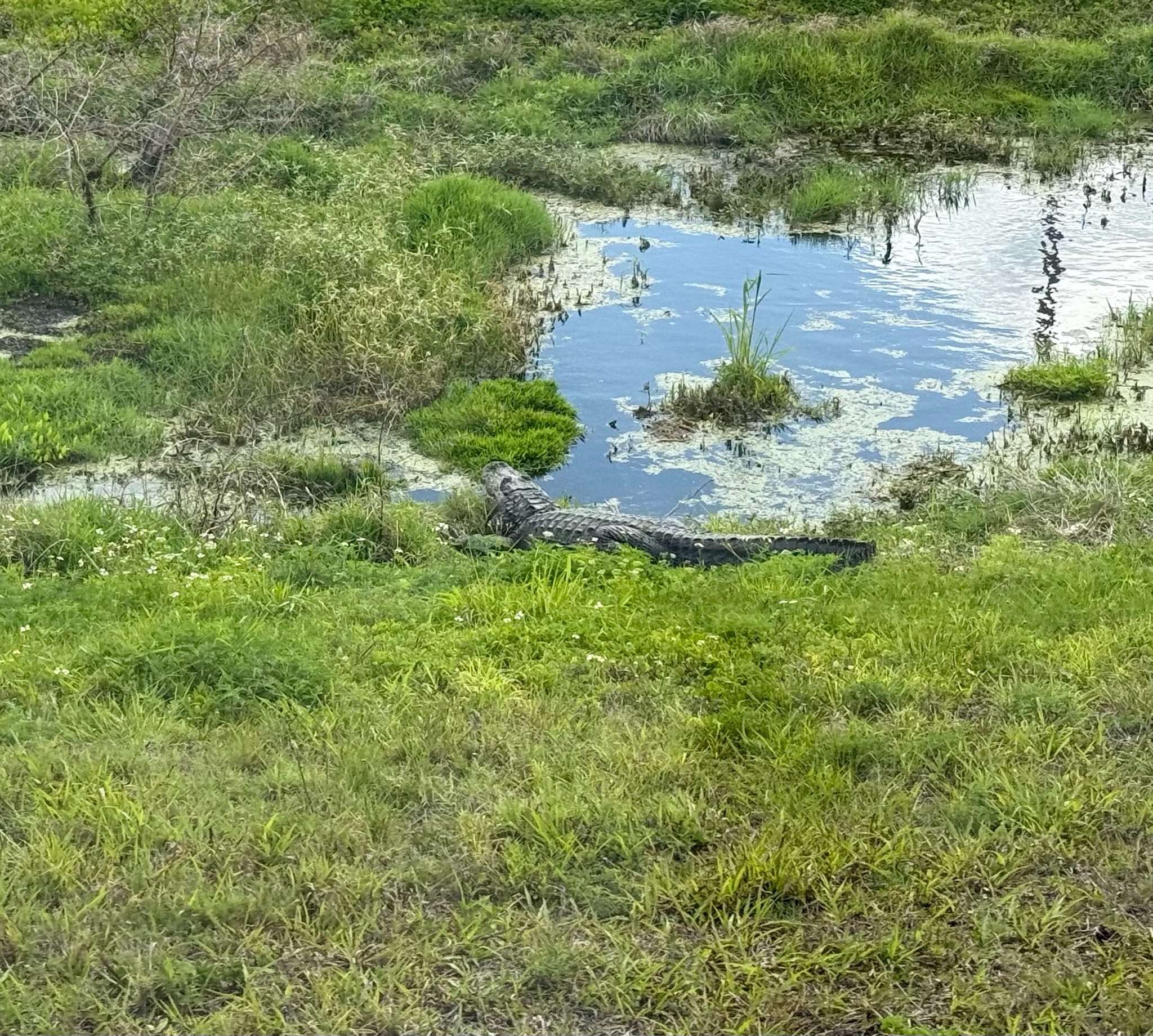
And, since this was a wildlife preserve, it was no surprise to see an alligator hanging out near the road. One of the first things the prerecorded message had said on the first leg was it was common for the busses to swerve and/or make sudden stops because wildlife frequently wandered out on the roads.
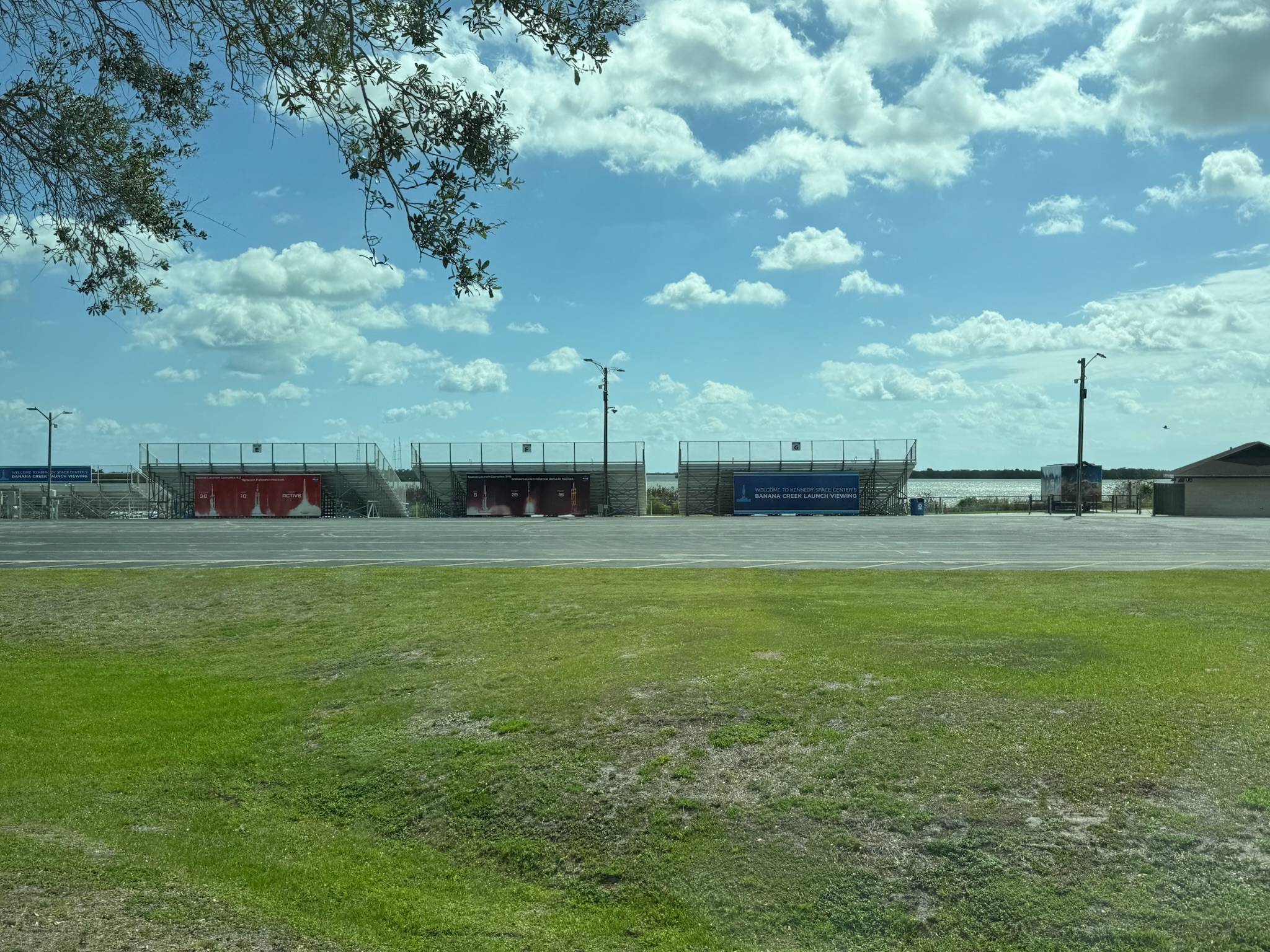
Here was a a launch viewing site on our side of the river. We could also see a similar viewing site on the other side.
We went back to the main road and turned north. On this leg, the prerecorded audio talked about the ultimate purpose of the Artemis missions: to put a long term manned base on the moon for deeper space travel. It was a relatively short ride before the bus came to a halt at the Apollo/Saturn V Center.
We followed the crowd off the bus and around the building to the Moon Tree Garden. Christi distinctly remembered that last time, the doors to the building had been open and we went into a theater where we saw a presentation before being let out into the main part of the museum. And we didn’t remember there being a Moon Tree Garden. The doors to the building were shut, so we figured the Moon Garden must be new and they’d changed the way traffic flowed in this building.
The Moon Tree Garden was basically a statue circled by little plaques commemorating each of the moon missions. The seeds used to grow the trees in the garden had actually gone to outer space as part of Apollo 14.
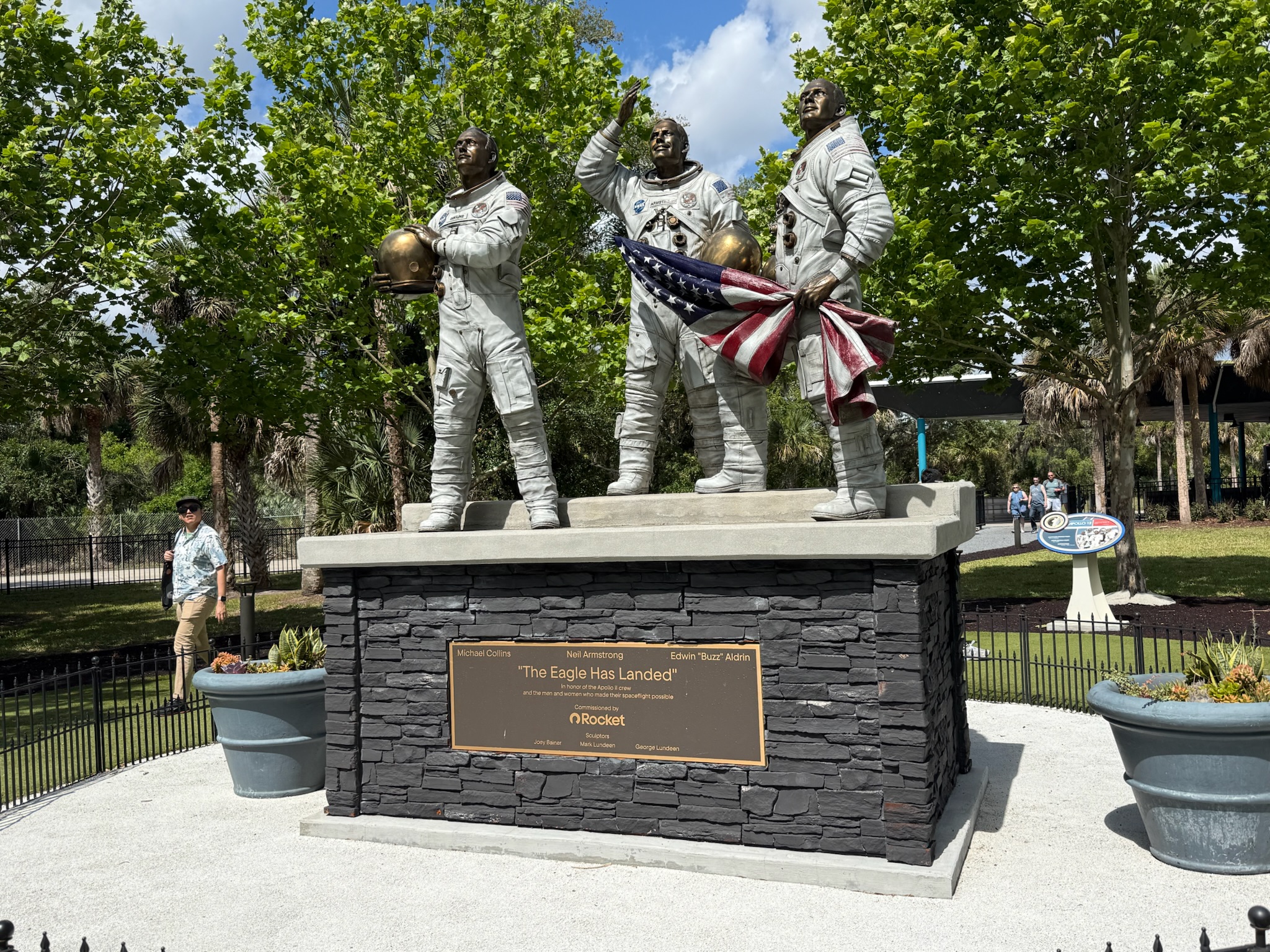
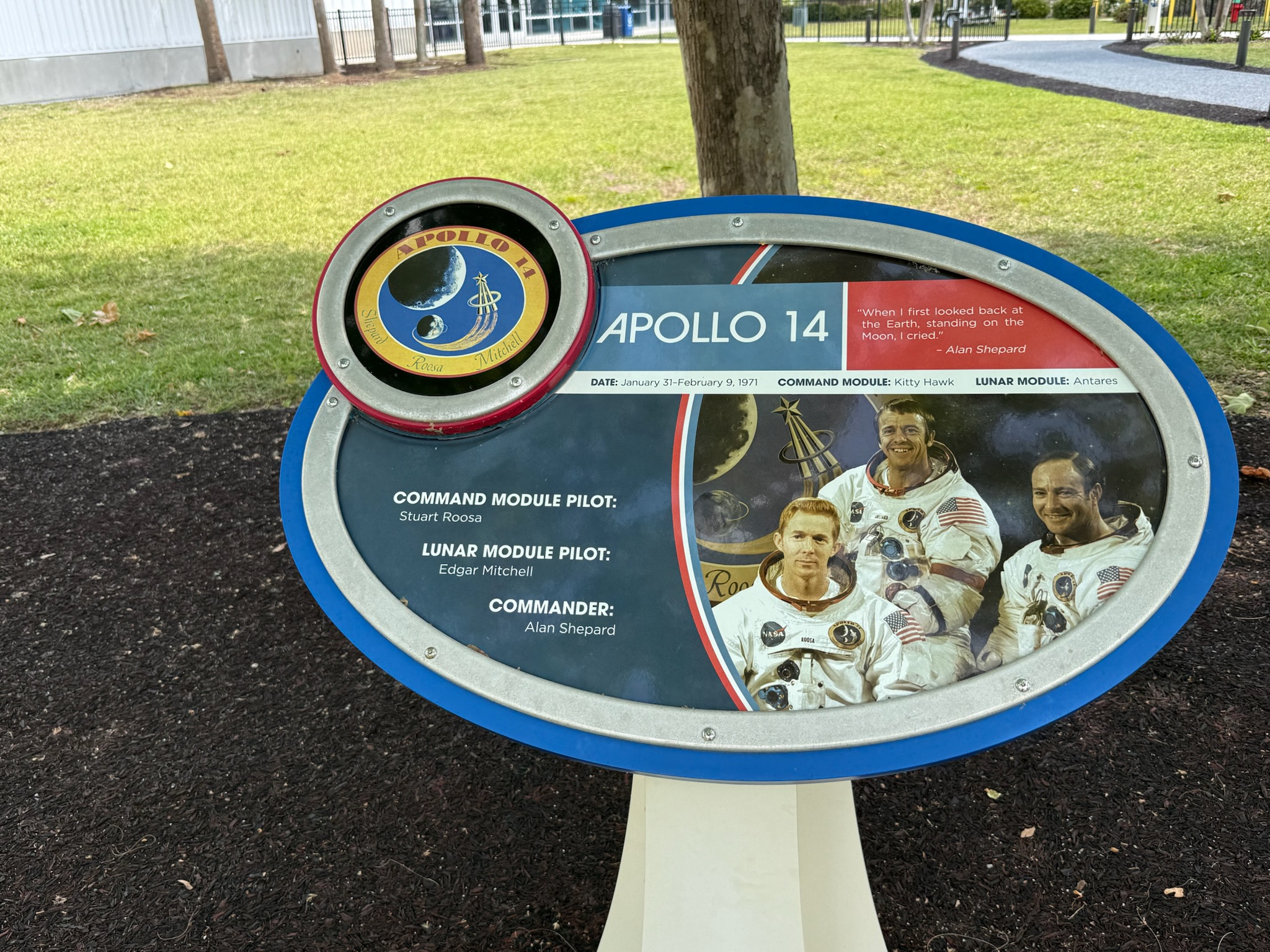
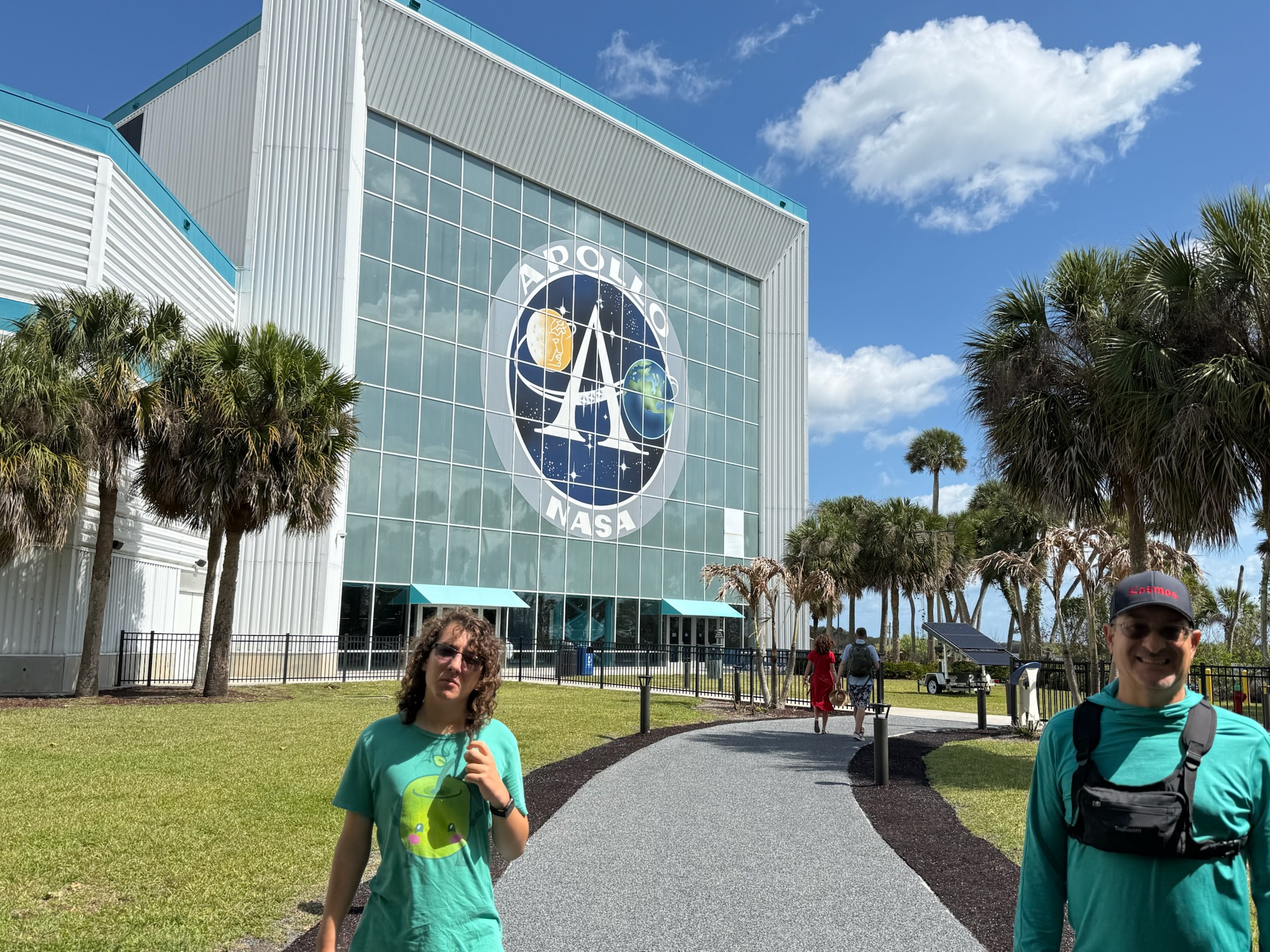
A quick internet search told us that the Moon Garden had been unveiled in 2019 as part of the 50th anniversary celebration of Apollo 11. So it was here last time we’d visited, we’d just chosen to skip it because we were short on time. We followed the path to another building entrance.
To be continued…