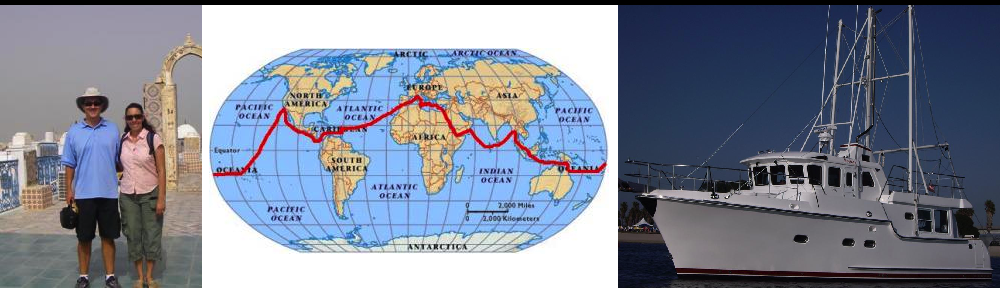
continued… There was also a model of the Atlas V, which has been in use since 2002. According to the sign, there have been more than 600 Atlas program launches with 100% success. It was used for transporting astronauts to the International Space Station (ISS), delivering satellites to orbit, and NASA spacecraft to destinations in the solar system, including the Mars Science Laboratory mission with the Curiosity rover to Mars in 2011.
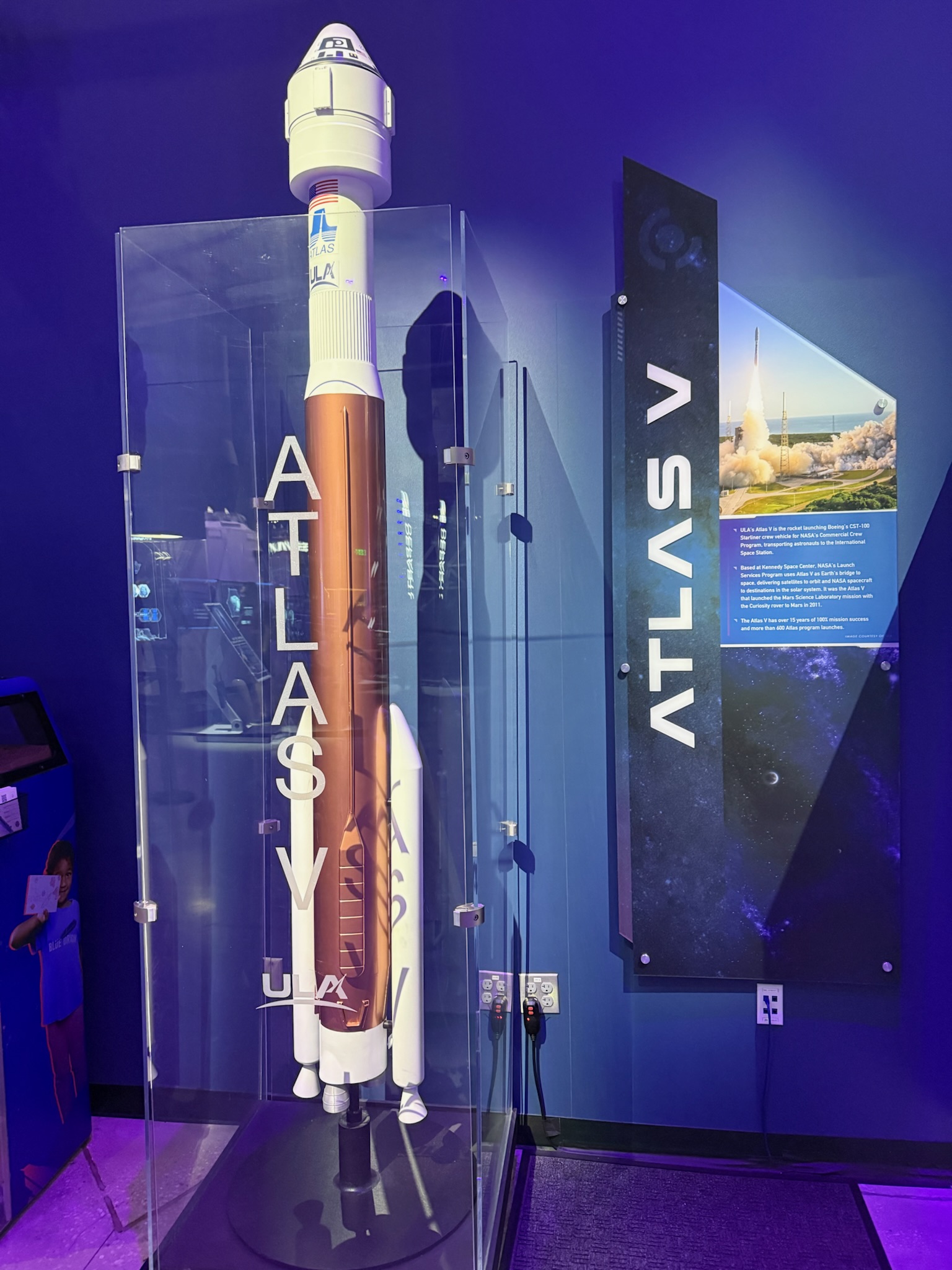
And there was a model of the Vulcan Centaur rocket. The sign was written in a conditional tense where it said that after delivering supplies to the ISS, it will fly missions for commercial, civil, science, cargo and national security space customers. So, due to the odd verb tense, we weren’t sure if the Vulcan was already in use or just planned to be in use soon.
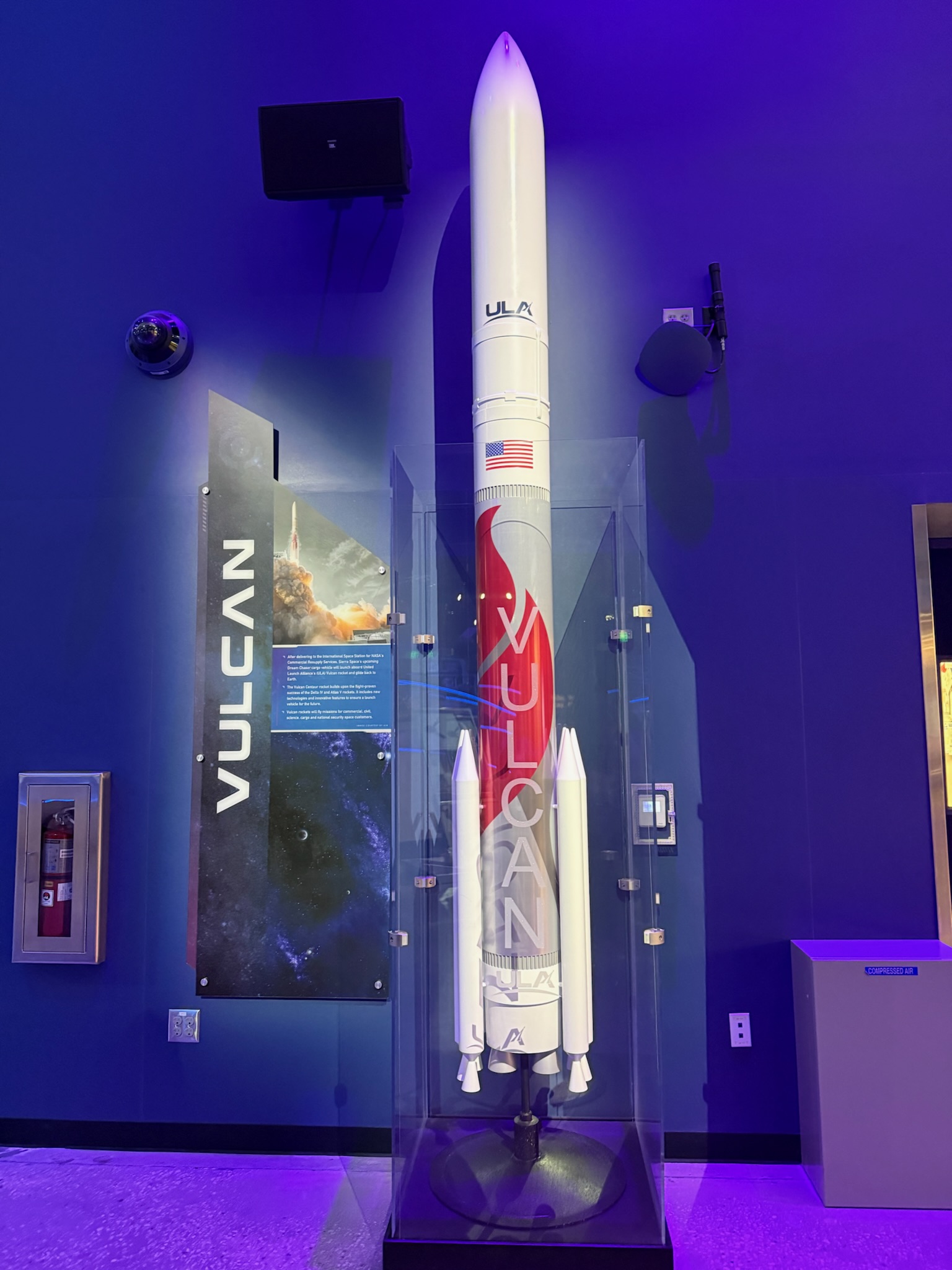
This was the Boeing CST-100 Starliner capsule, which sounded like it was not yet in use. It could accommodate seven passengers or a mix of crew and cargo. It has an innovative, weld-less structure, flies and docks autonomously, can be used up to ten times, and can land on land using parachutes and airbags. It sounded like they were planning to regularly transport four astronauts at a time and put paying space tourists in the remaining seats.
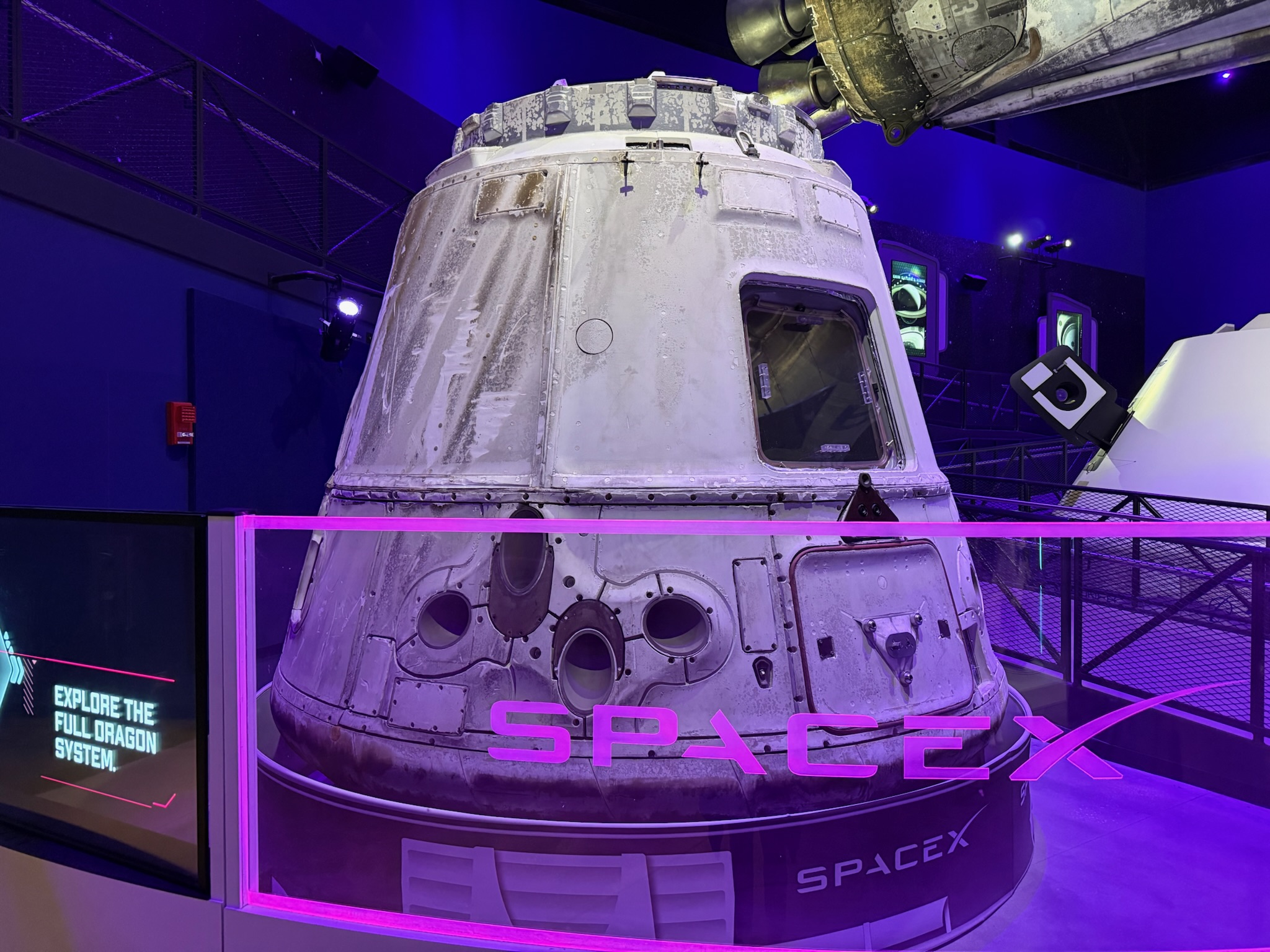
Below was the original SpaceX Cargo Dragon, which in May 2012 became the first commercial spacecraft to deliver cargo to/from the ISS. It was launched from a SpaceX Falcon 9 rocket here at Cape Canaveral. In 2020, it was replaced with the Cargo Dragon 2, which uses smaller Draco thrusters that require less fuel and provides more cargo room. It remains the only spaceship capable of returning experiments and materials from low-Earth orbit to Earth.
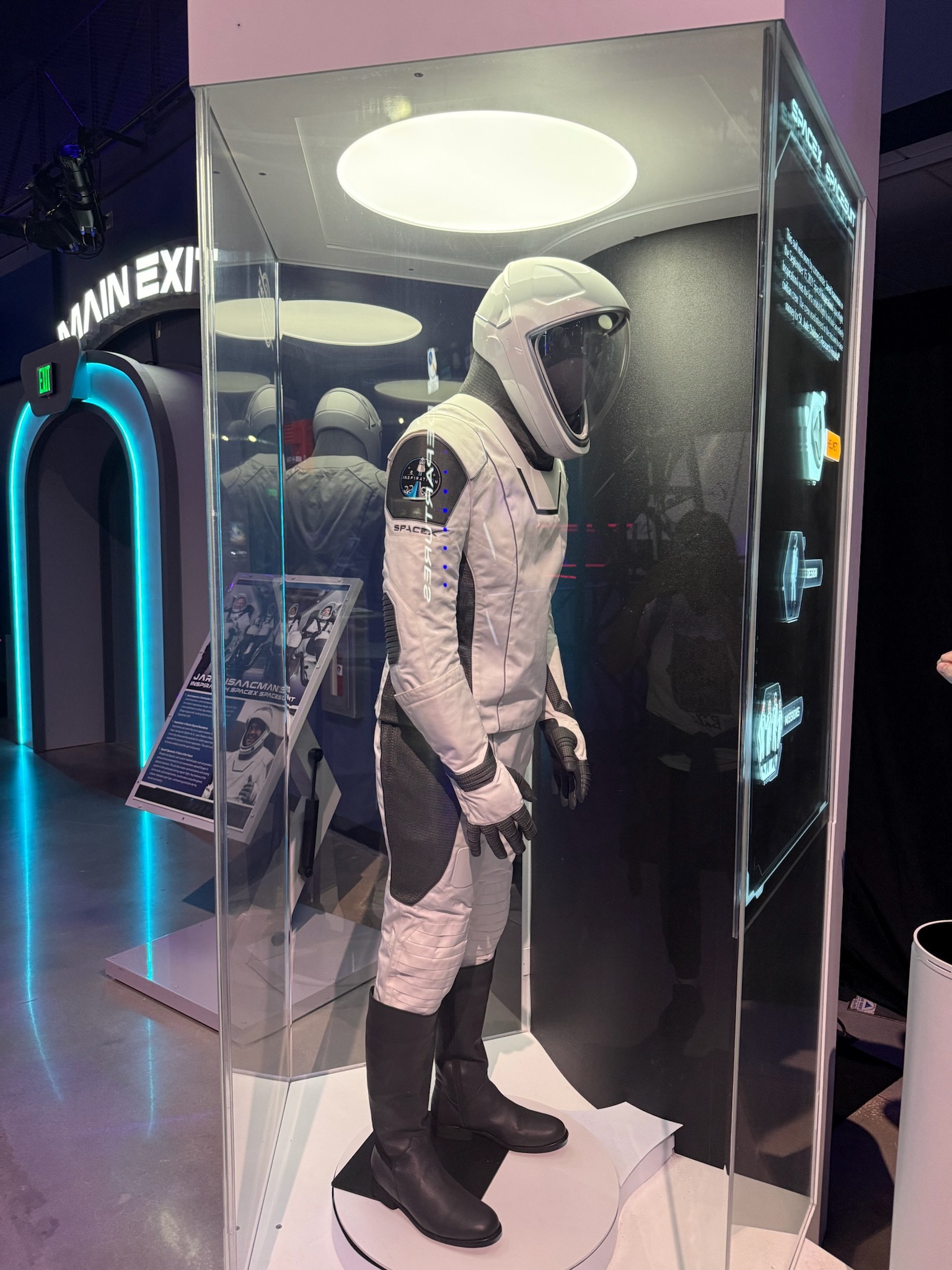
There were a couple of exhibits on the next generation of space suits. Below was SpaceX’s version, which per the sign, provided a pressurized environment, routes communications and cooling systems, touch screen compatible gloves, flame-retardant outer layer and hearing protection during ascent and reentry.
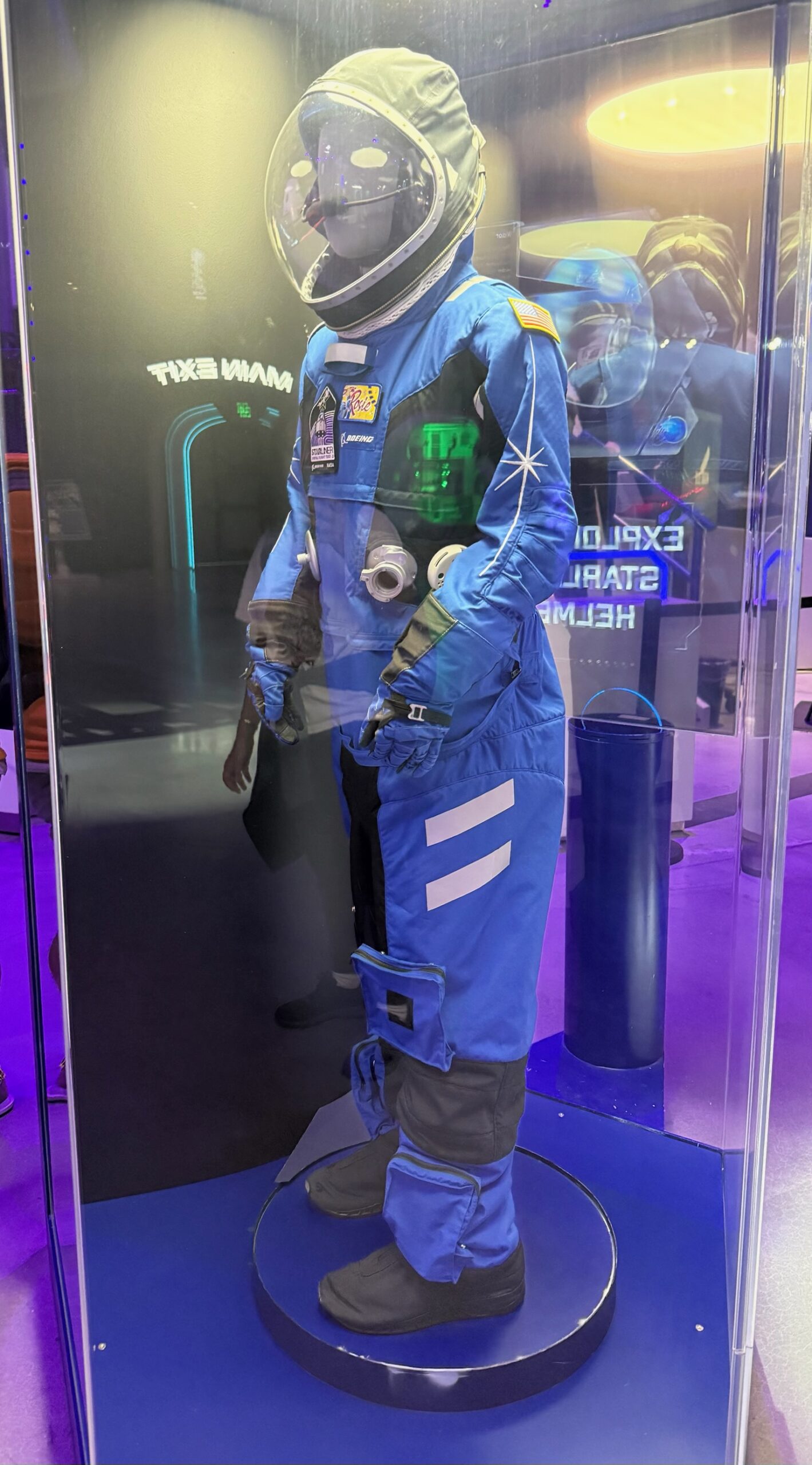
Below was Boeing’s version, which the sign said were lighter (only 20 pounds/9 kg), cooler and more flexible than previous suits. In our opinion, Boeing was going to need better advertising for their space suits if they were going to compete with SpaceX for the space tourism business.
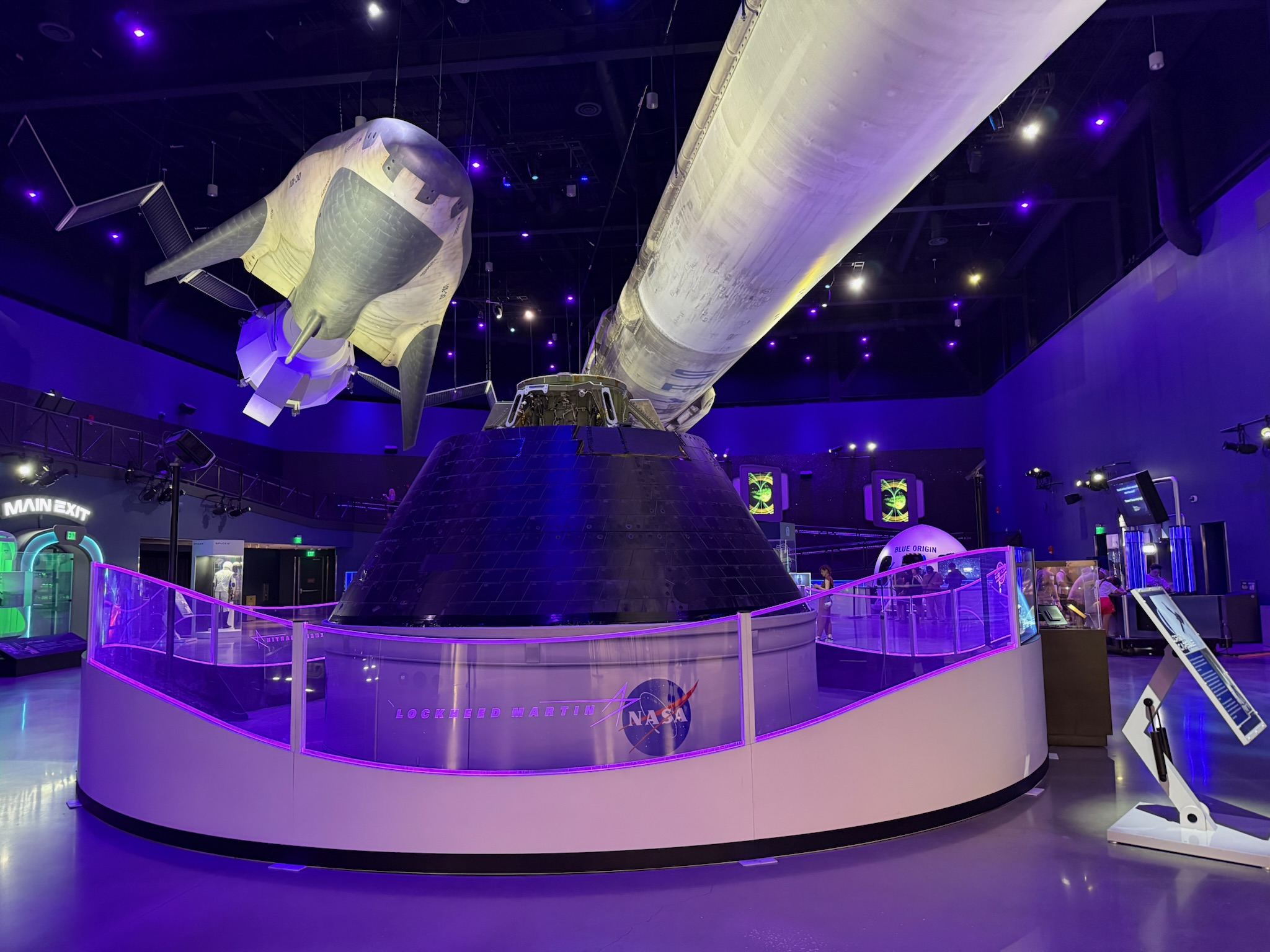
If we matched up the sign on the ground properly with the display on the ceiling, the airplane looking object on the left was a Dream Chaser, made by Sierra Space, which was designed to transport crew and cargo to low earth destinations, including the ISS. The sign said it was a full scale model — the space plane was only 30 feet (9.14 meters)! It would be launched into space on a Vulcan rocket. Upon return, it could land on any commercial runway, and was reusable for at least fifteen missions.
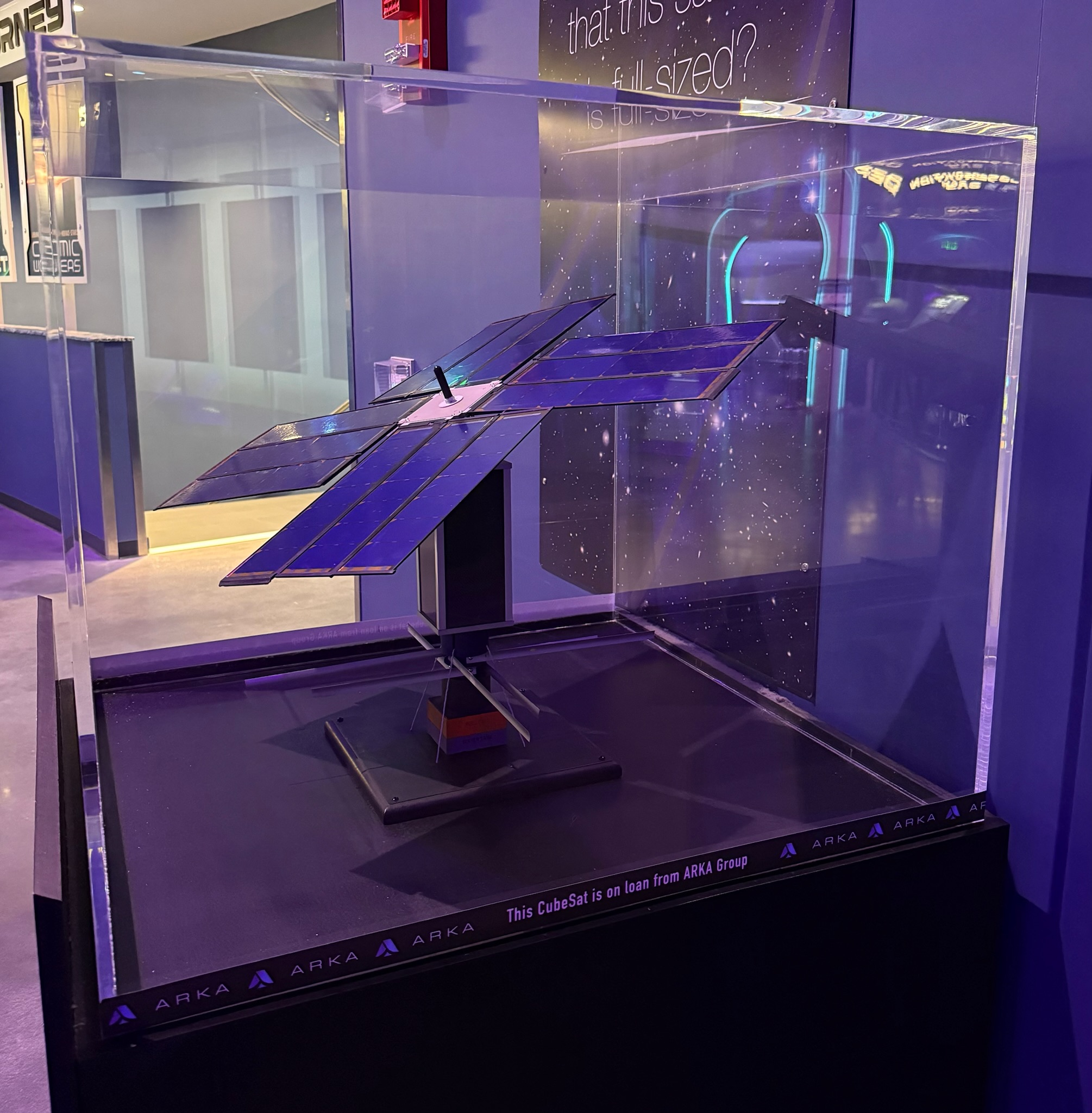
We headed upstairs, where there were a few more displays. Just as technological devices on Earth have gotten smaller and smaller, technology for outer space has also become more compact. This was called a CubeSat and was categorized as a nano satellite. But the sign made it sound like nowadays, most of the satellites launched were this small. There was also a nearby computer screen with an interactive exhibit on satellites.
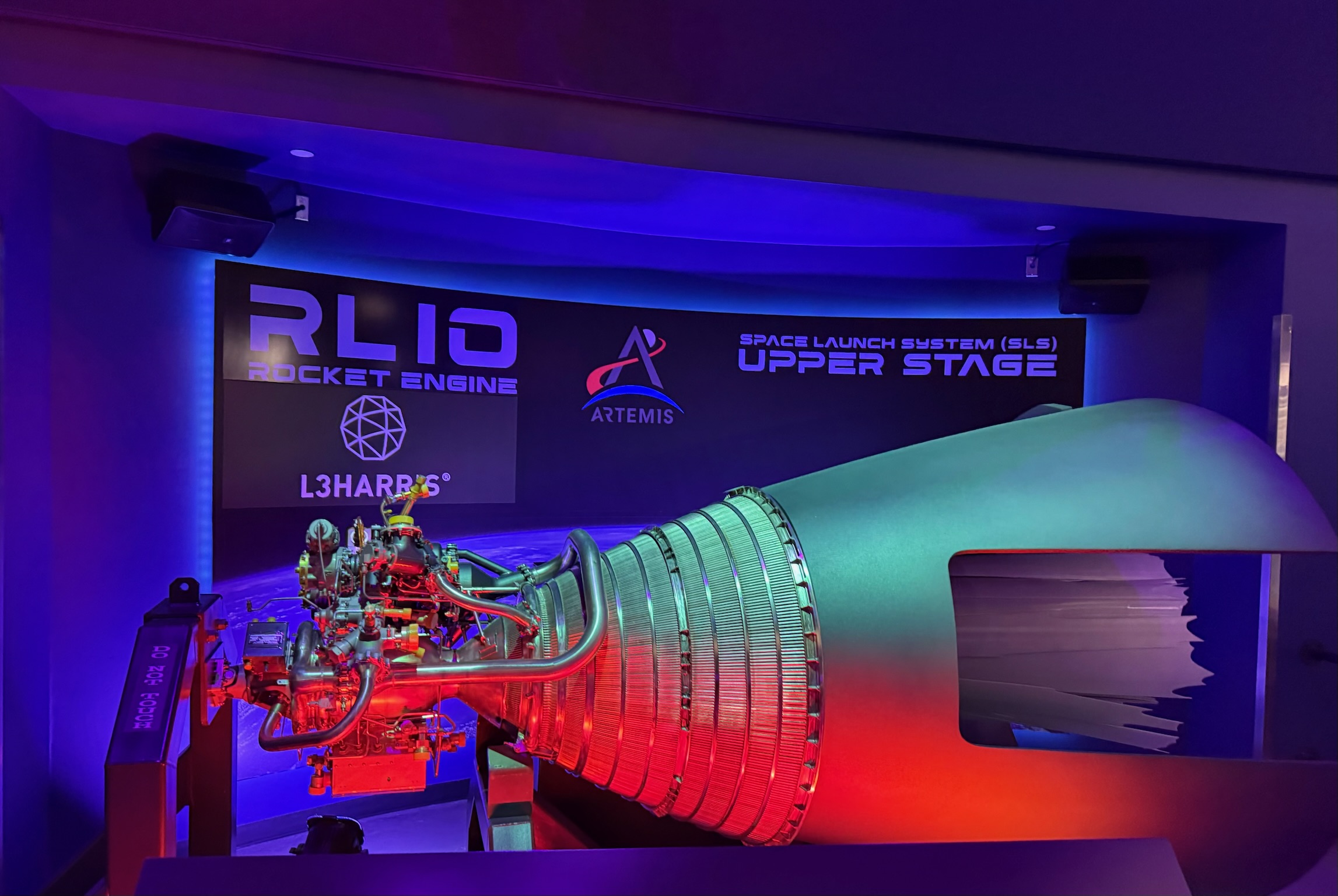
The Aerojet Rocketdyne RL10 Upper Stage engine has flown hundreds of missions over the past 50+ years aboard Atlas, Delta, Titan, Vulcan and SLS rockets to place satellites into orbit and send spacecraft to explore deep space (note: this sign answered the question about whether Vulcan was already in use!). It was the world’s first liquid hydrogen fueled rocket engine and employed a Closed Expander Cycle to gain maximum fuel efficiency.
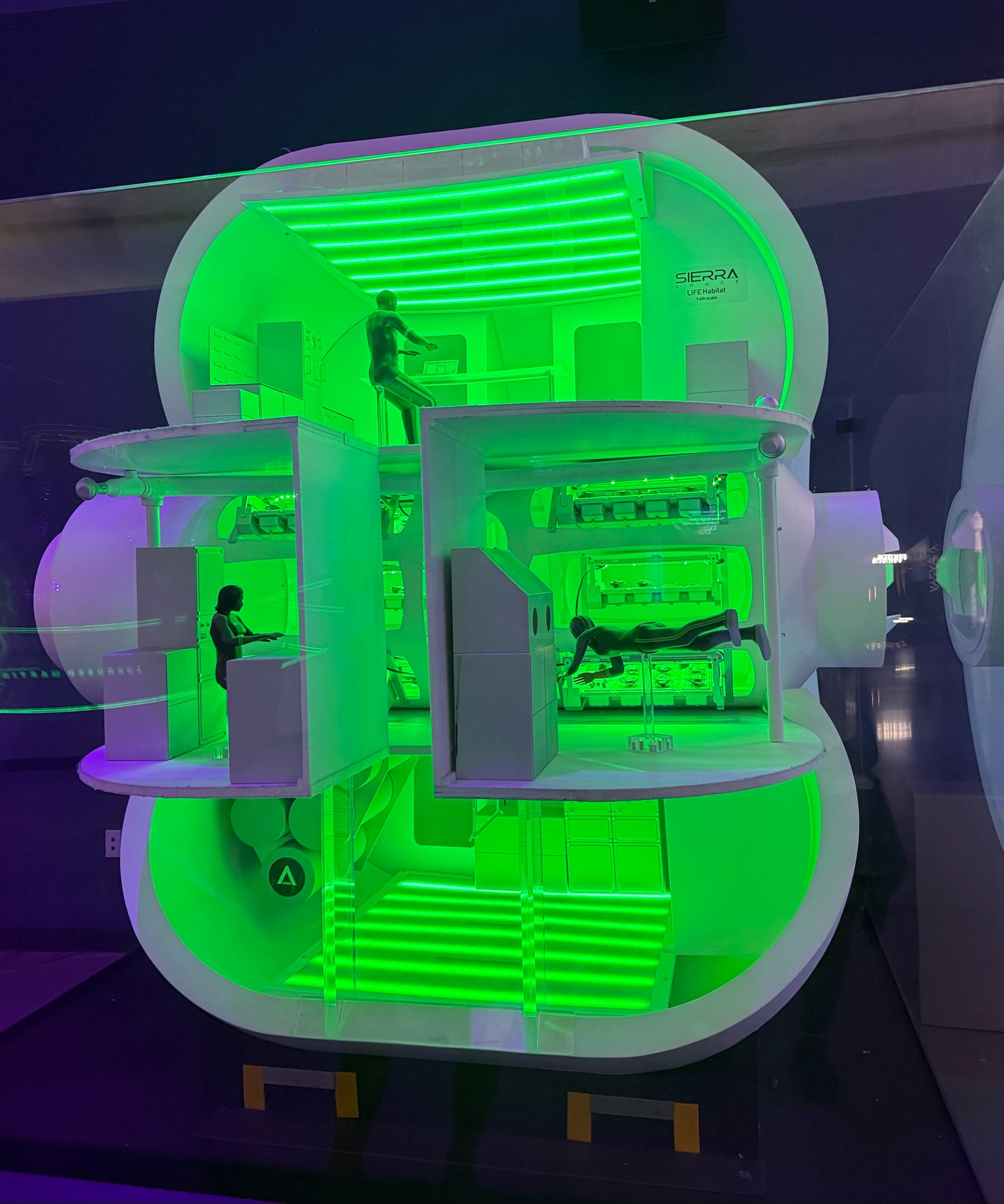
These are LIFE (Large Integrated Flexible Environments) Habitats that can support long term duration human habitation. They can be launched into space on a rocket and can expand to the size of a three story building on orbit. People can live in them in low Earth orbit, deep-space transport and on the surface of the moon and Mars.
The majority of the space upstairs was devoted to a series of simulation rides. We got into the “Unchartered Worlds” line. As you can see, there was no one in line ahead of us. And it was still a long wait to get into the ride!
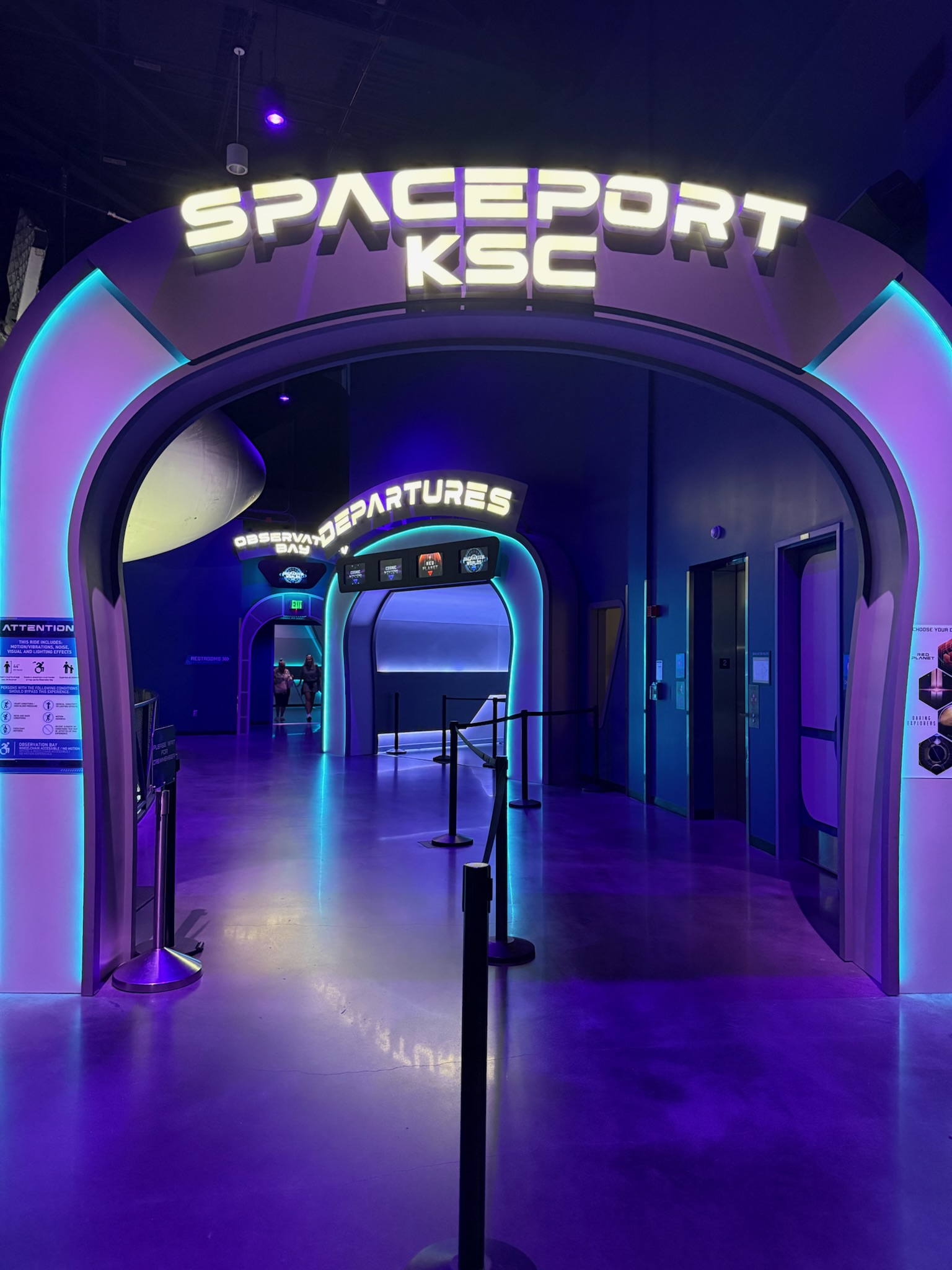
To be fair, the ride couldn’t hold many people. We kind of wondered if they’d waited until there were enough people in line to fill all the seats before they let us in — maybe they didn’t want to run the ride if the seats were mostly empty?
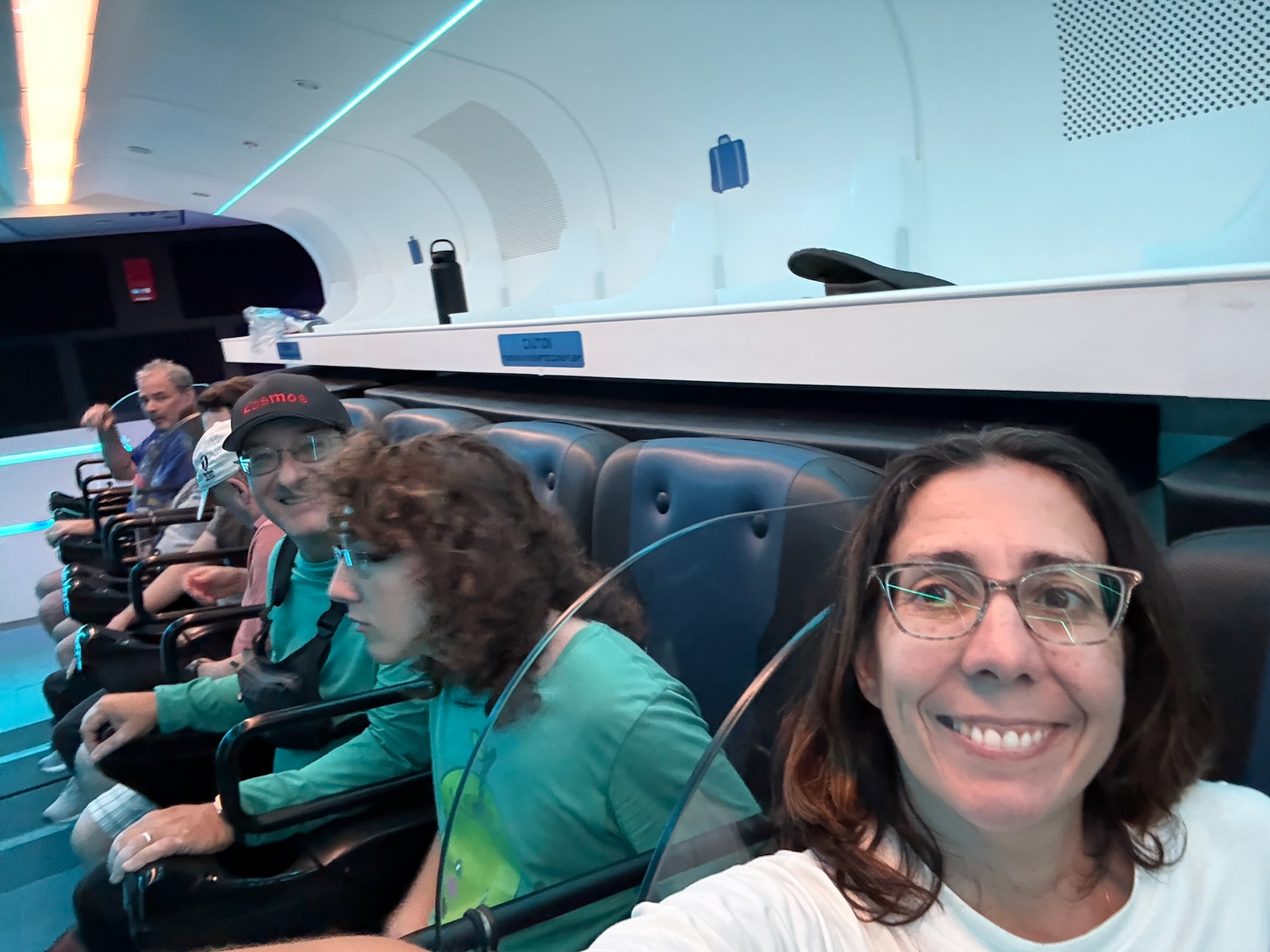
The simulation took us to the TRAPPIST-1 planetary system, which was located about 40 light-years away from Earth in the constellation Aquarius. It contained seven Earth-sized planets orbiting a red dwarf star, and three of the planets were in the “goldilocks” or “habitable” zone by Earth life standards. The ride took us past all three, where the narrator determined that one of the planets was too cold and one too hot for human life, but the one in the middle could be inhabited by humans. The ride was fun and lasted about the same amount of time that the Space Shuttle simulation had.
If we’d had more time, we would have gone on the other simulations, but an Astronaut Talk was about to begin in another building, so we needed to get moving if we were going to make it to the Talk. To be continued…