continued… We hustled over to the building the Astronaut Talk was in and took a seat in the mostly empty theater. The astronaut of the day was Bob Cenker, who did one mission aboard the Space Shuttle as a private contractor — he wasn’t an actual NASA astronaut.
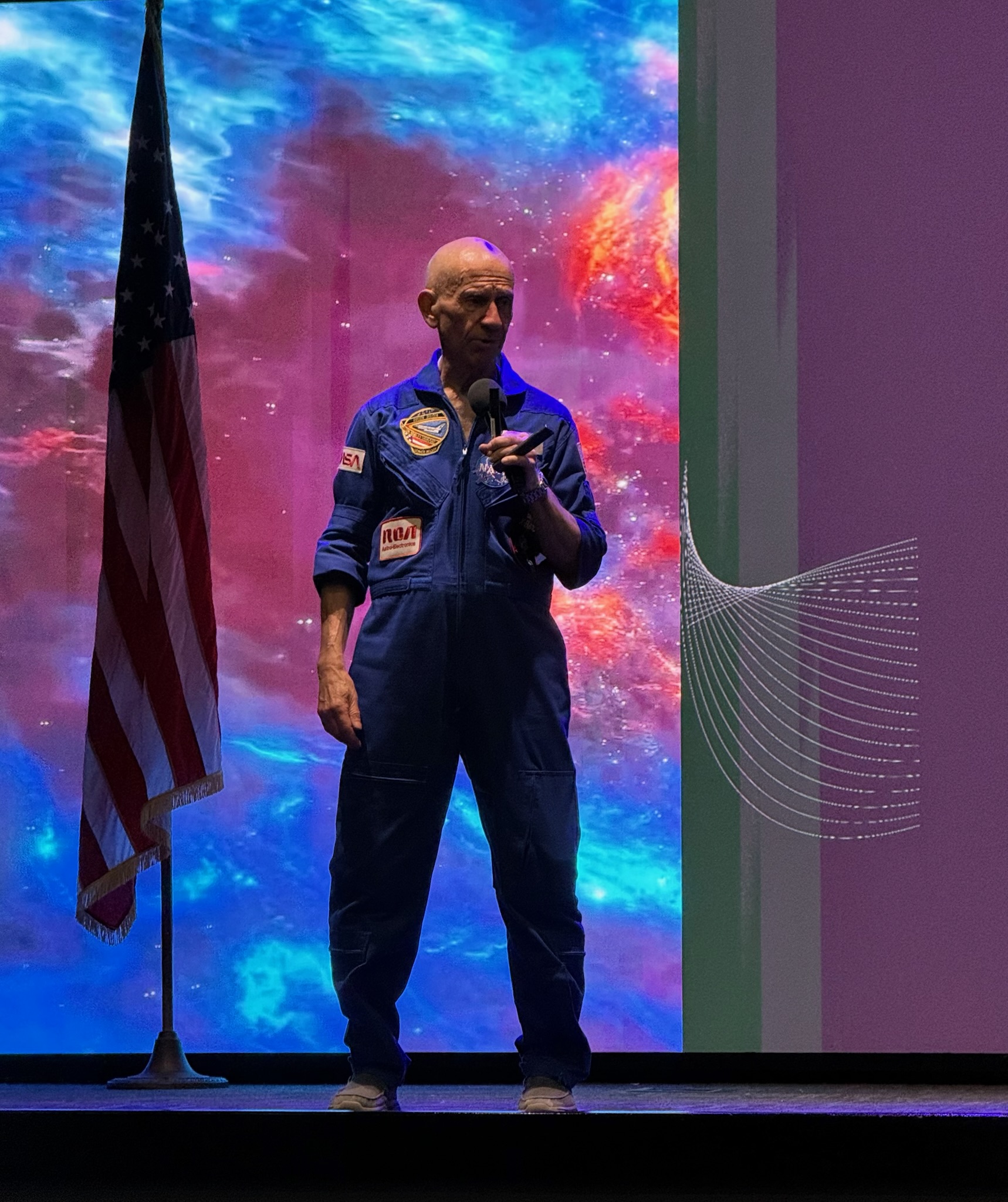
Bob was chosen for the mission because he was a satellite specialist and they needed his specialist services on this particular mission. He talked about what it was like to be in space – the first day, he was very sick. Once he adjusted, he could eat fine, but preparing food was a challenge. He also talked about the challenges of using the toilet. He was very detailed about his experience — what day to day life was like, how his body changed, etc. He also talked about adjusting back to Earth upon return. He told a funny story about dropping dishes because he forgot they didn’t float.
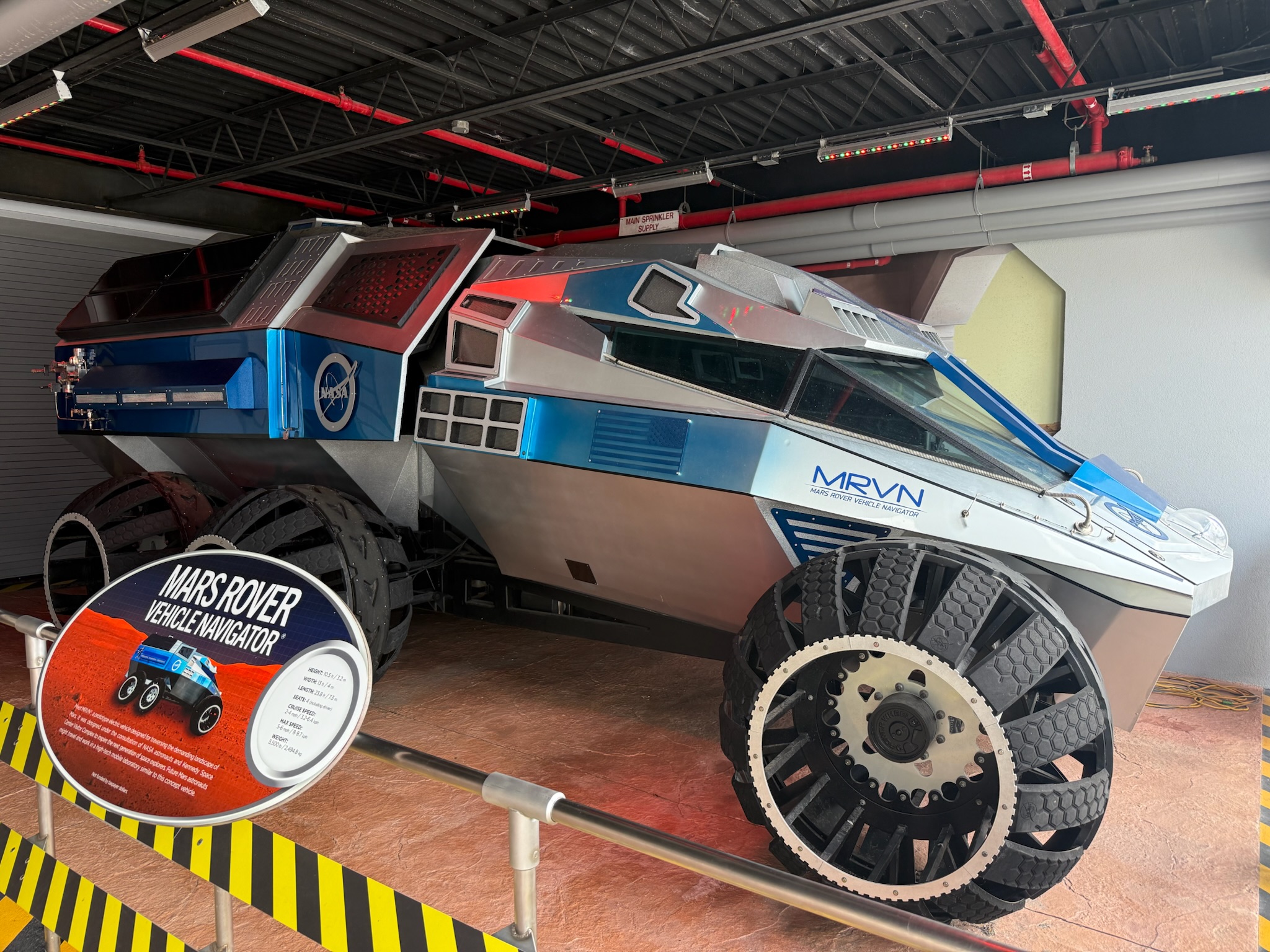
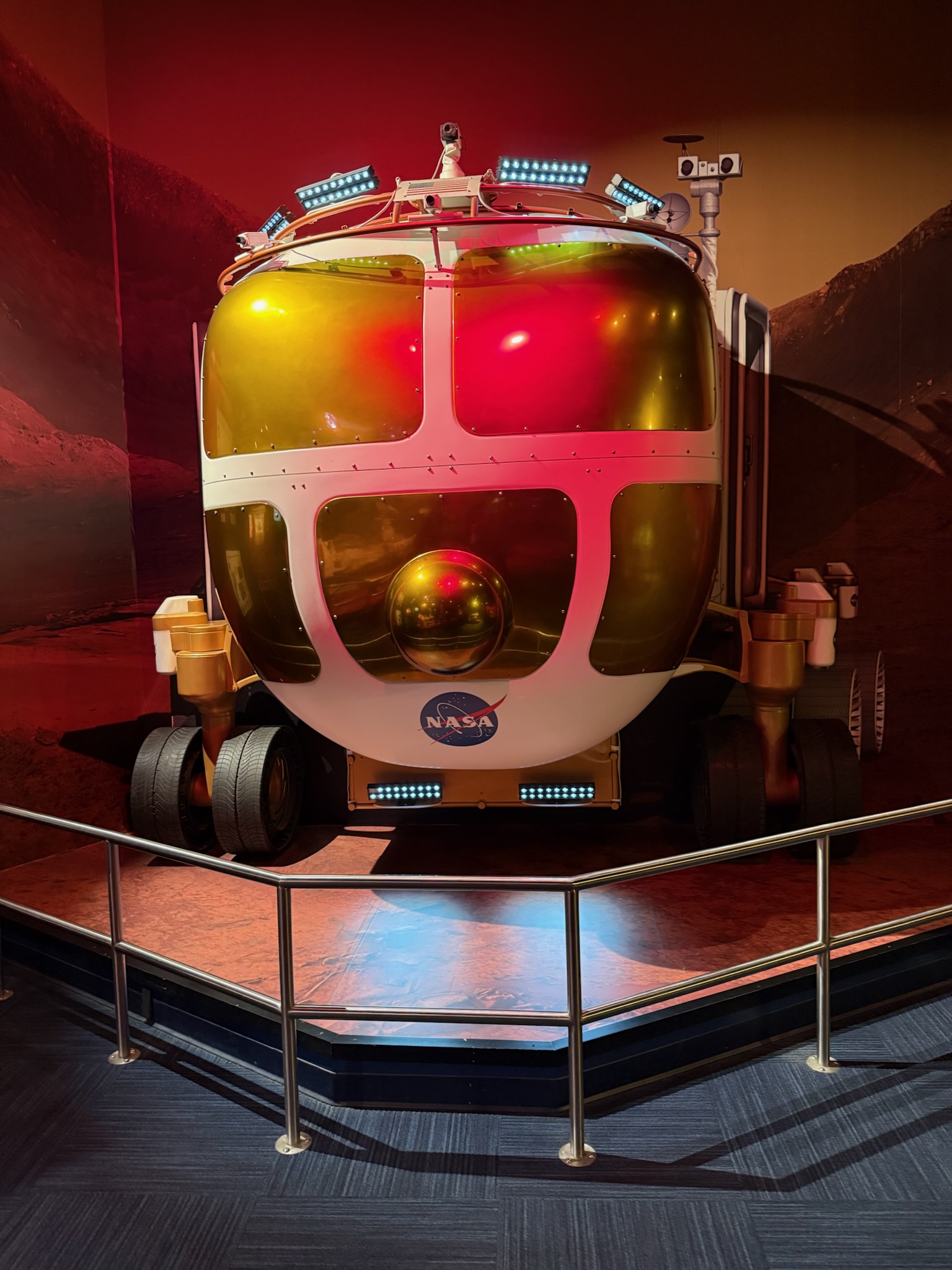
Next on the to-do list was an exhibit called Journey to Mars, which was in a building across the way from the theater. On the way over, we stopped to look at a vehicle called the Mars Rover Vehicle Navigator that was parked near the Journey to Mars. According to the signs, it was a prototype of a high tech mobile laboratory. The vehicle was electric and designed to traverse the demanding landscape of Mars. It could seat 4 people, cruise at 2 – 4 mph (3.2 – 6.4 kph) and had a max speed of 5 – 6 mph (8 – 9.7 kph). We found it interesting that the sign said “Not funded by taxpayer dollars.”
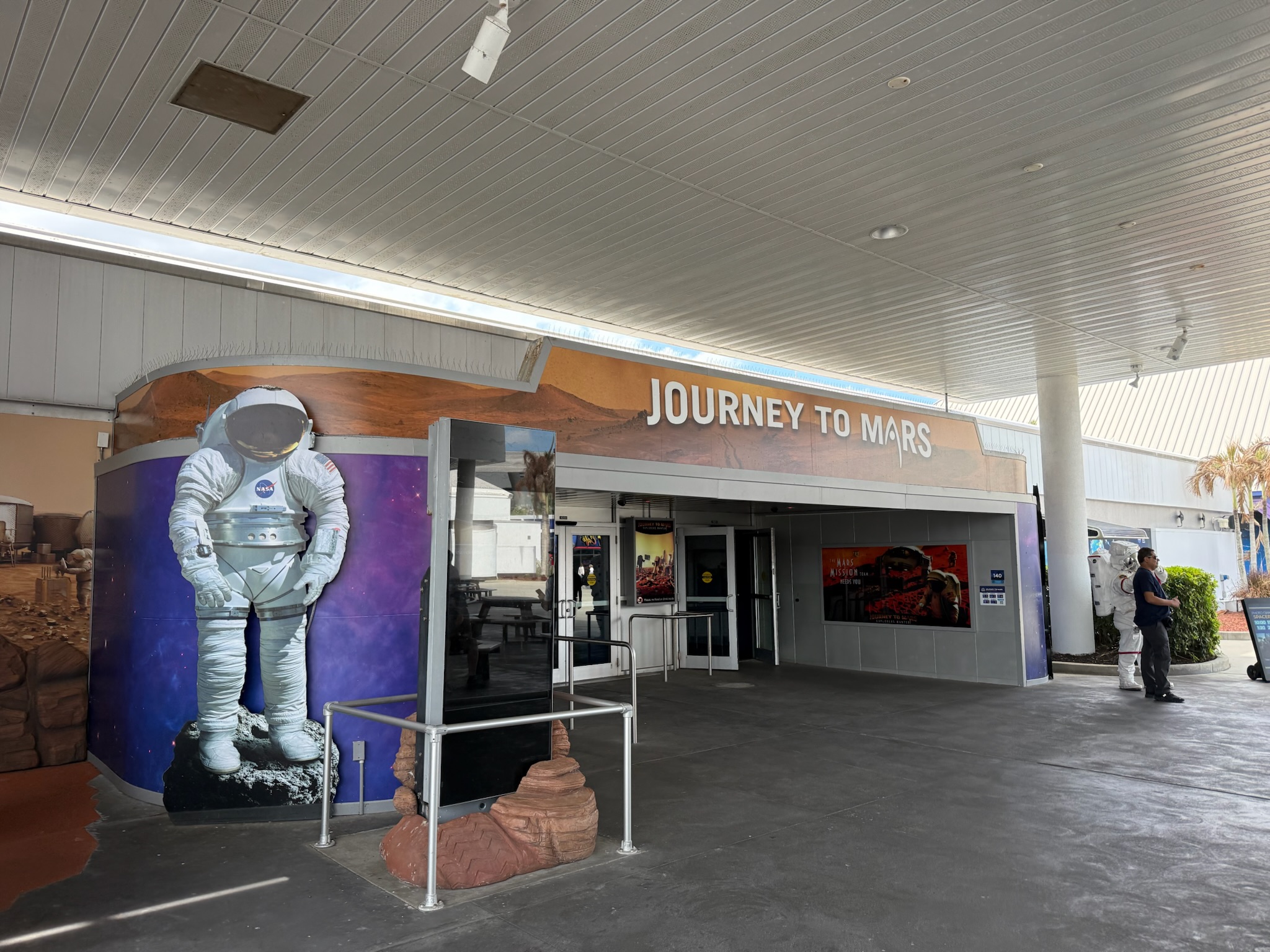
The Journey to Mars focused primarily on recent/current Mars explorations and about what they believed life would be like in the future when human travel to Mars became viable.
The majority of the exhibits were interactive display screens. There were some fun educational games, like navigating a space craft through hazards in space.
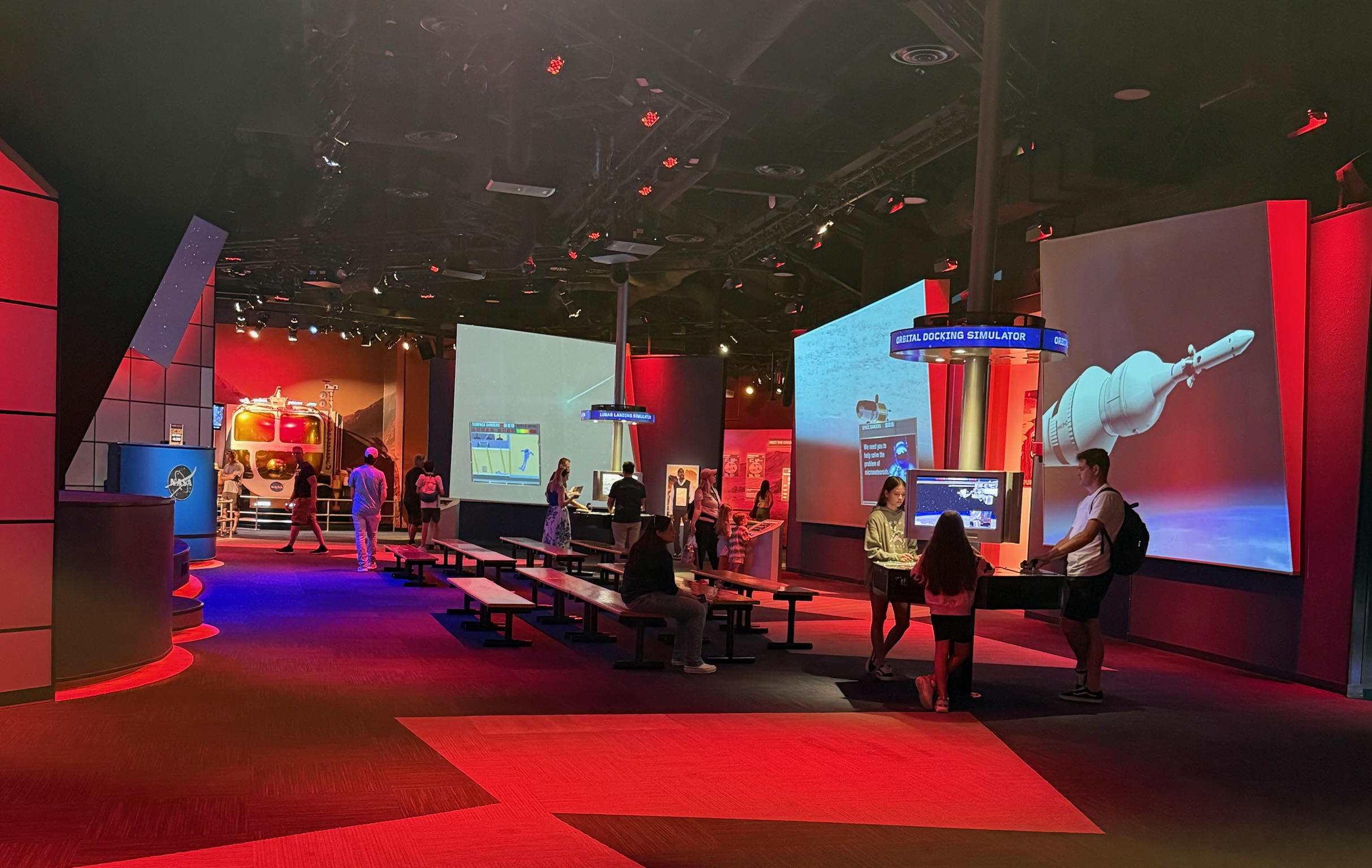
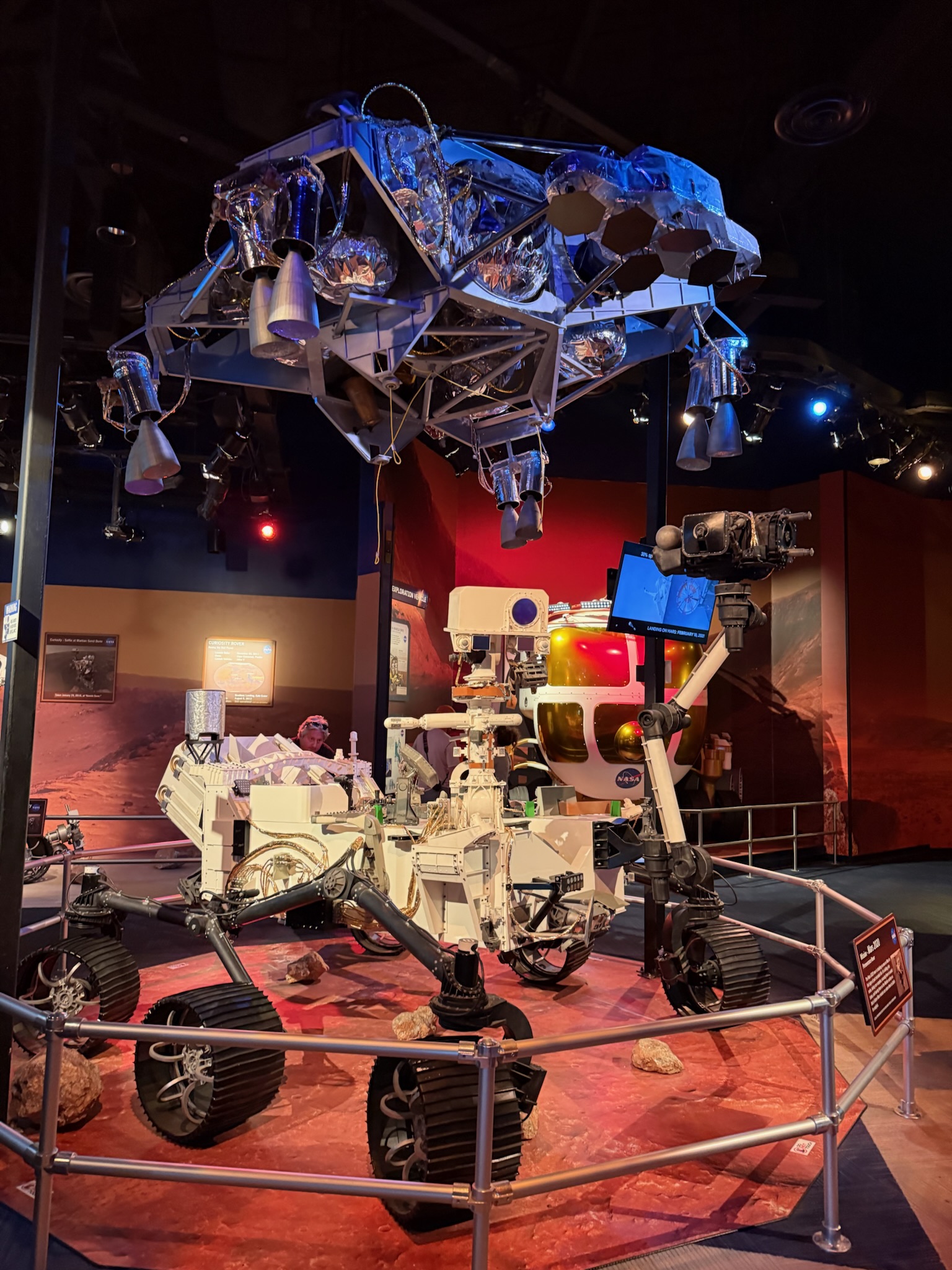
As far as fixed exhibits went, the majority were about the assorted Mars rovers. The rovers were launched from Earth on rockets and landed on Mars using parachutes and airbags. Each rover was bigger and heavier than its predecessor. They displayed photos taken from each rover and it was impressive how much better the images became with each iteration of rover. Note that the next three images are each Mars rovers, but we honestly have no idea which rover was which.
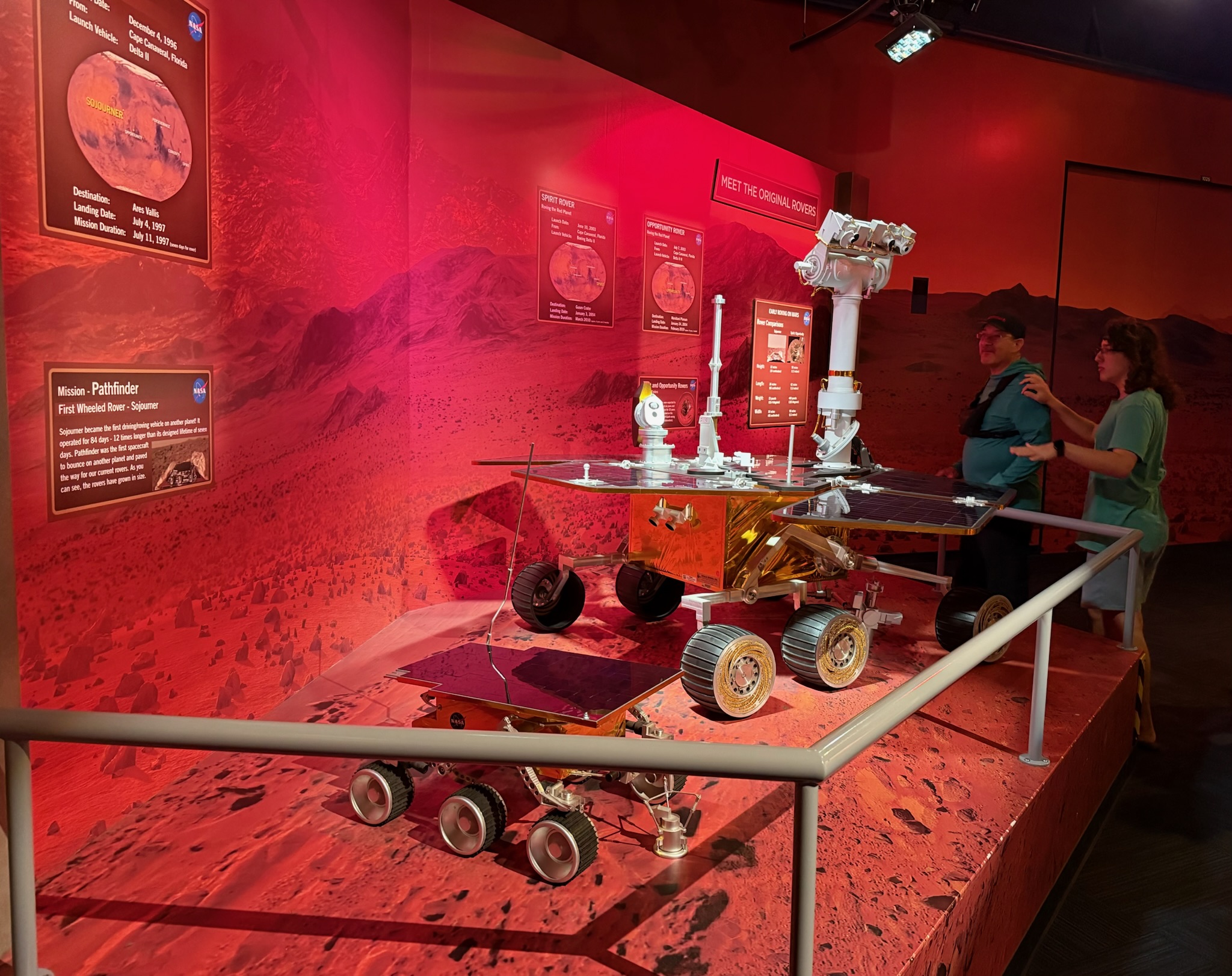
Sojourner rover launched December 4, 1996 as part of Mission Pathfinder. It was the first roving/driving vehicle on another planet. The rover had 3 cameras. It had only been anticipated to last for 7 days but operated for 84 days.
Spirit launched June 10, 2003. It had a 3-D panoramic camera and was expected to last for 92 days. It operated for 6 years and 2 months.
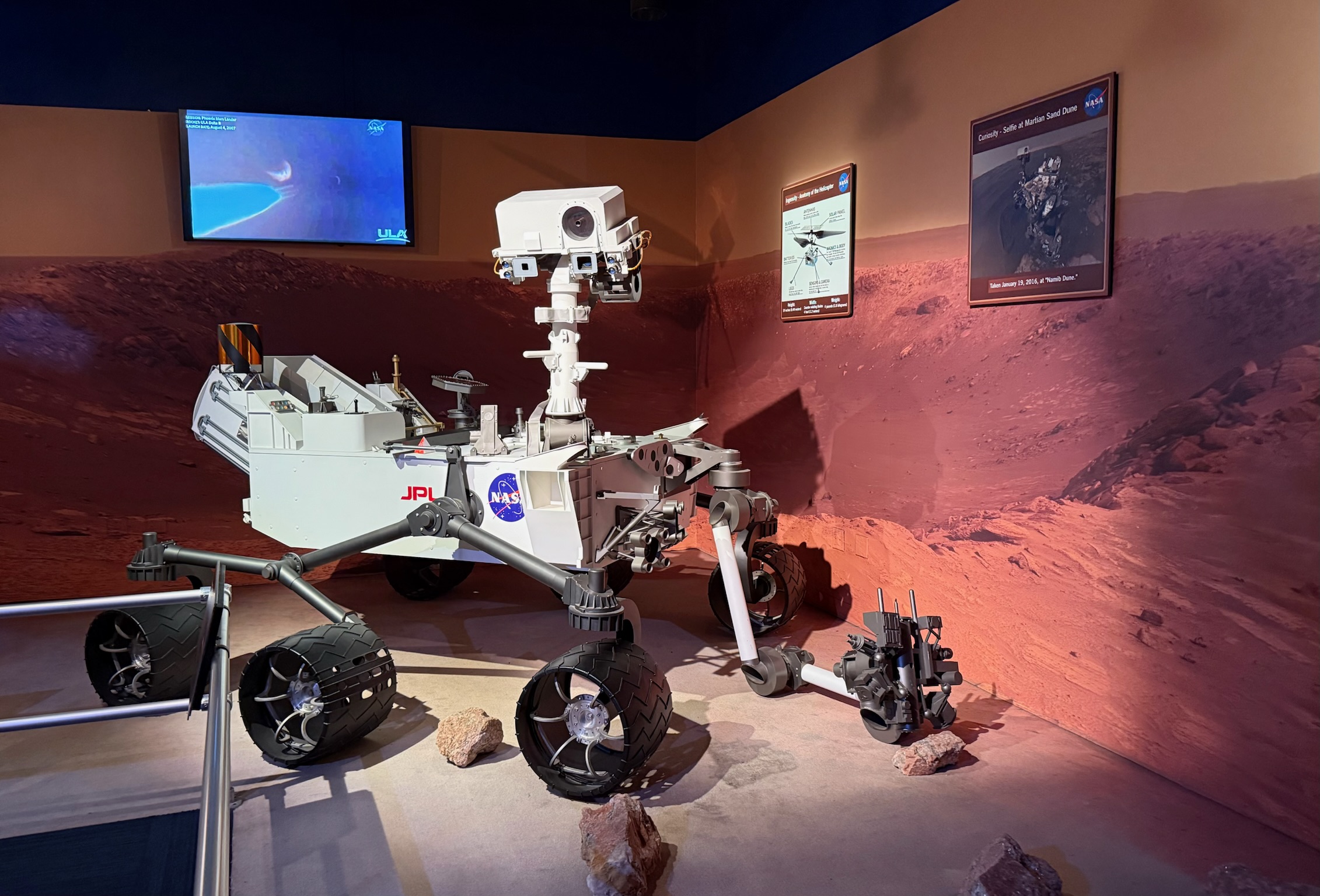
Opportunity launched July 7, 2003 and landed on a different part of the planet than Spirit. It also had a 3-D panoramic camera and was expected to last for 92 days. It operated for 15 years and 1 month and holds the distance off-Earth record with 28-miles.
Curiosity launched on November 26, 2011. It had 17 cameras.
Perseverance launched on July 30, 2020. It had 23 cameras with amazing abilities to zoom in on small targets at far distances with 3D images. It was accompanied by the Ingenuity rotocopter, which was also capturing images.
Below was the prototype of the latest iteration of rover that NASA was currently testing. It was really more like a space RV because it could house two astronauts for up to 14 days with sleeping and sanitary facilities. It was about the size of a pickup truck, had 12 wheels that could crab walk, was pressurized, could travel hundreds of miles, climb over rocks, drive at a 40-degree slope, required little to no maintenance and was expected to last for 10 years.
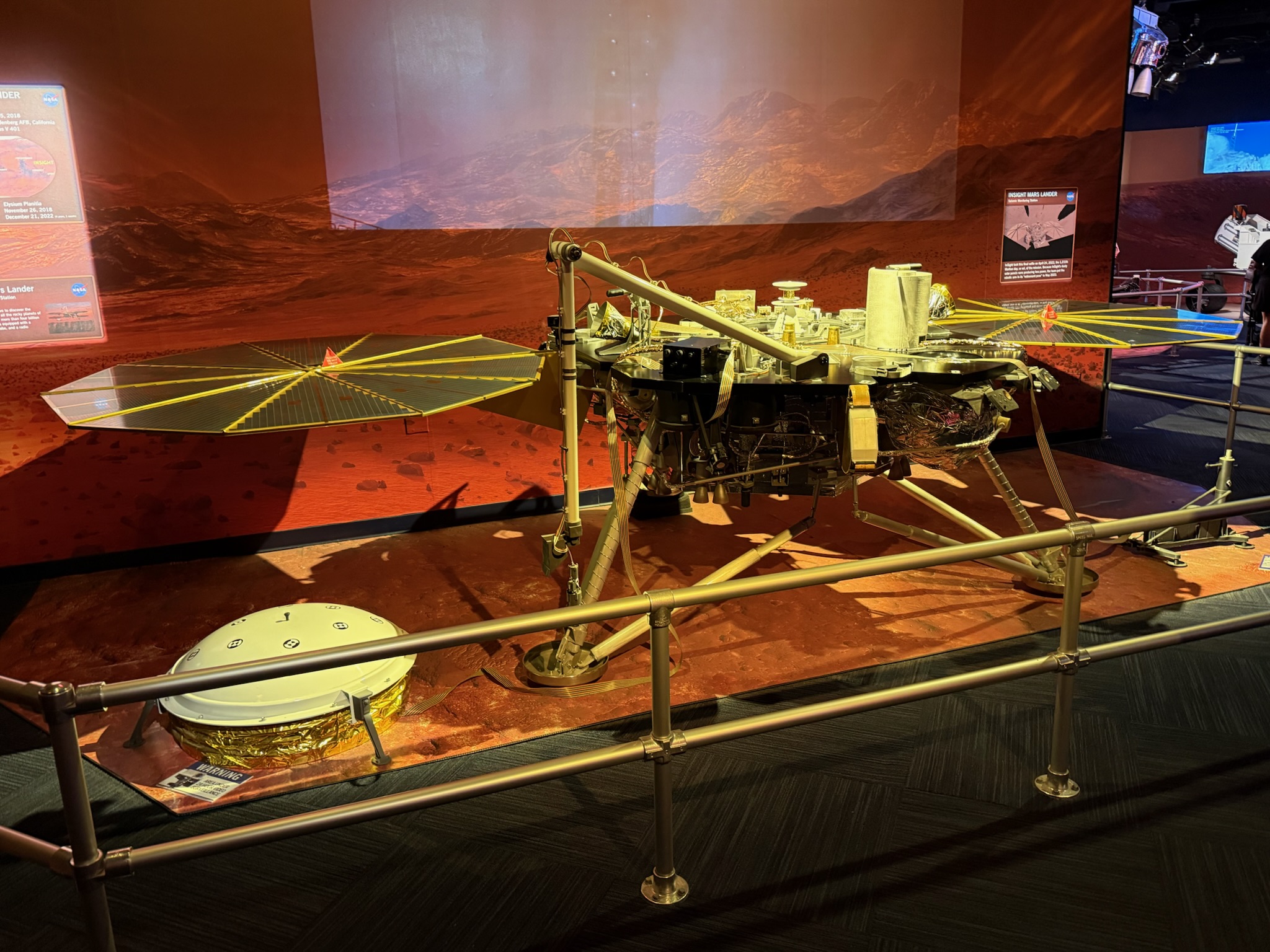
This was the Insight Mars Lander, which launched on May 5, 2018. It didn’t rove, it just sat still and monitored what the planet did. It was equipped with a seismometer, a heat probe and a radio science experiment. It lasted for 1,211 days before the solar panels were so dusty that they didn’t work any more.
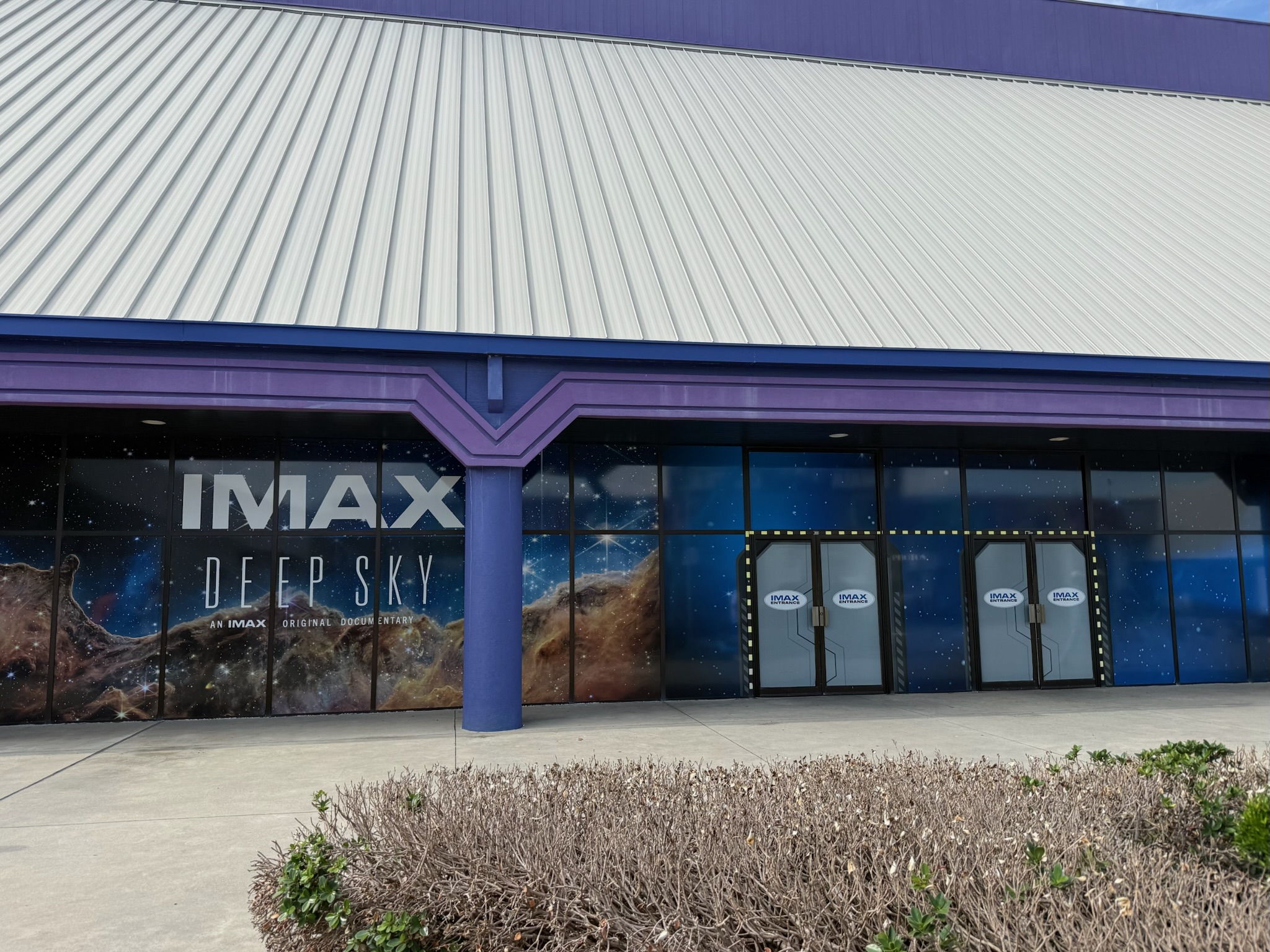
An IMAX movie on the relatively new James Webb telescope was beginning soon in the next building over, so we headed out of the Mars exhibit to get seats for the movie. The IMAX theater was actually next door to the Hyperdeck VR ride, in the same building.
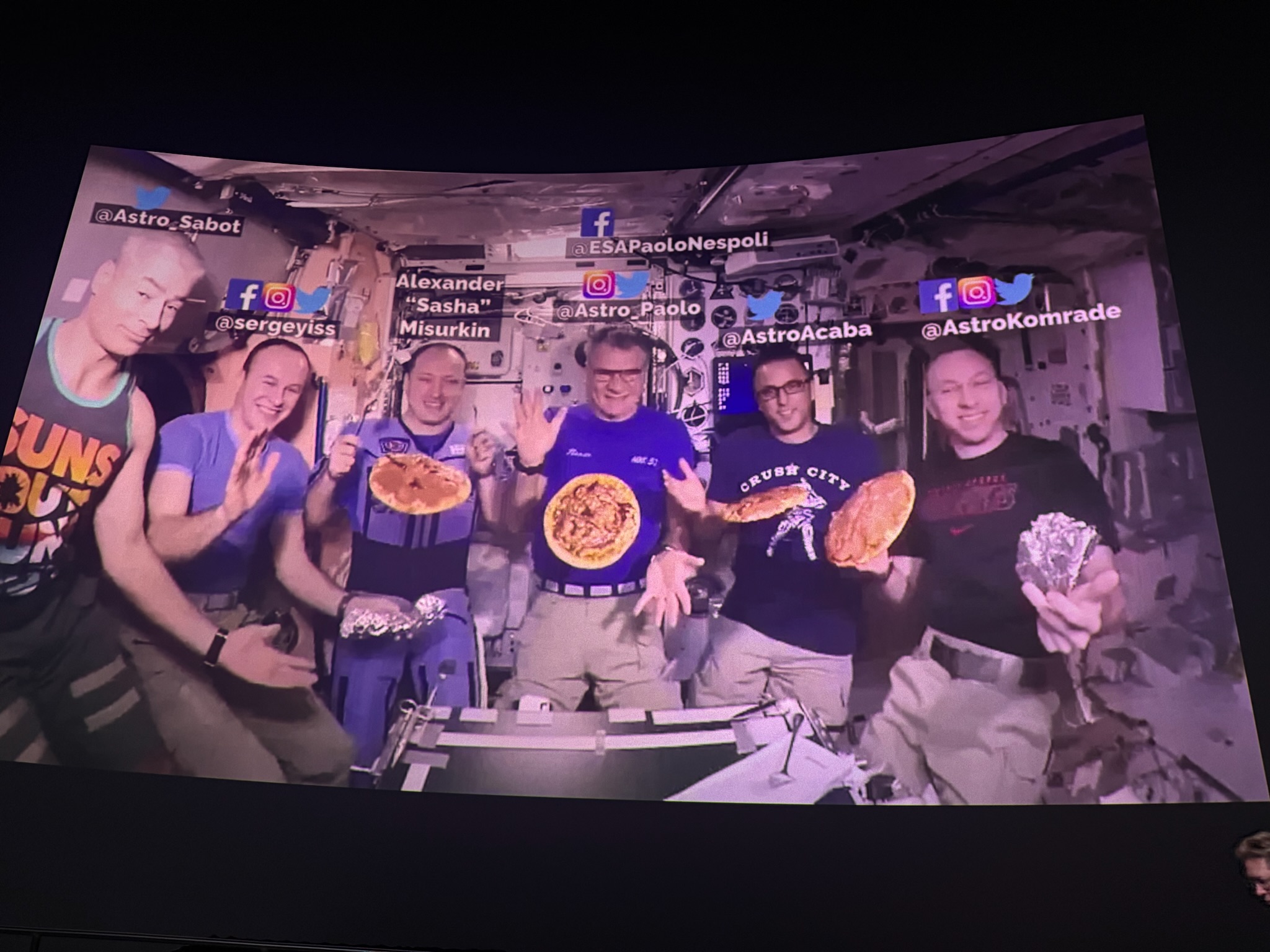
Since it was only a one-minute walk, we made it in plenty of time for the movie. Before it began, they showed clips from the ISS showing what life is like there: they had someone in their bedroom sleeping basically standing up, trying to make and eat pizza with the ingredients flying around and a demo on how to hold down the ingredients in order to make a PB & J sandwich. Bob Cenker had just told us about how hard it was to prepare food and eat, so it was fun to see the visuals.
The film was about the building and launching of the James Webb Space Telescope (JWST). JWST had a massive mirror compared to other space telescopes and the observatory specialized in studying infrared light, which gave scientists an opportunity to look into the early days of the universe. Those two capabilities combined represented a huge step forward from earlier space telescopes. NASA had never built anything like it before and in terms of engineering, it was incredibly hard.
For example, JWST’s mirror was too big to launch in one piece, so for the first time on a space telescope, it launched all folded up and then in space aligned the 18 different segments to form one perfectly smooth surface. Another example: infrared light doubled as heat, so keeping the telescope cool was a challenge. They wound up making a quadruple (four layer) sun shield that had to be unfurled in space, something that had never been attempted before. To keep it cool, they also situated 1 million miles (1.5 million kilometers) farther away from the sun than Earth, which meant it couldn’t be serviced, repaired and/or upgraded like telescopes in Earth’s orbit were.
It took 32-years to build from concept to launch — while much longer than anticipated, the delays were actually a blessing in disguise that allowed them to upgrade the telescope as the technology improved and they came up with better ideas. There were a lot of cost overruns, too, with the final price tag at $10 billion.
NASA’s fear of failure also contributed to JWST’s delays. There were many single points of failure to worry about, so engineers tested it every way they could to ensure it actually worked when launched. But when they did finally launched it, it worked! Throughout the film, they interviewed several people on the team that built and launched it. It was neat to see their passion and enthusiasm about how driven they were to complete this stellar project.
At the end of the film, they showed a few of the images from Hubble, then overlaid the same Webb images over them. The difference in clarity and detail between the Hubble and Webb images were stunning — the Webb was a smashing success in terms of quality images. They closed with some more beautiful images taken by JWST.
When the movie ended, the park had already closed. We were ushered to the main gate and exited. Here were some of our thoughts on the Kennedy Space Center:
We had a good time because it was a weekday while school was still in session and it was not hot. With so many of the interactive exhibits designed for only one person to use at a time, it would be hard to utilize many of the exhibits on a busy day. If it was crowded, waiting in line would be miserable, especially if it was hot and humid outside.
We’ve already mentioned there was more to see/do than could physically be done in one day. It would have been nice to have another day to finish looking at the exhibits in the Space Shuttle building and go on the Atlantis walking tour. Other things that we missed but would have liked to have done included: the Heroes and Legends building, a guided tour of the rocket garden, and the Mission Status Briefing, which was a 20-minute live presentation about recent and future missions. We also would have liked to go on the rest of the simulation rides, do the VR Hyperloop ride again, do the other VR ride, and see the other IMAX movie called Space: The New Frontier.
As we left the park, we discussed a dinner plan… to be continued…