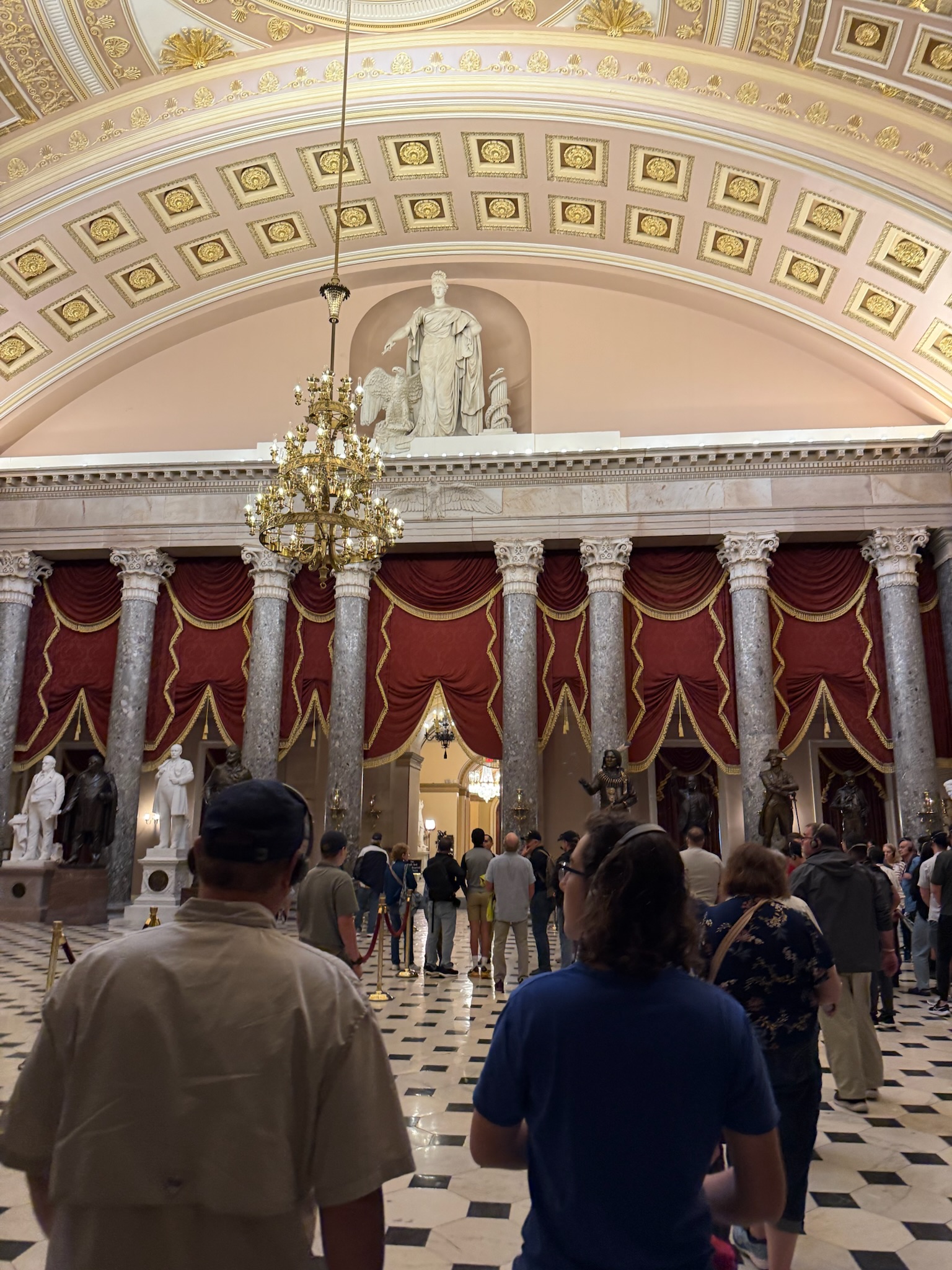
The hall led to a semi-circular shaped room lined with state statues. We’d thought there were a lot of statutes in the other rooms, but they were really crammed in close together in this room.
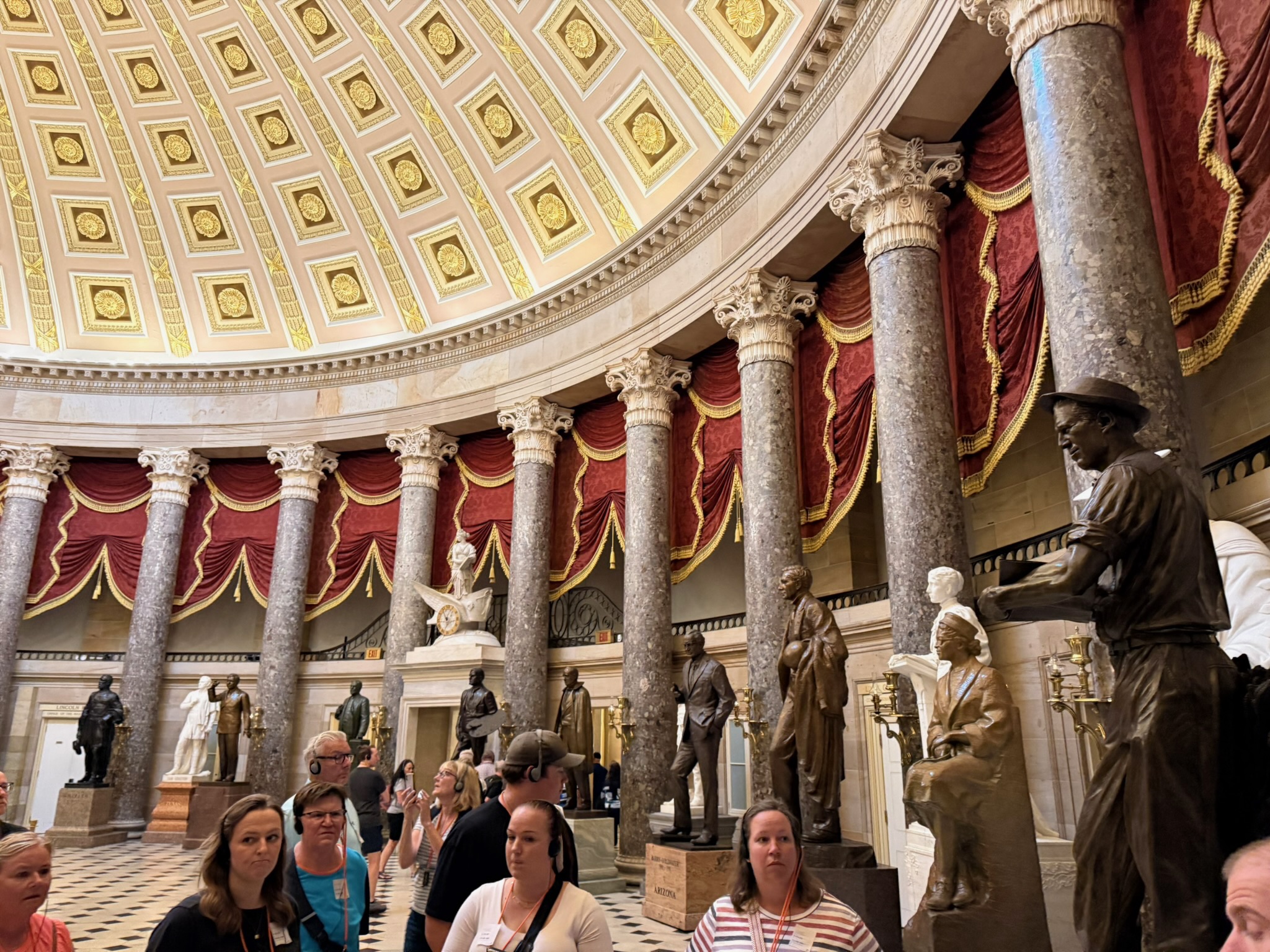
Our guide explained that this was the original House of Representatives, which was completed in 1807. From 1800 – 1807, they’d utilized a room on the second floor of the north wing until the south wing was completed. The House met in this room from 1807 – 1857. It used to be called the Old Hall of the House, but was later renamed National Statutory Hall because it was where the majority of the state statues were displayed.
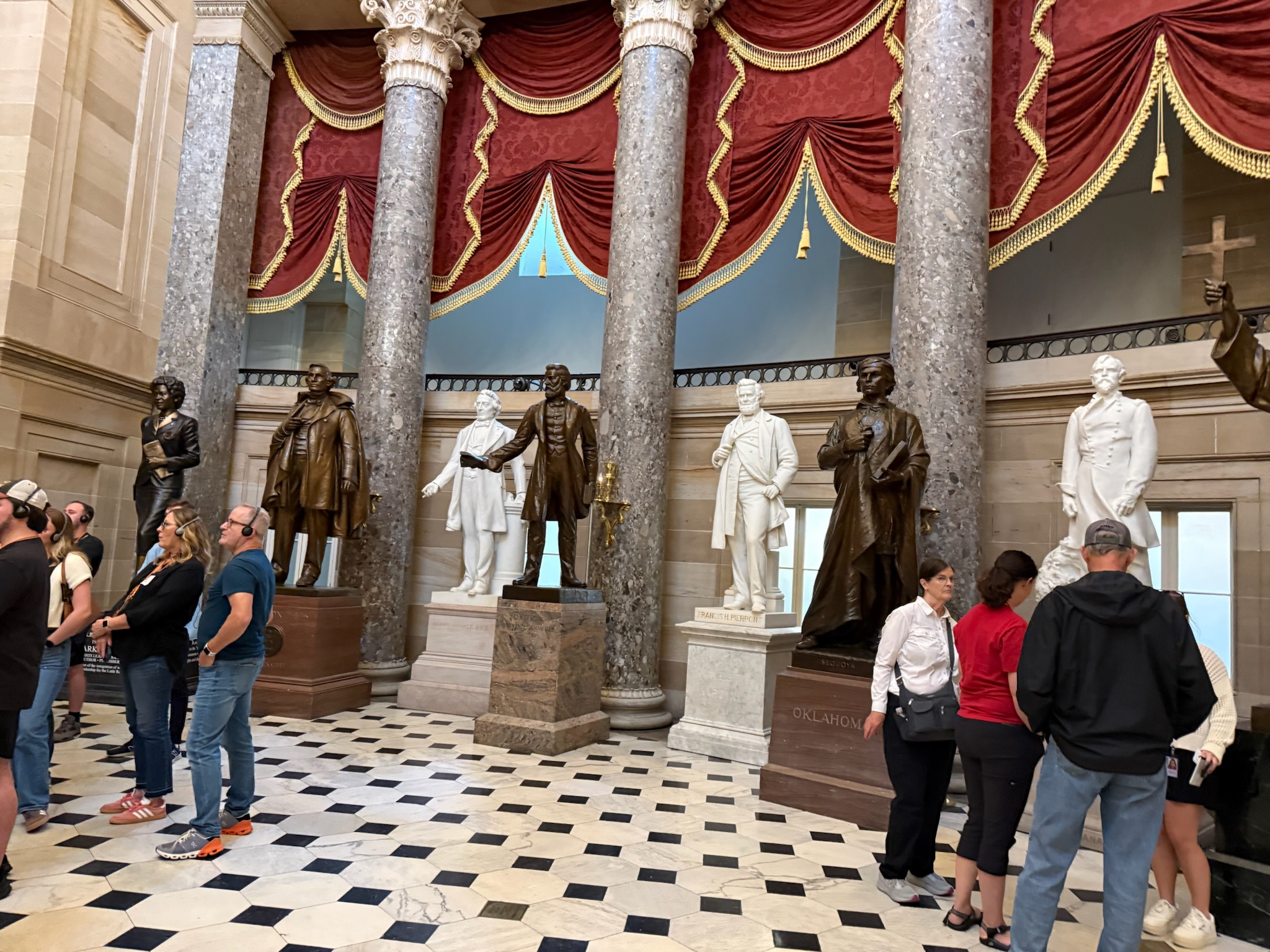
Our guide explained that each state was allowed to provide two statues of people who had been important to their state. Up until 2000, the statues never changed, so only people from the distant past were commemorated. But in 2000, Congress passed legislation allowing states to change their statues once every ten years so that more modern people could be honored.
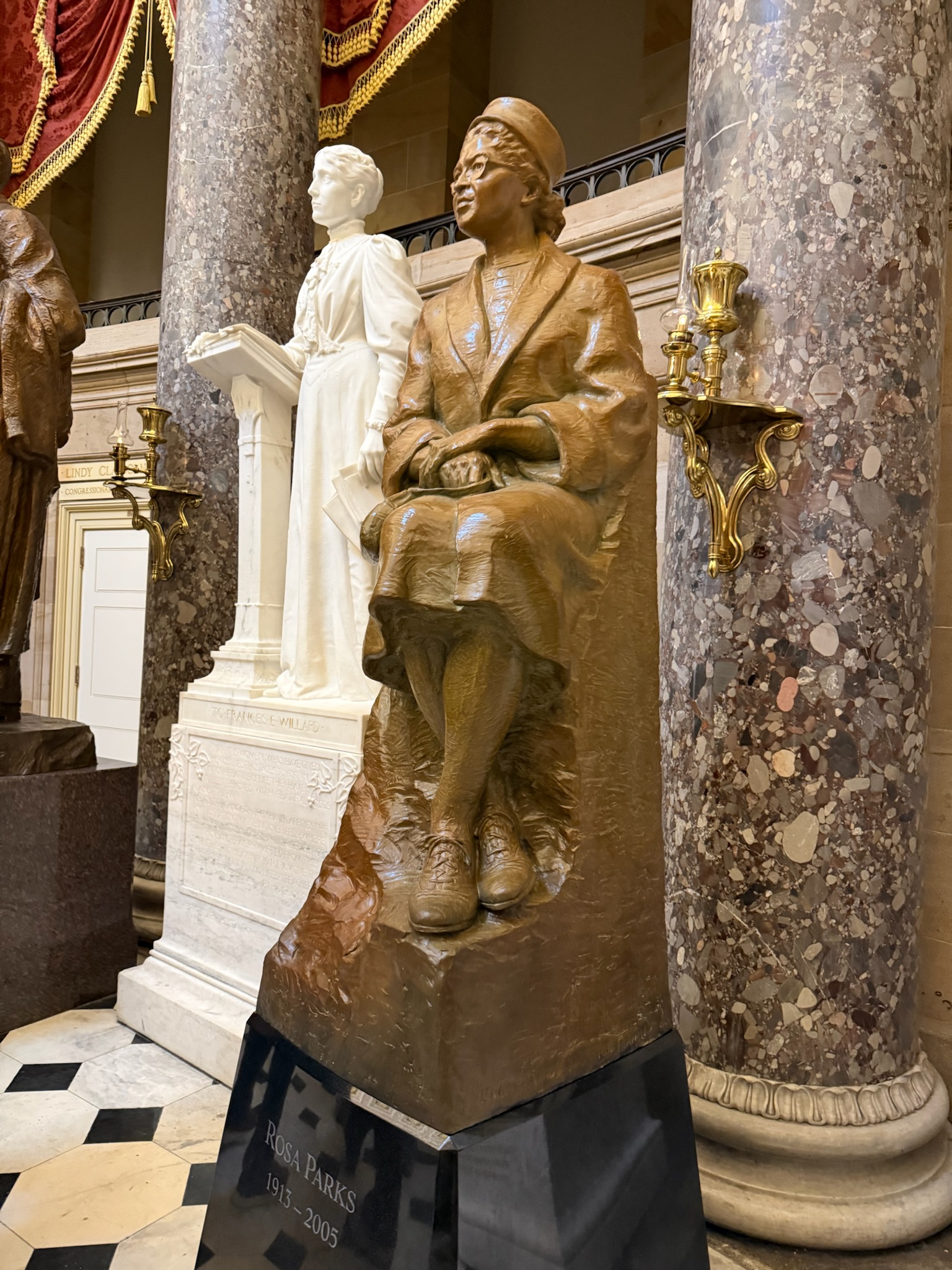
The Crypt has one statue from the original 13 colonies. The Rotunda has former presidents. The guy with the cross was one of California’s statues, Father Junipero Serra, a Spaniard who established Catholic missions all up and down the California coast in the late 1700s, including one in San Diego.
Back in the early days of Congress, no one had private offices. Each legislator had their own desk and they all worked together in this one room. Our guide said that the working conditions were unhygienic. The carpet was gross. In addition to mud and other normal stuff that makes carpets dirty, many of the legislators chewed tobacco and spit it into the carpet, so everyone’s shoes were covered in sticky tobacco juice. The legislators frequently broke out into fist fights. DC was hot and humid in the summer, and having so many people crammed so close together was unbearable. This was why Congress instituted summer breaks. Here was a shot of the spectacular ceiling.

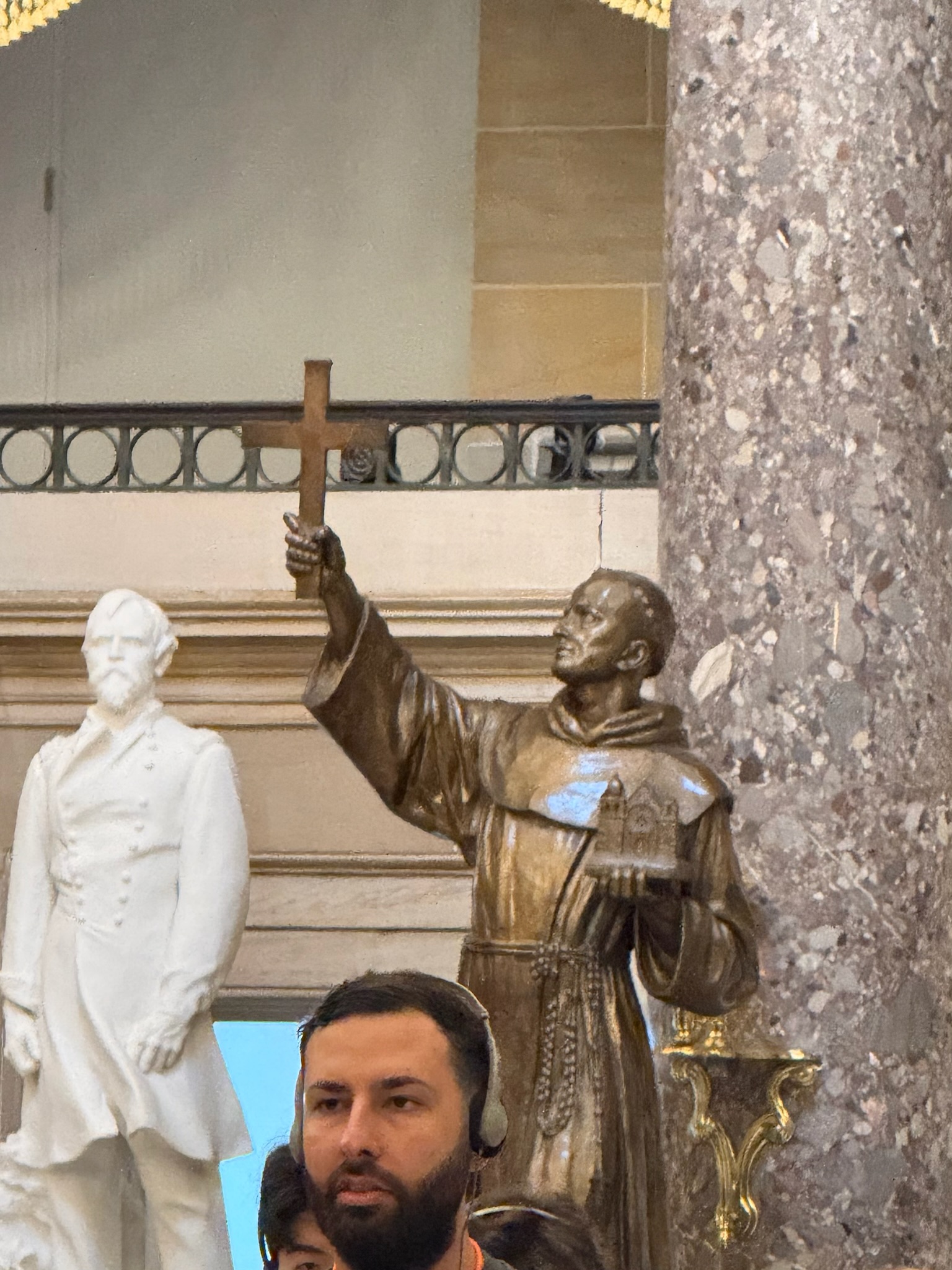
We were surprised to find that this was the last stop on the tour. If we wanted to see the current Senate and House of Representatives, we’d have to contact our congress person again for separate tickets. We were assured that if we popped into their offices across the street, they’d give us tickets right then. Our guide led us back to the rotunda and down to Emancipation Hall. On our way out of the rotunda, we noticed the other statue from California, which Eric and Christi immediately recognized as Ronald Reagan.
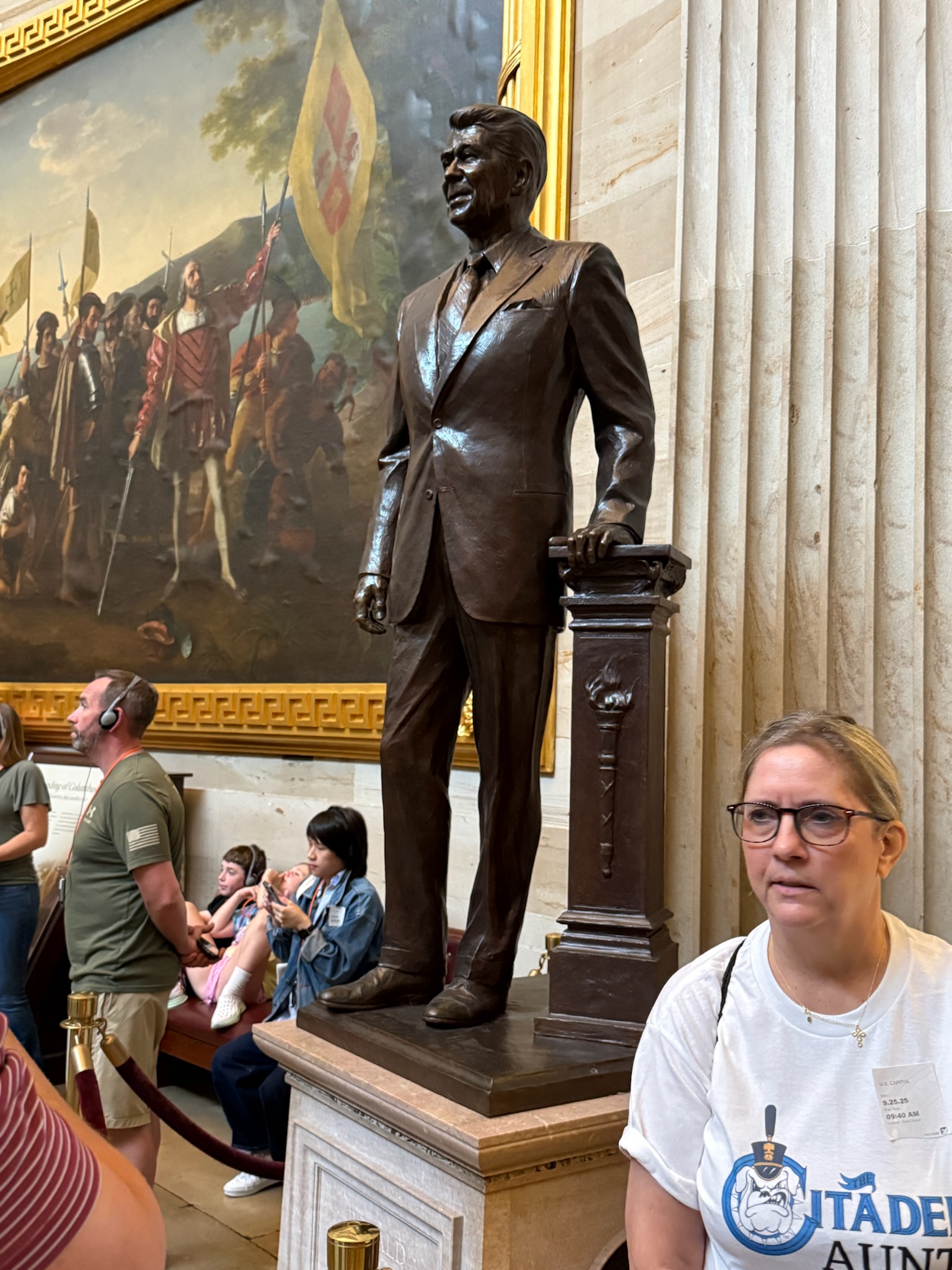
We decided it would be fun to get lunch at the Capitol Cafe, which was inside the Capitol right next to Emancipation Hall. This state statue was in the short hallway between the Hall and Cafe.
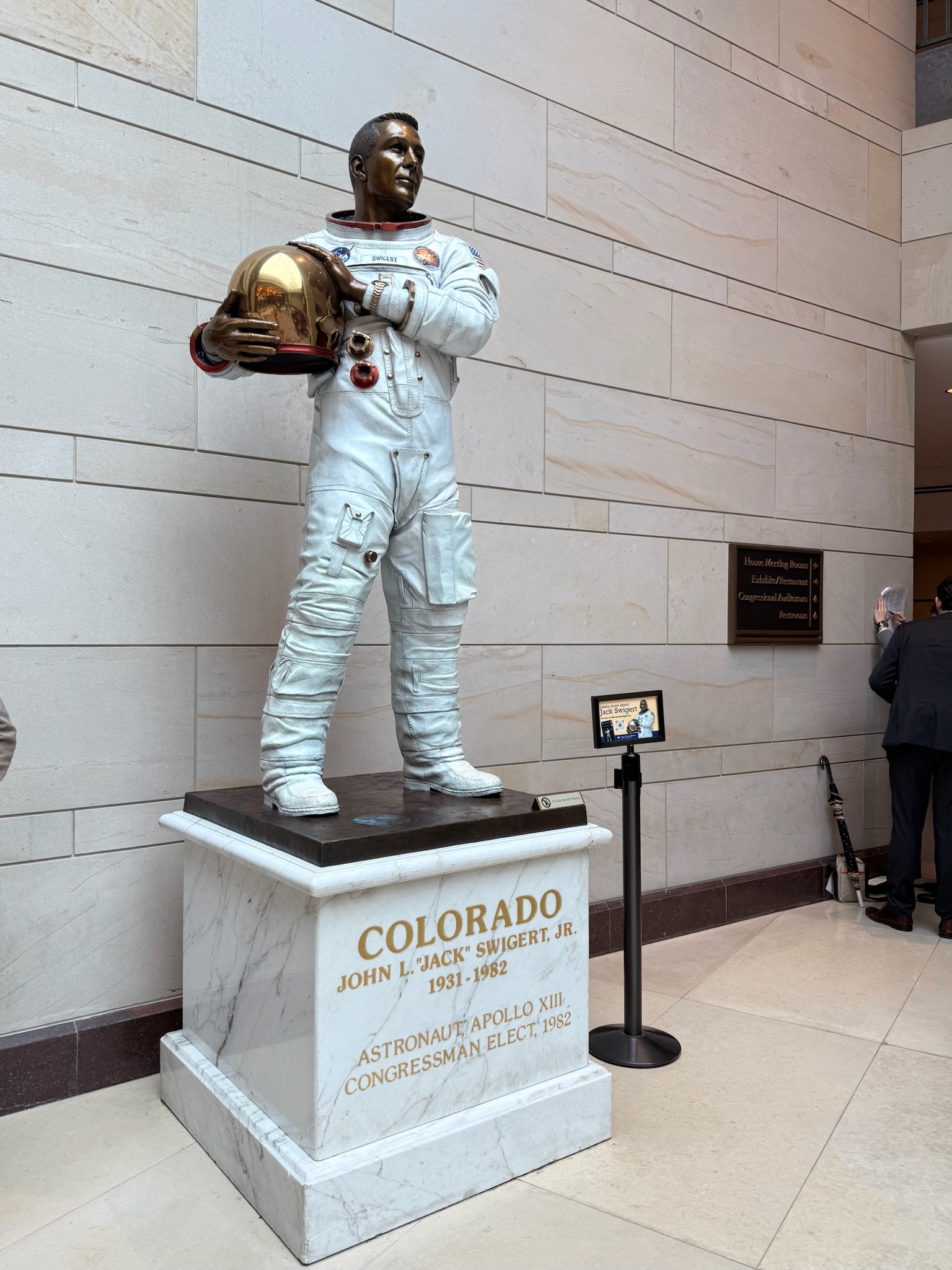
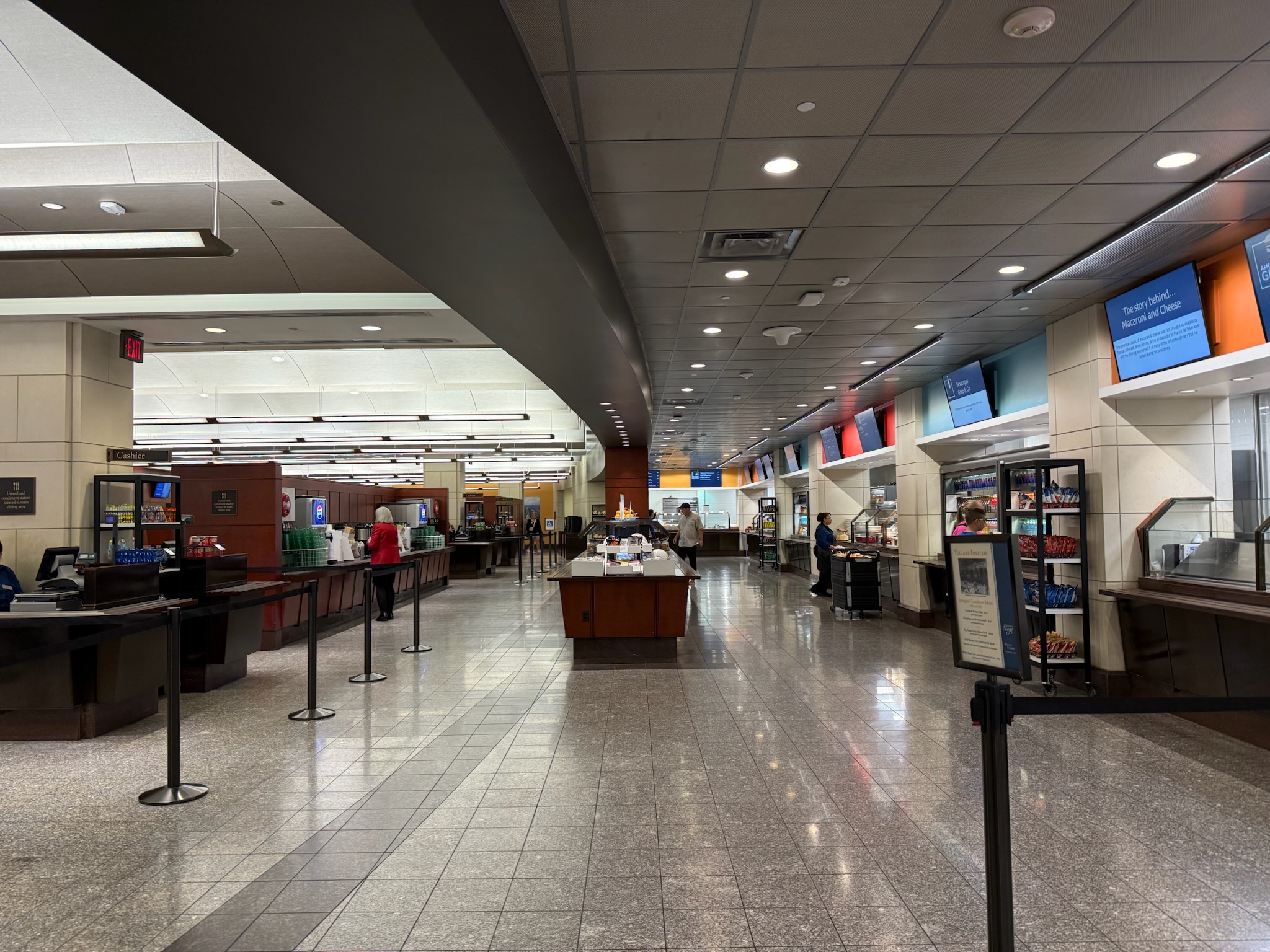
The cafe was actually a giant cafeteria, with a mind-boggling number of food stations and variety of foods to choose from.
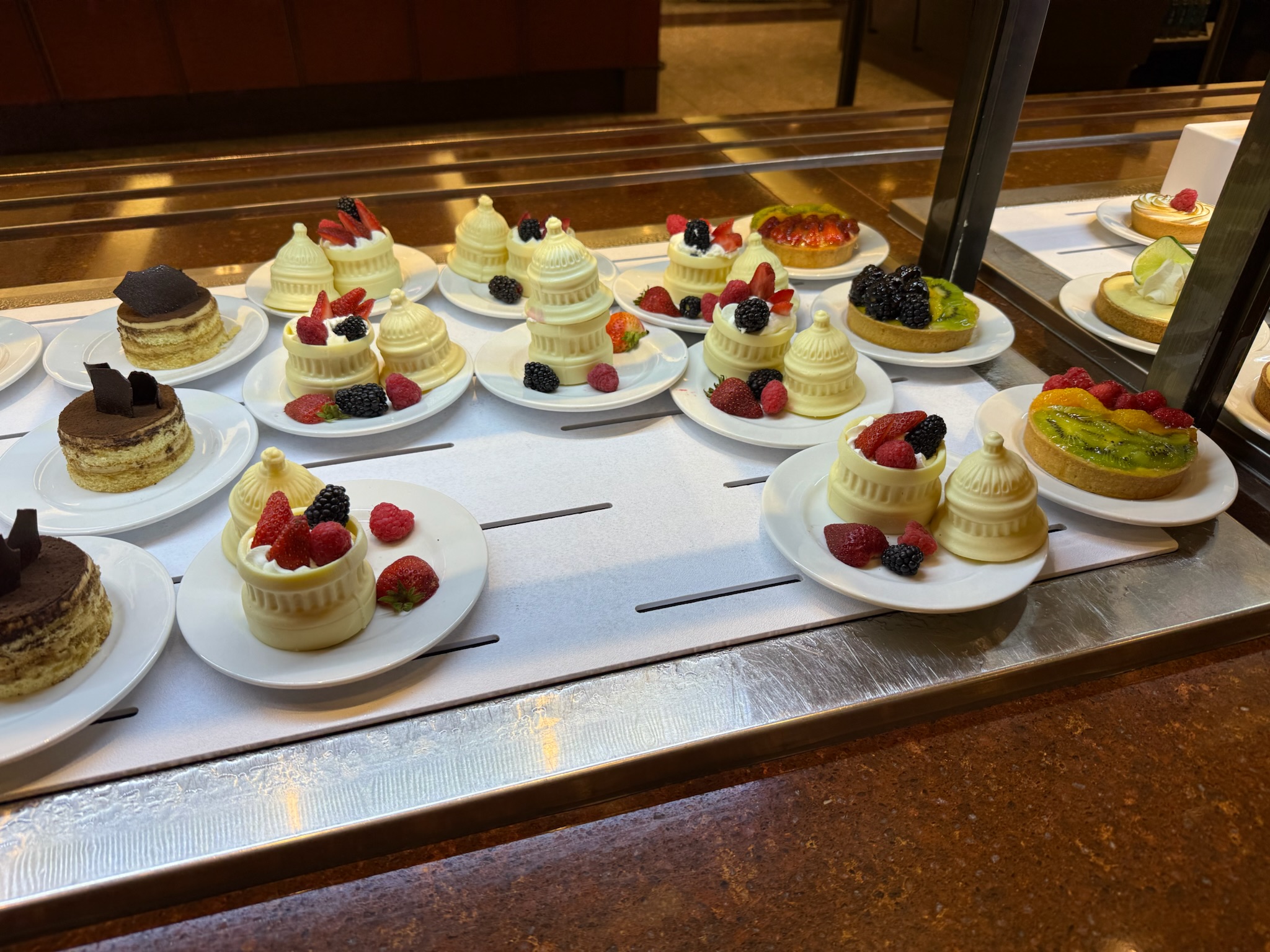
We opted for gourmet sandwiches. Christi also got a latte, Keith got a small red velvet cake, and Eric got one of the white chocolate congress pastries that was filled with whipped cream. The food was pricey, but it was also surprisingly high quality for cafeteria food and the portions were good-sized, so we felt like it was good value for the money.
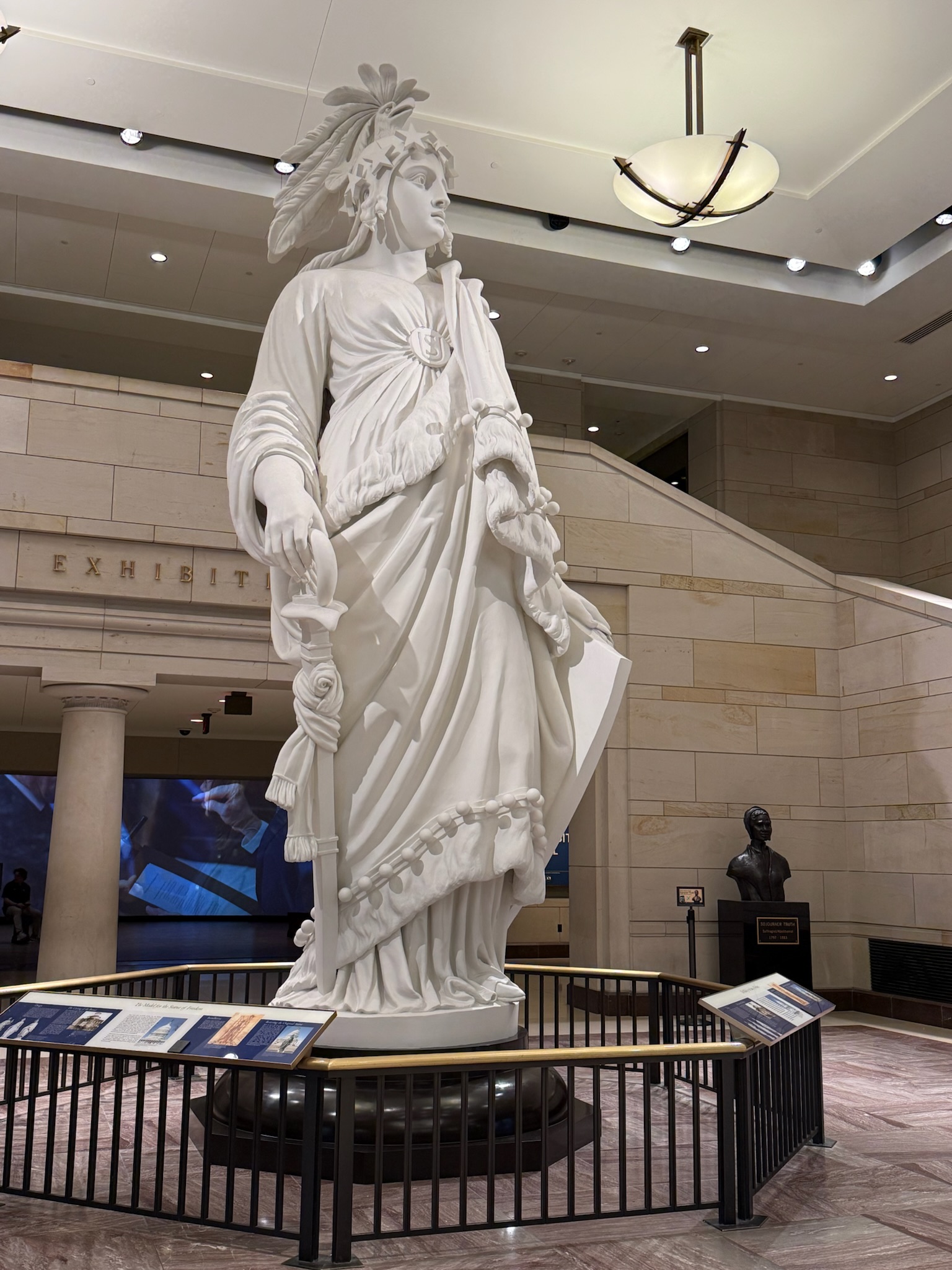
After we finished eating, we went over to the Exhibition Hall, which was on this floor at the opposite side of Emancipation Hall. Outside the entrance to Exhibition Hall was the full size 19.5 foot plaster model for the bronze statue that was on top of the Capitol dome. The mold was completed in 1860. It took two-years to cast the statue, which took 15,000-pounds of copper, 1,500-pounds of tin and 200-pounds of zinc. The statue was lifted to the top of the dome in sections. She was finally completely in place in December 1863, with her head facing east 288 feet above the ground.
Inside the Exhibition Hall were several displays about the importance of voting and contacting elected representatives to tell them about the issues that are important to us as constituents. It said that congressmen also can help with understanding federal benefits and services, as well as helping to sort out personal issues with federal government agencies. There were several signs encouraging people to get involved in politics, with suggestions including becoming an advocate on an issue that was important to us or running for office ourselves.