continued… The next exhibit was about the role of the Merchant Marines, which were private maritime ships. Private Maritime ships have been a critical component of this county since its inception, so we found it odd that the exhibit started with a brief summary of Word Wars I and II, then skipped ahead to the modern day.
It sounds like during the World Wars, maritime ships and seamen were conscripted to help the war efforts by delivering troops, supplies and equipment to deployed military ships and overseas bases. It was a job even more dangerous than the active duty Navy. Thousands of merchant marine ships were sunk; at least 10,000 merchant marines died in the line of duty. But since they weren’t actual military, they didn’t receive government benefits or pensions for their service. In 1988, the US government finally recognized the service of the Merchant Marines and granted them benefits equivalent to other servicemen. But by that time, only half of the people who had served in the Merchant Marines during WWII were still alive.
Right after entering World War I, the US military hired The American International Shipbuilding Corporation to built a fleet of merchant marine ships to service the Navy at a facility in Hog Island, Pennsylvania. At its peak, it employed 30,000 workers. In all, they built 122 ships in four years. None saw service in World War I. The huge cost of creating Hog Island for ships that were never used was controversial and prompted a Congressional investigation.
In anticipation of entering World War II, in 1936, the US began building two more fleets of merchant marine ships: the Liberty and the Victory. They’d learned in WWI that standardized was more efficient, hence only two types of identical ships produced. The US expanded existing shipyards and opened more, with a total of 18 shipyards in various coastal cities all over the county. The US built 3,300 ships over the course of the war; by 1943, three ships a day were being launched. Sadly, the goal was to build ships faster than the Germans could sink them. Also, when World War II started, the fleet of ships built at Hog Island were put into service.
For the modern Maritime Industry, the signs talked about some of the different specializations, with a model of each type of specialty ship on display: Tankers for Liquid Natural Gas (LNG), oil tankers, cruise ships, fishing trawlers, container ships, and car carriers.
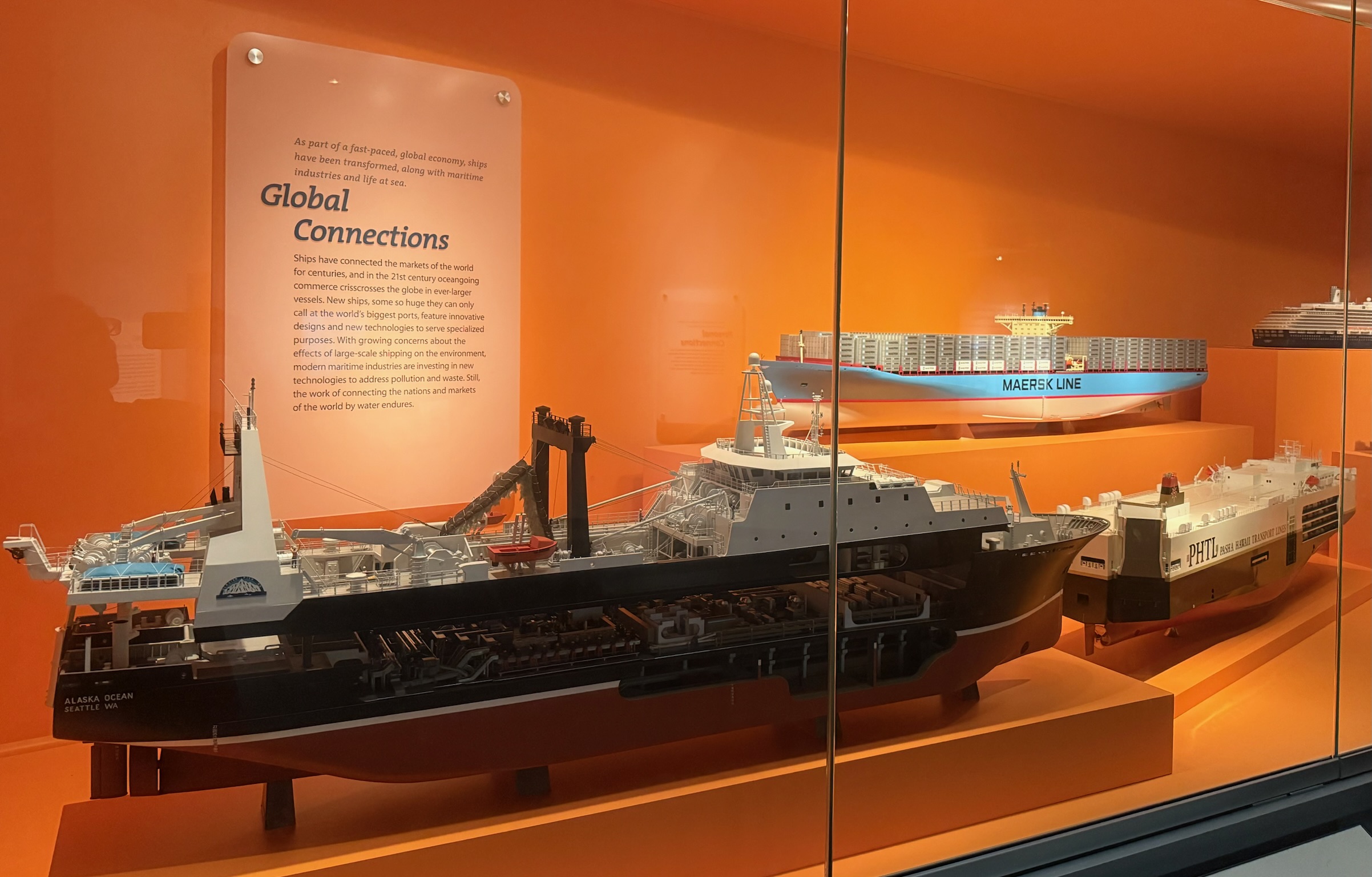
As you can see from the photo above, modern day trawlers are not like Kosmos. These ships were literally fish processing factories. They used enormous nets to catch 300-metric tons of fish per day, then used machines to butcher the fish and process it into filets, pieces that would become fish sticks, pieces that would be turned into imitation crab, etc. All the processing was done right on the deck, then they’d freeze the finished product. With the depletion of the Atlantic cod, Chesapeake oyster and Columbia River salmon industries, nowadays, the biggest domestic commercial fishing was done in Alaska for pollock and hake.
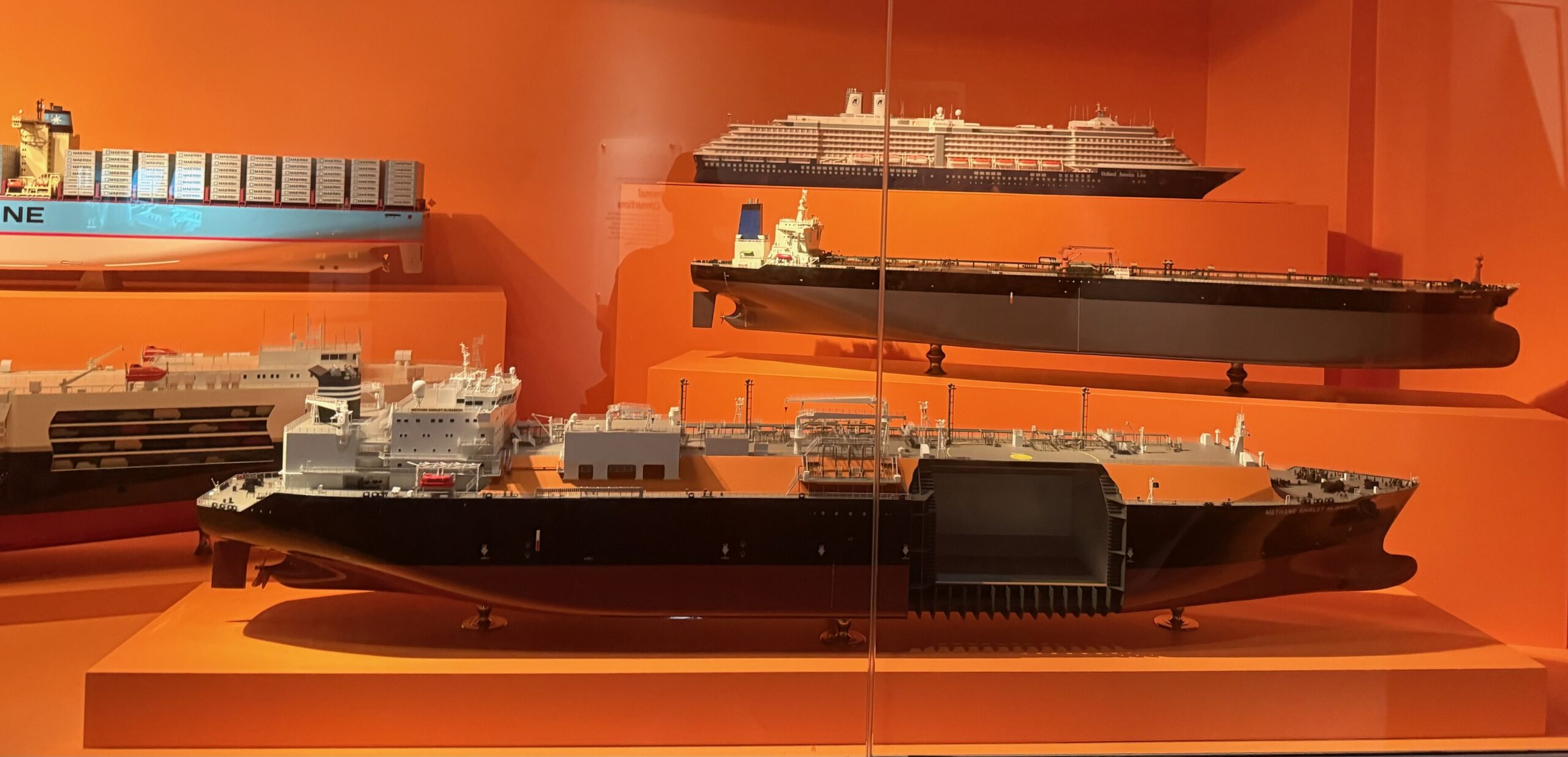
We found the most interesting to be the LNG ship. Since natural gas was explosive, these ships were fortresses. The gas was shipped at -260F, frozen and condensed into a liquid. The one above had a double-hull with six-feet (2-meters) of sea water between the hull walls. The four tanks had layers of stainless steel and other materials alternated with thick foam insulation. Inside, they are lined with stainless steel corrugated in two-dimensions to keep the frozen gas from sloshing around. As of whenever this sign was made, LNG ships have never had a serious incident and have the best safety record of any category of commercial shipping.
While the factory trawlers still needed dozens of crew to help with the operating the factory machinery, most of the rest of the giant ships had small crews, thanks to automation. Emma Maersk (model pictured above) was 1,302 feet long, 183 feet wide, and had a crew of only 13.
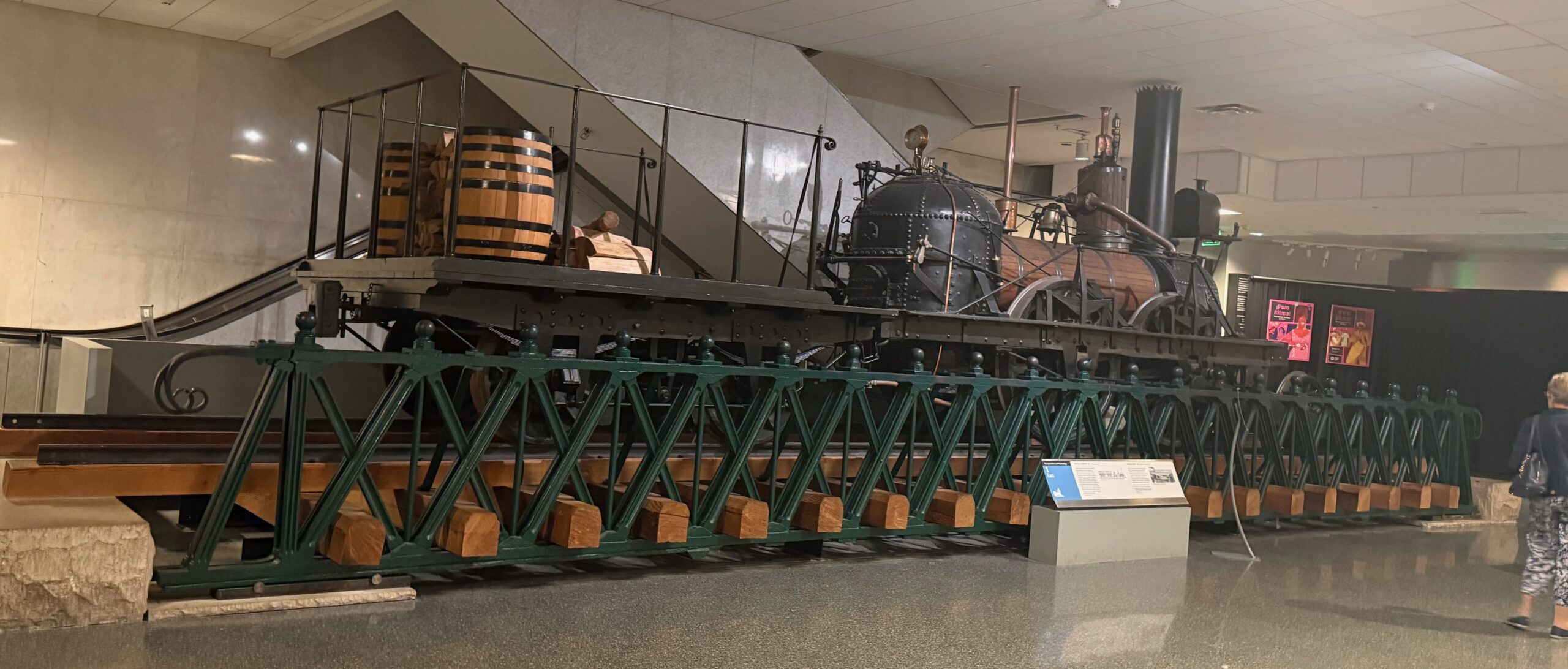
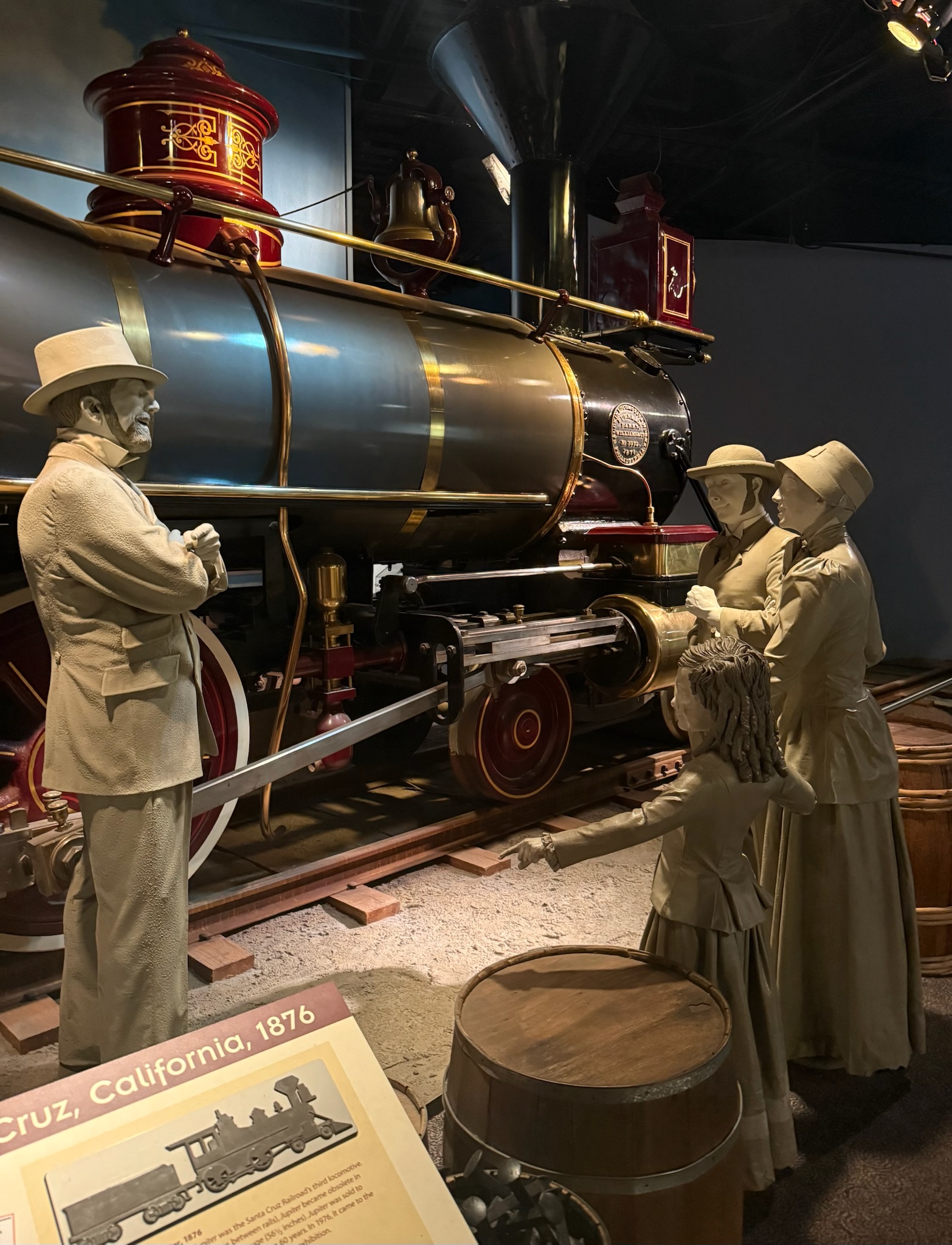
After we finished “On the Water,” we went to the next room over, called “America on the Move.” On display in the hallway between the rooms was a John Bull locomotive from 1871 on a section from the first iron railroad bridge in the US, built in 1845. The John Bull was an early steam locomotive imported from England for use on the first rail line between New York and Philadelphia. Iron was an unusual choice for a bridge at the time, but the railroad company wanted something fireproof that was stronger and longer lasting than wood. They determined that erecting a bridge of iron would be faster and easier than stone. This bridge ushered in a new era of engineering.
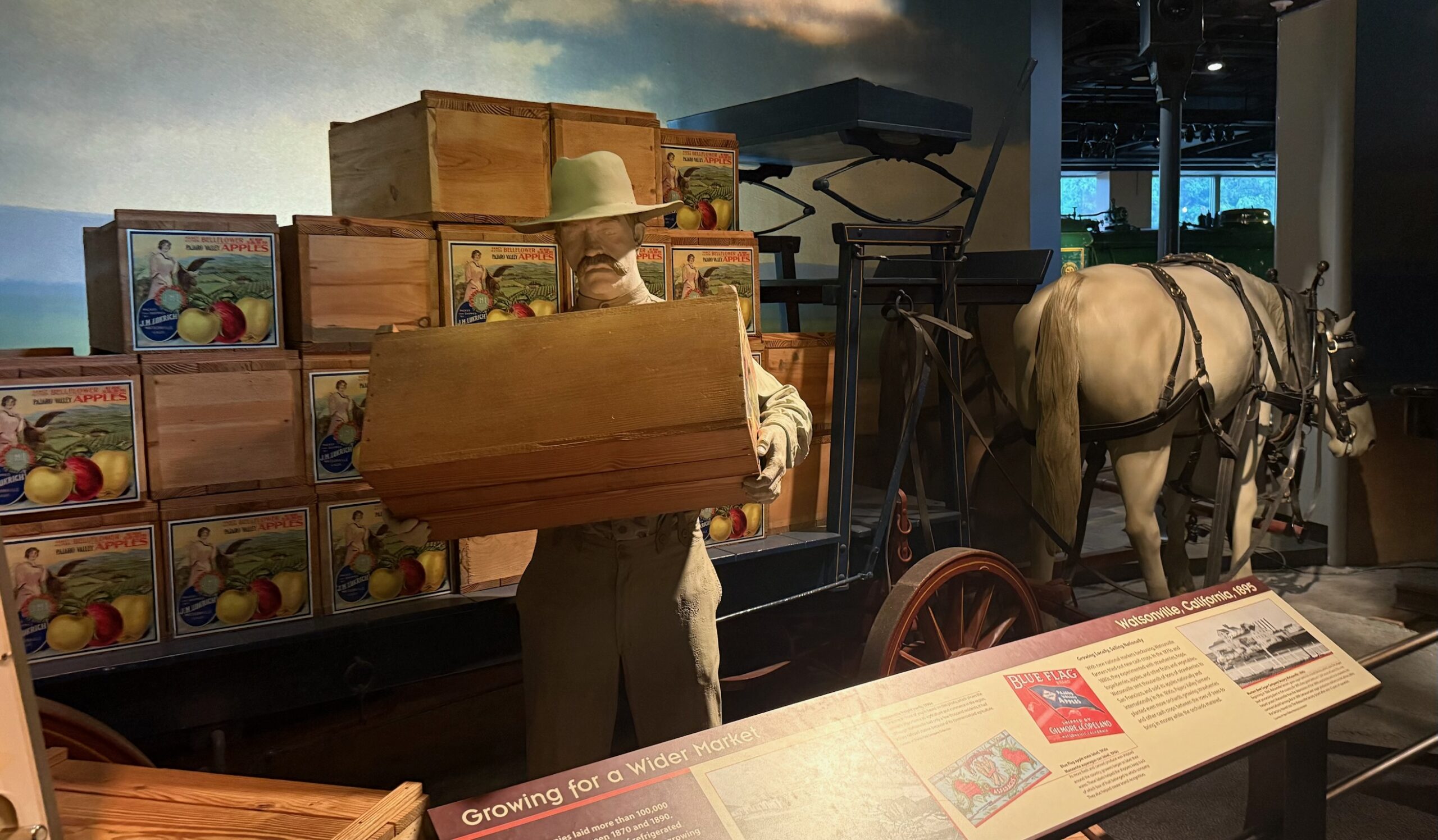
The first exhibit that we saw in the room was on Watsonville, California (in Santa Cruz county, about halfway between the cities of Santa Cruz and Monterey). More accurately, it was about how the coast-to-coast train system changed the national economy, but Watsonville was the story cited to help bring history to life.
Trains began running refrigerator cars in the 1860s, using blocks of ice and air circulation to preserve perishable cargo. This made it possible to transport foods, such as fresh meats and produce, to cities along the railroad lines. This made feeding urban populations much more viable.
In 1869, the transcontinental railroad system linked the east and west coasts. Nearly every town in the country could receive food and goods from any other part of the country within a week or two; factories and farms could ship products anywhere! This was when marketing/advertising became nationwide instead of only regional.
This ability to transport food nationwide changed the nature of farming. Up until then, farmers grew only for the local consumers. But with the ability to reach a broader market, the crops the farms grew changed to meet national demand. Many farms switched from multiple crops to single crops; for example to wheat, as there was usually a national demand for flour.
Watsonville was one such farming community. The Southern Pacific railroad connected to Watsonville in 1871. One they did, Watsonville experimented with strawberries, hops, loganberries, apples and other fruits and vegetables to see what had the most demand. Strawberries and apples were successful. In 1888, a sugar factory opened in Watsonville, and sugar beets for the factory became one of the primary crops. Farms relied on immigrants to plant, cultivate, pick and pack the crops. At first they hired Chinese, but with the Chinese Exclusion Act of 1882, they switched to Japanese. Then in the 1920s, Japanese immigration was restricted, so they switched to Filipino and Mexican laborers.
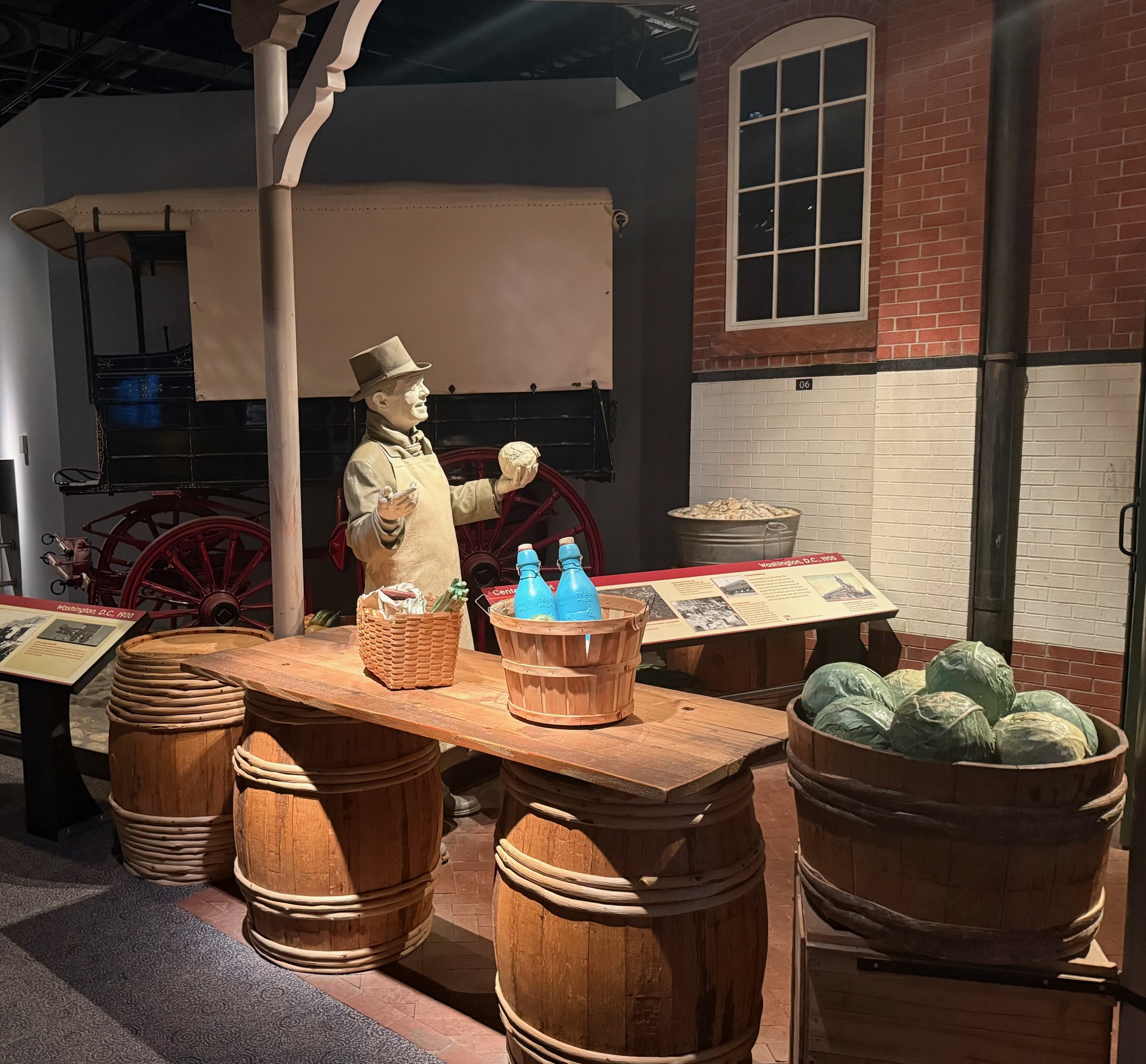
From here, the exhibit switched suddenly from Watsonville to Washington, DC. We suppose the idea was to follow where the produce grown in Watsonville in 1900 went. In this case, the farm sent it to a wholesaler in DC, who sold it to retailers. Some retailers were small, independent neighborhood markets. Other retailers took the produce to the Center Market, where vendors sold produce, meat, seafood, etc out of stalls to city residents. Thanks to the train system, shoppers in DC could buy all kinds of exotic foods that had previously been unavailable, such as oranges and bananas (the bananas arrived from Central America by boat and were transported by train to DC).
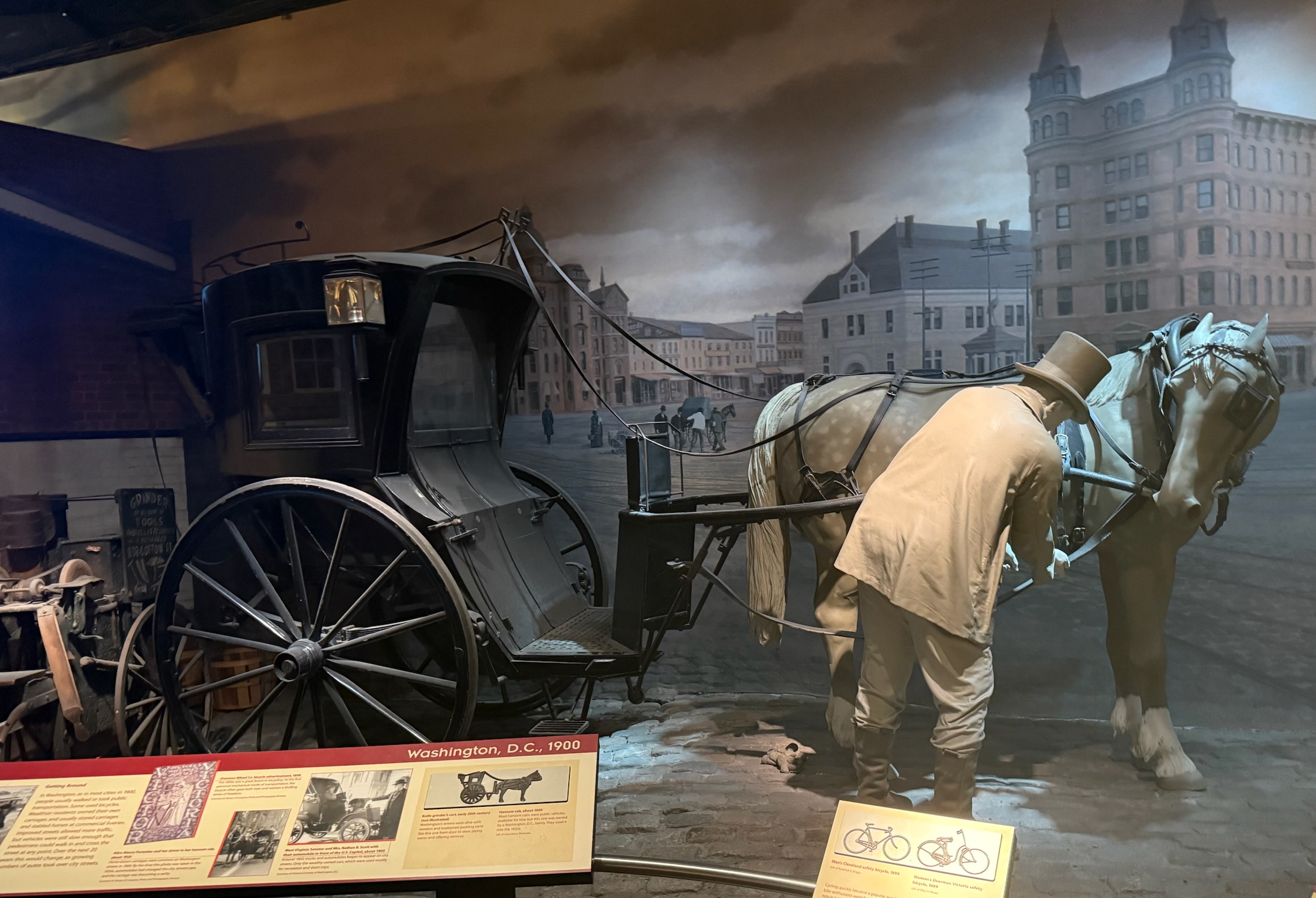
The exhibit on DC changed from food to transportation in DC. In 1900, most of the rural farmers who took their products to DC to sell used horse-drawn wagons. Tradesmen and vendors also used horse-drawn wagons to transport tools/goods. Most city residents lived close to where they worked/shopped, so they walked. Some people had bicycles, which, as we’d learned in another exhibit in this museum had become popular in the 1890s. Wealthier residents had their own horse-drawn carriages, which were kept at commercial liveries. There were horse-drawn carriages available for hire. And in 1900, the first few automobiles appeared.
There was also public transit available in DC via the electric streetcar (AKA trolley), which various cities had started implementing in the 1880s. In DC, the trolley lines were privately owned and run. Being able to build homes farther than walking distance from their jobs allowed for cities to expand. Suburbia had already started in the 1850s, with new housing communities built along train lines, but with the trolley system, suburbia expanded in many directions. New home builders would often build streetcar lines to their neighborhoods, knowing that their homes wouldn’t be desirable if people were unable to get to work/shopping/socialization in the city. The exodus of the middle-class from DC changed neighborhood life and the rhythms of the city.
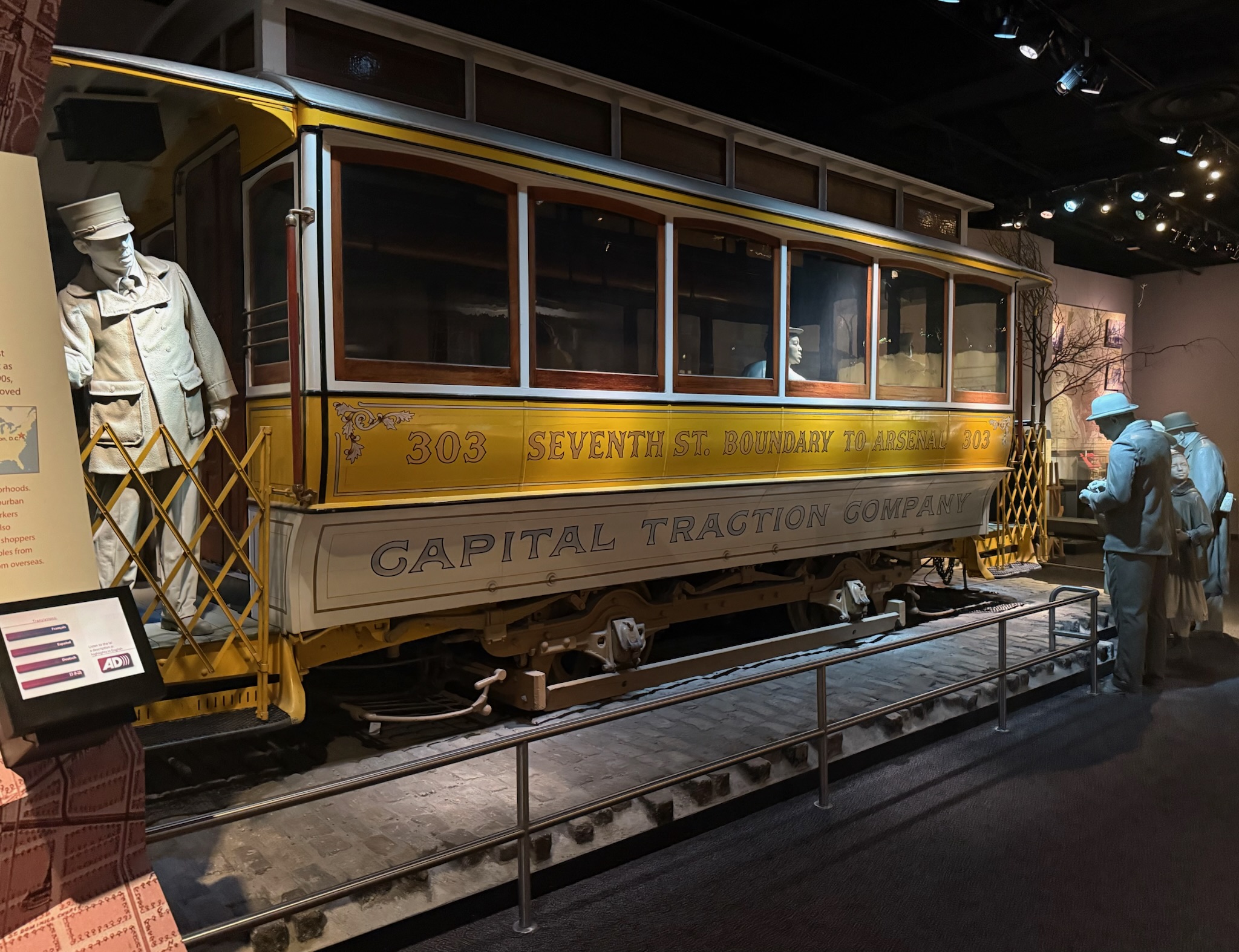
In other cities, particularly southern cities, Jim Crow laws segregated public transportation systems. DC never passed any segregation laws, but people seemed to self-segregate in streetcars.
By 1910, automobiles had become more common. Cities began implementing buses, which passengers seemed to prefer over the trolleys as they were more comfortable to ride in and had more flexible routes/stops. Buses were also less expensive to operate than trolleys. As more people bought cars of their own and more bus routes were implemented, trolleys were phased out. In DC, trolley service completely ended in 1962.
This led to an exhibit on the growth of the automobile. All three of us were tired and felt like we couldn’t absorb any more information. The unbelievable thing was that we’d only seen a little more than half of the first floor — and this building has three floors of exhibit space! This museum was huge!
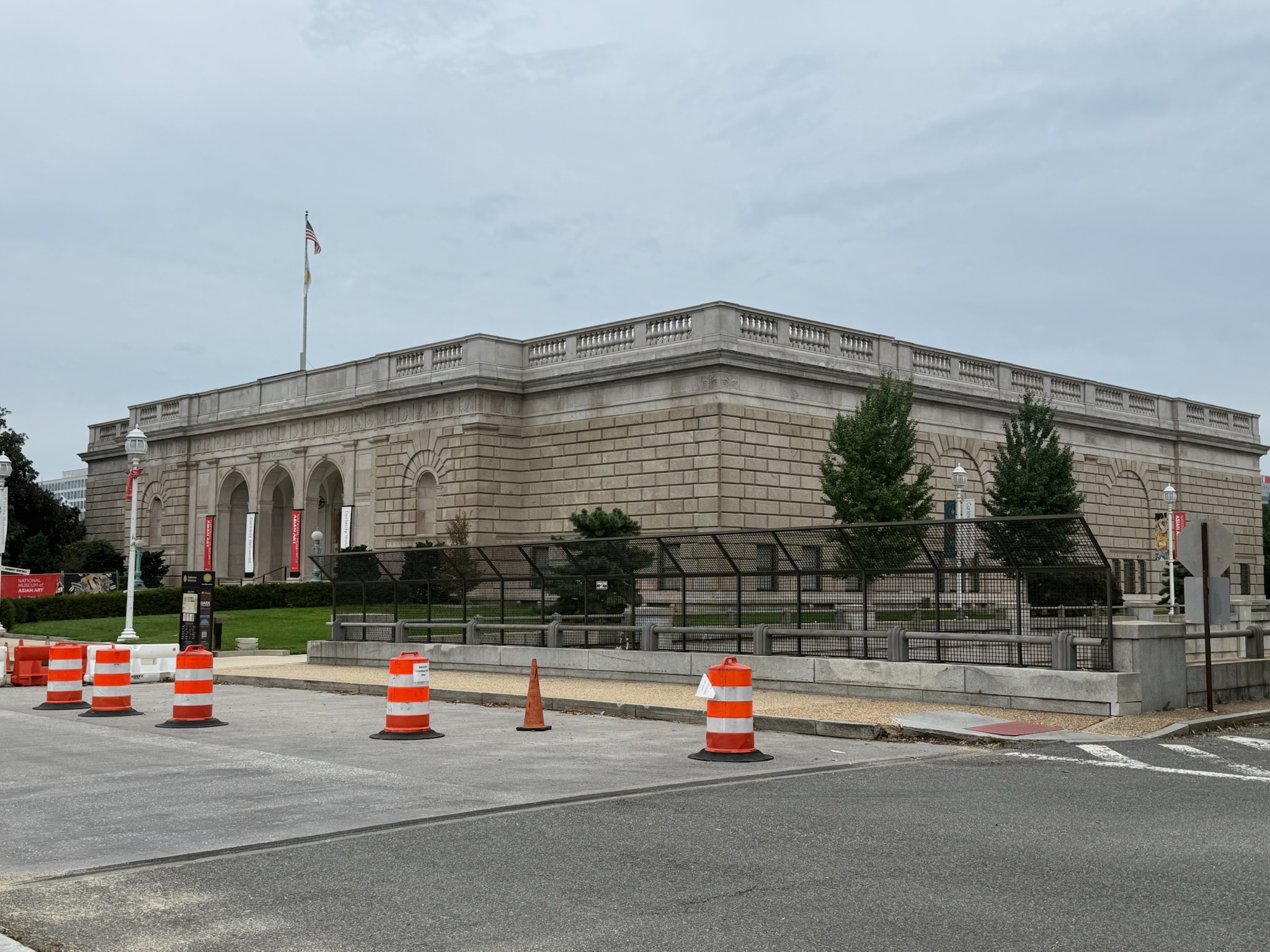
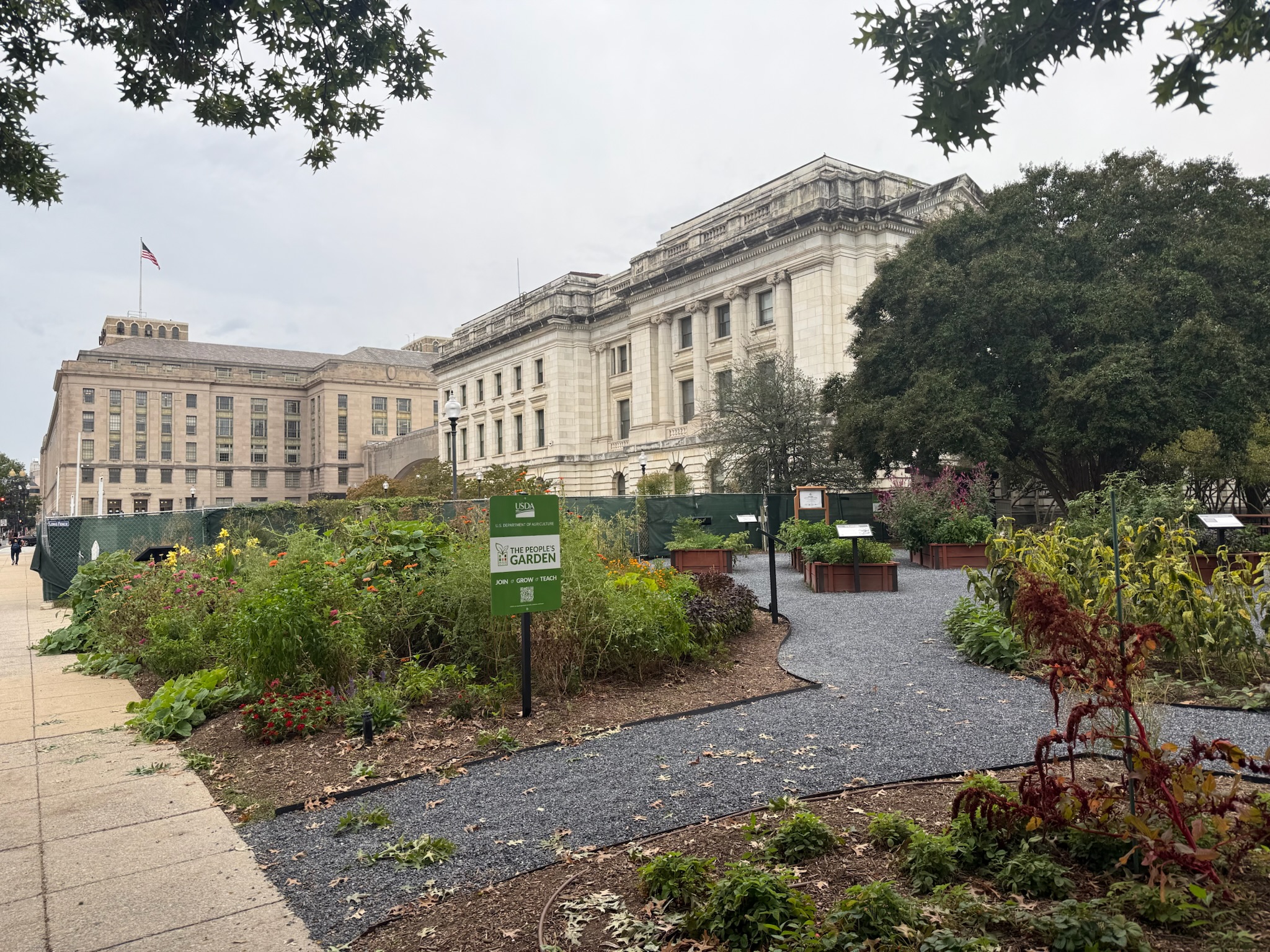
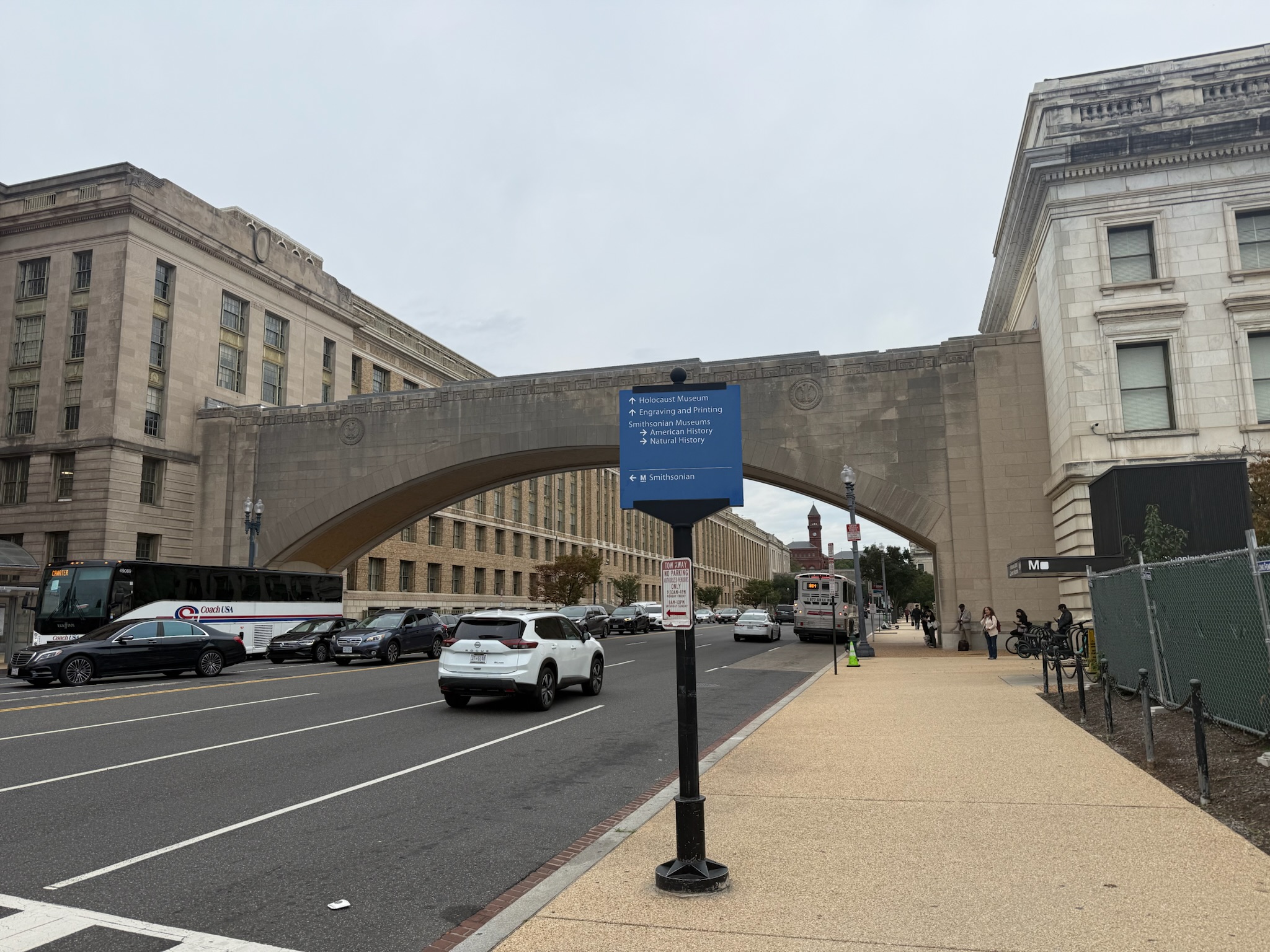
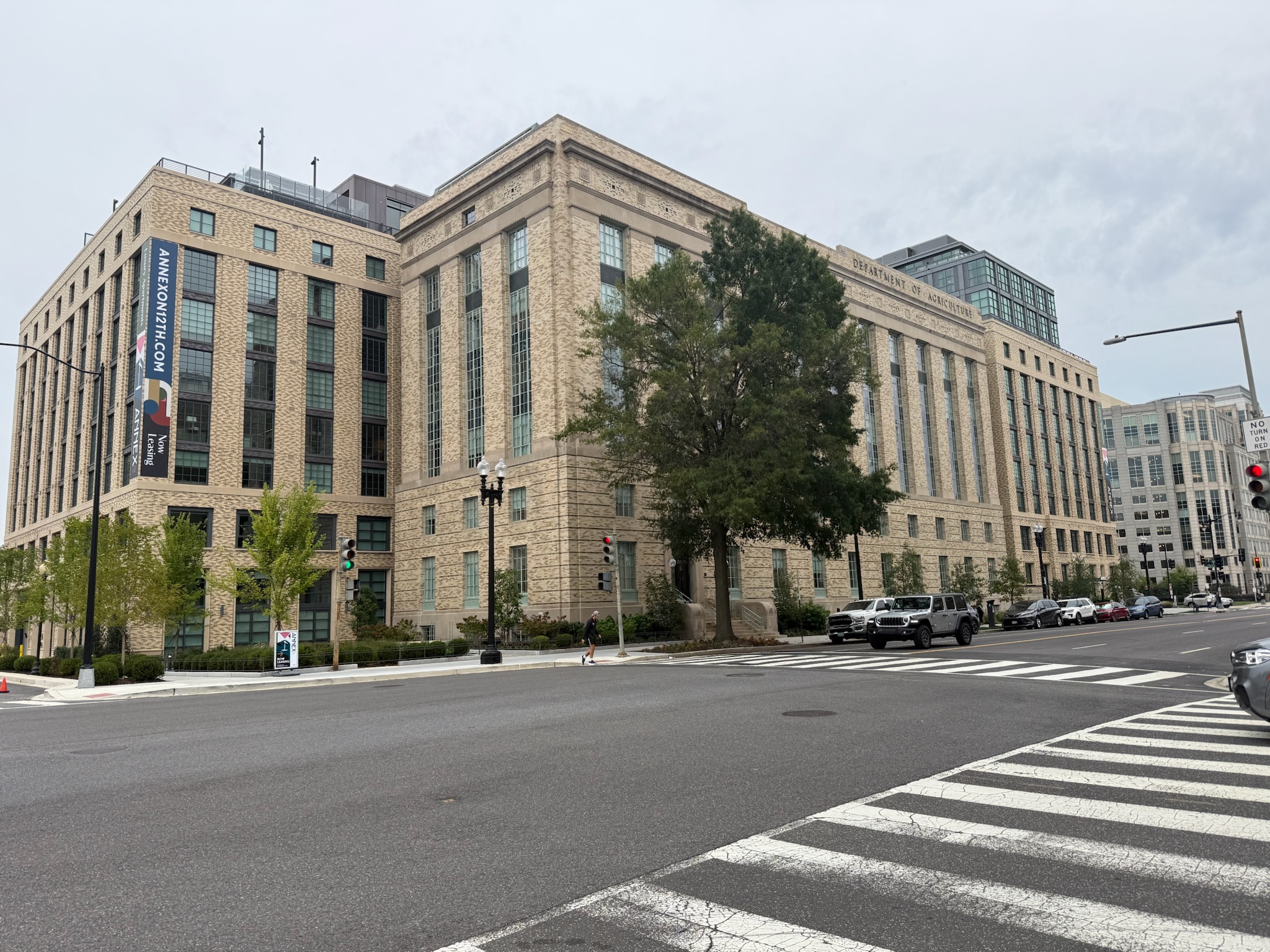
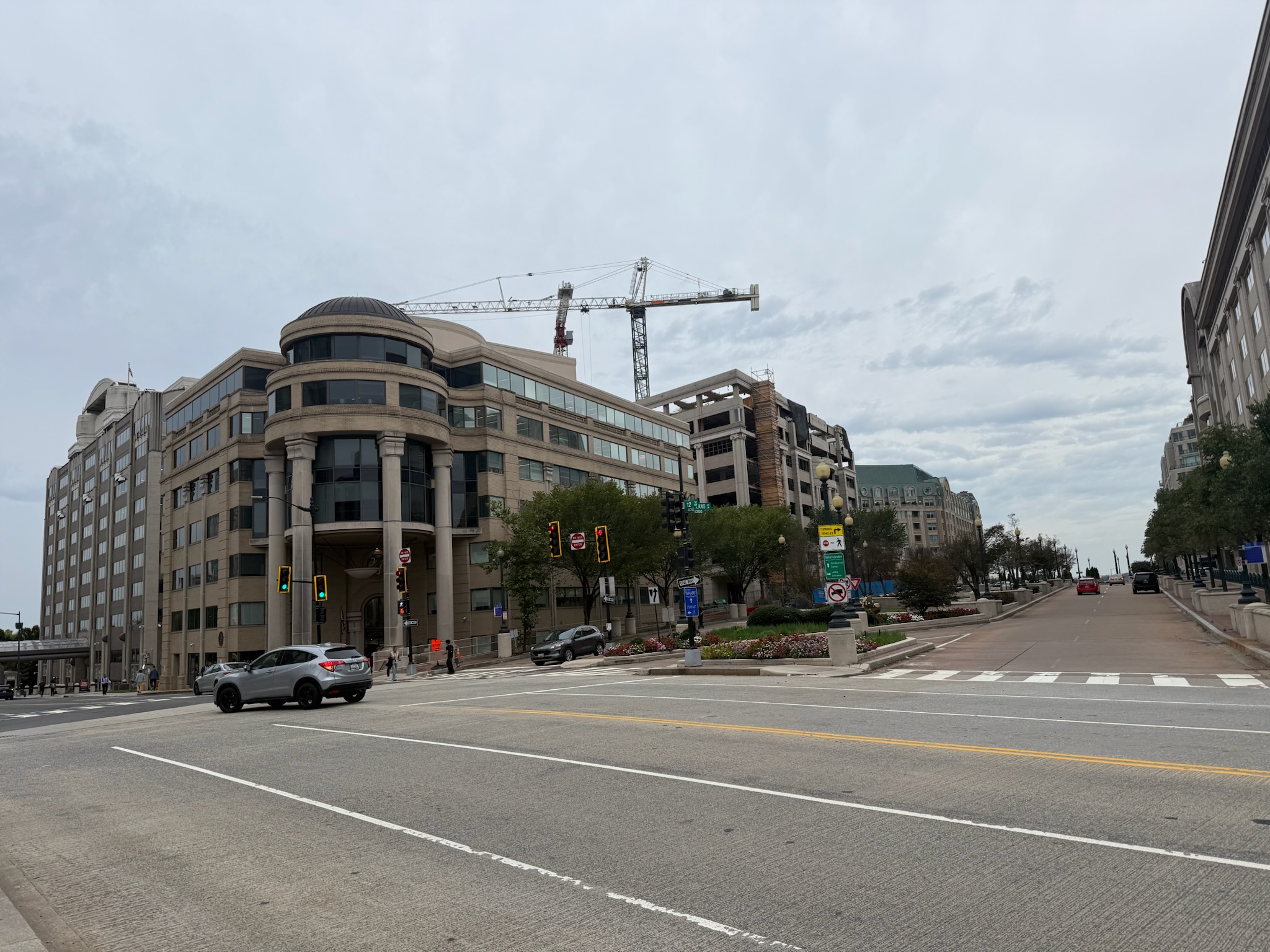
We left the museum and walked back to The Wharf, taking a different route than we had before. Here were a few photos of the buildings we’d passed along the way.
We had a quiet night onboard.