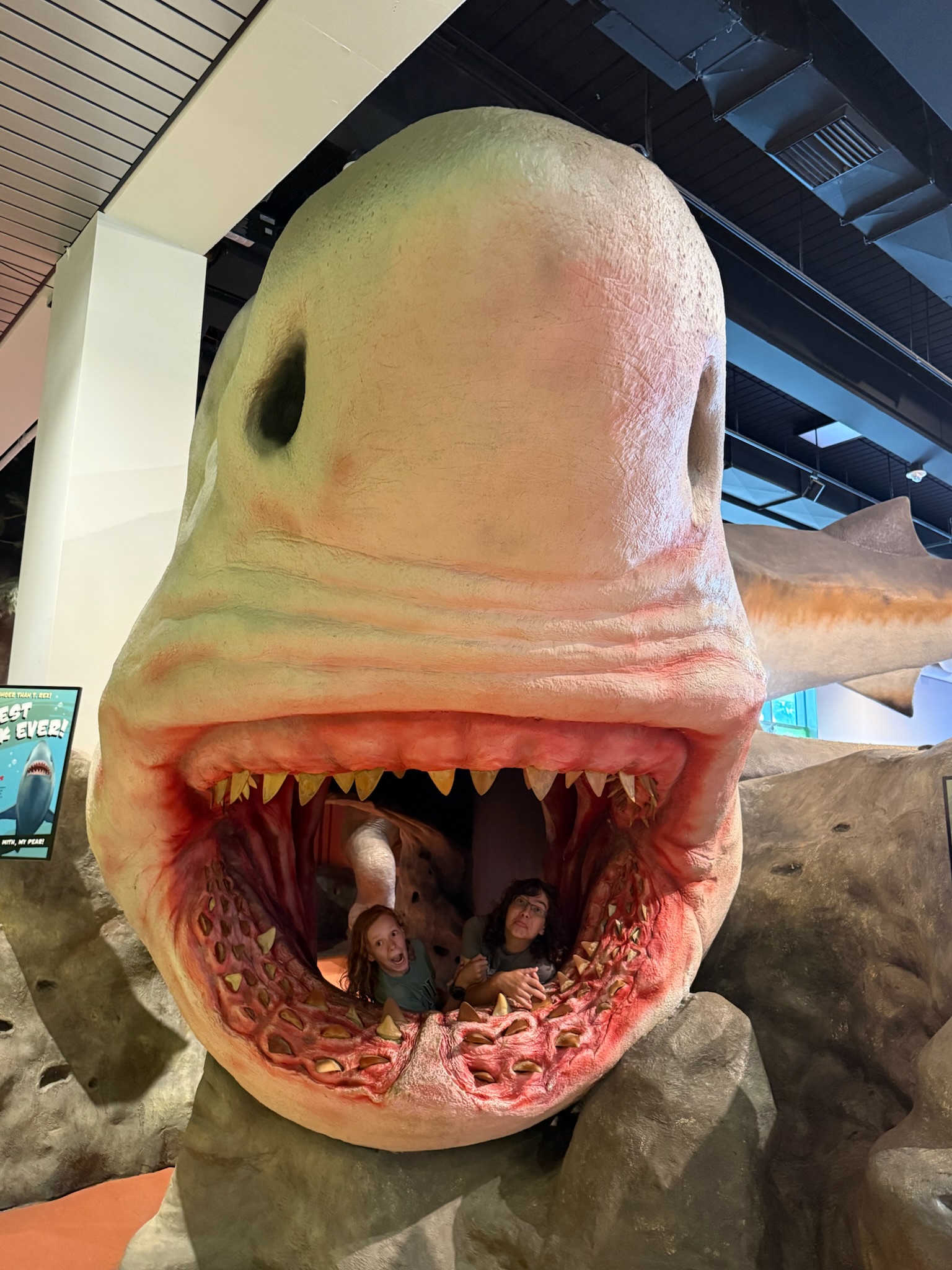
continued… Not far from the otter area was an area on the prehistoric animals of Florida, which included megalodon sharks (more on megaladons).
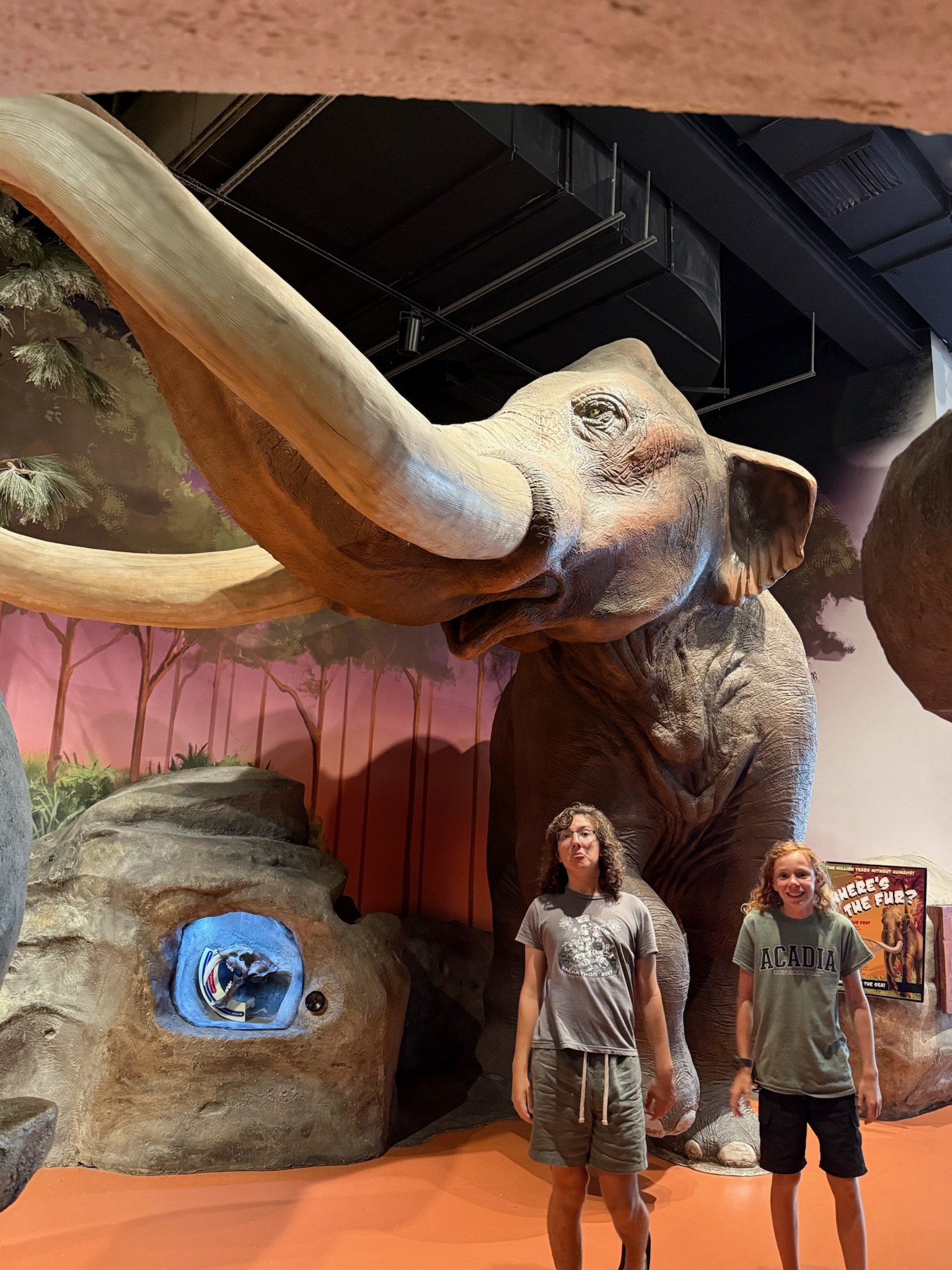
Florida also had mammoths. The mammoths didn’t go extinct until 10,000 years ago, so they lived alongside man in Florida.
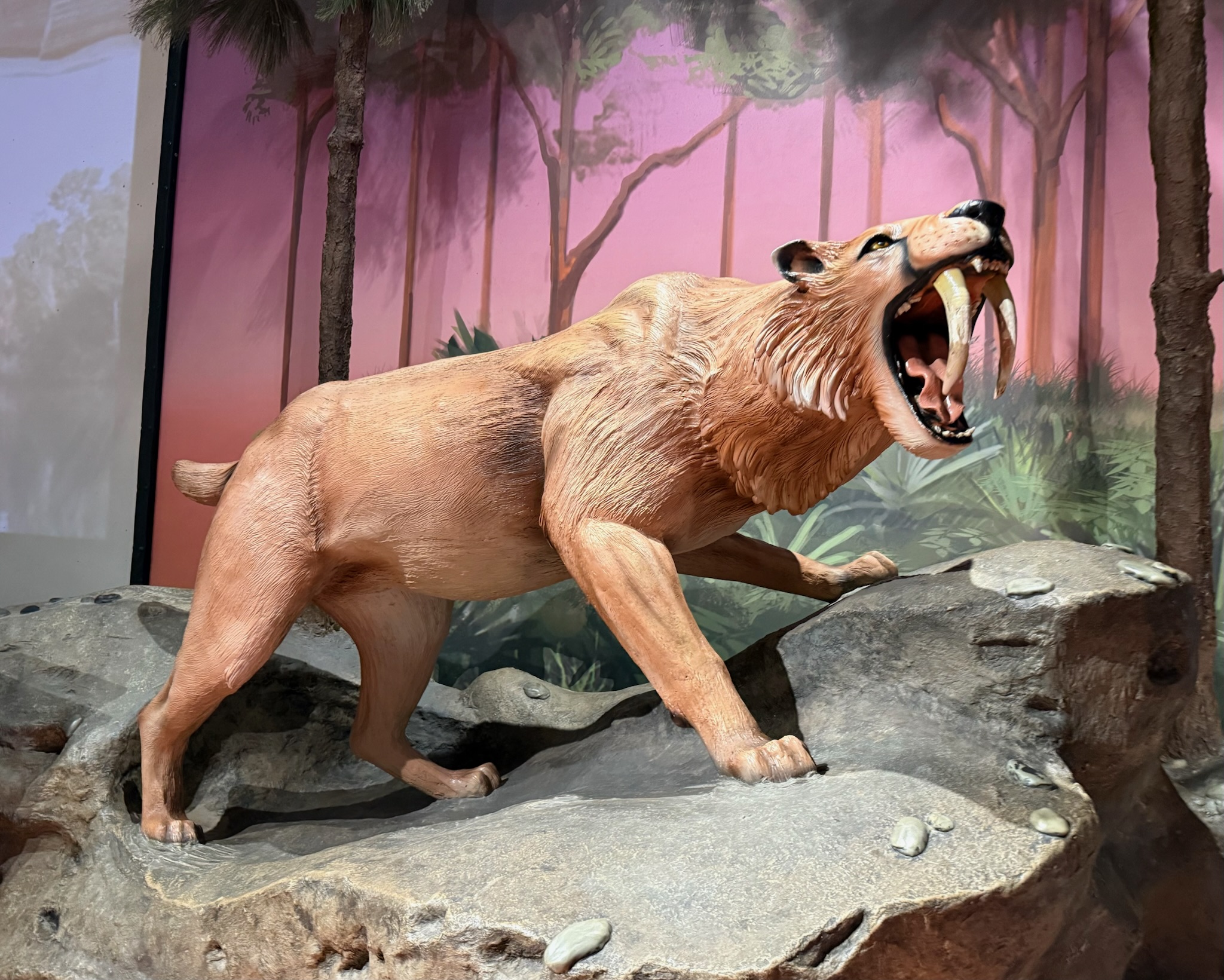
And saber toothed cats. Saber toothed cats also didn’t go extinct until 10,000 years ago.
There was an Everglades Theater that looked like it probably showed a movie, but it was closed. Outside the theater, a history of the Everglades written on the wall. The boys didn’t even look at the Everglades information. Christi quickly looked it over. The Everglades was a region of flooded grasslands in the southern portion of Florida. It started at Lake Okeechobee’s southern edge, where water flowed out through a natural overflow point, creating a a slow-moving, shallow river 60 miles wide and over 100 miles long that flowed southward.
In 1845, Florida became the 27th US state. The legislature (it didn’t say whether it was the state or federal legislature) deemed the Everglades to be “wholly valueless…” In 1850, Congress passed the Swamp and Overflow Act, placing 20-million acres of wetlands under state ownership. The state commenced with assorted projects to drain the swamp, including digging canals and planting Melaleuca, which altered the natural water flow and killed off the indigenous, unique flora, which led to the starvation of the unique fauna that lived on that flora.
The limiting of the natural water flow upriver meant the aquifer that fed Miami became low, and during a drought in 1931, seawater intruded into the aquifer and contaminated the fresh drinking water. In 1930 and again in 1931, land in the Everglades was given to the Seminole Native Americans to establish reservations. In 1943 – 1944, there was another drought. Wildfires ravaged the Everglades and permanently destroyed the soil. In 1947, Everglades National Park was established, which encompassed 1.5 million acres — which was a tiny portion of the Everglades total size.
In 1948, Congress authorized the C&SF project to regulate the water flow in the Everglades and the US Army Corps of Engineers started building a vast water delivery system to South Florida. In 1951, the state took back more than half the land it had given to the Native Americans in 1931 in order to build a drainage project. In 1959, as part of the C&SF project, the northern part of the Everglades was cut off from the central and southern portions. In 1970 and 1971, another drought brought attention the deteriorating quality and diminishing supply of drinking water.
In 1972, Florida began to acquire properties in the Everglades to use as wildlife preserves. In 1973, UNESCO recognized the Everglades as an international biosphere reserved and in 1979, designated it as a World Heritage Site. In 1988, Florida began to try to reverse the damage done by starting a project to restore the natural water flow in the Kissimmee river, which restored 11,000 acres of wetlands that fed into Lake Okeechobee. In 1989, Everglades National Park was expanded to add over 100,000 additional acres. In 1992, the federal government authorized specific water restoration activities in the Everglades. In 1994, the Florida legislature also passed an act to restore and protect the Everglades. In 2001, Congress appropriated $7.8 billion for the Everglades restoration.
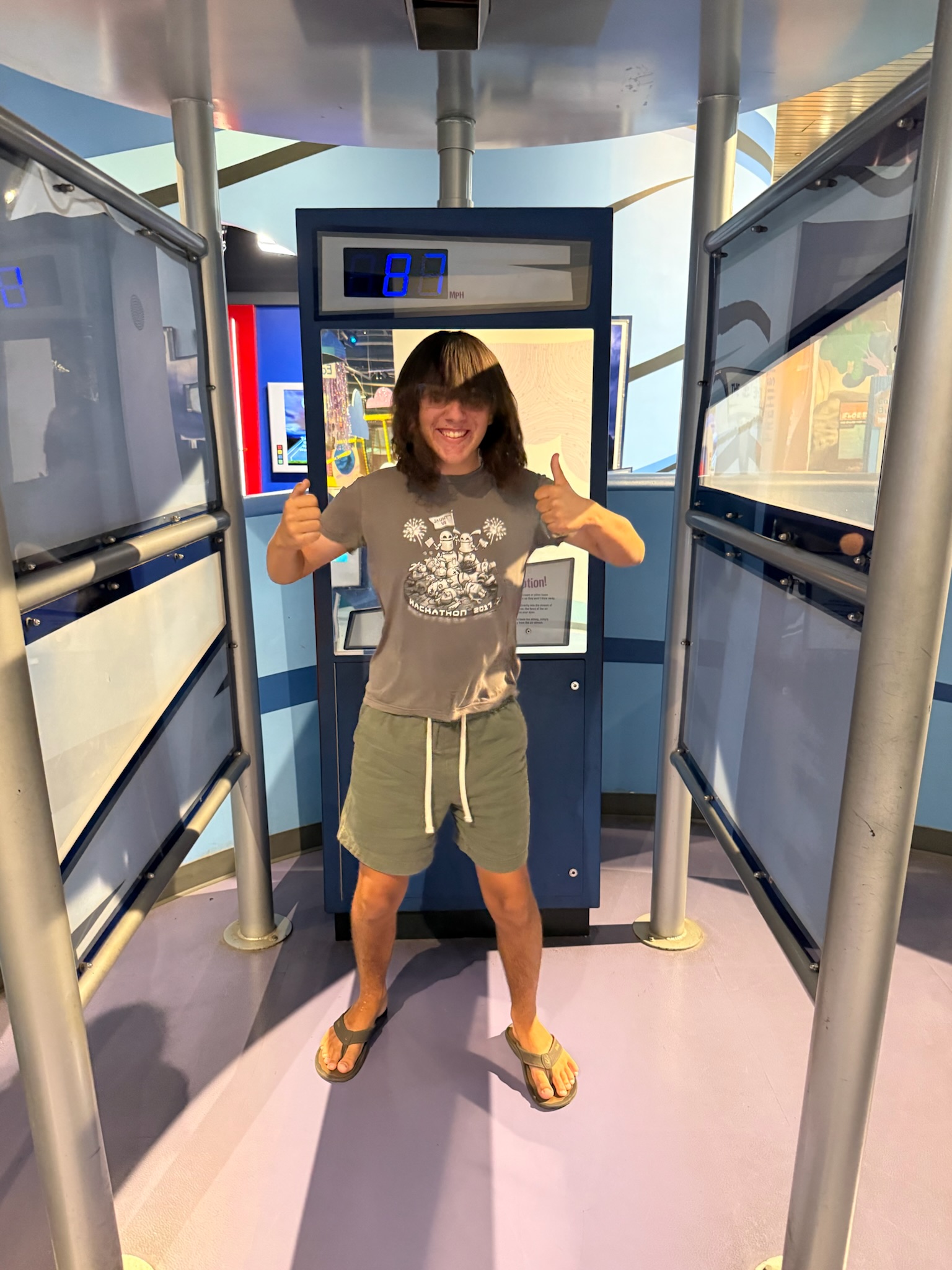
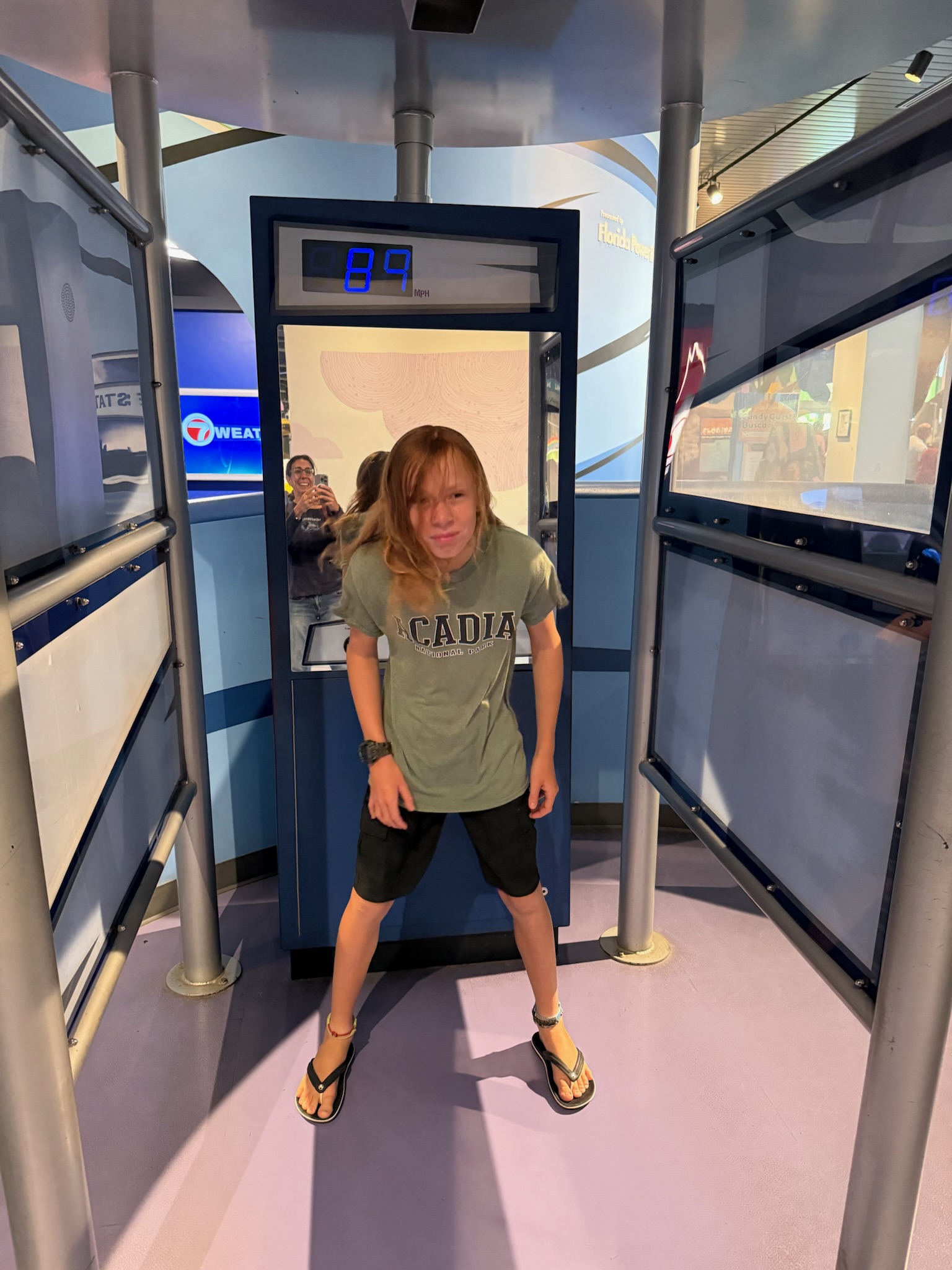
Beyond the Everglades Theater was an area devoted to weather. That area also had a lot of fun machines that helped demonstrate complicated scientific topics. While not all the machines worked, in this area, more worked than didn’t. One of the machines demonstrated hurricane force winds. It worked!
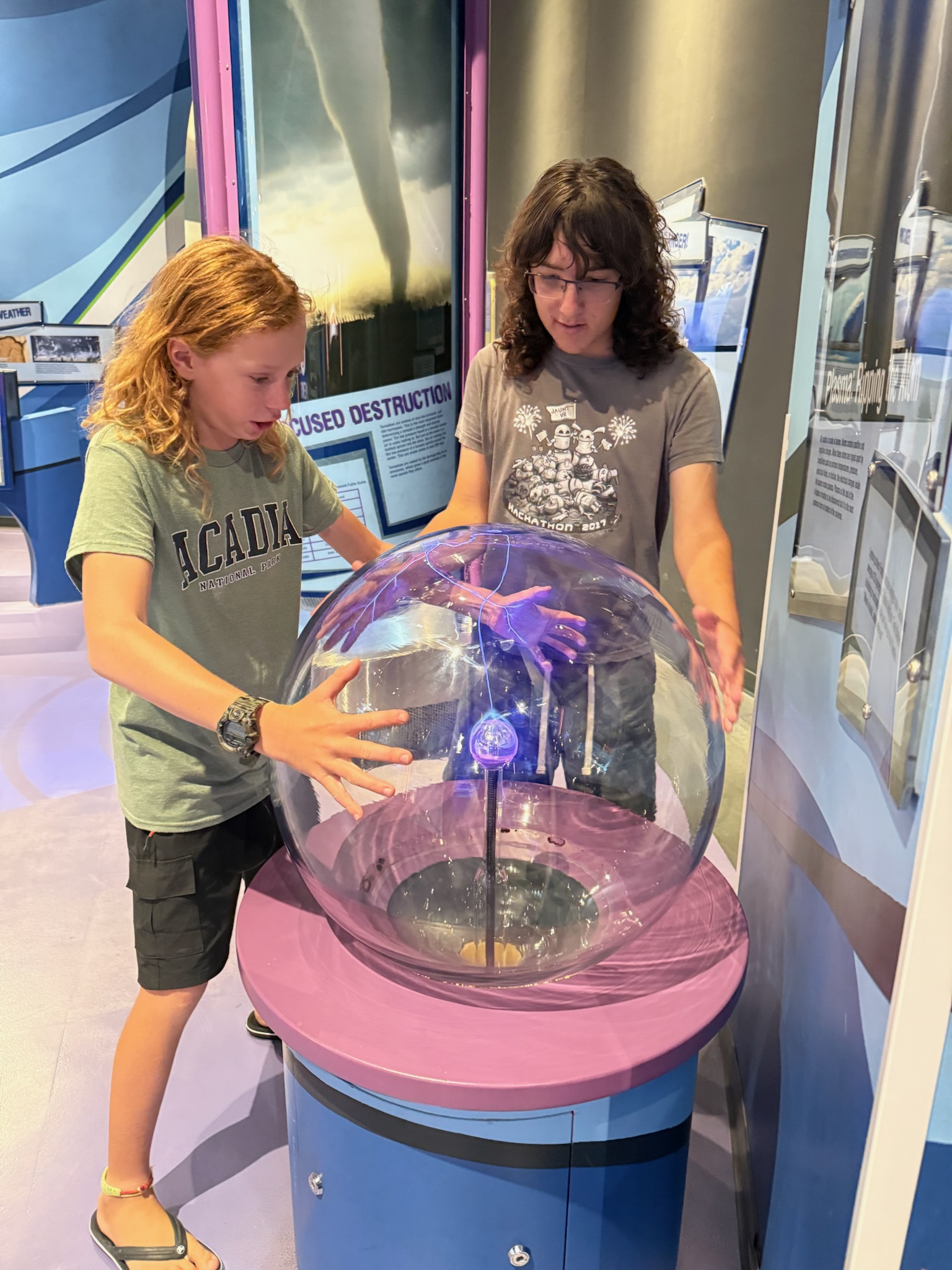
One on plasma, which was created by the splitting of atoms, which separated the electrical charges within the atoms into plasma.
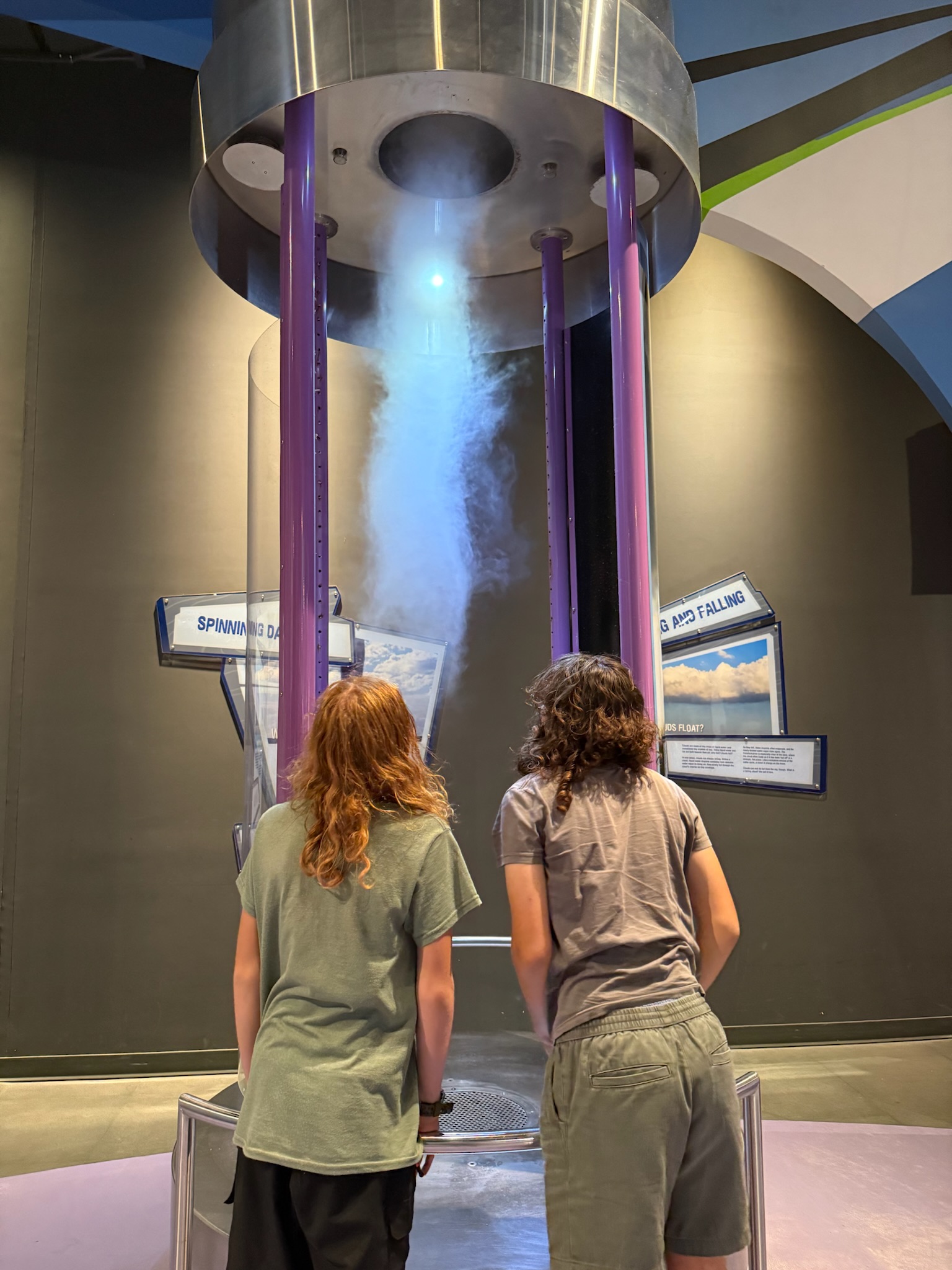
One on cloud formation.
One on tornado formation.
This display on high voltage arcs looked interesting, but it was broken.
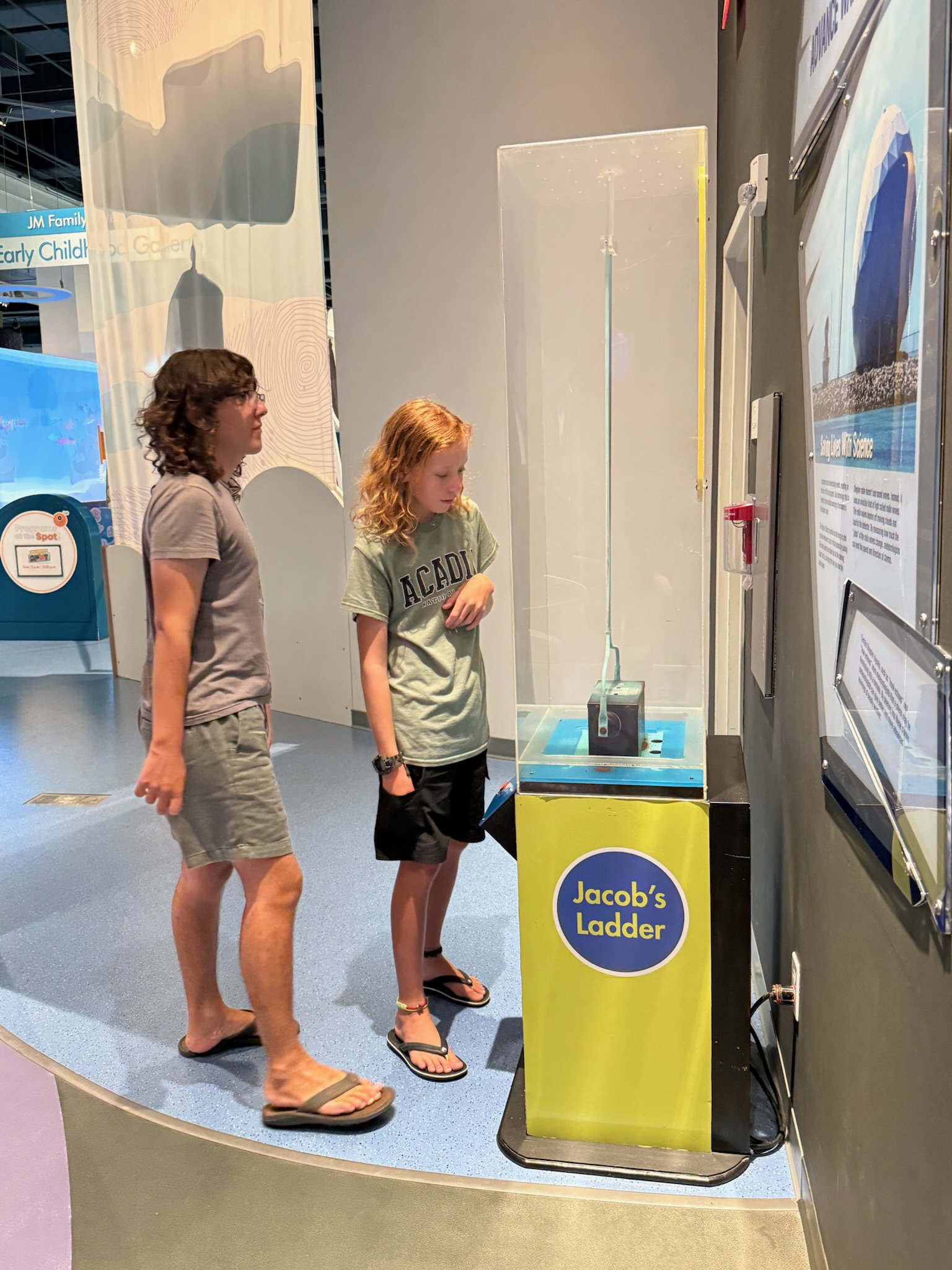
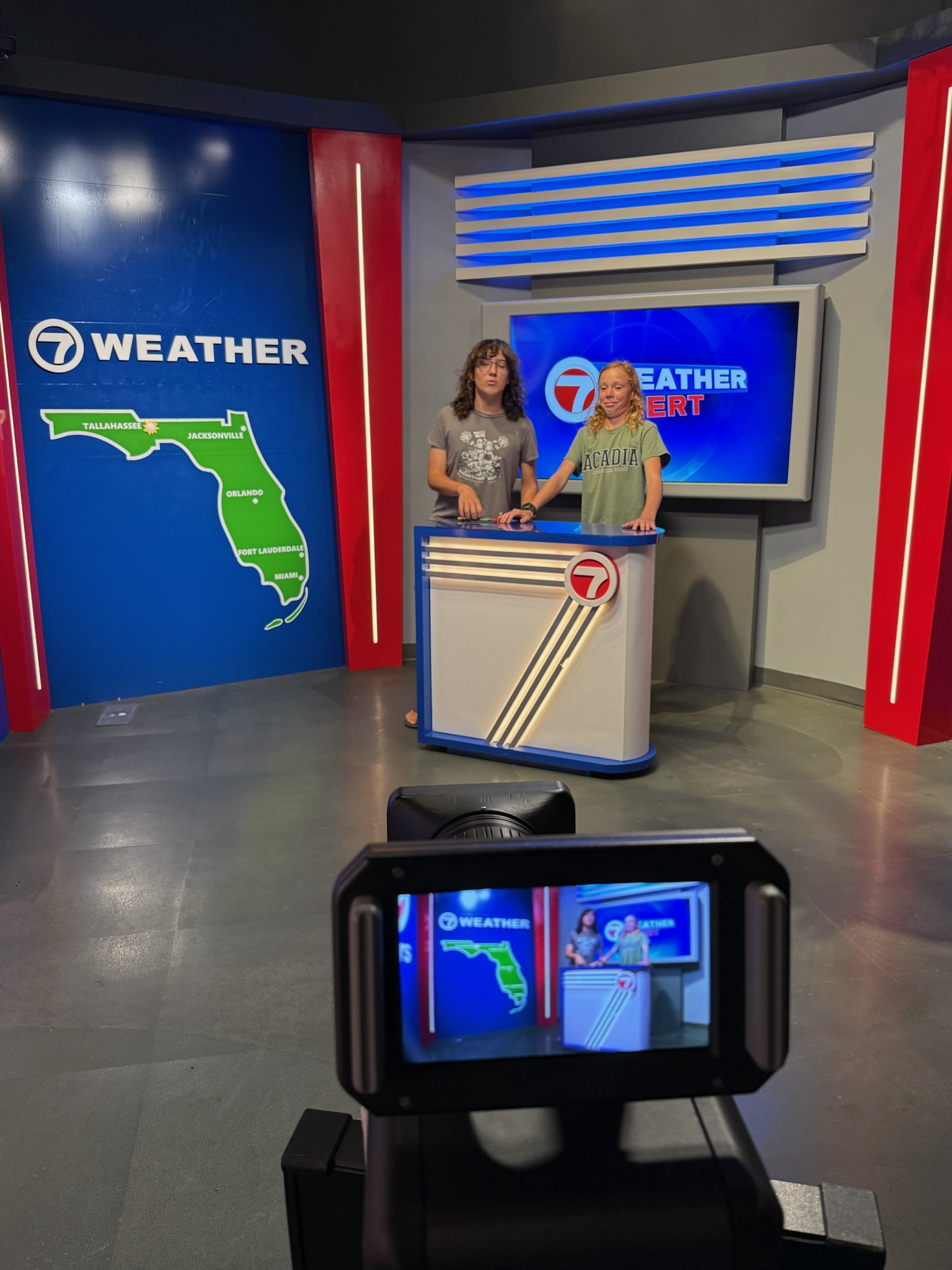
They also got to pretend to be weathermen!
The last two areas downstairs were both play areas, one for toddlers and one for kids probably about 4 – 10, but the boys were too big for most of the equipment. At this point, 50-minutes had passed. Christi tried to get the boys to go back to the exhibits upstairs that they’d missed, but they said they’d seen everything they wanted to see. So we went into the IMAX theater a few minutes early.
The movie was called Lost Wolves of Yellowstone and was a documentary about the restoration of wolves in Yellowstone National Park. In the late 1800s and early 1900s, wolves were intentionally killed off to protect other species in the park. But that led to a serious imbalance of nature that created problems, so an initiative was launched to reintroduce wolves in order to restore the natural balance of the ecosystem. The Yellowstone rangers basically kidnapped wolves from Canada, flew them to Yellowstone, put them in a pen for a while, then released them from the pen to see what they’d do. There were challenges and ups and downs, but the end result was that some of the wolves stayed in the park and had babies, and an ecosystem of wolves now thrives. Christi found the film interesting. Fynn said it was okay. Keith was bored. Keith (and Christi since she was the teacher) had to read both Call of the Wild and White Fang for school. Both books were about dogs/wolves in Alaska, and the film brought parts of those books to life.
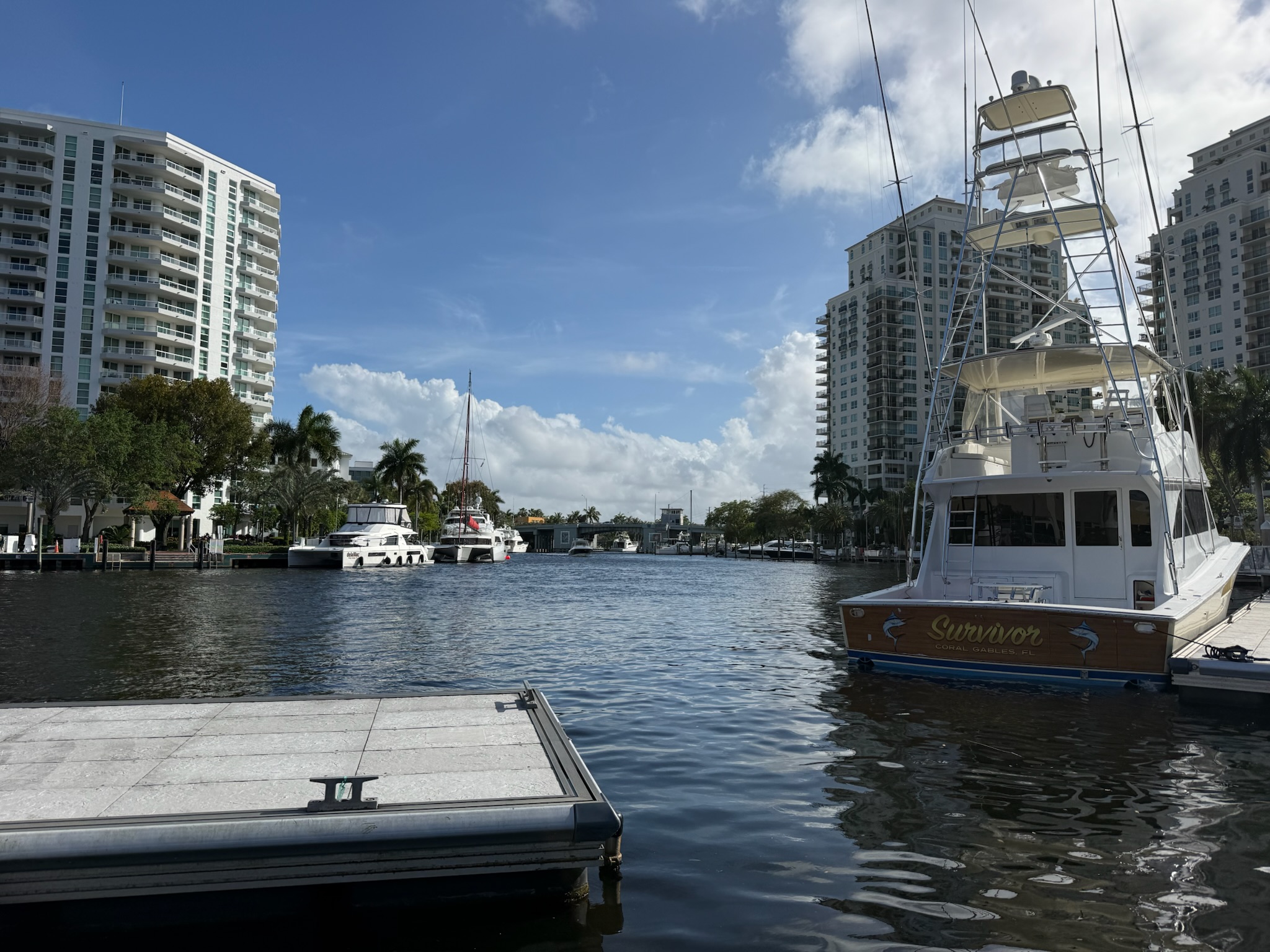
The film ended at 1700, and since the museum was closing, we were immediately ushered out. We walked across the street to Esplanade Park. It was small, with a grass area, a gazebo, a couple of statues and a dock. It was a public dock, so people could bring their boats into the heart of downtown. This was looking northeast along the New River.
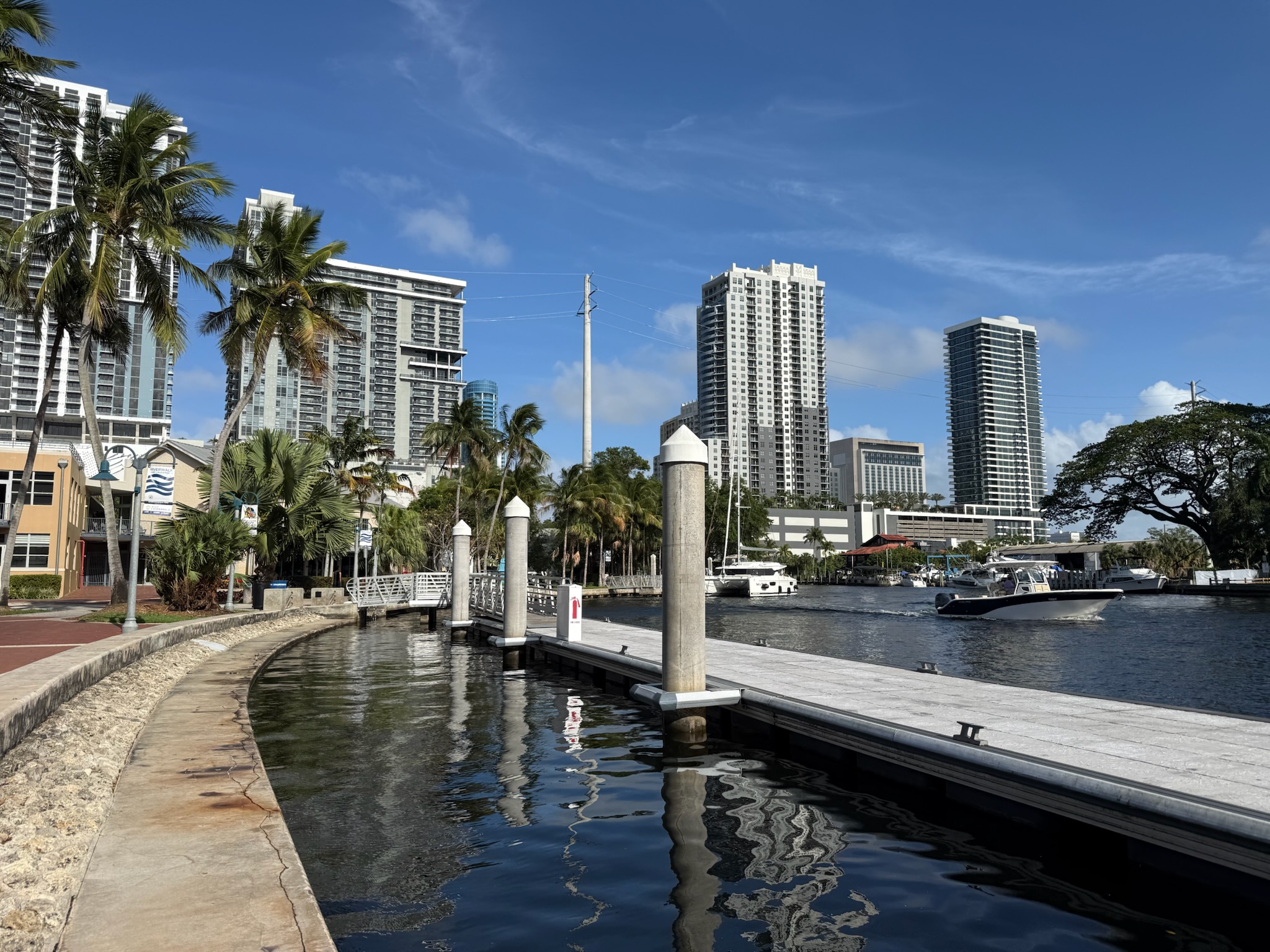
This was looking southwest.
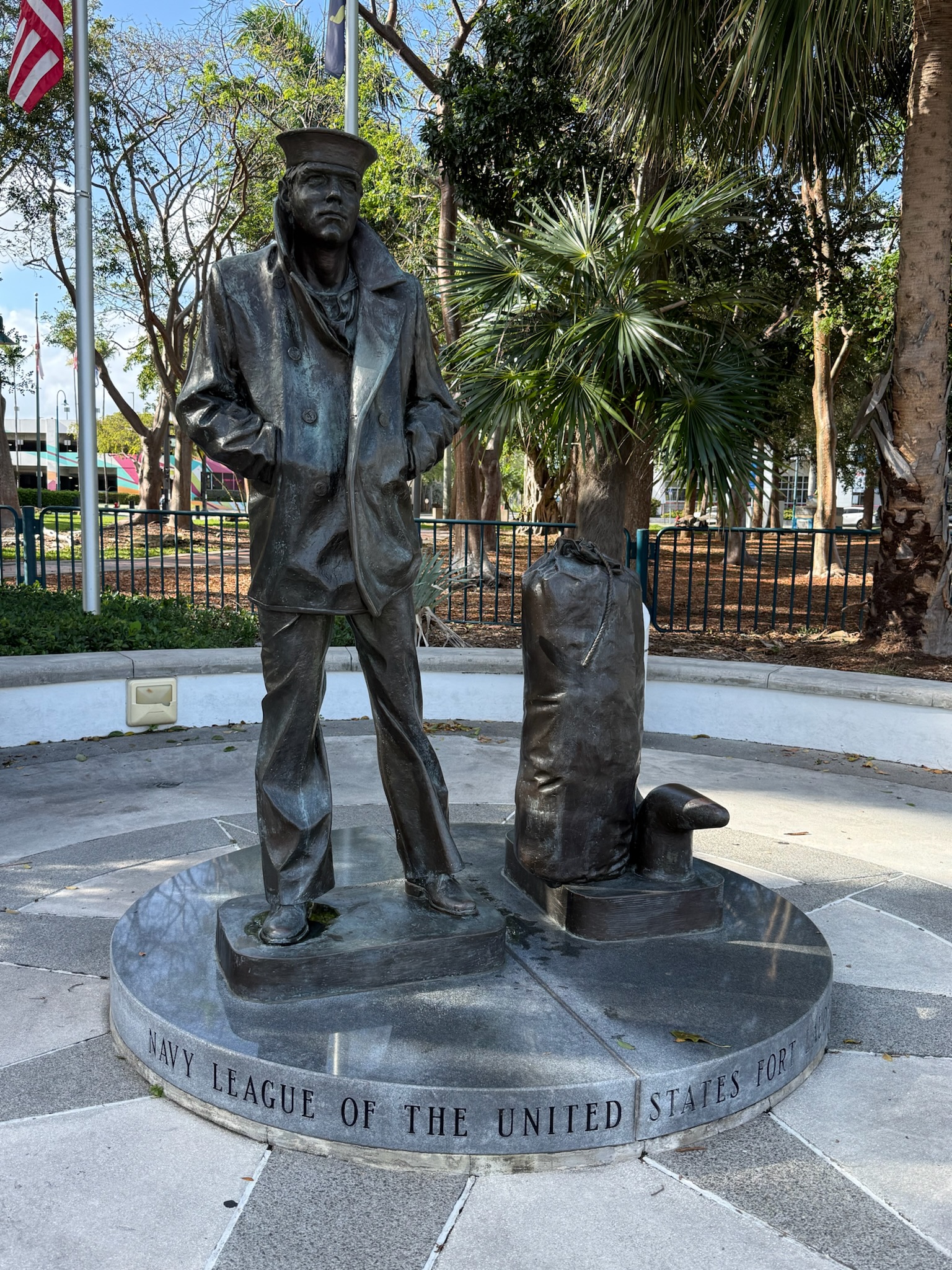
One of the statues.
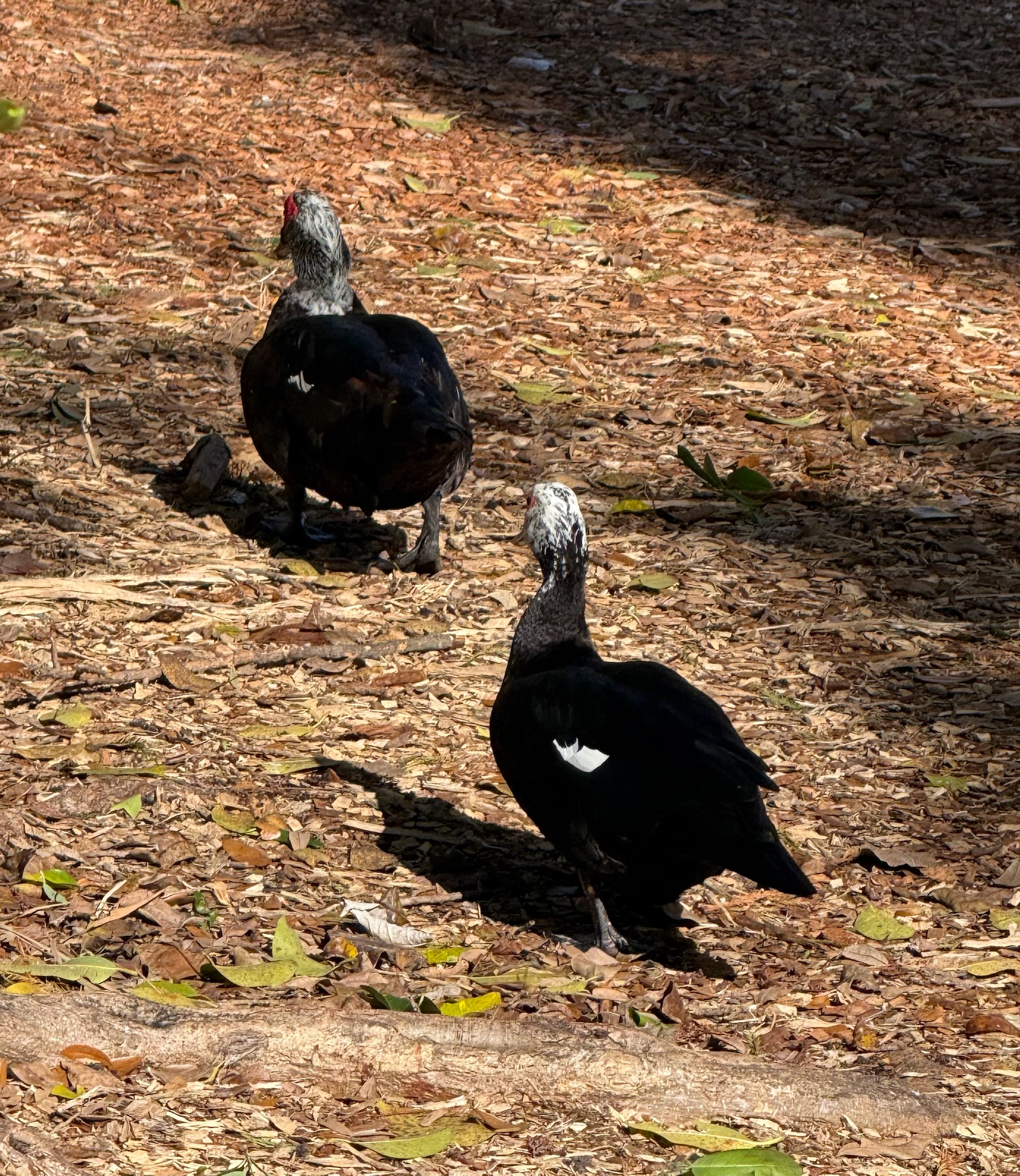
Some ducks (or were they geese?)
After looking around for a few minutes, we headed back to the car and took Fynn home. The Maps app again routed us through the airport, but this time, Christi made a wrong turn and got stuck inside the terminal loops. And she had a hard time getting back out of them.
Christi and Keith went onboard Tiki Tour, and hung out with them until rush hour traffic cleared, then they headed back up to North Palm Beach. Eric hadn’t gone because he was expecting more Yacht Tech employees to come and do work aboard. When Christi and Keith returned, Eric reported that the Yacht Tech guys never came, and he was sad that he’d missed out on seeing Tiki. He also reported that a big spout of rain had come through that lasted for a while. At this point, it was getting late. We ate a quick dinner and went to bed.