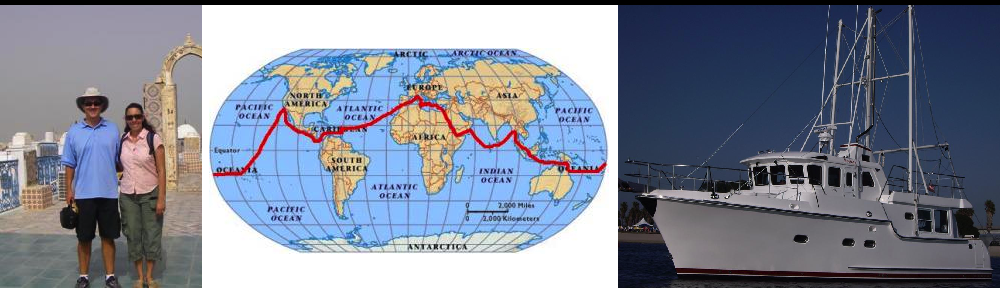
continued… But we had a great view of the Saturn V from our table in the cafe. Looking towards the bottom of the rocket.
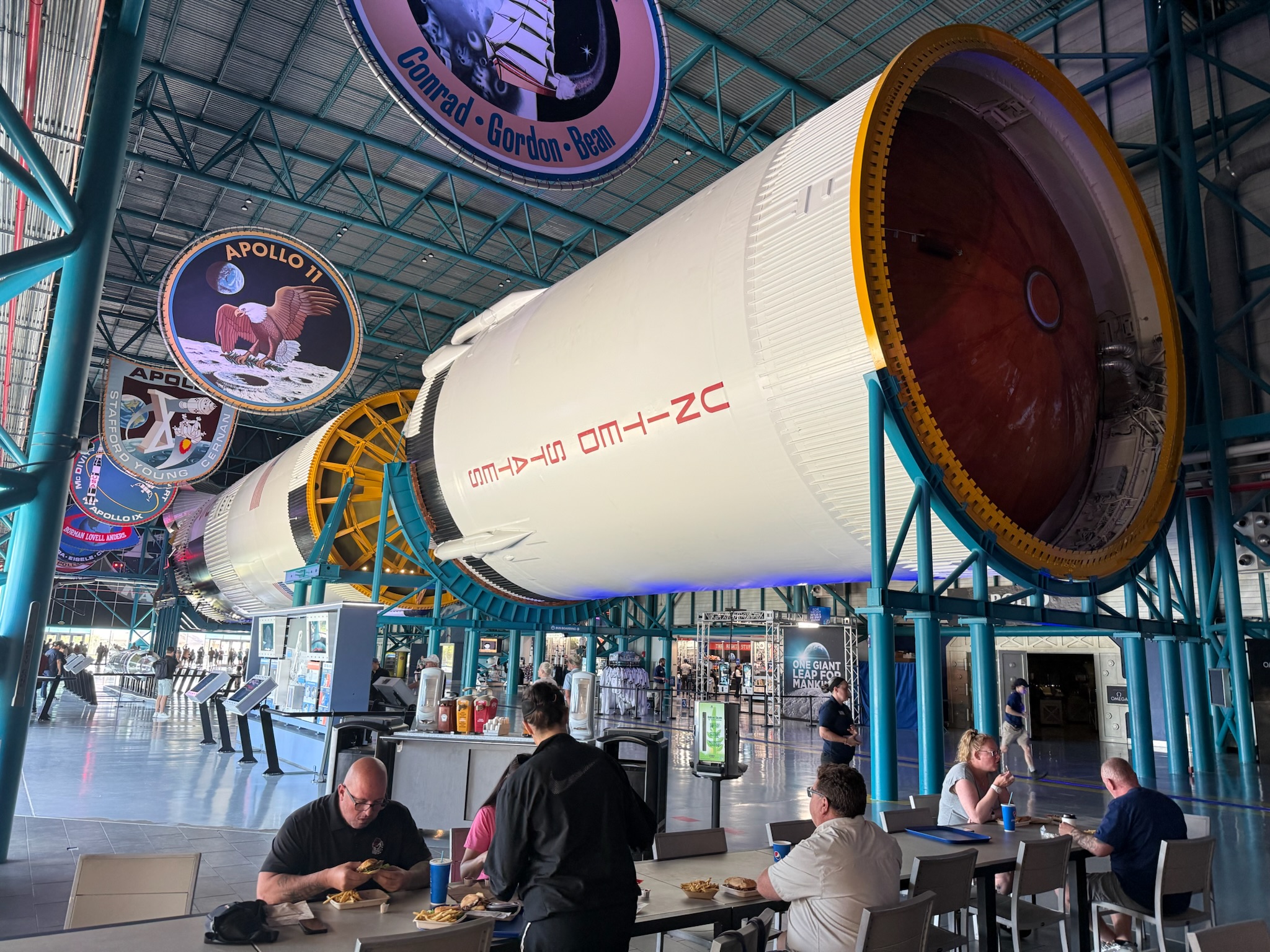
Basically above our heads.
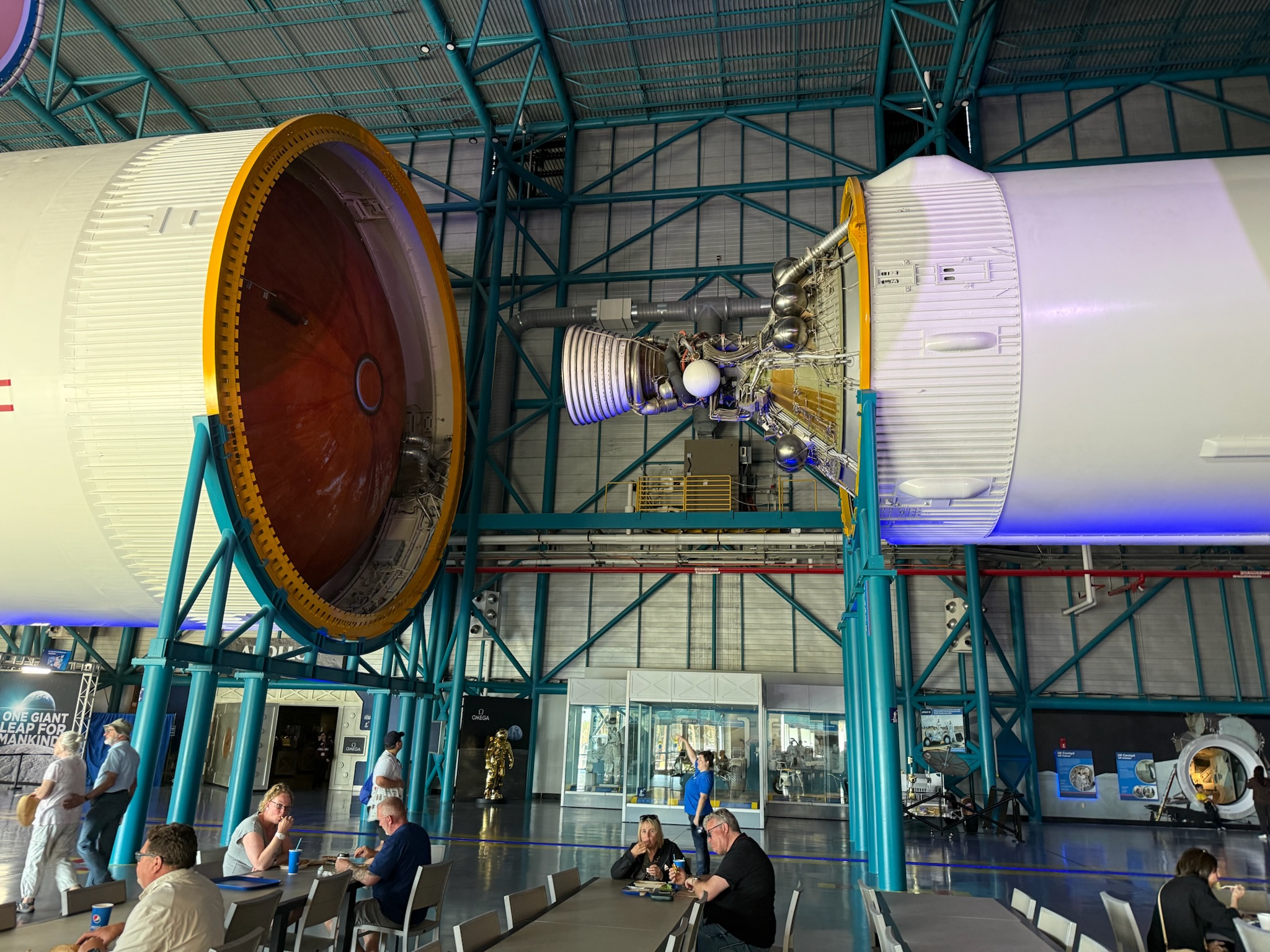
Looking towards the top of the rocket.
The very bottom and very top of the ship were pictured in a previous post. In total, the Saturn V was 363 feet (111M) tall. The building we were in was specially constructed specifically for building this rocket. It was one of the largest enclosed spaces and was still considered an engineering masterpiece. It took 3-years to construct the building, from 1963 – 1966. It was 525 feet (160 M) high and had 4 low bays and 5 high bays for assembly. It had the largest doors in the world: 456 feet (139 M) tall, and it took 45-minutes to completely open/close the doors.
After eating, we went over to a relatively small, partitioned off section at the far edge of the building — beyond the rocket’s nose.
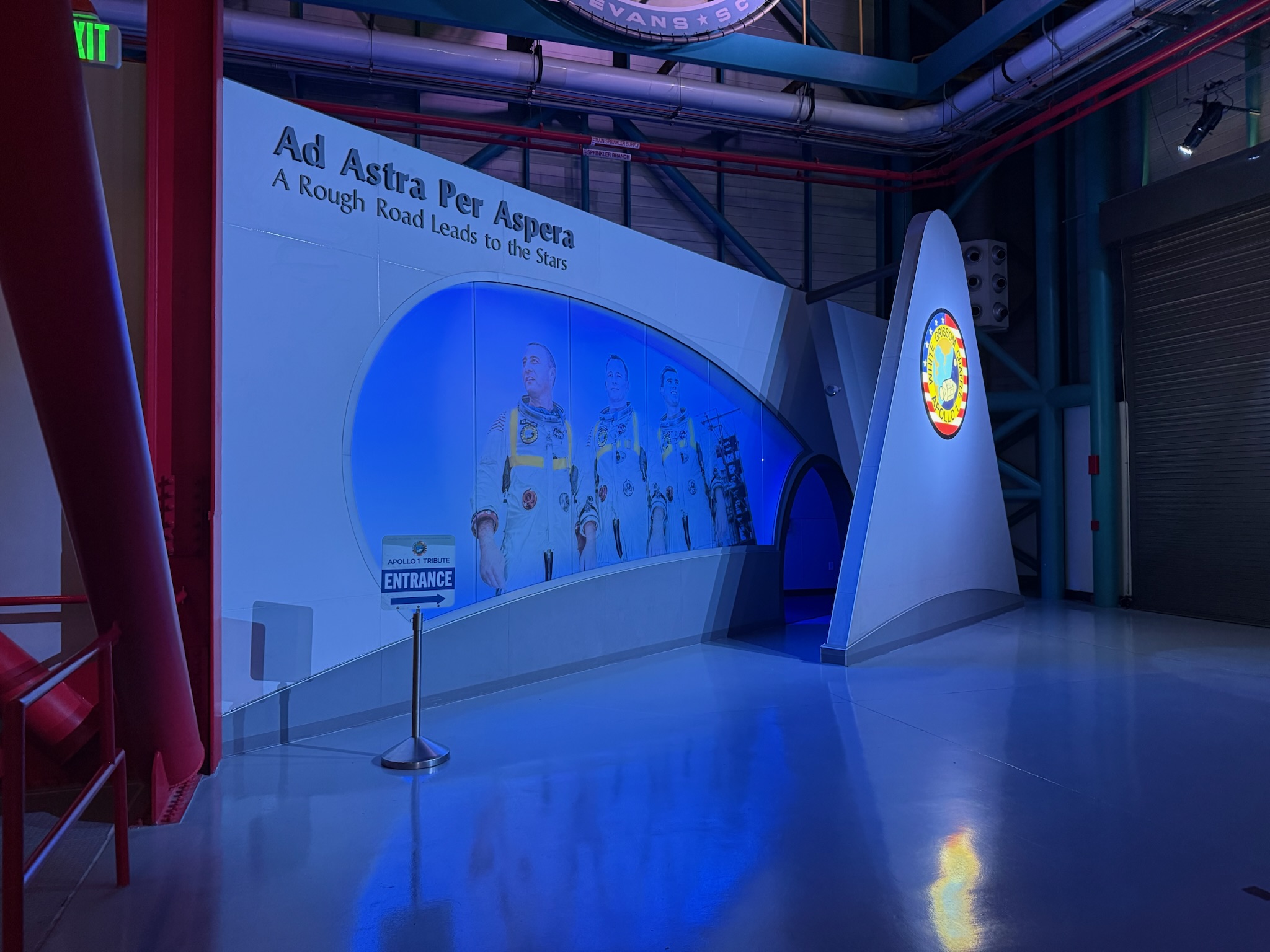
It was a tribute to the Apollo 1 astronauts and support staff who died in a cabin fire during a launch rehearsal test prior to the scheduled launch.
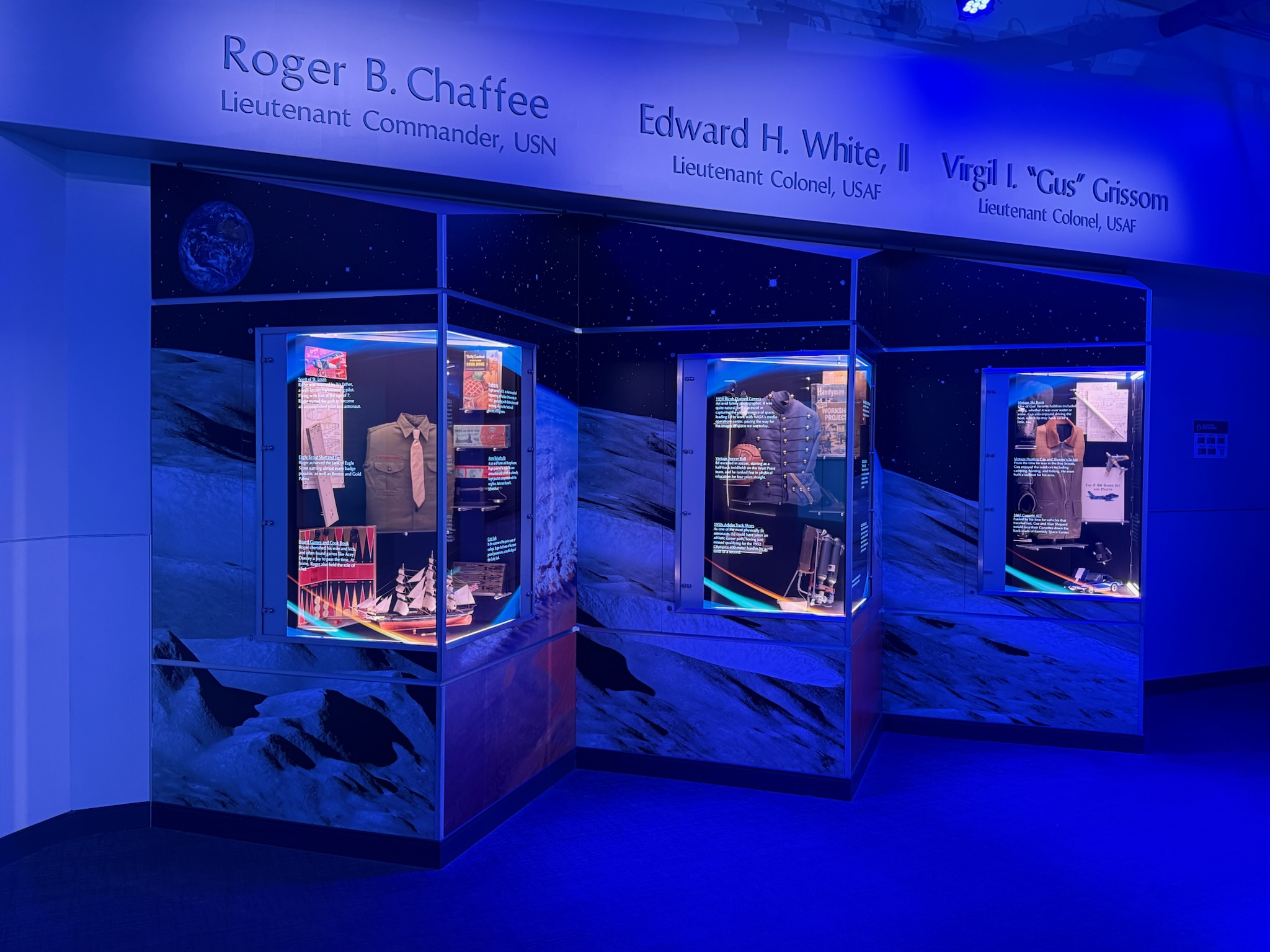
We headed back into the main area and worked our way back down to the opposite end of the building, looking at as many exhibits and displays as we could. Here was the Astrovan, which shuttled the astronauts in their full space suits the 9-miles in between the building and launchpad. It was a modified Clark-Cortez motorhome.
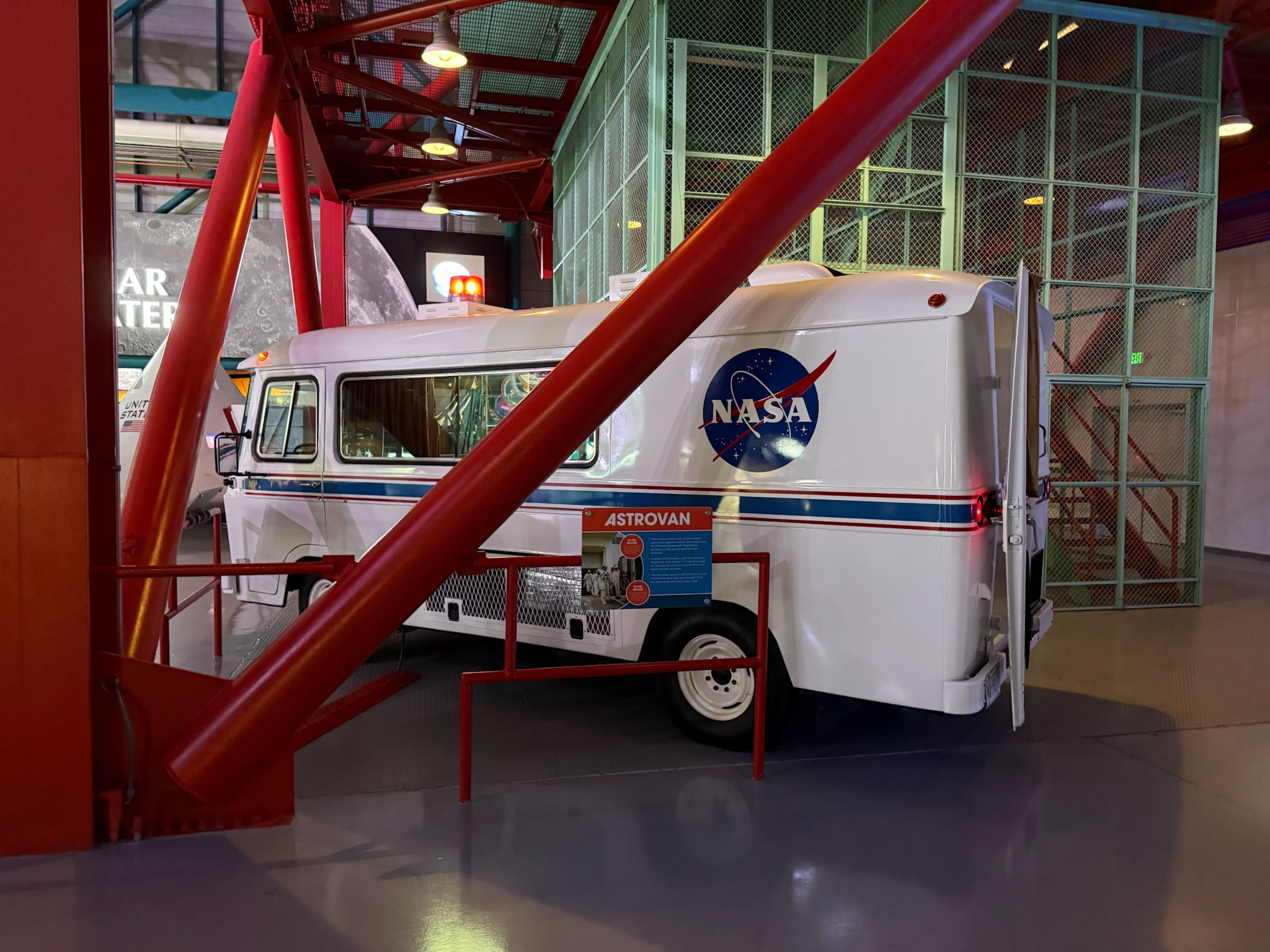
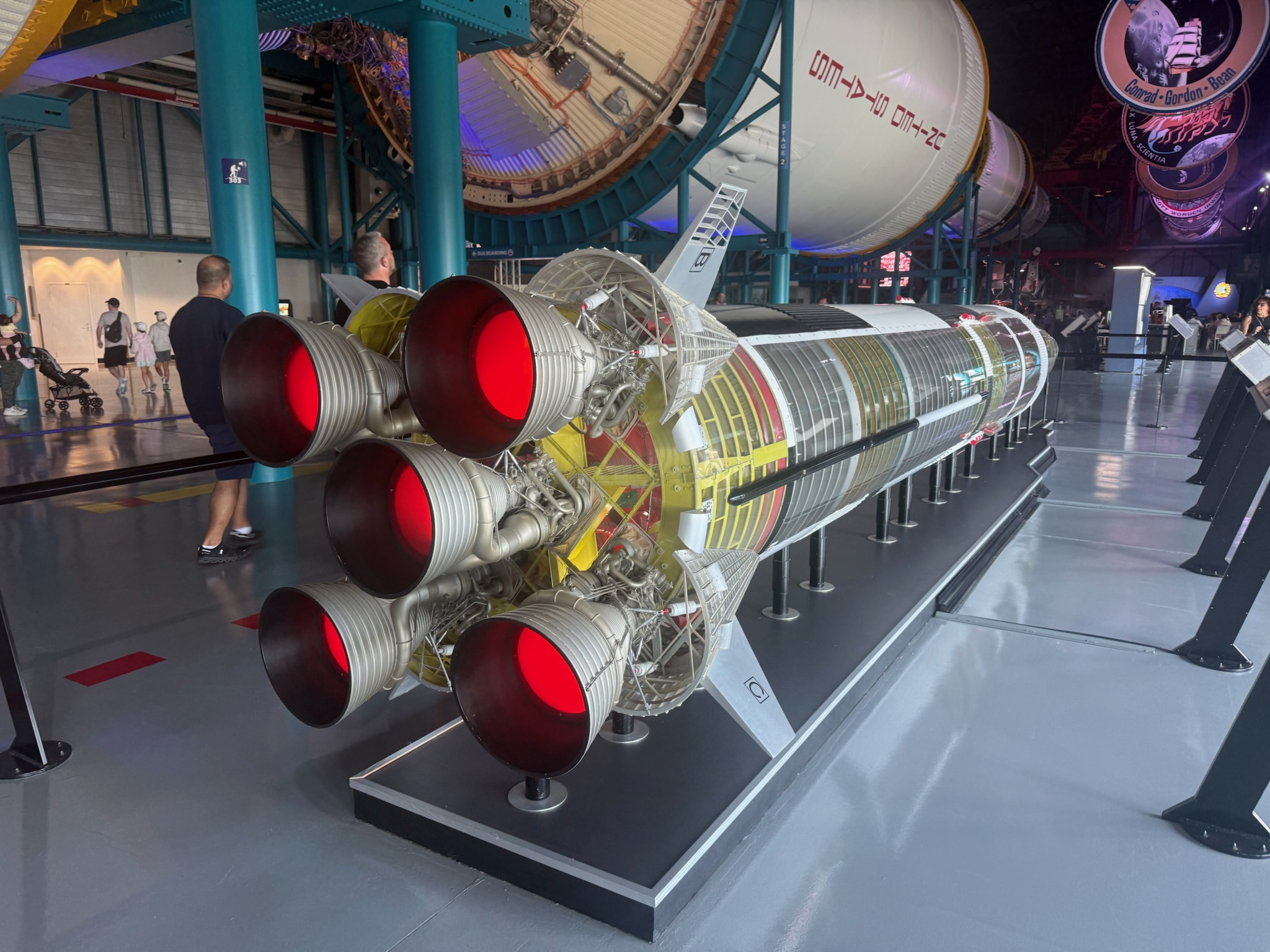
Eric’s favorite exhibit was this model of the Saturn V, which was partially clear so we could see the various components inside. He liked being able to see how much fuel was onboard, and where the capsule was located.
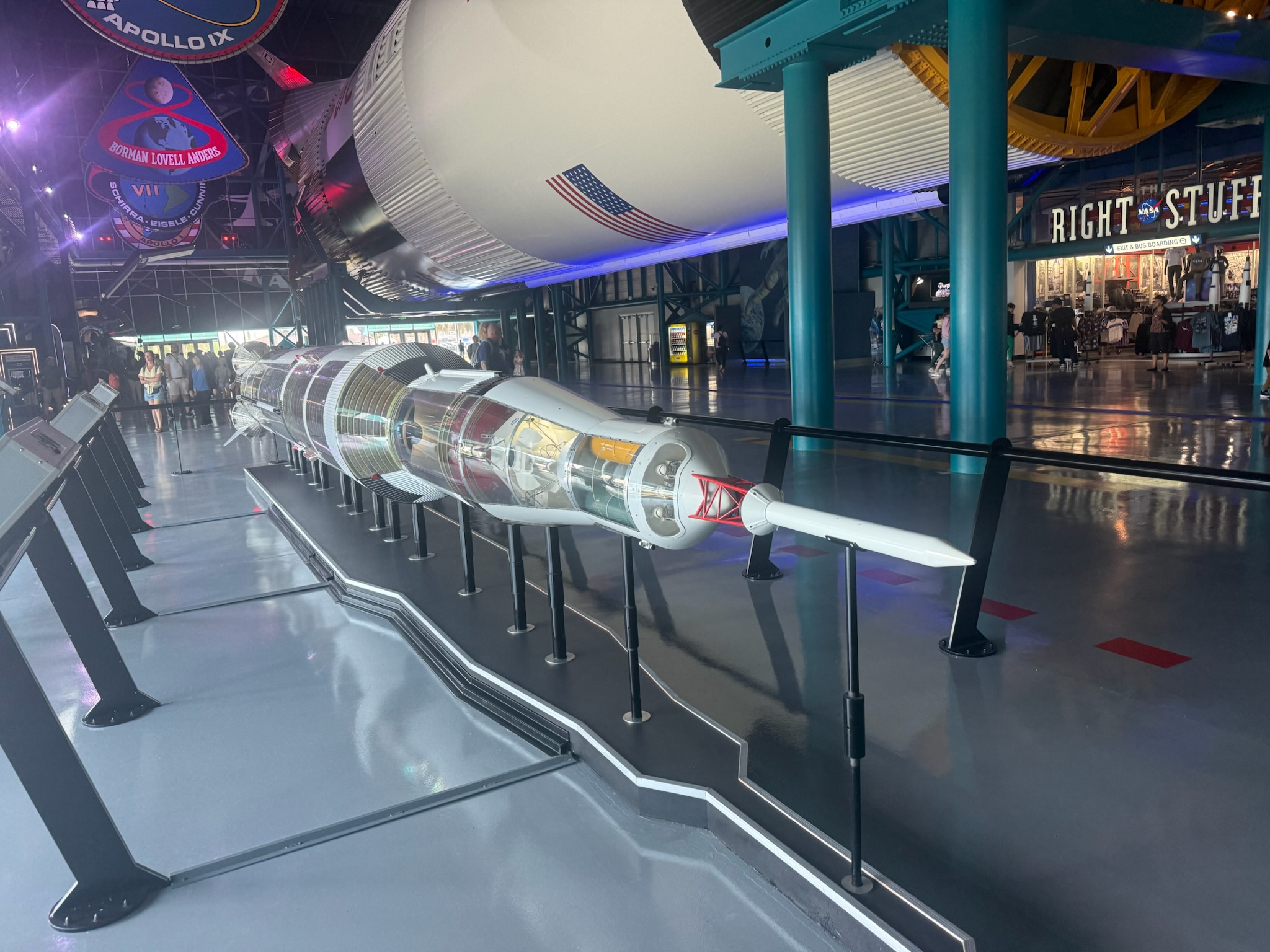
While there were many fixed exhibits, like the ones above, there were also a lot of interactive exhibits on computers… which meant only one person at a time could use them. And, since there was a lot of information on each of the exhibits, people used them for a long time. We wound up skipping a lot of exhibits because we didn’t want to wait — but we did have fun with the ones that we were able to use.
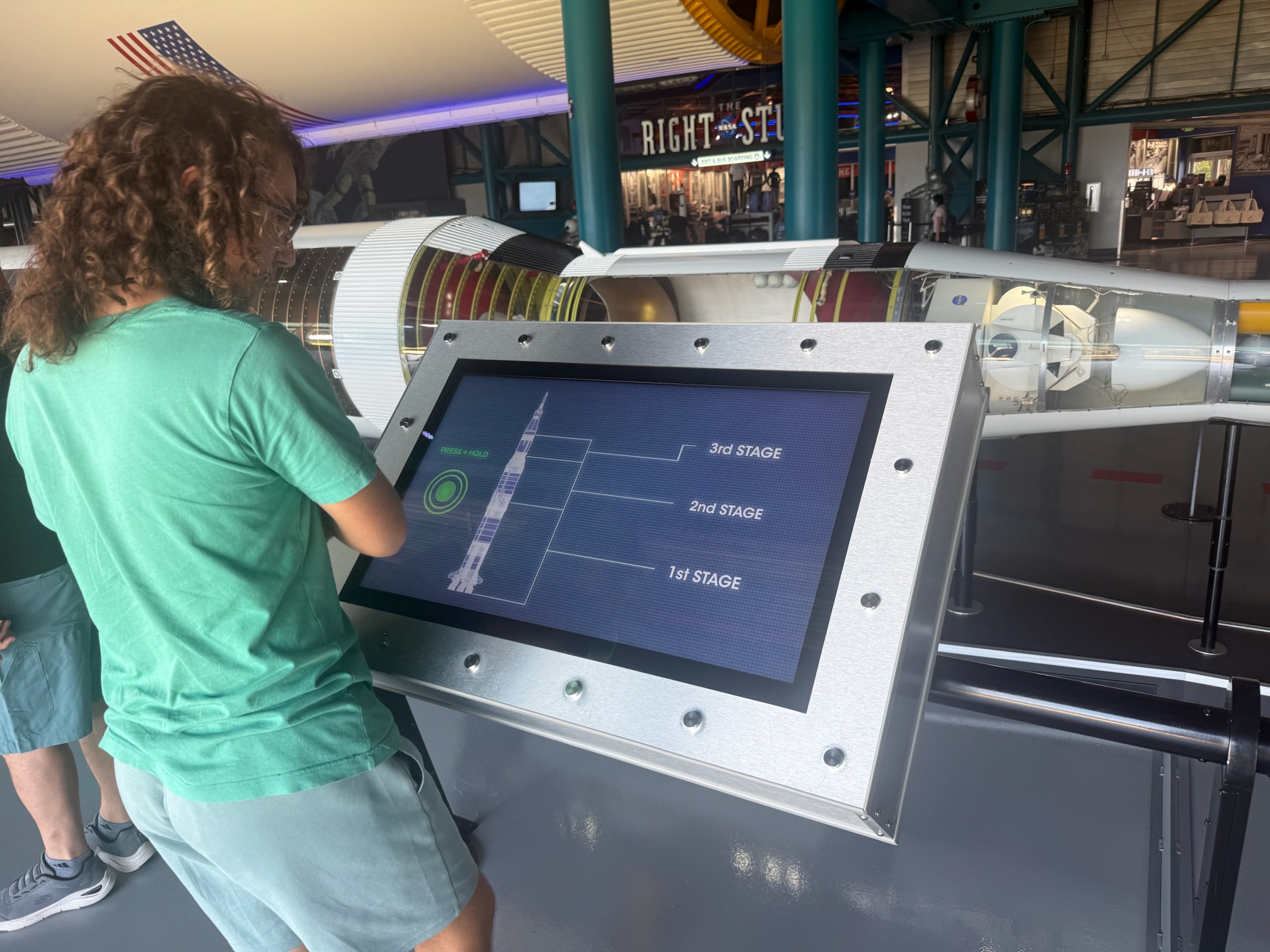
There was information about the types of training astronauts did, such as going in a whirling centrifuge to experience g-forces and being in an airplane doing deep nosedives to experience weightlessness.
There were fun facts about the moon: it was believed to be 4.6 billion years old, was 1/4 the size of Earth, and was about 238,800 miles (384,400 km) from Earth. It had 1/6 the gravity of Earth, so if you weighed 100-pounds (45-kg) on Earth, you’d be 16.6-pounds (7.5 kg) on the moon. 1 lunar day = 27 Earth days. Temperatures varied from 253 degrees Fahrenheit (123 degrees C) and -387 degrees Fahrenheit (-232 degrees C). Between all the Apollo moon landings, astronauts have brought back 842 pounds (382 kg) of lunar rocks and soil.
In addition to information about the Apollo Missions of yesterday, there was information about the series of Artemis missions that had already begun. The goal was to expand the economy with a permanent base on the moon for mining, scientific research and tourism, creating new jobs and industries. They were currently researching habitats that would allow people to live comfortably on the moon, shuttlecraft to get to/from the moon, and orbiting spaceships for science/technology development.