Sunday, May 24, 2026 — This morning, we headed back to the bakery for breakfast. In previous days, the streets had been busy, even early in the morning. This morning, the streets were nearly deserted. However, we did pass several piles of vomit, so we’re guessing it was busy last night.
Back at the apartment, we tried to buy tickets to the Acropolis online. 1300 was the first available time slot, which was too late in the day for us. We figured we’d try in person — even if we couldn’t get in, we would still get a great view, plus there were many other archeological sites surrounding the Acropolis.
We found out that taxis and ride shares were hard to come by on Sunday mornings, but we did eventually get one. This was the north entrance.
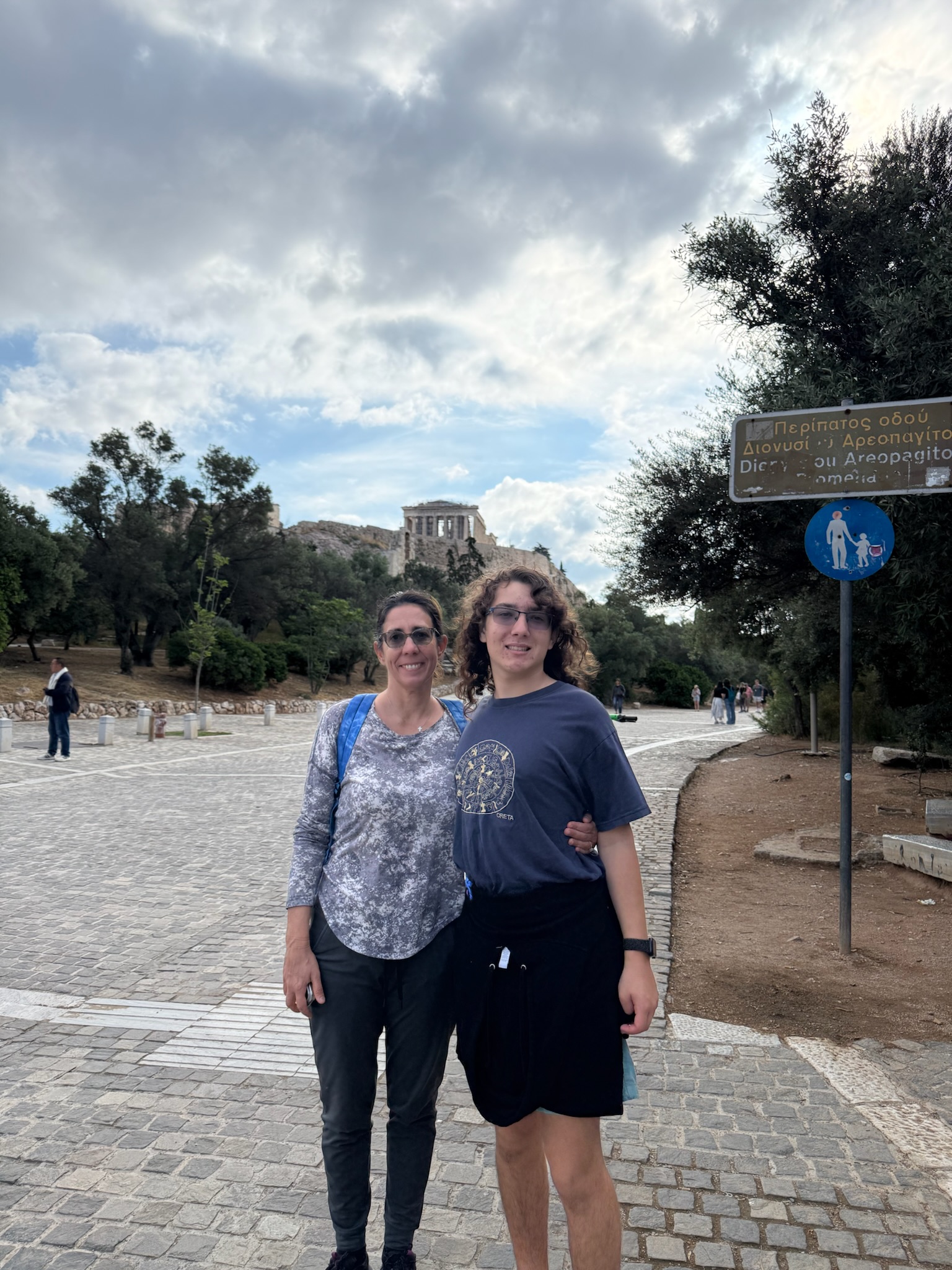
We walked up the marble paved walkway to the ticket booth. The first available tickets were for 1000, with a 0945 entry. Yay! The tickets cost 30 Euros ($33 USD) for adults; children 17 and younger were free… but we had to show Keith’s passport to prove that he really was a child. We had more than a half-hour to kill, so we walked over to a nearby viewpoint. The sign you can see in the photo talked about the Apostle Paul meeting with the Athenian political leaders. We were unclear if the meeting happened at this exact site or on nearby Areopagus Hill, which could be seen from this viewpoint.
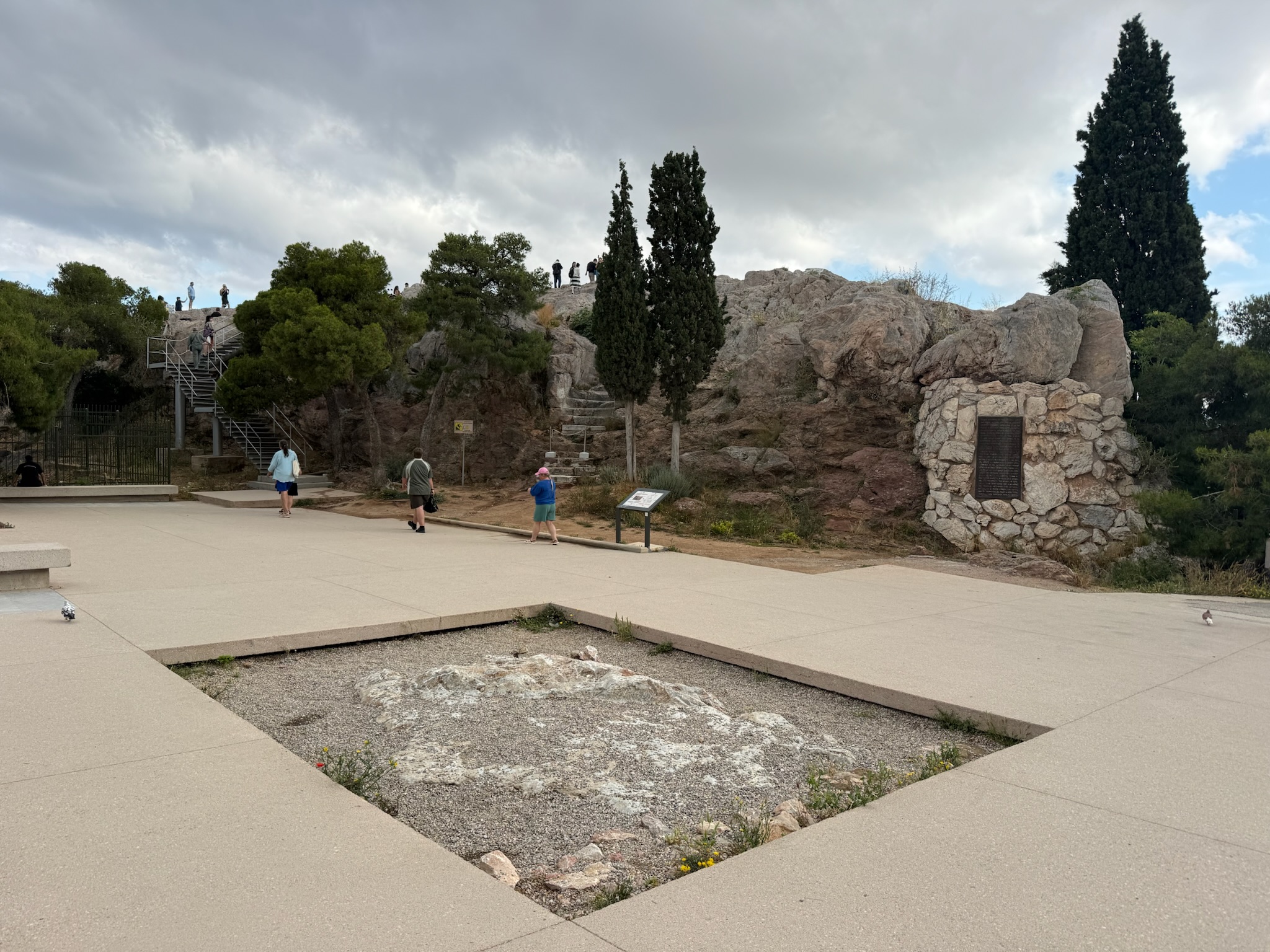
The stairs led to the top of a large marble rock that the tourists fanned out across. The rock was slippery! Here was the view of the Athens.
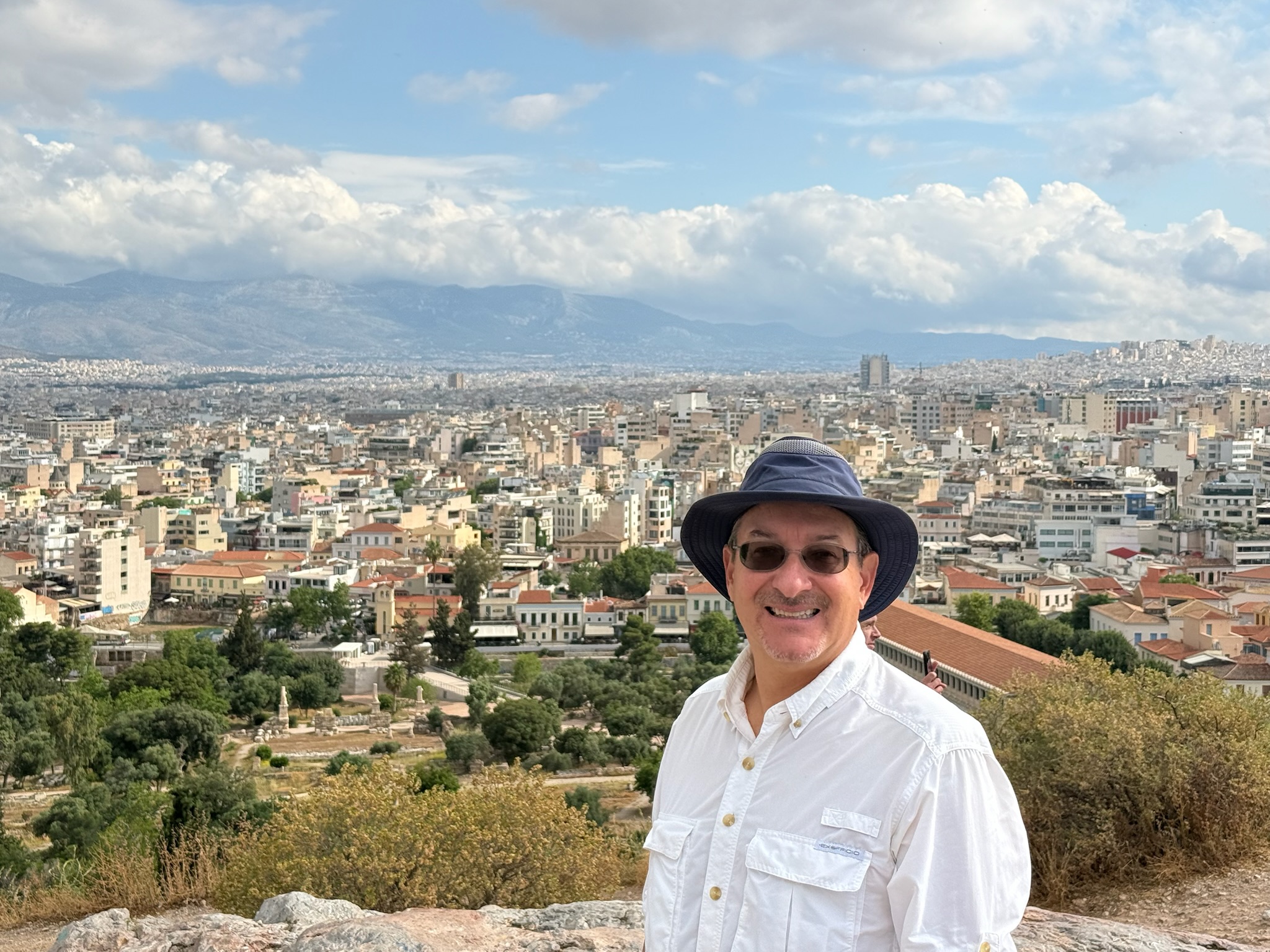
We’re guessing that was Areopagus Hill in the background.
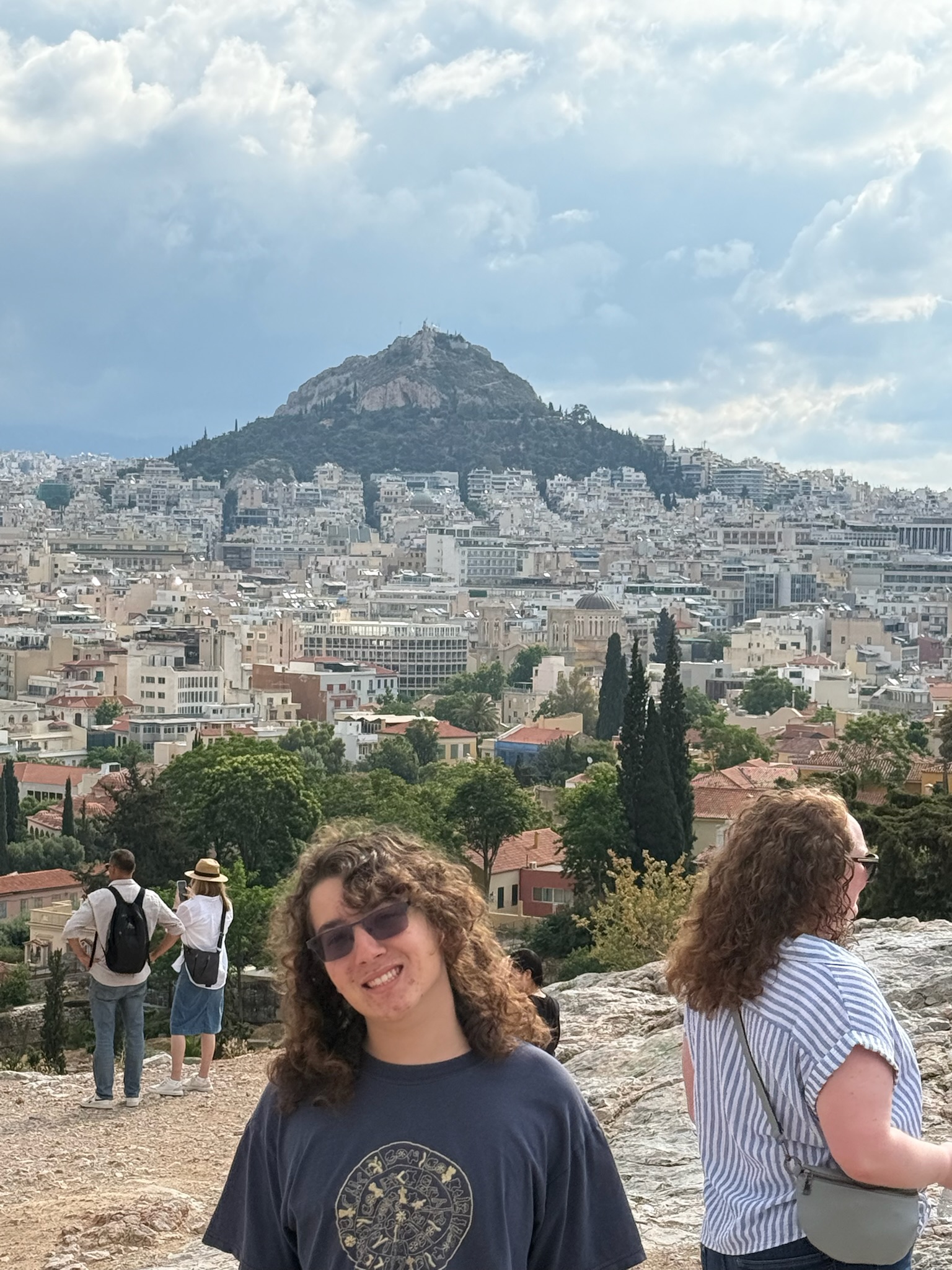
And the view of the Acropolis. The word “Acropolis” meant “high city.” It referred to a group of buildings built along the face of and at the top of the rock that dated back to the 5th century BC (the first buildings in the Acropolis were constructed in the 13th century BC, but the original buildings were destroyed by wars and natural disasters). Note the giant swarm of people on the slope towards the right.
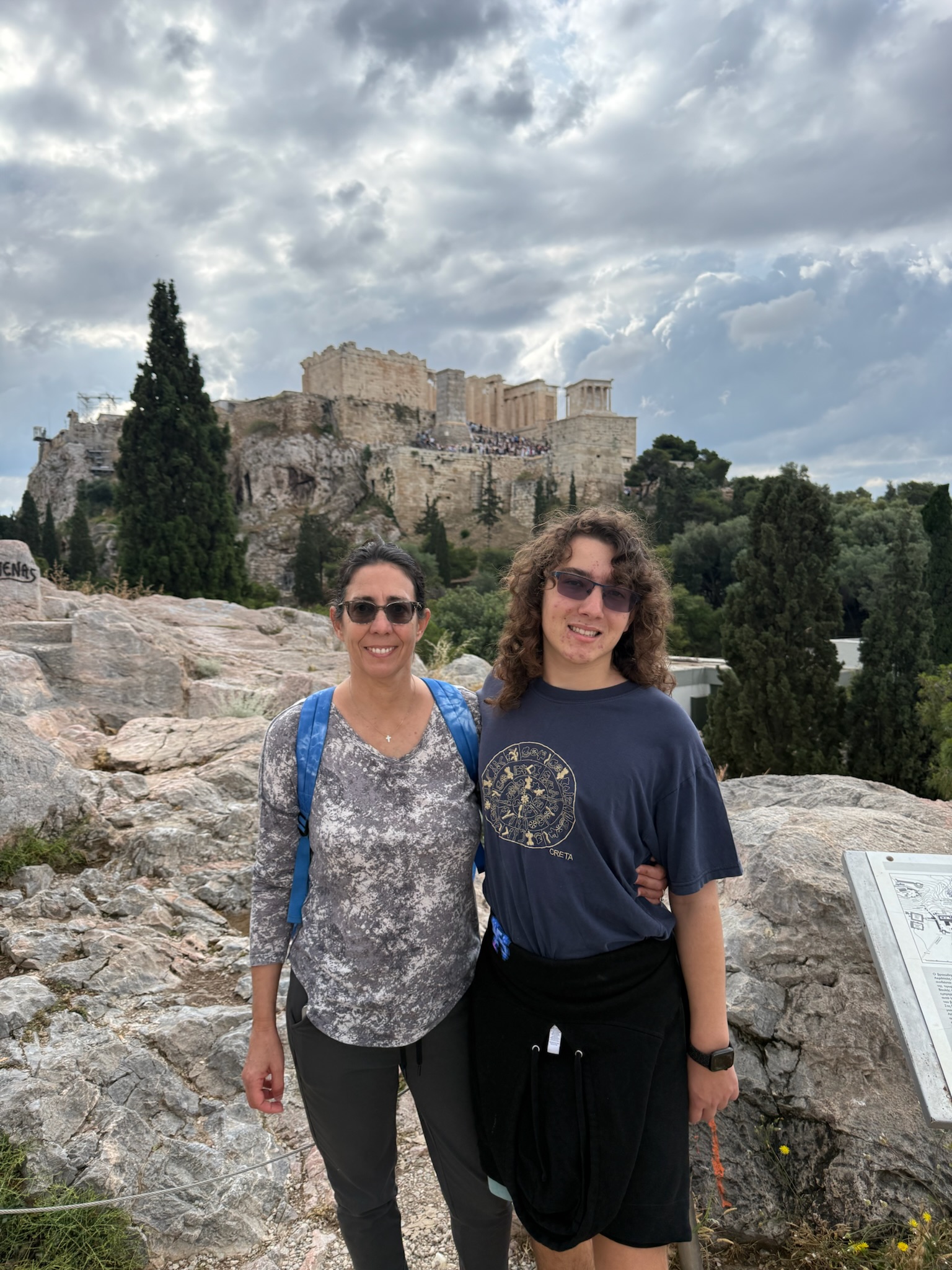
There was a great view of the ancient Agora from up there. Per the sign that we’d just read, the Apostle Paul met with people down there, too. The rectangular building was called the Stoa of Attalos and the octagonal one was the Church of the Holy Apostles.
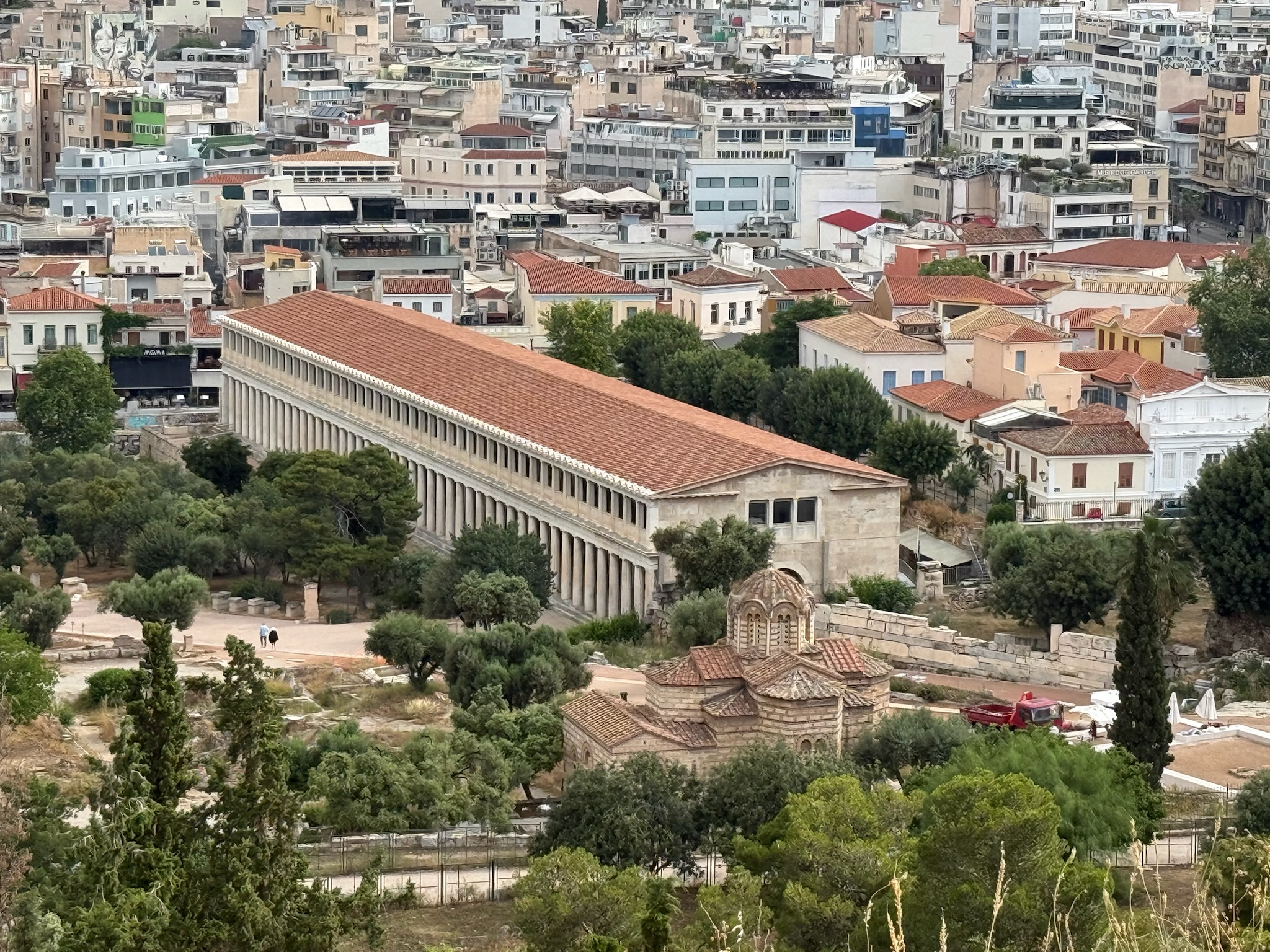
Here was the Temple of Hephaistos, also in the ancient agora.
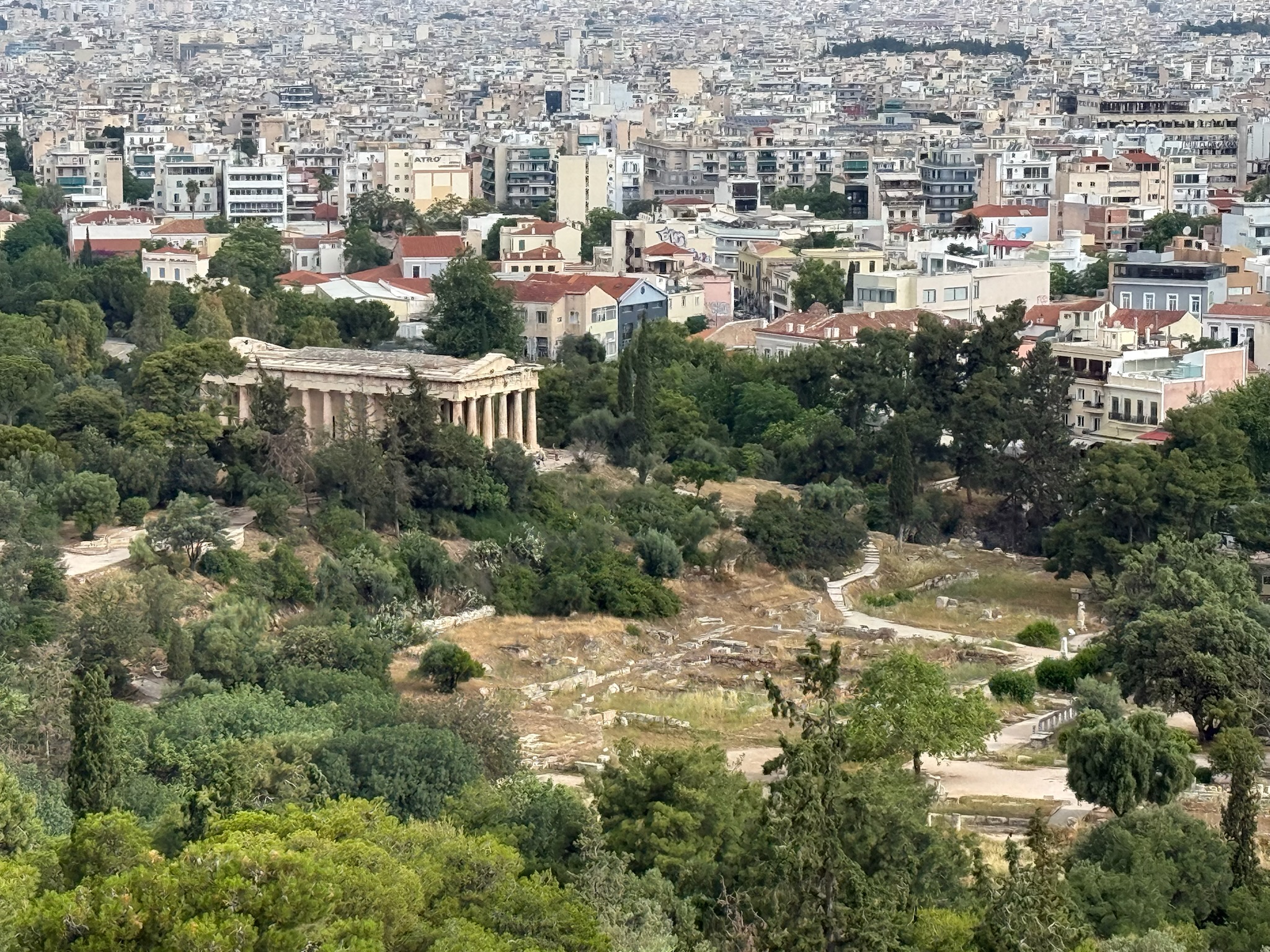
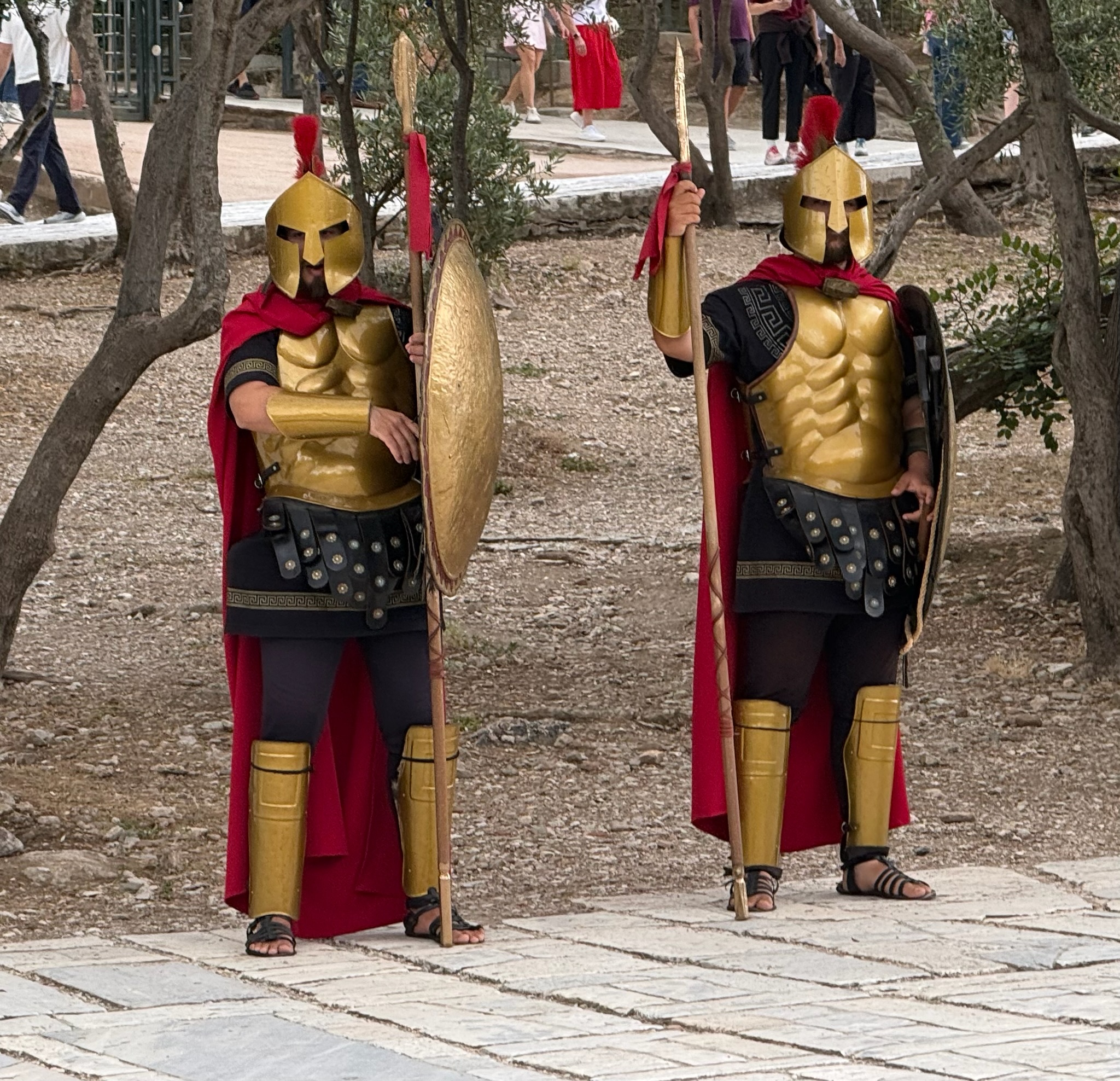
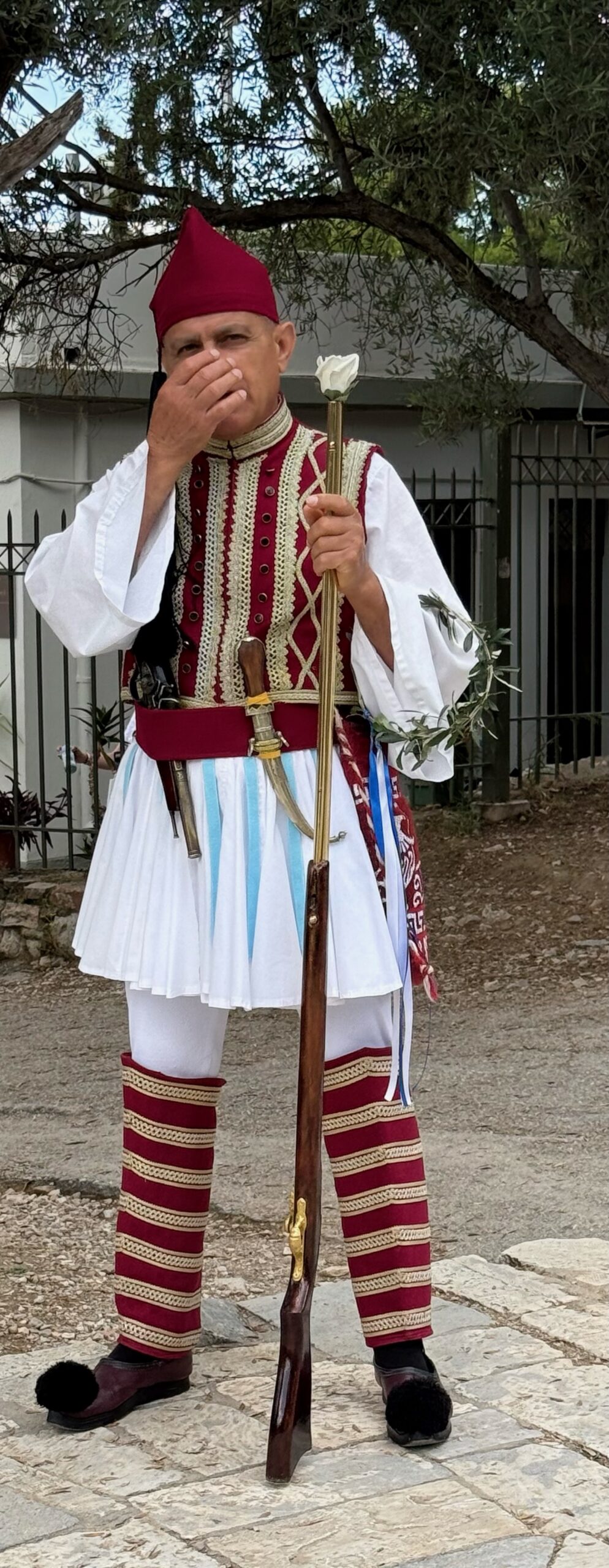
We headed back to the entrance to line up, stopping at the gift shop to pick up bottles of water on the way. FYI, there was some serious price gouging at this shop. We passed several men dressed in assorted traditional costumes that charged for photos. We managed to sneak a couple.
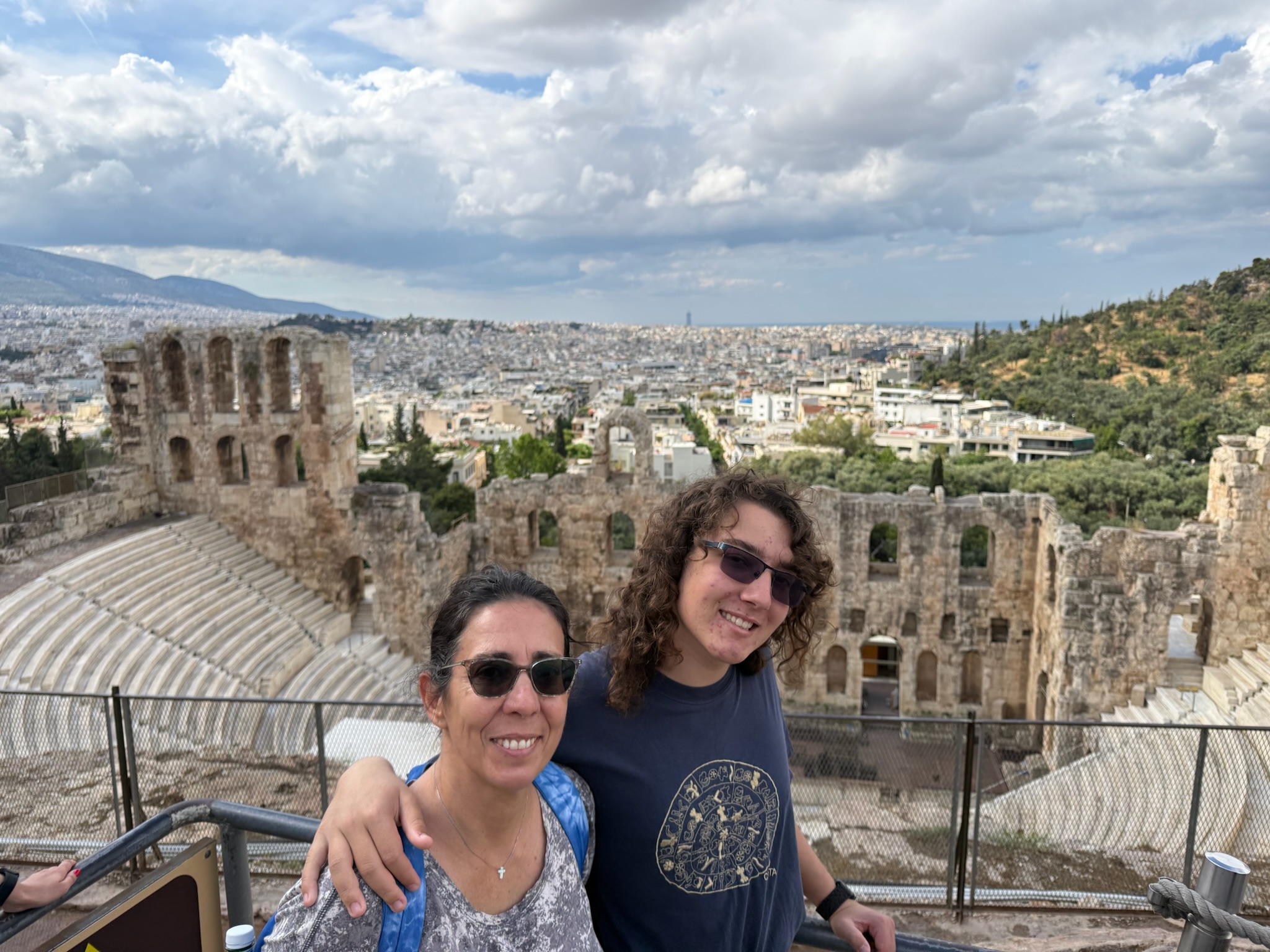
The scene at the entrance felt chaotic. There were several lines, and we got the impression most of them were for private tour groups. We found the 0945 line — and it was long. At 0945, they let our group start walking up the switchbacks towards the Propylea, which was the name of the building on the west side of the rock that served as the official entrance into the Acropolis. Thanks to the line moving so slowly, we were able to snap a photo of the Theater of Herod Atticus without slowing down the flow of traffic.
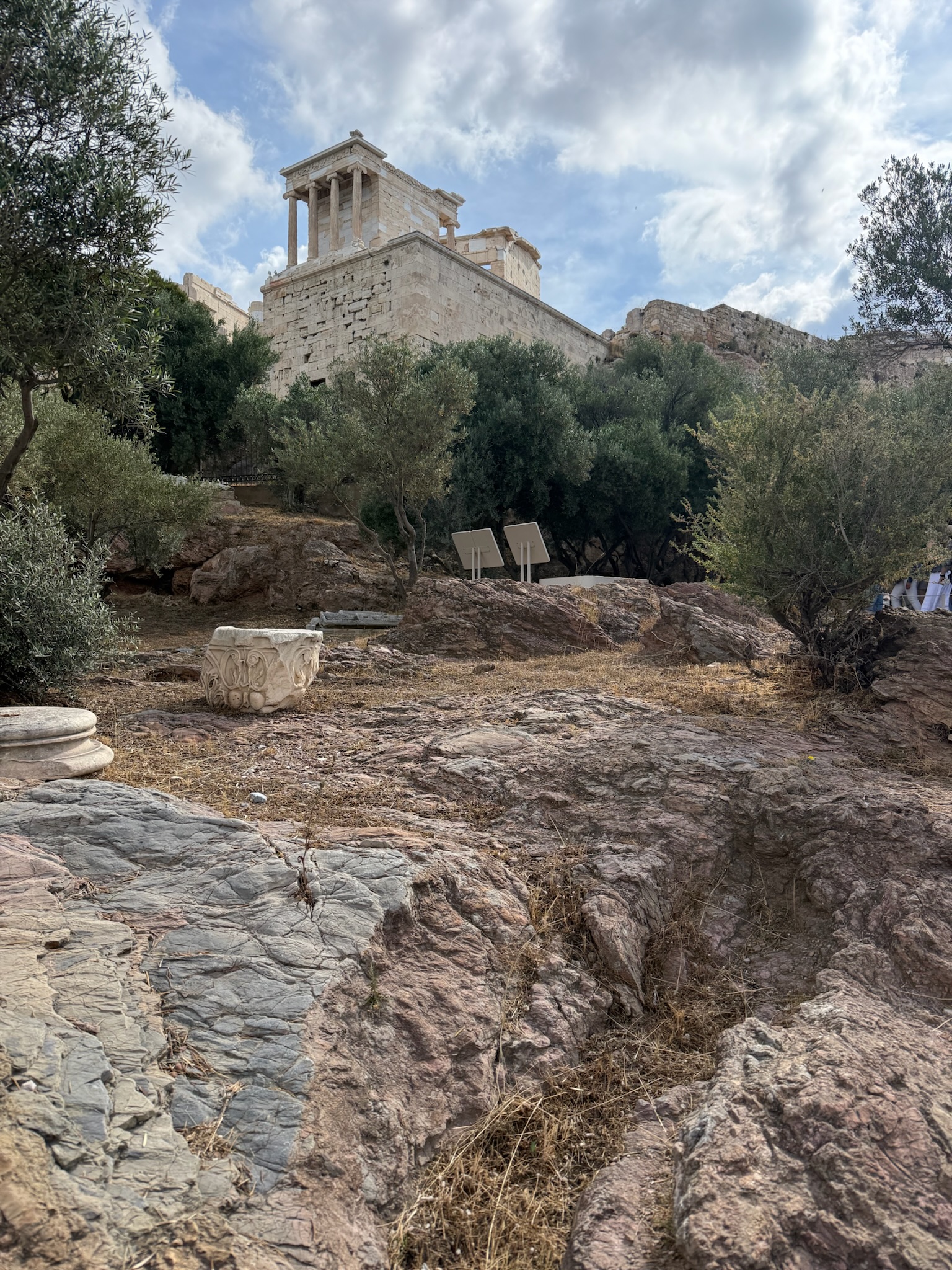
And here was a shot of temple devoted to the goddess Athena Nike, taken as we made our way up the switchback. This temple was next to the Propylea.
The switchbacks were crowded with people, making it feel a bit claustrophobic. The sidewalk soon became stairs and it felt even more claustrophobic. Here was the turn into the first “gate.”
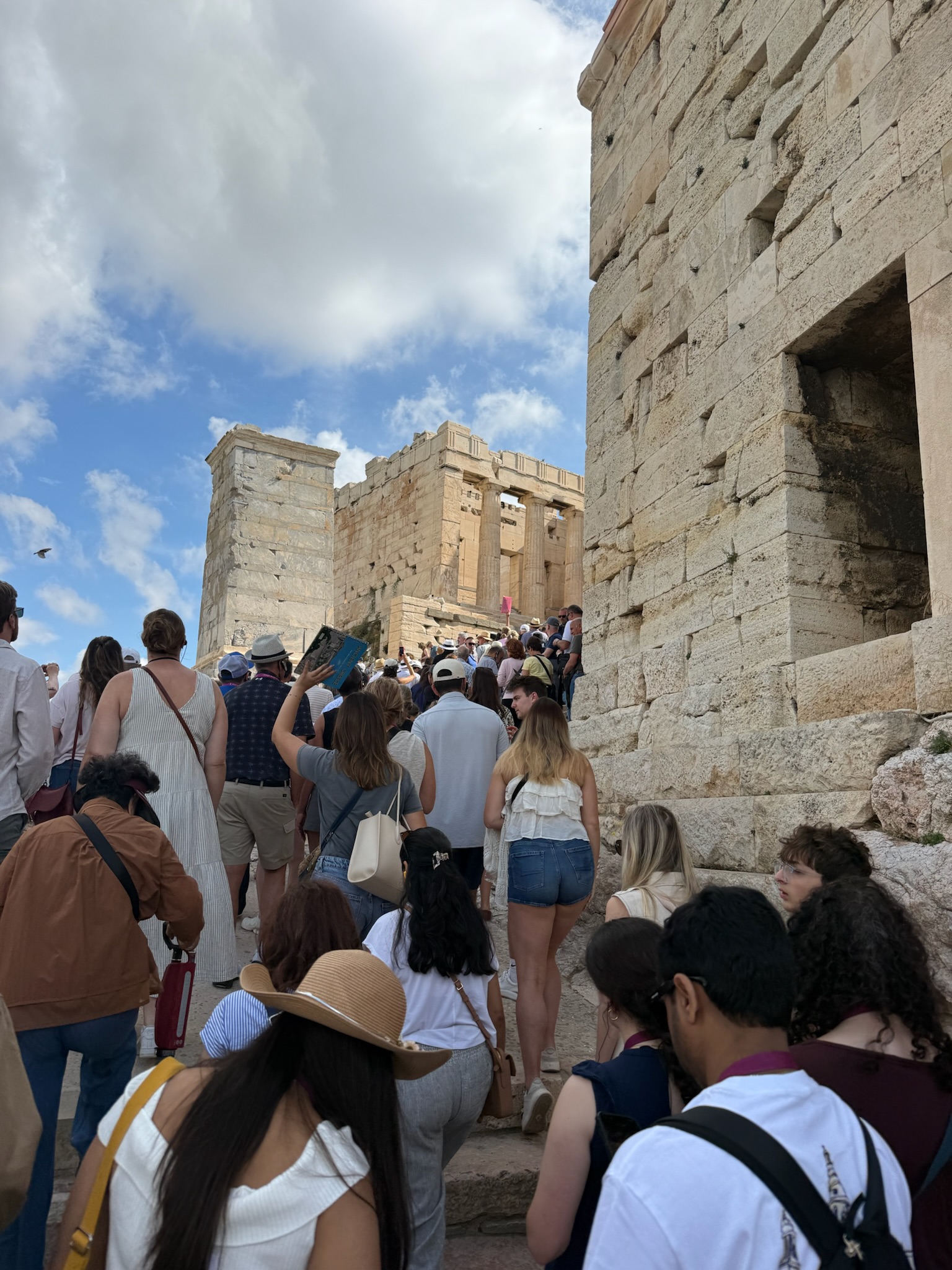
And we still had a ways to climb to get to the second “gate.”
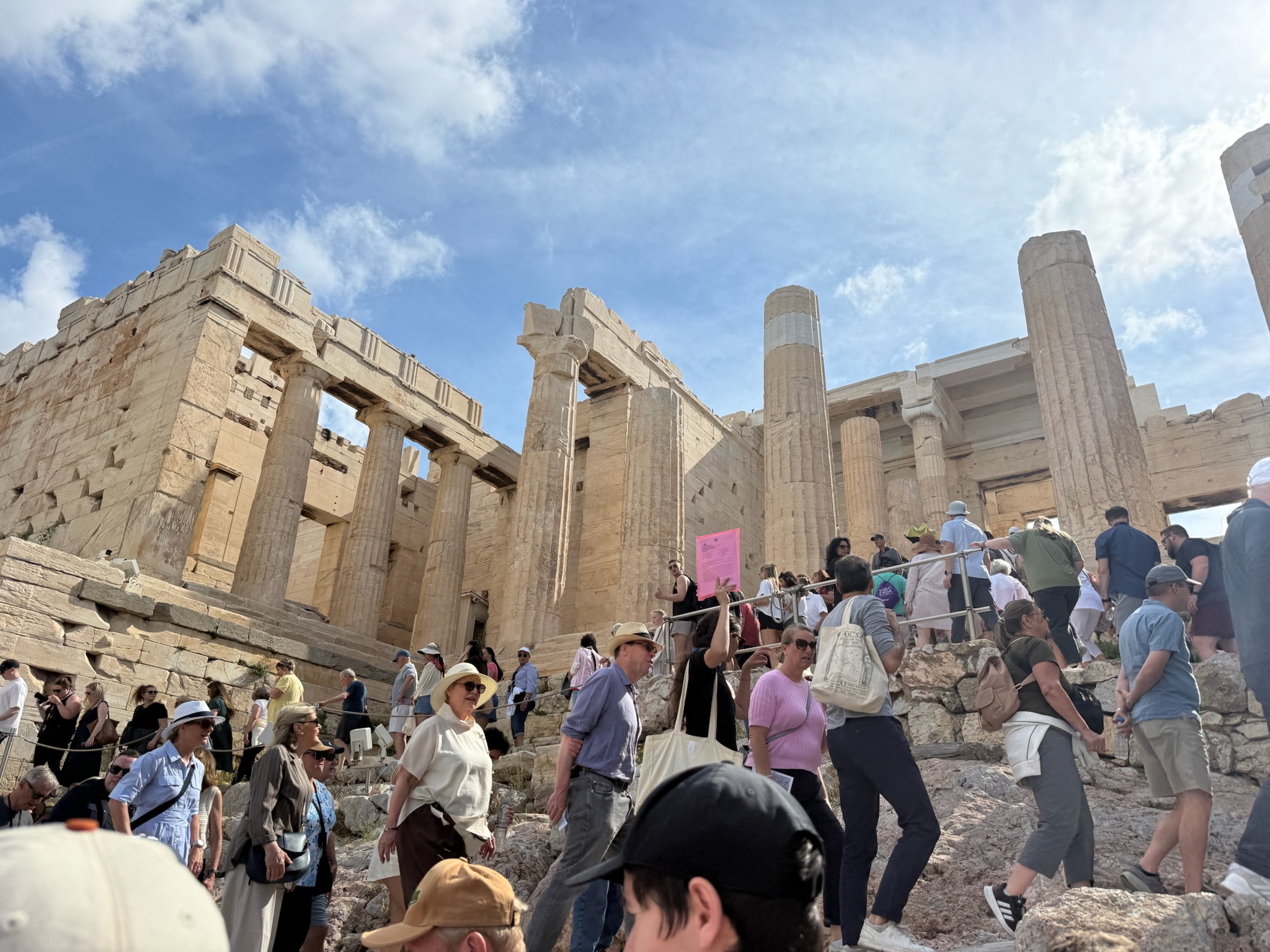
Walking through the second gate.
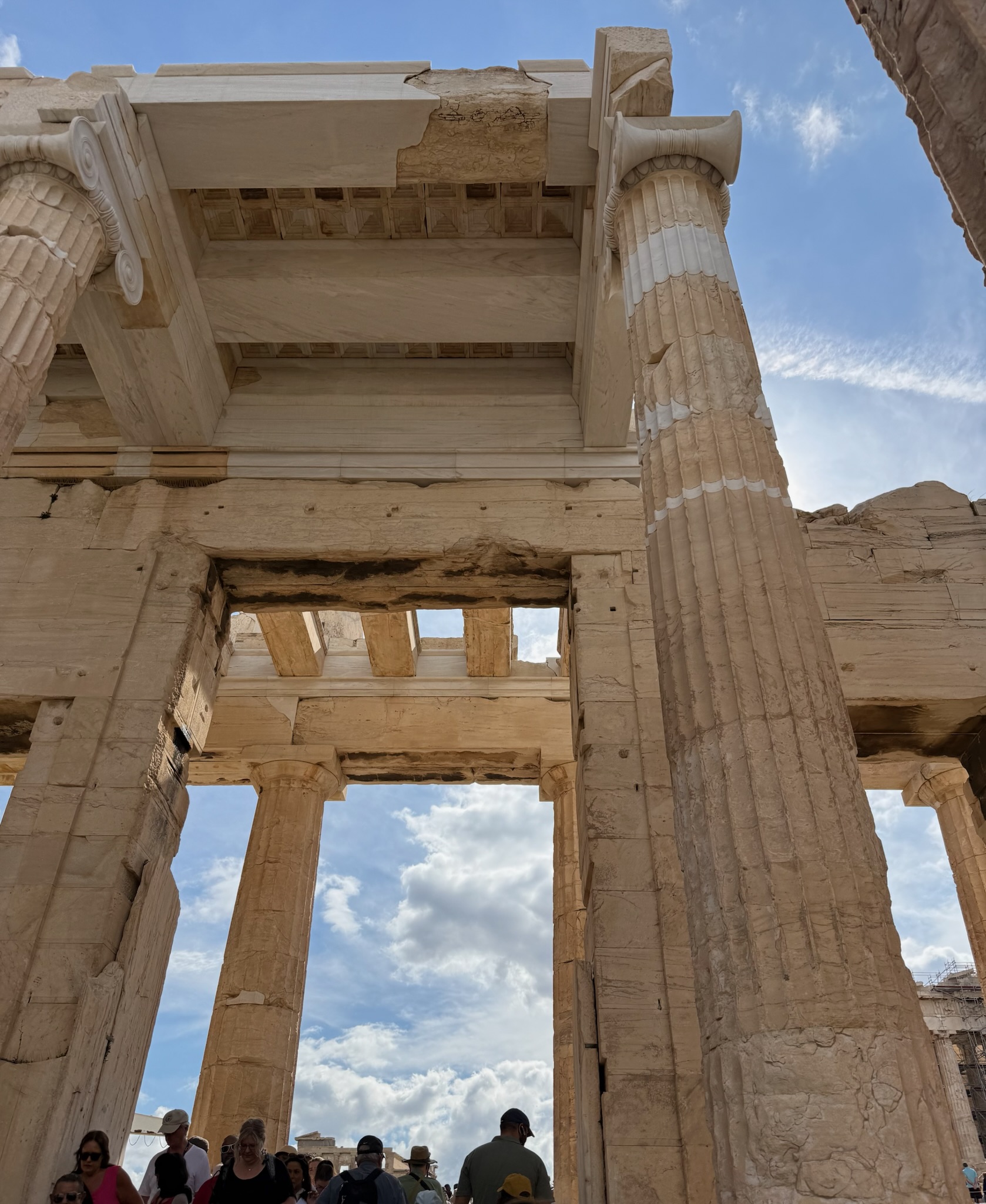
Once we cleared the gate, we could see the Parthenon, which was a temple devoted to Parthenos Athena (virgin Athena), straight ahead on the right. The Parthenon was arguably the most famous of the ancient ruins in the Acropolis. Ahead of us on the left, opposite the Parthenon, was the Erechtheum. We knew the Temple of Athena Nike was to our right, but the view of it was blocked by the Propylea.
This was the west side of the Parthenon. We’d heard that the scaffolding had been removed, and while there was less scaffolding than there had been in 2008, it wasn’t completely gone.
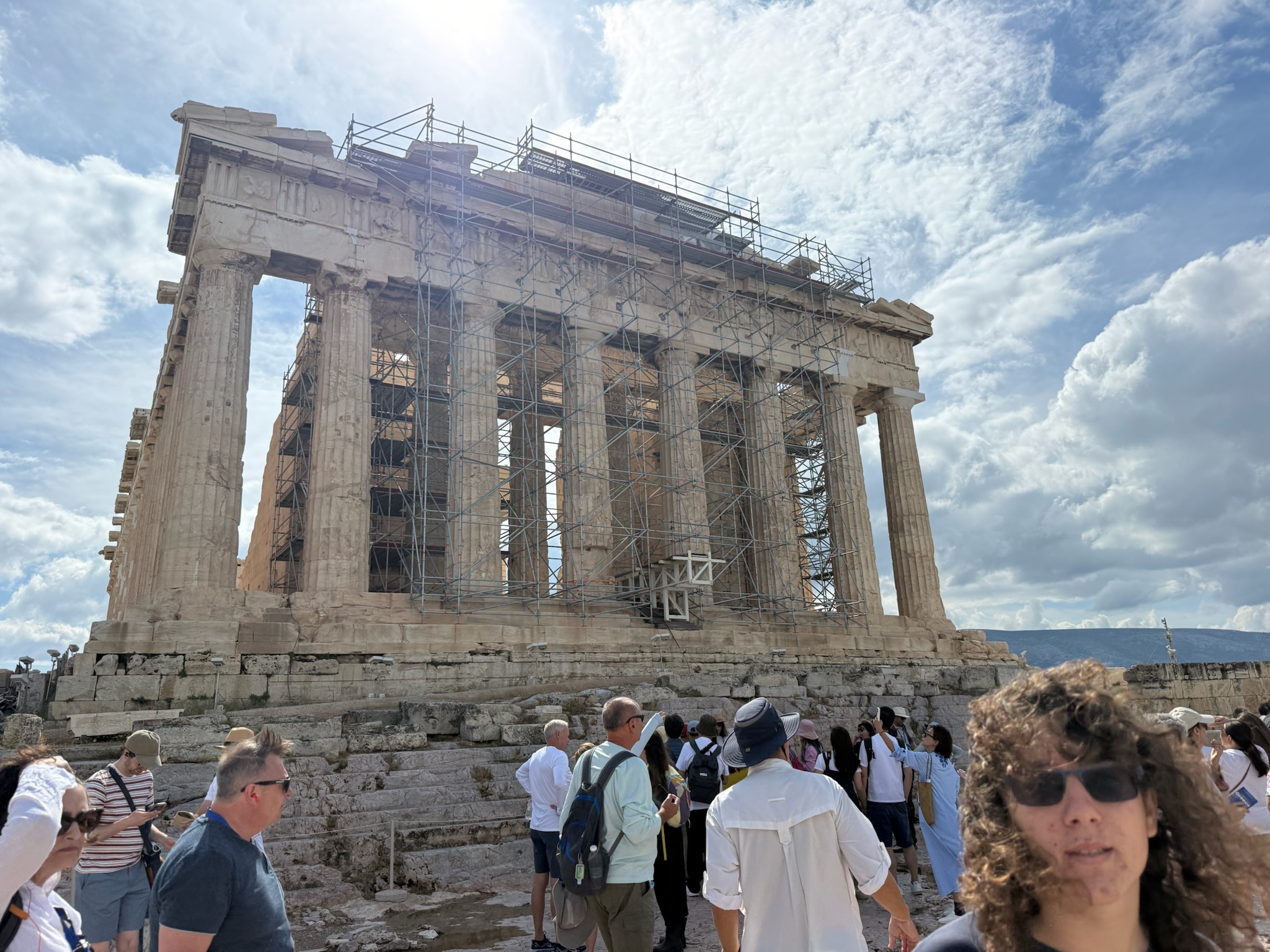
Here was the north side of the Parthenon.
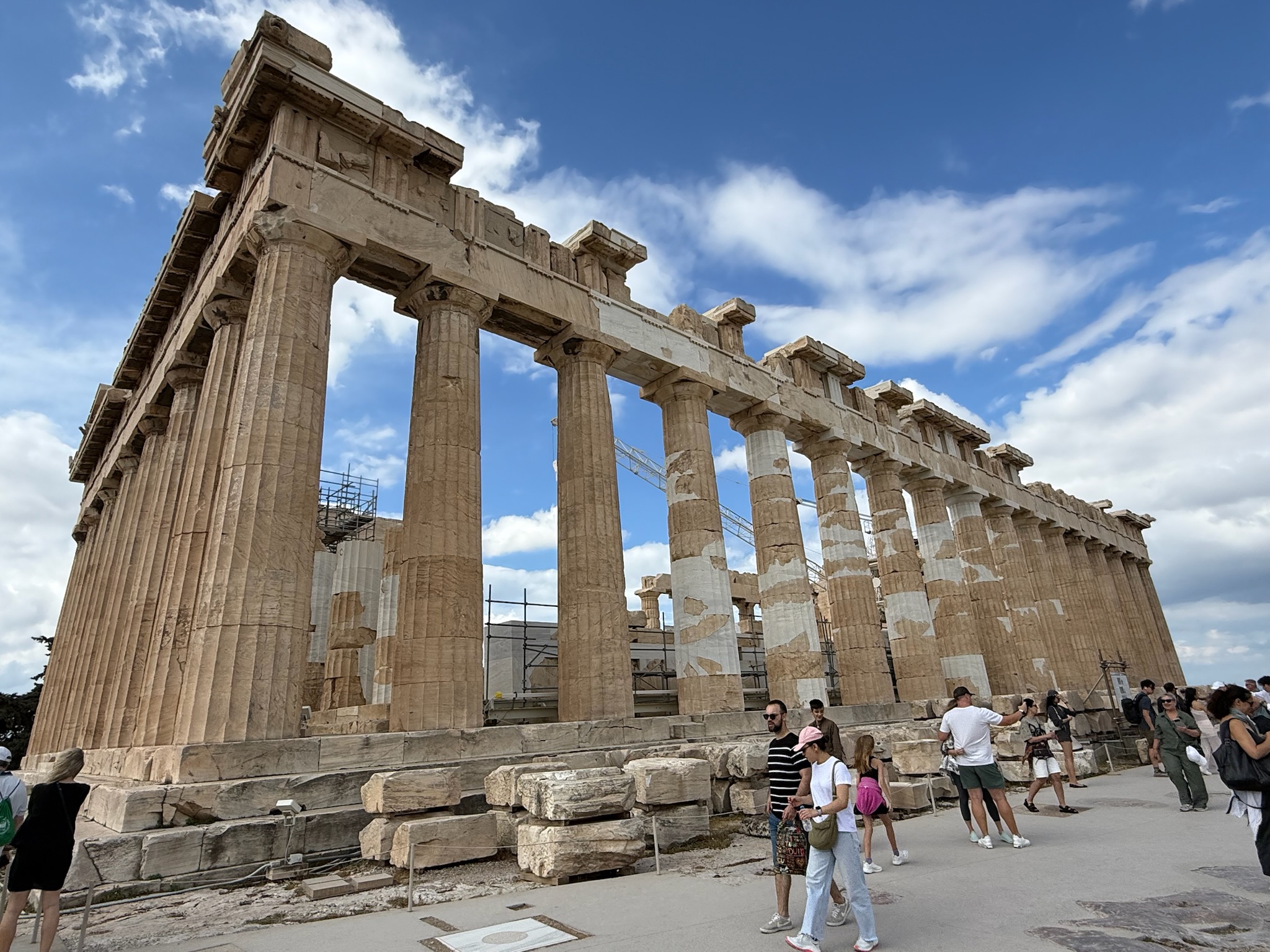
And the east side of the Parthenon. Per a sign, the debris in the foreground of this photo was the remains of a temple devoted to the goddess Rome and to Roman Emperor Octavian Augustus and was probably built between 19 and 17 BC.
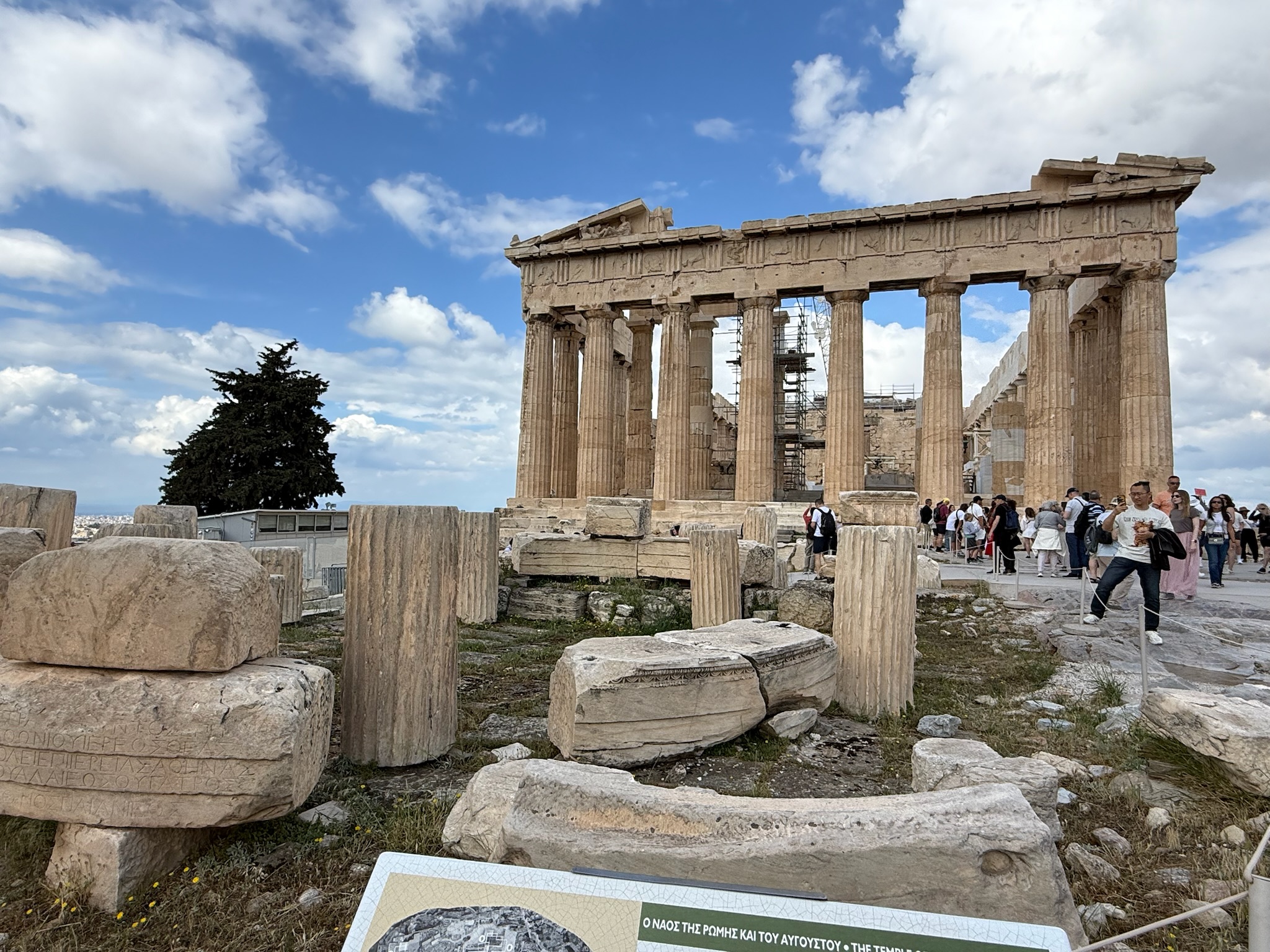
This was the east side of the Erechtheum. If you look carefully, you can see the columns on the left appear to go into the ground itself without a foundation like the columns in the middle and the right have. That was because it was built on a slope. A sign said that the scattered debris in the foreground of this photo was the “Old Temple,” dedicated to Athena Polias, which was built around 500 BC and destroyed around 480 BC by a Persian invasion. Prior the temple, there was a Mycenaean palace on the site.
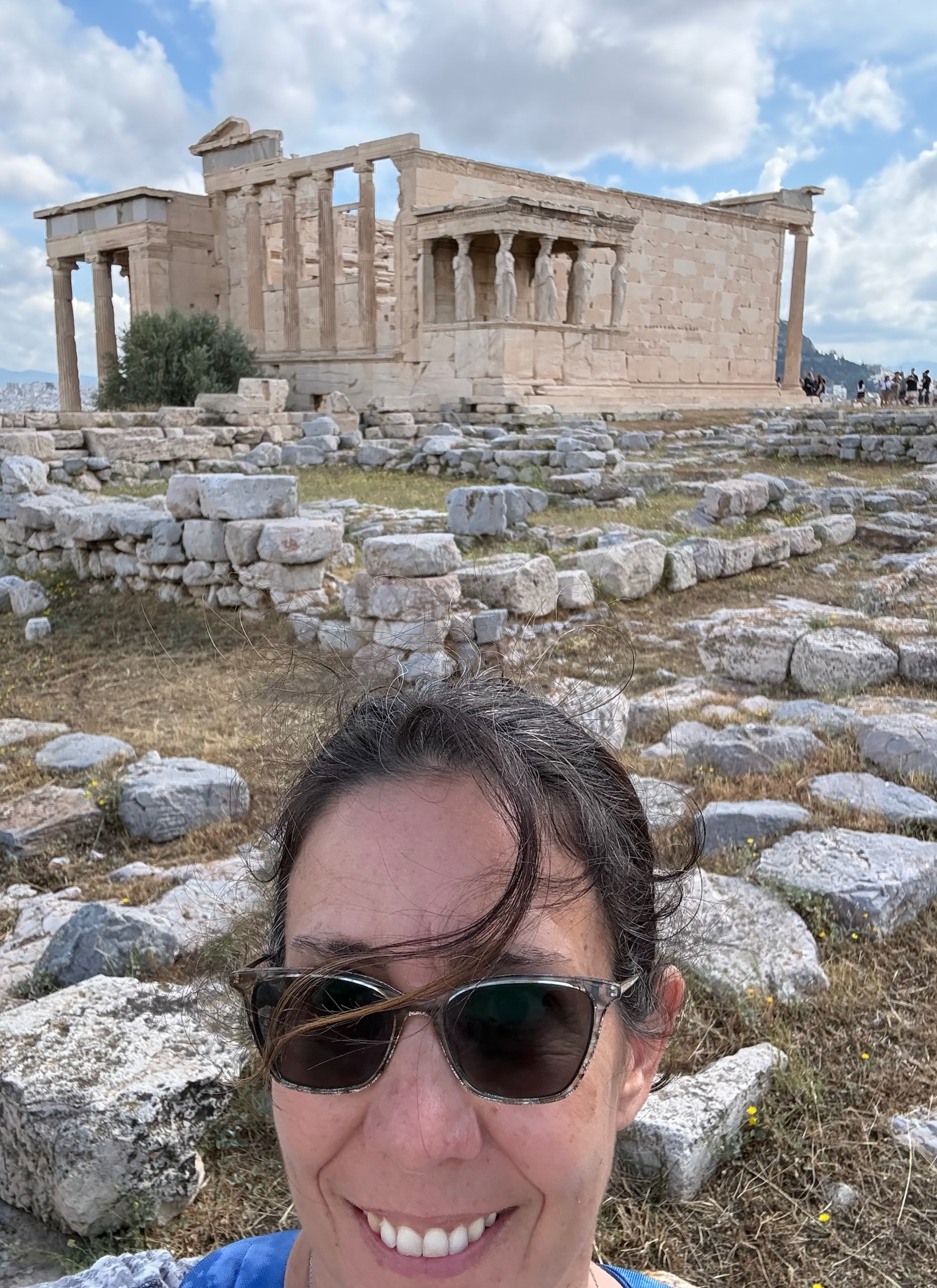
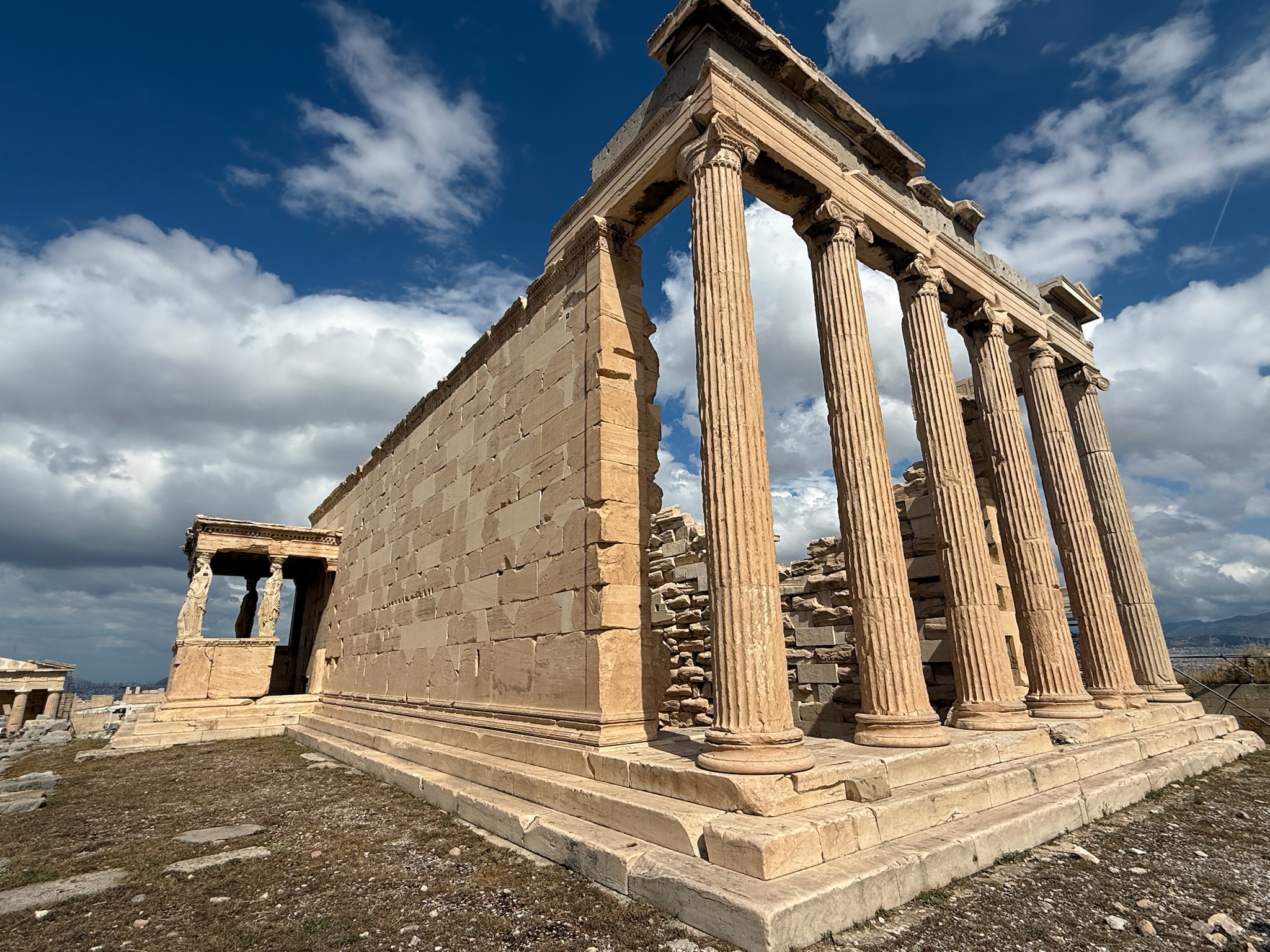
Here was the Erechtheum from another angle. In 2008, we’d written “It is built on the holiest of holy sites up there.” A sign indicated that the building protected a salt spring that was important in the traditional mythology and the tombs of two kings, one of whom was Erechtheus. The porch with the columns shaped like women was part of the tomb of King Kekrops. Scholars have not come to a consensus on which deity/deities it was built to worship.
The northeast corner of the Acropolis had what looked like a military battery topped with a giant Greek flag.
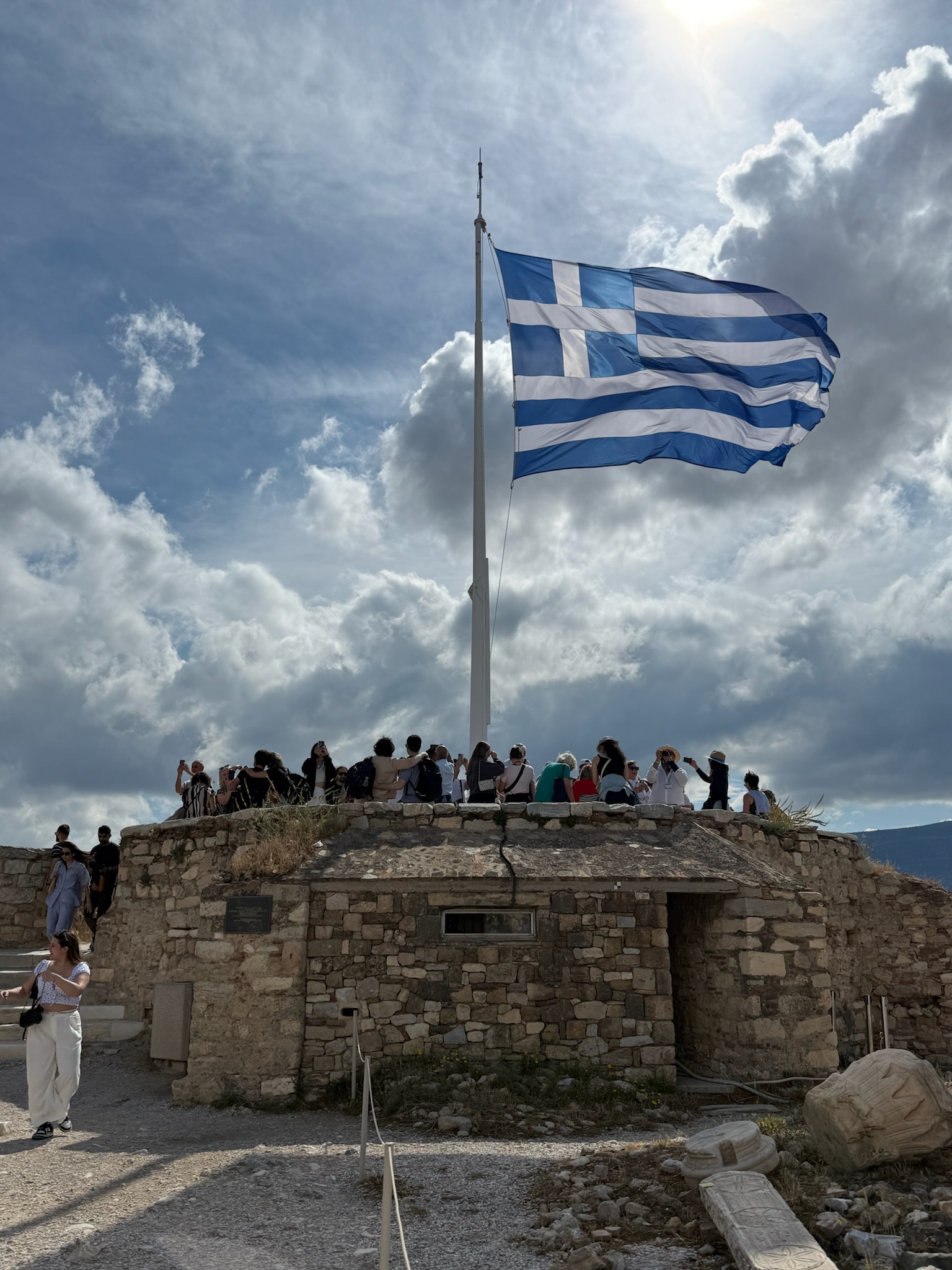
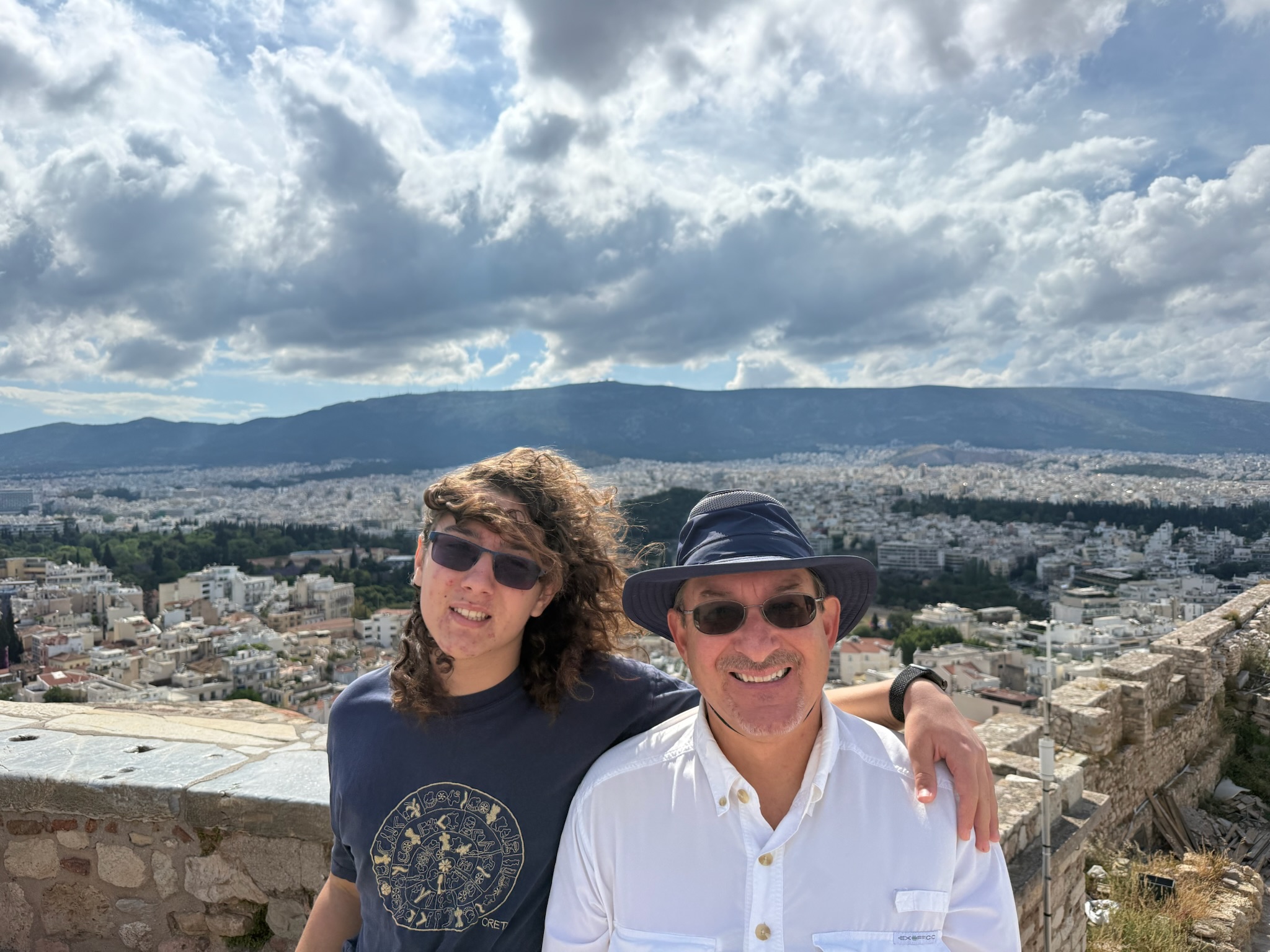
The battery was not open, but we could walk on top of it and enjoy the stunning views. Here was Athens below.
And a view of the top of the Acropolis, with the east side of the Parthenon visible straight ahead and the east side of the Erechtheum on the right. The low building on the left was the Old Acropolis Museum. Another Acropolis Museum exists now, and we didn’t think this one was open anymore — but we also didn’t check.
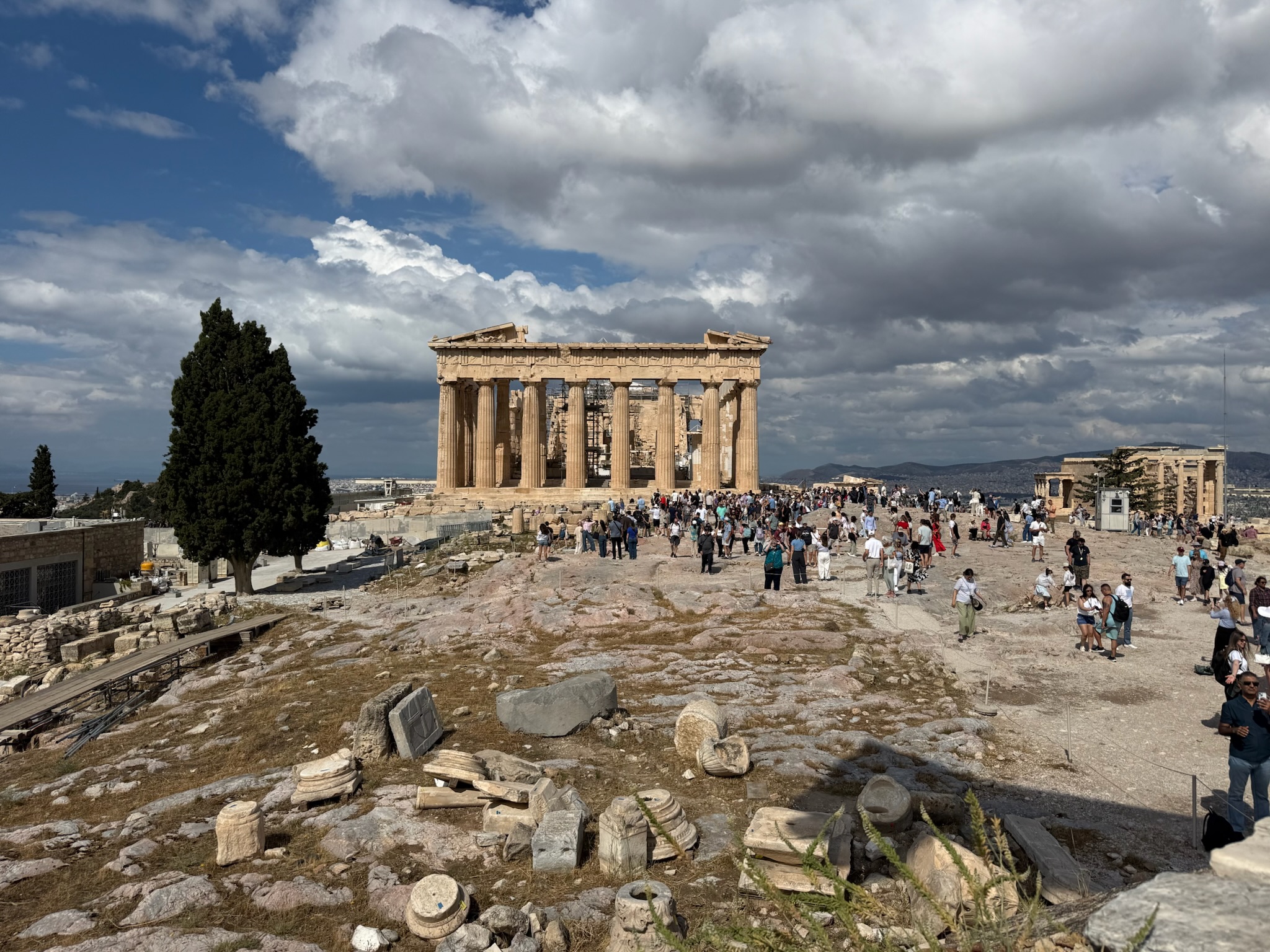
For the entirety of the time we were in the Acropolis, people poured in en masse and it seemed that not many left. It rapidly got more and more crowded and felt increasingly claustrophobic with so many people crowded together in the same key spots. We were becoming anxious to get away from the crowd and started moving back towards the Propylea.
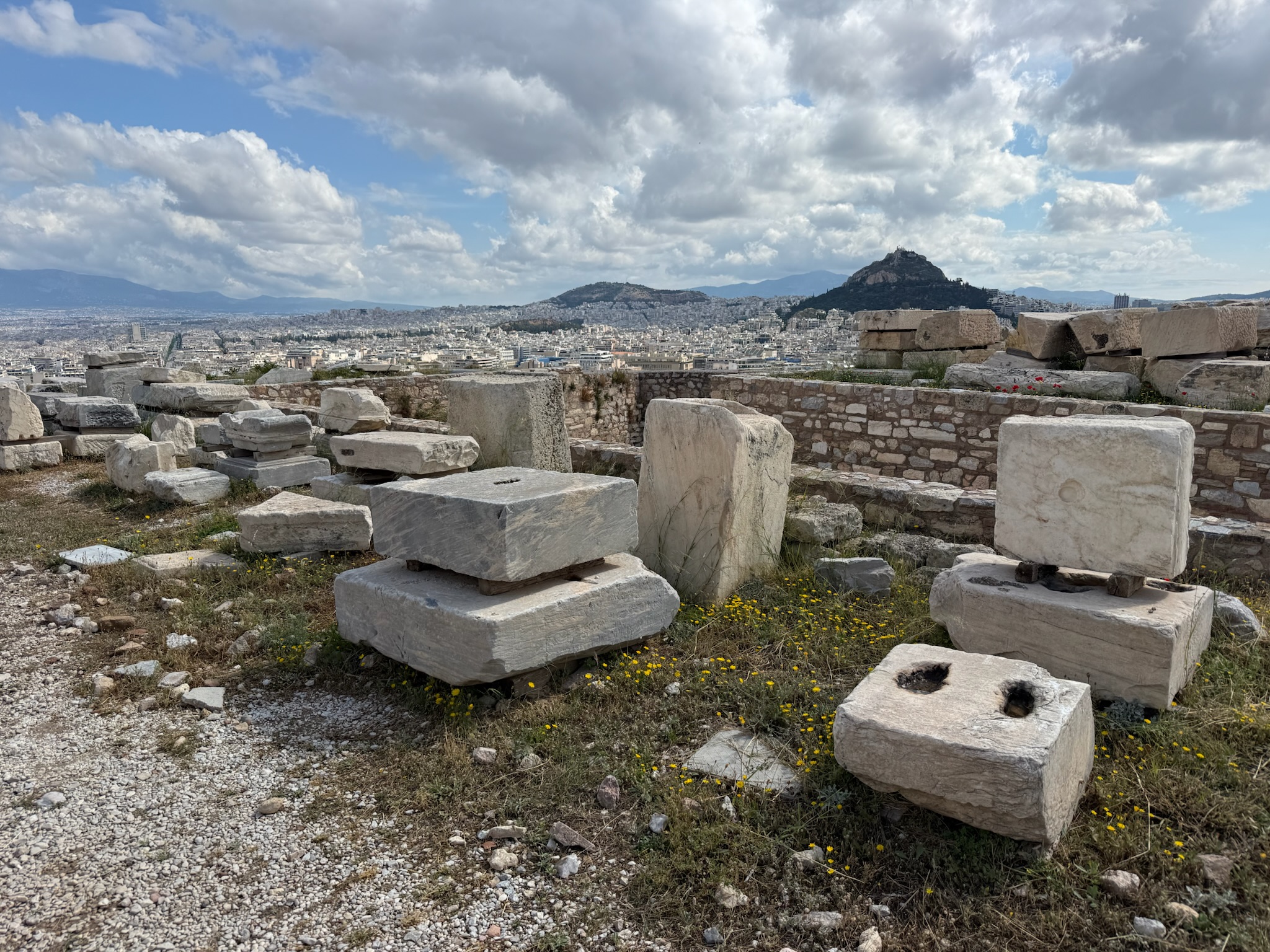
We followed the walkway along the south side of the Parthenon. As you can see in the photo above, there were fragments of ruins scattered all over the place, and there was a concentration of them near the southern walkway. There were many little areas where a few pieces had been laid close to one another, indicating that they belonged together.
To be continued…