
continued... The overarching theme in the exhibit on the changes in the way Americans ate was convenience. At the Museum of Industry, we’d learned that by the 1880s, canning food had become an important industry that continued to grow in the 20th century. We’d also learned that other types of food processing became important industries at about the same time, such as meat processing to make foods like sausages and deli meats, etc. According to this museum, by 1900, ready-to-eat convenience foods had became an important staple in American diets.
These convenience foods were made possible thanks to innovative technologies that allowed for mass production. For example, in 1840, a machine was invented that made 1500 tin cans per day. Prior to that, a can maker could only produce 60 tin cans per day. Had the machine not been invented, canning could never have become a giant industry. As time marched on, more and more of these technologies were created, and there was a steady rise in the types of convenience foods that became available in the marketplace. Some examples this museum gave were automated donut making machines (1950), a tortilla making machine (1950), a machine harvester (1955) and a carrot stick slicer (1959).
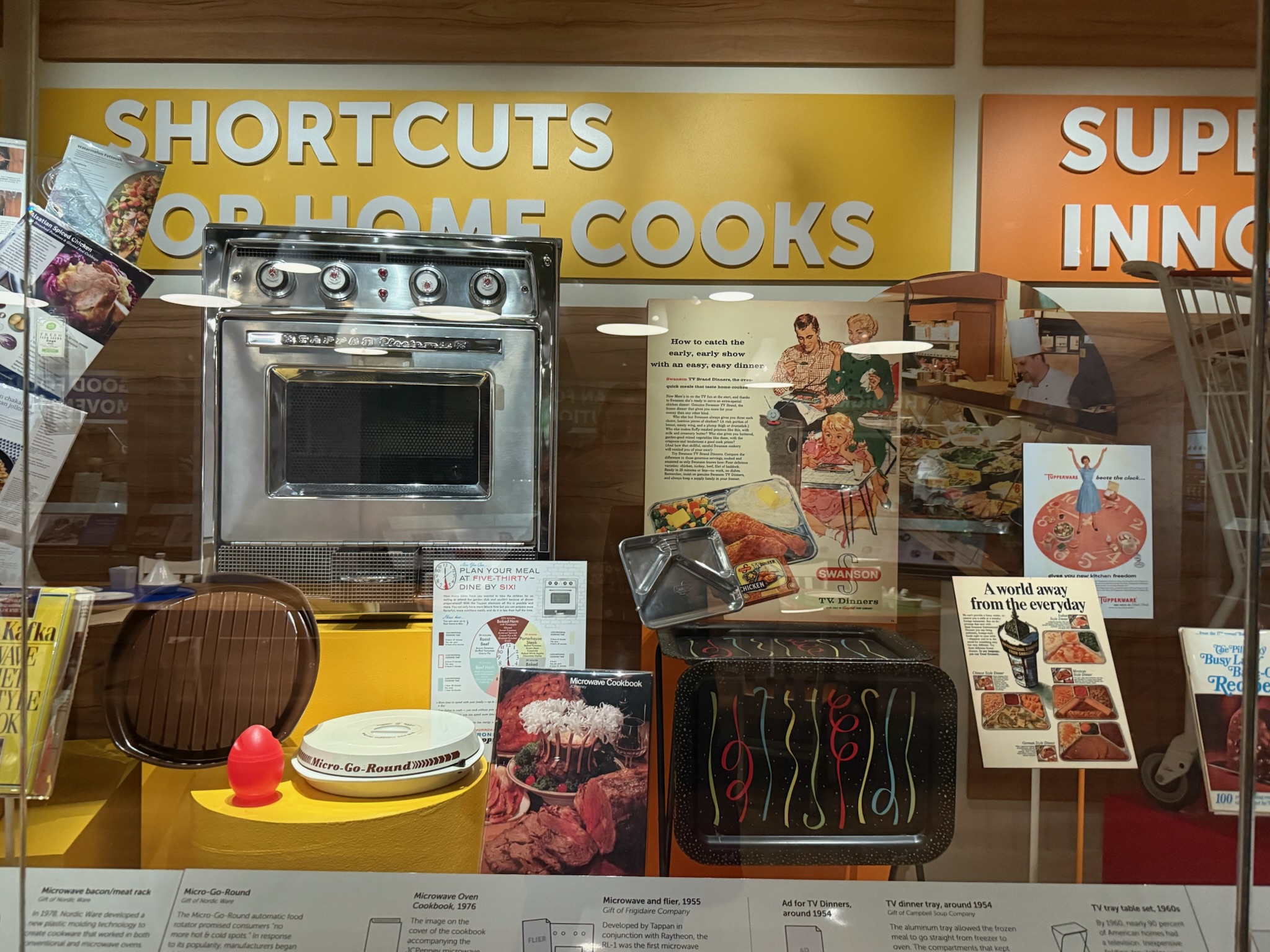
Convenience stores, such as 7-11, became popular in the 1940s. Convenience stores were usually small stores that primarily stocked foods and drinks intended to be consumed while on the go, though they also usually carried a few staples such as milk and eggs. Giant supermarkets became popular with the rise of suburbia, where there was space to build giant stores with ample parking lots.
The first frozen food hit the market shortly after World War II ended: frozen concentrated orange juice. This launched an entire new methodology of food preservation. The first frozen TV dinner was launched in 1954, marketed as easy-to-prepare, with a disposable tray so it was also easy-to-clean-up! Americans loved the concept of a portable meal that could be eaten in front of the TV.
The first big snack food was Fritos. In 1932, C.E. Doolin bought equipment to make chips by hand, then applied Henry Ford’s assembly line methods to his chips. By 1950, he was mass producing bags of Fritos and distributing them nationwide. This set off a snack frenzy. Manufacturers introduced a host of snack foods, always trying to come up with new shapes, flavors and textures to attract more customers. These foods were affordable and widely accessible, and Americans enthusiastically embraced them.
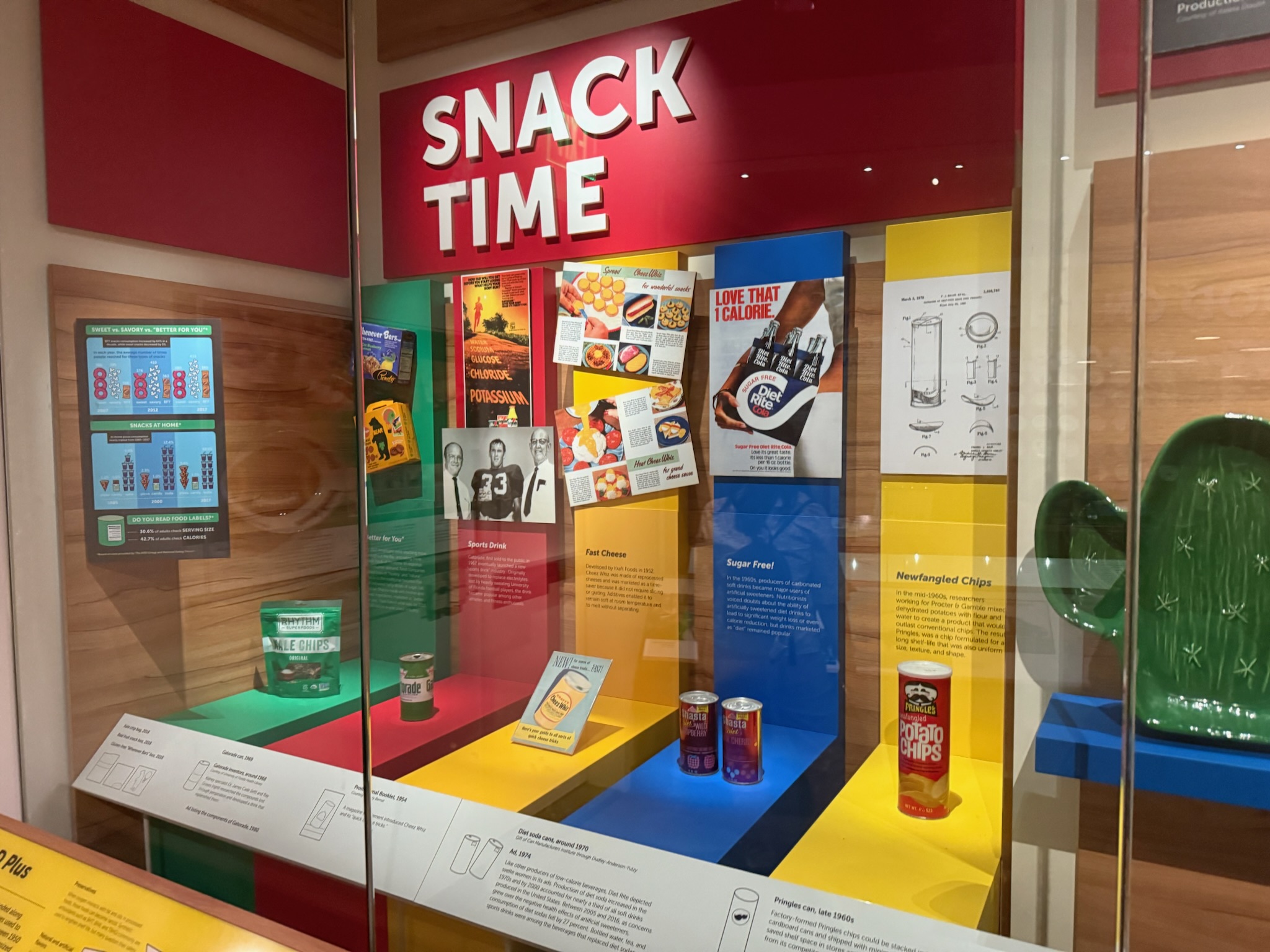
In the 1950s, eating in the car became popular. Drive-in restaurants featured waitresses who came to your parking spot to take your order/deliver your food. Later, the waitresses were replaced with drive-through windows. Restaurants that catered to customers who intended to eat in their cars formulated their menus to items that could be easily eaten with one hand while behind the wheel. By the 1980s, fast food restaurants estimated that half of their business was from the drive-through window (the other half would park and walk inside). In 2014, a study was published that estimated that in the US, 20% of all meals were eaten in a car.

In 1950, the first snack tray for cars was marketed, making it easier to eat in the car. Cars began to include cupholders so people could consume beverages while driving… and the number of cupholders was important in marketing the vehicles! Innovative beverage lids allowed people to sip their drinks without taking the lids off.
On the darker side, in the 1950s, food additives began being used to enhance colors, textures, flavors, nutritional value, and most of all, the shelf-life of foods. Some were natural, but most were artificial/synthetic. The sign said there were concerns about how safe these added chemicals were to health, and cited a few examples of common food additives that were later determined to cause health problems, such as red dye #4, olestra and saccharine. Since the museum only implied this, we’ll come out and say it: most food additives have never been safety tested. The FDA simply assumed they were safe and labeled them as Generally Regarded As Safe (GRAS).
In 1956, construction began on the interstate highway system. The new road system almost instantly transformed the American food distribution system, making it easier for manufacturers and distributors to expand their operations on land outside of cities. This expansion favored large supermarkets at the expense of the small stores.
Another factor that helped to drastically changed the ways Americans ate was immigration. Before World War II, the United States favored European immigrants, but after the war, Congress changed immigration guidelines to encourage migrants from all over the world. This meant that Americans were exposed to many new types of foods that they’d never experienced before, expanding the American palate. Restaurants and specialty groceries catering to these ethnic groups opened and flourished. As the popularity of the various cuisines grew, the manufacturing of processed ethnic foods grew, as well. One example cited was El Chico Tex-Mex restaurant, started by a Mexican immigrant who opened a small restaurant in Texas in 1928. Over the decades, her family expanded it into a chain of more than 100 restaurants, and also had a line of canned and frozen foods that were sold in grocery stores. The museum credited the resulting national popularity of Tex-Mex cuisine to El Chico.
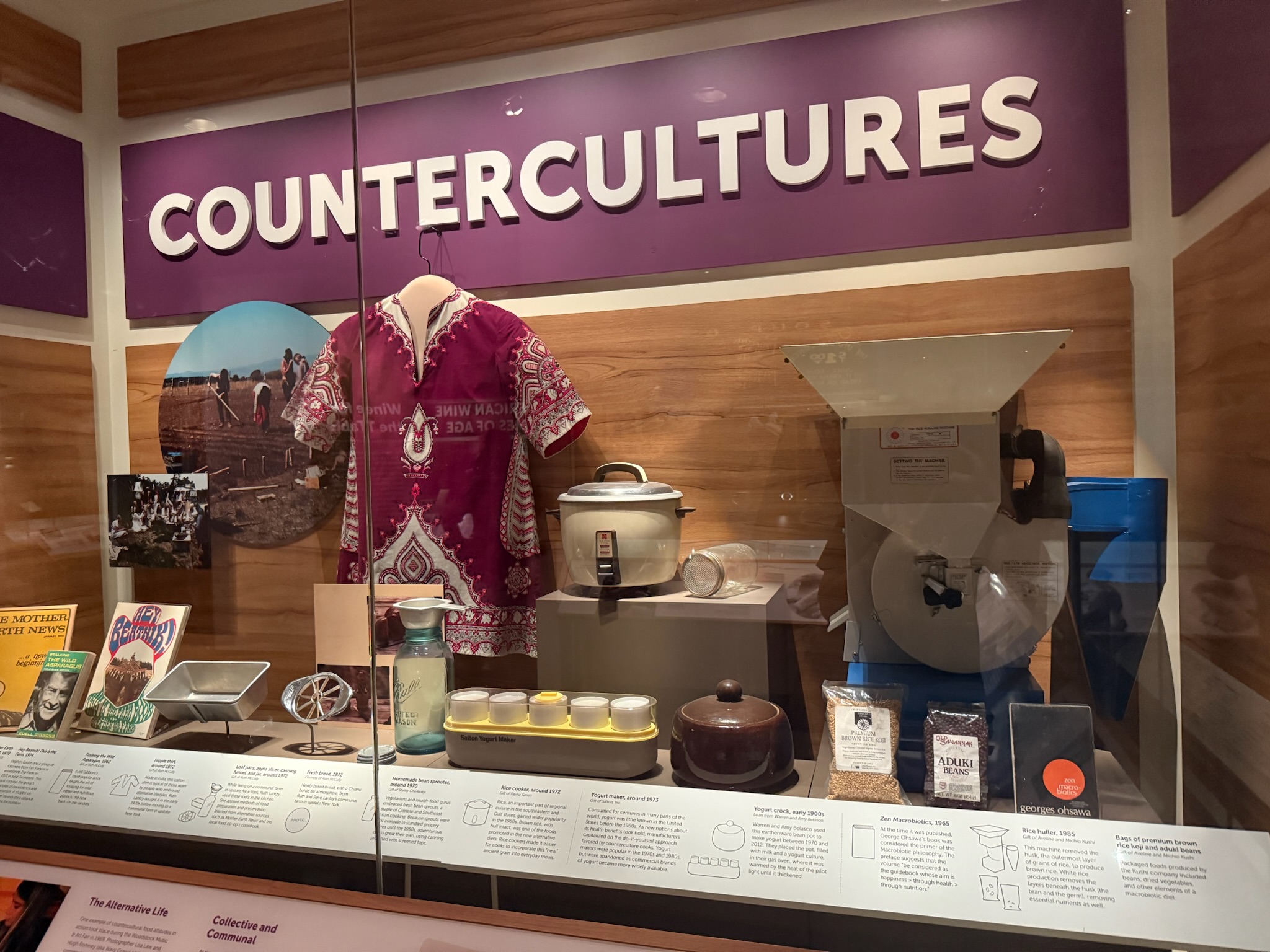
While the mainstream culture was pushing convenient processed foods, there was a counterculture pushing back, where people embraced making foods from scratch using quality ingredients. It sounded like there were two branches: 1. People like Julia Child who were into “good food,” meaning gourmet traditional cooking and 2. Hippies who sent political messages via food. To cite some examples, the hippies encouraged people to grow their own organic crops both to be more environmentally friendly and to boycott the exploitation of farm workers. They also encouraged eating vegetarian to be more humane to animals. At some point, the line between the two groups blurred.

The counterculture has steadily grown and has had impacts on different areas of society. Many low socio-economic communities in urban areas had a difficult time accessing fresh produce, and this movement has created urban gardens where people can grow their own produce. Many schools now include gardening programs in their curriculum to help children to understand where food comes from and how to care for the environment. An impact that we found surprising was that the counterculture helped grow the wine and beer industries.
According to the signs, people have tried to cultivate a wine industry since the country began — including Thomas Jefferson! It wasn’t until the late 1800s that California began to be successful — and shortly after, Prohibition was enacted. While Prohibition did seriously damage the industry, it wasn’t killed. The constitutional amendment had allowed exemptions for wines used for medicinal and religious/ceremonial purposes (ie communion), and people were legally allowed to make up to 200 gallons of wine per year for personal use. Grapes grown in California were shipped to people wanting to make wine at home. A few wineries were allowed to stay in business if they made wine solely for medicinal or religious/ceremonial purposes.
One of the wineries highlighted was the Concannon Vineyard, which Christi had visited when we’d lived in the Bay Area. Concannon opened in 1883 and survived Prohibition by being the official sacramental winemaker for the San Francisco Catholic Church. The winery was still family owned and was now operated by the fourth generation. The Concannon winery was gorgeous and a great place to visit if you are in the area.
After Prohibition was repealed, the University of California at Davis (near Sacramento) established a wine research program. They used science to determine which variety of grape was best grown in which area. They determined ideal spacing of plants and optimal trellising systems, best crop irrigation and pest control methods, etc. They developed a disease-resistant rootstock and new varieties of grapes.

Another important laboratory was opened at Beaulieu Vineyard in Napa Valley. Researchers introduced new materials, techniques and processes that helped reduce spoilage and increased flavor. Examples included stainless steel tanks, which were easier to clean and thus prevented bacteria from spoiling the wines. Plus, the tanks could monitor temperatures, which led to more stable wines with better flavor. They also started using colorimeter machines, which measured acid levels, and hydrometer machines to measure sugar levels. The correct balance of each ensured ideal flavor and texture.
California wines began to win prestigious awards at competitions, beating out renowned French wines. Wine makers started advertising campaigns to try to raise more of a demand for their product. And the gourmet facet of the counterculture encouraged wine with meals. Between 1968 and 1972, Americans doubled their spending on wine. As we’d learned at the Air & Space Museum, it was also an era where travel had increased. To attract more patrons, vineyards started hosting distinctive experiences and events. Places like Napa Valley became tourist destinations.

Beer had a somewhat different trajectory. It had been completely banned during Prohibition, and after Prohibition ended, home brewing was still illegal until 1978. The commercially produced beers on the market were light bodied lagers. By the 1960s, Americans were tired of the limited beer choices. The hippies were very into do-it-yourself foods, and home brewing became popular amongst that crowd. In 1962, UC Davis added a brewing science program to their course offerings, but it was intended primarily for commercial products. By the 1970s, people became more outspoken about their illegal hobby. They started to teach how-to classes and published how-to books. The first micro-brewery, meaning small scale commercial brewery, opened in Sonoma (which is near Napa Valley) in 1976. Being near the vineyards was deliberate, as some of the wine equipment was repurposed for beer.

By the 1980s, microbrewries, later renamed craft breweries, sprang up all over the country. At first they struggled with finding financing, sourcing ingredients, and persuading lawmakers, distributors, retailers and consumers, but by the early 2000s, small breweries had grown enough to challenge the dominance of the big breweries. Like wineries, many breweries made their facilities enjoyable places for people to hang out. The museum didn’t say this, but we wanted to point out that as of 2018 San Diego County was considered “the Craft Beer Capital of America”. At that point in time, there were 155 licensed craft breweries, which was the most of any county in the United States.
When we finished in the Food Exhibit, we moved on to an exhibit room called “On The Water”… To be continued…