Dawn on Friday, April 10, 2026
In school, Keith was currently studying about the United States’s rapid expansion during the 1800s. As part of the expansion, Native American people living in desirable locations were forced off their land and moved to less desirable locations. The Seminole Indians of Florida resisted, so the US waged three wars against this tribe and their allies. Many of these allies were either free blacks or runaway slaves that the Seminoles had welcomed into their tribe. These black people were referred to as Black Seminoles.
It was fortuitous that we happened to be studying the Seminole Wars while we were so close to where they’d occurred. We wanted to take Keith to a museum about the Seminole history and we found one that looked interesting in a town called Clewiston, located on the south shore of Lake Okeechobee and about halfway between the east and west coasts of Florida. Since it was nearly an equidistant drive between North Palm Beach and where Special Blend lived on the west coast of Florida, we asked them if they’d be interested in meeting us. They said they would.
In the morning, Eric talked to Yacht Tech about the sight gauges – unfortunately, those particular gauges weren’t made anymore. They decided the best course of action was to recycle the old gauges by changing the valves and cleaning up the corrosion. At the end of the conversation, Yacht Tech confirmed that no one was scheduled to come out to Kosmos today, so Eric joined Christi and Keith.
It was a 1.5 hour drive, mostly southwest, though we had to go north for a little bit after we rounded the bottom of Lake Okeechobee. At first, the scenery was mostly suburban sprawl, with track homes and strip malls, but once we got far enough away from the coast, the landscape became primarily agricultural. We passed many farms. A few of the farms had nice houses, but most of the homes were low-end, boxy bungalows. We drove through several small towns. We noted that the centers of the towns had quite a few abandoned small, older buildings and the outskirts had newer, boxy buildings with mostly low end chain restaurants and stores.
We met Martha and Christy at Beef O’Brady’s, which was a chain of Irish themed sports pubs that had started in Florida and since spread to other states.
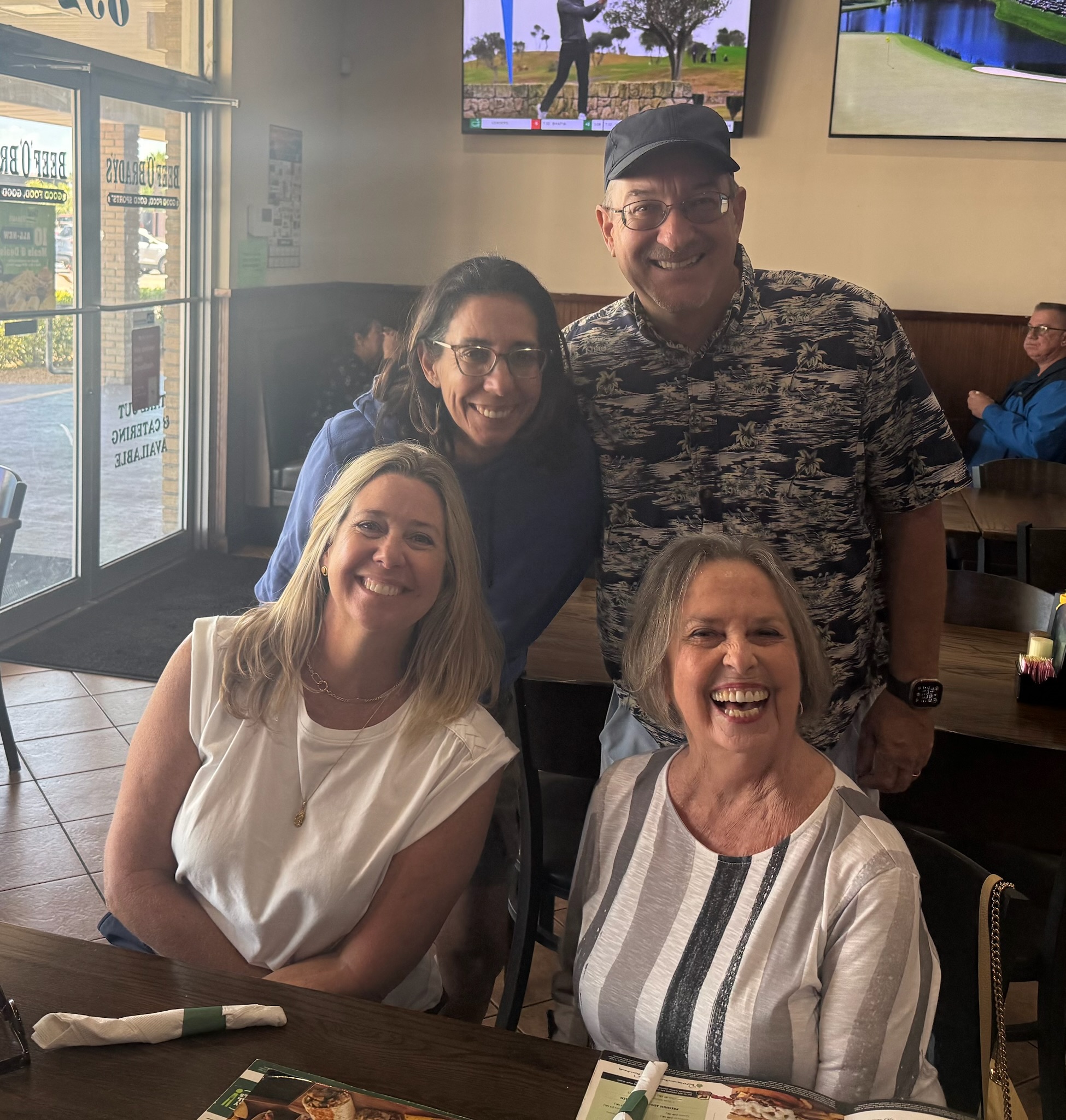
We had a nice time catching up with Christy and Martha on all that has happened since we last saw one another. Martha’s family has been in Florida for generations, and since we were here specifically to teach Keith about Florida’s history, she shared some interesting stories about past eras.
After lunch, all five of us headed over to the Clewiston Museum. It was located in a small, low building not far from the restaurant. In front, there was a chickee, which was a structure that the indigenous Native Americans utilized.
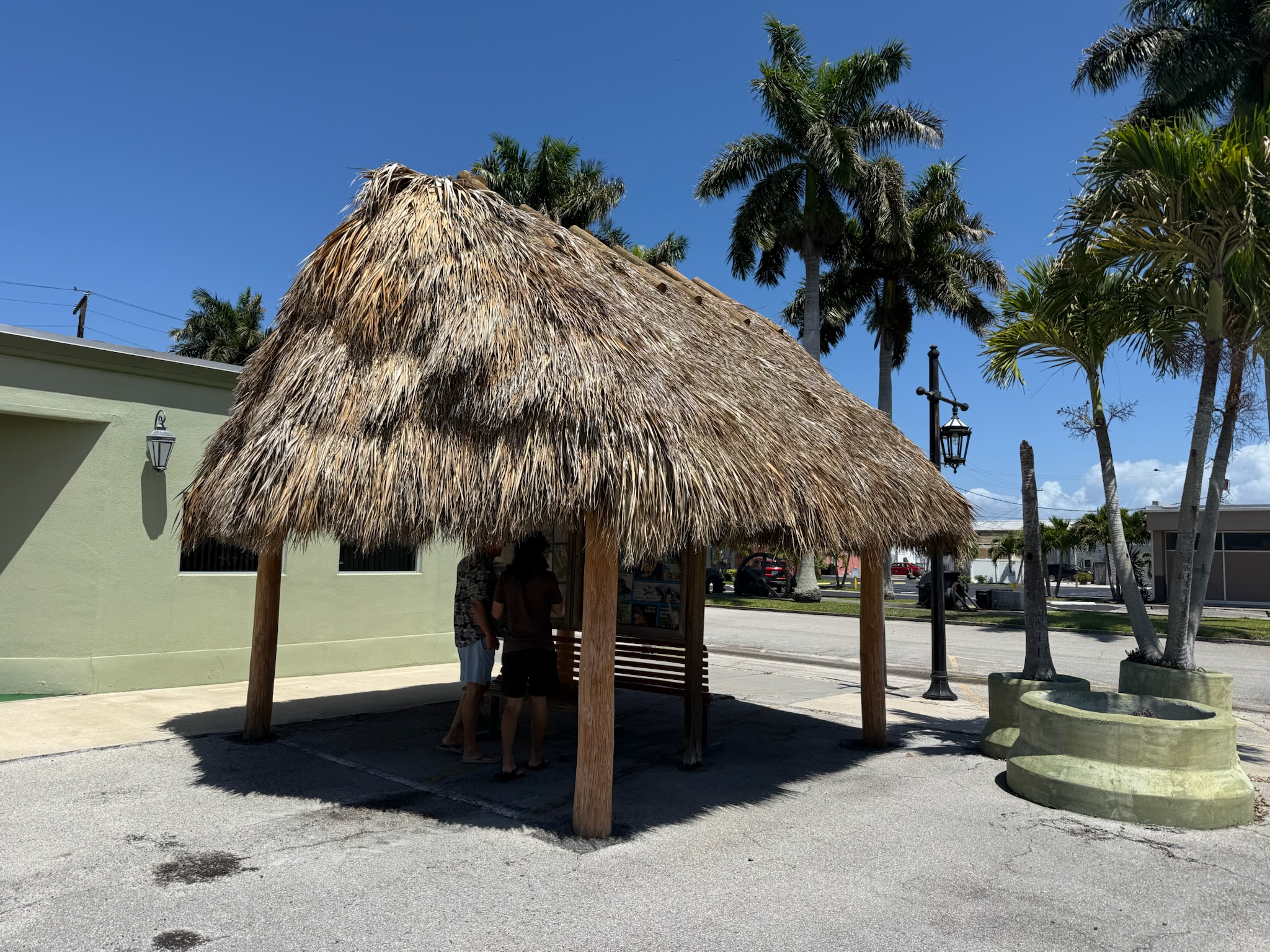
Under the chickee were signs telling about the various flora and fauna of this area. 131 of the species found on the US Endangered and Threatened Species list were indigenous to Florida, and many of them were specifically indigenous to the Lake Okeechobee area, including the Florida bobcat and Florida panther. The American alligator and Florida white-tail deer used to be on the list, too, but their populations have recovered. Other species unique to the area include the Osceola turkey and the blue-winged teal duck.
There was also a display about how they’d created wetlands with emergent and aquatic plants, which slowed down the water flow and absorbed excess nutrients from the stormwater runoff before it flowed into the Everglades. Nutrient levels in the Everglades were naturally low, and water enriched with fertilizers from upstream meant that the wrong kinds of plants flourished, hence the need to remove the extra nutrients. Yesterday, we’d read about the large amount of money they’ve been spending on restoring the Everglades, so it was neat to read about one of the projects that the money had been spent on.
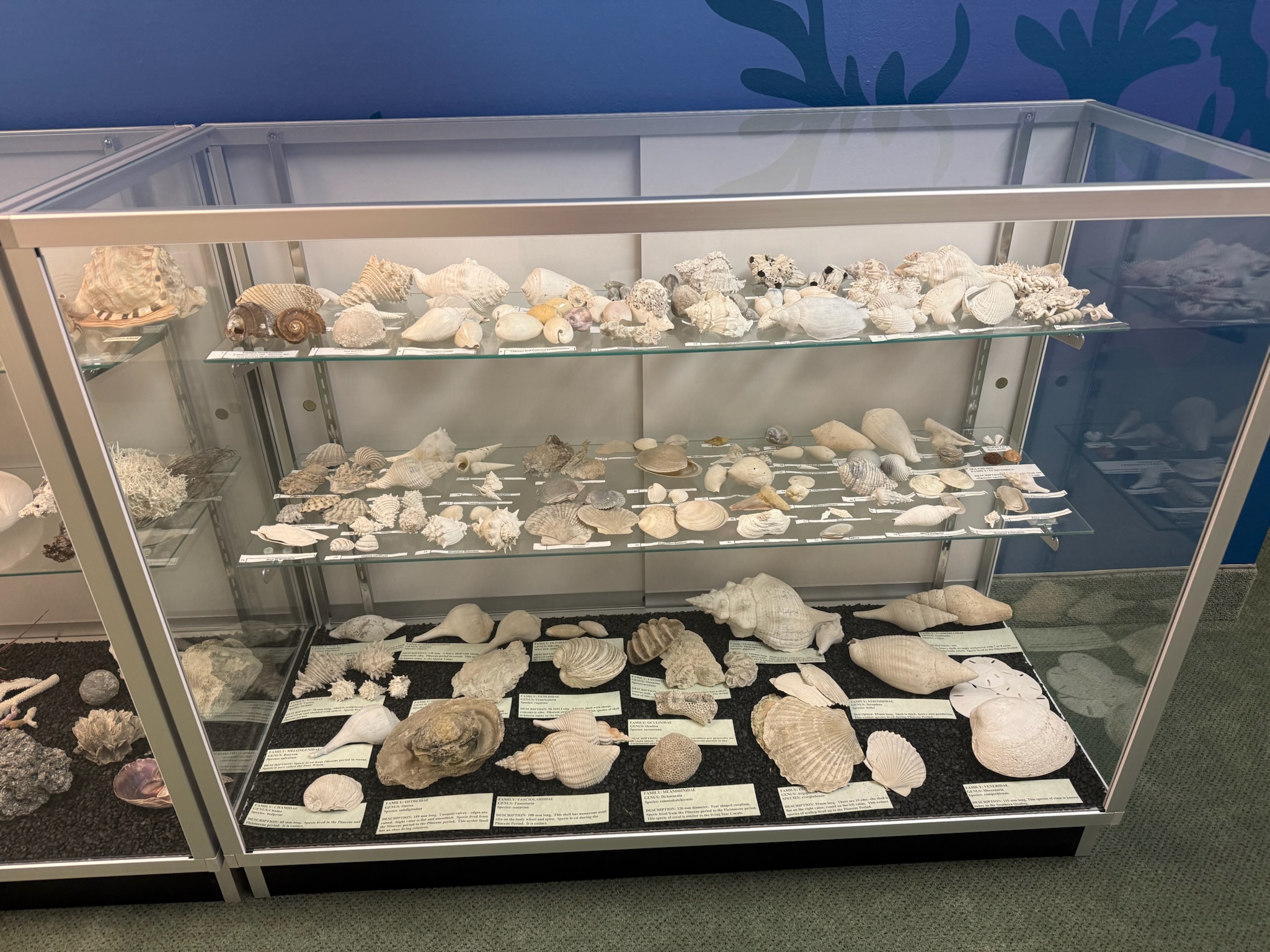
We headed inside. Tickets were $10 for adults, $8 for seniors and $5 for students — and Keith counted as a student. The first exhibit was a display of small sea creatures fossils that had been found in the area that dated back to when Florida was under water. Per the sign, most were collected by Virginia Douglas and her husband, Frank Faunce. From 1963 – 1973, they’d scoured excavation sites looking for newly unearthed fossils. In 2015, she donated them to the museum.
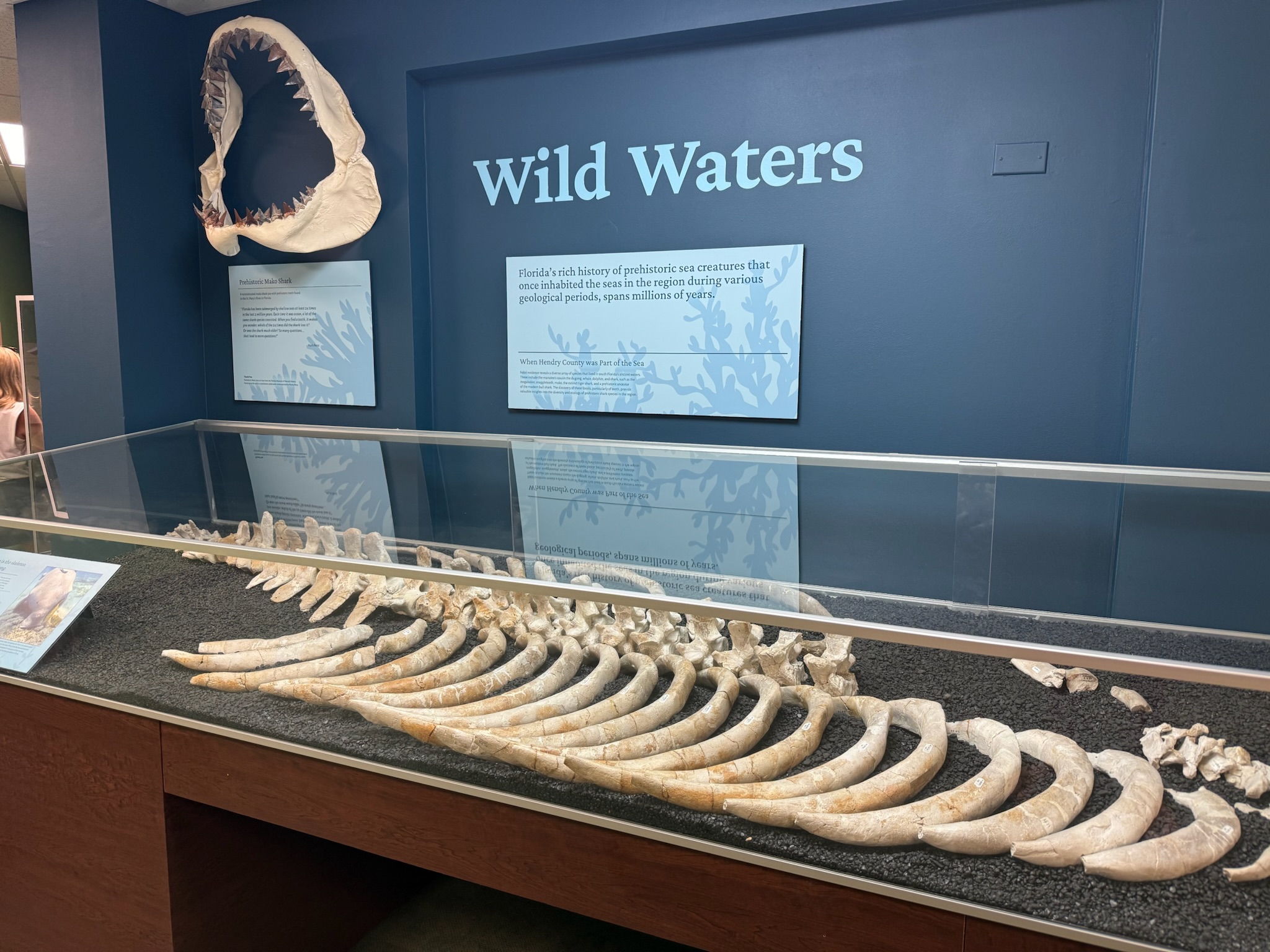
The next display was about the bigger sea creatures that inhabited what is now the center of Florida. There was once whales, dolphins and a lot of varieties of sharks. In addition to megalodons, there were tiger sharks (now extinct), a prehistoric ancestor to modern bull sharks, snaggletooth sharks, and 20-foot mako sharks. A local named Mark Renz was scouring an old mine looking for shark teeth and he found the skeleton of a dugong (a cousin of the manatee that in modern times does not live in this part of the world). The jaw in the left hand corner was of a prehistoric mako.
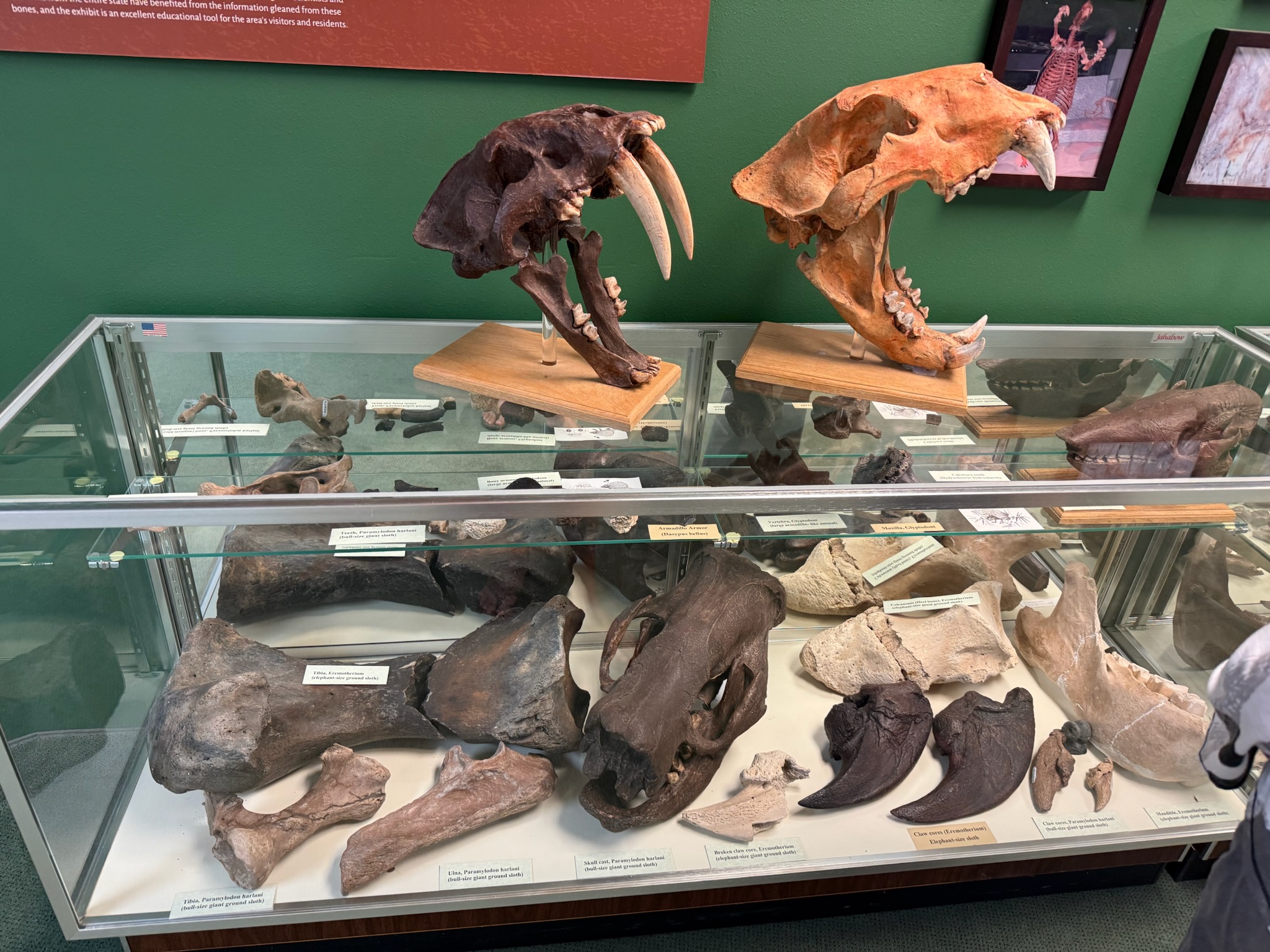
The next display was about the land creatures that inhabited Florida during the ice age. In addition to the creatures we’d learned about yesterday, there were also giant sloths as big as elephants glyptodonts (which were armadillo-like creatures), dire wolves, prehistoric horses and more. The fangs on thoe saber-tooth cat was terrifying. We would not want to encounter one of those in the swamp!
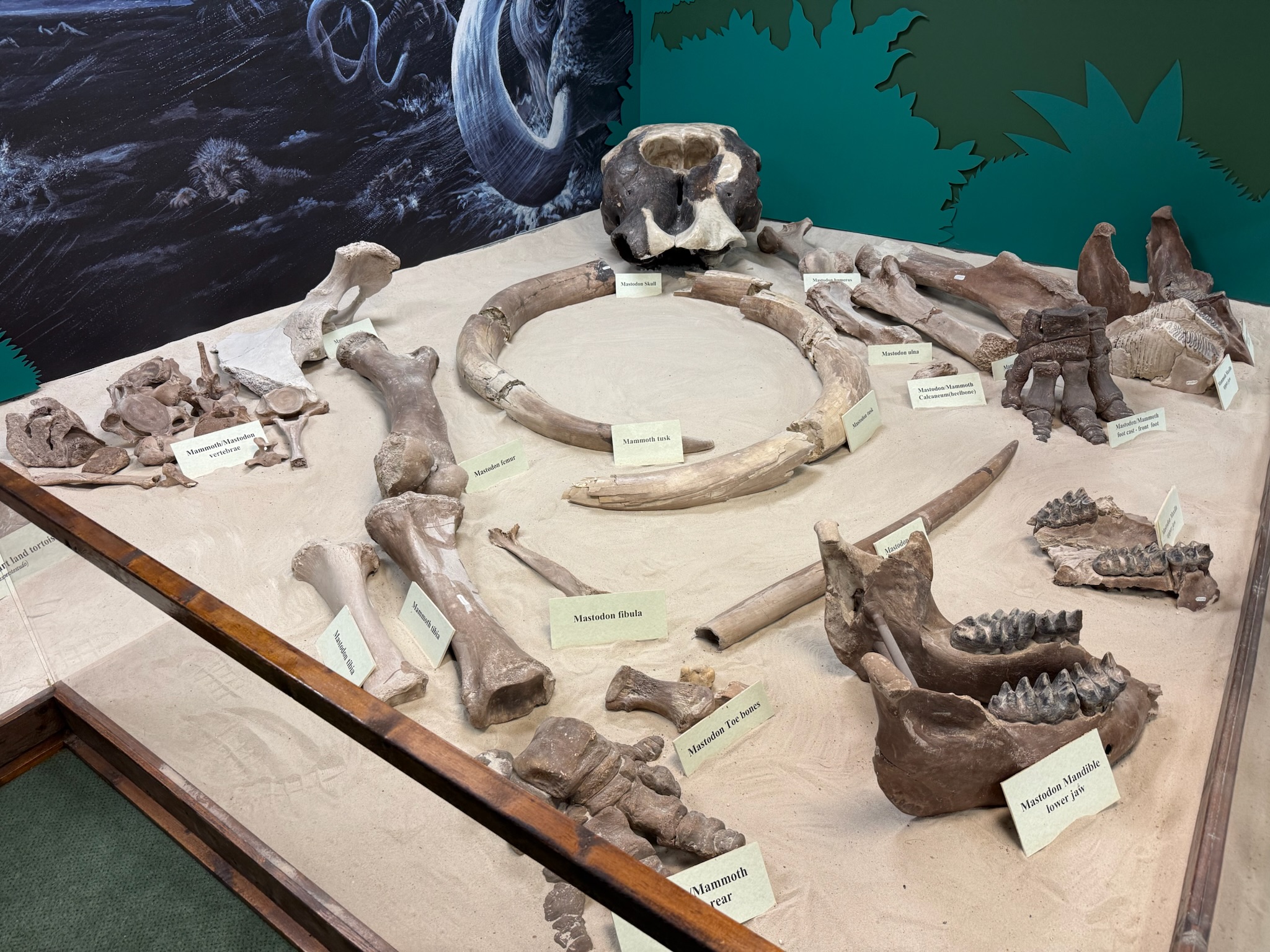
Here were some mastodon bones. Mastodons were an extinct species related to elephants. They arrived in Florida somewhere between 23-million and 2.6 million years ago. Their distant cousins, Mammoths, arrived later. Both species lived in Florida until about 10,000 – 13,000 years ago.
The next exhibit was on the early inhabitants… to be continued…