Saturday, Sept 27 — First thing this morning, Eric went to move car. His plan was to move the car out of the lot and then park right back in it. However, the lot was closed – cars could only leave, they couldn’t enter. Since it was so early in the morning, he decided to see if he could find street parking along The Wharf. He found a spot, but the tire popped when he bumped into the curb while parallel parking. Then he noticed the sign said 10-minute parking. Argh!
He changed the tire with the donut in the trunk, then went to the car rental agency at the airport to exchange cars. The staff in the office told him they couldn’t help him until after he called into the customer service line. He was very frustrated about being on hold for 7-minutes while the staff at the counter were twiddling their thumbs. Fortunately, the agency exchanged the car with no issues, though they did charge $100 for the tire. And he’d forgotten to fill the tank up before returning the car, and we are still waiting to find out what they’re going to charge us for the gas.
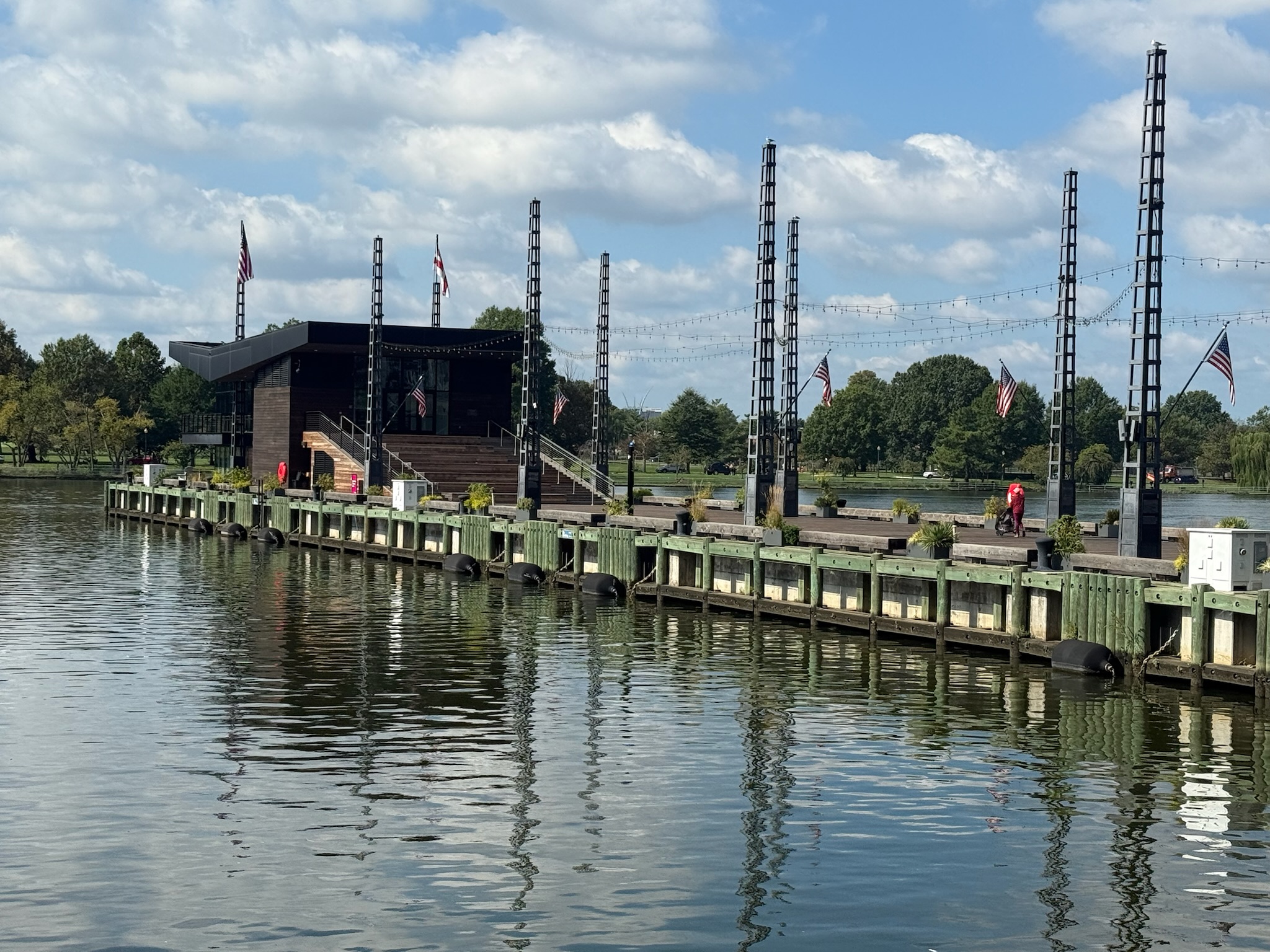
Meanwhile, on The Wharf, there was a big event. Christi and Keith watched a giant crowd of people congregate on the pier to the west of the marina, with loud music playing. The music stopped and the whole crowd moved to the boardwalk and started walking east. They thought it may have been a fundraiser walk, but weren’t sure. Here was a photo of the pier after the crowd cleared out.
Once Eric had the replacement car, he headed back to The Wharf. He drove around for a solid half-hour and couldn’t find a parking spot anywhere. Much to his frustration, many of the lots and garages were closed on the weekends. He gave up and finally parked at the outrageously expensive Wharf parking garage. We tried to hurry, but since we hadn’t realized there would be a rush to leave, none of us had really gotten going on the day yet. By the time each of us showered, ate breakfast and got everything ready to go out for the day, almost two hours had passed. The parking fee was $24.00.
Meanwhile, the diver came to clean the bottom. He said it wasn’t bad, which was a giant relief for Eric. Ever since our experience with crazy fast growth in Little Creek, Eric has been more worried than normal about bottom growth. The diver said that in the freshwater of the Potomac, the biggest issue was a slime that would continually get thicker and thicker.
Once we were on the road, we were surprised and frustrated to find that the traffic was bad. There were a lot of cars on the highway and the flow of traffic was well below the speed limit. What we had expected to be a half-hour drive was more like 50-minutes.
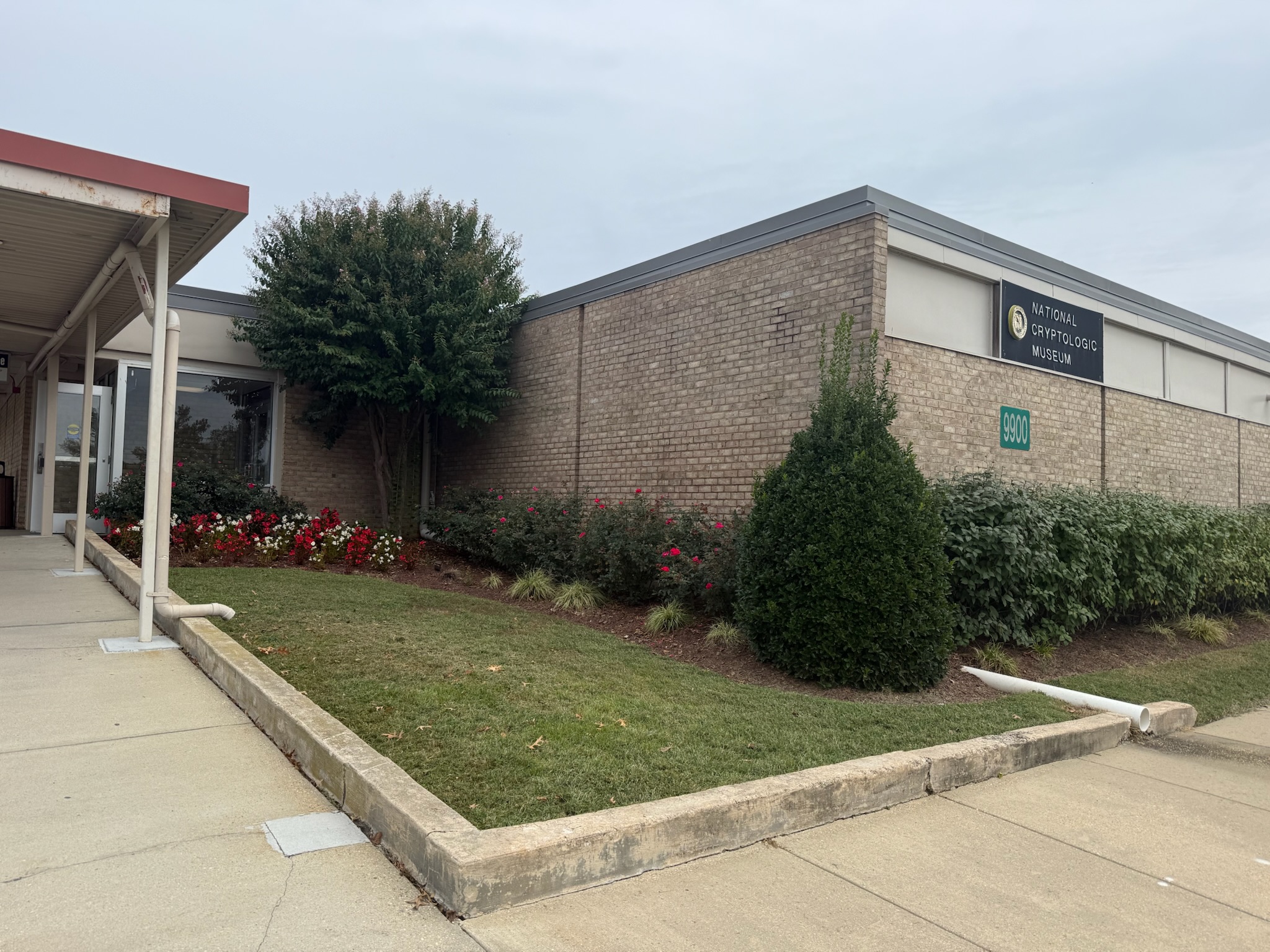
The museum was on the edge of the National Security Agency (NSA) base in the outskirts of Annapolis. Just beyond the museum was a guard station, and It appeared that only people with clearances could go any farther than the museum. The building was military-esque, meaning blocky and non-descript. The simple, plain facade was the total opposite of the very grandiose museums that we’d been to over the last few days.
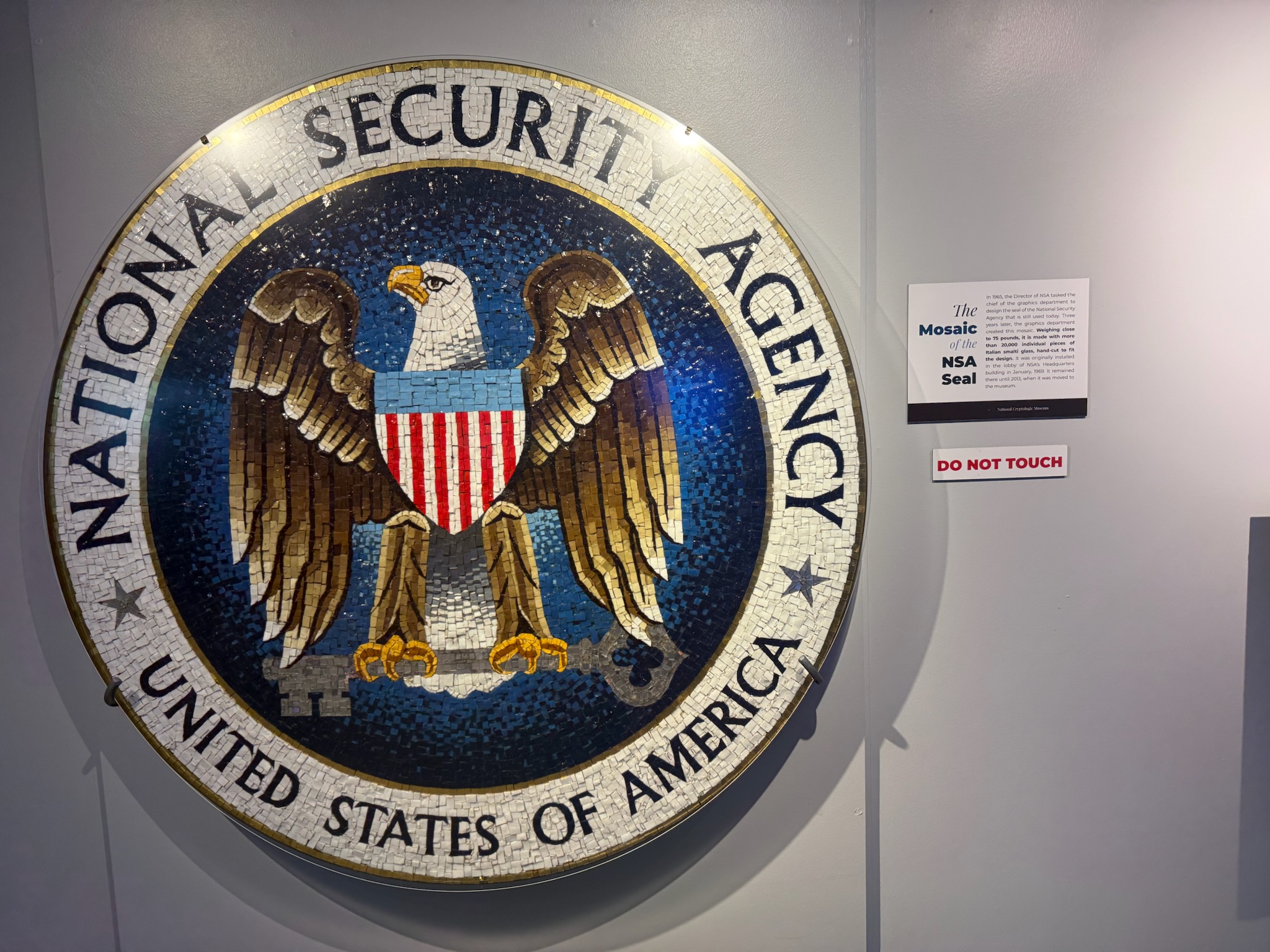
In good news, the museum was free. However, it was small. Its claim to fame was that every item on display in the museum was the real deal; there were no replicas. This was the mosaic that hung in the NSA headquarters from 1969 – 2013.
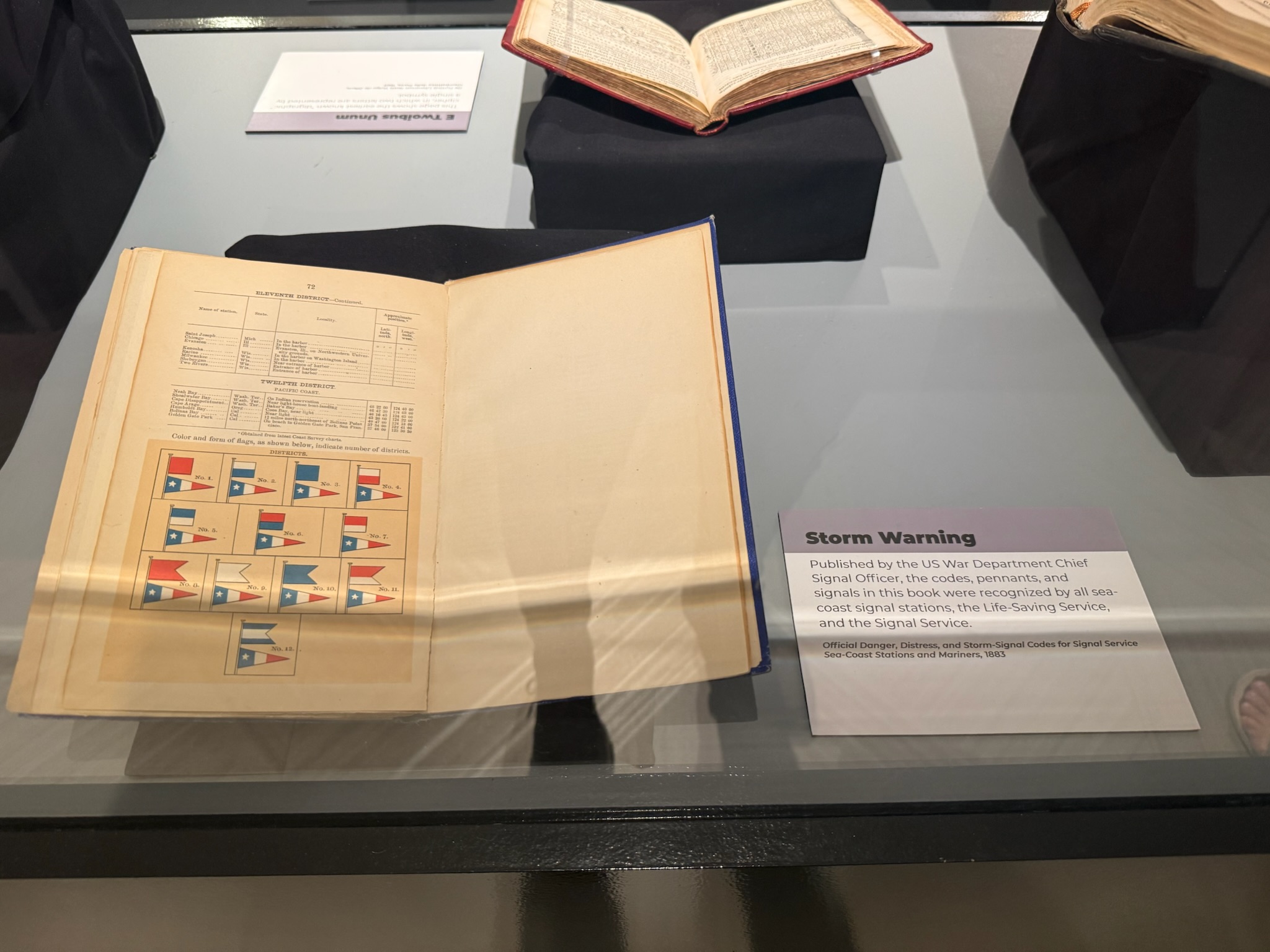
The first exhibit had several old books related to cryptography, including books about cryptography in ancient times and one on Egyptian hieroglyphics. We found the pennants and flags code book to be particularly interesting.
The first official government cryptographic unit was created in 1917 by the US Army. It was called MI-8 and headed up by Herbert Yardley. Initially, the entire unit was made up of Yardley and two clerks, but by the end of World War I, the “black chamber” had 151 people that had read almost 11,000 messages in 579 cryptographic systems. After World War I ended in 1918, the Army was going to disband MI-8, but Yardley talked the State and War Departments into keeping it open. MI-8 was shut down ny the Department of State in 1929. Yardley, bitter and hurting for money, published a book called “The American Black Chamber” that revealed the organizational structure, major successes, and even some real decrypted messages. The military publicly disavowed the activities of the “black chamber” and privately tried to prosecute Yardley for treason. A copy of Yardley’s book was in the book exhibit.
Another sign helped explain why Yardley was bitter. After World War I ended, the Army created an in-house new cryptologic unit called the Signal Corps headed by William Friedman, who later became known as the “Father of American Cryptology.” So it sounded like the Army had been trying to replace Yardley’s agency with Friedman’s agency for over a decade. In 1930, the agency changed names to the Signal Intelligence Service (SIS) and expanded. During World War II, SIS broke the code on the Japanese cipher machine called Purple. We’d read about the advanced Purple system that had been extremely difficult to crack in the Spy Museum in the cryptology section. It was also briefly mentioned in the intelligence failures section (the US had already cracked Purple and didn’t heed the decrypted communications indicating the Japanese intended to go to war with the US). In 1952, SIS was folded into the new National Security Agency.
There were a lot of cryptographic machines on display. This was the very first electric wired rotor cipher device that was built in the US. It was invented by Edward Hebern, who applied for a patent in 1917, at least a year before the German Enigma machine, which utilized a similar technology, was invented. However, MI-8 did not buy any because they thought the messages were too easy to crack.

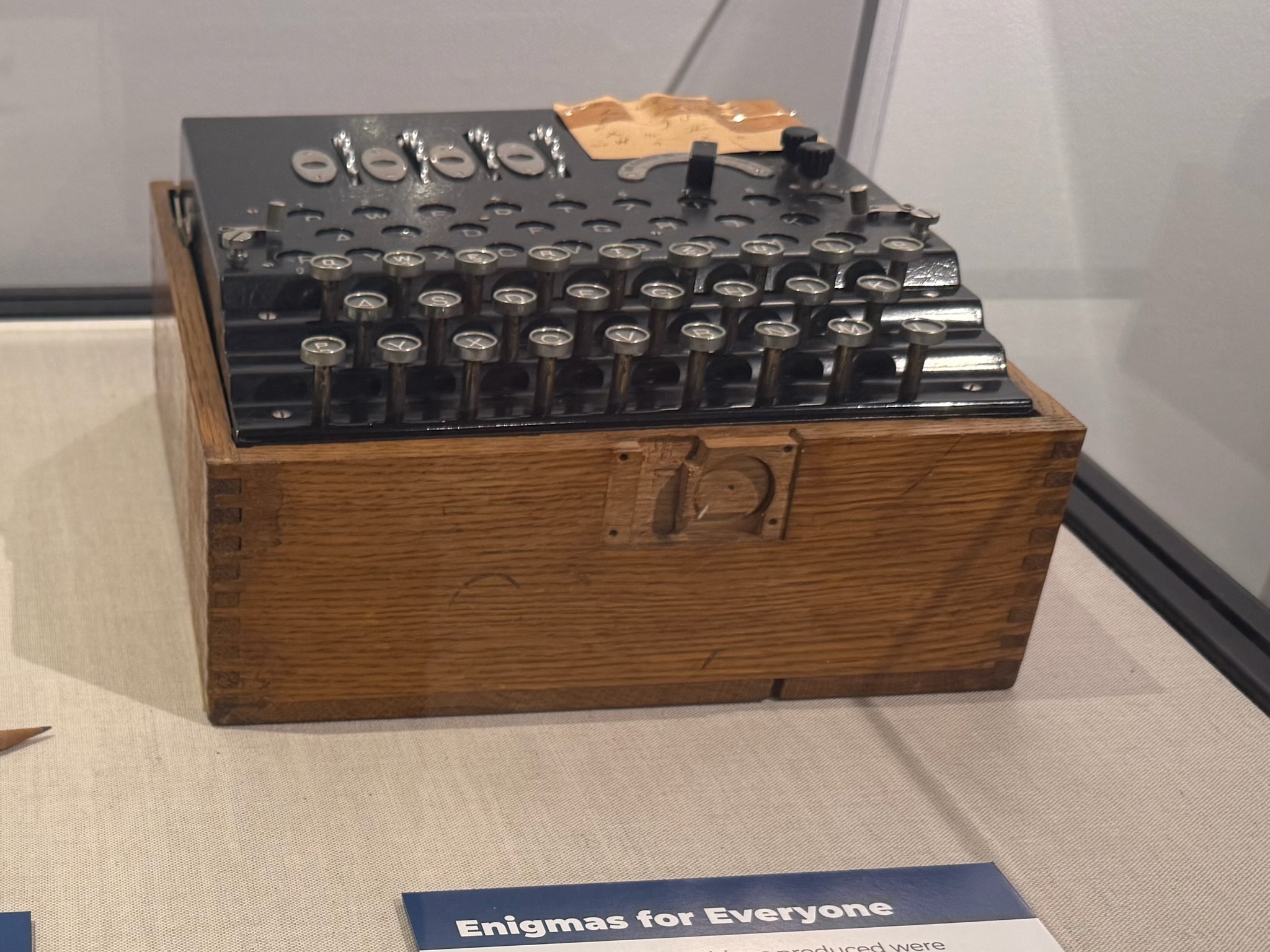
Something that Christi hadn’t been aware of was that the Nazis hadn’t invented the Enigma machine. They were commercial machines intended to be used by banks, financial organizations and other companies that wanted to keep data private that were sold on the open market. It sounded like after the Nazis took control of the German government, they seized the Enigma technology for themselves. Below was an Enigma machine for commercial use.
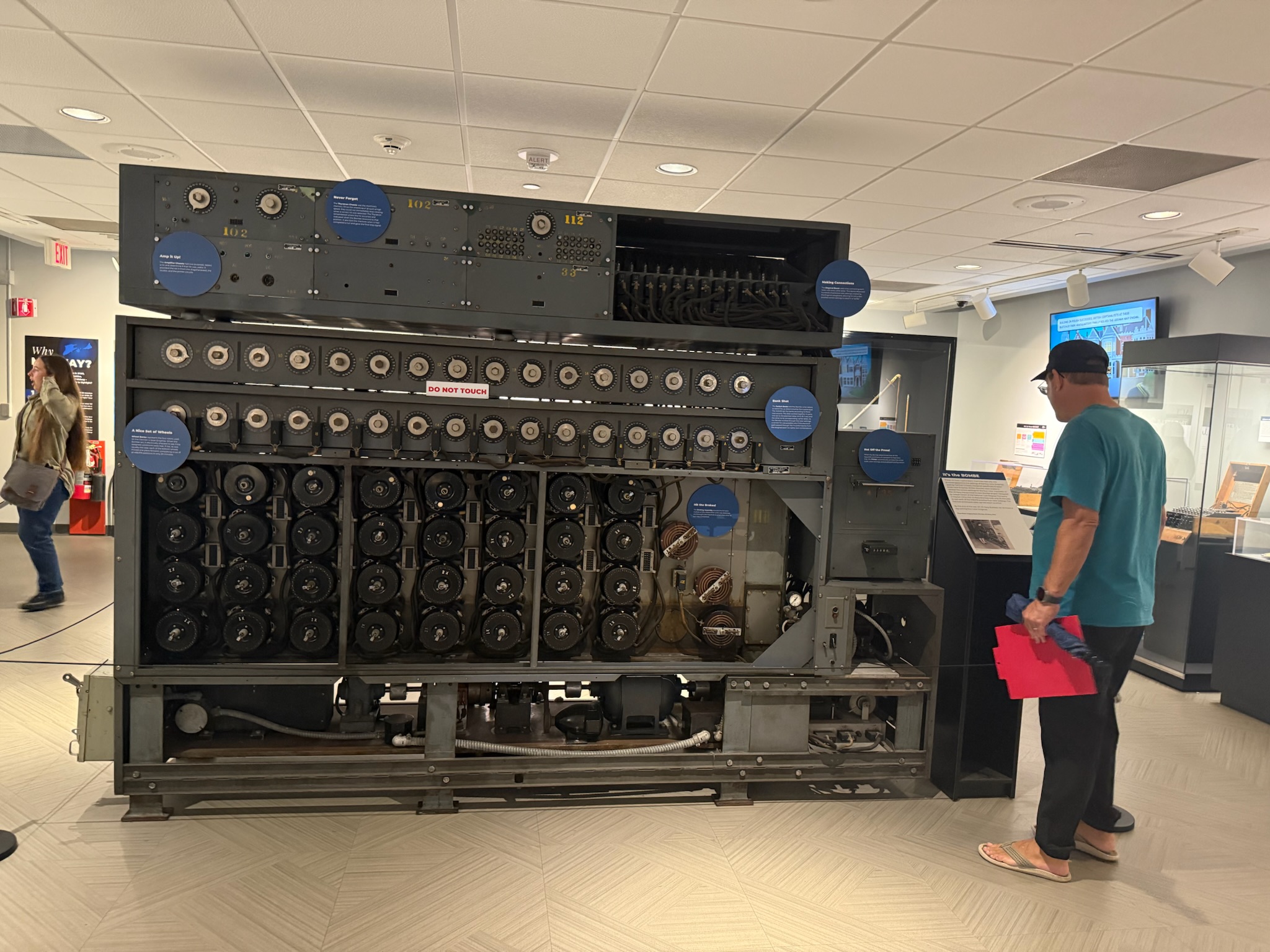
The machine below was called The Bombe and its sole purpose was to determine the settings of four-rotor Enigmas in order to decode documents. The BOMBE could test the 456,976 possible settings in only 20-minutes. By the end of World War II, 121 US Navy bombes ran 24-hours a day.
The machine they used to decrypt Purple messages was significantly smaller than the one to decrypt Enigma messages.
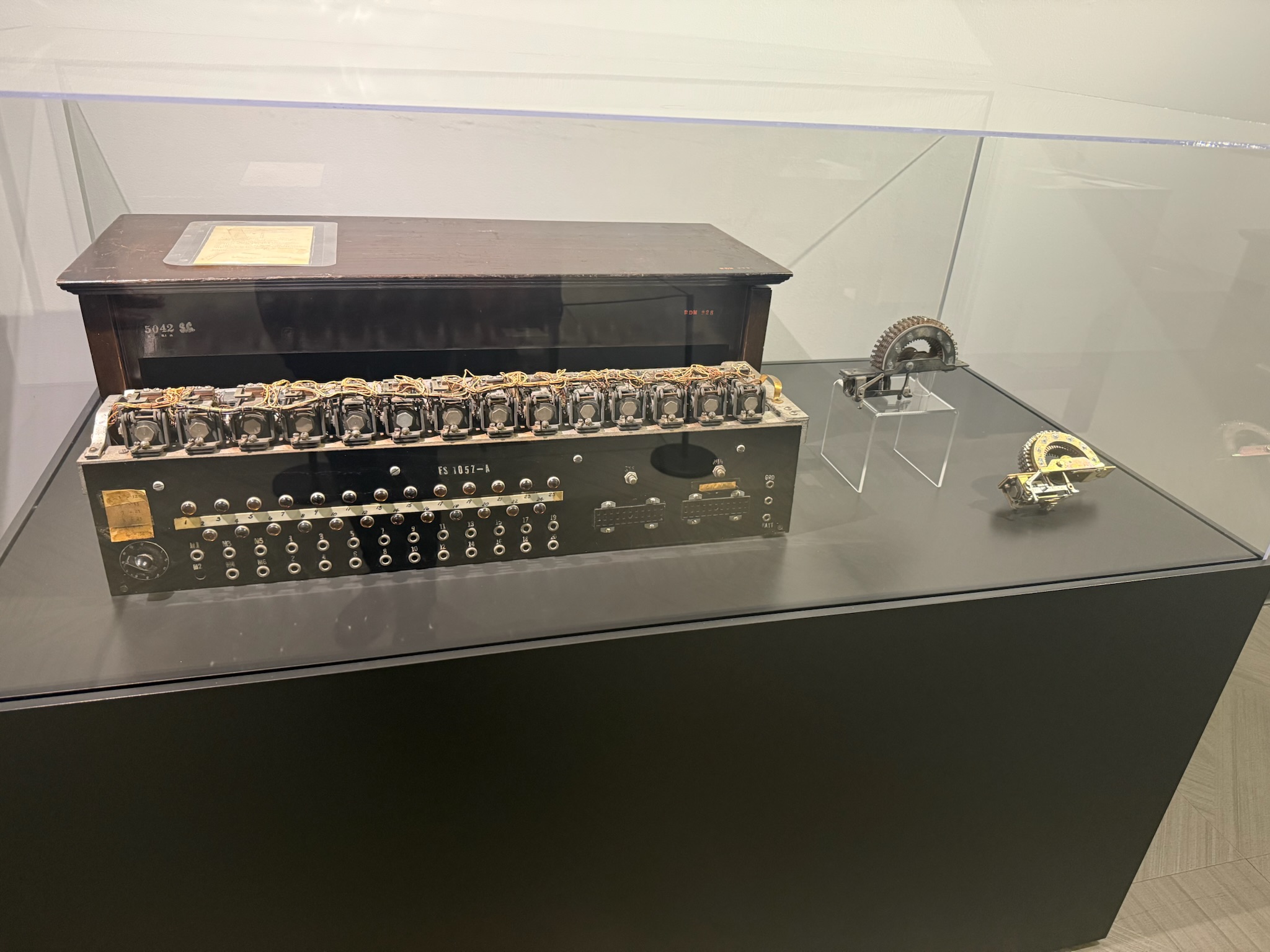
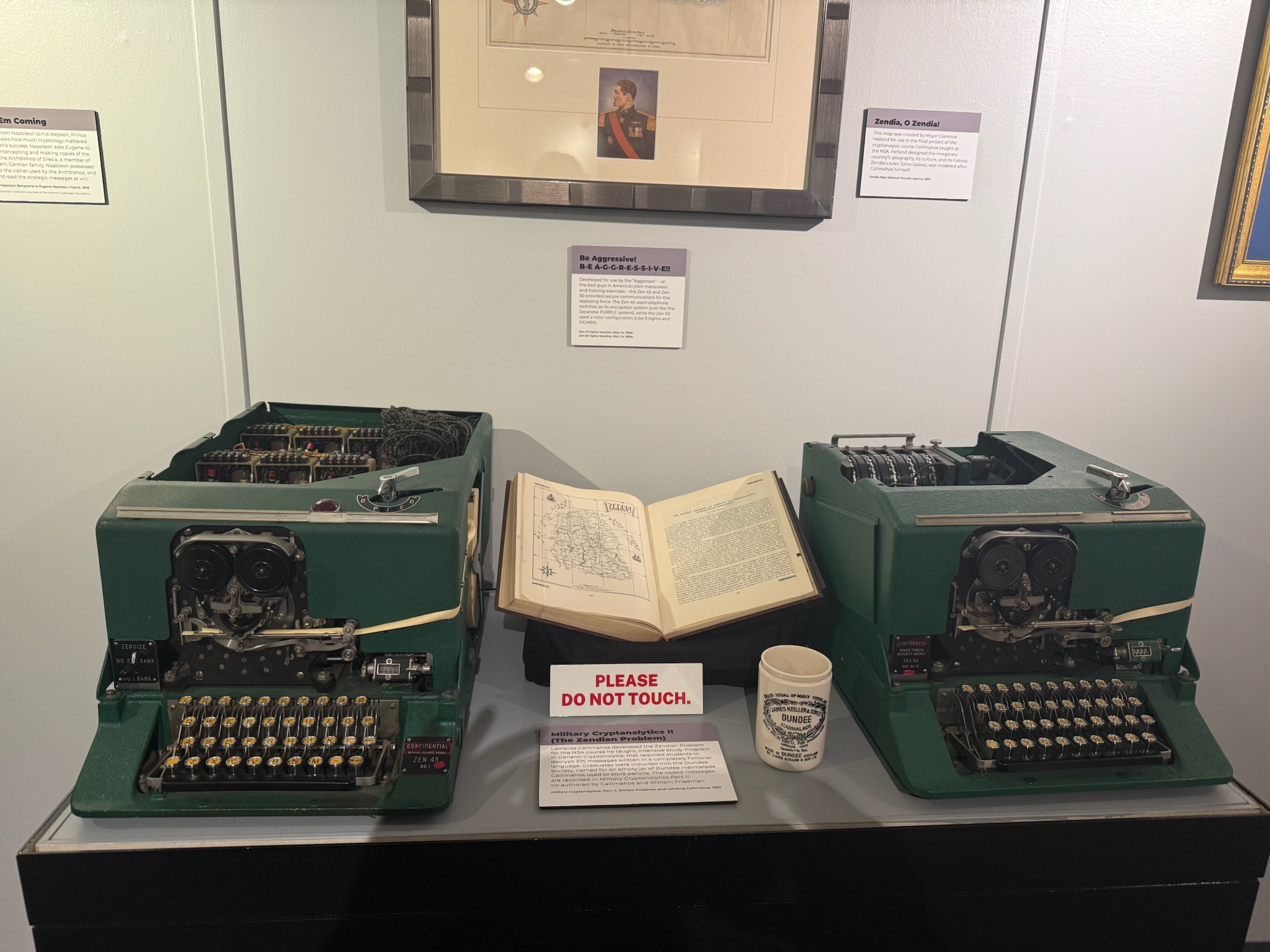
Below are the Zen 45 and Zen 50. The Zen 45 used telephone switches in its encoding (like the Japanese Purple), while the Zen 50 used a rotor configuration (like the German Enigma).