continued… We came to another staircase, this one leading to a much wider platform where it was easy for us to gather around Dimitri. He pulled out a flashlight and started explaining the various features of the cave. He showed us the cooling pattern of the outer crust on the ceiling. Once again, we were glad we’d seen The Lava Show so we already understood the concept.
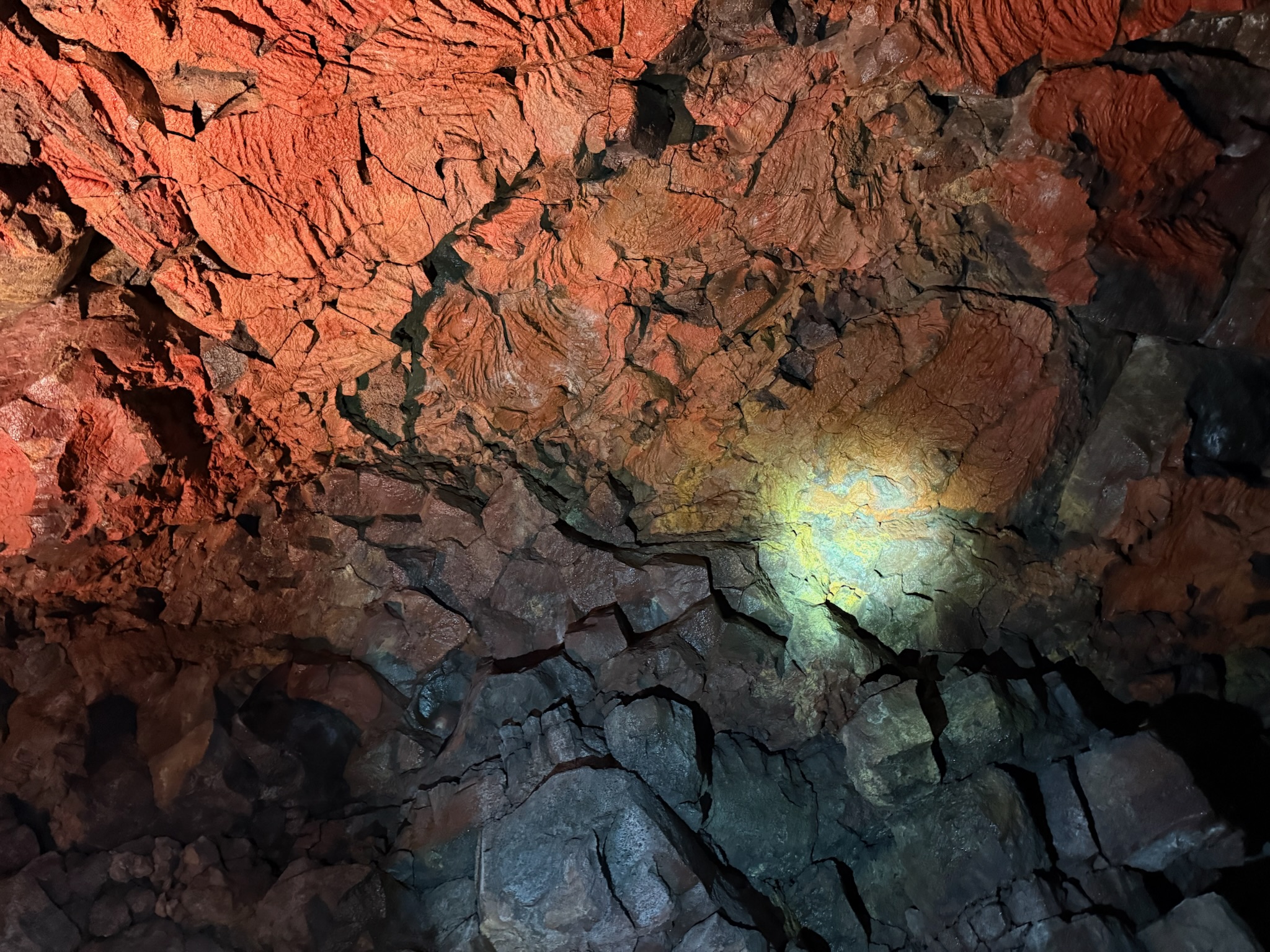
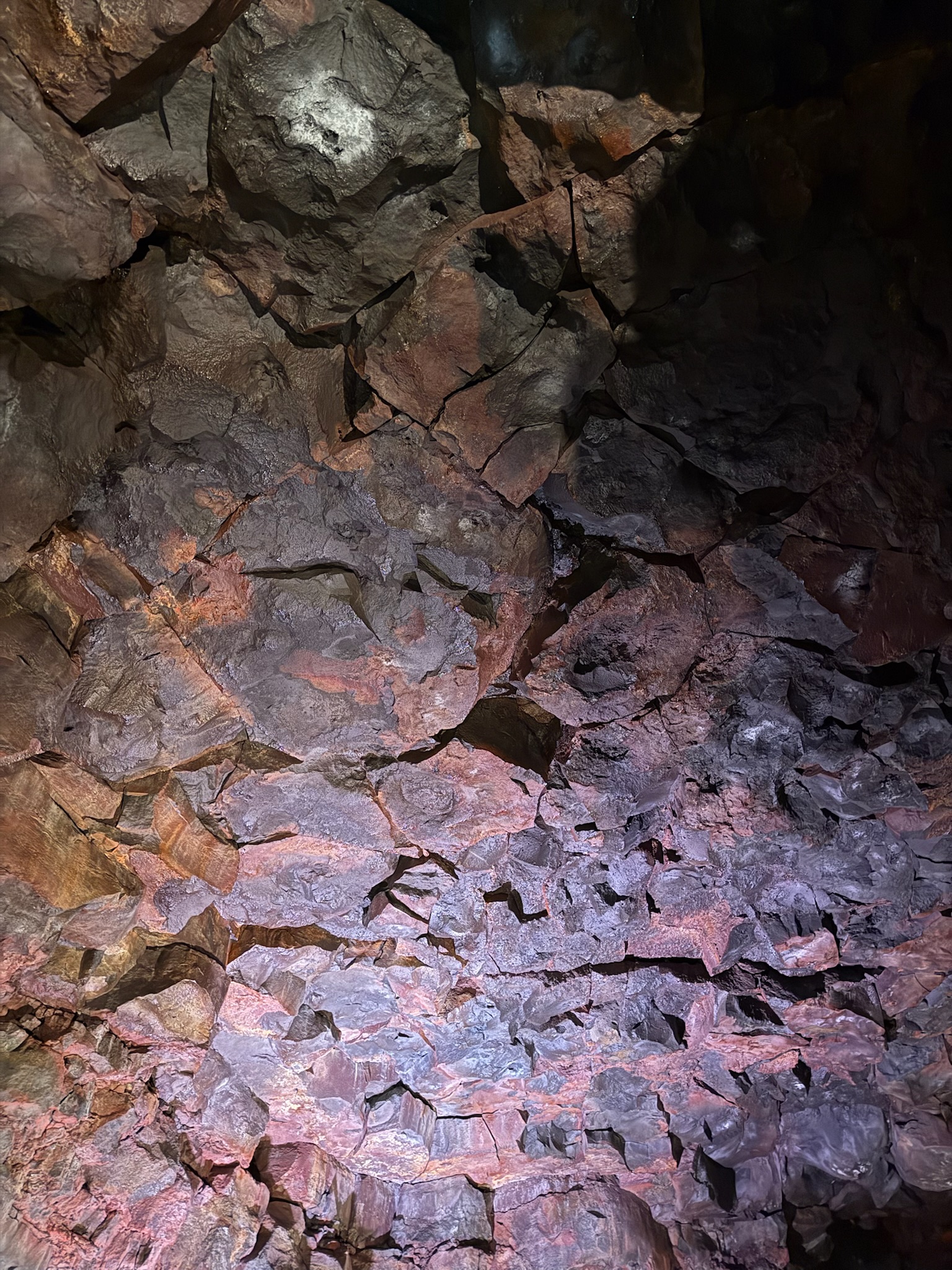
He explained the various colors. Red was the primary, from the high iron content — the red was literally rust. There was also quite a bit of yellow from the sulphur. And, near the skylights, there was quite a bit of green from the moss that grew around the skylight.
He turned out the lights and it was pitch black. He turned the lights on after a few minutes of darkness and we saw glittering white. Dimitri explained that it was bacteria, and that would vanish quickly now that the lights were on again. He said the bacteria was thousands of years old, hydrophobic and didn’t need light. We thought it was weird how it hid in the light and reappeared in the dark.
He showed us the pattern of the lava flow on the walls.
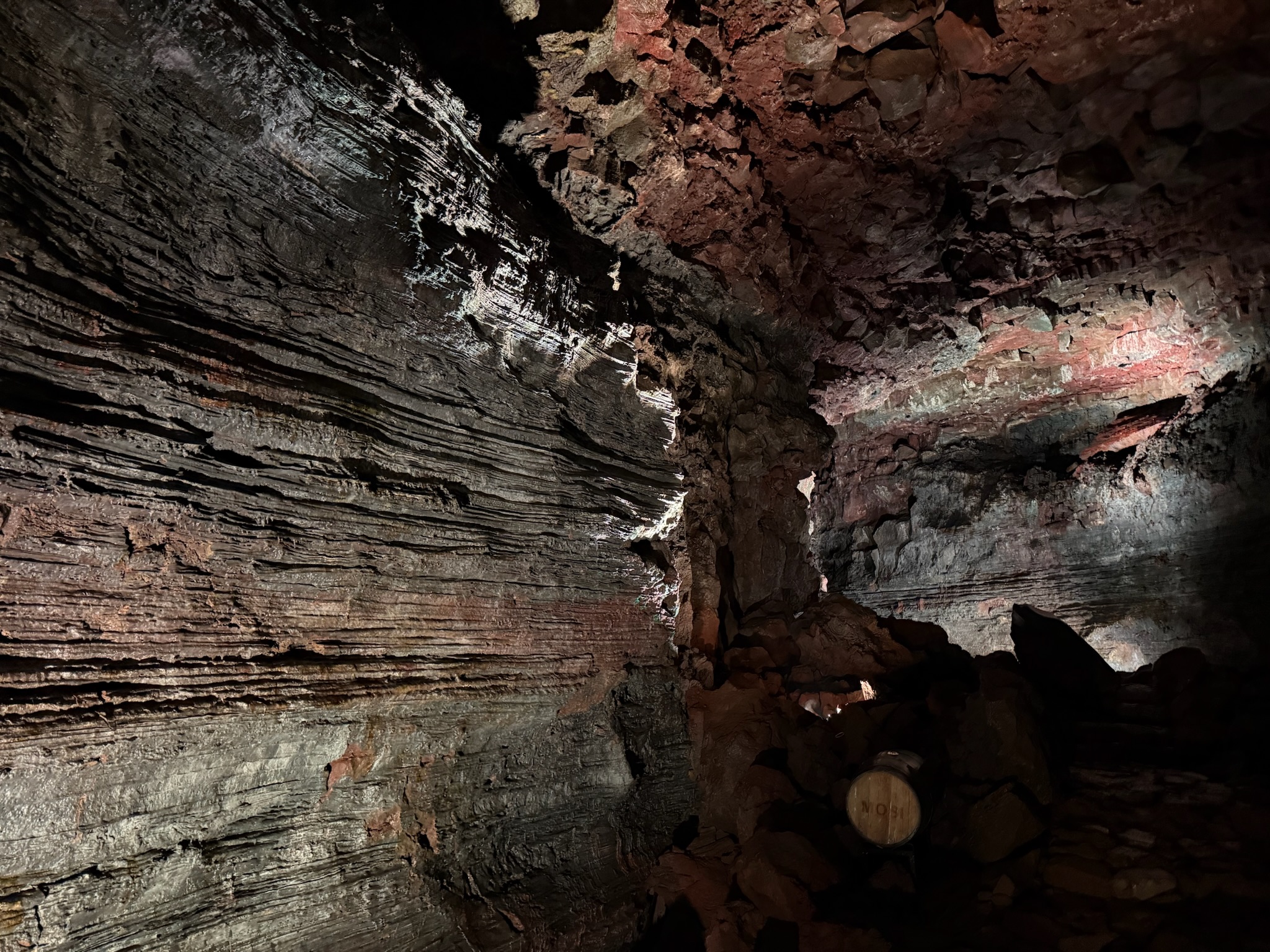
He showed us that in volcanic caves, stalactites were just small strands formed by dripping lava — they looked like someone had applied too thick a coat of paint and the paint had dripped. Volcanic caves didn’t grow stalagmites like limestone caves did.
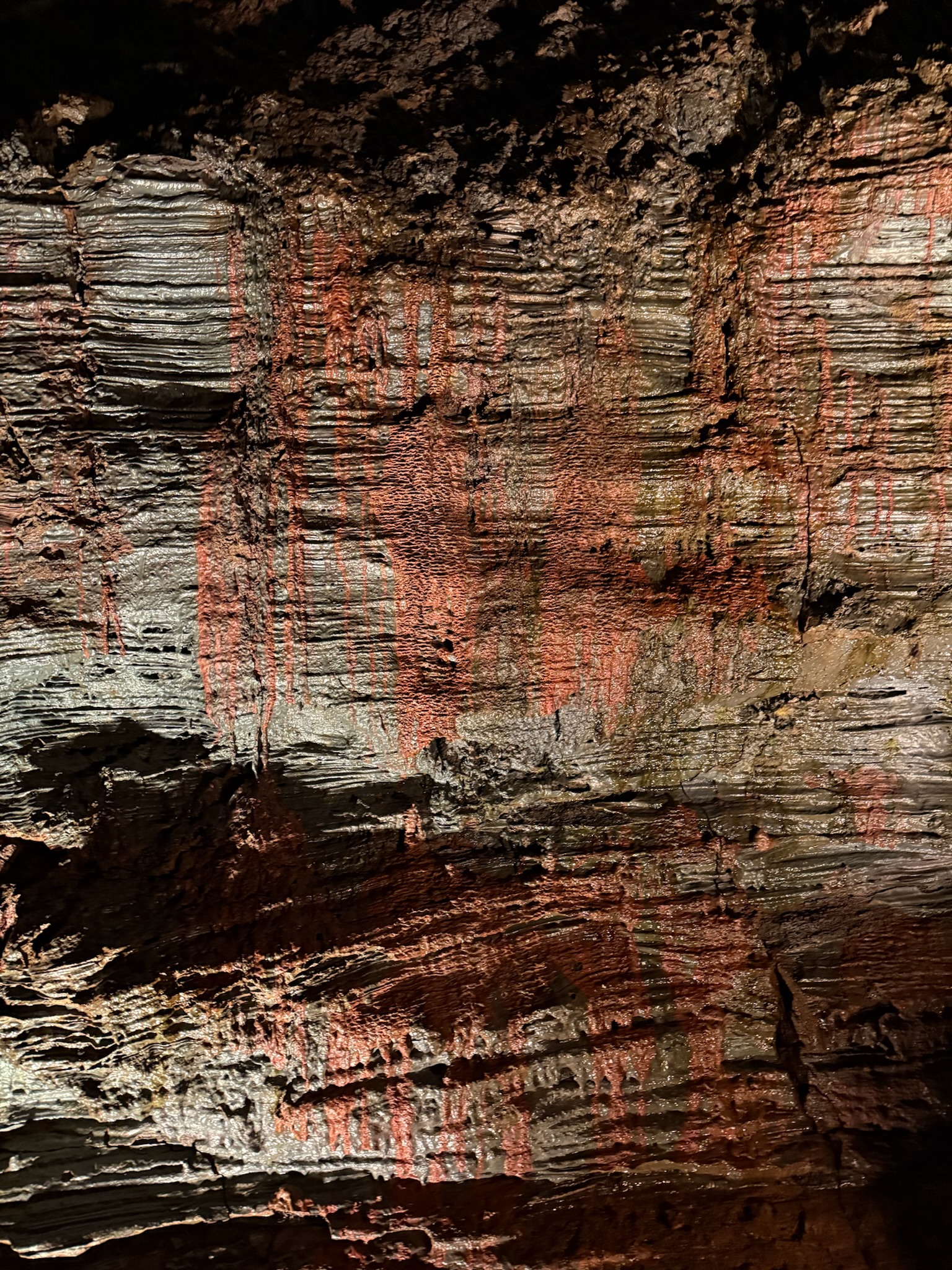
We walked down another staircase, this one quite long, to another wide platform.
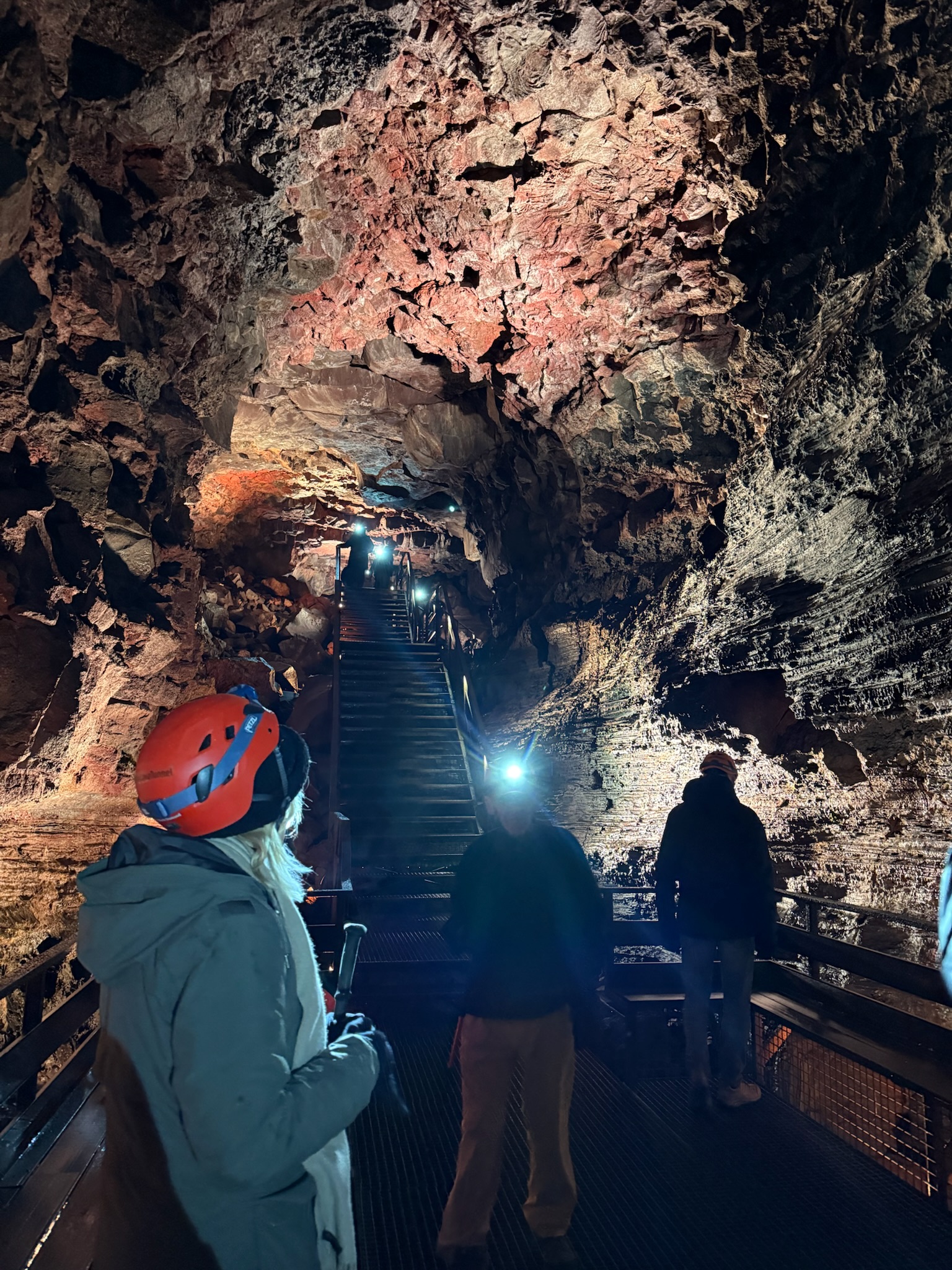
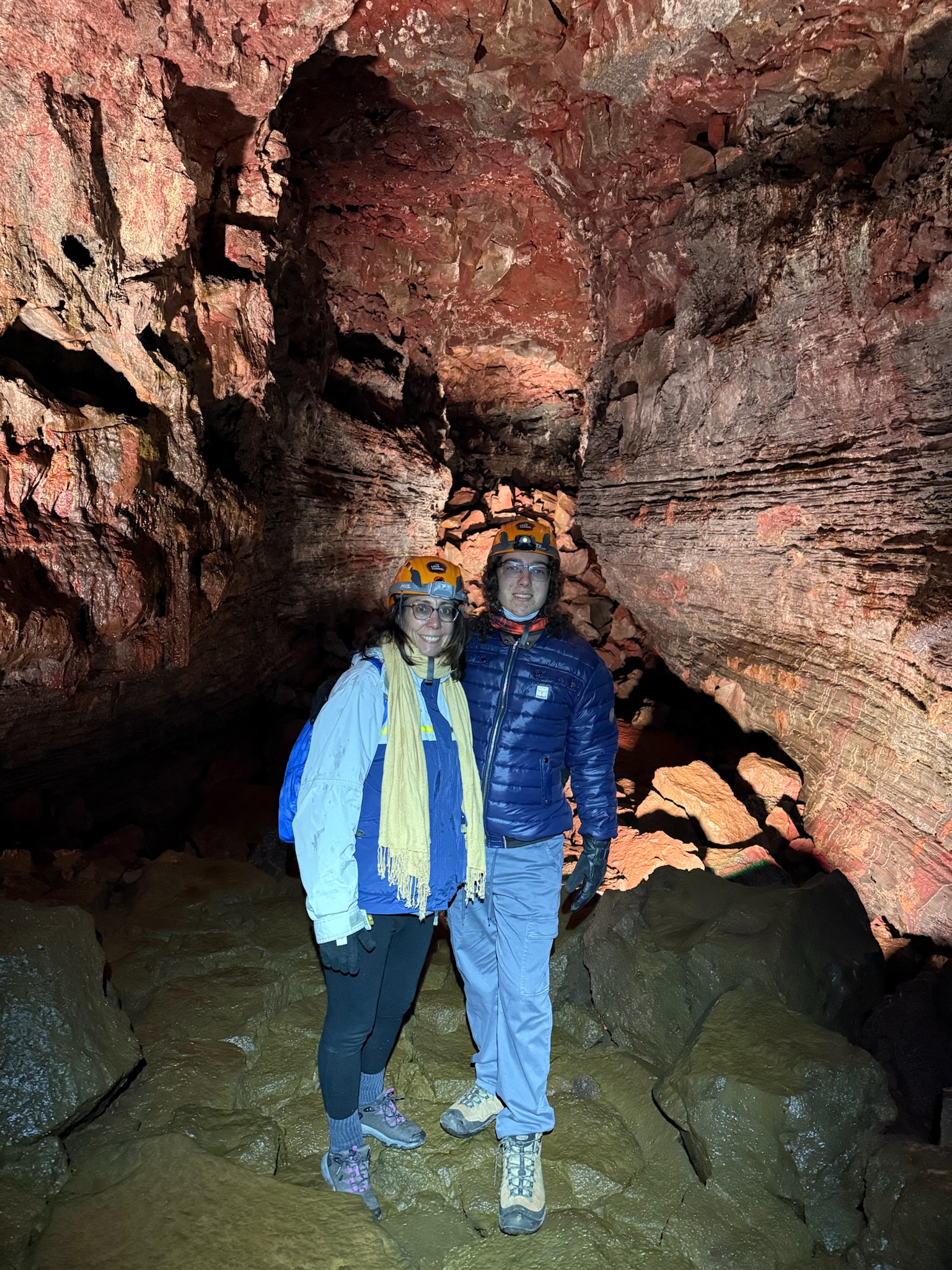
Beyond the platform there was a very small stretch of flagstone covered ground and then the cave appeared to be a dead end. But once we got to the end, we saw the tunnel made a sharp turn and continued on. This was where our tour ended, though. Dimitri explained that we’d seen about 1/3 of the tunnel and a longer tour of whole tunnel was available if we wanted to come back and see it all. Dimitri kindly took a photo of each group with part of the cave that we hadn’t explored in the background. We suppose it made a more rugged looking photo than the flagstones and metal platforms that were in the portion of the cave we’d seen.
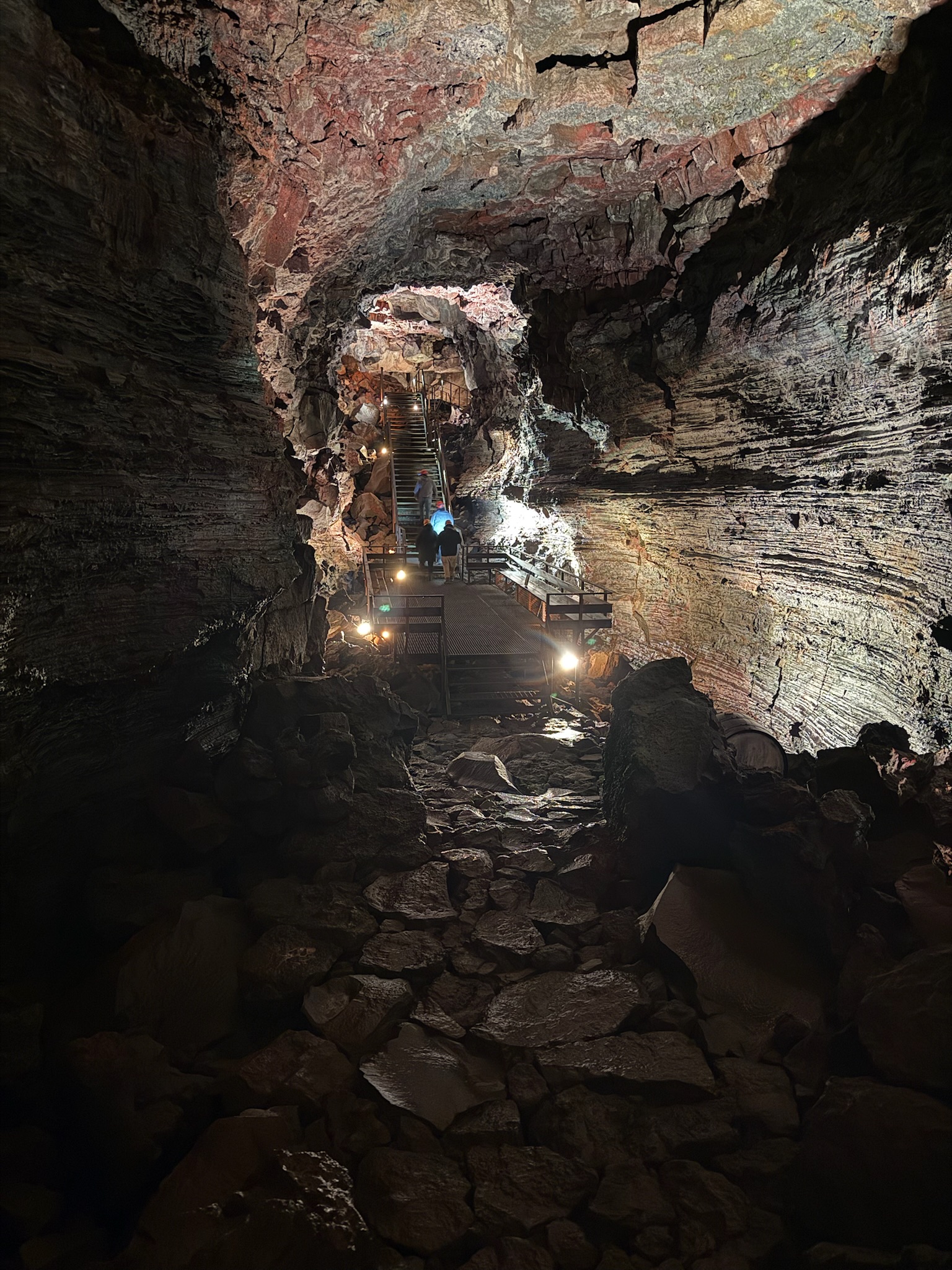
This photo taken from the spot we were standing in above, to give you a sense of the dimensions of this portion of the cave.
Dimitri escorted us out at a leisurely pace, allowing us to ask questions along the way. We found the tour to be very interesting and we were glad we’d gone. That said, as we were removing our hard hats in the visitor’s center, we looked at the prices. The tour itself cost 8,900 ISK (about $74.00 USD) each, so 17,800 ($148 USD) for both of us. We had paid the booking agent 33,598.00 (about $276 USD) so the transportation for fee for the two busses was 15,798 ISK (about $130 USD) — almost as much as the tour itself. Christi again seriously regretted not renting a car.
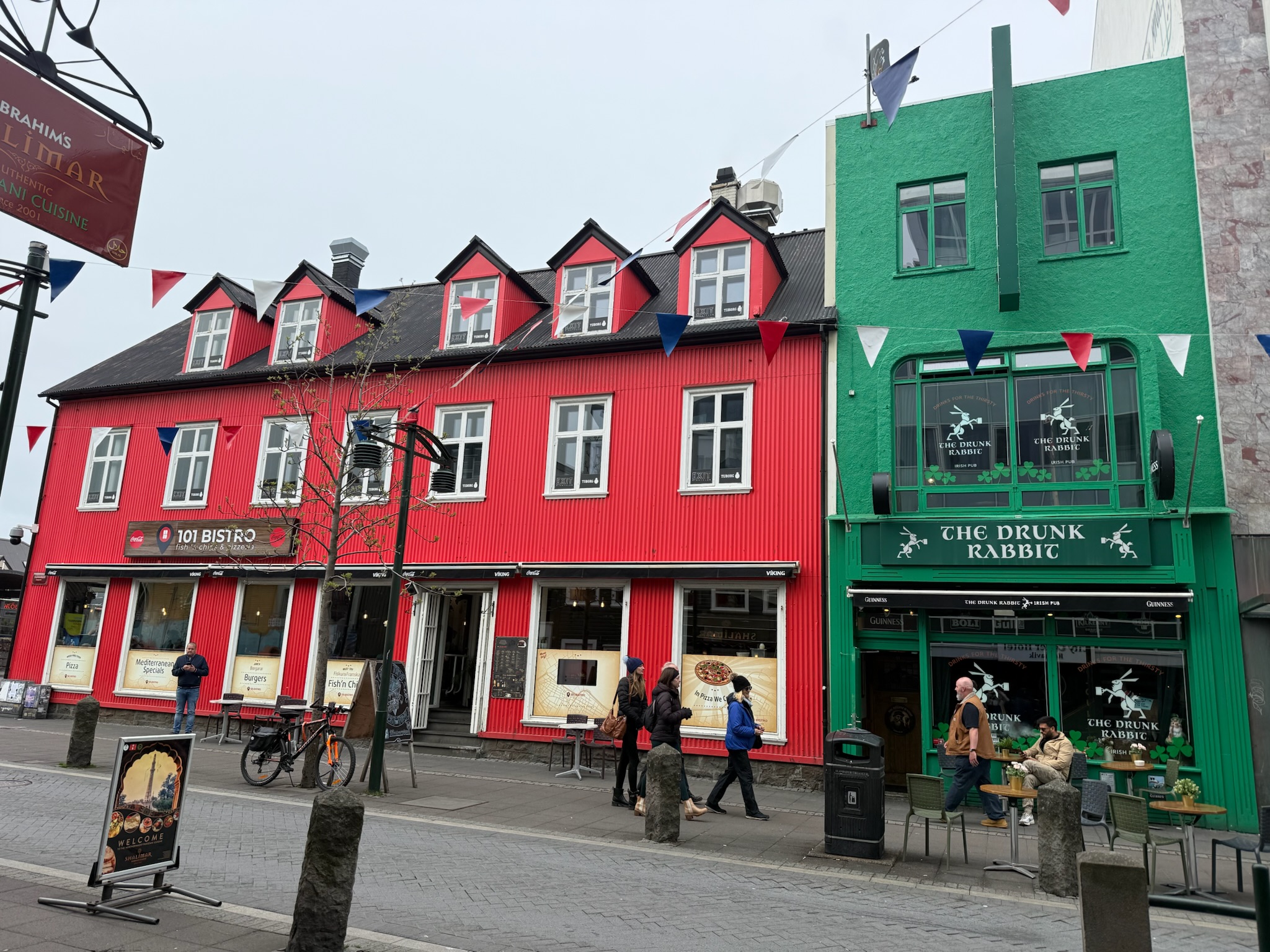
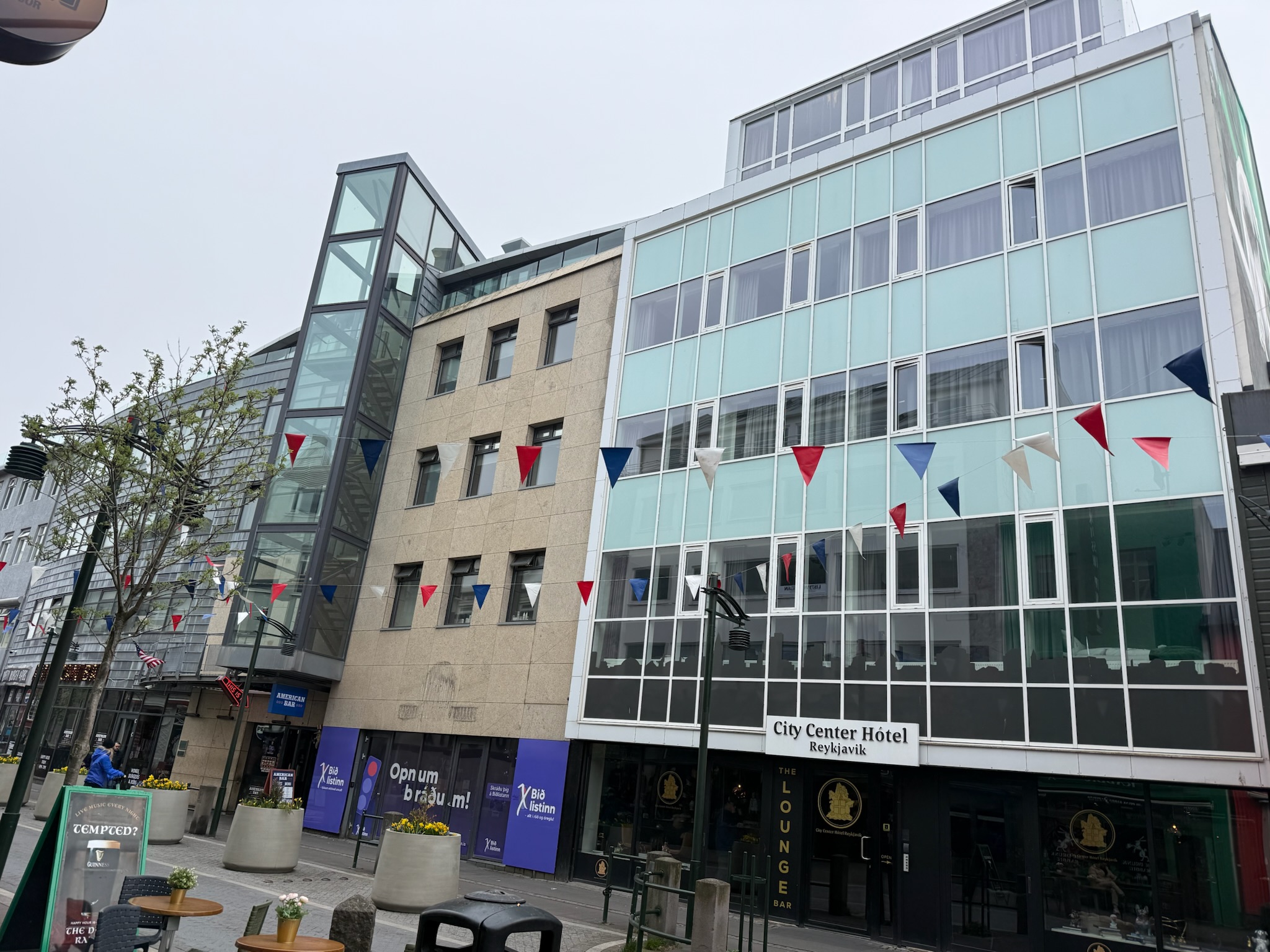
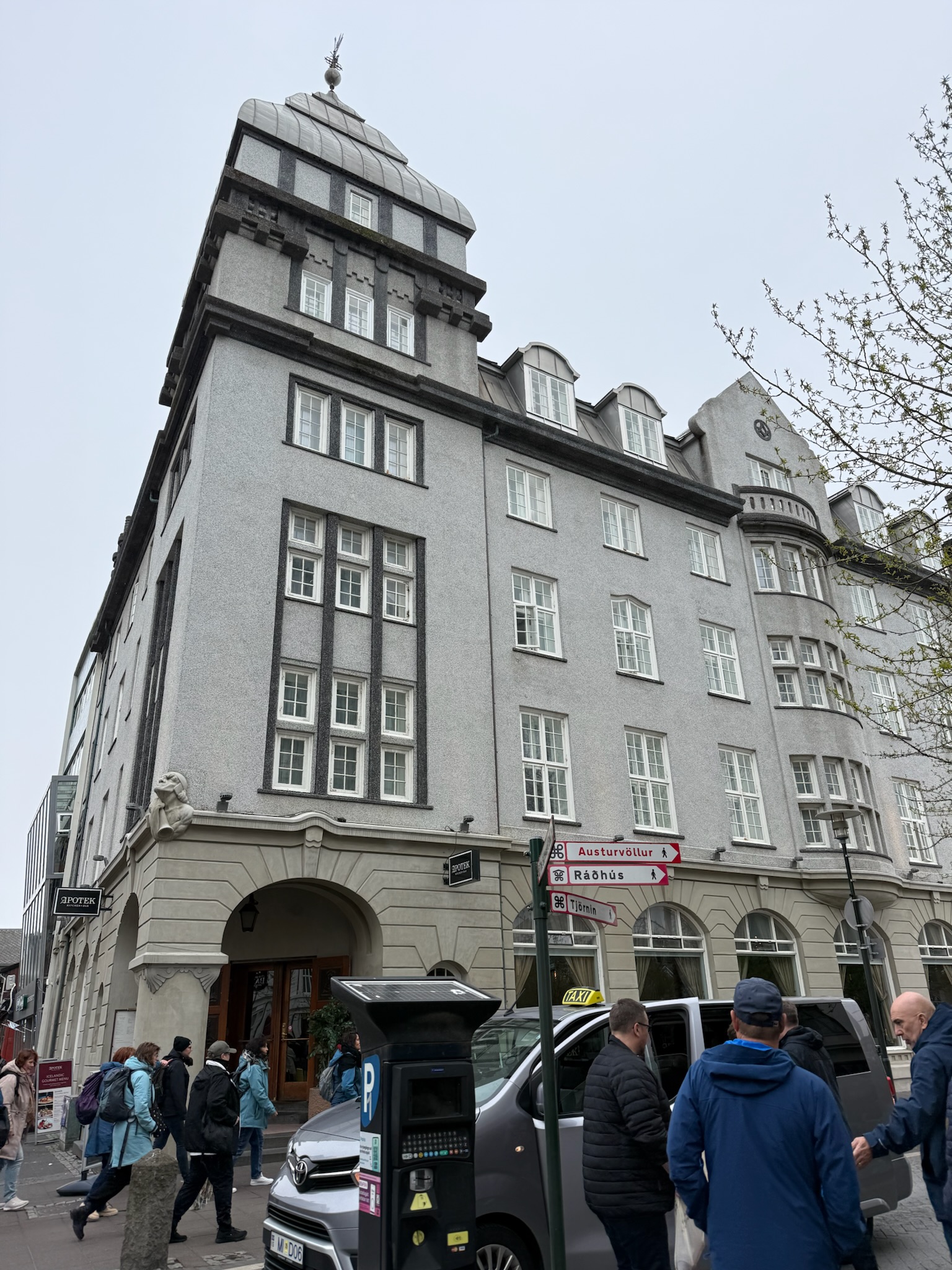
In good news, the non-communicative bus driver dropped each group off at our hotels, so we didn’t need to change busses at the BSI and do the loop bus again. We went to the hotel room to rest for a short while, then at 1730, walked back to the heart of downtown to meet Eric and several other of his convention buddies at a hotel. Here were a few more photos of downtown.
From the hotel, we carpooled to the home of one of the convention attendees that lived nearby. The host family served burgers that they’d grilled on the barbecue. The food was phenomenal. The wife was Icelandic but had briefly lived in California, and Christi and her talked about life in California versus Iceland. At one point, the host couple mentioned that the prisons in Iceland were nice. Christi told them that Dimitri had joked that Icelandic prisons were luxury resorts. They laughed and agreed.
At 1845, Keith and Christi caught a taxi back to the hotel for the night. Eric and the rest of the group caught a taxi to the convention’s awards ceremony at the Harpa. The convention also hosted an after-party. Needless to say, Eric came home late.