continued… We noticed it was nearly time for the IMAX movie about the northern lights to begin, so we headed back down to the first floor and lined up outside the IMAX theater. At the time the movie was supposed to start, we were still lined up. We’d expected them to open the doors to let us in, but instead they turned on a video that gave us some basic information that would help us to understand the main feature better. After that short video ended, they opened the door to the theater, and we quickly got seated. They told us no photography was allowed after Christi took this shot of the images that were being shown during seating.
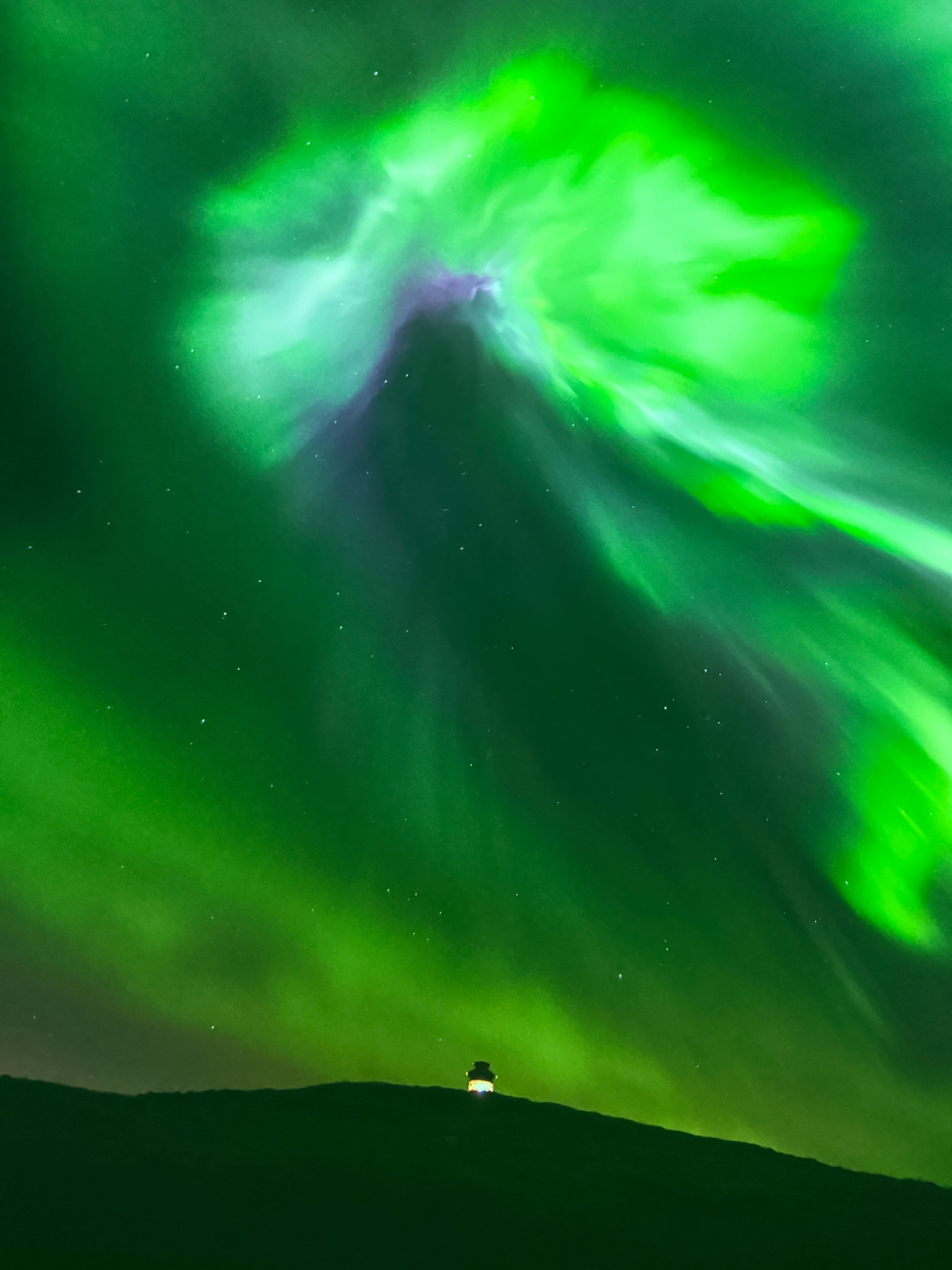
It was a story told from the perspective of one of the deities from their traditional Norse mythology. She explained a little bit about astronomy and that other planets, as well as our moon, also had special activity at their north poles. She explained what the magnetosphere was and how it reacted to electromagnetic field (EMF) bursts that came from the sun, why the EMF bursts created auroral lights, etc. The video did an excellent job of explaining complicated science in an easy to understand manner, while also blending the science with some local folklore. Visually speaking, the film was stunning. The images of the auroral lights and the celestial bodies were gorgeous. There were also some folklore images weaved in there that were also beautiful.
When movie let out, we took the elevator up to the cafe on the 5th floor for a latte (Christi) and lemonade (Keith). It was the top floor of the building, and it was a dome with a 360-degree view of the city. The latte was just as good as the one she’d gotten yesterday. She was pretty sure they used the same magical milk.
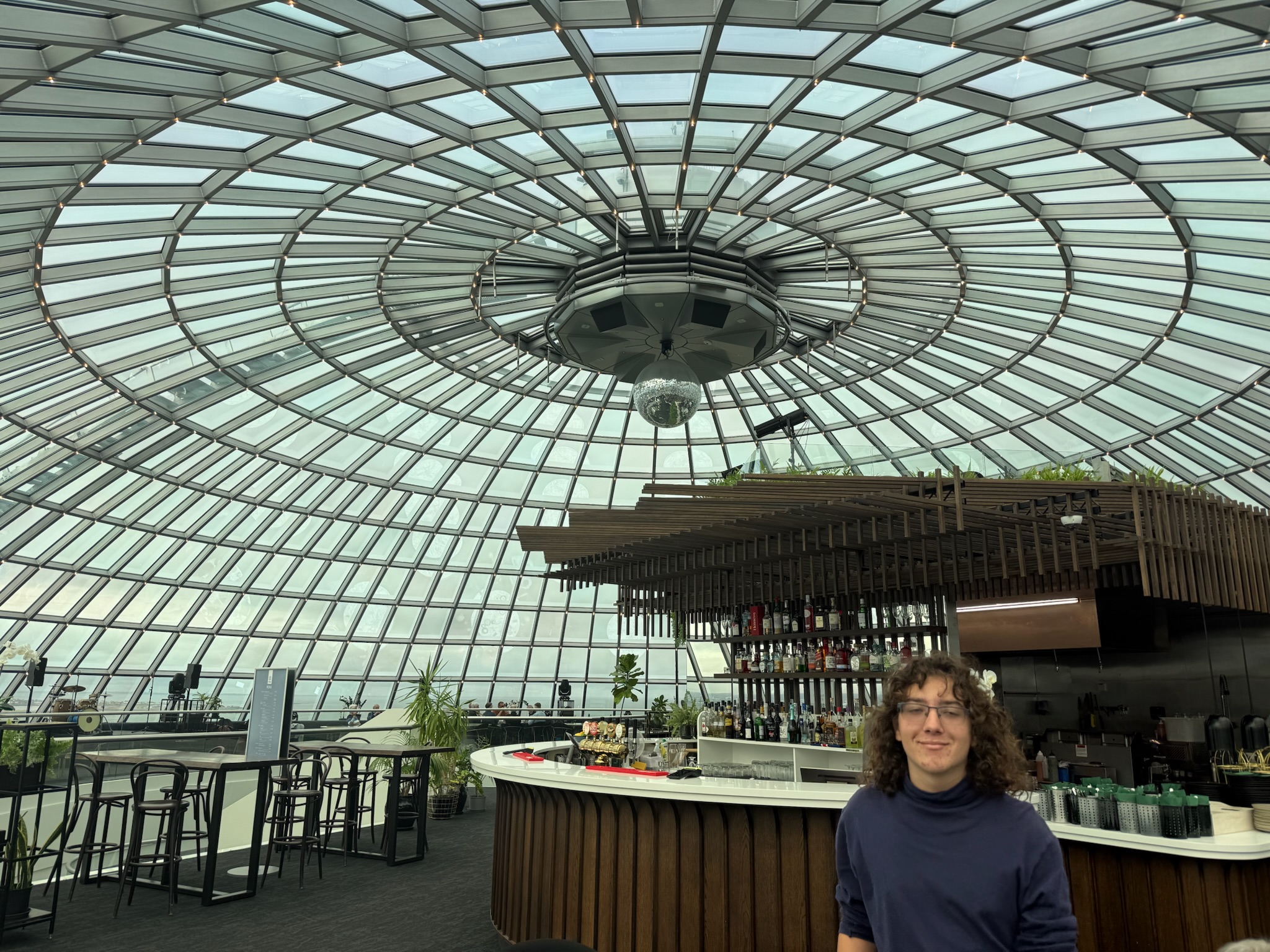
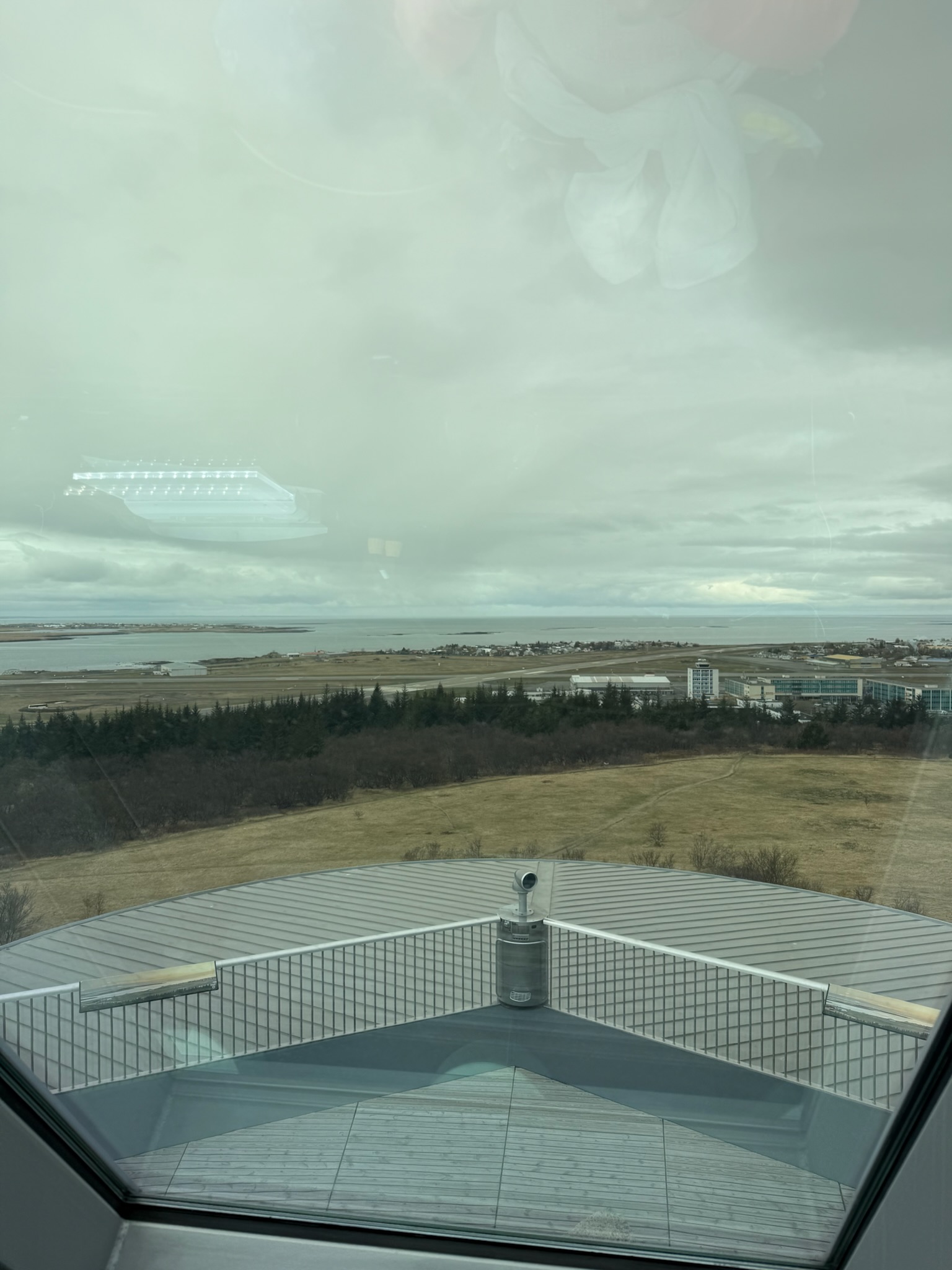
Here were a couple of shots of the view.
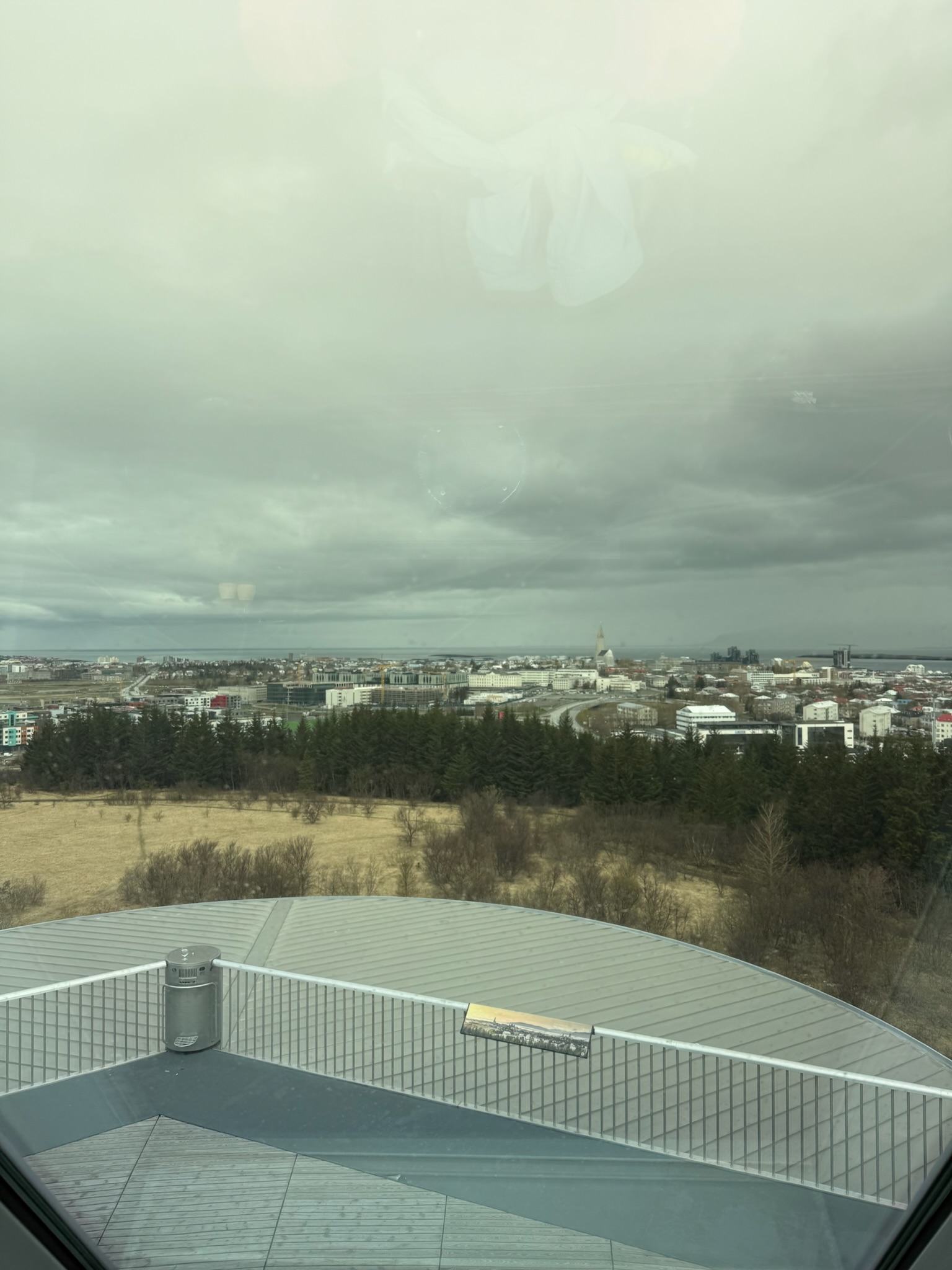
A sign said that the dome was supported by six water tanks, each holding 4-million liters of water. The steel frame of the building was hollow and acted as a radiator. In the winter, they ran hot geothermal water through the tanks to keep the building warm, in the summer they used cold glacial melt water to keep it cool. We believe the round things sticking out from the sides of the buildings were the water tanks.
We took the stairs down to the 4th floor, which was a gift shop and an outside observation deck with the same 360-degree view of the city. In the photos taken from the 5th floor, you can see the observation deck on the 4th floor. While the scenery was certainly better without the windows obscuring the view with tint and glare, it was cold outside. Here were a few more shots of the city, taken from the deck.
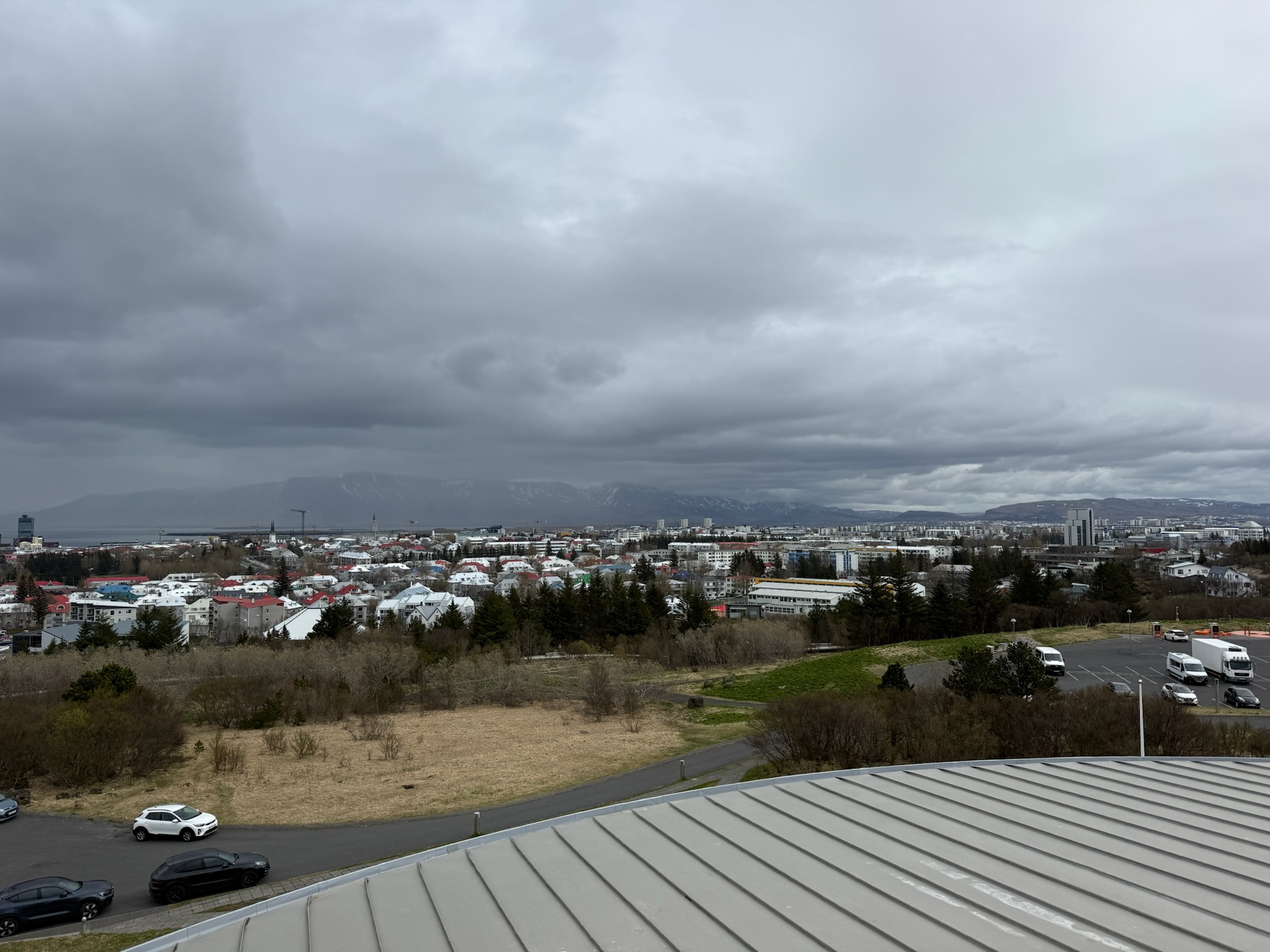
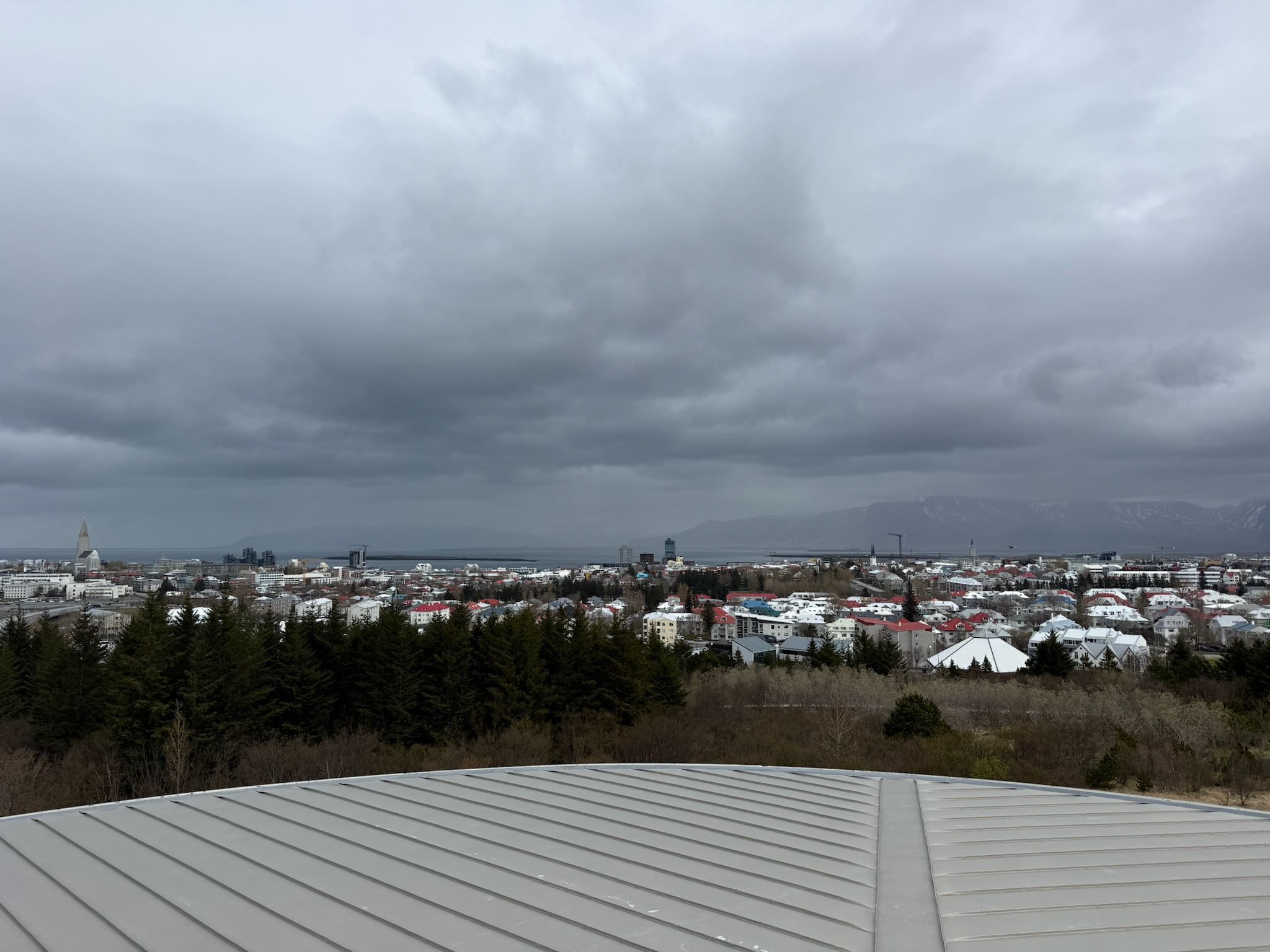
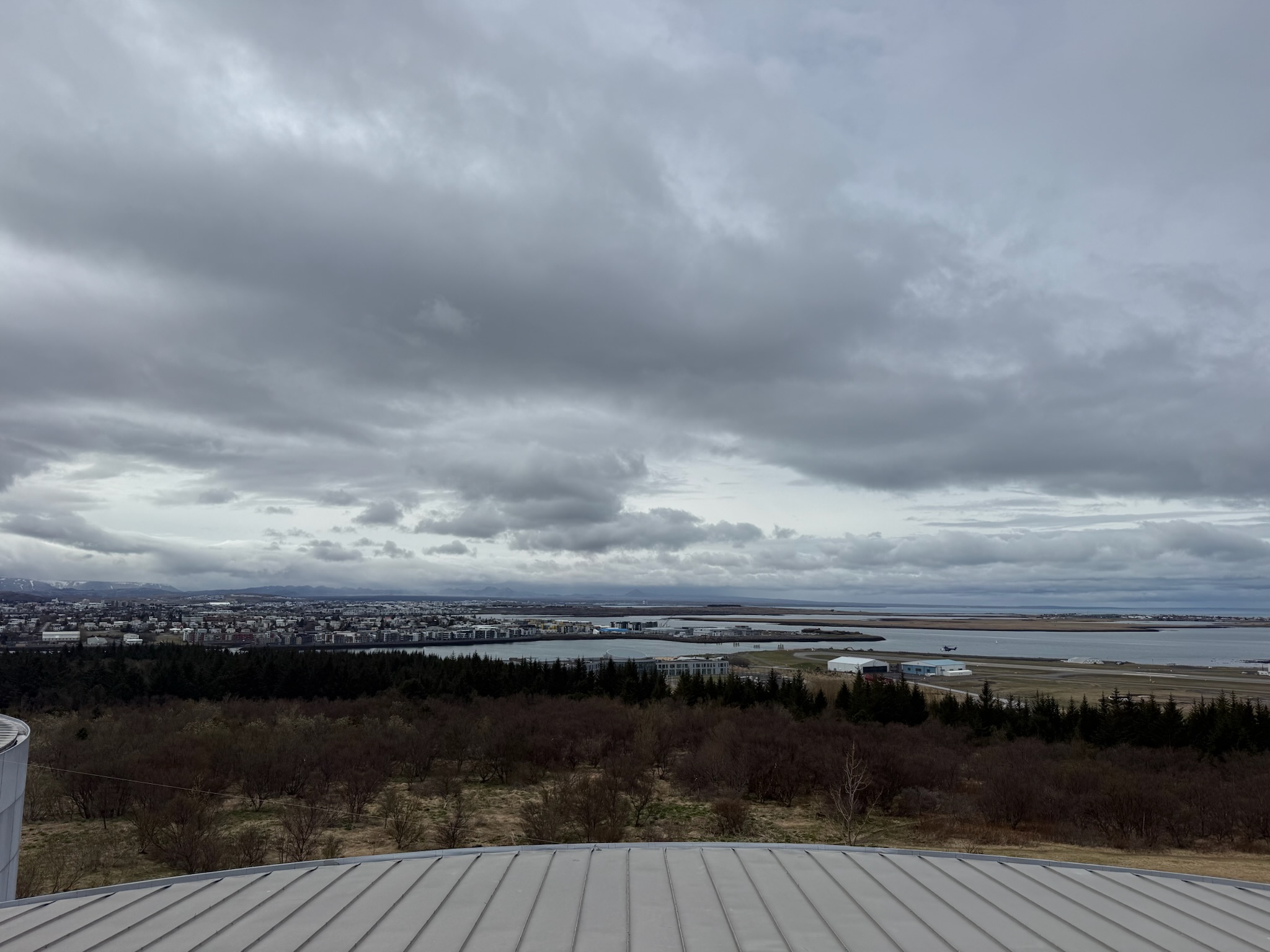
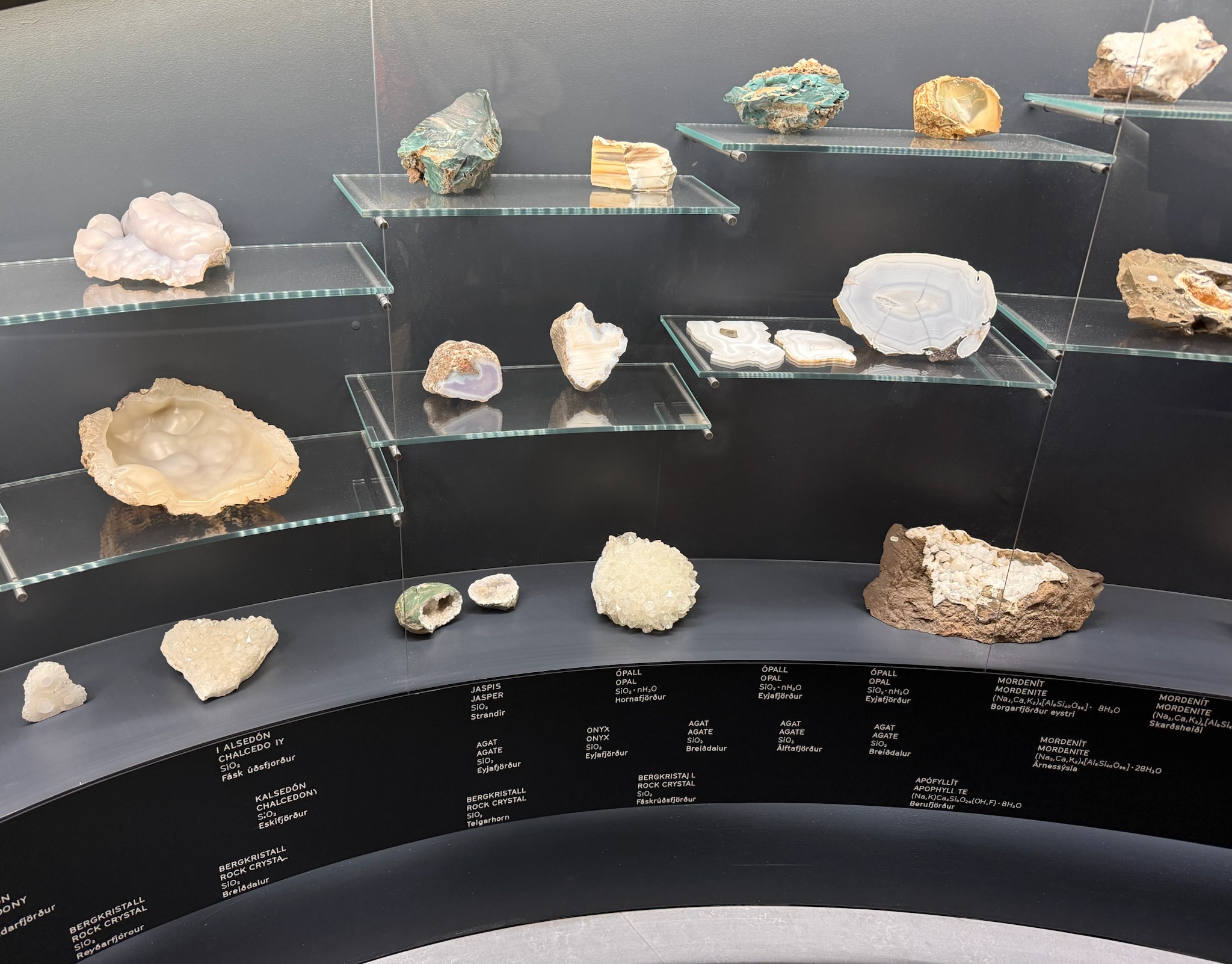
We took the stairs down to the third floor and found out there was no third floor! We continued down to the second floor to see the exhibits that we’d missed earlier. The first one we went to was on the rocks and minerals found in Iceland. The featured mineral was Iceland spar, an unusually pure variety of calcite with unique properties that was important to scientific development in the 19th and 20th centuries. There was also a big sign about amygdales (AKA amygdules), which was when the mineral in the middle of a rock was different than the minerals in the outer shell. Sadly, the sign was difficult to read, so we didn’t get to find out how it happened.
There was a separate exhibit on volcanic rocks. Lava, or magma, was basically molten rocks, and when it dried, it went back to rock. The most common type of volcanic rock found in Iceland was basaltic, which came from a low-viscosity lava. Low-viscosity meant rich in magnesium and iron and a low silica content. Rhyolite and obsidian were rocks from a silica-rich lava. Andesite rocks were dried andesitic lava, which had an intermediate silica content. And there was pumice, which was a porous, frothlike volcanic glass from lava that cooled so quickly in the air that it didn’t have time to crystalize. Any kind of lava could make pumice. Hyaloclastites were porous volcanic rocks formed by the rapid cooling of lava that erupted underwater or under a glacier. There were two subtypes, tuff and breccia. Volcanic rocks tended to be rich in minerals and nutrients, so after the initial devastation of the lava destroying the land, it was possible for a lush, abundant ecosystem to spring from it.
The next display was on volcanoes. Earth’s crust, what we call the ground, was massive chunks of land (continental tectonic plates) that floated on a bed of molten rock. There were cracks in between the plates and lots of cracks within the plates. Volcanoes formed when heat and pressure from gasses built up under the crust’s surface. Just as a geyser exploded once there was sufficient pressure, so was the case with volcanoes. The lava, ash and gasses would find a crack in the surface and push its way out.
Typical weak spots were fault lines, where two tectonic plates converged or diverged. Not every location with tectonic plates were hot spots where pressure built, which was why there were no volcanoes in California. Iceland sat on top of the Mid-Atlantic Ridge, an up to 10,000 km north/south running crack between the North American and Eurasian continental plates, and Iceland happened to be over a hot spot.
A mantle plume was when a massive column of lava heaved up Earth’s crust and broke it apart. The land of Iceland was created by a mantle plume. Many scientists believe that this mantle plume accelerated the pace of continental drift, pushing the continents apart and widening the Atlantic Ocean.
An active volcano was in some stage of the process of erupting, a dormant volcano was not erupting but expected to start the eruption process again, and extinct volcanoes had not erupted in thousands of years and were not expected to erupt again. Iceland had dozens of active volcanoes and countless extinct volcanoes in its 30-volcano systems within five volcanic belts.
We’d mentioned hyaloclastite rocks above. Submarine eruptions, eruptions in the ocean that created sea mounts and islands, were relatively common in the waters near Iceland. Subglacial eruptions were also relatively common. This was when lava started flowing under a glacier, creating massive flooding.
Fissures were long cracks in Earth’s crust, sometimes many kilometers long, and were often caused by earthquakes pulling the land apart. In volcanic areas, lava will escape from Earth’s core through these fissures, so there wasn’t a single point of eruption. These were called fissure swarms. As the lava flow widened and cooled it often created rocky plateaus. These types of fissures usually happened underwater, and Iceland was one of the few places they occurred on dry land.
Shield volcanoes were (relatively) gentle, long lasting eruptions that created wide, rounded hills. They only erupted once.
Stratovolcanoes were the tall, conical mountain that most of us envisioned when we heard the word volcano. These were tall because they periodically erupted, often over centuries or millennia, and each eruption added more rock to the top of the crater.
We moved on to the exhibit on earthquakes. Iceland had three sources of earthquakes. We mentioned above it sits on the Mid-Atlantic Ridge. In some spots within Iceland the plates were diverging and in others transforming. Transform plates were when the tectonic plates rub up against one another and cause earthquakes, which was what happened in California. Diverging was when the plates pulled apart. In the diverging areas, the gap widened by about 2 cm per year, though usually diverging gaps would eventually be filled by lava. Earthquakes also naturally occurred as part of the effects of volcanic eruptions.
At this point, we’d thought we’d seen the entire museum. We went down to the first floor and were looking for the exit when we realized there was a big section of exhibits on the first floor that we’d missed. The first was about Lake Mývatn, which was 37 km² wide and only four meters deep. It was fed by nutrient rich cold and warm springs. The combination created an ecosystem unlike anything else on Earth. It contained 40 species of midges, and in the summer, the midges were so thick they looked like smoke. It also had Atlantic charr, brown trout and salmon. Within the lake grew thread-leaved water-crowfoot, a plant in the buttercup family with white and yellow flowers and Lake Balls, which were literally balls of green algae that rolled along the bottom. On the shoreline grew Queen of Mývatn, which was a flowering plant in the cabbage family that was unique to Iceland. Downey birch trees, which were native to Iceland, proliferated around the lake. Ducks that inhabited the lake included Barrow’s goldeneye, a black and white duck, and the Eurasion wigeon, which was a dabbling duck (which meant surface feeder). In other types of birds, the lake was also home to Horned Grebes and Gyrfalcons, which were the only member of the falcon family to live in the far north year round. Lake Mývatn was the only European breeding ground for Common Loons. For animals, there were Arctic foxes.
Next was an exhibit about Iceland’s longest fjord, Eyjafjörður, located in the central, north part of the island. FYI, a fjord is a long, deep, narrow body of water that reached far inland, usually with steep rock cliffs on either side. Fjords were formed when glaciers carved a U-shaped valley and the sea later filled it. The fjord was best known for its underwater hydrothermal fields, with vents, chimneys and fissures continuously spouting hot, fresh water through eerie rock towers. The vents were shallow, making it easy for divers and scientists to visit. The unique habitat attract diverse marine life, including kelp, sea urchins, Bryozoa (which Christi thought was a type of coral but now knows it’s a distinct species), and 40 varieties of starfish. Whales were seen there and a bird called the Rock ptarmigan, which turned white in the winter and changed color to blend with the environment in the summer, inhabited the area.
That was the last exhibit. The ticket booth called a taxi for Christi and Keith, which arrived within 5-minutes. We went back to the hotel, arriving about 1215. Christi grabbed a some brochures in the lobby, including one for The Lava Show that she knew she wanted to see. Back in the room, she saw the show was only a 10-minute walk from the hotel and the show times were every 2-hours. After some down time to rest, we left the hotel at about 1330… to be continued…