There was a small exhibit on Congress’s investigational powers. They mentioned a few examples: A committee investigating organized crime in interstate commerce convened from 1950 – 1951. It was one of the first televised hearings, so it garnered a lot of attention. The Wherry-Hill Investigations of the 1950s sought to expose gay federal employees. And in 1975, the Church committee investigated “unlawful or improper conduct by intelligence agencies.”
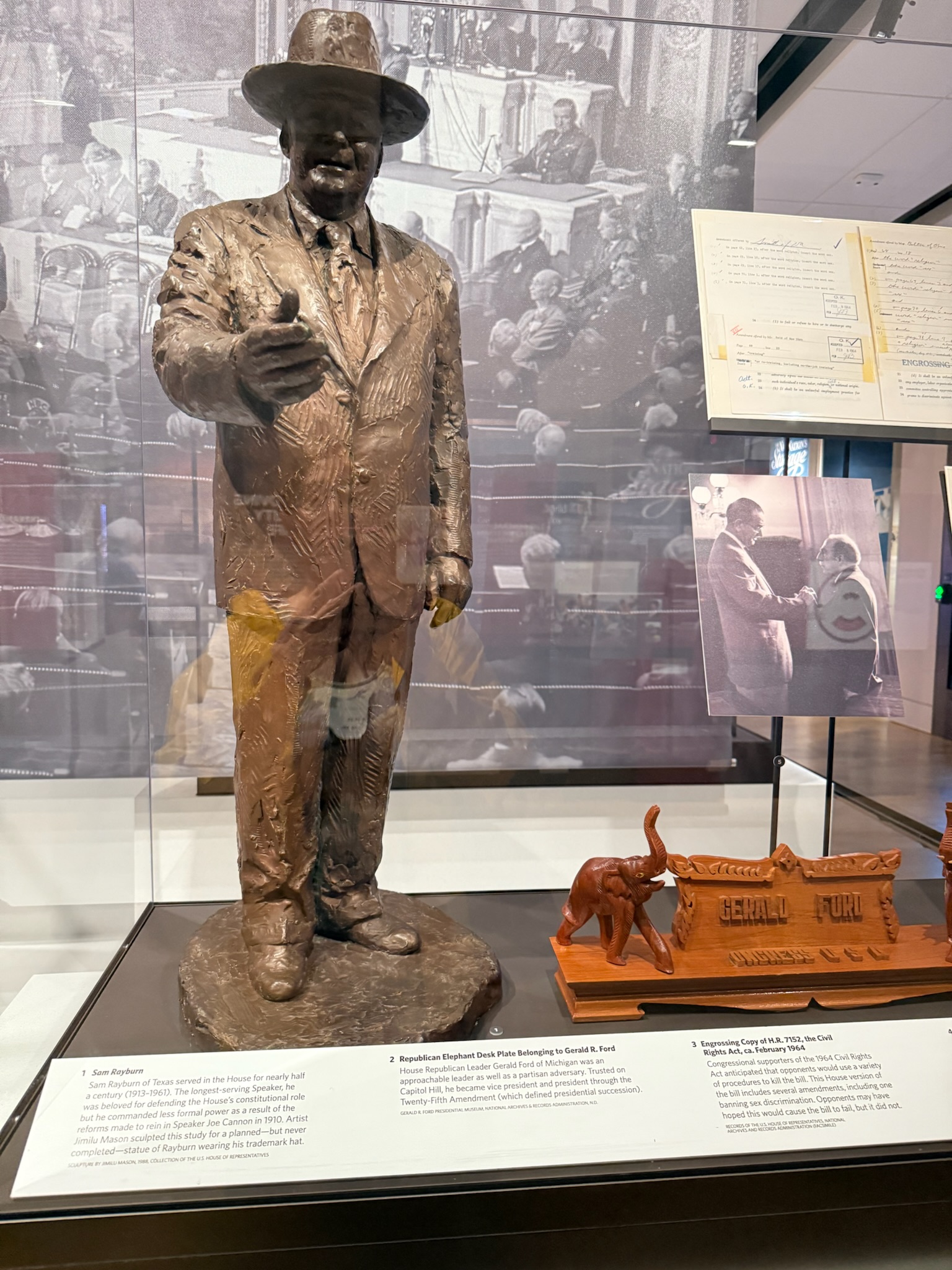
The item on the left was a maquette, or mini-version of a proposed statue, of House Representative Sam Rayburn, who served from 1913 – 1961. The statue was never made. The wooden item to the right of the sculpture was a desk plate belonging to Gerald Ford. Ford was the only president who wasn’t elected as president or VP. When Nixon’s VP, Spiro Agnew, resigned in 1973, Ford ascended from House Minority Leader to VP. When Nixon resigned in 1974, Ford became president. The document above is a copy of H.R. 7152, The Civil Rights Act, which was passed in 1964.Continue reading →
continued… The next exhibit was about more general early US government history. It started by explaining that the fledgling nation’s founding framework was the Articles of Confederation, enacted in 1781. And it explained why they were replaced in 1789 with a revolutionary new idea that had never been tried before — the Constitution. It explained how the Great Compromise led to a balance of power between three branches of government so the federal government couldn’t become tyrannical, and also ensured no state could have too much power over the others. An addendum called the Bill of Rights was added with a list of amendments to the Constitution which protected individual liberties. Interestingly, the author of the Bill of Rights, James Madison, didn’t think it was necessary, but realized that the anti-Federalists wouldn’t support the Constitution without individual rights explicitly laid out. The Constitution states that federal laws and treaties take precedence over state laws.
The House of Representative proceedings were open to the press and general public from the inception of Congress in 1789, but the Senate met in private. After the states complained, the Senate was prompted to open its doors — for the most part — in 1795. They still met in private about matters considered too sensitive for the public, including presidential nominations and foreign treaties.
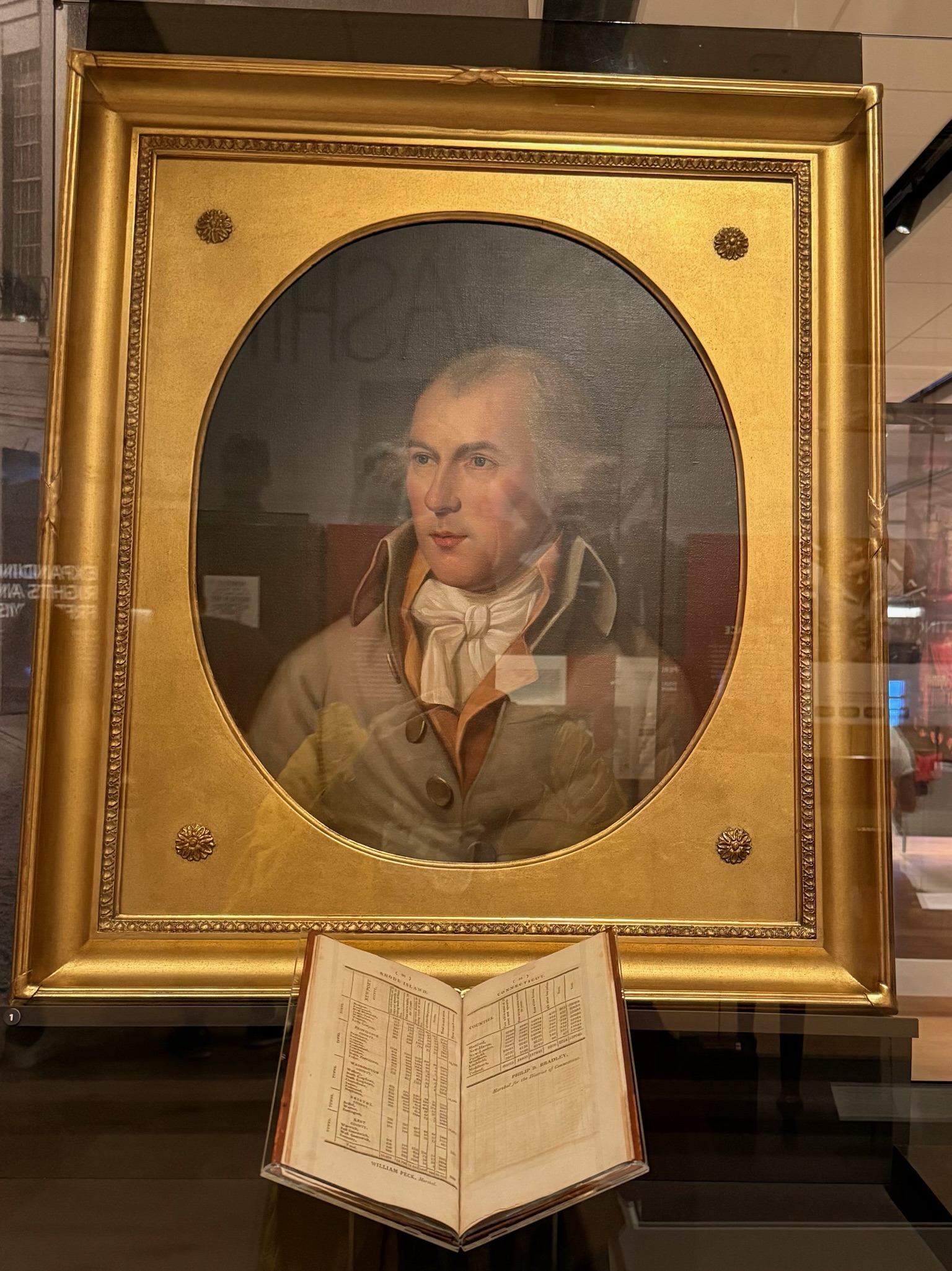
Portrait of James Madison. The book was the results of the first census in 1790. There were 3.9 million people, including almost 700,000 slaves. Continue reading →
continued… There was an exhibit about notable addresses to Congress that took place here in the Capitol. Interestingly, John Adams, who was president in 1800 when the Capitol opened, was the first and last president to speak to Congress in person in a joint session (meaning both the Senate and House legislators were in attendance) in the Capitol for over 100-years. Woodrow Wilson restarted that tradition of in-person communication in 1913. In the interim, the president simply addressed the legislators in writing.
The first foreign dignitary to address congress was the Marquis de Lafayette in 1824, though he addressed each chamber separately instead of having a joint session. The first foreign head of state to address Congress in a joint session was King Kalakaua of Hawaii in 1874. In 1939, King George VI became the first reigning British monarch to visit the US. His successor, Queen Elizabeth II of England, came to the Capitol several times, and the Pope came once in 2015. Other notable leaders were Russian President Boris Yeltsin, who came only six months after the collapse of the USSR and British Prime Minister Winston Churchill, who visited three times.
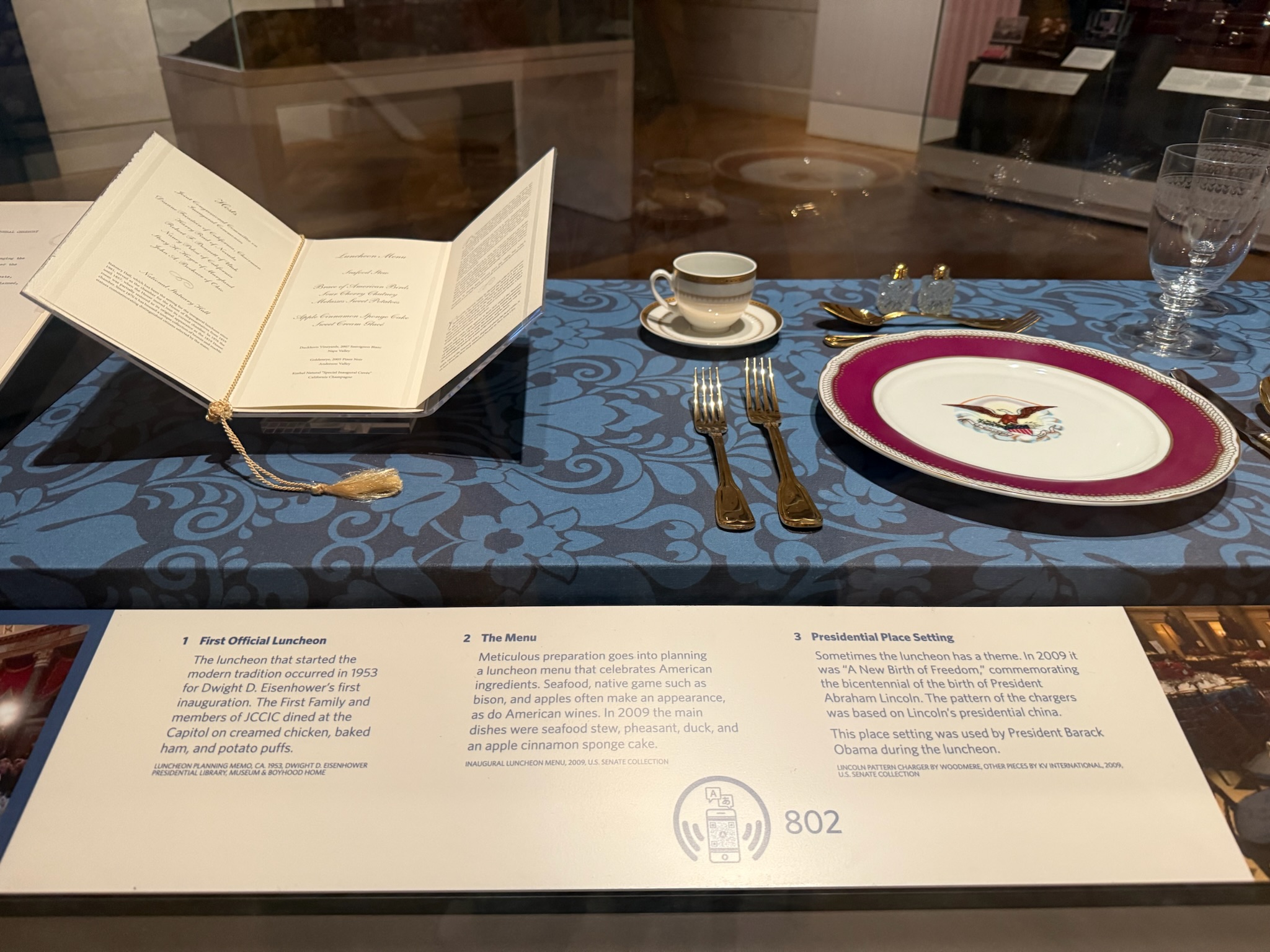
As previously mentioned, presidential inaugurations were conducted here. There was a display about how the exact location has changed over the centuries (going from inside to outside, then from the east side to the west side), the extensive logistics to prepare for the event, what they do in inclement weather, etc. What we didn’t know was that there was a luncheon held in Statutory Hall afterwards. With only 232-seats, It was the “the most exclusive event in Washington.” Only the legislators in leadership and on the inauguration planning committee, the vice president, former presidents, and special VIPs were invited. The tradition began in 1953 with Dwight Eisenhower.
continued… The next exhibit was about the building itself. As we had briefly mentioned earlier, the original structure was planned in 1791, construction started in 1793, and was completed in early 1800s… when the country had 16 states and 5.5-million people. By 1850, there were 32 states and the population had exploded to 23-million. Both the House and Senate had outgrown their chambers, so they decided to add grand extensions onto the original wings. The House moved into its new chambers in 1857, and the Senate moved into theirs in 1859. The old dome was replaced with the current dome as a part of this expansion project. By the beginning of the 20th century, the legislators ran out of space yet again. The first House and Senate office buildings were opened across the street in 1908 and 1909, respectively.
Fun fact: Originally, the name for the building was going to be Congress House, but then-Secretary of State Thomas Jefferson insisted on Capitol, wanting the gravitas of Ancient Rome’s Republic and its Capitoline Hill.
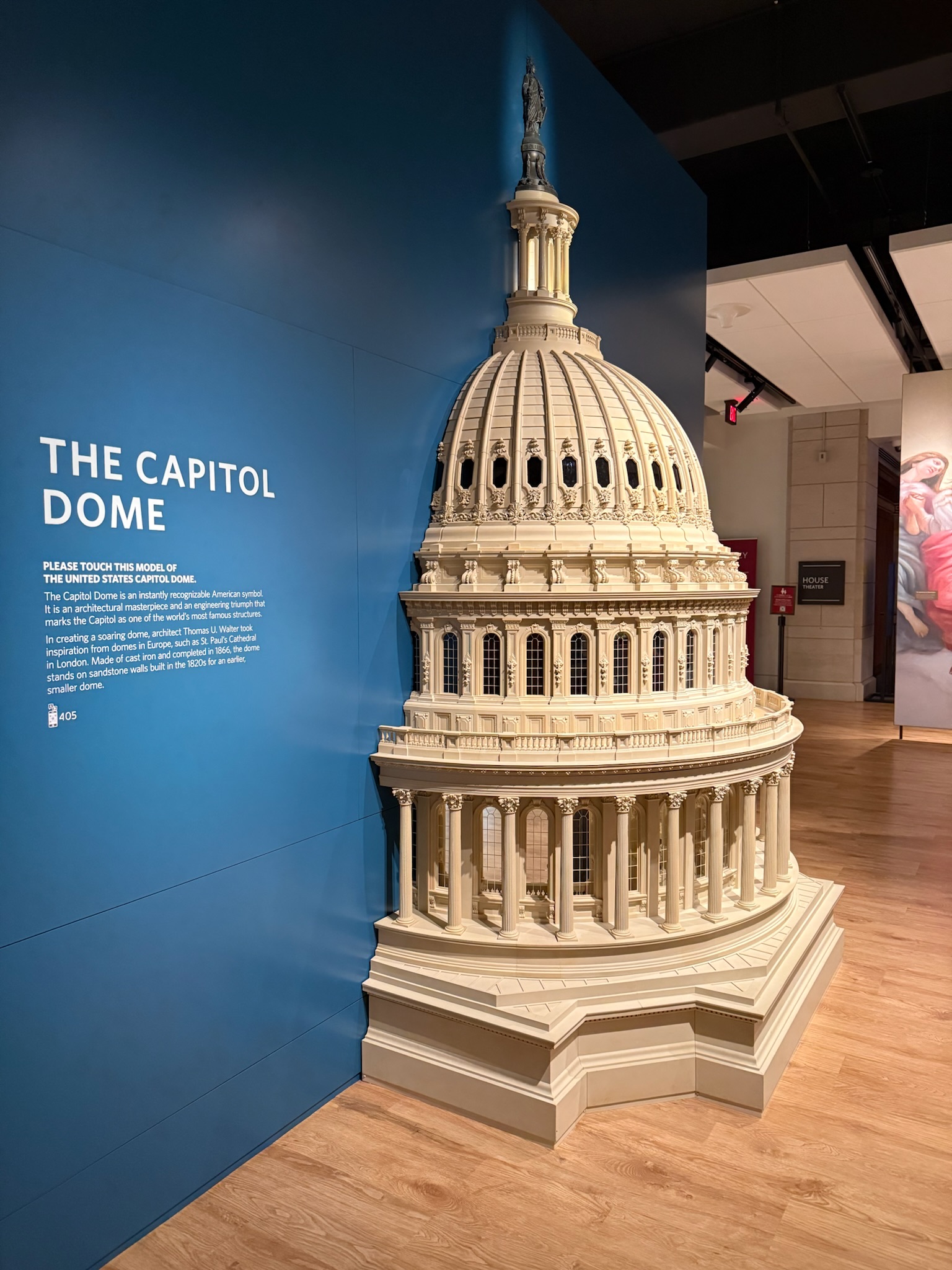
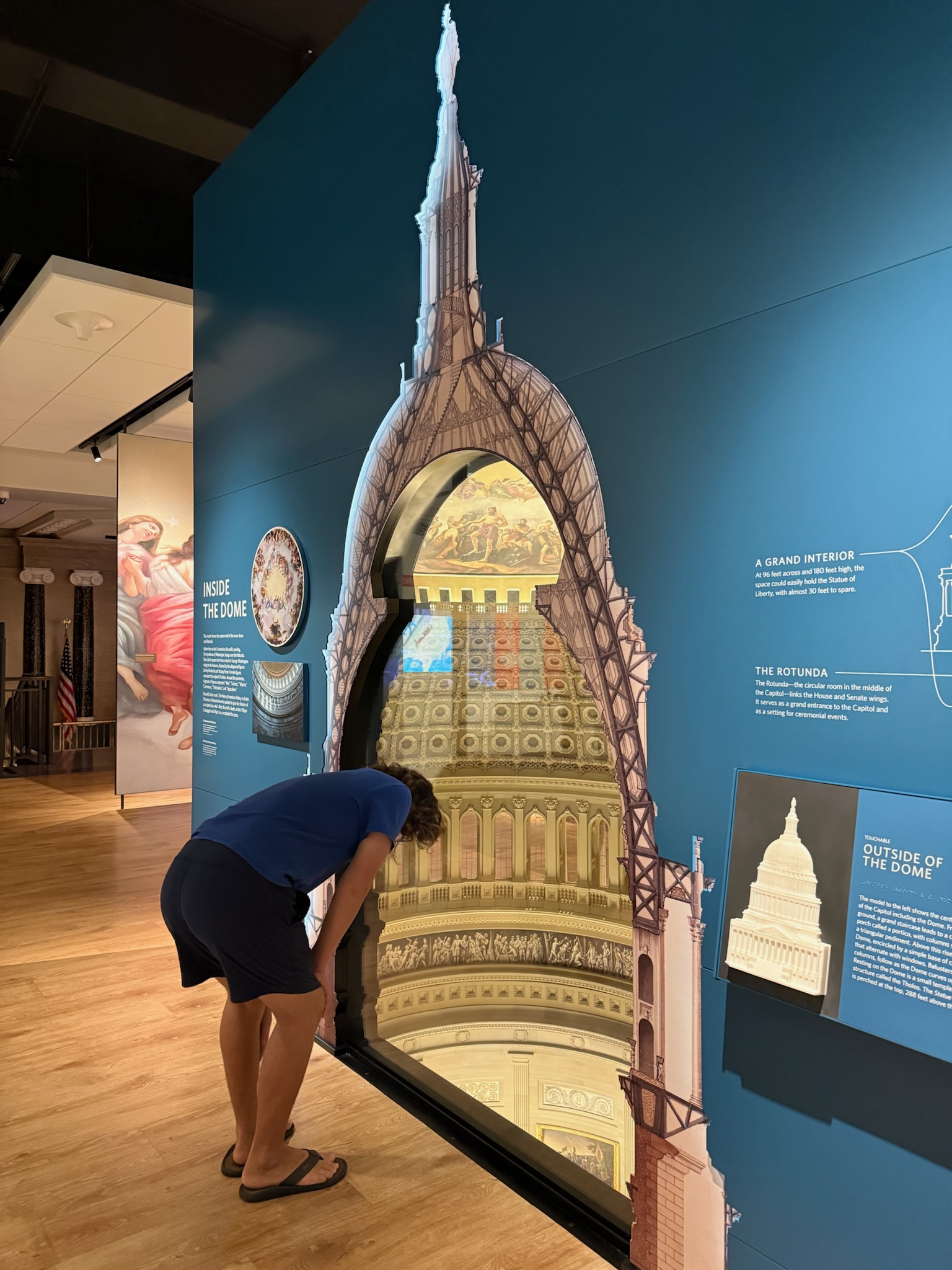
The display about the dome gave a lot of details about the structure. Architectural enthusiasts would probably find the display fascinating as it was something of an engineering feat. We found this model of the dome to be a clever and unique presentation format.
It was cool to be able to peer inside the model to see what it looked like on the inside when standing on the ledge between the friezes and octagonal panels.
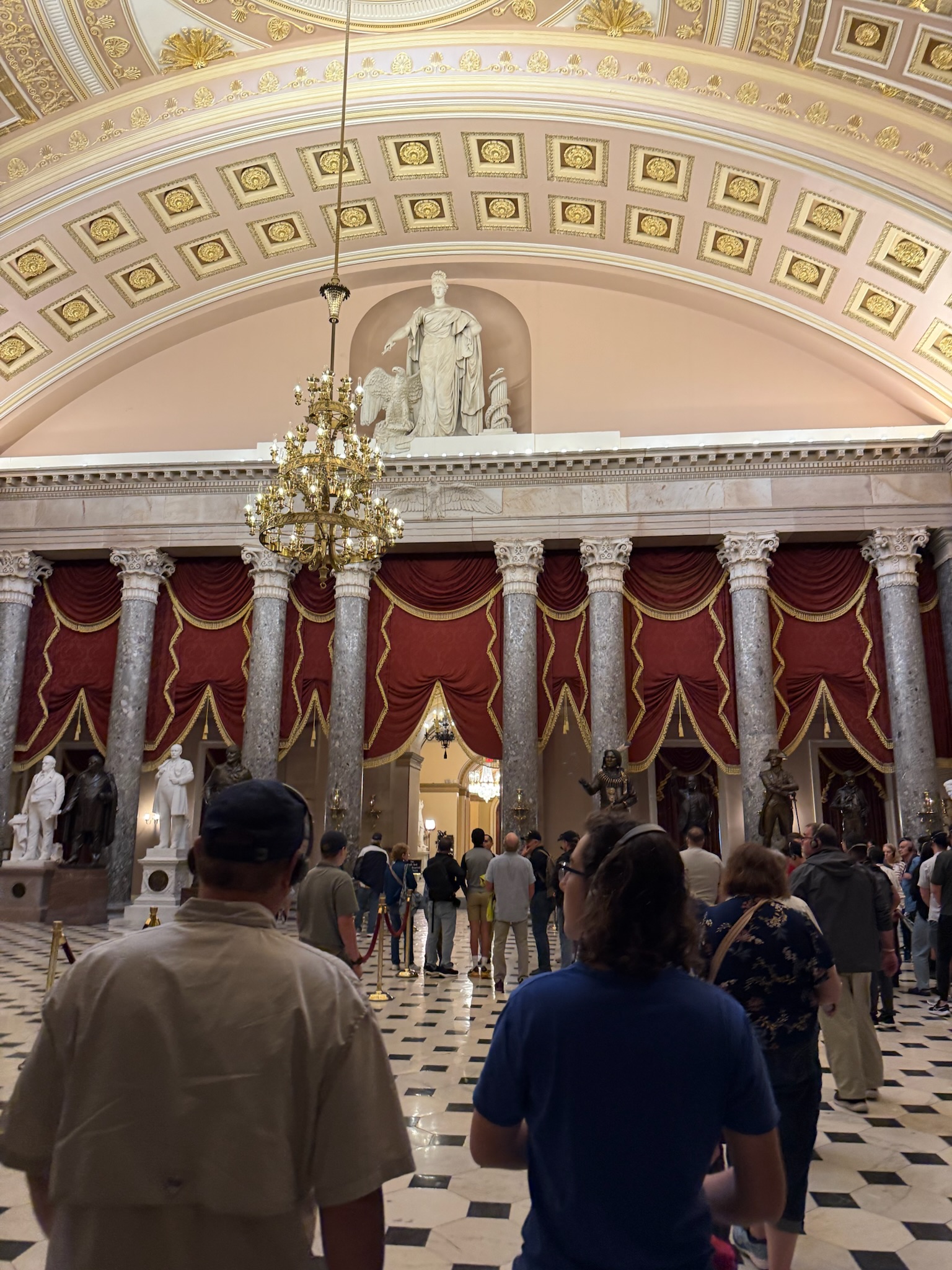
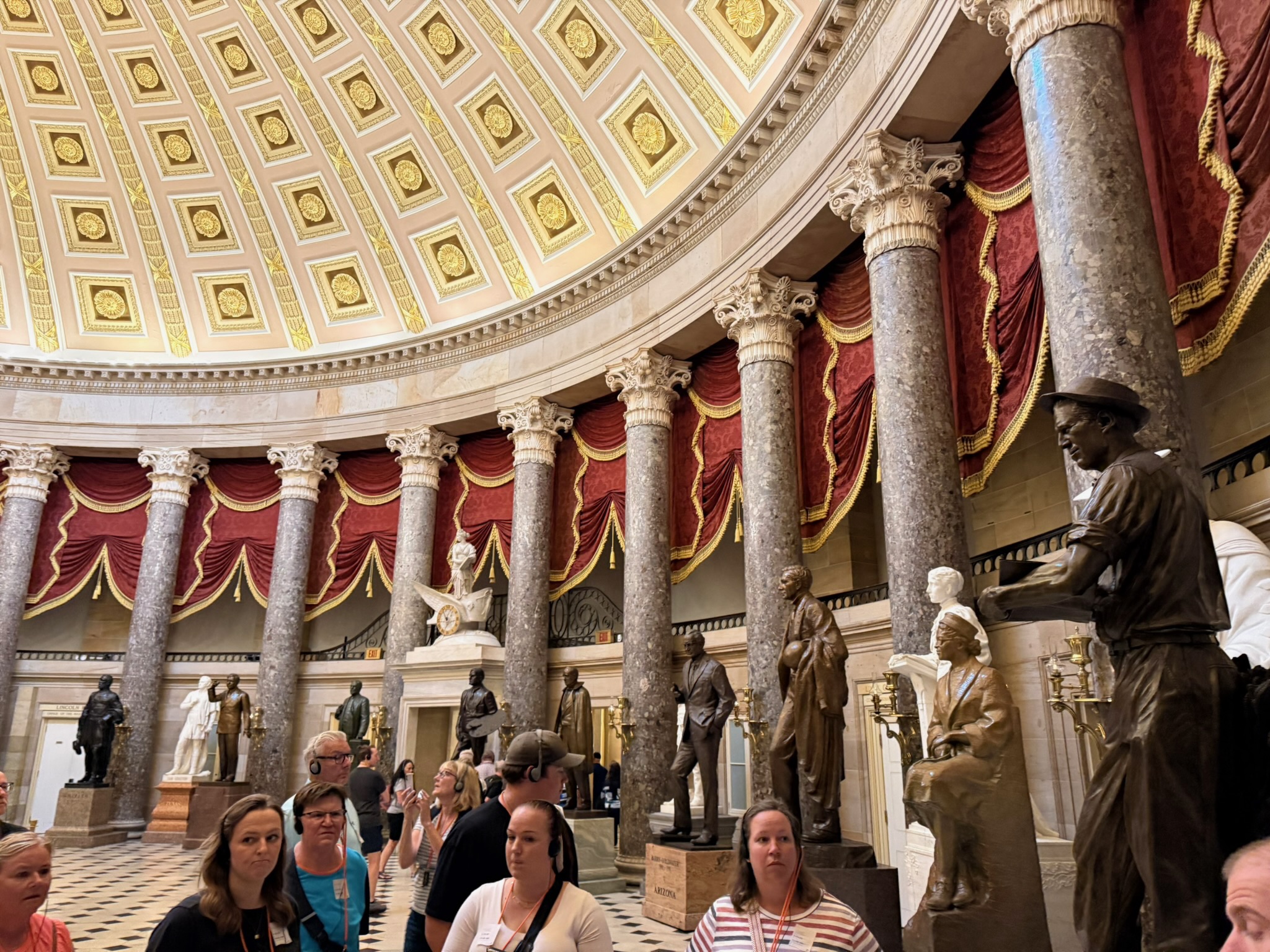
The hall led to a semi-circular shaped room lined with state statues. We’d thought there were a lot of statutes in the other rooms, but they were really crammed in close together in this room.