continued... Shortly after we left Thingvellir National Park, the tour guide made a big deal about the continental divide line that we were about to cross on the road. We’d been on the North American side and we drove through a sizable stretch of road that the guide explained was technically defined as “nowhere” before we entered the European side. Who knew there were gaps of land that didn’t belong in either continental plate?
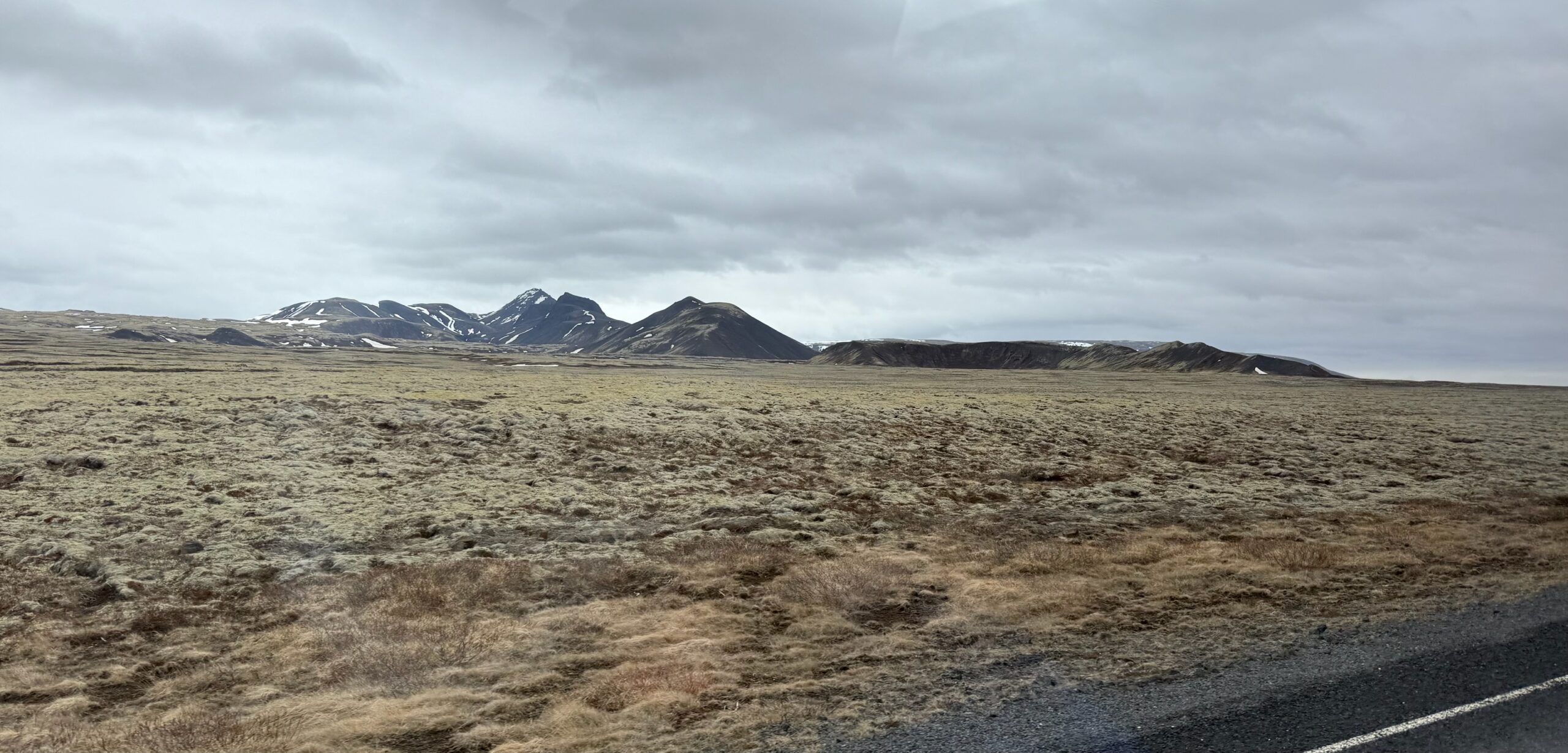
After we crossed into Europe, the guide told us he had a surprise for us — he’d squeezed in an extra itinerary item, a dairy farm where they made their own ice cream. Here was a shot of the scenery along the way.
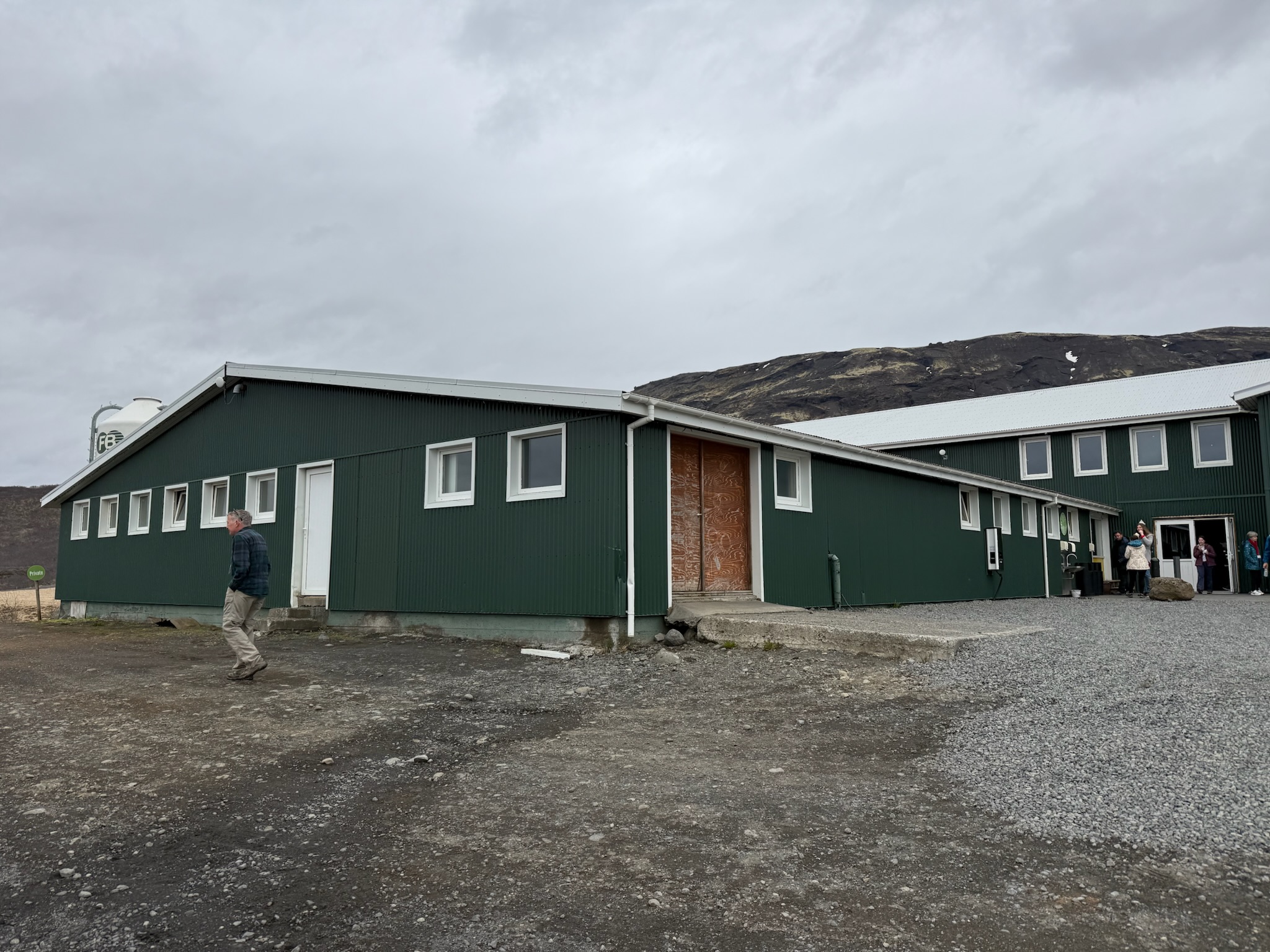
The Efstidalur farm has been owned by the same family since 1850, and were committed to preserving Icelandic farming traditions. In addition to making ice cream, they also had an onsite hotel and restaurant, and rented horses for horseback riding. The guide said the ice cream was amazing and they didn’t it in the stores; this was the only place it could be purchased. The parking lot was packed with tour busses, which made parking tough. The left wing of the building was the dairy, the door on the first floor to the right was the entrance to the ice cream shop.
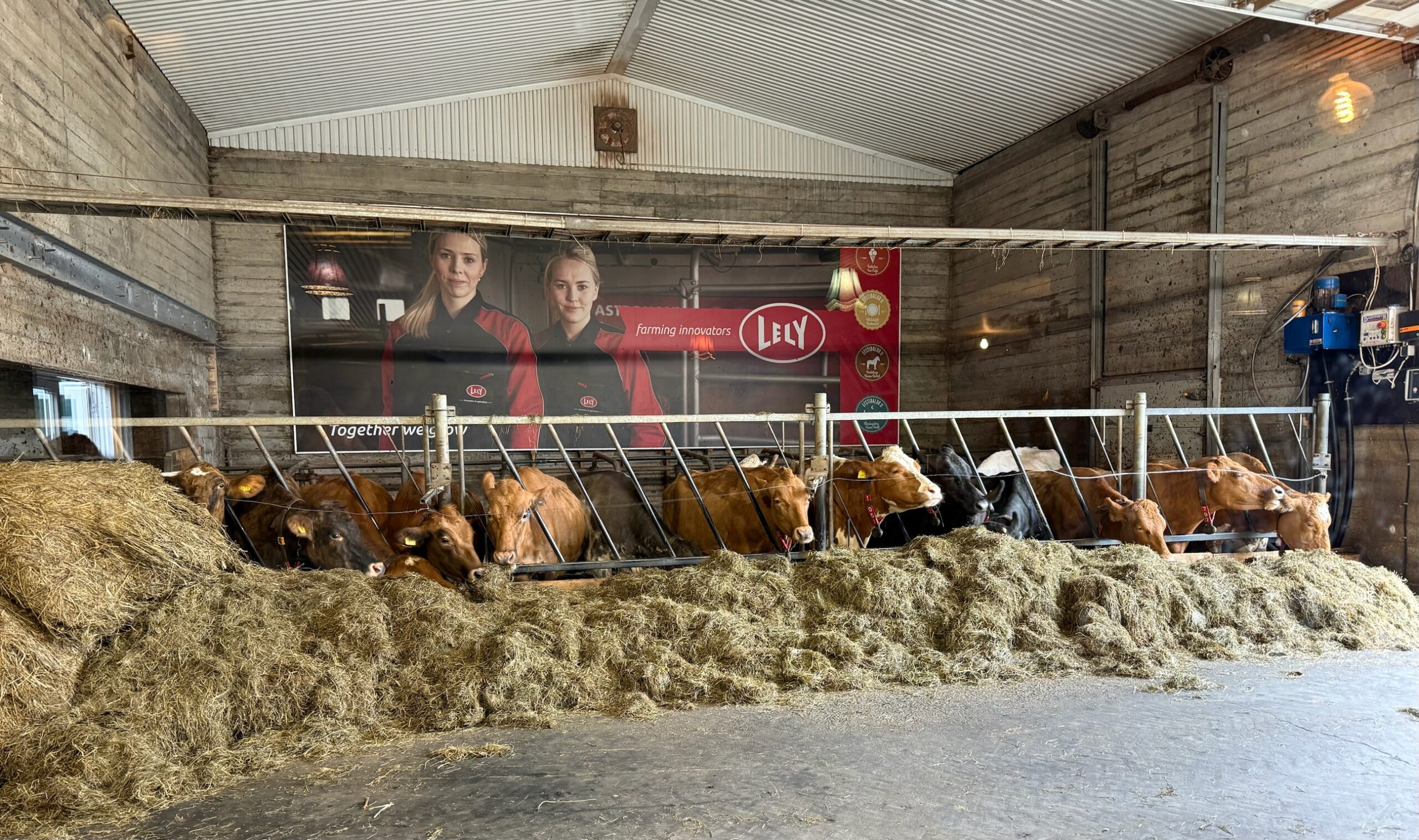
The dairy.
It was a long line to buy ice cream. We noticed many of the same people that we’d seen at Thingvellir.
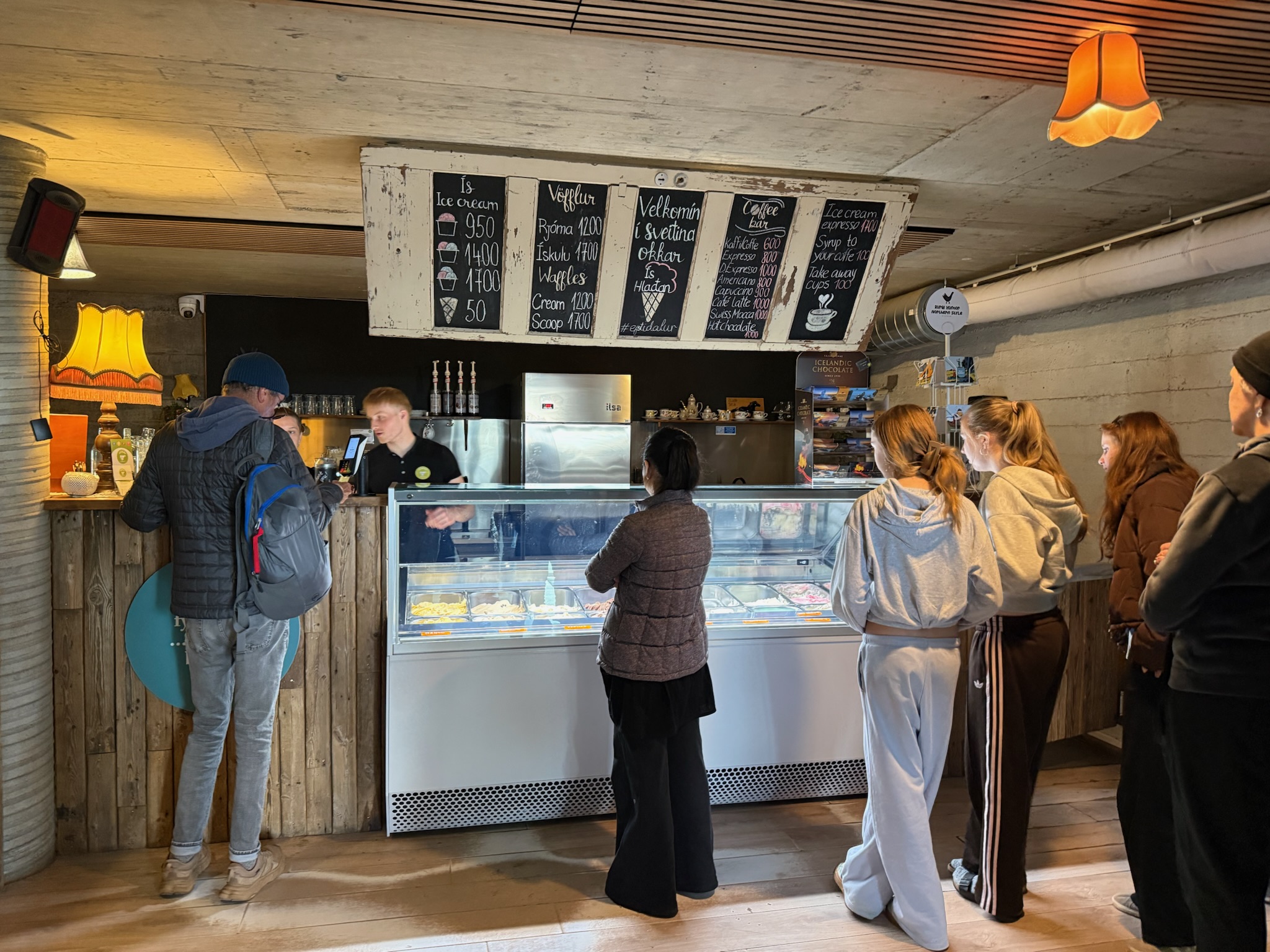
The driver encouraged us all to get the blueberry flavor, which was a mix of cream and yogurt. Christi took his suggestion. It was sooo good — perfectly sweet, with a refreshing blueberry taste. Neither the blueberry nor the sugar were overwhelming. Keith got mocha. It was very creamy and yummy. In the photo below, the hotel and restaurant would be just to the left of Keith. The construction equipment made it appear that they may be expanding the operation.
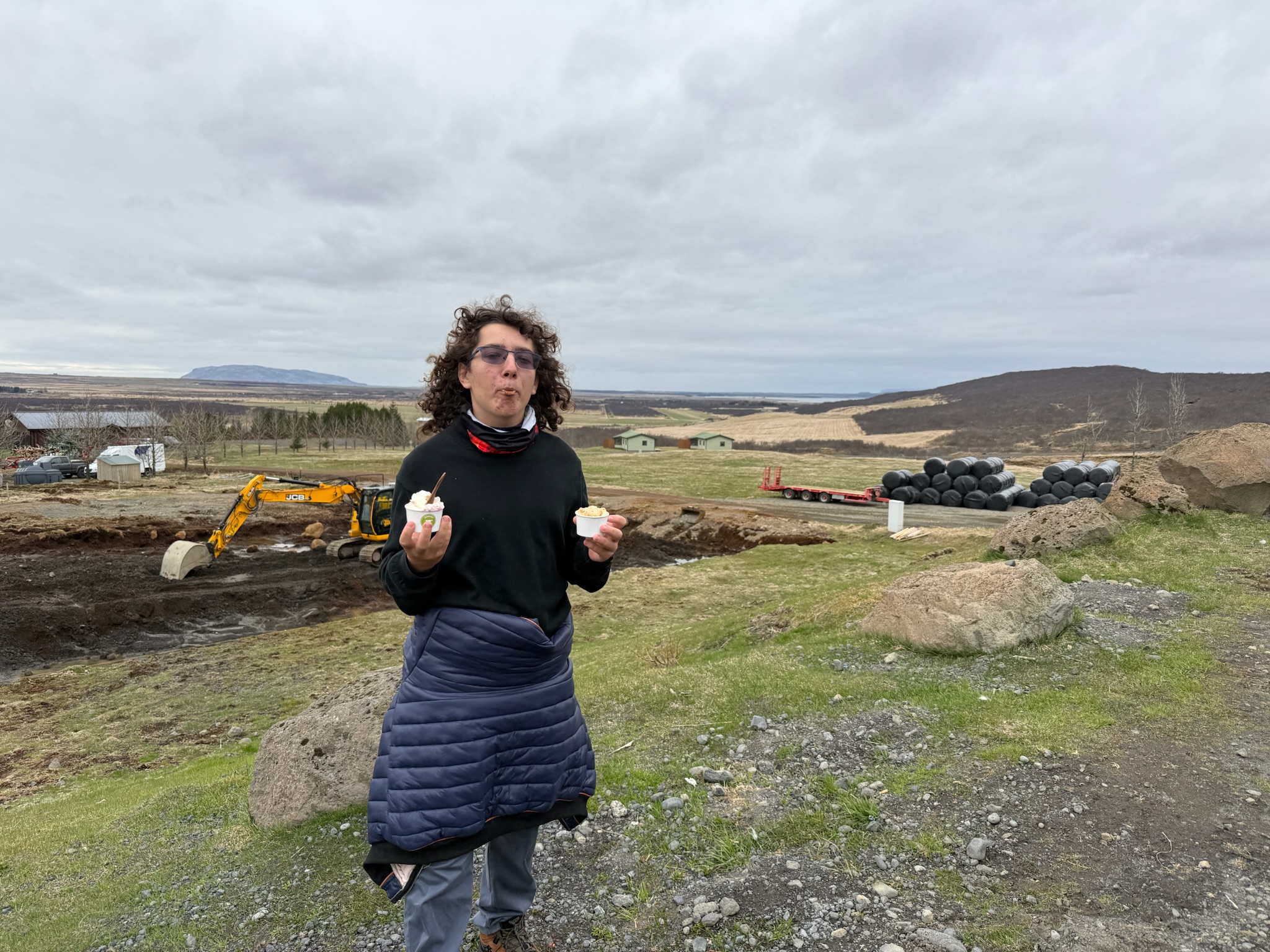
Since indoor seating was limited, we enjoyed our ice cream outside. We were worried we’d freeze eating ice cream in the cold weather, but we learned that eating something cold didn’t make us feel any colder. The bus driver had given us a lot of time at this stop and we talked with some of the other people in our tour group untilit was time to get back on the busses.
The next stop was Haukadalur Valley Geothermal Field, AKA Geysir Geothermal Park. The guide told us that the first erupting fountain identified anywhere in the world was here in this park. In the 17th century, the Icelandic people named it Geysir, which meant “the spouter.” Geysir was the most famous geyser in the world, and it became the generic word to describe all spouting fountains. Prior to the early 1900s, Geysir used to spout 70 – 80 meters as often as every 30-minutes, but then it died down to about 15 meters every 6 hours — and there were some days with no eruptions. In February 2016, it stopped erupting altogether. The guide assured us that even though Geysir was dormant, there was still plenty of other geothermal activity to see.
The geothermal park was conveniently located right off a highway. The bus parked across the street at the visitor’s center.
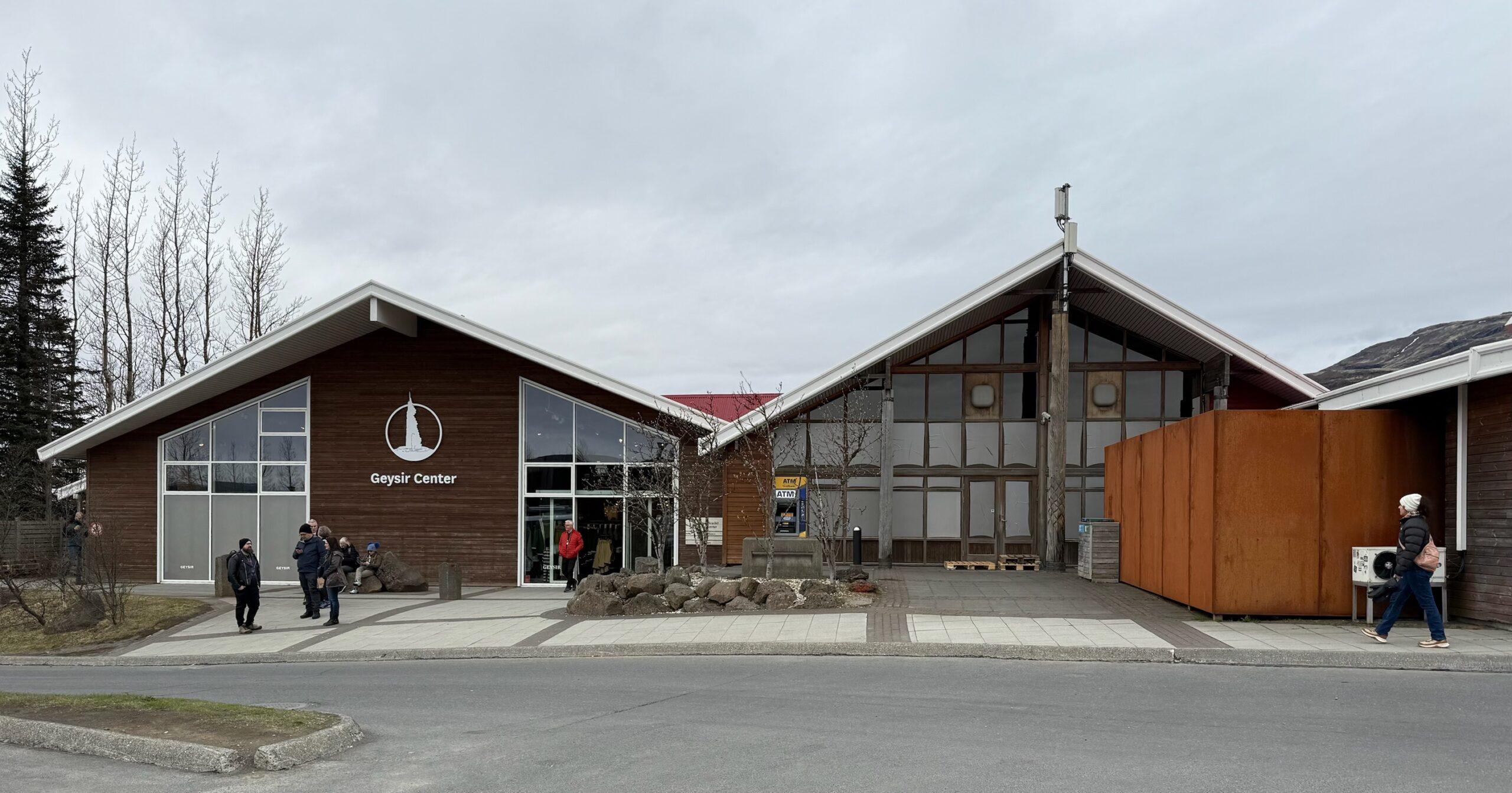
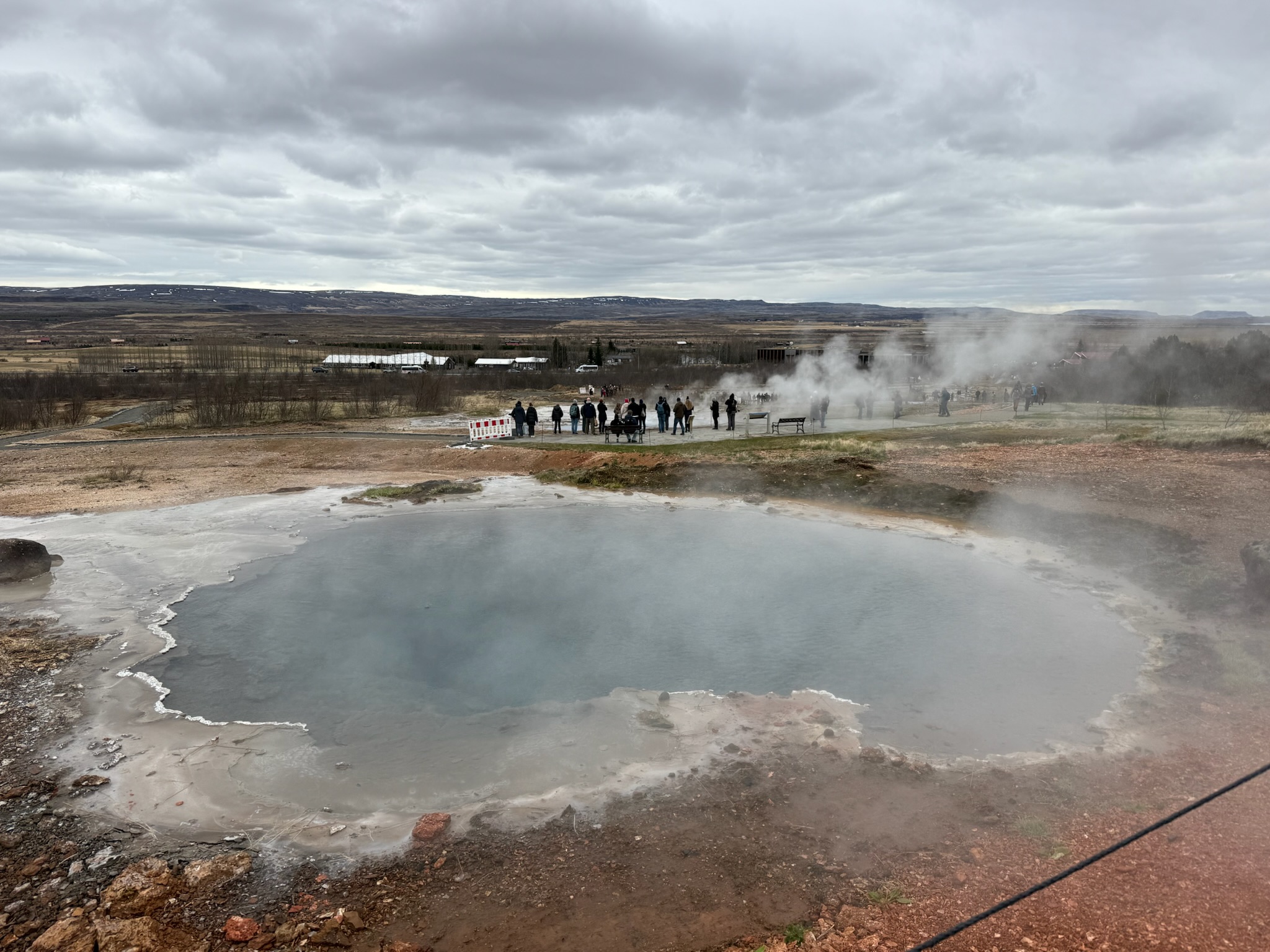
The guide pointed to where we needed to go and told us to be back in an hour. We walked down a paved walkway, passing several hot springs and steam vents. The pools closest to the road mostly steamed, so the water was hot, but not necessarily boiling. The signs warned not to touch the water as we could be burned.
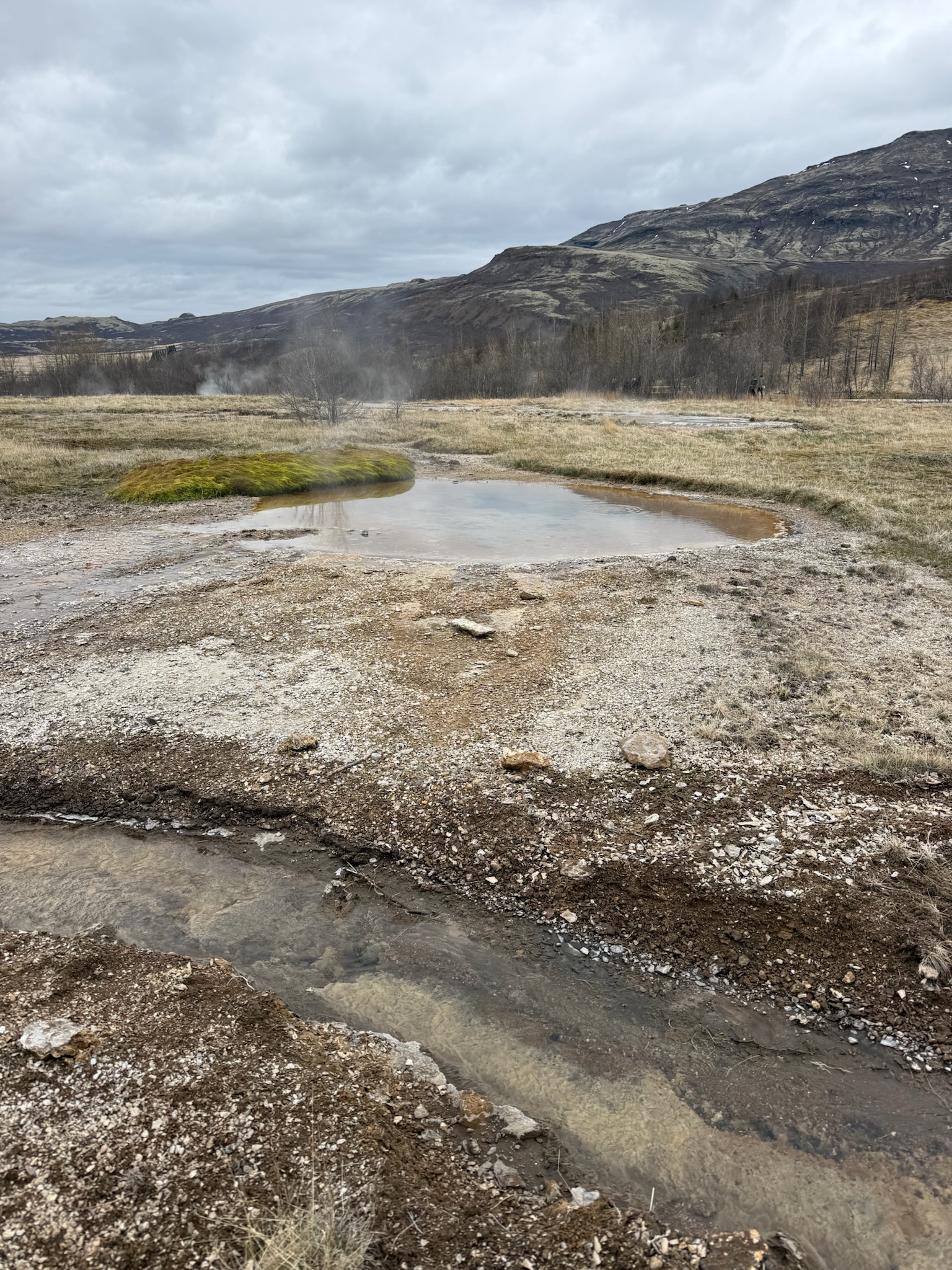
A few of the pools bubbled, meaning the water was boiling. Christi commented that she was surprised that there was no sulphur smell.
The paved walkway ended. We walked across the dirt to the remaining pools.
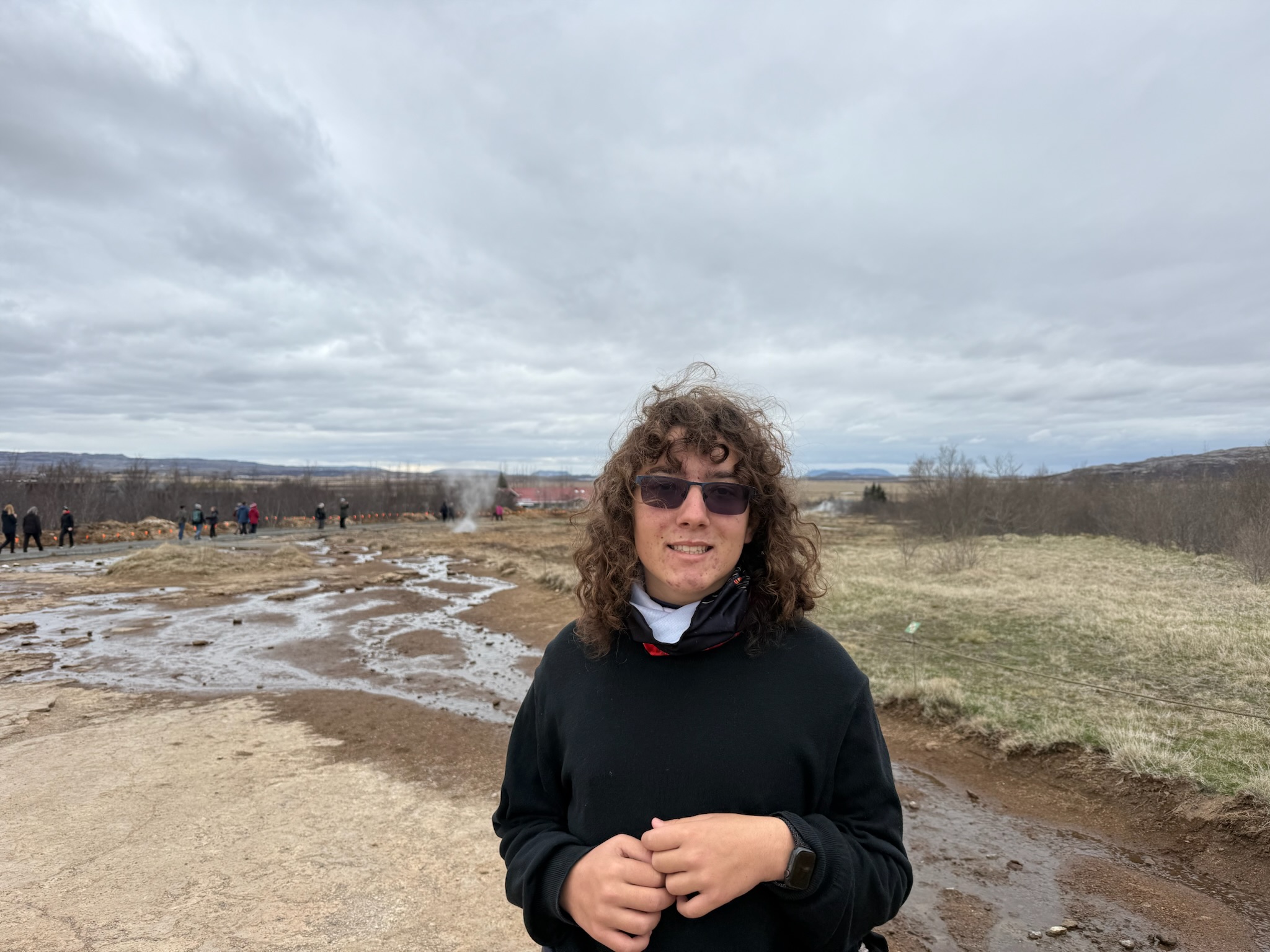
We came to the most active geyser in the park, Strokkur. It was the only one that reliably went off on a relatively stable schedule. That area was stinky, with a strong sulphur smell. Keith couldn’t take the odor and retreated back to where the air smelled clean. The geyser went off every 5 – 10 minutes. Sometimes the eruption was small and sometimes it was huge, with some reaching as high as 20 meters. Christi saw it spray four times — three were small and one was big. This was the big one.
In between eruptions, Christi walked over to some of the other bubbling hot springs.
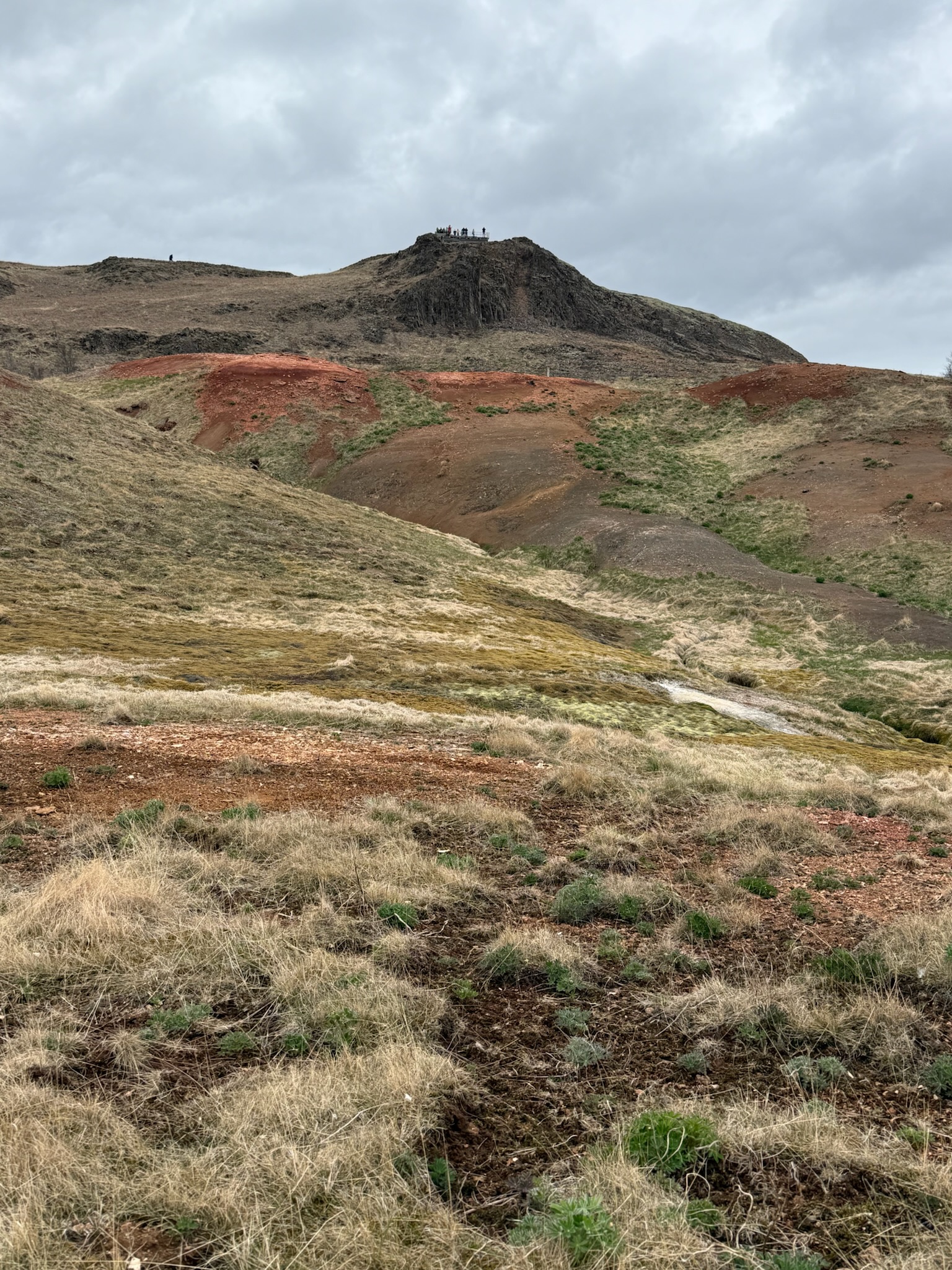
As noted in the video above, the geothermal area was at the base of a hill. There was a path up and a viewing platform at the top. Here was a clearer shot of it (in the video, the hill was obscured by steam from the hot springs).
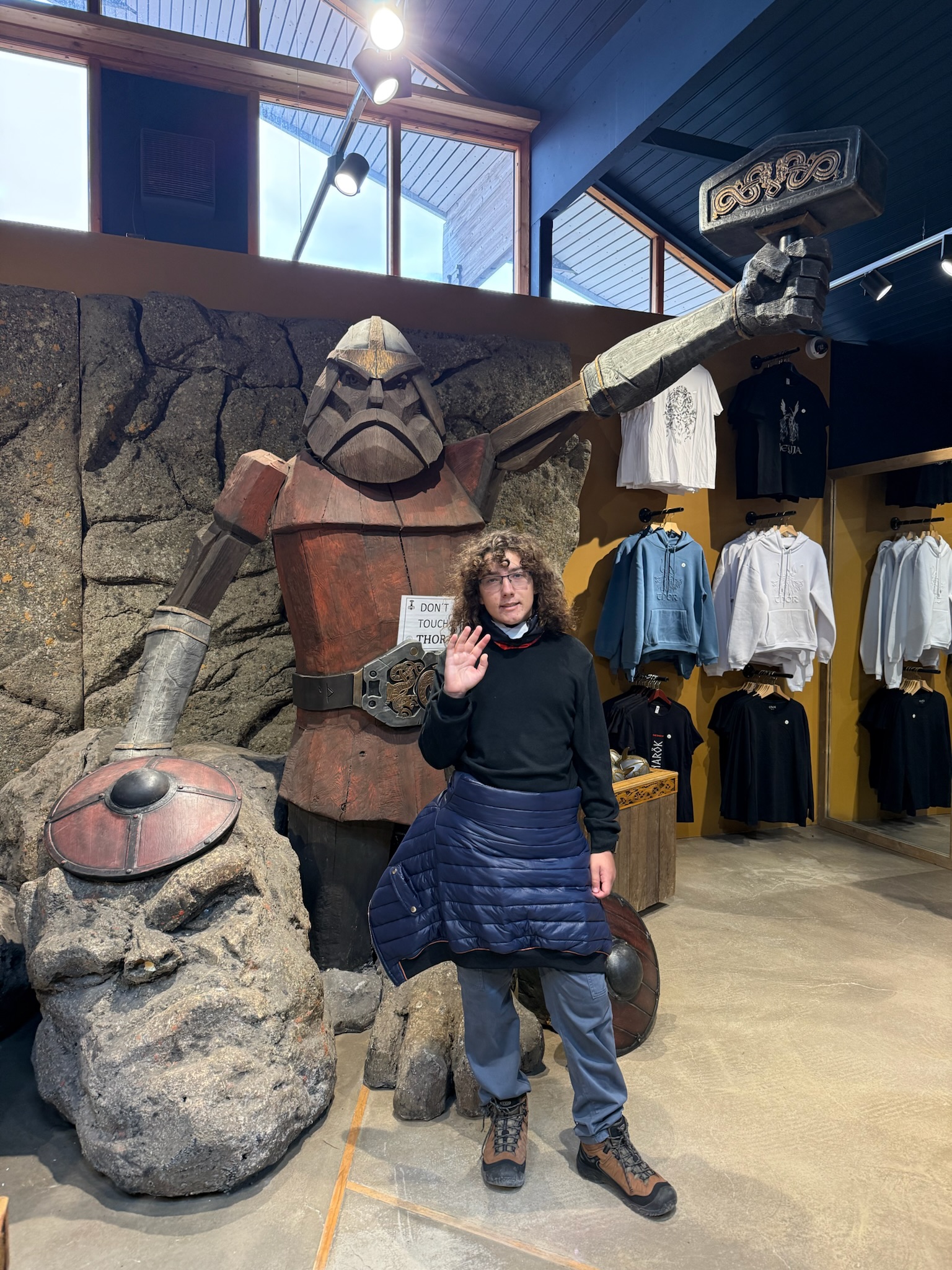
Once she’d seen all the pools, she retrieved Keith and we walked over to the Visitor’s Center. Inside there were two restaurants, both cafeteria style, and at least two gift shops. It was packed with people — and again we saw some of the same people we’d seen at Thingvellir and the dairy. Clearly, the tour companies did the same route in the same time frames.
A meal was included in our tour, but our tour guide had encouraged us to get lunch here since it would be a while before we’d stop for the meal. We probably should have eaten something here, but the lines were long and we were worried about running out of time. When it was time to go, we boarded the bus… to be continued...