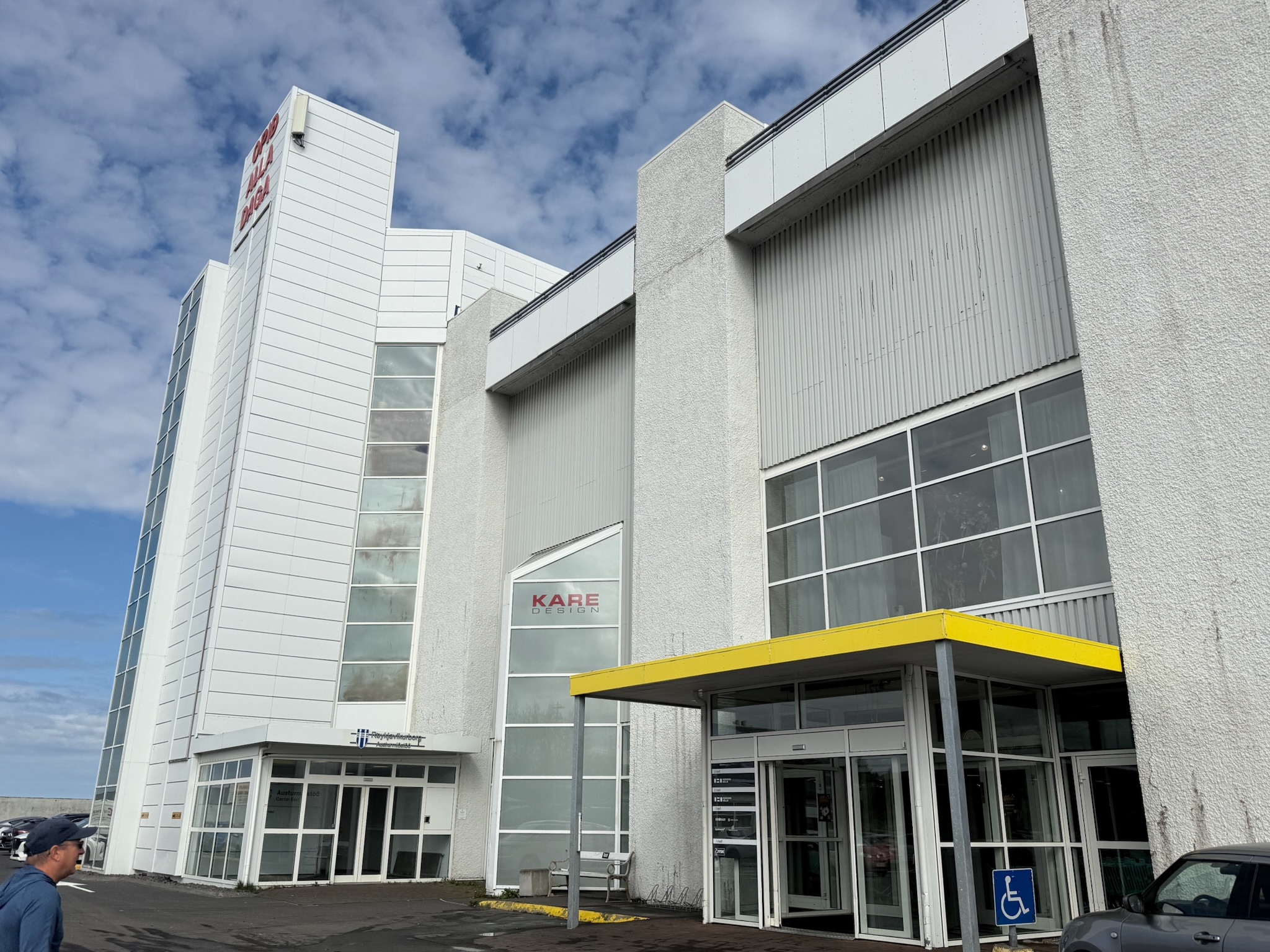
Tuesday, May 19 – The poor sleep we’ve been getting here in Iceland was making it difficult to get moving in the morning. We got off to a late start. For breakfast, we took the car to a bakery in a shopping center in the suburbs. Parking was free and abundant.
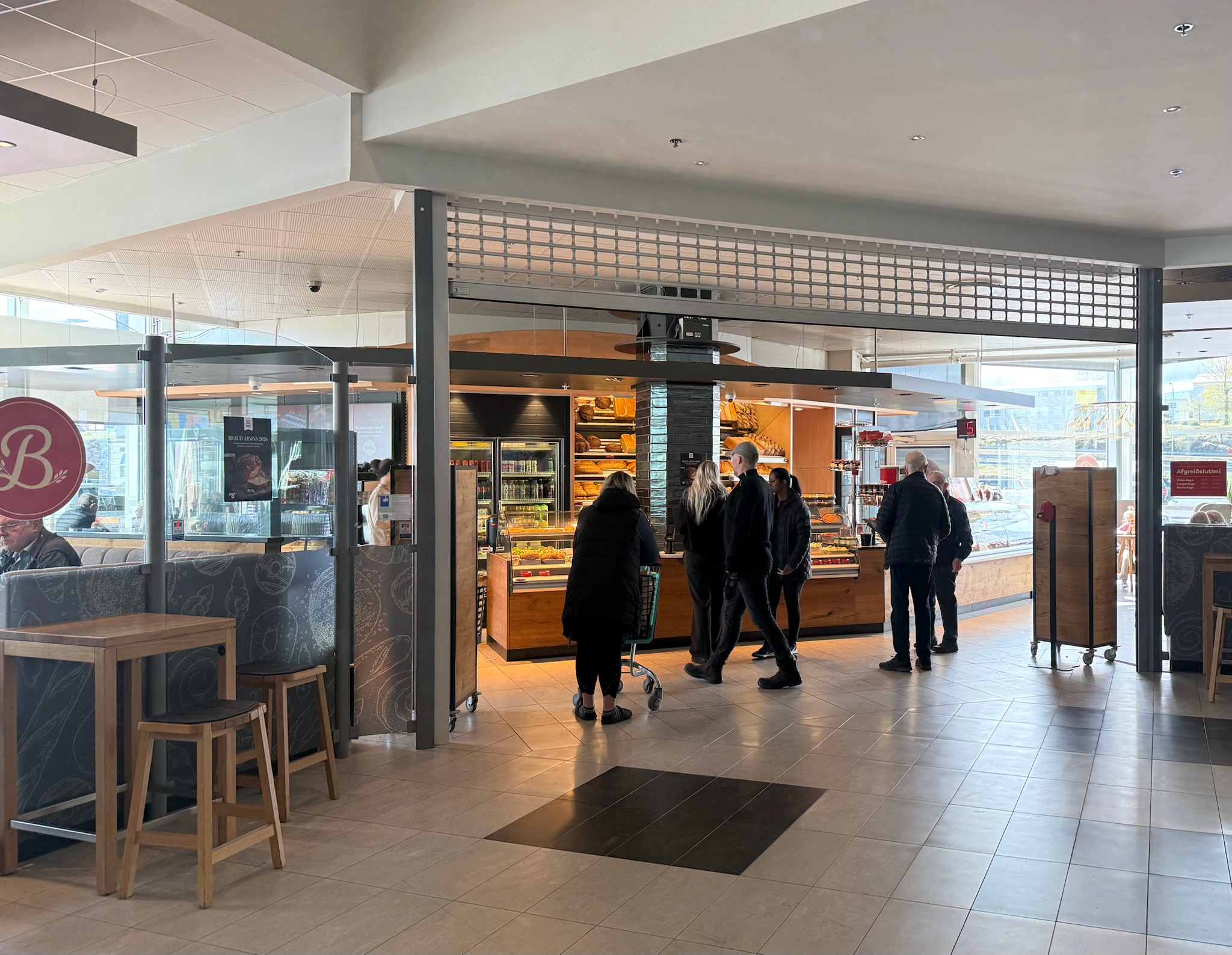
We realized the bakery was part of a local chain. The signs were all in Icelandic, with no English. But the people behind the counter spoke English and were happy to explain what was in the assorted goodies. This bakery was about half as expensive as the places we’d gone to downtown.
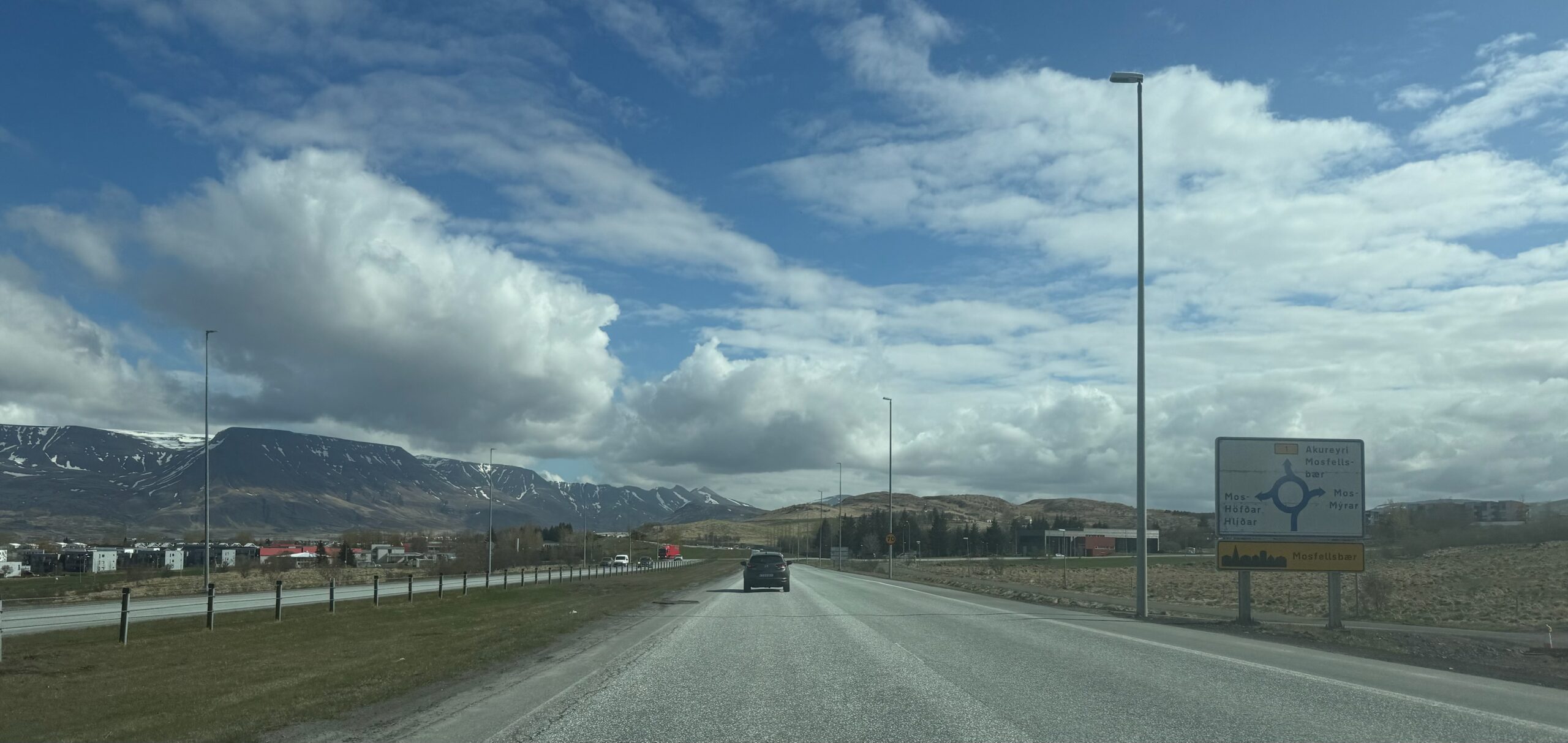
The food was great. We’ve been blown away by the food here in Iceland — we haven’t had a single mediocre meal, let alone a bad meal. Once we finished eating, we set off, this time heading north on Highway 1. It was another beautiful day, sunny and 49 degrees Fahrenheit (9.44 celsius).
After eating, we filled up with gasoline. It cost 231.3 ISK and we took 26.45 liters (slightly less than 7 gallons) for a total of 6117.88 ISK. With the 11% VSK, our grand total was 6,791 ISK ($54.80 USD, which broke down to $7.83 per gallon). We earned a carbon footprint of 58.19. We wondered if they actively tracked carbon footprints in Iceland and what that tracking entailed. The locals had told us that since electricity was nearly free, most Icelanders drove electric vehicles.
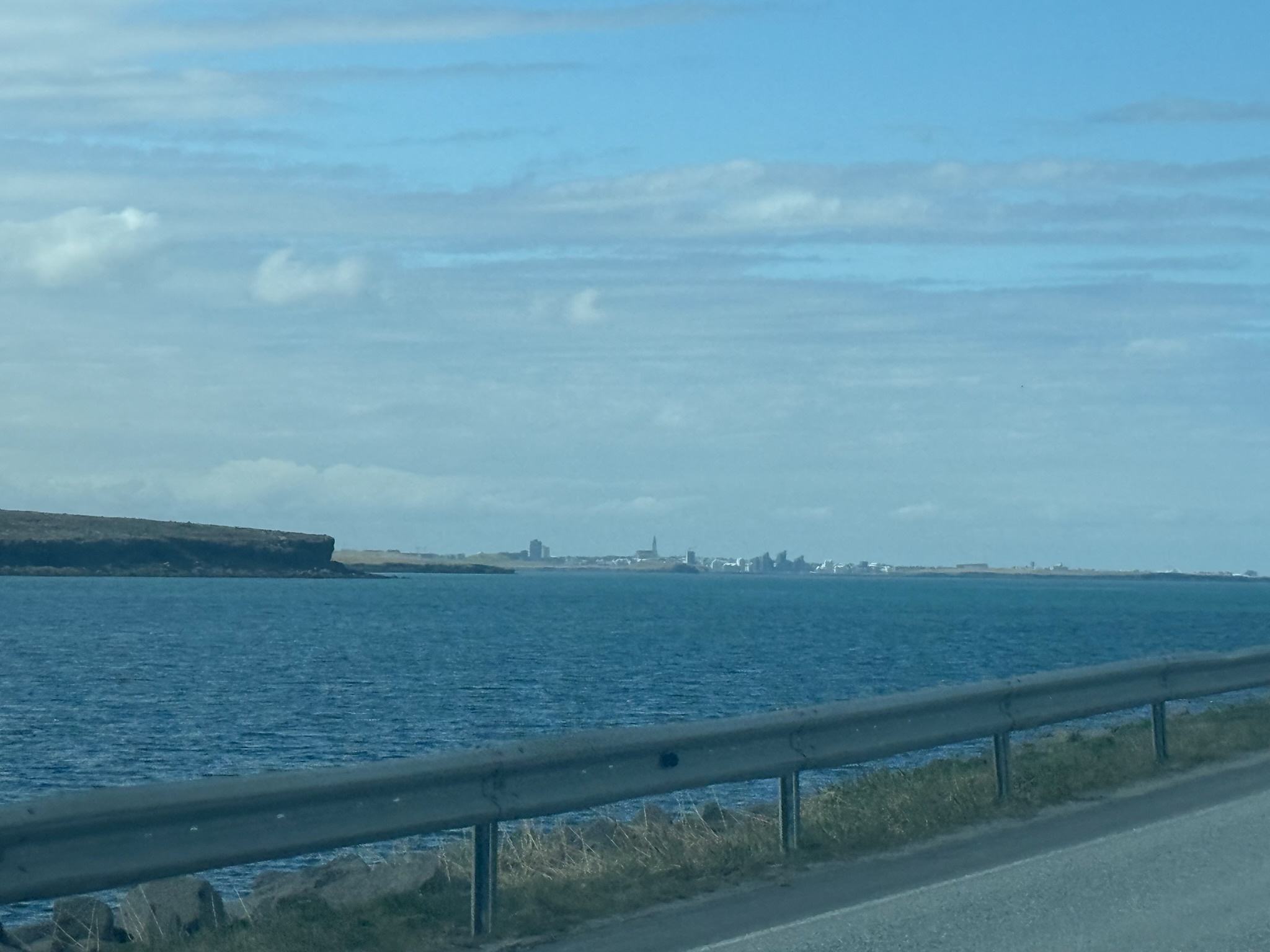
The scenery quickly went from suburban to rural. Eric realized that we were following the same route that the tour bus had taken when Eric went on the Langjökull glacier tunnel. It was a long but stunning drive to the Snæfellsás Peninsula. This stretch of Highway 1 mostly followed the jagged coastline, so there were beautiful waterfront vistas all along the drive. Here was a shot looking back at the city.
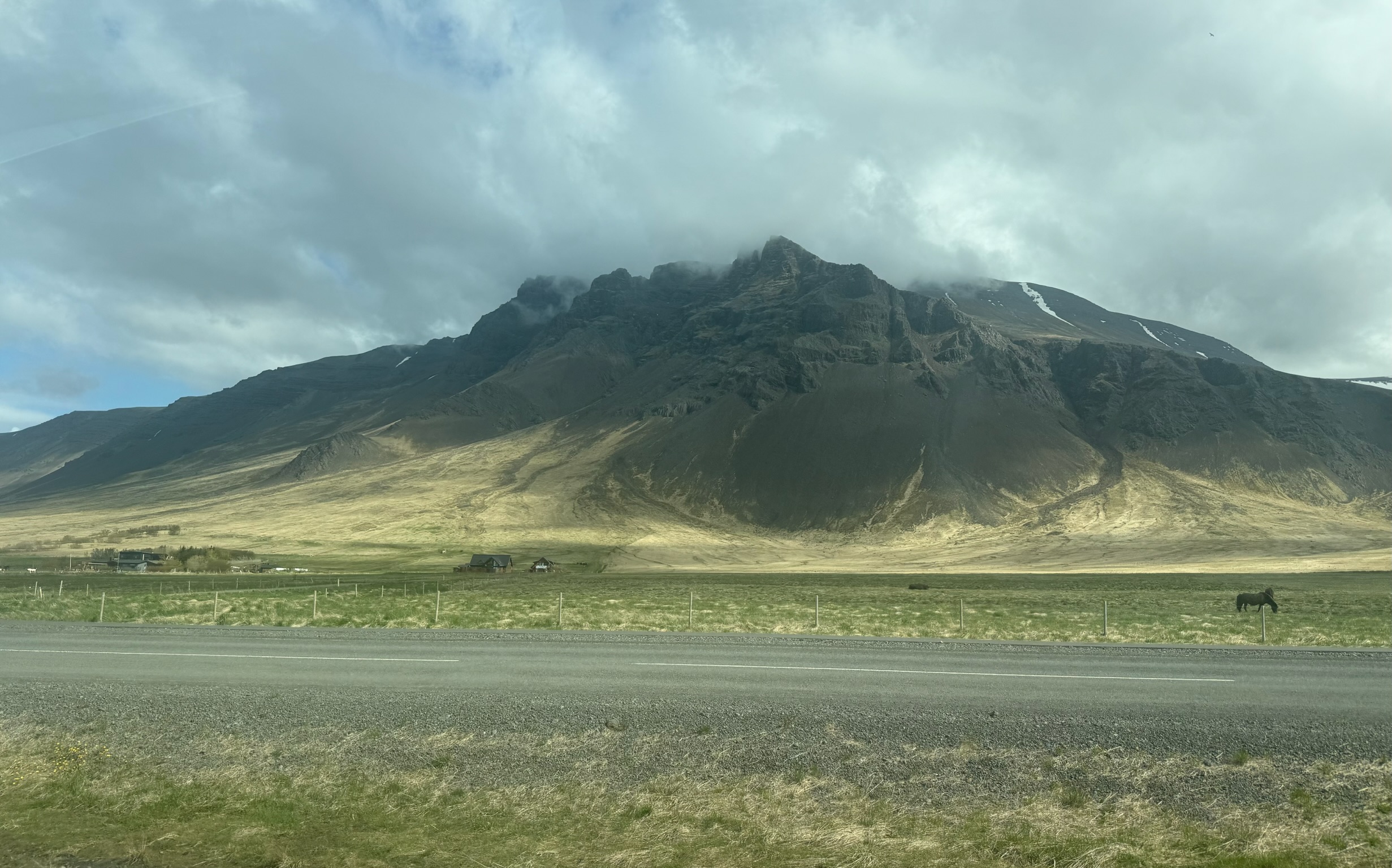
And looking inland.
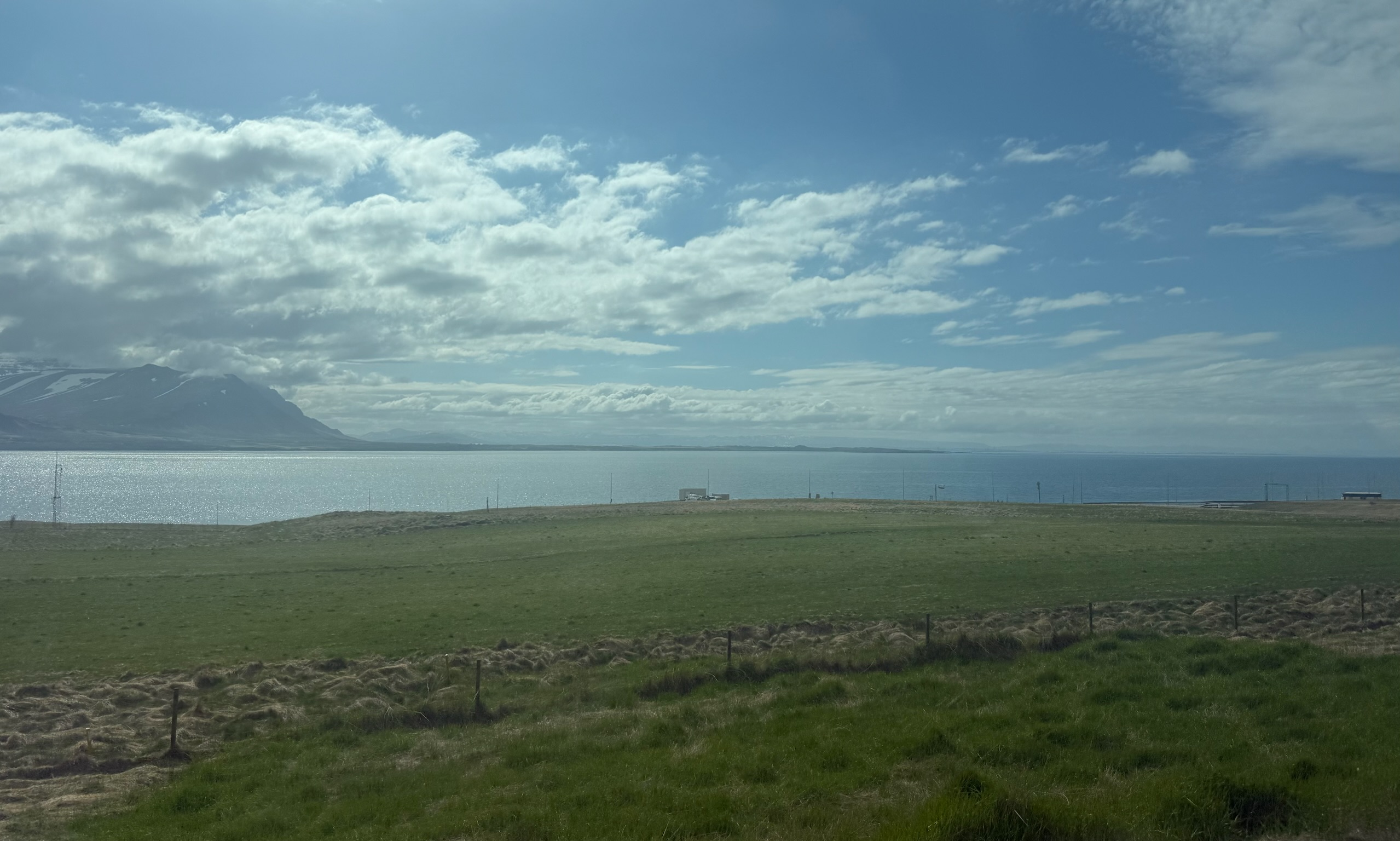
We came to the tunnel that had impressed Eric, which ran under the Hvalfjörður fjord. The tunnel opened in 1998, was 5,762 meters (18,904 feet) long and ran 165 metres (541 feet) below sea level. Prior to the tunnel, cars had to drive another 62 kilometers (39 miles) around the fjord, so it saved an hour of drive time. This was the view from near the tunnel exit.
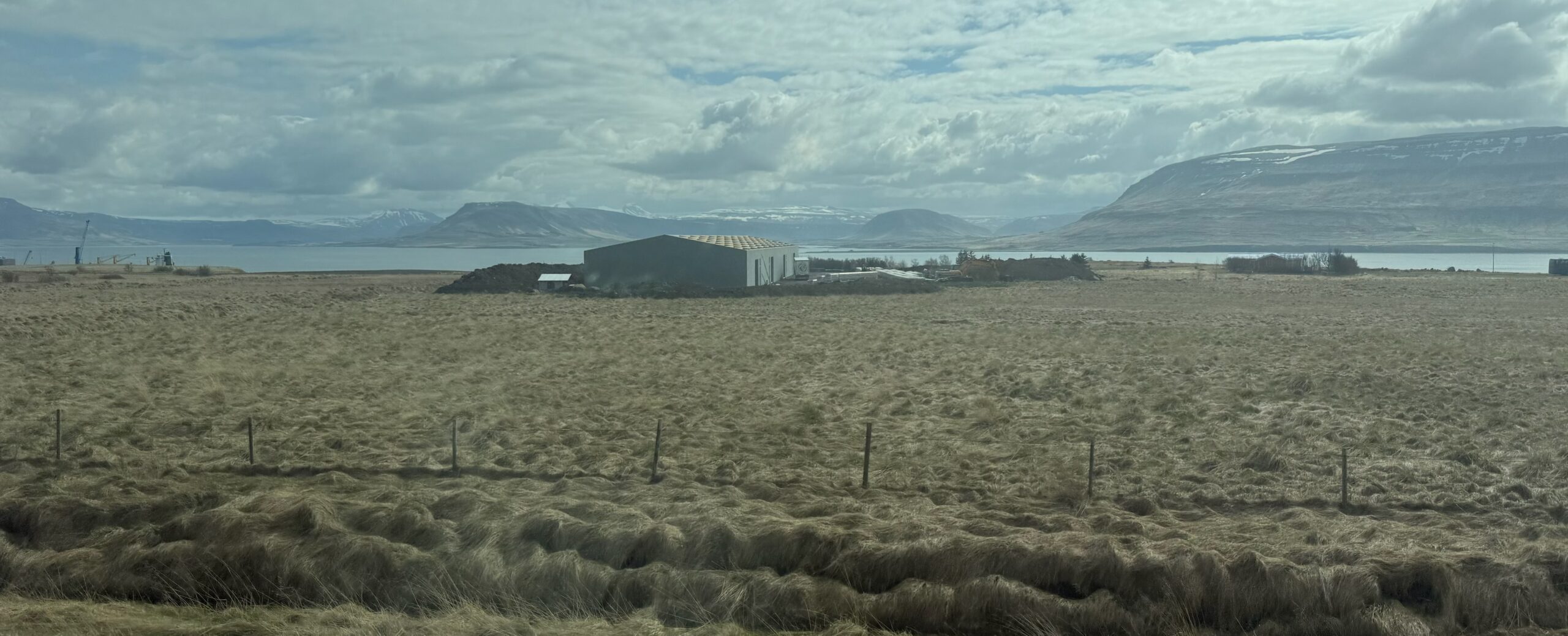
Not log beyond the tunnel, we passed a factory situated on the north side of the fjord. Eric remembered that the bus driver had told them it was an aluminum plant and that aluminum was one of Iceland’s biggest source of revenue. Aluminum was abundant in nature as bauxite, a sedimentary rock composed mainly of aluminum-bearing minerals. But bauxite refining was an energy hog, making aluminum production expensive. But energy was cheap in Iceland. Bauxite wasn’t indigenous to Iceland, so cargo ships brought in the bauxite for processing.
Not long past the aluminum plant was the turnoff that Eric’s tour bus had taken to go to the base of the Langjökull glacier. We stayed on Highway 1.
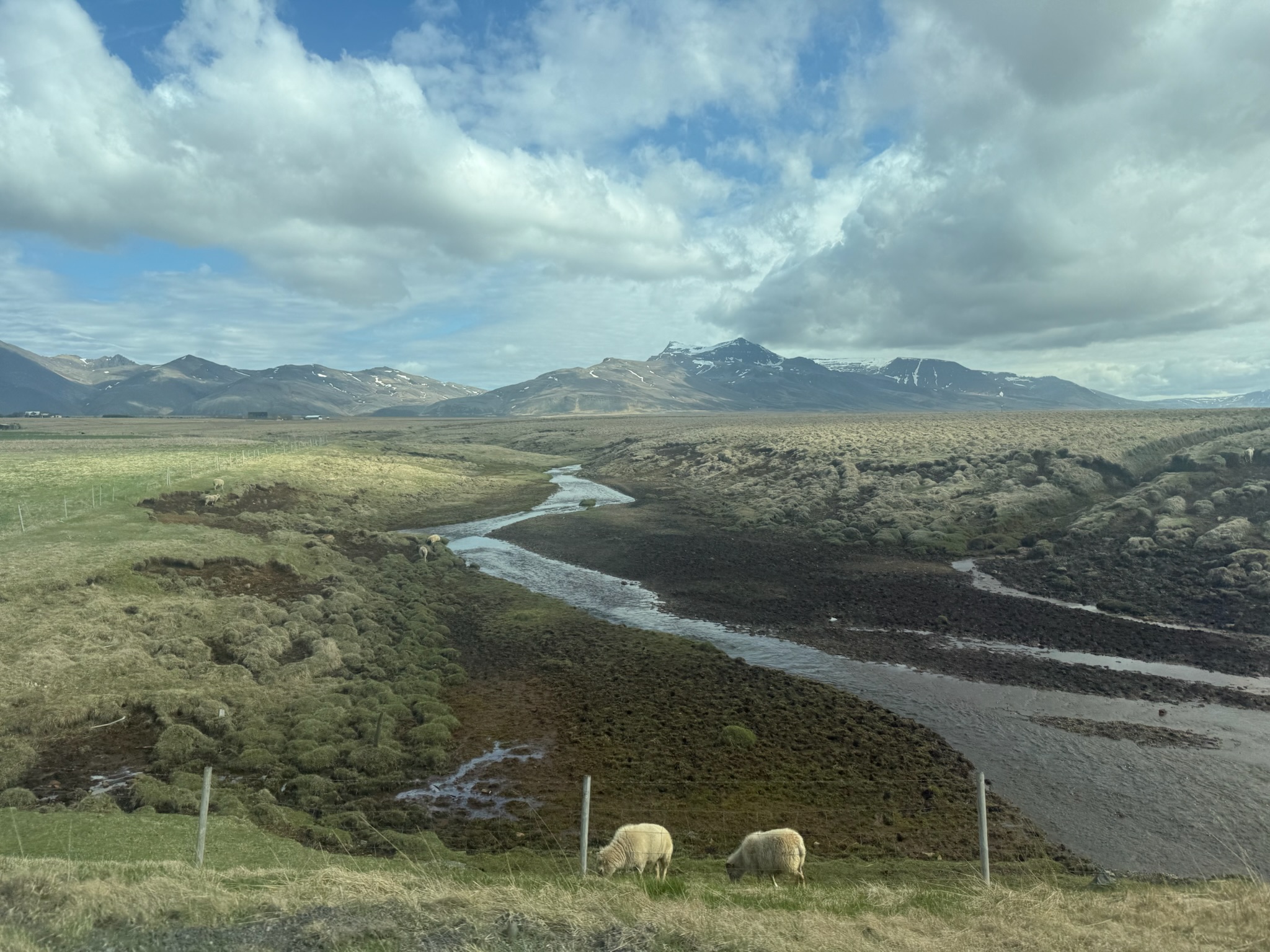
The Snæfellsjökull glacier, located at the western tip of the Snæfellsnes peninsula, was steadily becoming bigger and clearer. The word Snæfel meant “snow mountain” and jökull meant glacier.
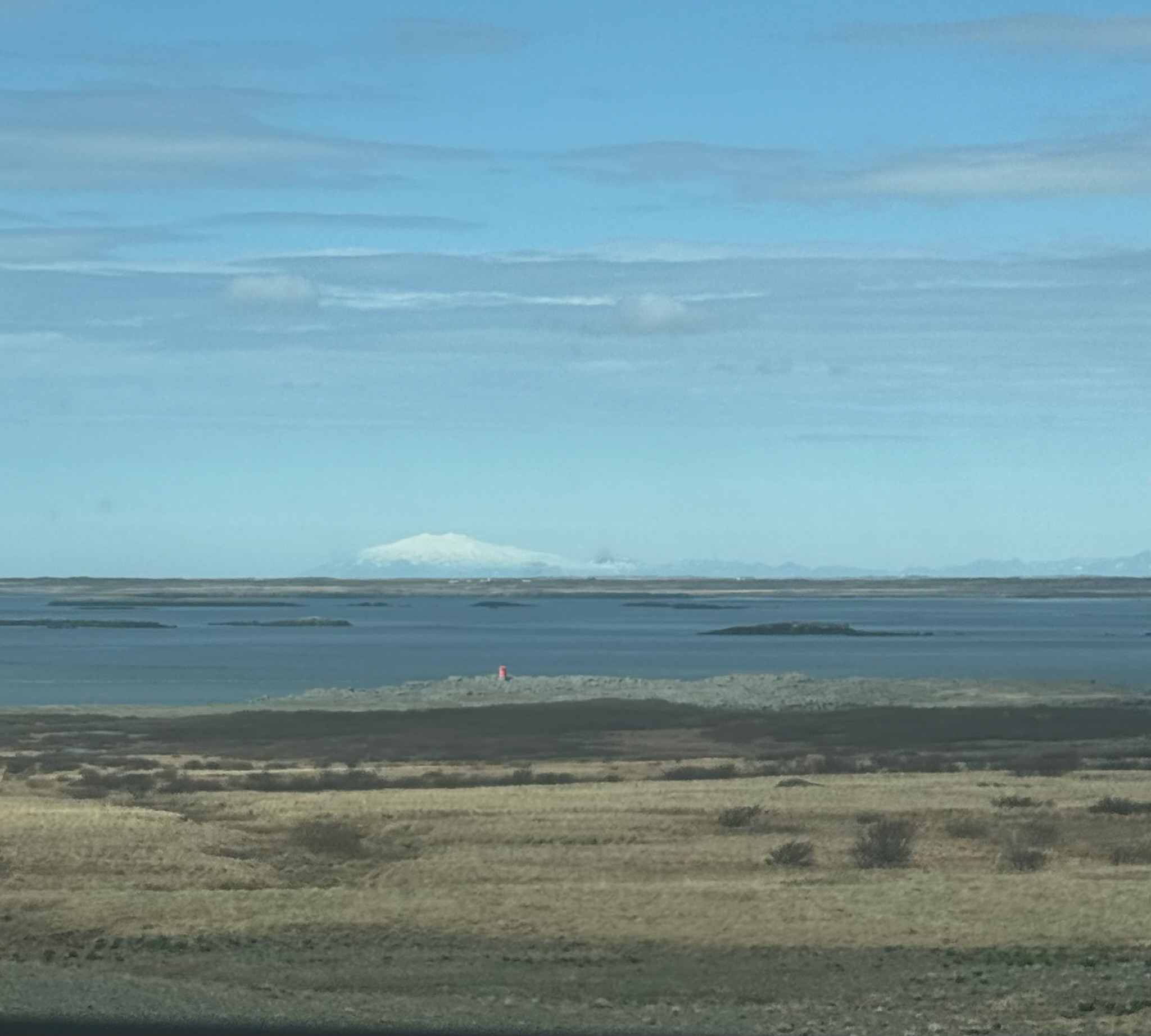
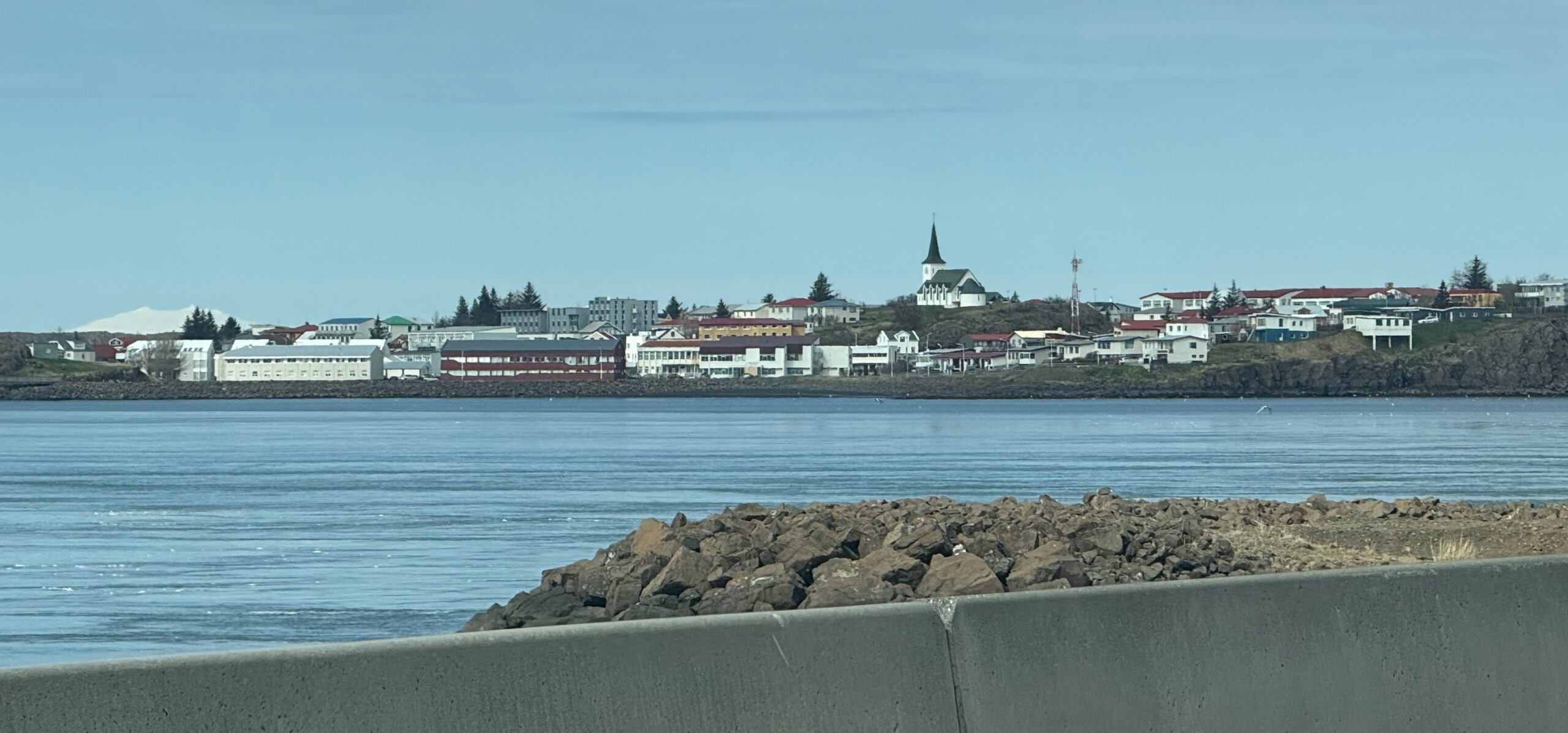
Highway 1 took us across a bridge over the lovely Borgarfjordur fjord to the charming little town of Borgarnes on the southwest edge of the Snæfellsás Peninsula. At this point, instead of following the shoreline east, Highway 1 went inland as it continued north. We turned off Highway 1 onto Route 54, which took us through the cute town and continued northeast.
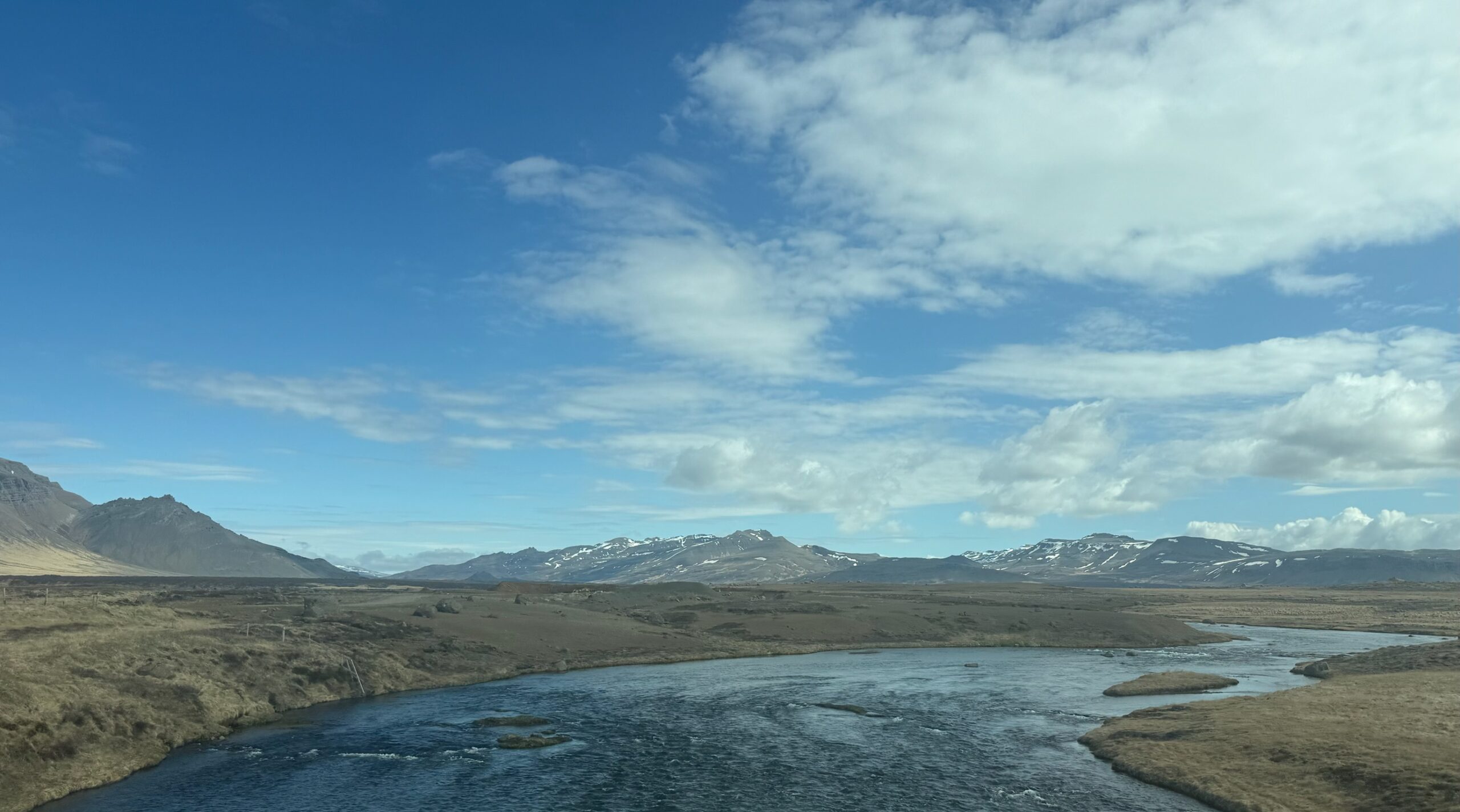
Beyond the town, the scenery was mostly rural farmland, though we did pass a couple towns that were so tiny that you’d miss them if you blinked.
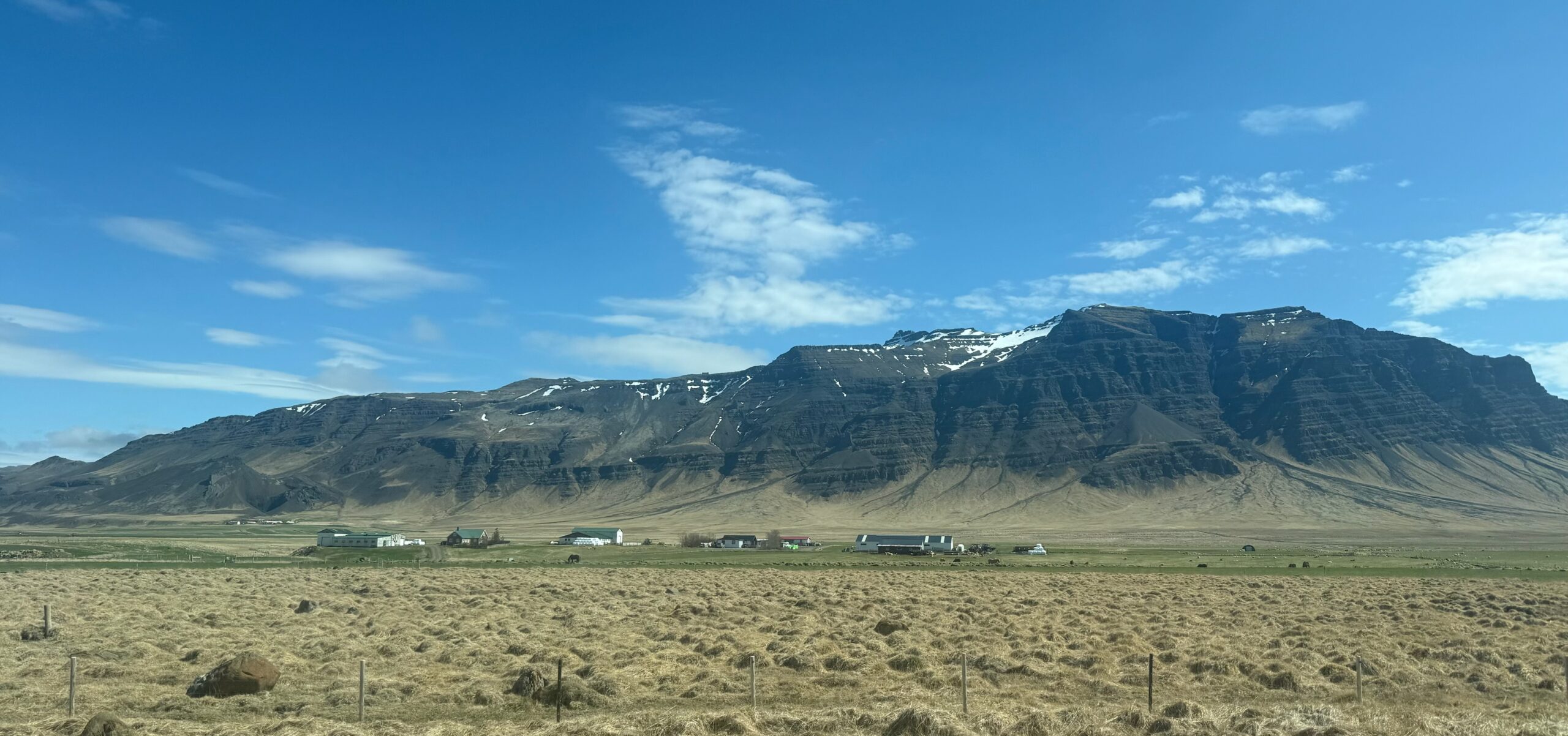
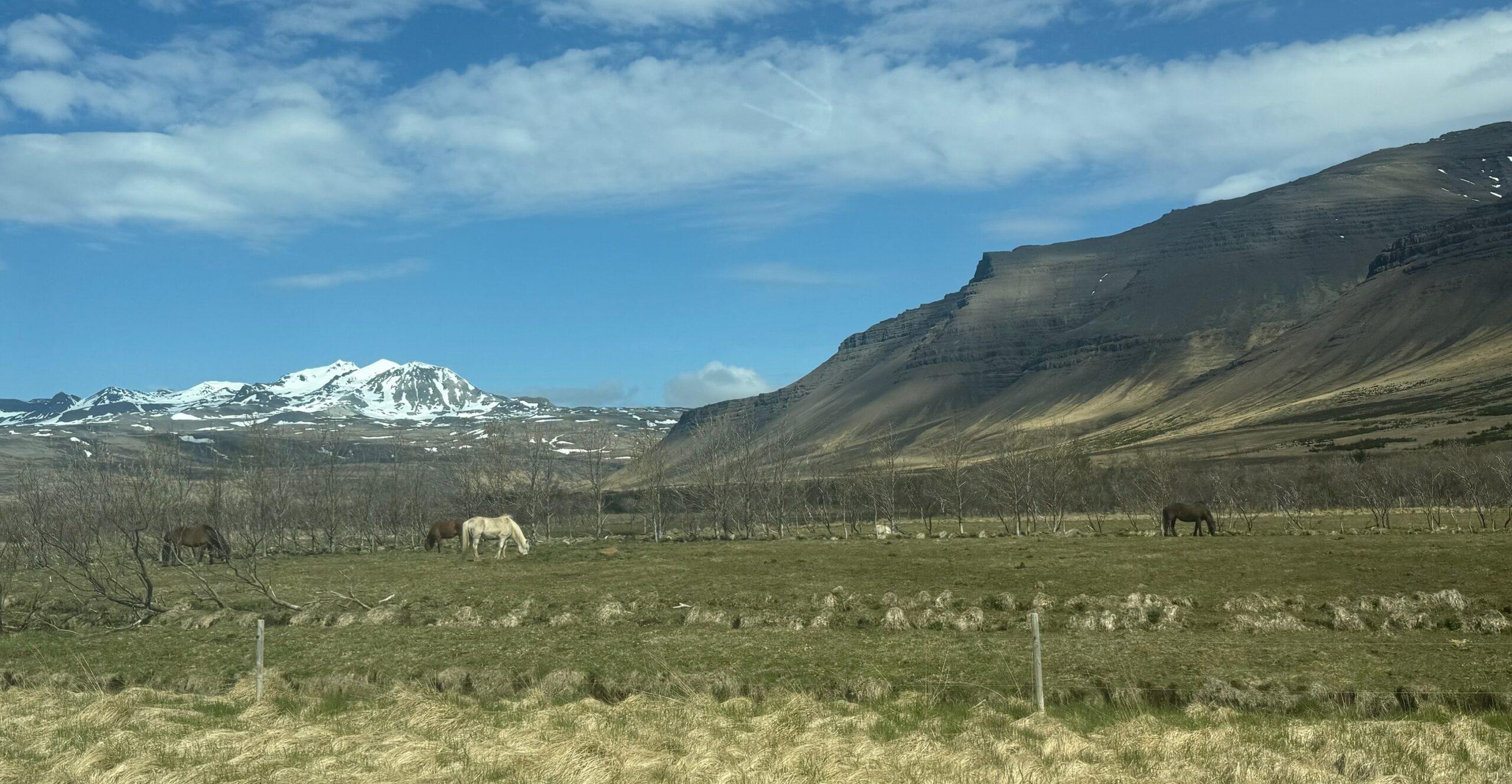
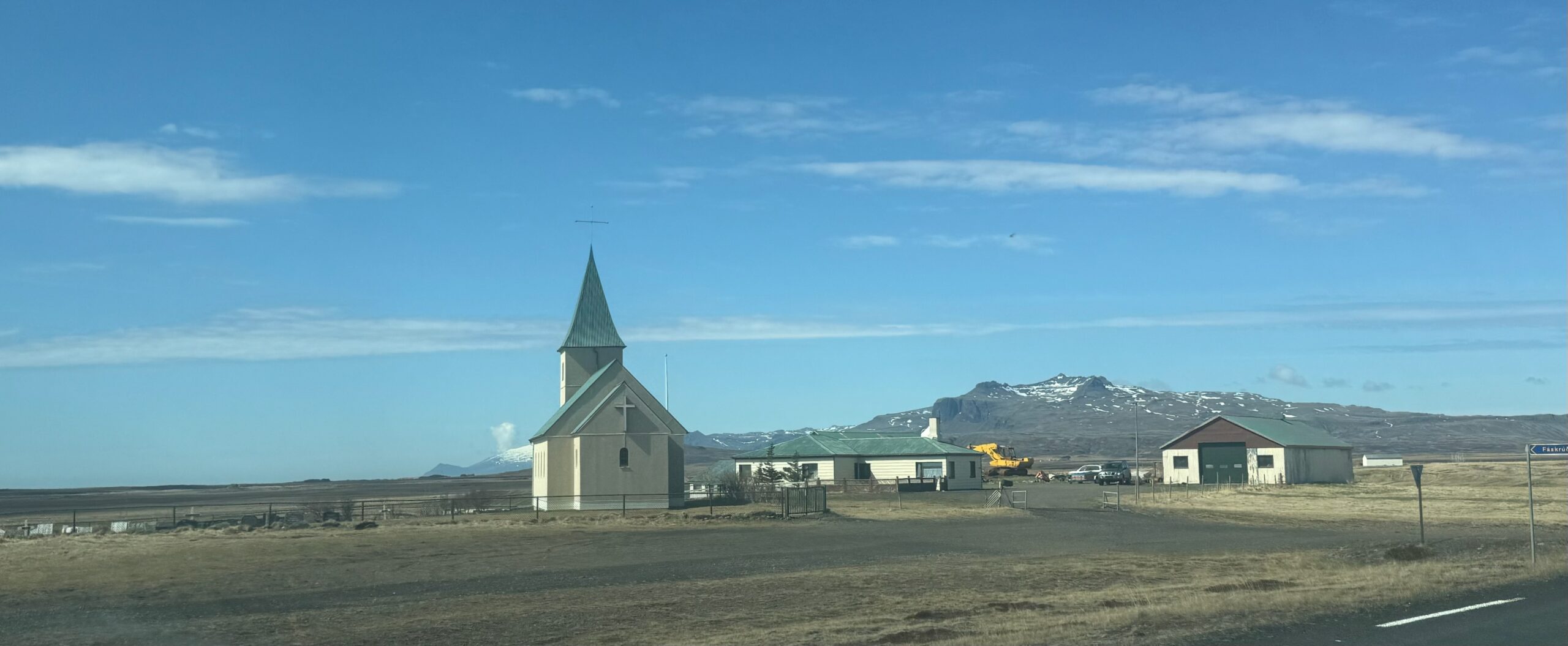
We eventually turned onto Route 574, which circled around the tip of the peninsula. We were once again following the shoreline, now moving east. The Snæfellsjökull glacier was getting bigger. We marveled at how lucky that we were to have such clear skies — most days, the peaks were socked in by fog.
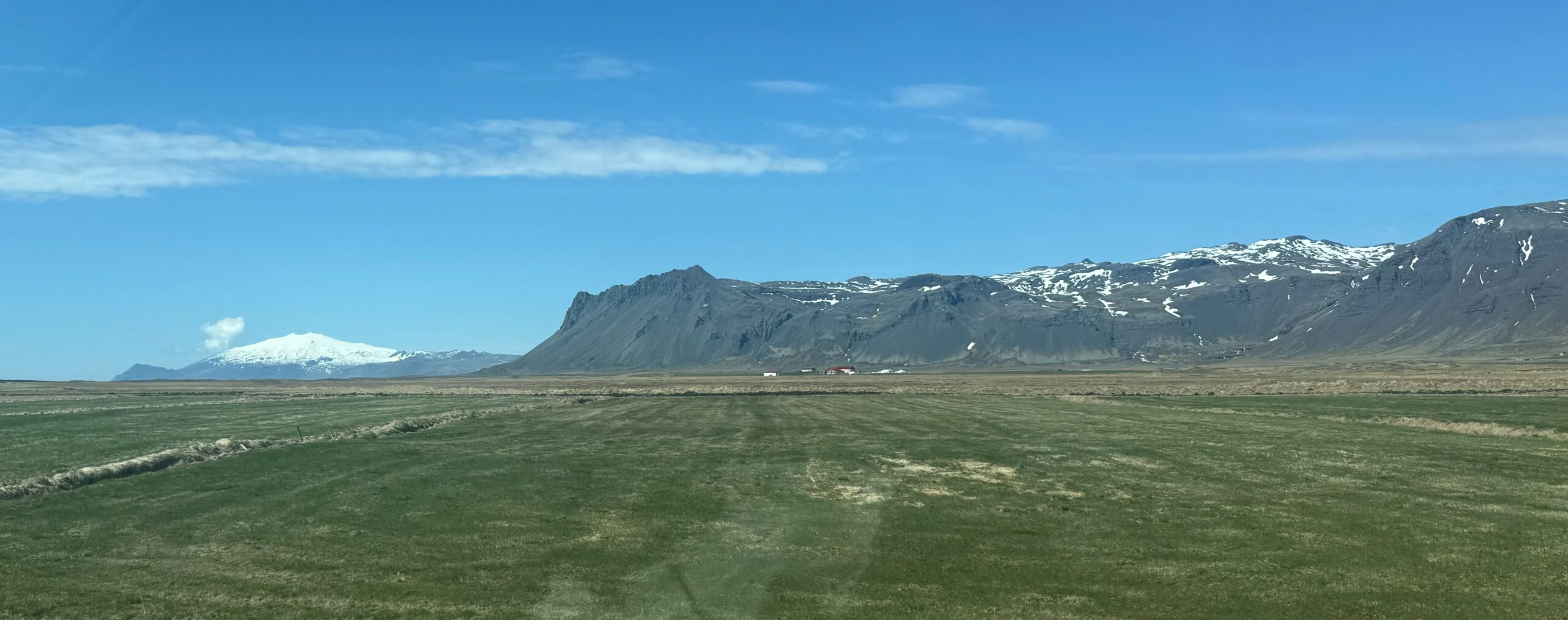
And we started to notice lots of waterfalls coming out of the dramatic cliffs.
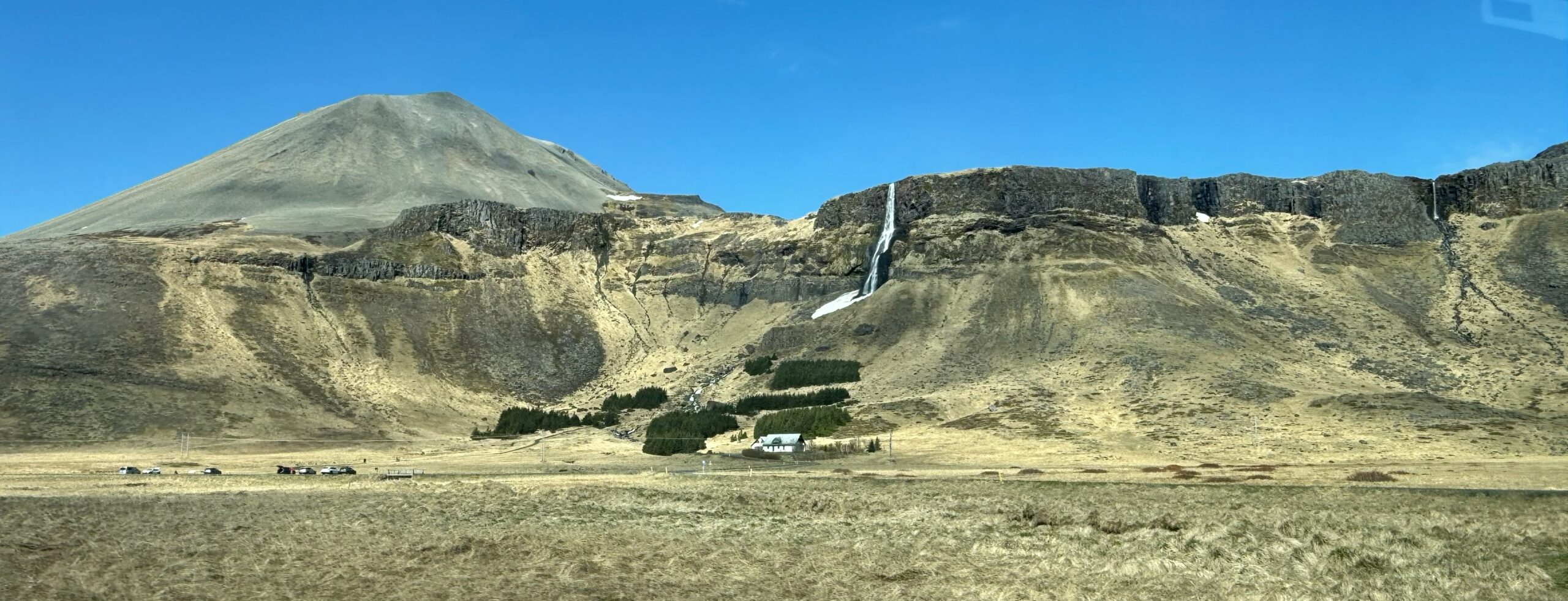
Our first stop was at viewpoint. Looking towards the glacier.
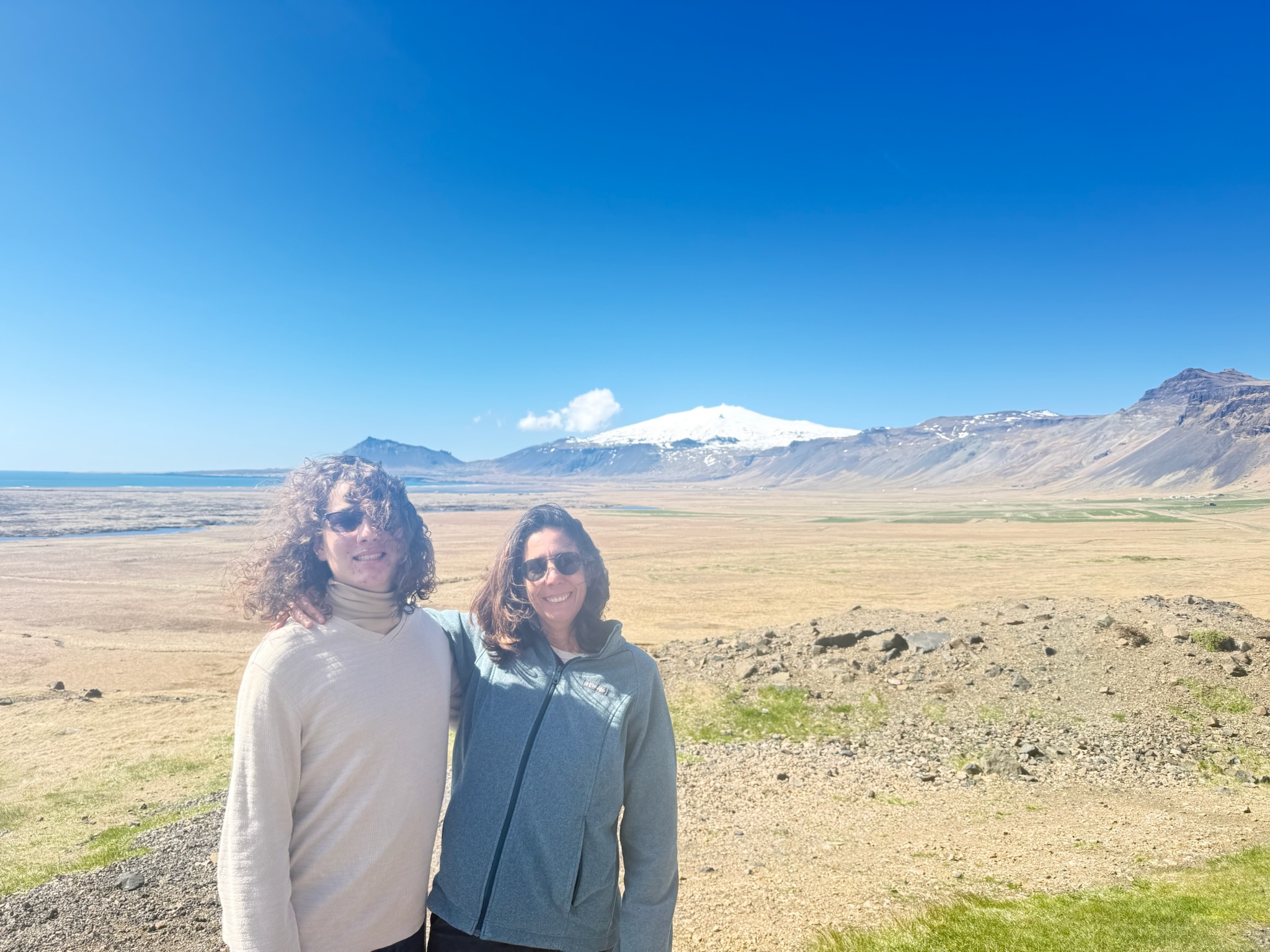
Looking the other direction.
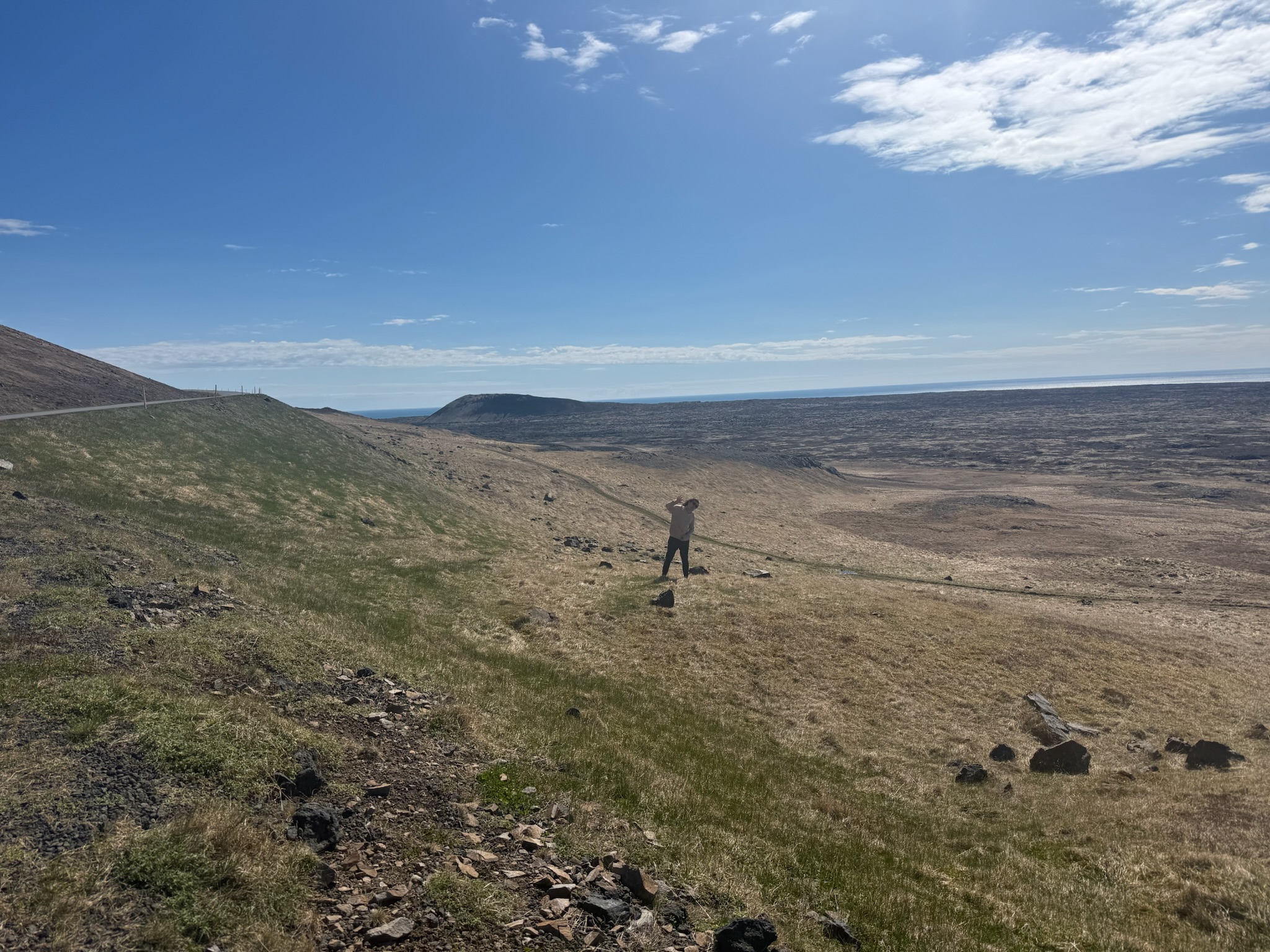
There was a sign. It told about a serial killer in the late 1500s who was from the general area. Wow. That was a creepy thing to highlight about their history. We piled back in the car. It was a relatively short drive to our next stop… to be continued...