Days 2 – 4 on the Passage from North Palm Beach, FL to Deltaville, VA

Friday, June 20 – Sunday June 22 — On Thursday, we’d mentioned that our speeds inside the Gulf Stream were incredible. Eric had had calculated that if we could maintain a speed of 10.2 knots, we’d get in a full day ahead of schedule, so he’d increased RPMs to 1750 to get us up to 10.2 knots. Then our speed picked up even more, eventually getting to 11.7 knots!

After that peak, our speed slowly crept back down, and by 0800 on Friday, we were doing 10.4 knots. While the extra speed was exciting, we were on track to arrive in the middle of the night, so Eric dropped the RPMs back down to 1650 for a daylight arrival. At 1650 RPM, we were still doing a blazing fast 8.8 knots! The speeds continued to slowly creep down the rest of the day, and by 0800 on Saturday. we were down to 7.1 — which was still a great speed.

On Saturday, the speed slowly crept back up. Eric kept reducing RPMs to keep us on track for a daylight arrival. By midnight on Saturday night/Sunday morning, we were doing 9.3 knots at 1500 RPM! On Sunday, our speed was a yo-yo, but we were still averaging a fast enough speed that Eric continued to gradually reduce RPMs to 1425 — and we were still averaging 5.5-knots at 1425!

On Sunday evening at about 2000, Eric changed our course to avoid the shipping lanes in the Chesapeake Bay. The new route added more miles, which was fine as we needed to arrive later, anyways. Once he’d re-routed us, he increased the RPMs to 1650.

On Friday, for most of the day, the sea conditions were the same as they had been on Thursday: 2 -3 foot swells at 5 -6 seconds with 1-2 foot wind chop. But on Friday evening, we were hit with a squall at about 1830. It was ominous on the radar.
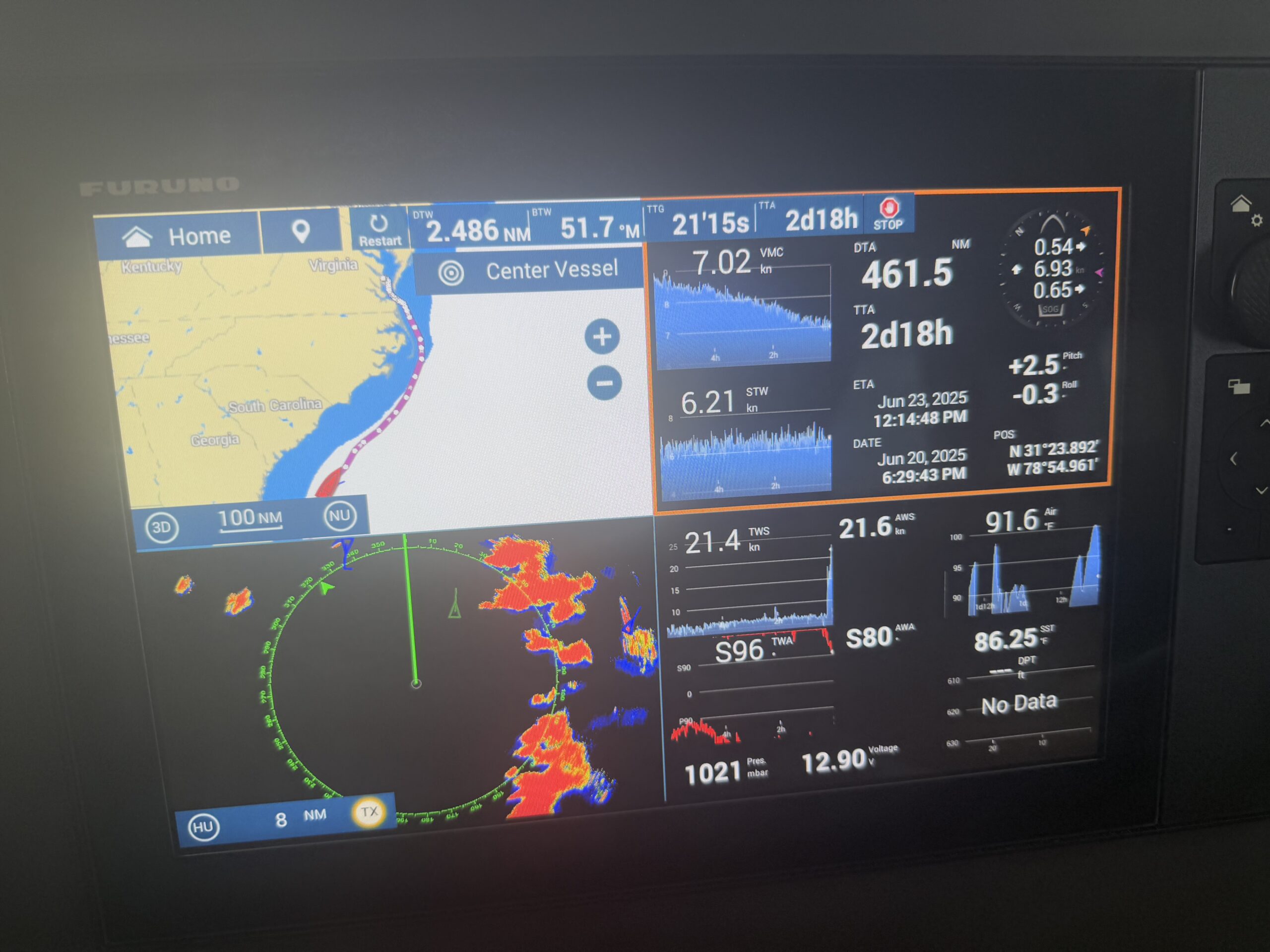
The wind went from nearly dead to strong in an instant, and the seas rapidly worsened. We’re pretty sure it rained a little bit. But it passed relatively quickly, and all went back to being calm almost as fast as it had picked up. We could see the silent lightning from the storm for a long time after it had passed.
Continue reading

Finishing Up the Boat Work and Getting Fuel in North Palm Beach, Florida, USA

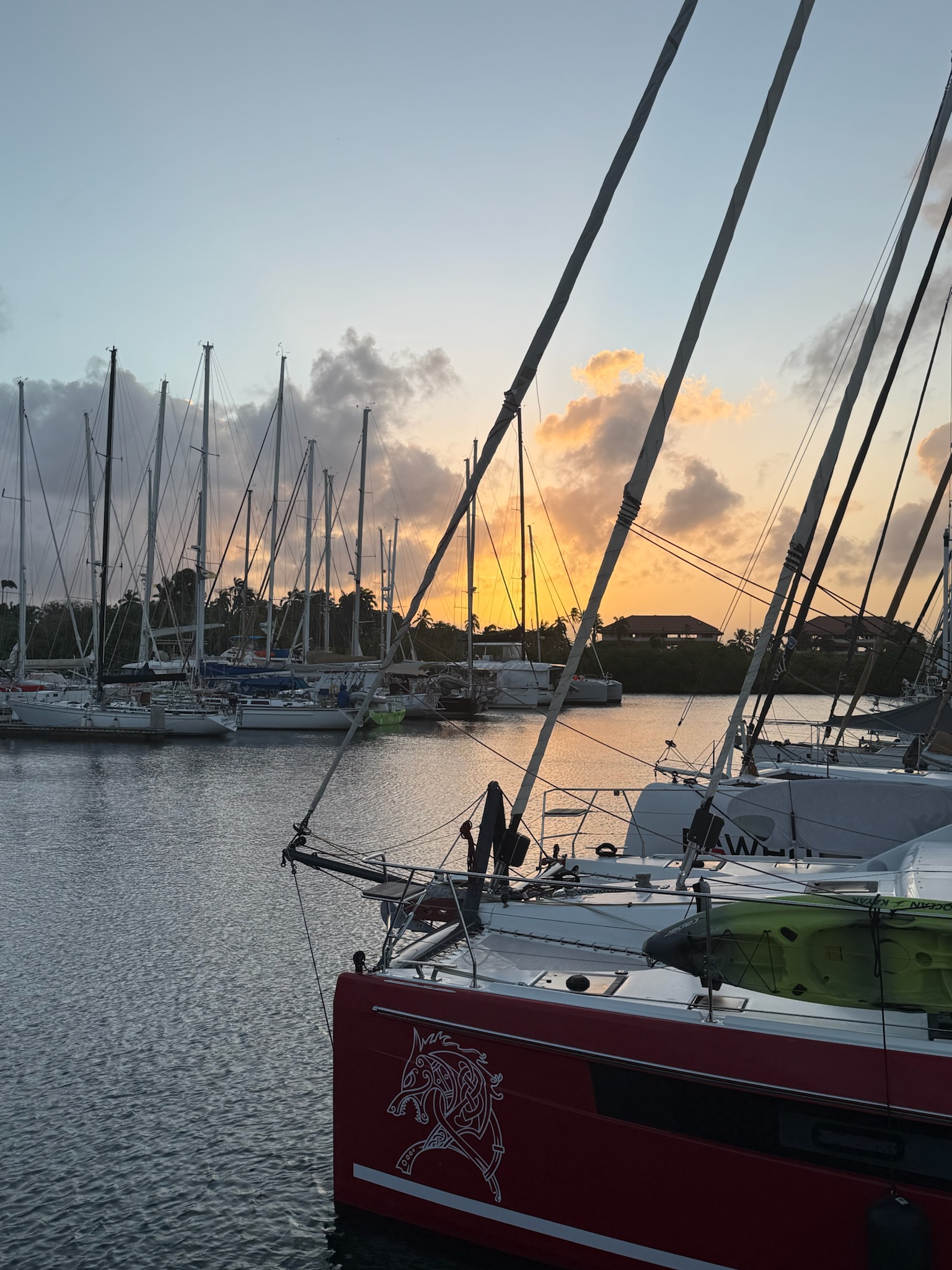
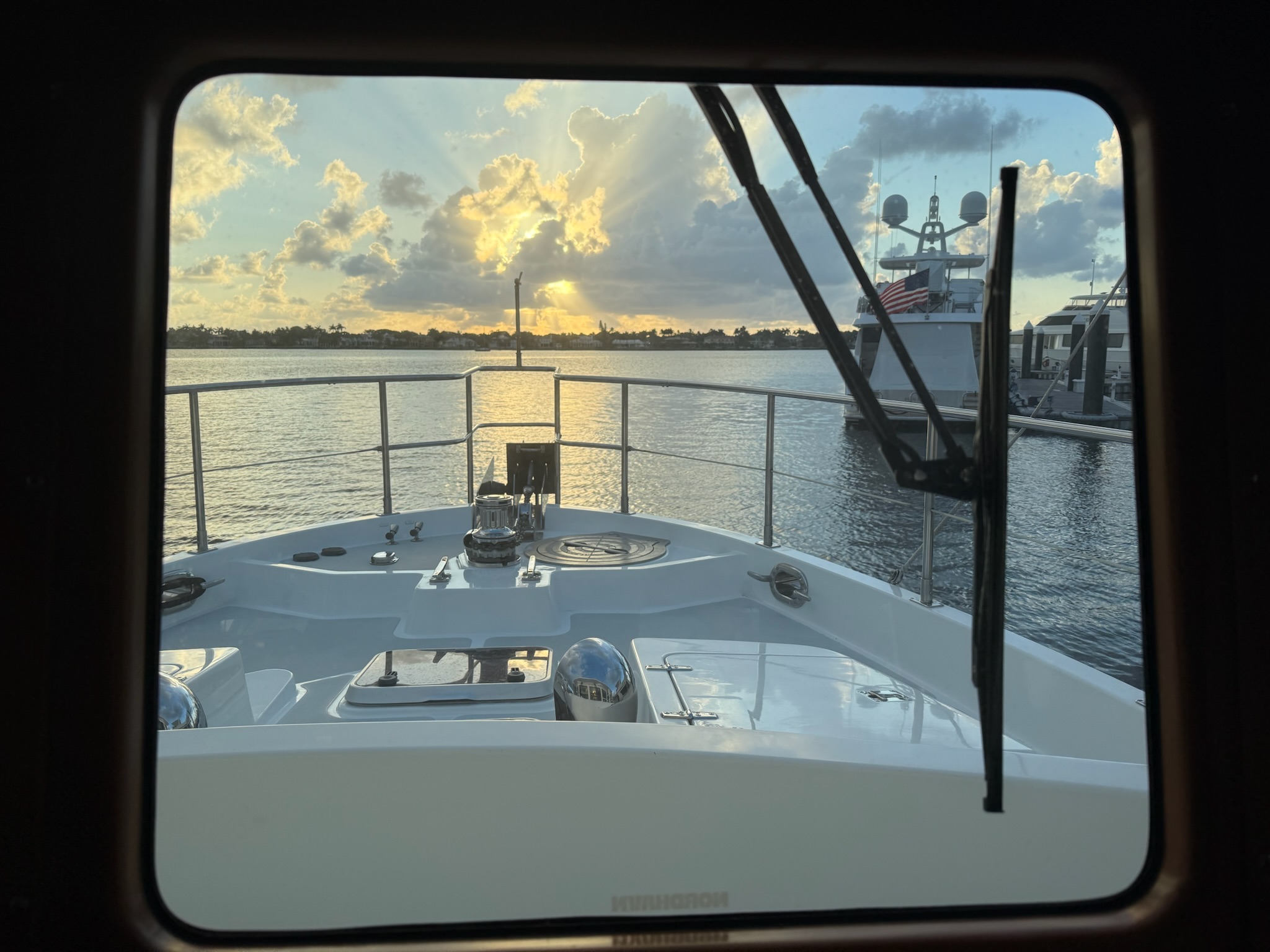
On Tuesday, June 17, we missed the sunrise, but here was a morning shot.

We spent Tuesday and Wednesday finishing up the projects. Eric confirmed radios were working, the other two air conditioning units were descaled, and Yacht Tech finished up the waxing, stainless polishing, and the gelcoat work. Unfortunately, not every gelcoat spot was repaired. There had been two separate work orders, and due to a misunderstanding, Eric had only authorized one.

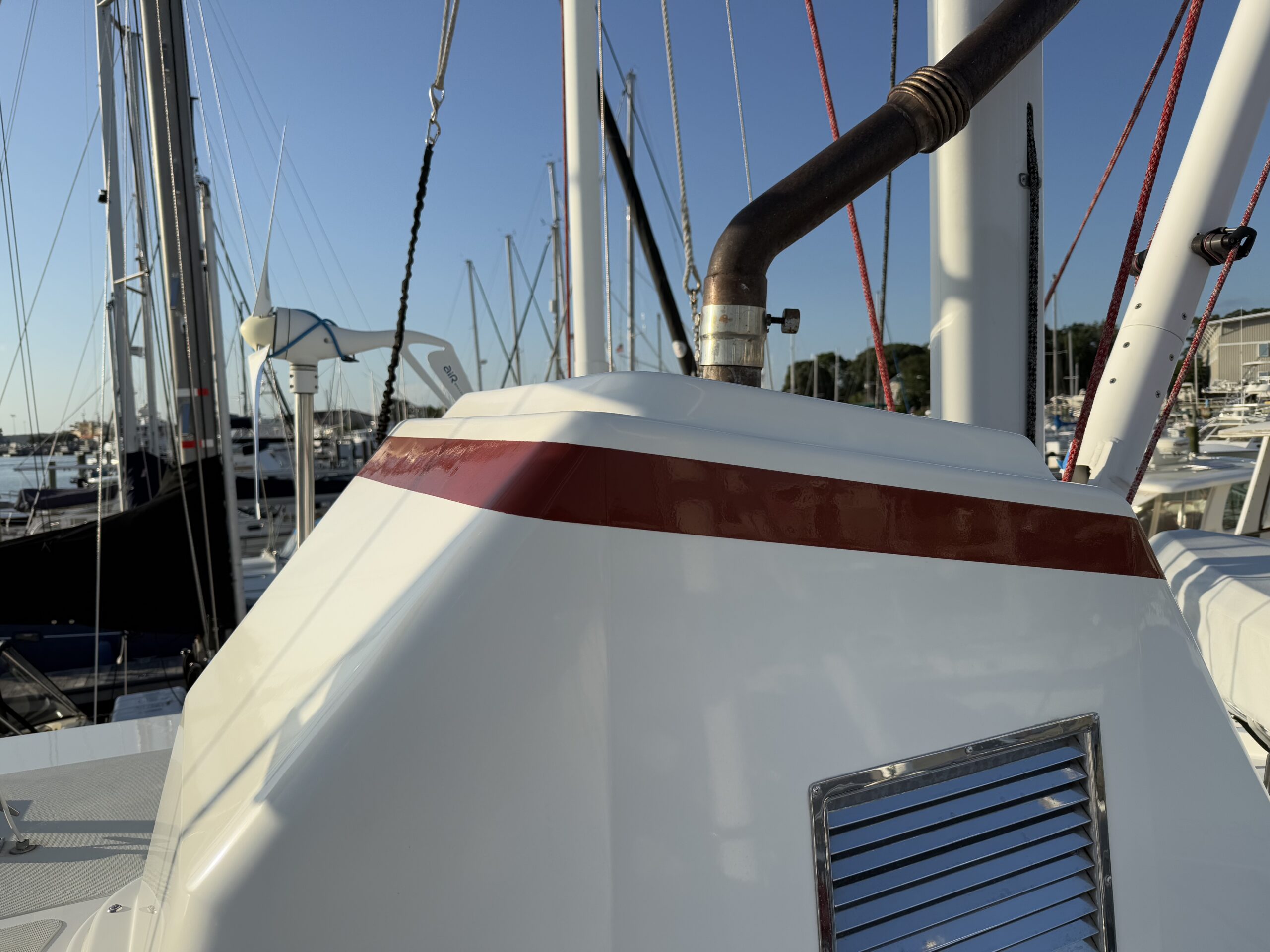
We’d mentioned that the bottom red boot stripe had been touched up. Yacht Tech also touched up the smokestack stripe. When all the outside work was completed, they gave Kosmos a good washing and wipe down.

Continue reading

Nature Walk in Ft. Sherman

The sunrise on Tuesday, February 11 again looked like there was a fire in the sky that was giving off a lot of smoke. 

Tuesday was another quiet day. We’ve found another downside to being right in front of the marina. In the morning, the marina mowed the lawn, and the wind blew grass clippings all over the boat. Eric determined that the wind generator was working well, so after he cleaned off the grass, he turned off the wind generator and brought the dinghy back onboard.  

On Wednesday morning, Eric changed the wing engine fuel filter. It was easier than, but also messier than, anticipated. In the early afternoon, Eric led a D & D session with Keith and several of the kids in the marina. 

In the evening, we went on a nature walk with Carlos, who works at the marina. His hobby is botany, and he does these nature walks as a side gig. Several people had recommended that we hire him, but up until now, he’d been booked solid with ARC boats. Now most of the ARC boats were gone and he had time for us. 

Carlos had been a young teen when the US military left Panama (in 1999). His brother had been working at Ft. Sherman as a contractor. Carlos had tagged along with his brother and remembered what the base looked like back then. 

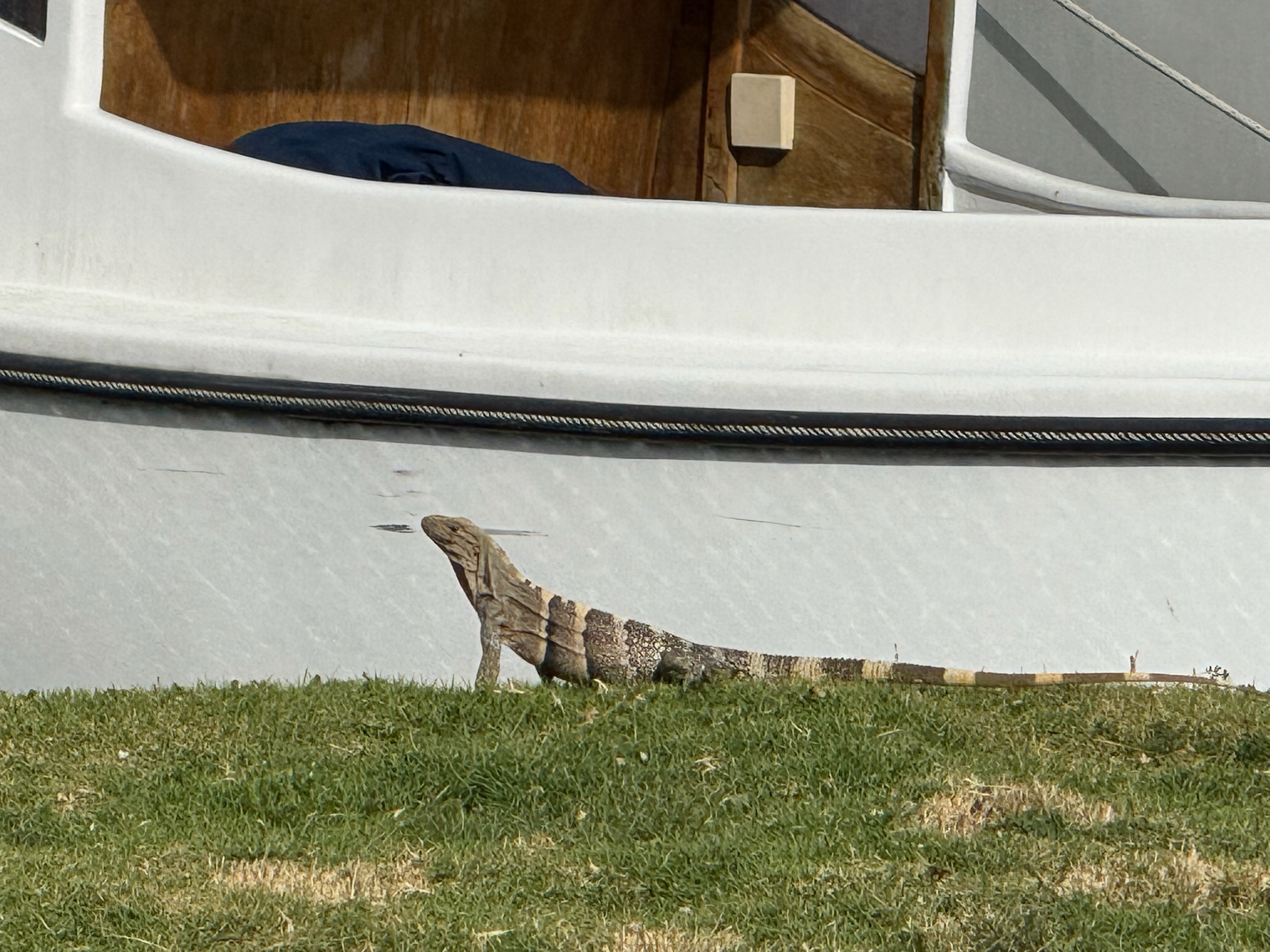
He started the tour by explaining that during canal construction, there was a lot of excess dirt that the military utilized to create land. He said much of the flat area within Ft. Sherman, particularly near the edge of Limon Bay, was man-made, including this cove. While Carlos was talking, the resident lizard came out to say hi.

Continue reading

Emergency Training: Inflating the Old Life Raft

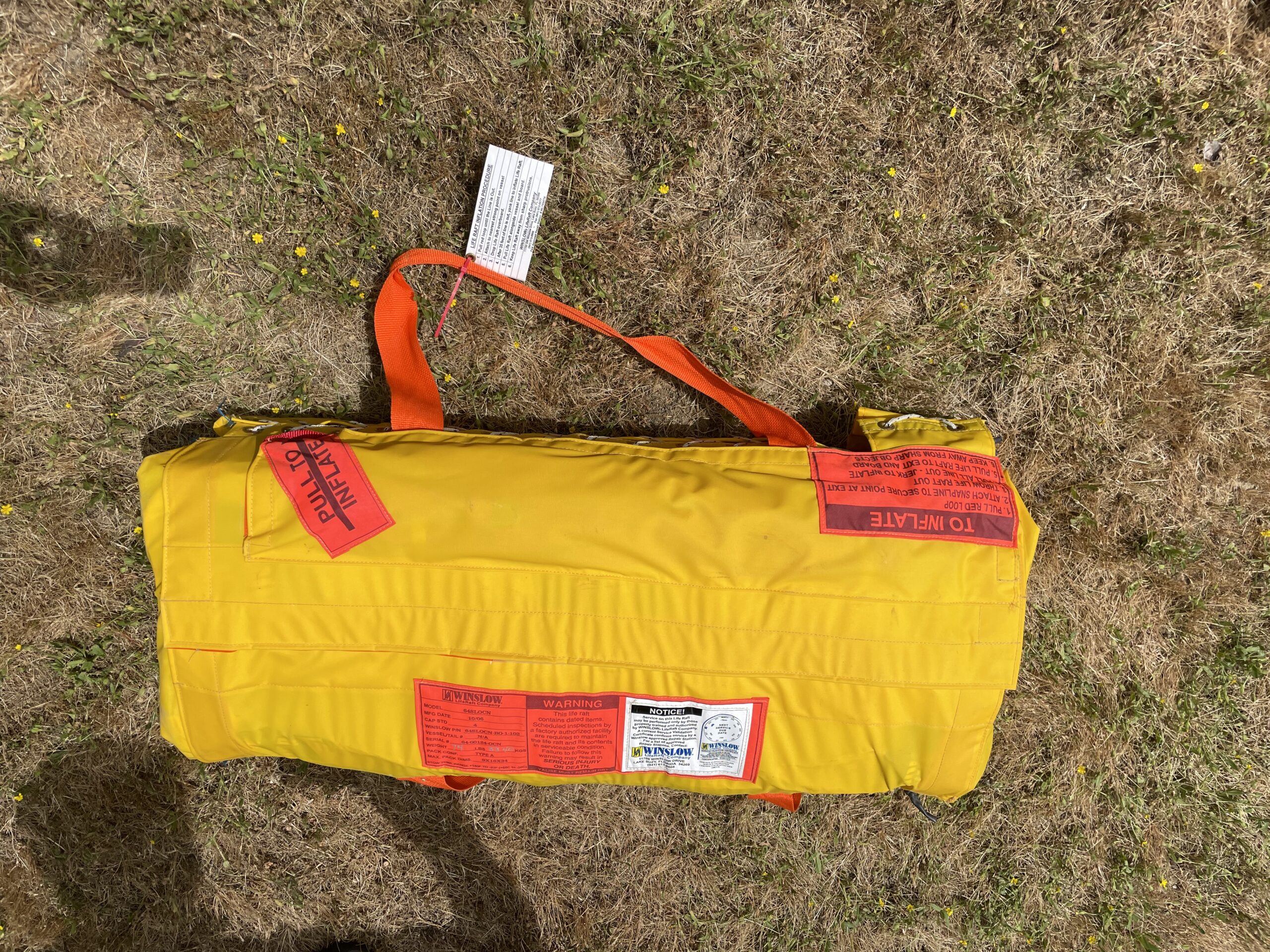
When Kosmos was new, we bought a six-person Winslow life raft that was vacuum-sealed for extended life. We got a Maxi model with food, water, EPIRB and lots of great features. All these years, we kept it under the settee in the salon, so it was very protected. Even though it was 18 years old, we believed it was still in good shape thanks to the protected location.

Unfortunately, our insurance company wouldn’t recognize such an old life raft, so the insurance company insisted we get a new one before going to the Sea of Cortez. We chose the Winslow Ultra-Light Offshore four-person model that has all the same non-perishable goodies, but does not have perishable items in it. Our old life raft was 70-pounds — there was no way Keith nor Christi could launch it without help. The new life raft is 35-pounds, which Christi and Keith can each manage alone.

Our ditch bag was a large, heavy duffel bag. We’ve replaced it with three water-proof backpacks (one for each of us). One of the backpacks has the perishable things that were previously in the life raft; the other two have the rest of the contents of the old ditch bag. With the bags on our back, our hands will be free to launch the life raft and deal with other things.

We decided it would be a great safety training exercise to inflate the old life raft. Our friend, Marty, joined us. Marty gave us a lot of helpful information. Here is a video Marty took of it:

Continue reading

Joshua Tree National Park

The family that we went camping with in Yosemite last year invited us to go to Joshua Tree National Park with them and several others for spring break. Joshua Trees are the largest species of the yucca genus (evergreens with sword shaped, tough leaves and white flowers). In addition to a large collection of Joshua Trees, the park is also famous for giant piles of rocks dotting the desert landscape, and people come from all over to climb these rocks. The park is also popular for stargazing. It has many hiking trails, too. Christi adores Joshua Tree. Eric and Keith had never been.

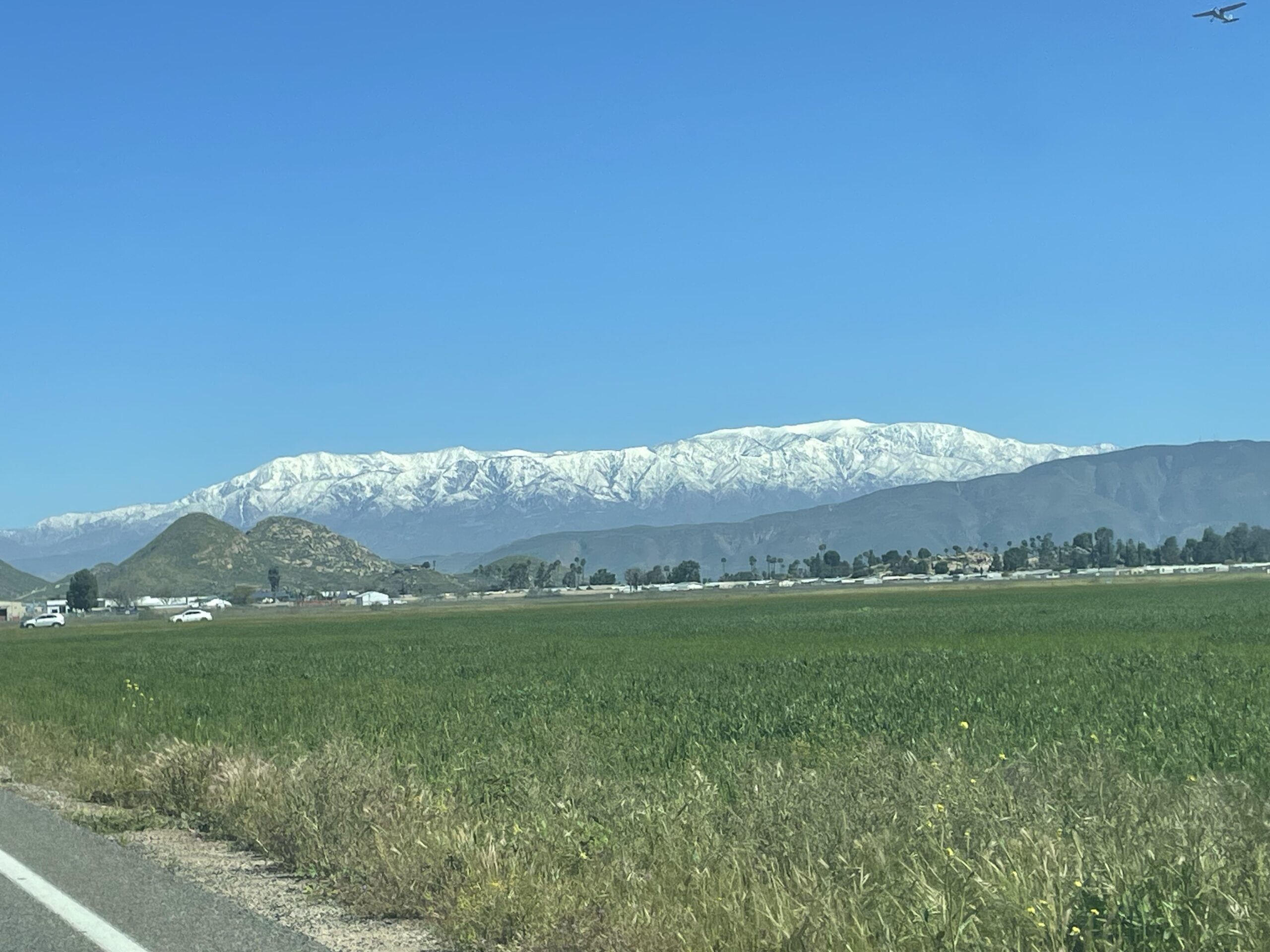
On Tuesday, the weather was clear and sunny. The three-hour drive northeast from San Diego to the high desert was beautiful. Southern California has had an unusually wet and cold winter, so the landscape was greener than normal and full of flowers, with snow capped mountains in the distance.

The campsite was located in Indian Cove, a small alcove on the outskirts of the park, conveniently located right off the main highway. While the temperatures were balmy during the day, it was cold at night. We’d decided it would be too cold for tent camping, and renting an RV was more expensive than renting a cabin/house. What was great about Indian Cove was that it was next to a residential area, so we were able to find a place that was only a 5-minute drive. With many national parks, such as Yosemite, it can be quite a long drive between the park and the closest amenities outside the park.

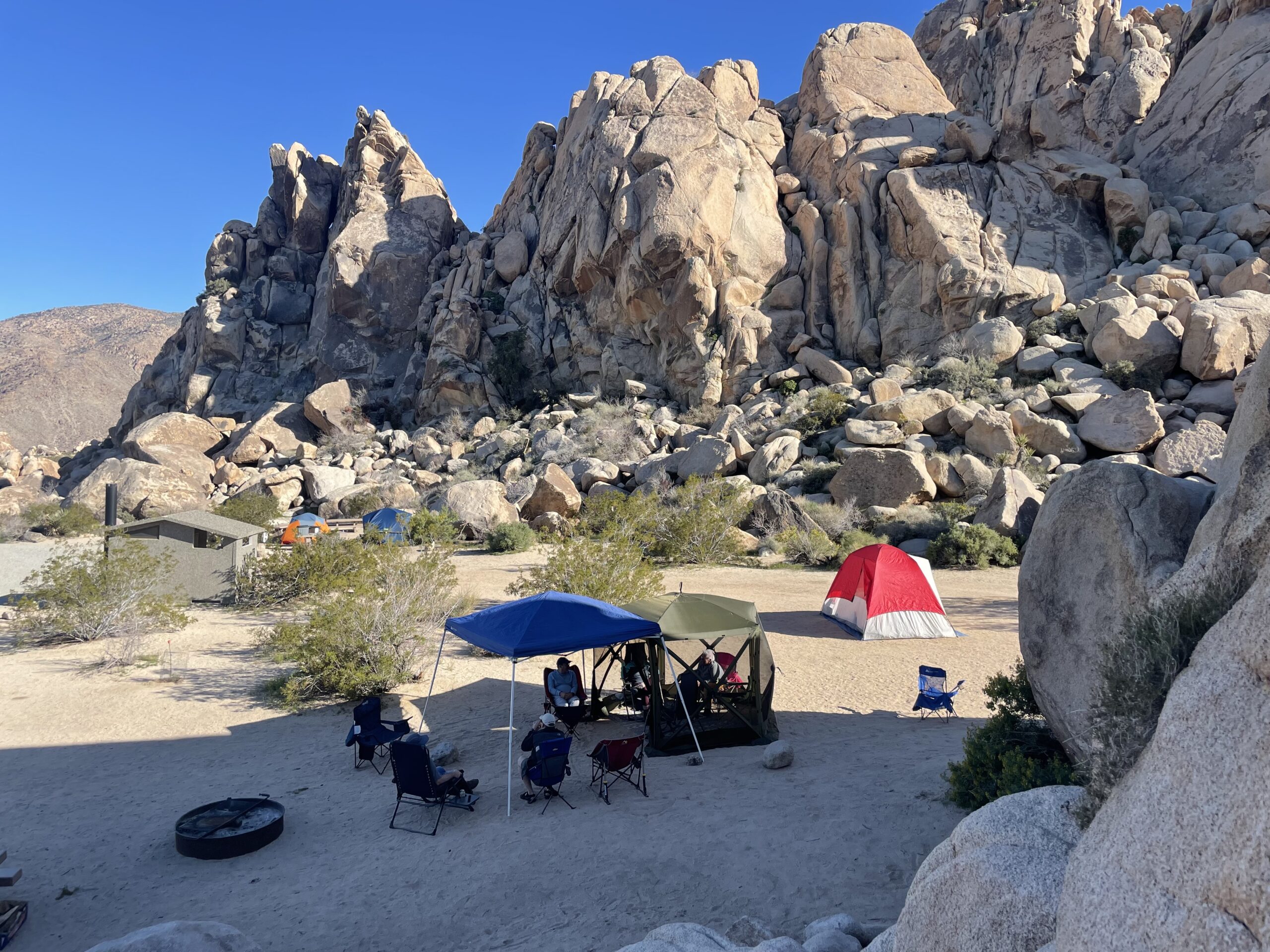
We arrived at the campsite at around 1400 (2:00 pm). Here’s a photo taken from atop one of the surrounding rock formations.

The boys spent the afternoon climbing rocks and playing a game called “Joe’s Gas Station.” Christi and Eric did a little bit of rock climbing, too.

Continue reading