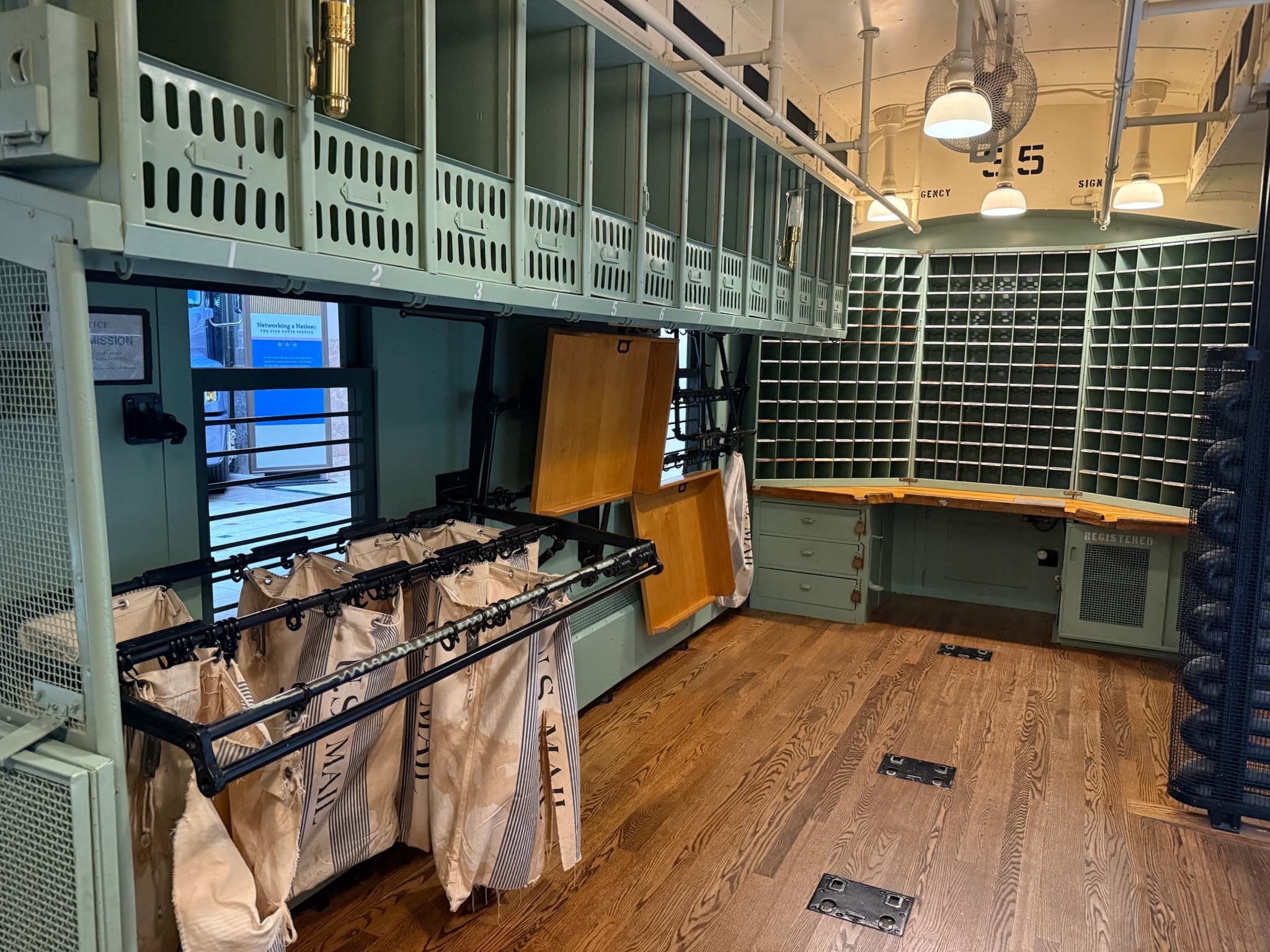
continued… Next we moved over to the section about trains. After the Civil War ended in 1866, the Post Office started placing clerks on trains to sort the mail while in transit. It was the mainstay of postal operations for almost a century. The clerks worked long hours and their job was dangerous as railway accidents were common. Processing mail on trains ended in 1977 after three decades of declining railroad traffic.
Yesterday, the marina had told us another boat was coming in on Friday that needed our end-tie, and that we needed to move prior to their arrival. Since it was such a calm morning, the first thing we did was move to another slip. All went smoothly with that, and interestingly enough, the power worked fine and we didn’t need the isolation transformer.
Our big outing of the day was the National Postal Museum. It was 2.3 miles away, located a little bit north of the Capital building. According to Apple Maps, if we took the Metro, it would cost $6.75 each way for the three of us, we’d need to change lines, and the total transit was estimated to take 35-minutes. Eric checked the ride-share app and found that it would cost $9.00 and take 20-minutes to be delivered door to door. We opted for the ride-share. We waited for the driver at the fountain by Surfside taco, which had a traffic light and a small U shaped road that made it an easy location for the driver to pick us up.
While in the car, the driver suggested that after we finished at the museum, we should go across the street to Union Station. He said that even if we took another ride share back to the marina instead of the Metro, that the station was an “experience worth seeing.” He dropped us off at the Massachusetts Ave. East entrance, which was the south side of the building.
Continued… The Southwest Gallery had an exhibit called something along the lines of The Two Georges that compared and contrasted US President George Washington and British King George III.
As we’d learned in Yorktown, when the colonies had been established, the Monarchy had been pretty hands-off. When King George III came to power in 1760, he pursued stricter policies of control over the colonies. Long story short, the American Revolution was basically the colonies saying no to this control, viewing the king as a tyrannical ruler who could not be reasoned with. King George III stayed in power until 1811, when he became too sick to rule. Rather than abdicating the throne, King George III had his son rule on his behalf as the Prince Regent. The king died in 1820.
George Washington was a wealthy farmer from Virginia. He became the commander-in-chief of the military during the Revolutionary War. The two Georges were literally fighting one another over control of the colonies. Washington resigned from the military when the war ended in 1783, but remained active in the politics of the new nation. He became the US’s first president in 1789 and was in power until 1797, when he chose to retire despite being encouraged to run for a third term. The exhibit made a point of stating that Washington voluntarily relinquished power while King George clung to power to the very end, even when he was too sick to rule. Washington died unexpectedly in 1799 from an infection, only three-years after leaving office.
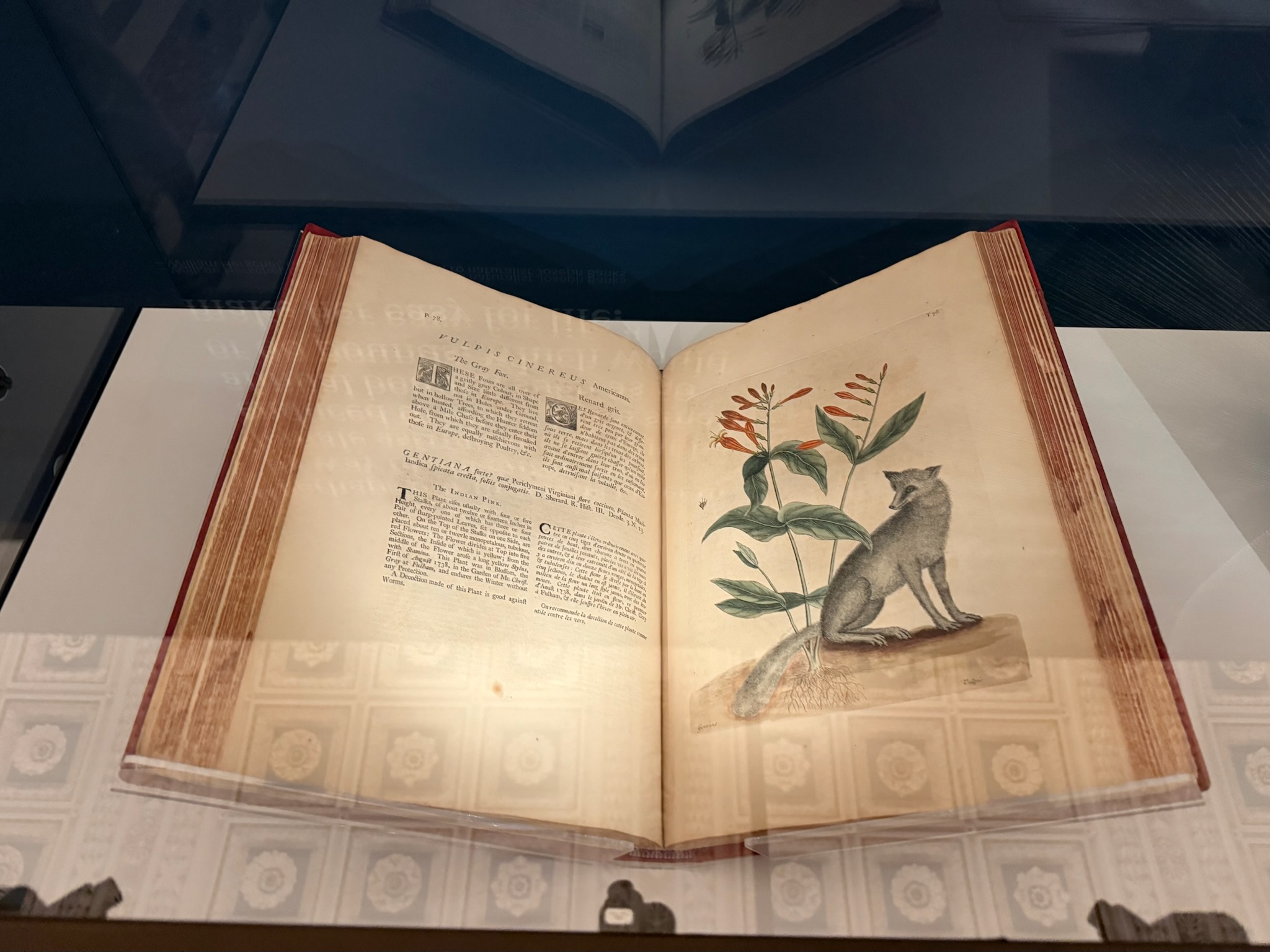
Both Georges were Enlightenment men who were into science and agricultural advancements. George III was an important patron of scientists and explorers, funding people such as Captain James Cook, naturalist Joseph Banks and astronomer William Herschel. Washington had wanted to establish a university in the Capital, believing that “flourishing the state of the arts and sciences” would lead to “national prosperity and reputation.” Both Georges owned this book on botany/horticulture.
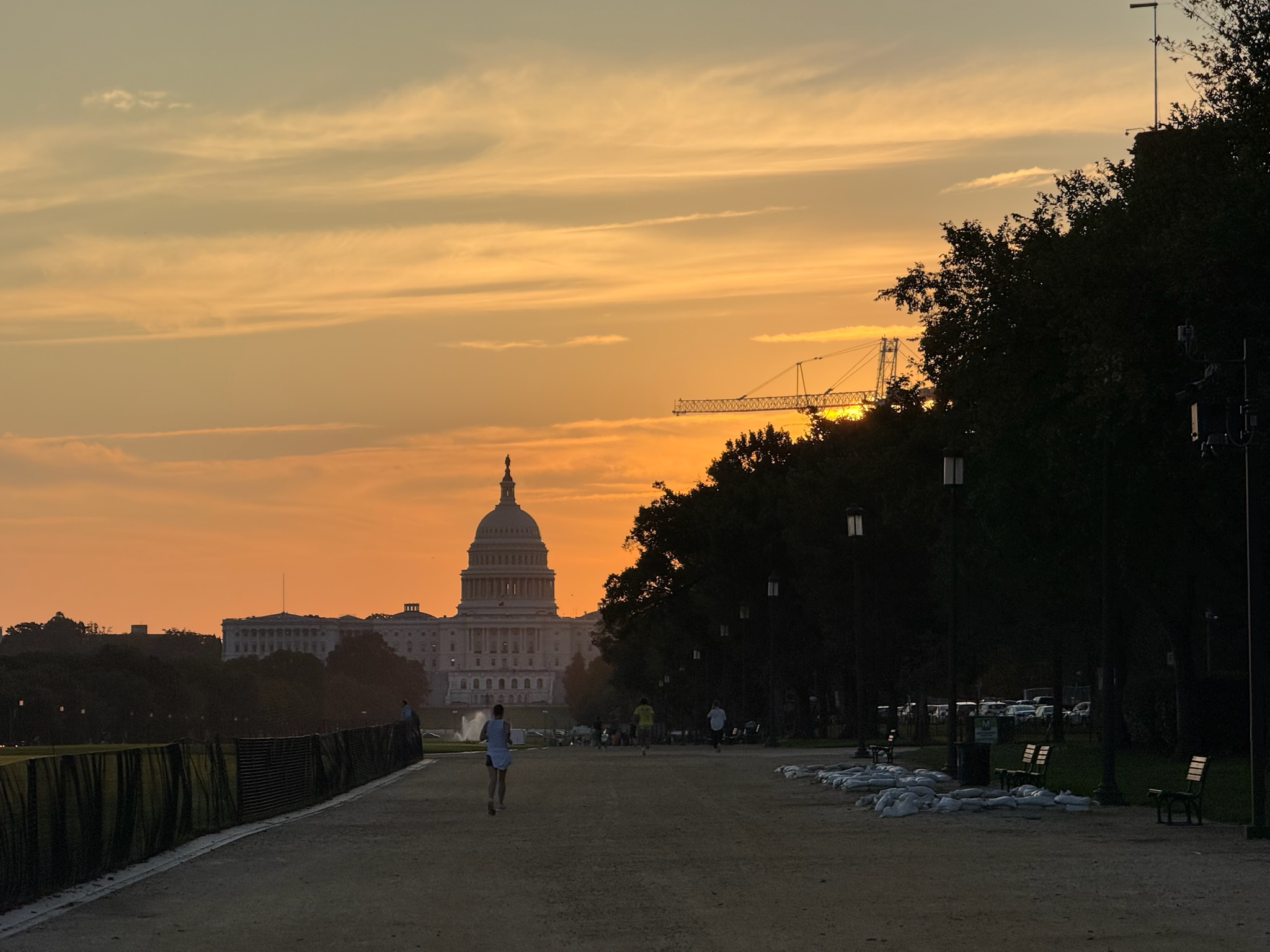
Eric went for another run at dawn on Tuesday, September 23. Here was the Capital in the early morning glow.
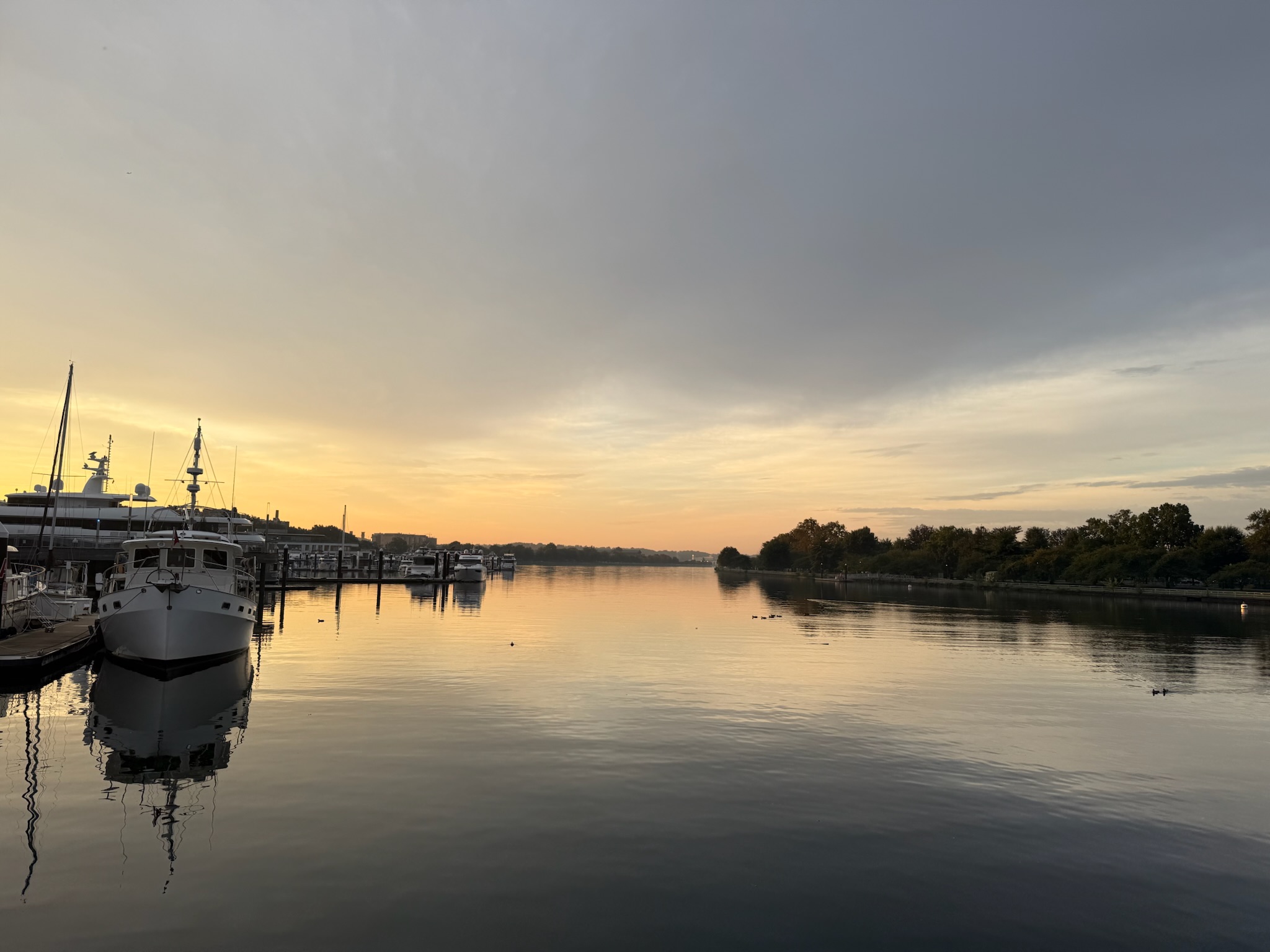
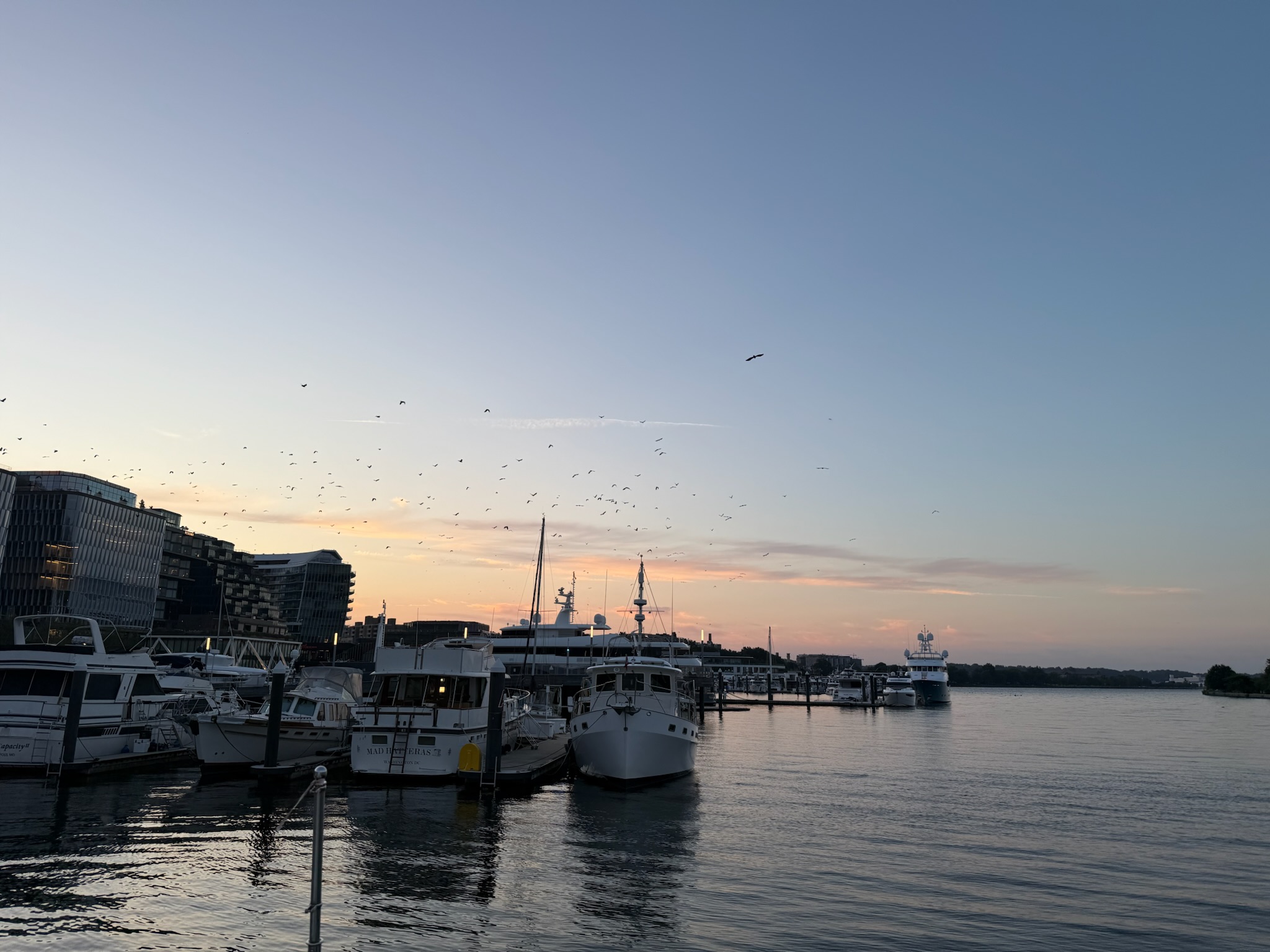
Meanwhile, this was the dawn back at the boat
Two months ago, we’d contacted our congressperson to ask for tickets to visit The White House, The Library of Congress, and Congress. We called their office and were told to fill out a form online. After waiting a week, Christi called to follow up. They said The White House hadn’t released dates they’d be open for tours yet, so they couldn’t submit our request. A few days later, we saw a press release that the White House was undergoing renovations and would be closed for tours indefinitely. Christi called again to follow up. The Congress woman’s office emailed her a link allowing her to sign up online for tickets to the other two venues. Tickets were free, but due to security reasons, they wanted personal information. Several days after that, Christi got emails from each venue saying we’d been approved for tickets, with a link to order them online.
continued… When Pluto was discovered in 1930, the scientific community agreed it was a planet. In 1987, another very large object was found in the Kuiper Belt. Since then, over a thousand more objects have been discovered. While Pluto was the largest, one named Eris has more mass and also has a moon. In 2006, the definition of planet was altered to be a celestial body that: a. is in orbit around the sun, b. has enough mass for its gravity that it has (nearly) a round shape and c. has cleared other large objects from the region of its orbit. Pluto did not meet criteria C. A new category was created: dwarf planet, which Pluto met the criteria for. Eris was also categorized as dwarf planets.
New Horizons was the first spacecraft to explore Pluto and its moons. It revealed that Pluto and moon Charon have dramatic landscapes and altered surfaces that were surprisingly young. It has passed Pluto and is currently in the Kuiper Belt.
The last “real” planet in our solar system is Neptune, and before it is Uranus. Uranus was discovered in 1781 by William Herschel, Neptune was discovered in 1846 by Johann Gottfried Galle. Both are icy gas giants, which means they have small rocky cores, but the majority of the planets are made up mostly of gas and ices — so they don’t have solid surfaces. Both are blue/green in color, which comes from high concentrations of methane. Both have faint rings — Uranus’s has thirteen and Neptune has six.