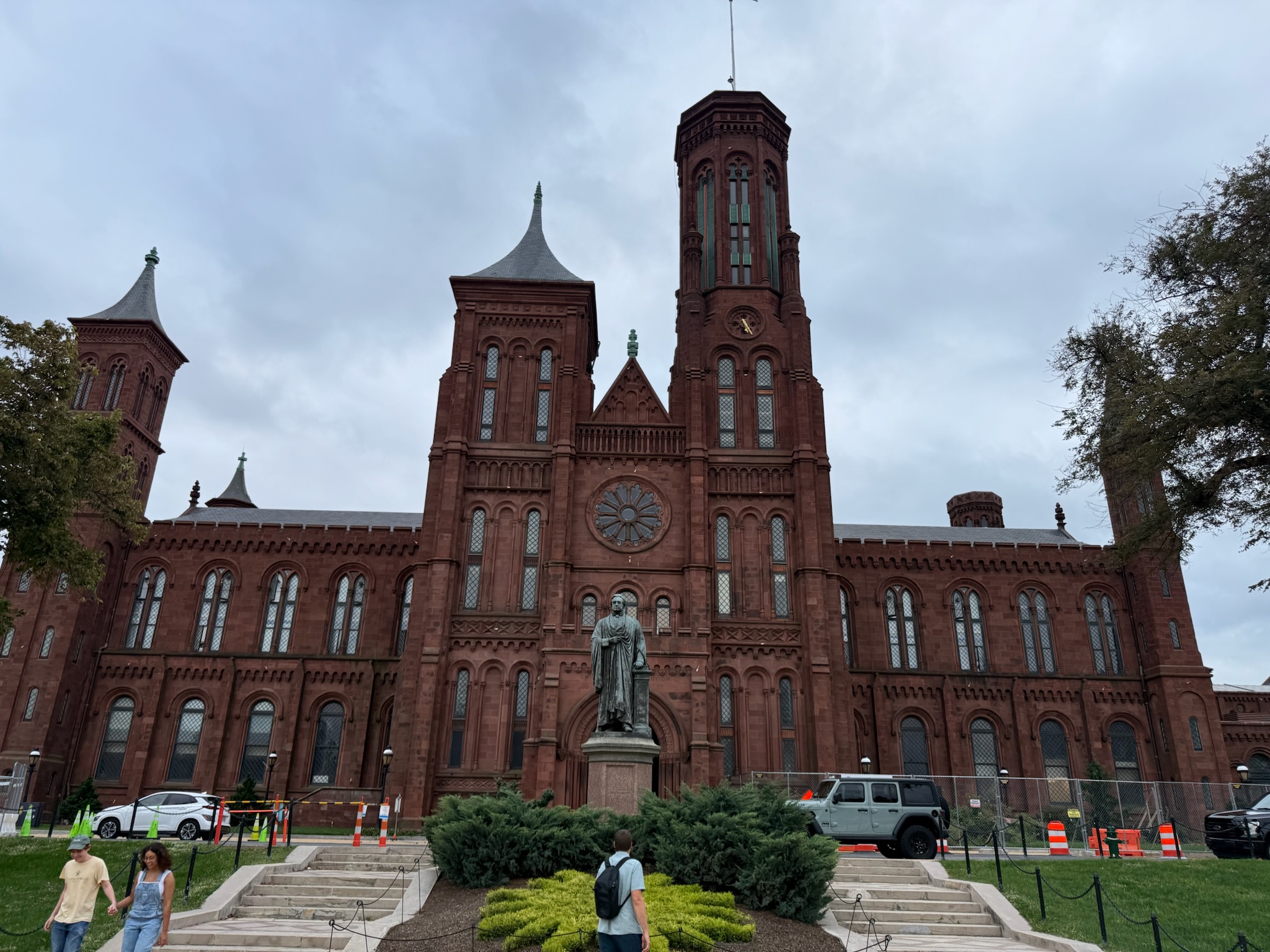
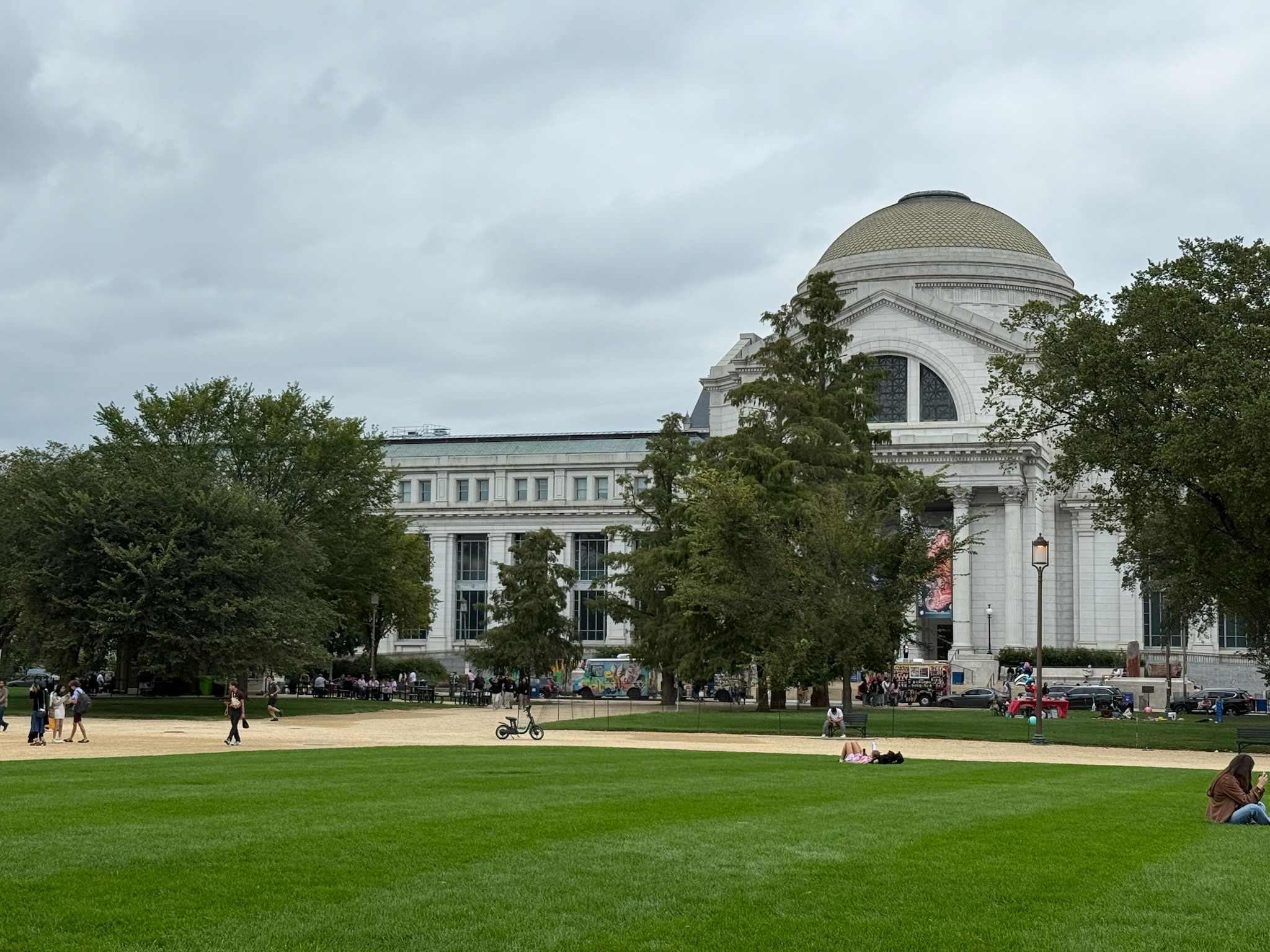
Sunday, Sept 21continued… we headed west along The National Mall, taking in the buildings on both sides of us. On the south side, next to the Arts & Industries Museum, was the Smithsonian Castle. It was also closed for renovation.
Across from the castle, on the north side of The Mall, was The Museum of Natural History.
continued… The next exhibit was on terrorism, with signs commemorating terrorist attacks around the world in the 20th century and many signs about terrorist attacks that were stopped by the intelligence agencies. This exhibit was disturbing and not something to dwell on.
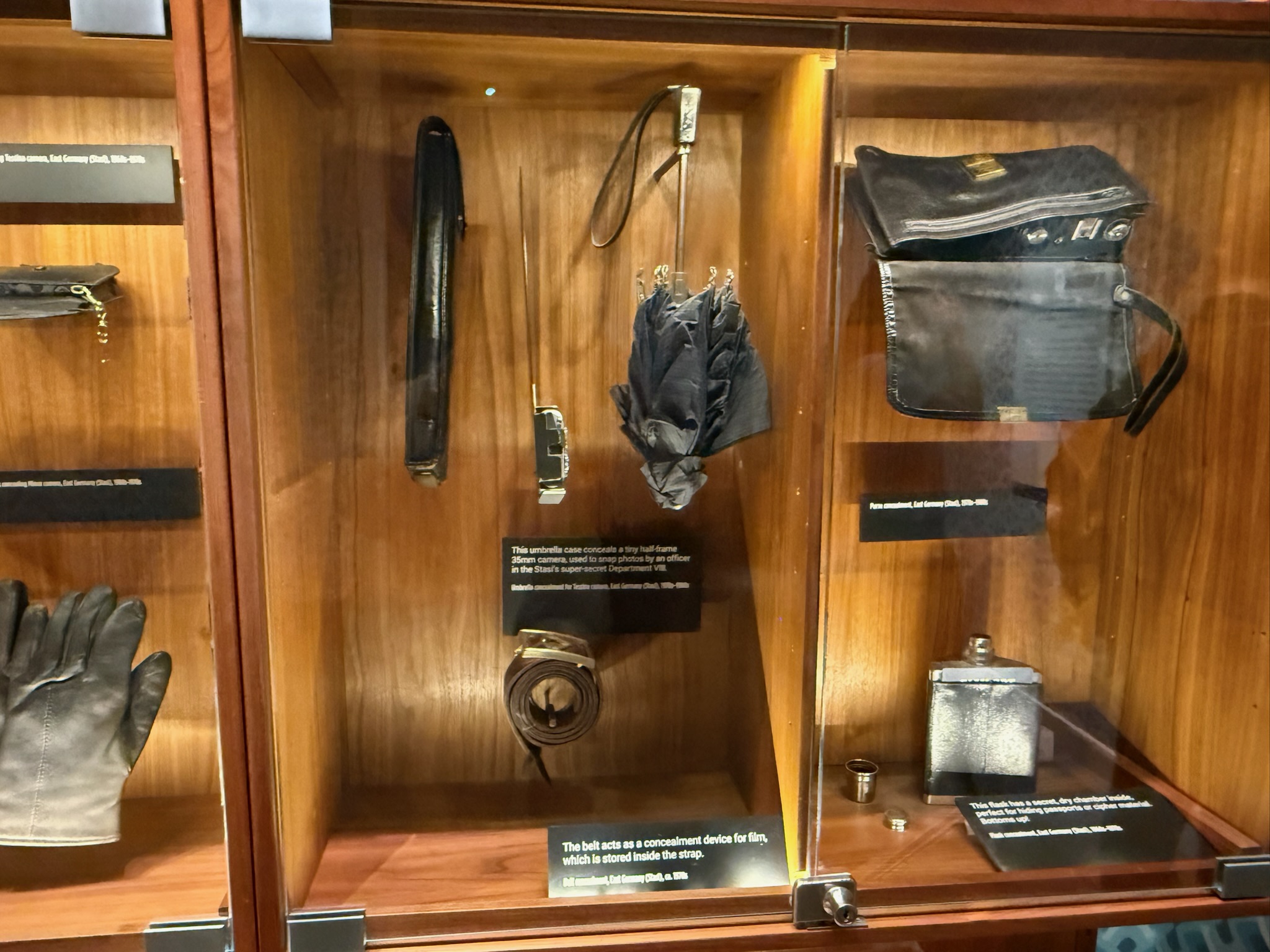
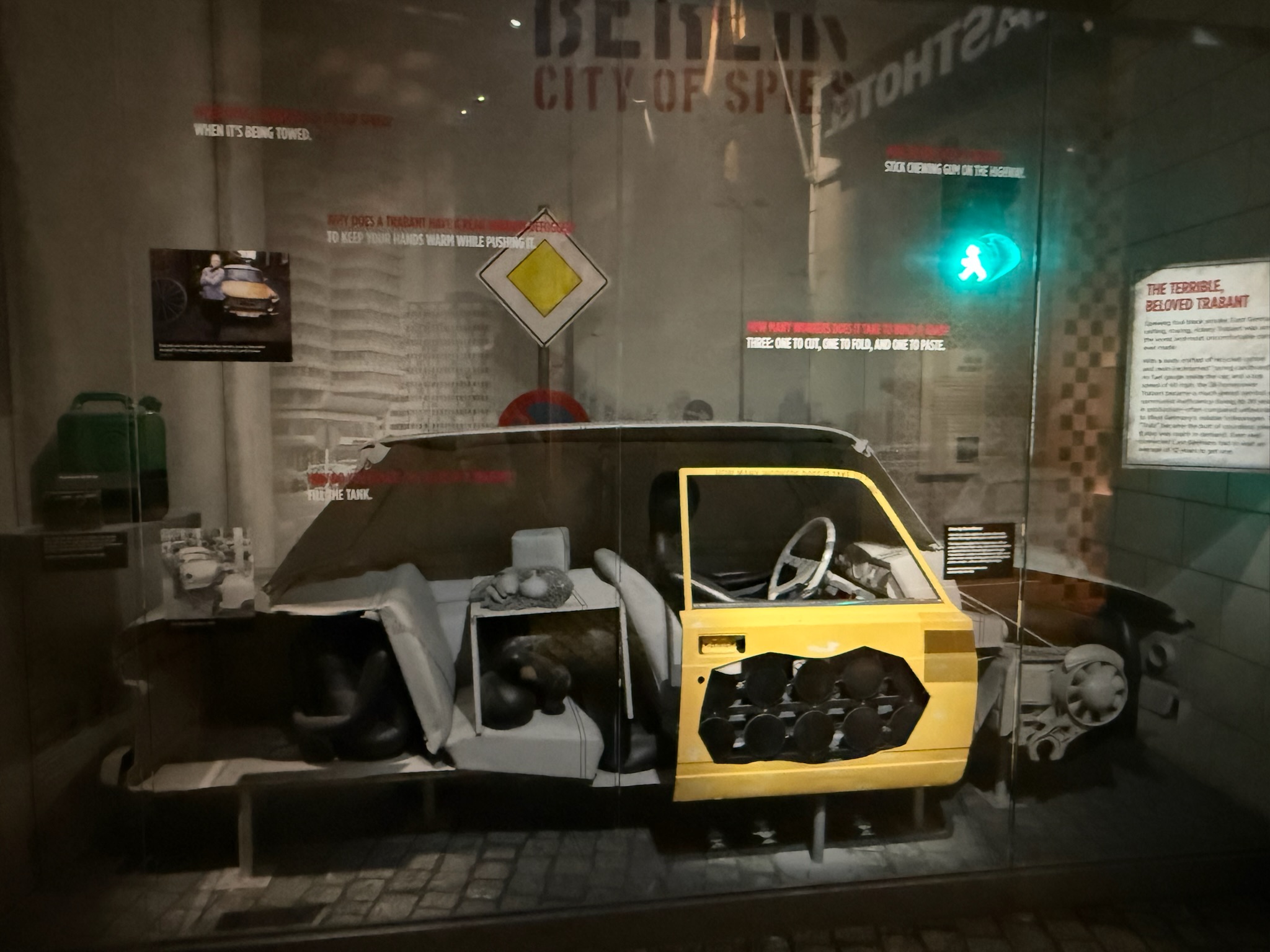
The next exhibit was on the East German Ministry of for State Security, AKA The Stasi. Their goal was to ensure that their citizens lived in fear, and they utilized techniques such as arbitrary arrest, kidnapping, harassment and relentless collection of information to attain this goal. They had 90,000 agents, plus a vast network of citizen informants. The signs talked in detail about their extensive spying network, showing many examples of where they hid microphones and cameras in order to monitor people, how they smuggled out film/recordings, etc.
They also mentioned escaping from East Berlin before the wall fell. Between 1961 and 1989, at least 140 people were killed at the wall, most trying to escape. There were apparently many places to hide in a car, and it was common for the Stasi to disassemble cars in search of stowaways — and it was up to the owner to reassemble their cars!
The Trabant was made by the communists and hailed as one of the worst cars ever made. Continue reading →
continued… In 1945, WWII ended and then-President Truman dissolved the OSS. But with the Cold War brewing, people convinced Truman they needed to peacetime intelligence agency to prevent another Pearl Harbor from happening. To try to garner public support, they even used the propaganda card by making a Hollywood film called “OSS” about the heroic actions of the OSS during the war. In 1947, Truman authorized the creation of the CIA, which was staffed by many OSS alumni.
The next section was provocative. “In a democracy, there is always tension between openness and secrecy. When people fear their country is under threat, they accept more security. When fears fade, they often demand greater transparency.” The first display was about Julius and Ethel Rosenberg. They were convicted of espionage in 1951 and later executed, based on the US governments assertion that there was indisputable evidence that the Rosenbergs had passed atomic weapon information on to the Soviets. However, the evidence was top secret and couldn’t be shared — while there was supporting evidence revealed in court, the jury convicted without seeing the allegedly most damning evidence. The execution was highly controversial, with many protests. In 1995, the evidence was finally released — it was captured and decrypted correspondence that proved that Julius was a Soviet spy. Whether he passed on information about atomic weapons and whether Ethel was a spy were less clear.
In the 1970s, there was a movement to expose the government’s extralegal activities. In 1971, a group broke into the FBI office and stole information about COINTELPRO, a secret counterintelligence program to infiltrate, monitor and disrupt social and political movements. Tactics utilized included wiretapping, forgery, searching homes, sending anonymous notes ad leading false information. The files were given to the press and published. The burglars were never caught. From 1975 – 1976, there were congressional hearings on the FBI and CIA operations, which led to reforms, including instituting a congressional oversight committee and the creation of the FISA court to review secret surveillance requests.
In 2013, government contractor Edward Snowden stole and leaked to the press 1.5 million classified files about secret US surveillance programs, such as PRISM, that violated people’s privacy rights by harvesting data from cell phones, land line phone, emails, texts, social media and more.
continued... We can’t remember what the purpose of this machine was… since it was in the exfiltration section, we think it may have been a machine used to help train spies on escaping capture.
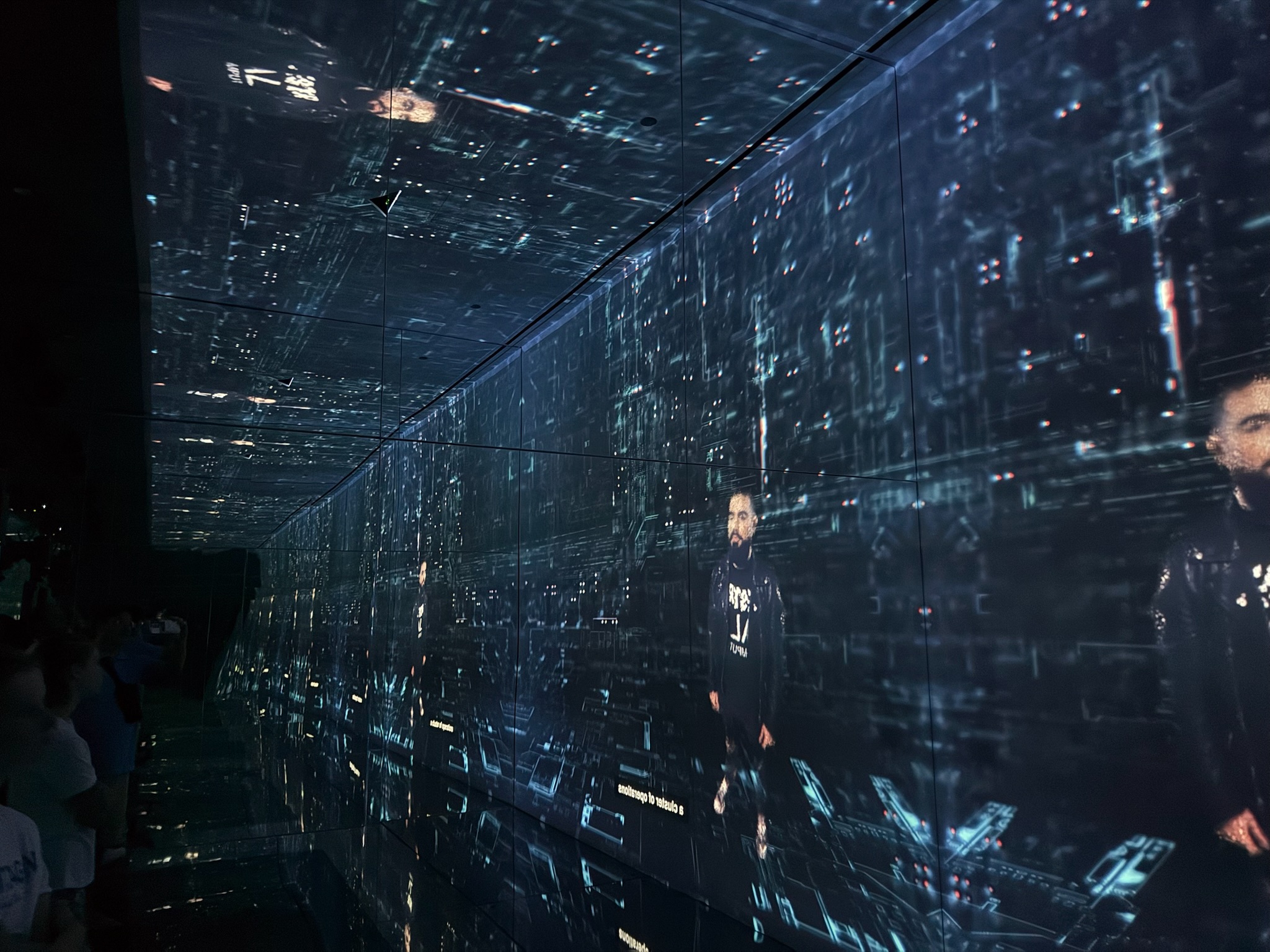
There was a small theater playing a film on a loop with real ex-spies telling their most thrilling stories about their spying days.
The next section was jaw dropping! The sign said “When governments task intel agencies to secretly undermine a rival’s political or economic system — perhaps by buying votes, bribing candidates, or disrupting trade — the results can change history… The stories here… all are bold attempts to transform the political or economic landscape.”
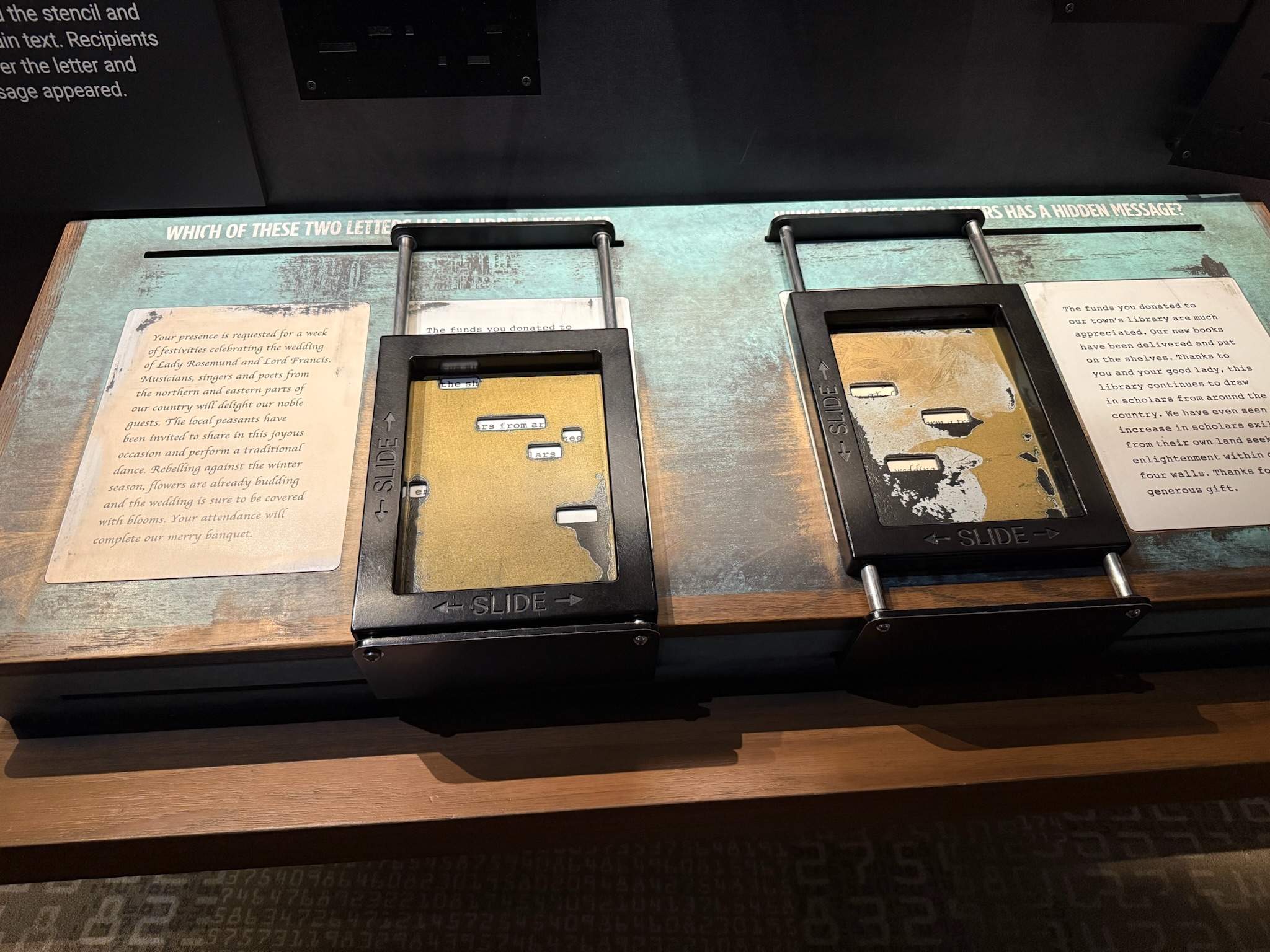
continued… There was a room on cryptography. Since Eric was a cryptographer, he was especially interested in this one. There was a display about various encryption tools that date back thousands of years — and were commonly used until relatively recently — such as the Cardano Grille. Even invisible ink dated back thousands of years — Pliny the Elder had a recipe for invisible ink that dated back to the 1st century!
Cardano grille. Write an innocuous letter with key words in the boxes that transmit a message.
As we’d leaned in Yorktown, during the Revolutionary War, George Washington had a vast spy network. Knowing the British were spying on the Americans, Washington encrypted his messages using a method called Pigpen. Then Thomas Jefferson invented a new encoding method, called the Jefferson Cipher, that was utilized up through World War II.
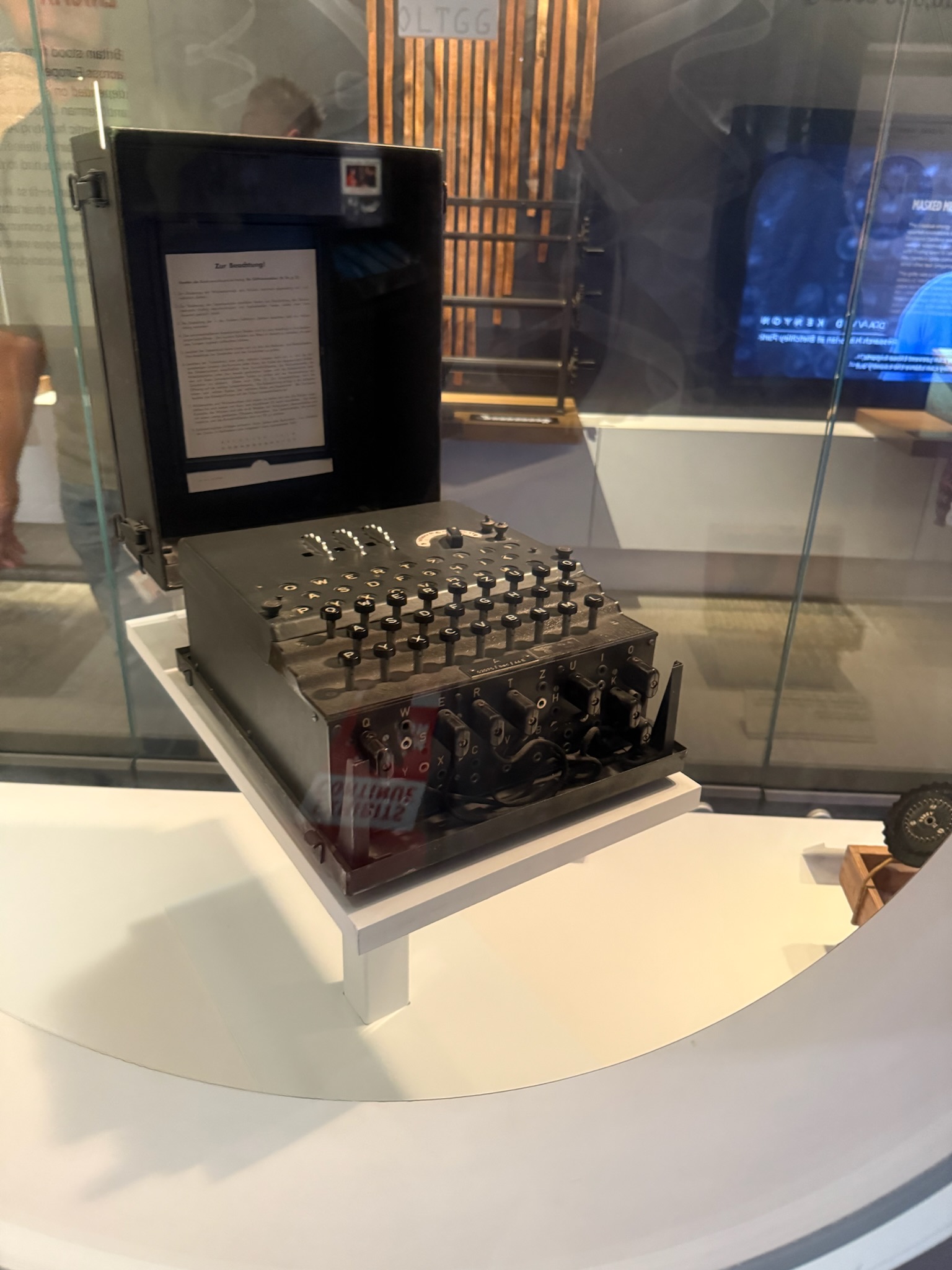
There was a display about a secret group of codebreakers that was assembled in 1939 in England when World War II erupted. It started as a team of 100 and eventually swelled to nearly 10,000, three-quarters of whom were women. They worked around the clock out of a mansion named Bletchley Park, which was a private home in England, trying to decrypt intercepted communications. The Germans had a machine called Enigma that was believed to be uncrackable. The team at Bletchley did crack it, but the Germans kept upgrading the technology, so the team at Bletchley had to re-crack the code with each upgrade. They managed to keep the operation a secret for 30 years.
We think this was the Enigma machine, though we aren’t 100% sureContinue reading →