continued… At this point, the museum focused on the three branches of the Army — calvary, artillery and infantry — and the logistics involved in moving the army for battles.
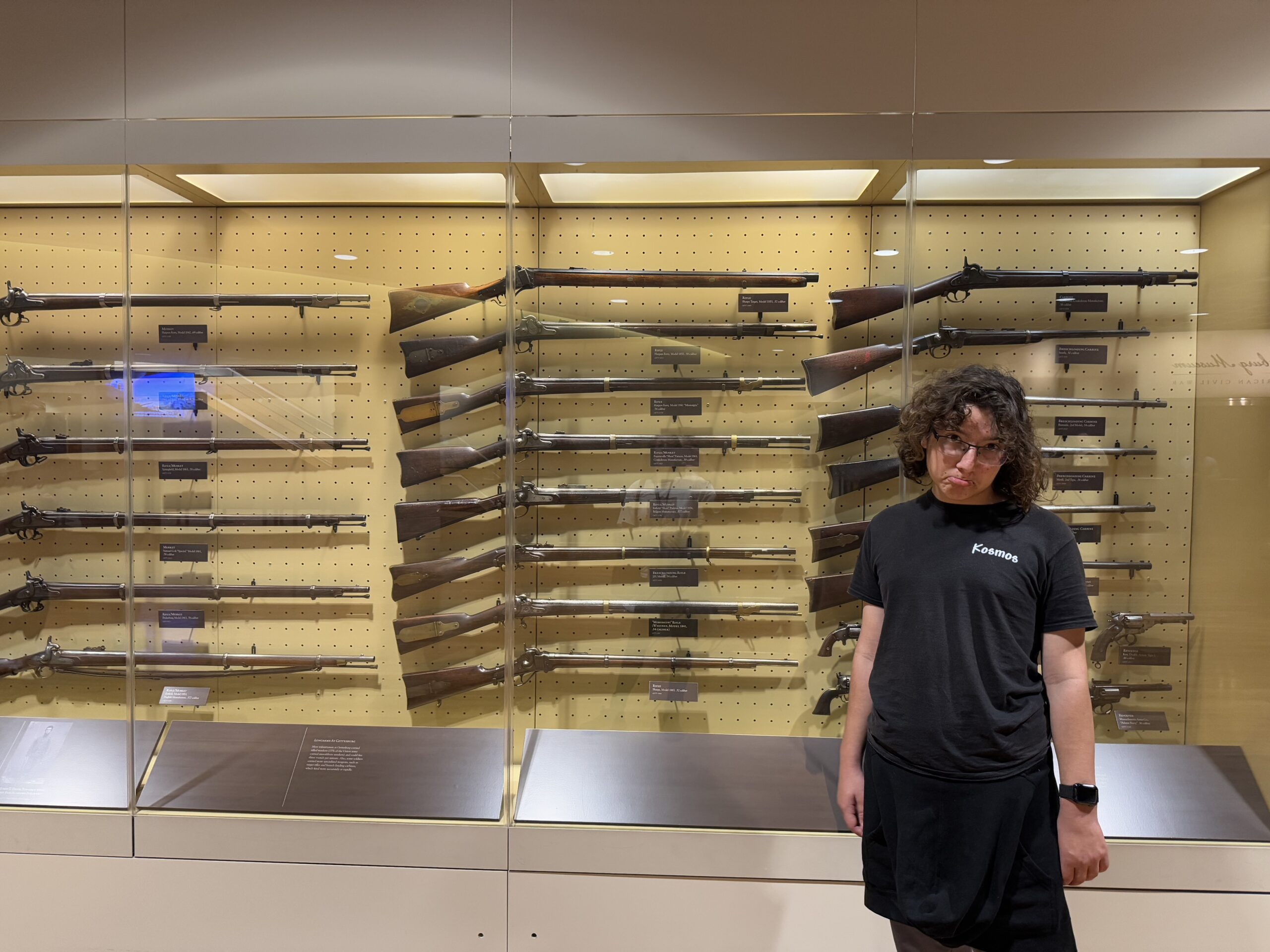
There was a lot of information about the specific weapons each of the different branches used and why those were chosen for that branch.
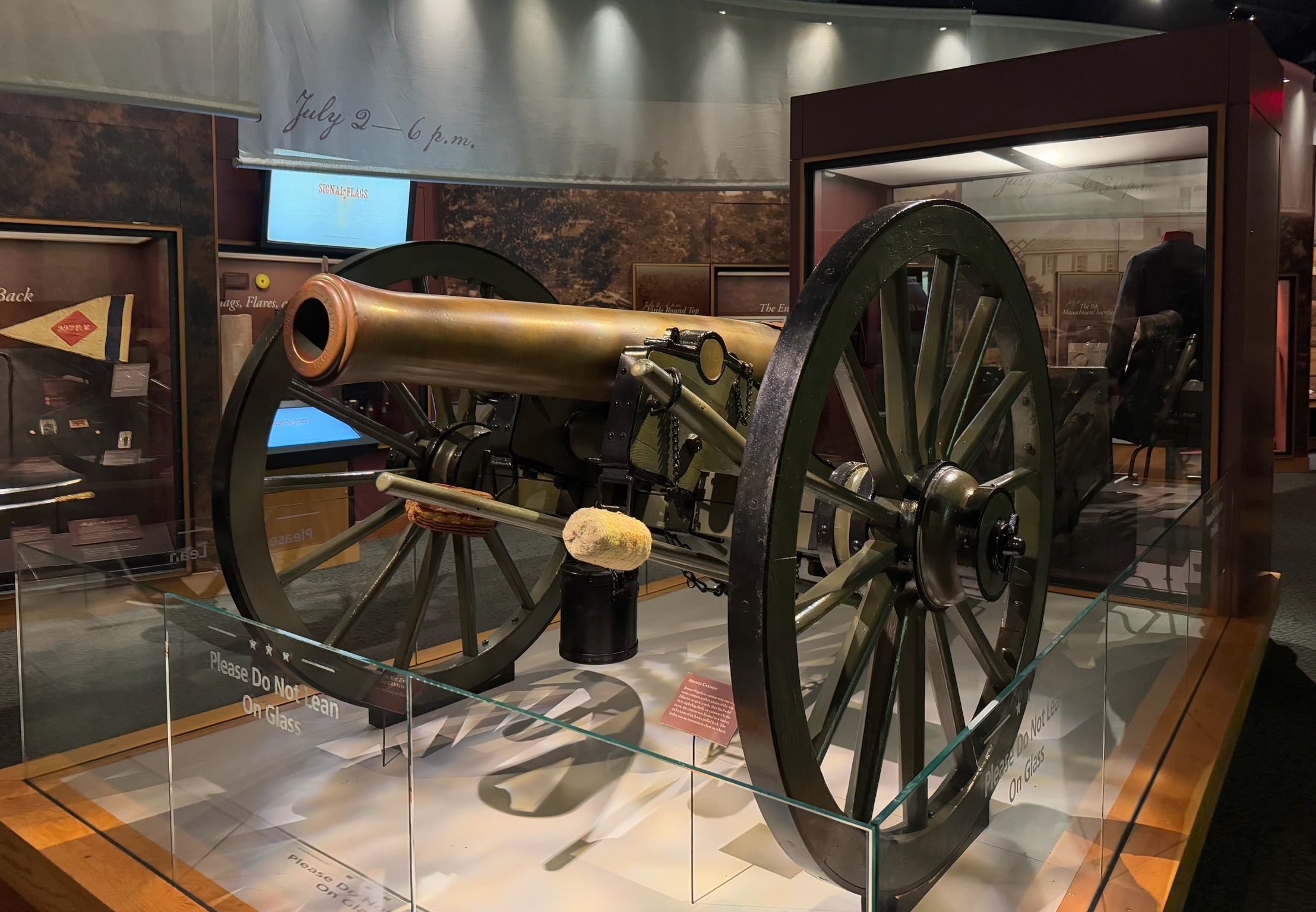
The infantry’s job was to take and hold ground — essentially to run into the enemy lines for direct combat to physically push them backwards and thus win that ground. The two sides fired on one another at point blank range and often engaged in hand to hand combat. The artillery units supported the infantry units in attack and defense and tried to destroy the enemy’s artillery — they were the ones who manned the cannons, which were fired from a distance. The calvary were on horses and primarily acted as scouts and screeners, finding the enemy, reporting their locations, and preventing the other side’s Calvary from doing the same. Infrequently, the calvary raided supply lines, cut communications, burned bridges and railroads, and charged full tilt into the enemy’s calvary.
continued… By February 1861, six more states had seceded: Mississippi, Florida, Alabama, Georgia, Louisiana, and Texas. In March 1861, still using the model set by the founding father’s during the Revolution, they ratified a new Constitution for the Confederate States of America and elected Jefferson Davis as their first president. Like all other governments, they issued currency, bonds and postage stamps.
As we’d learned at the USS Constellation, about 1/4 of the Union navy’s fleet resigned to join the Confederacy, leaving the navy woefully understaffed. We didn’t see a sign that gave statistics of exactly how many military personnel joined the Confederacy in total; the sign we saw said “…hundreds of …US Officers resigned their commissions to join the Confederacy…” One of them was Robert E. Lee, who was recognized as a top military leader who had served with distinction in the Mexican-American War.
The Civil War began about 0430 on April 12, 1861, when Confederate batteries opened on Fort Sumpter. The fort guarded the entrance to Charleston Harbor in South Carolina, making it a strategic location. Both the new Confederate States of America and the United States of America claimed the fort. By the time the battle started, negotiations had already dragged on for months. For the Union, abandoning Sumter would be an admission of weakness, but they knew if they reinforced it, they’d risk war. Lincoln decided to resupply the fort without bringing in any more weapons or troops. The new Confederacy viewed even this as too much, and President Davis gave the order to take the fort. The battle lasted for 34 hours and the Confederates won.
In April and May 1861, Virginia, Arkansas, Tennessee and North Carolina seceded from the US and joined the new Confederate States of America. People in Missouri, Kentucky and Maryland tried to get their states to secede, but failed to rally enough support.
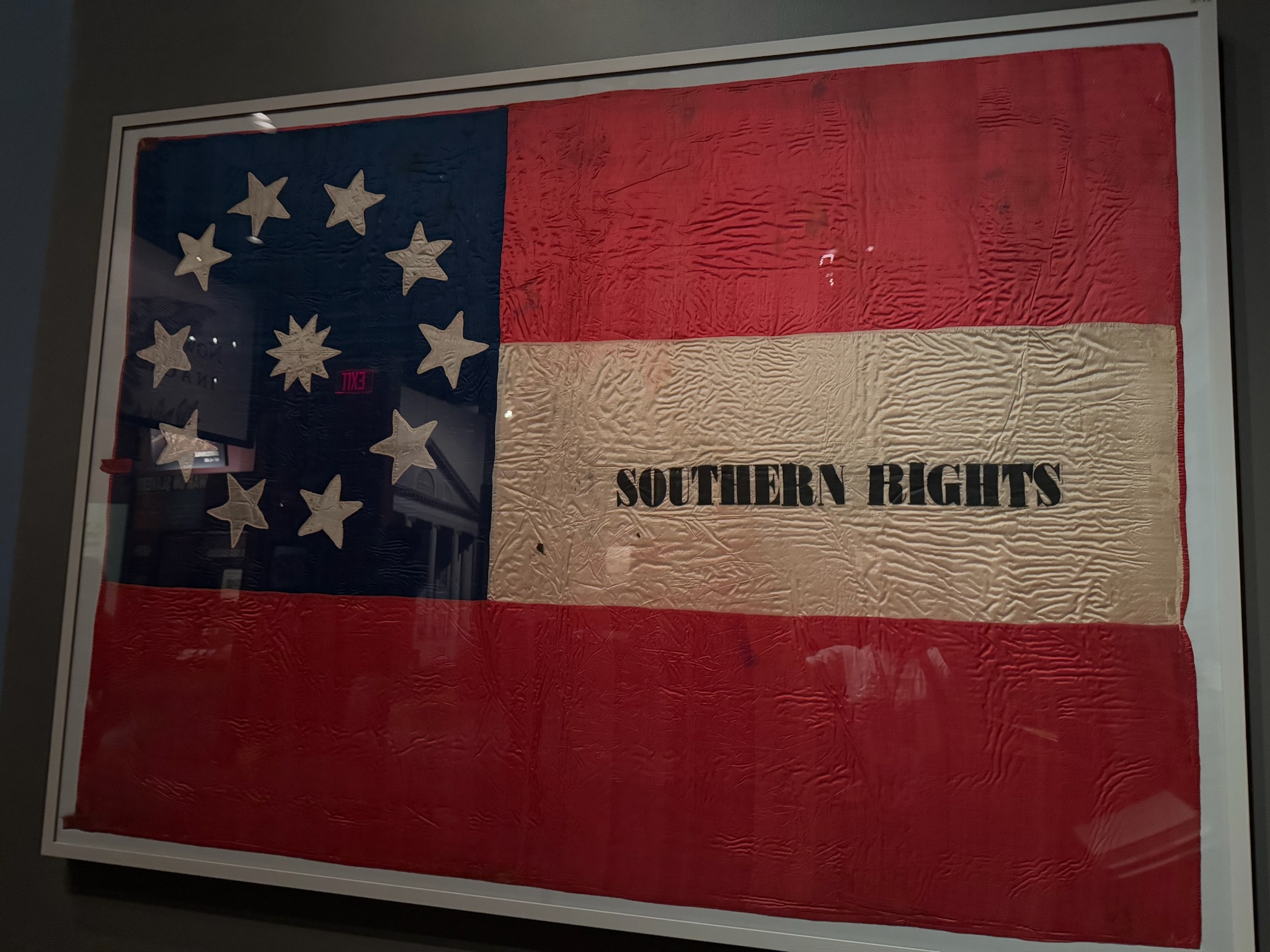
This was the original Confederate States of America flag, adopted in 1861.Continue reading →
continued…Much to Keith’s horror, once we got back to Highway 30, Eric and Christi decided to go back to Gettysburg to see if the museum was open. After our mega museum tour this summer, Eric and Christi had promised Keith we could take a break from museums, so he was mad that they’d broken their promise. But Eric and Christi felt like it would be a crime to literally drive through Gettysburg and not stop at a museum about an event that was so important to our country’s history.
As we neared the Military Park, we saw there was a line of cars entering, so we figured it must be open. Parking was free.
Tickets to the museum were $14.75 per person for ages 13 and up. The “Film, Cyclorama and Museum Experience package” was an additional $6 per person. We had no idea what the Cyclorama was, but we were told it was cool and worth the extra money. They also gave us a AAA discount, which helped offset the extra cost.
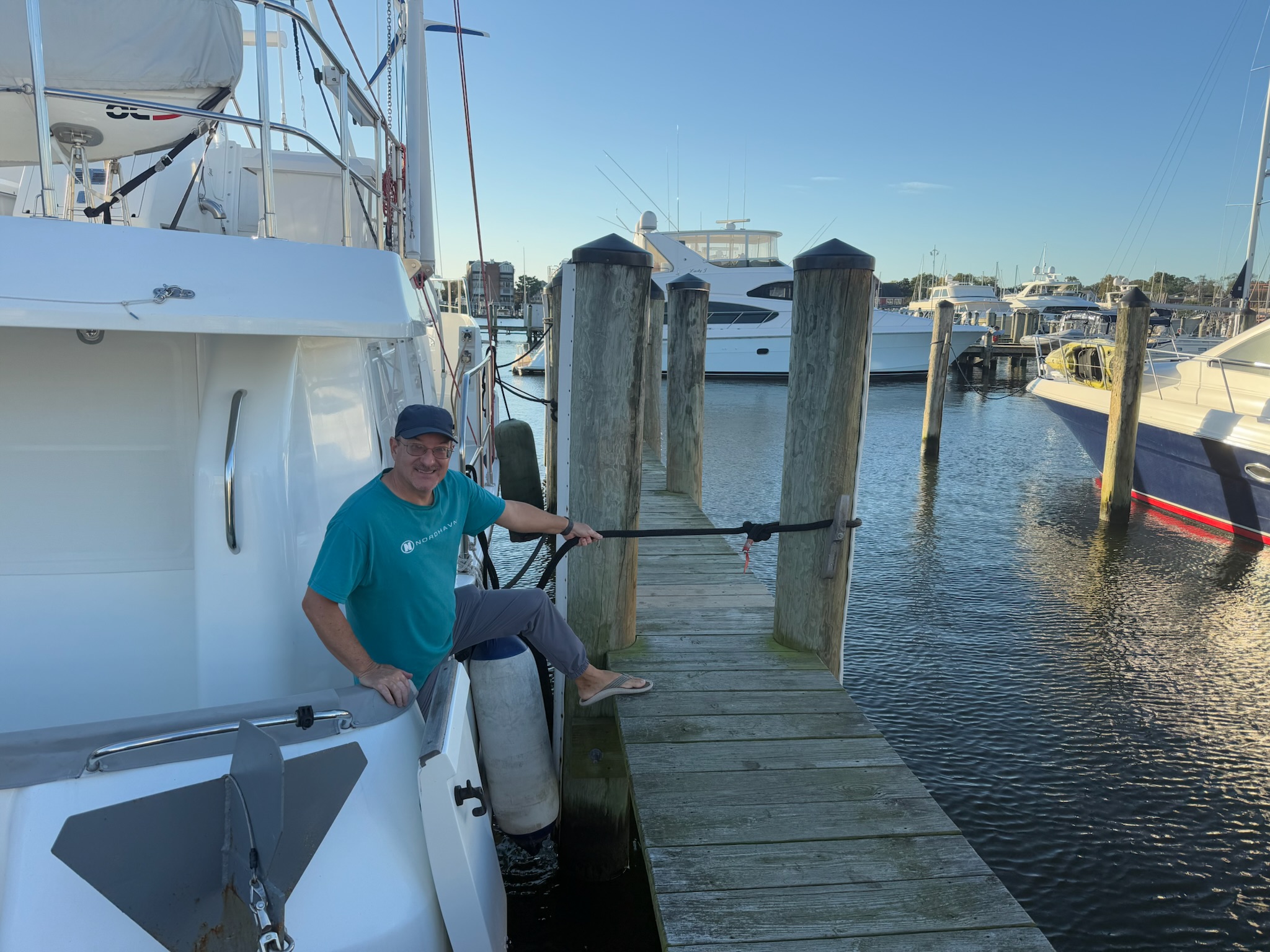
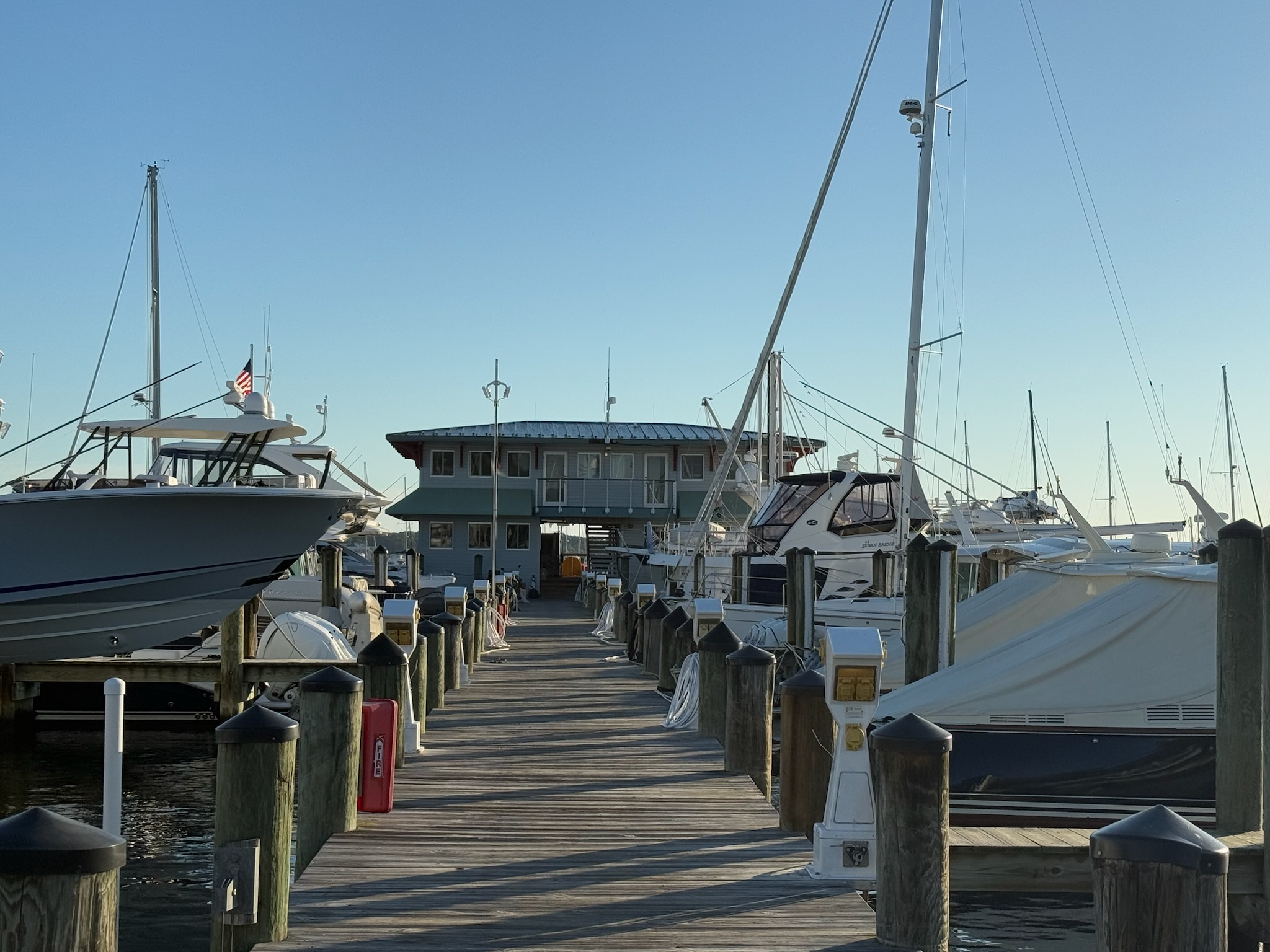
continued… Once Kosmos was situated, we quickly took showers and go ready to go out. After three days onboard, we were excited to walk around onshore, especially in a new town. It could be tricky to get on and off the boat with fixed docks, so Eric had set up a line to give us extra leverage.
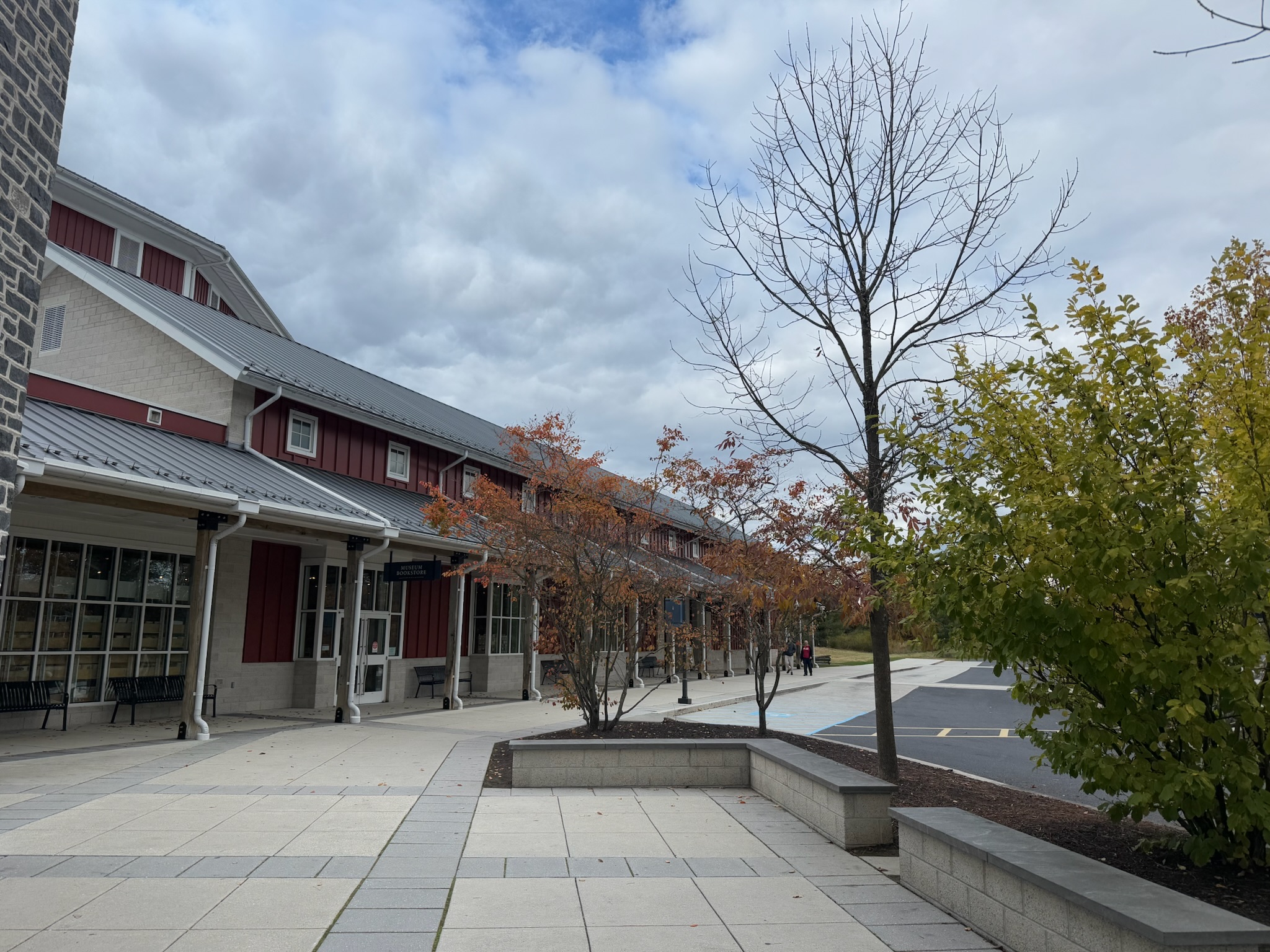
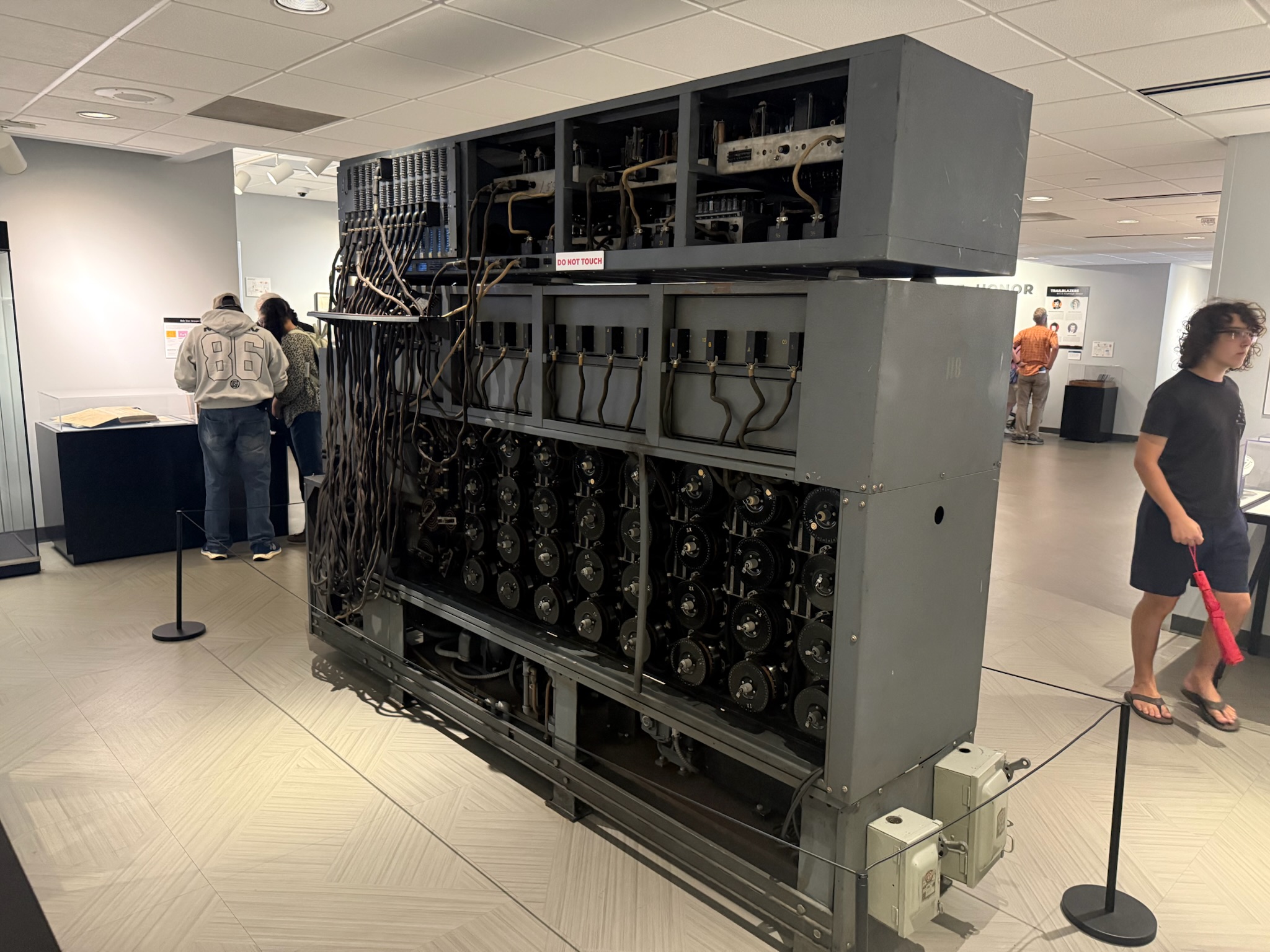
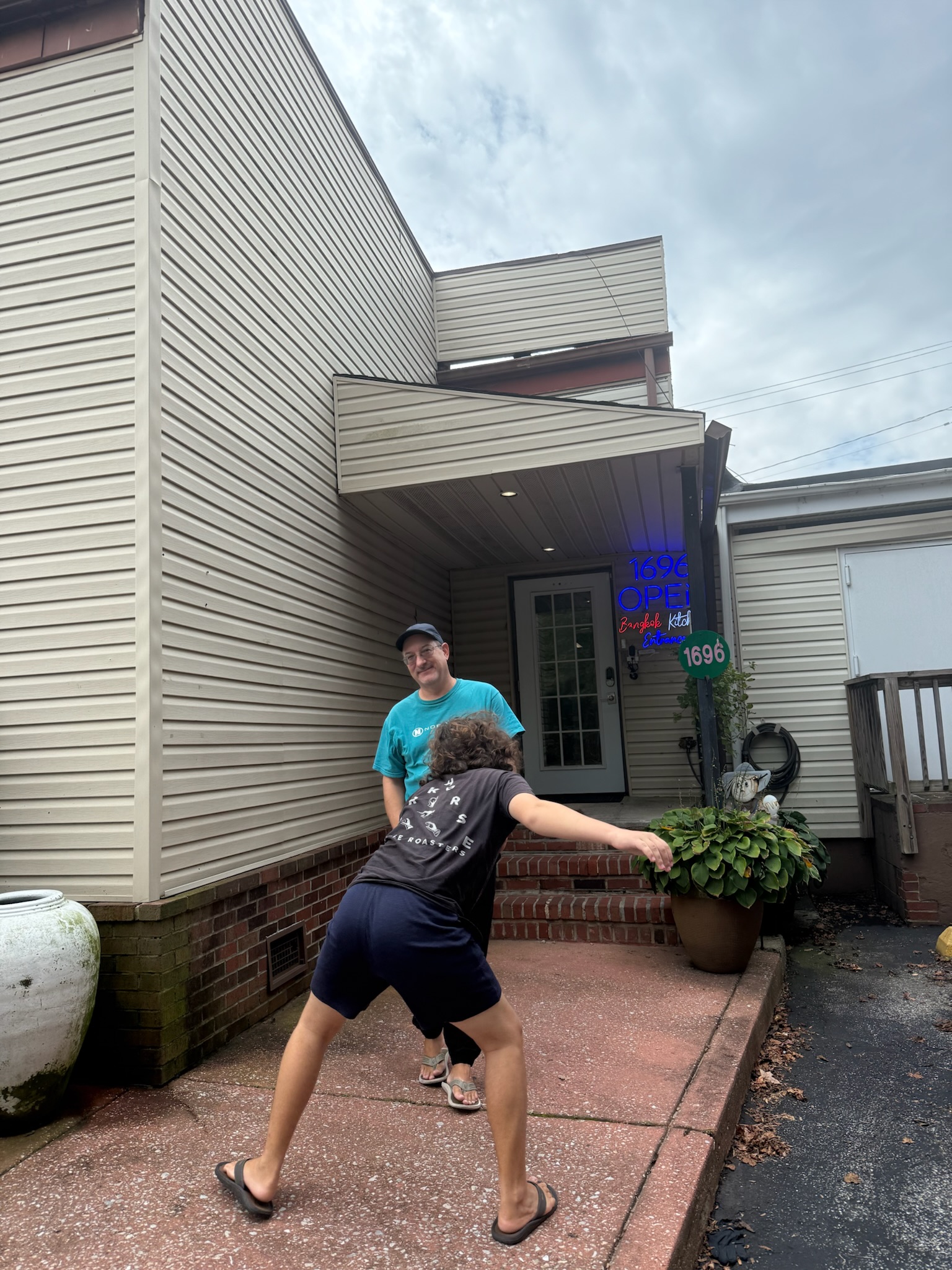
This week has been fun. On Saturday, we went to cryptography museum. It was quite boring and a super long drive to get there. I learned that the old computers were really really big. For lunch we ate at a Thai restaurant.
Cette semaine était amusante. Samedi nous sommes allés au musée de la cryptographie. C’était très ennuyant et un voyage très long pour y aller. J’ai appris que les anciens ordinateurs étaient très grands. Pour le déjeuner nous avons mange à un restaurant Taiwanese.