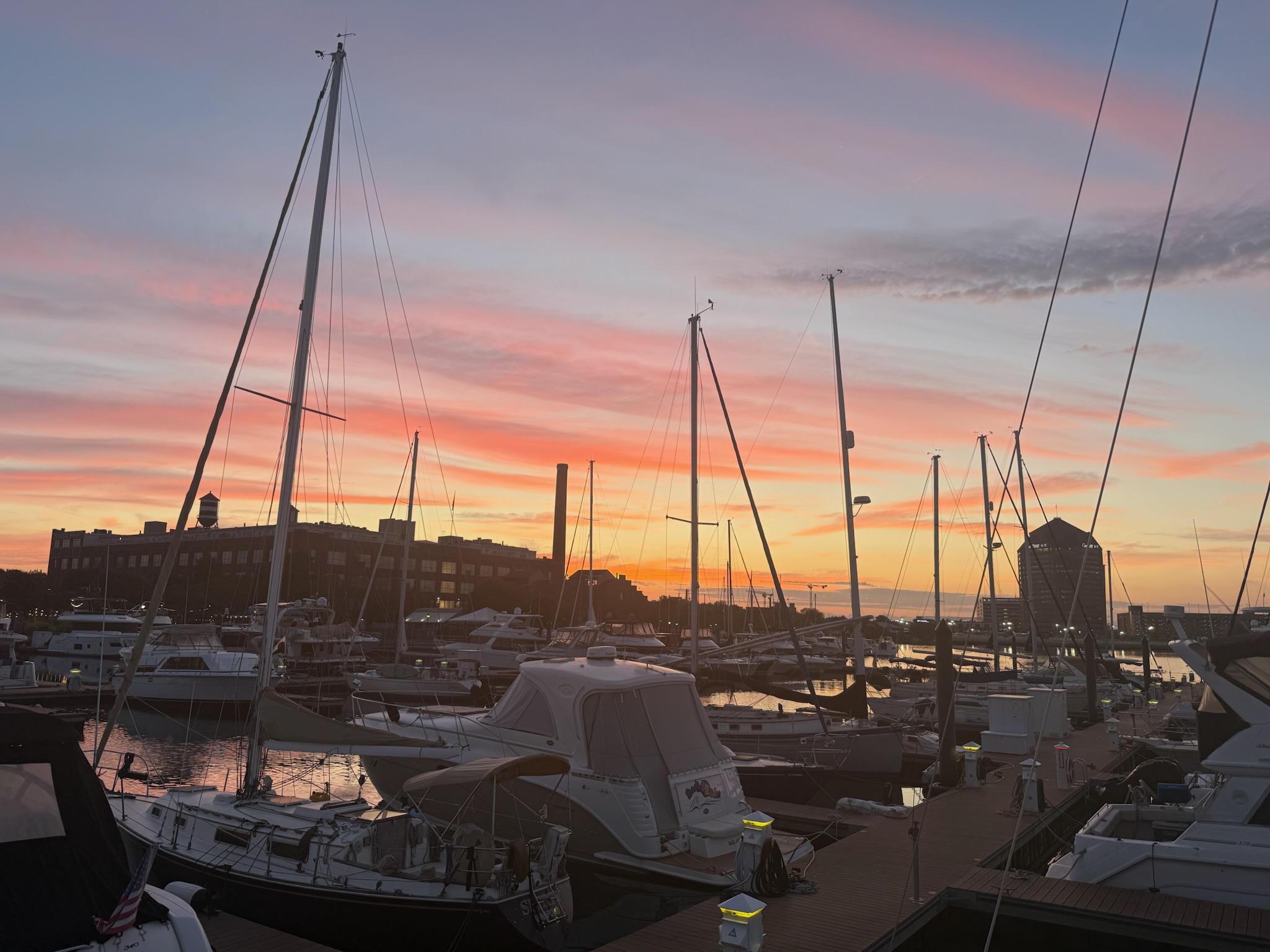
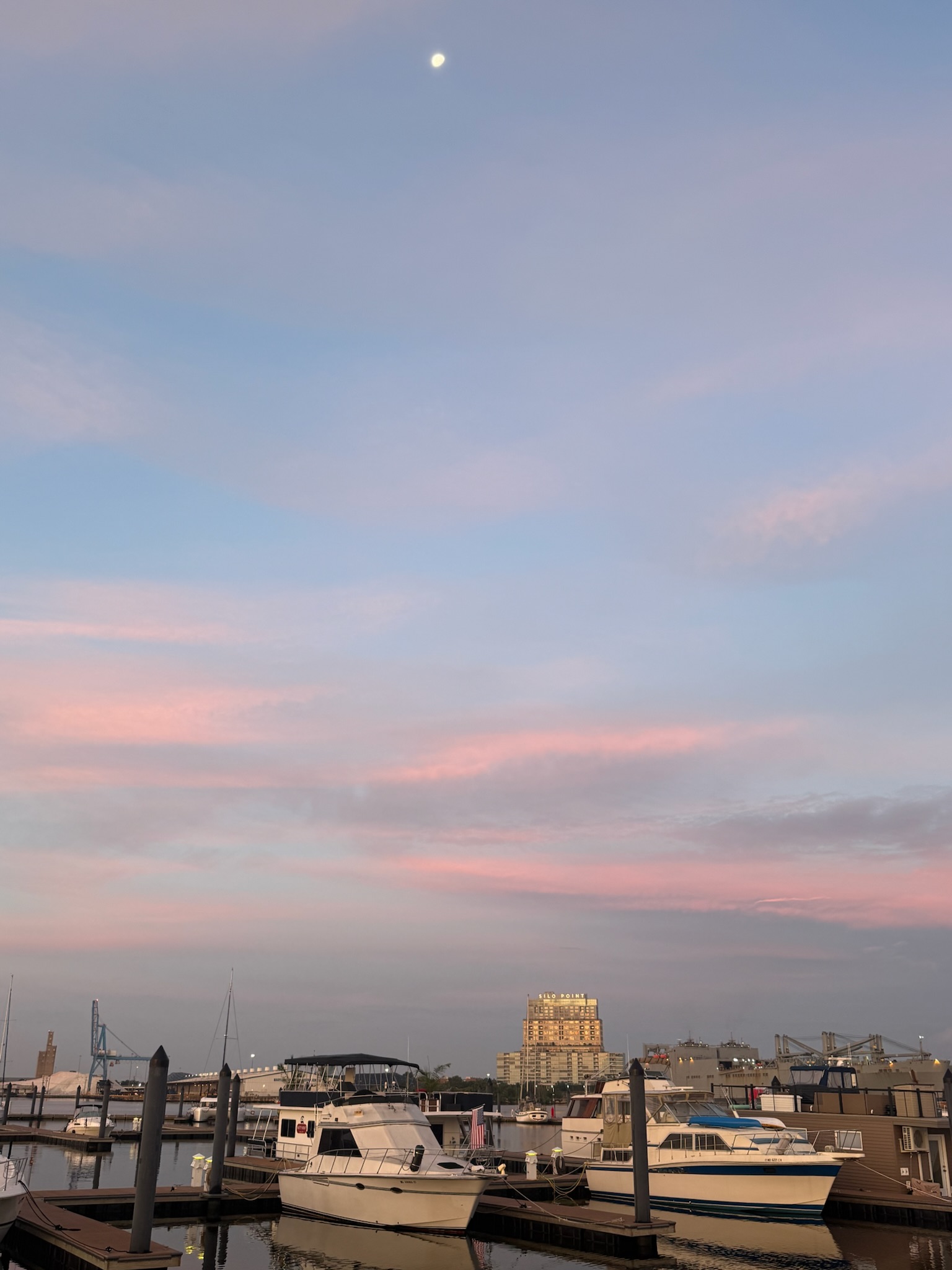
The sunrise on Wednesday, August 13, 2025 was glorious.
Even the west side of the sky lit up with color
Tuesday was a mellow day. It was hotter and more humid than Monday was, and the sky was ominously grey. We did chores around the boat in the morning and early afternoon. In the later afternoon, a family that we’d met at the Latino Festival came by for a visit.
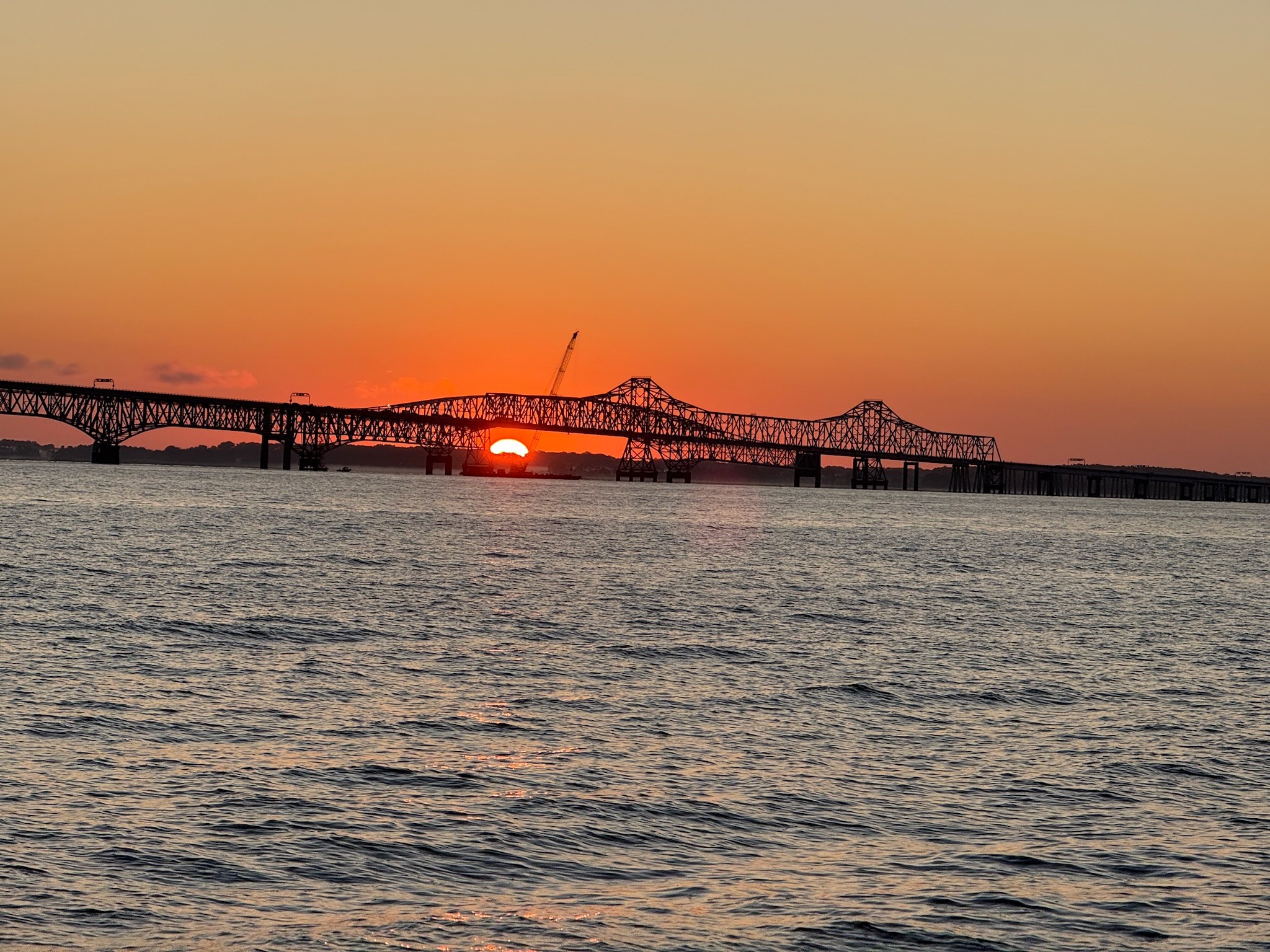
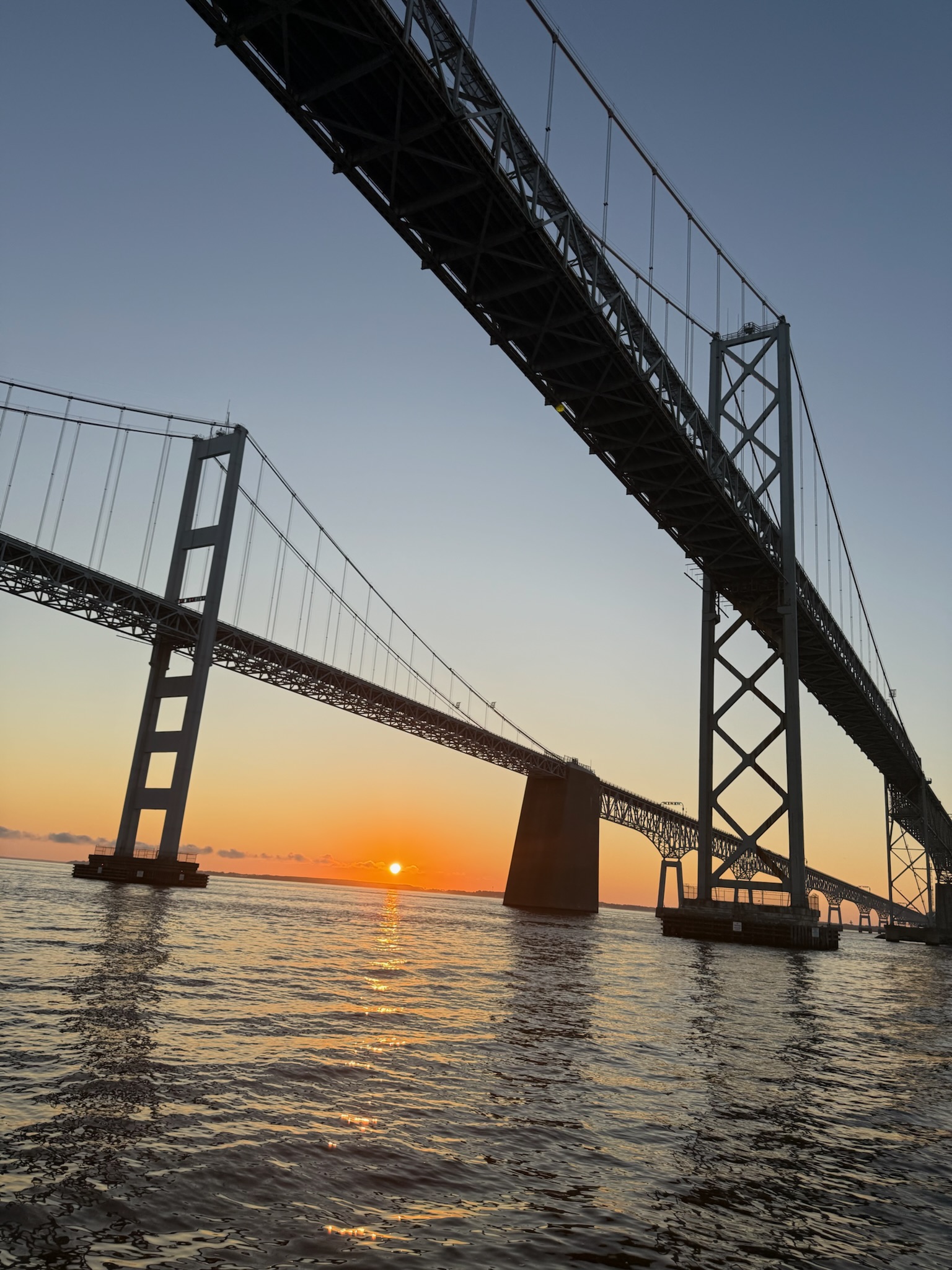
continued… By midnight, the wind had picked up and there was a small bit of wind chop, but other than that, all was the same as last reported for the rest of the night. This was the sunrise on Sunday, August 10, 2025, as were approaching the Chesapeake Bay Bridge.
And here was the view as we went under the bridge.
We approached the Francis Scott Key Bridge, which was on the outskirts of Baltimore, at around 0930. We were shocked to see that it hadn’t been rebuilt yet after it was destroyed a year and a half ago when it was struck by a cargo ship that was leaving Baltimore. This 2-minute video explains what caused the power failure that led to the crash — it was such a tiny thing! It was a stark reminder to us about how fragile boat systems can be.
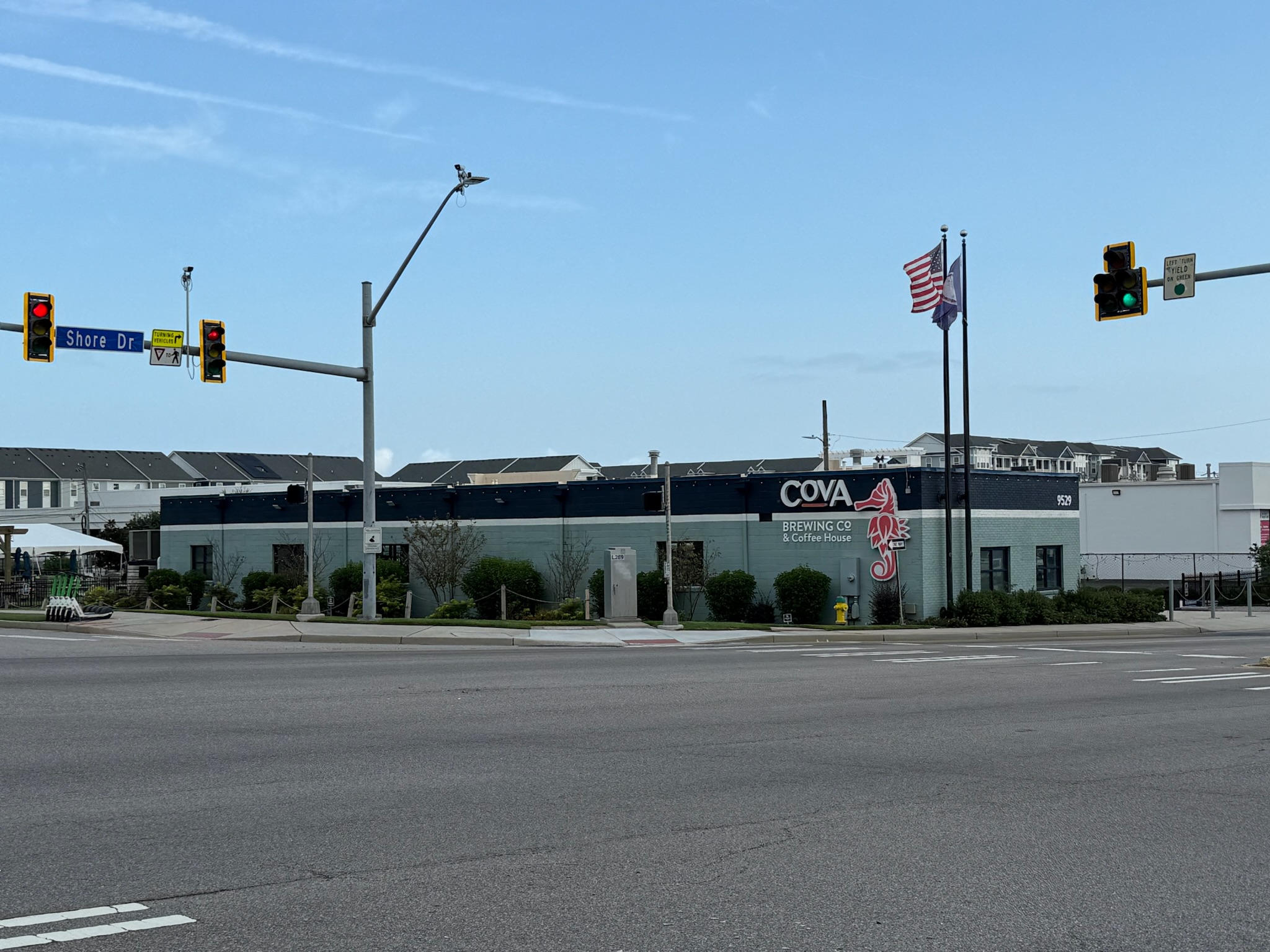
Saturday, August 9 — Directly northeast of us, just across the bridge, was a place called Cova Brewing Co & Coffee House that we’ve been meaning to go to since we arrived. We were told they sold only coffee and beer, though sometimes they’d let a food truck onto the property so people could buy food while they hung out.
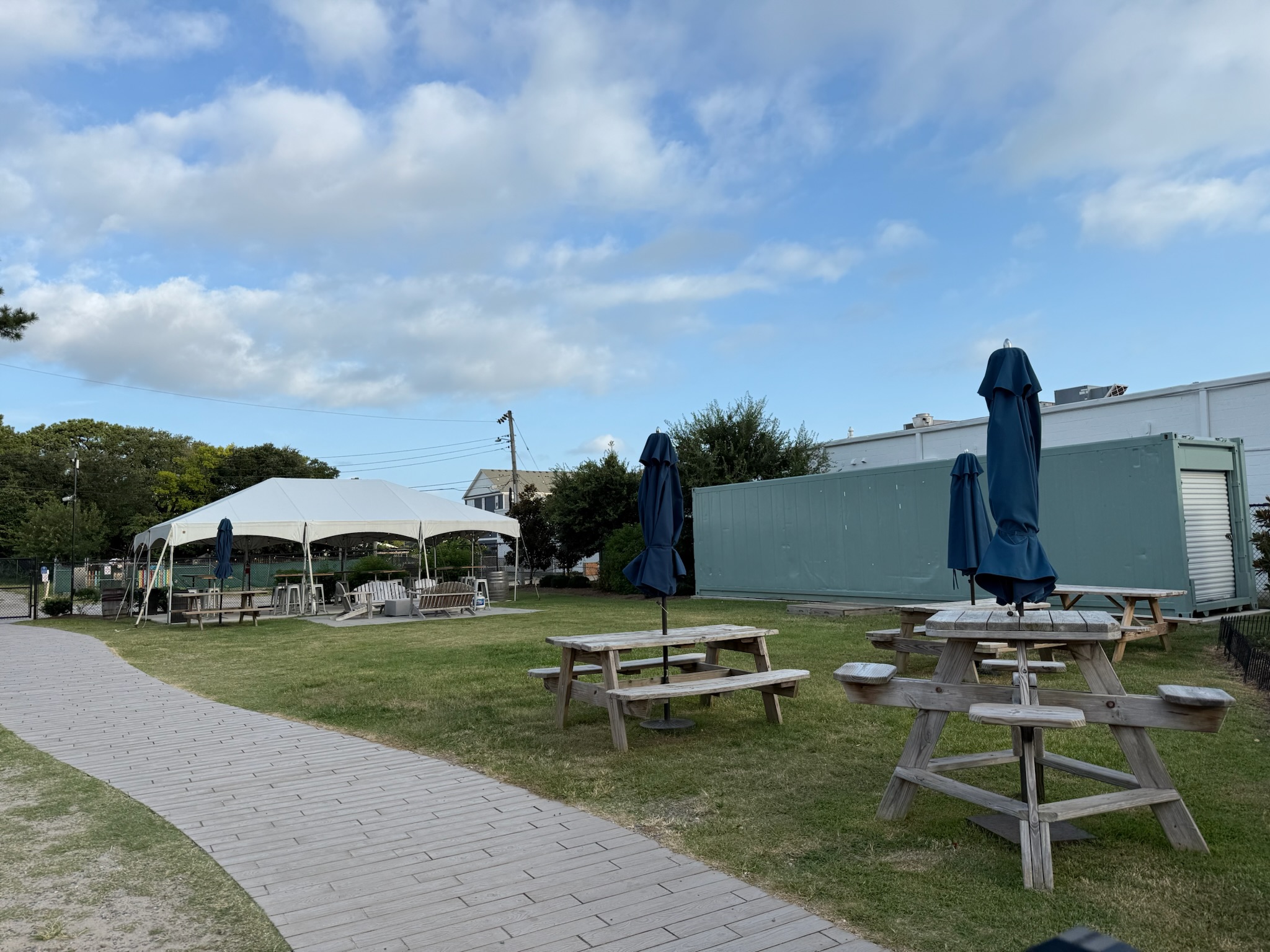
Seating was outdoors, with a large grassy area, lots of tables, and even a fire pit. In the evenings, it was packed with families.
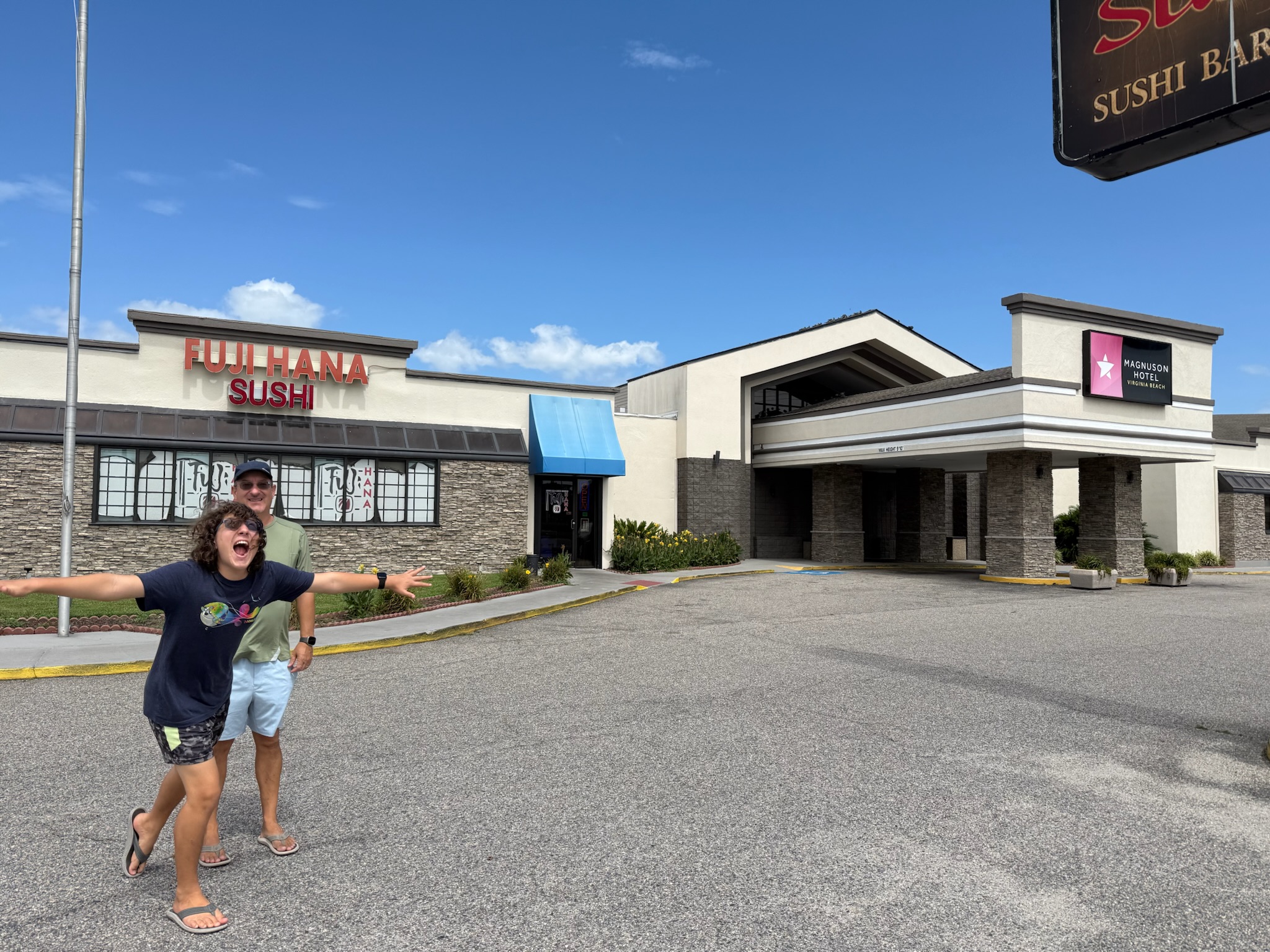
Saturday, August 2, 2025 — we had a quiet morning onboard. For lunch, we went to a Japanese restaurant called Fuji Hana Sushi, which was attached to the Magnuson Hotel. It was good value for the money and was run by a nice Japanese family.
Even though we were a short walk from Ocean View beach, we hadn’t gone yet. We’d heard that the beach was popular with families with young children as the waves were usually small. First of all, it was in the bay, so the waves coming in from the ocean weren’t usually as big as the waves on the Virginia Beach oceanfront. And there were breakers, which kept the waves from hitting the shore.
Since we were carrying gear, we drove over to one of the marinas on the north side of Little Creek, where we met up with the family on a boat named Blue Heeler that we’d met at the Latino Music Festival. From their marina, we made the short walk north to the beach.
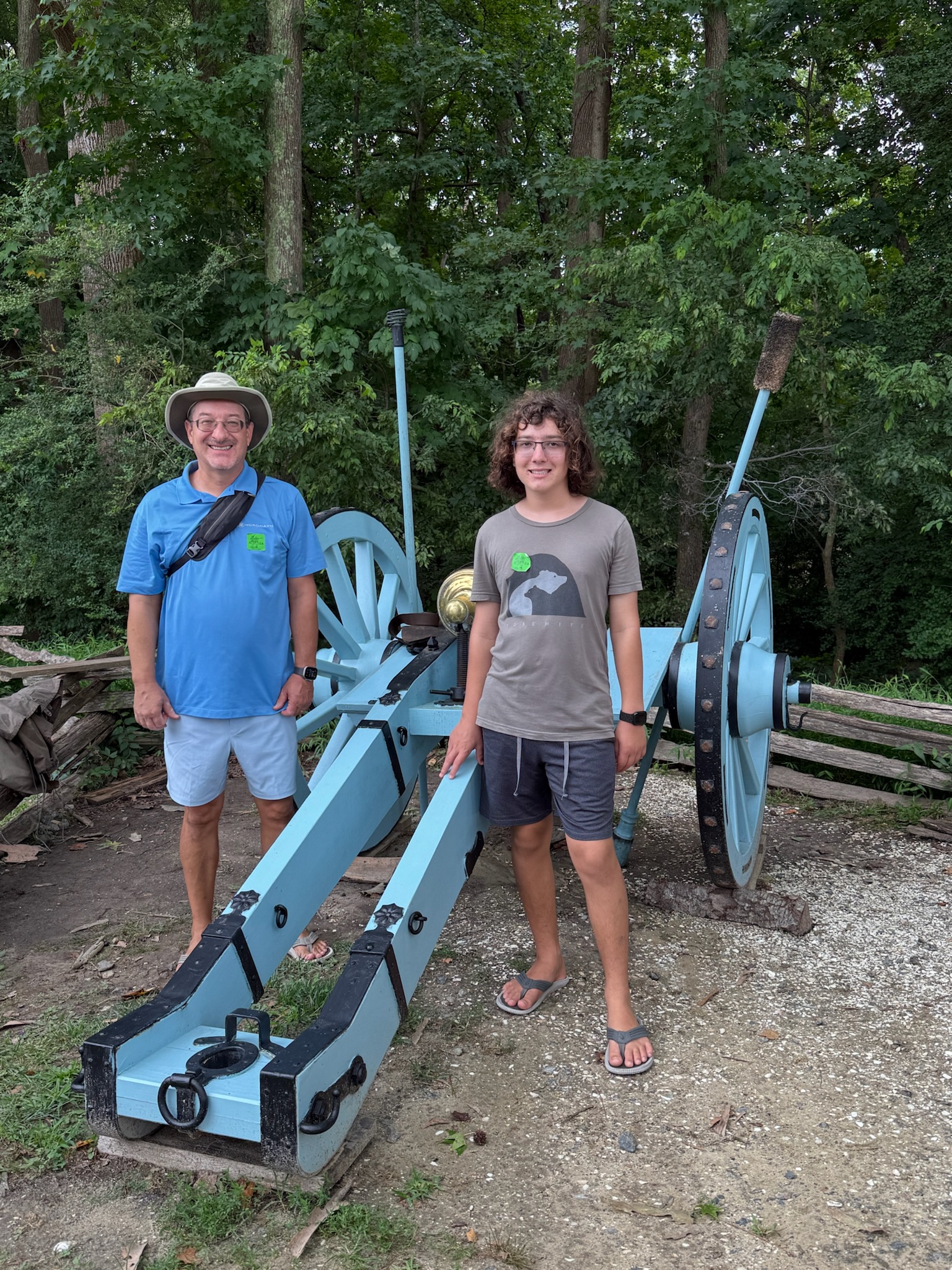
Continued… After we finished at the museum, we went back to the military area for the cannon firing demonstration. The Americans had multiple types and sizes of cannons. The first line of defense was the big canons. The French army had brought heavy siege cannons that fired 16 – 24 lb shot, which did serious damage to the base, but they couldn’t be easily moved. The Americans also had field canons, which were mobile, shot straight and were meant for disrupting lines (columns) of soldiers. The Americans also had 8″ howitzers. The howitzers were also smaller and could be moved around the battlefield where needed. They would shoot up over walls and could hit people behind walls. And they had mortars. The British only had light artillery that fired 3 – 6 lb shot, so the Americans had superior weapons in this battle.
Just as the bayonet on the end of the musket was more important to the troops as a psychological fear tactic than as a weapon, cannons were also more of a psychological fear tactic than a physical danger to the opposing soldiers.
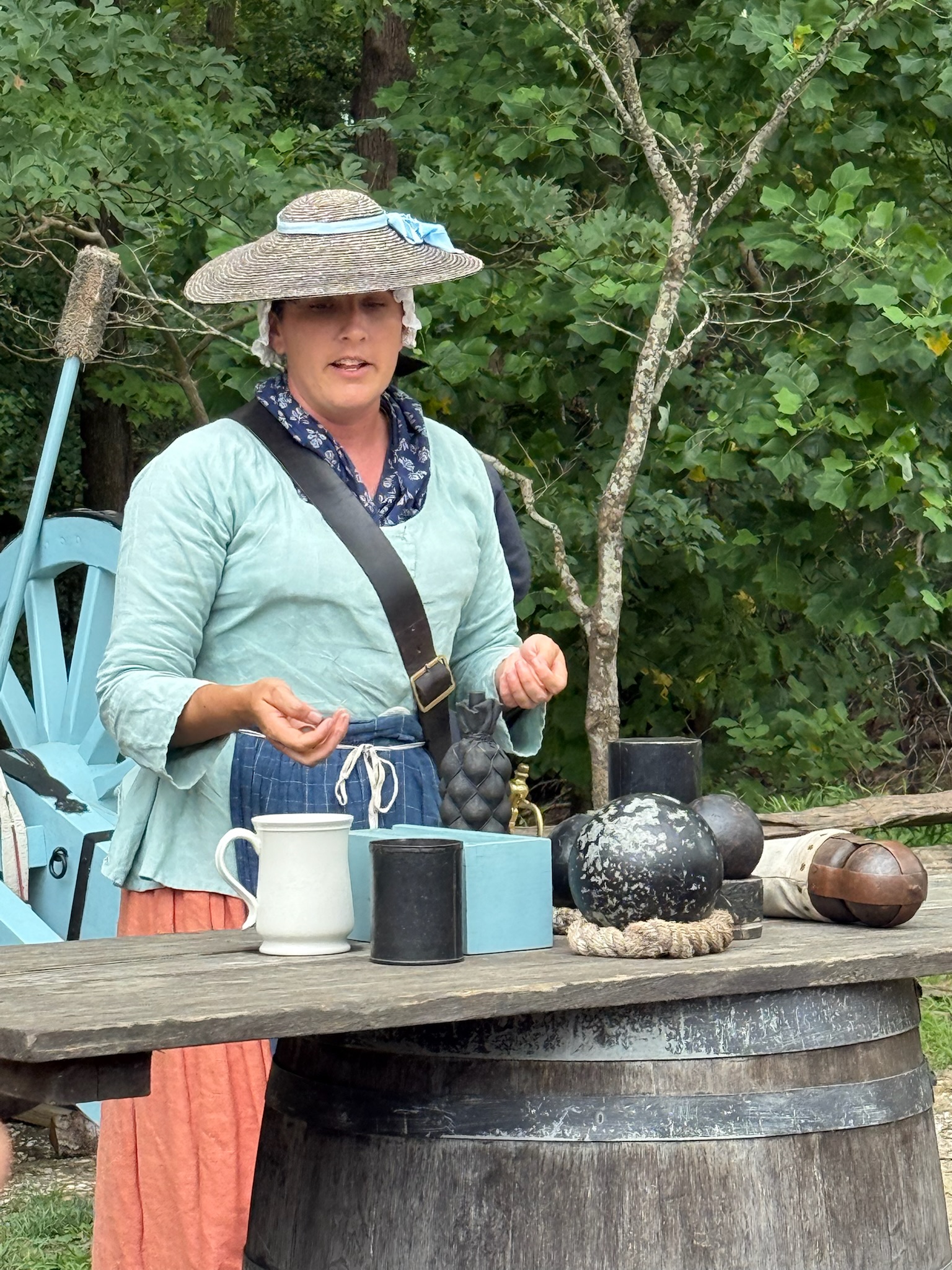
The character talked about the various types of ammunition that was used. Classic cannonballs had explosives inside them, hard shells were solid, and grape shot blew up in the air and sent shrapnel everywhere. mortars,
Just as the bayonet on the end of the musket was more important to the troops as a psychological fear tactic than as a weapon, cannons were also more of a psychological fear tactic than a physical danger to the opposing soldiers.
When they did the field demonstration, they went through each step of the process of loading and shooting the canon very slowly, and they had kids from the audience doing the various steps (although they had the kids use imaginary gunpowder and fire). There were quite a few steps involved! Someone’s job was to do the math on the angles and distance to ensure that the targets were hit. One of the things we found interesting was that they had two soldiers standing still next to the canon mouth when it was fired. It was completely safe to be there since the canon jerked backwards. The reason they did this was so that the other soldiers could put the cannon back at the same exact spot for the next shot (or, if they had missed, to ensure that this time it would be put in a better spot to not miss the next time). She mentioned that the soldiers stationed next to the cannons probably lost their hearing very quickly. Then they had the kids back away and showed what it looked like in real time to load and shoot the canon. It was definitely loud and smoky!
At this point, we’d seen the entire site, so we went to the Historic Yorktown Riverfront (where the ships were clustered together in the middle of the map), for dinner. It was a small cluster of adorable buildings about a mile east of the museum. We were pleased to see there was free parking in a parking garage on the south side of the street.