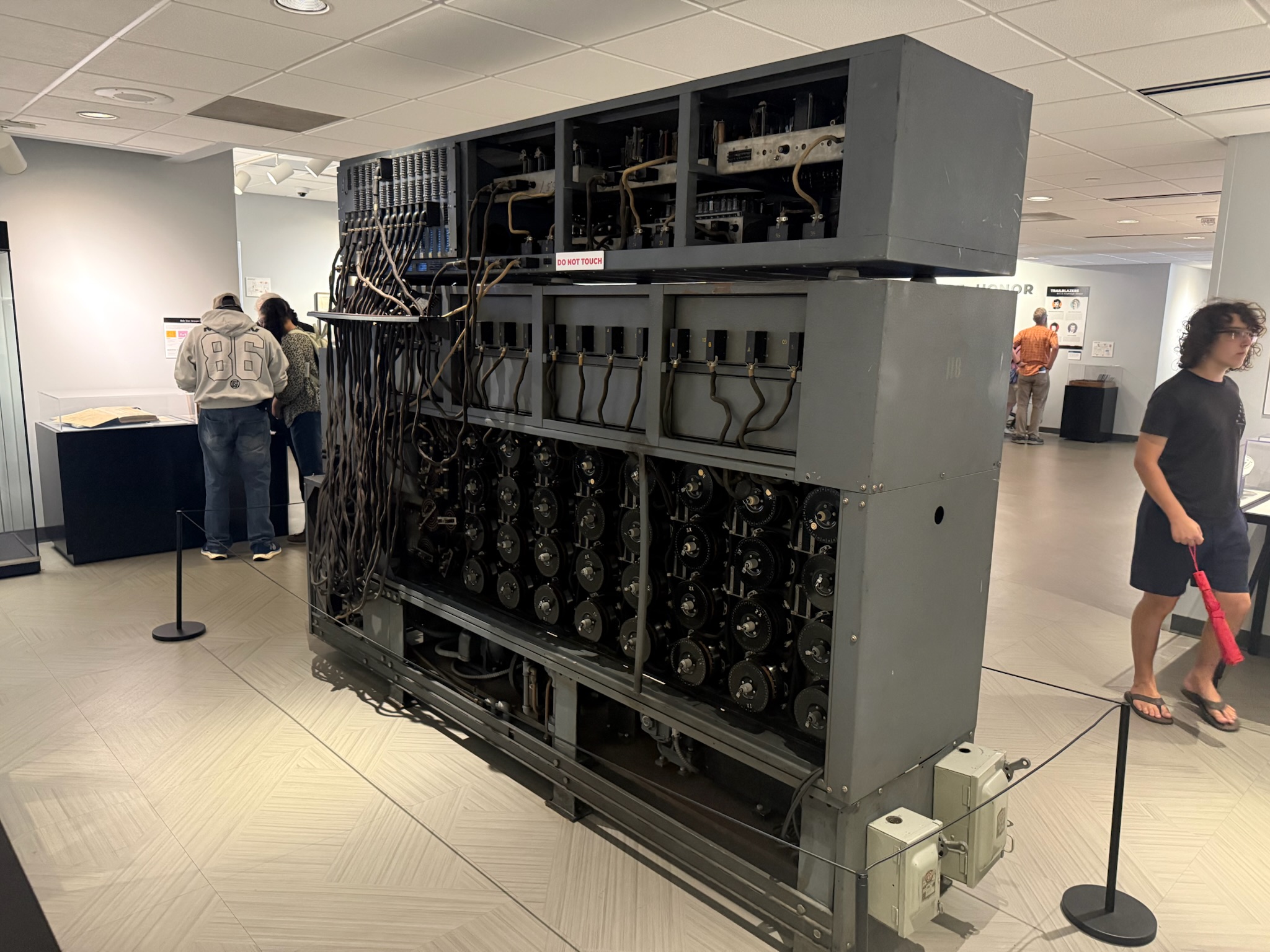
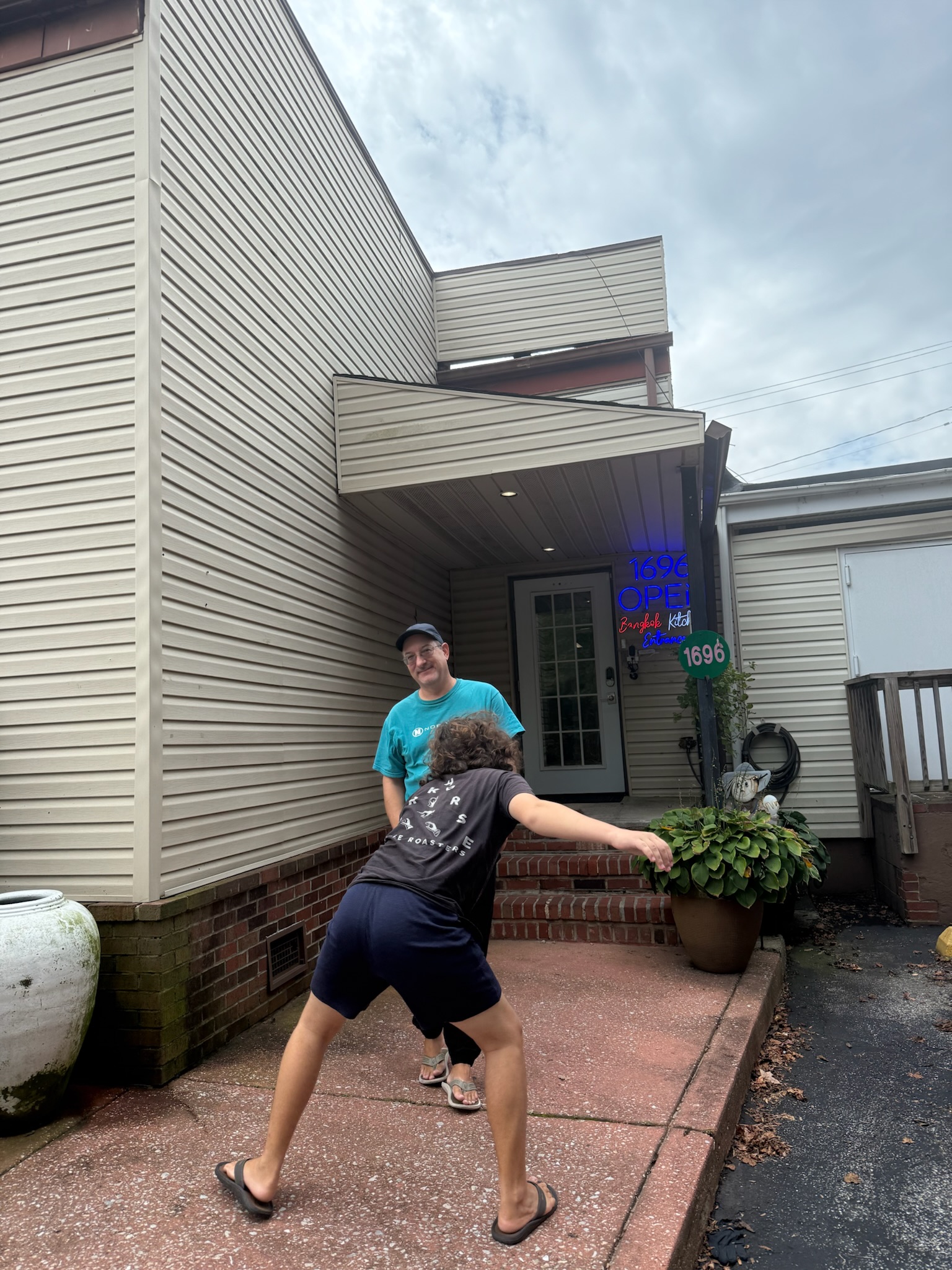
This week has been fun. On Saturday, we went to cryptography museum. It was quite boring and a super long drive to get there. I learned that the old computers were really really big. For lunch we ate at a Thai restaurant.
Cette semaine était amusante. Samedi nous sommes allés au musée de la cryptographie. C’était très ennuyant et un voyage très long pour y aller. J’ai appris que les anciens ordinateurs étaient très grands. Pour le déjeuner nous avons mange à un restaurant Taiwanese.
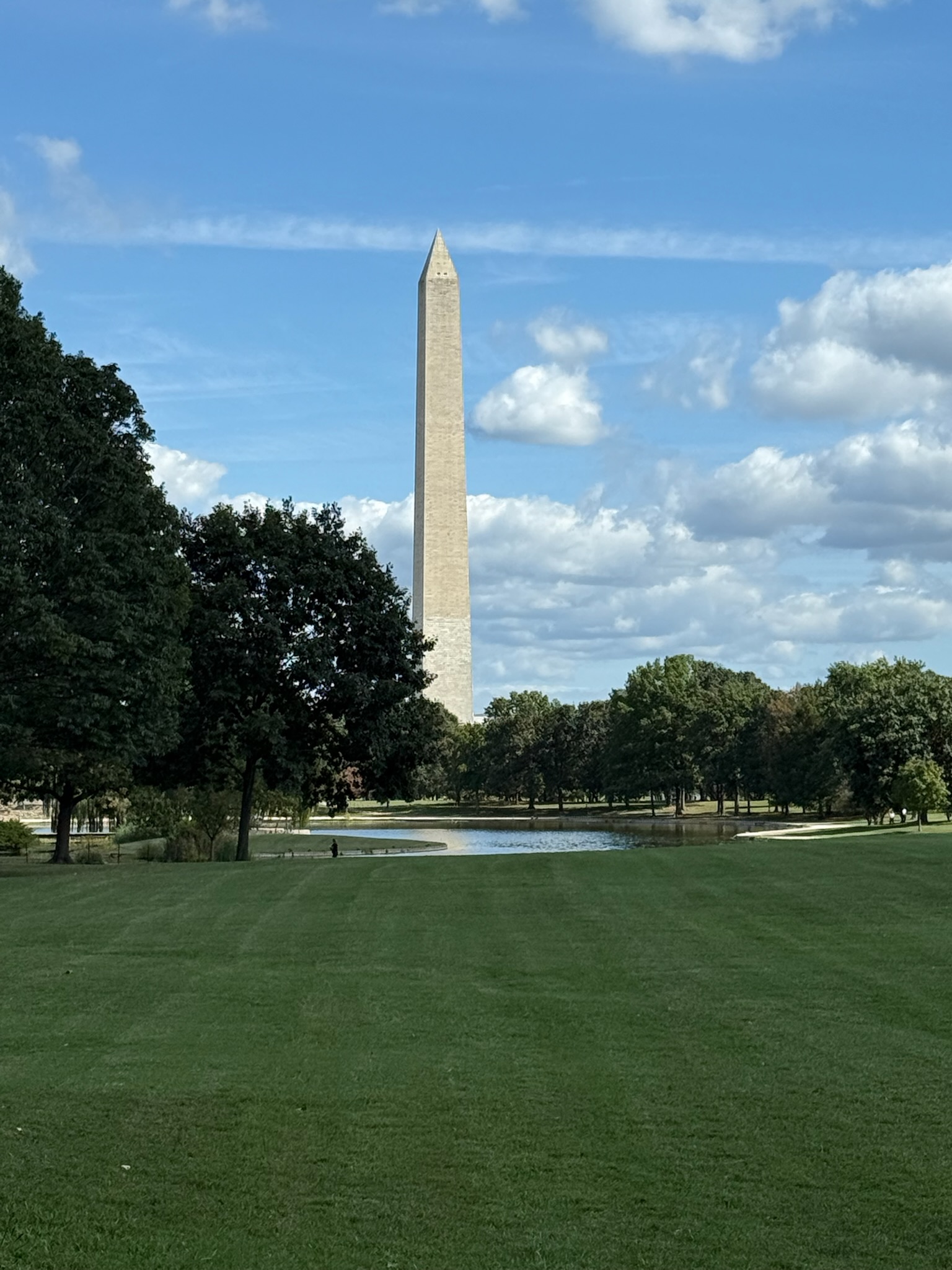
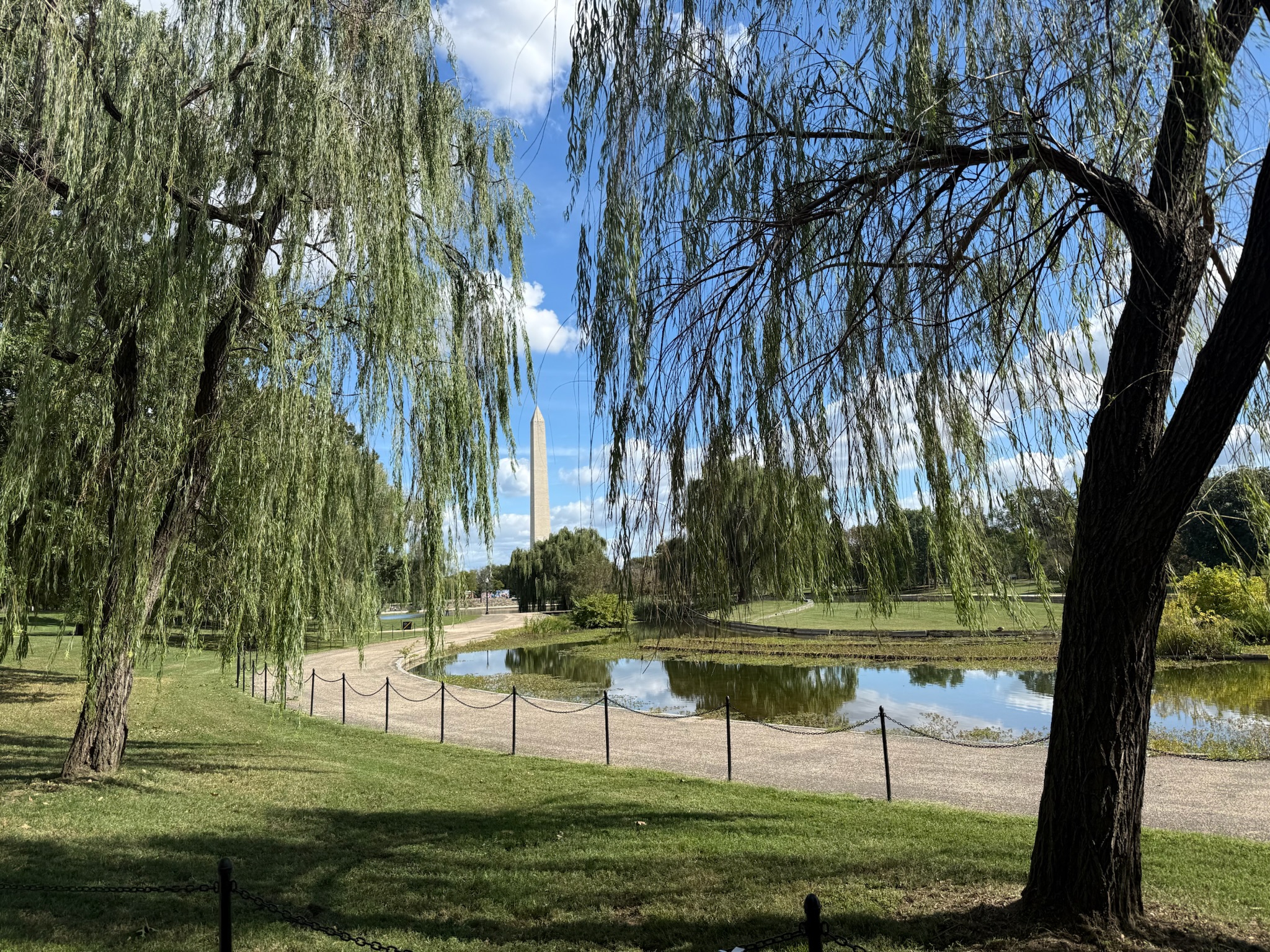
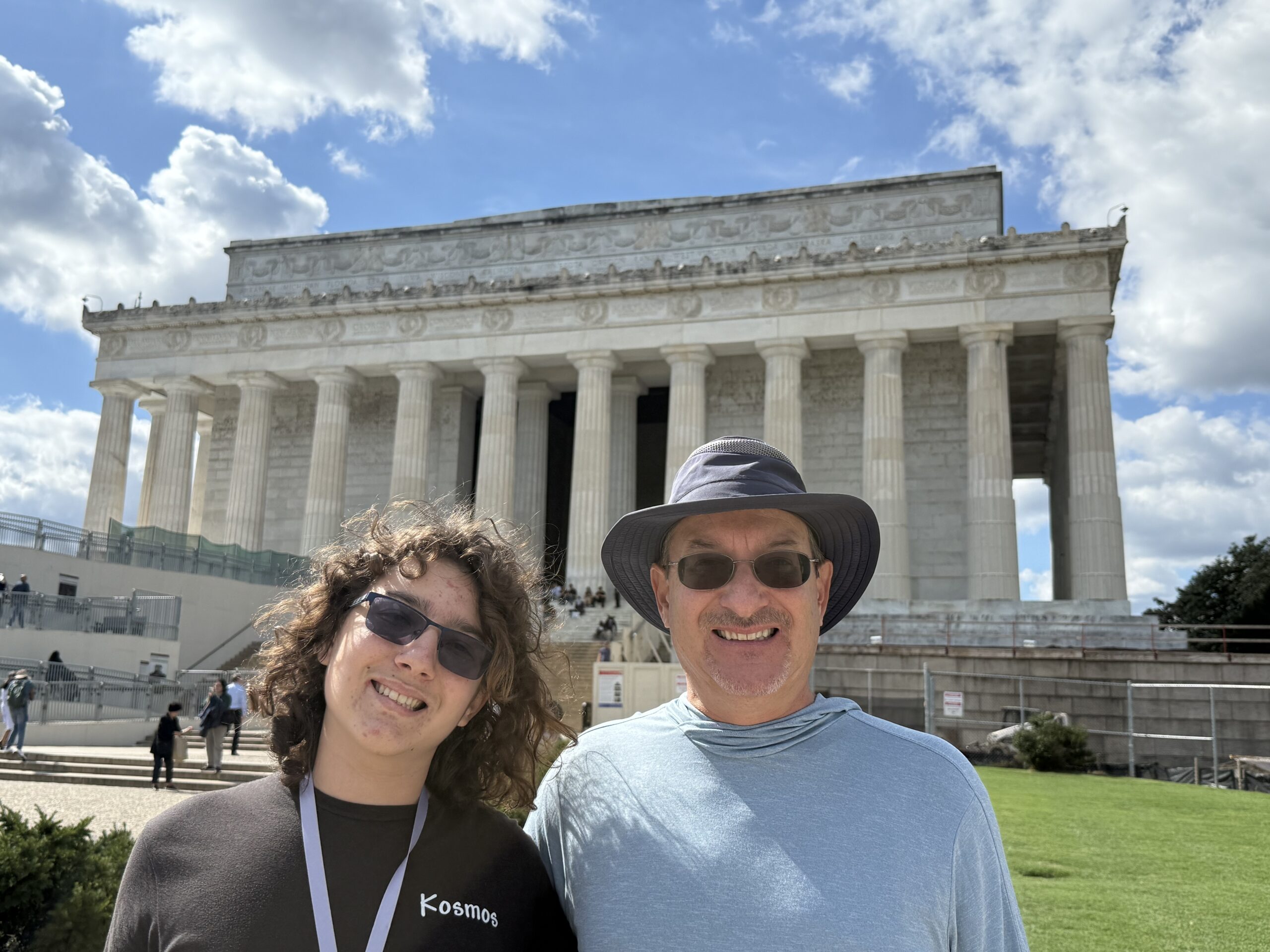
continued… We followed a walking trail to The Constitution Gardens. The Gardens felt more like a park than a garden, with grass, lots of trees and a shallow lake in the middle.
continued… The next exhibit was about the role of the Merchant Marines, which were private maritime ships. Private Maritime ships have been a critical component of this county since its inception, so we found it odd that the exhibit started with a brief summary of Word Wars I and II, then skipped ahead to the modern day.
It sounds like during the World Wars, maritime ships and seamen were conscripted to help the war efforts by delivering troops, supplies and equipment to deployed military ships and overseas bases. It was a job even more dangerous than the active duty Navy. Thousands of merchant marine ships were sunk; at least 10,000 merchant marines died in the line of duty. But since they weren’t actual military, they didn’t receive government benefits or pensions for their service. In 1988, the US government finally recognized the service of the Merchant Marines and granted them benefits equivalent to other servicemen. But by that time, only half of the people who had served in the Merchant Marines during WWII were still alive.
Right after entering World War I, the US military hired The American International Shipbuilding Corporation to built a fleet of merchant marine ships to service the Navy at a facility in Hog Island, Pennsylvania. At its peak, it employed 30,000 workers. In all, they built 122 ships in four years. None saw service in World War I. The huge cost of creating Hog Island for ships that were never used was controversial and prompted a Congressional investigation.
In anticipation of entering World War II, in 1936, the US began building two more fleets of merchant marine ships: the Liberty and the Victory. They’d learned in WWI that standardized was more efficient, hence only two types of identical ships produced. The US expanded existing shipyards and opened more, with a total of 18 shipyards in various coastal cities all over the county. The US built 3,300 ships over the course of the war; by 1943, three ships a day were being launched. Sadly, the goal was to build ships faster than the Germans could sink them. Also, when World War II started, the fleet of ships built at Hog Island were put into service.
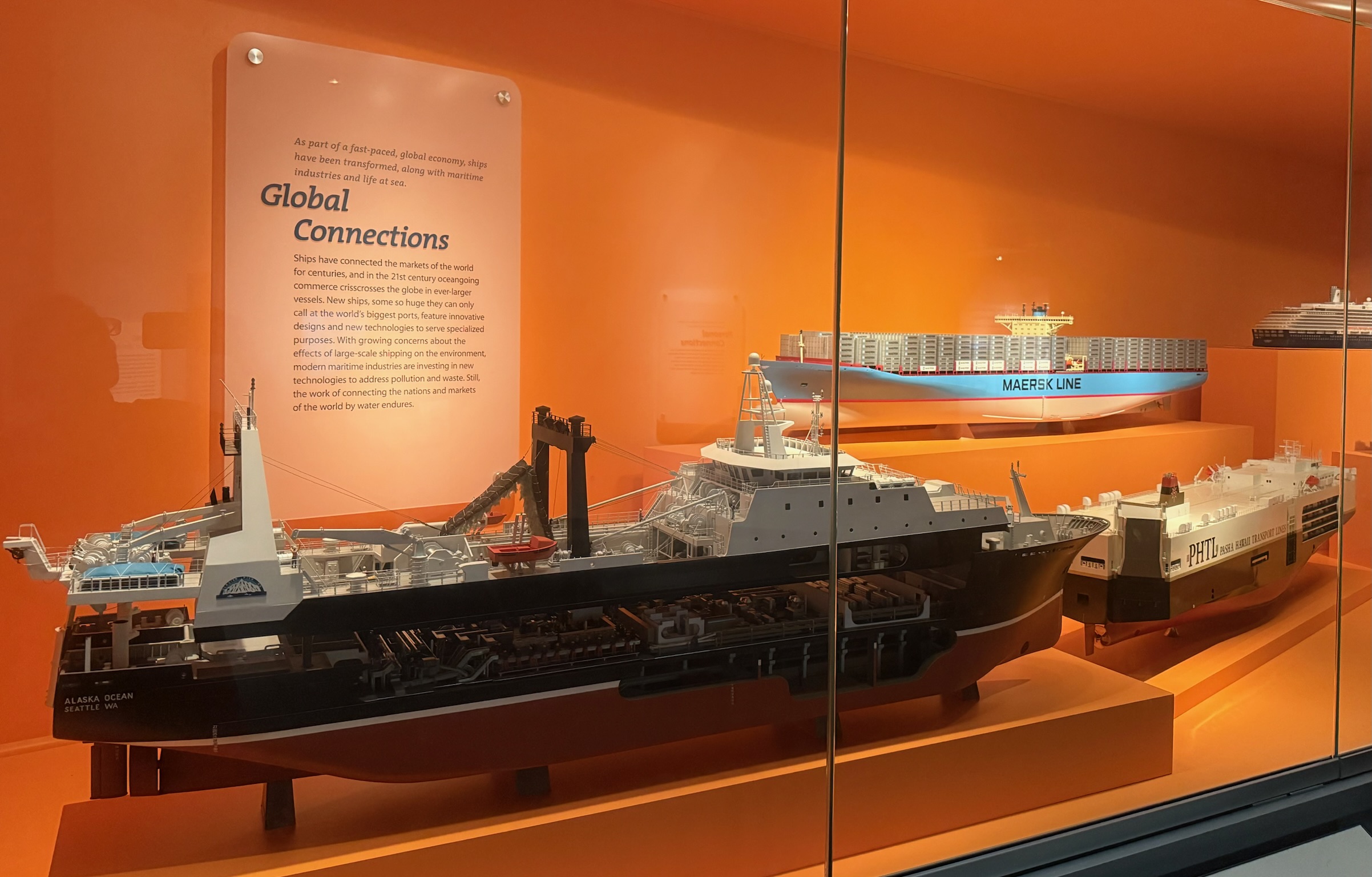
For the modern Maritime Industry, the signs talked about some of the different specializations, with a model of each type of specialty ship on display: Tankers for Liquid Natural Gas (LNG), oil tankers, cruise ships, fishing trawlers, container ships, and car carriers.
Left: factory trawler, right top: container ship, right bottom: car carrierContinue reading →