Colonial Williamsburg, Virginia – Part 1: The Governor’s Palace

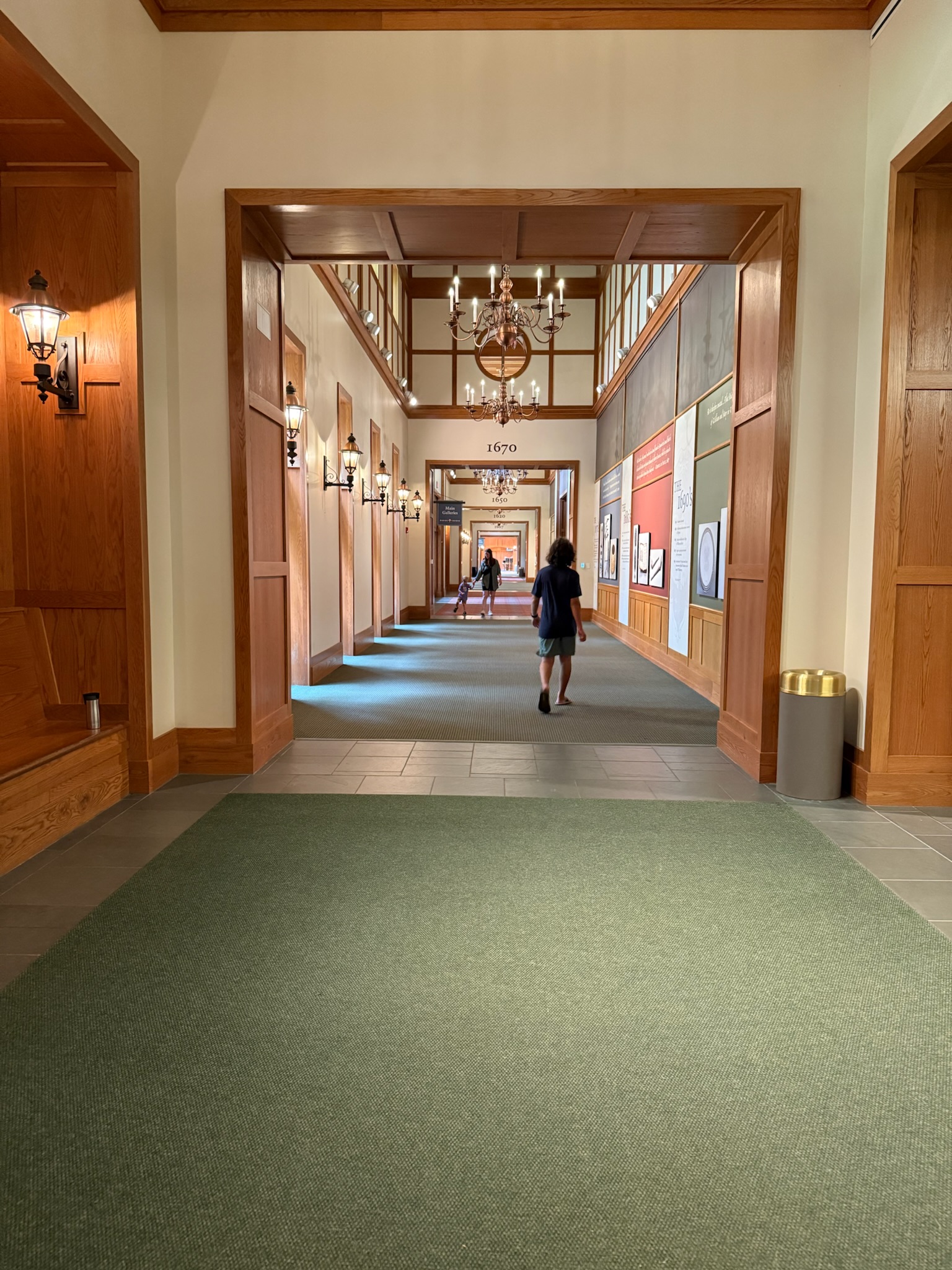
Monday, July 14 — We were still confused about Colonial Williamsburg. According to what we’d read online, we needed to buy tickets to see the historic town at the Regional Visitor’s Center, which was about 3/4 of a mile away from the historic district (by car, not as the bird flies). The visitor’s center opened at 1000. We pulled into the parking lot promptly at 1000, and it was packed. Parking cost $10, and it was a flat fee for the entire day.
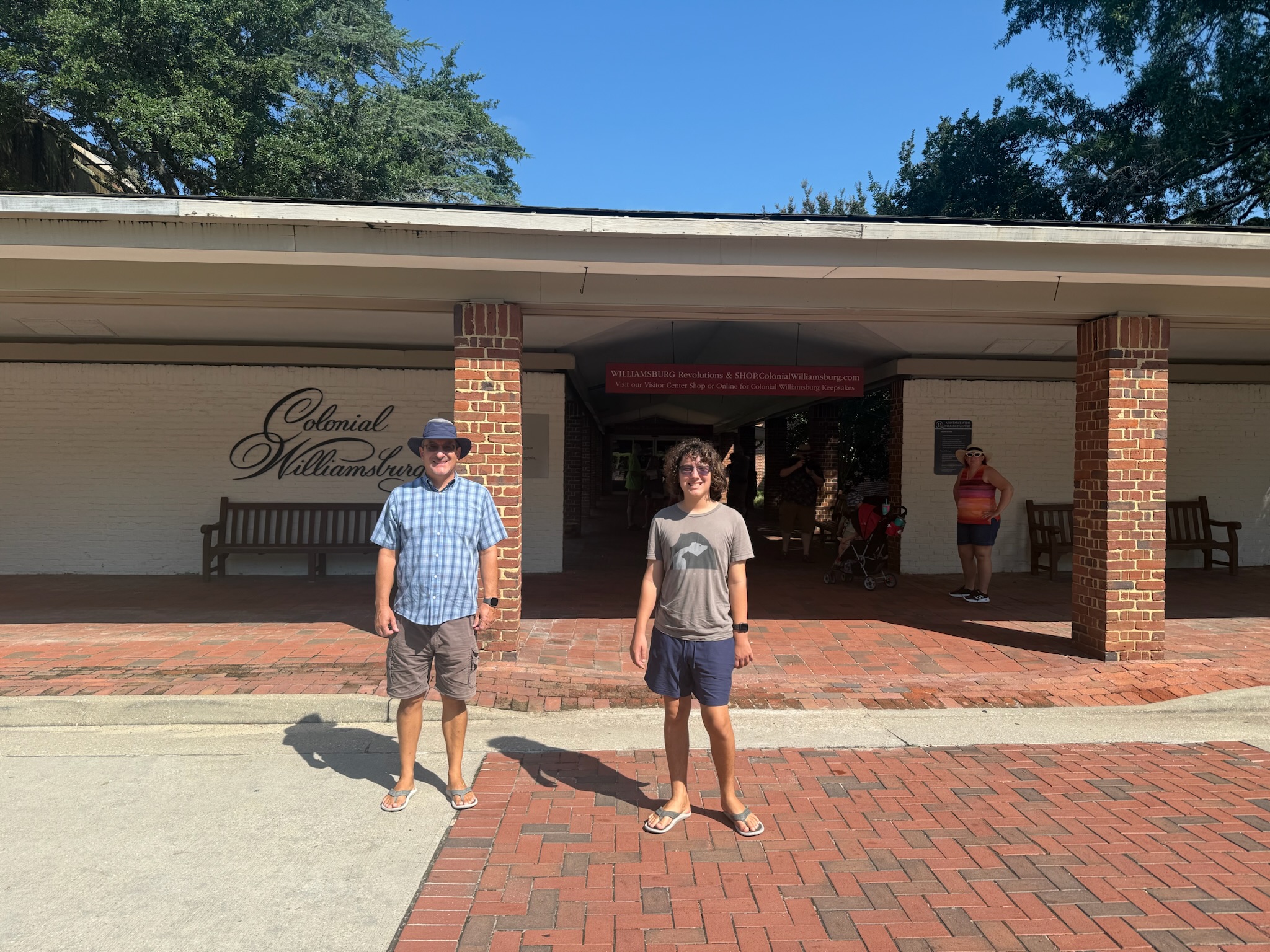
Inside the center, there was a fairly long line to purchase tickets, which were $35 per person for 13 and up. The cashier gave us a map and explained that there was more to see and do than could be done in one day and that we needed to decide on what we wanted to see and plan our day in advance. When we asked for clarification of what exactly it was that we were going to see, he explained that the Colonial Williamsburg Foundation owned several of the buildings in the historic downtown. Their buildings had been restored to look as they had in 1775. Inside, there were actors dressed in costumes of the era explaining the history of their particular building, with the focus being on the years between 1699 (when Williamsburg became the capital of Virginia) and 1776 (just as the Revolutionary War began). Anybody could walk around the historic downtown for free and look at the buildings, but only ticket holders could go inside of the foundation’s buildings. All the buildings on the map were color coded to identify which buildings were owned by the foundation. There were several buildings that were not owned by the foundation which were open to the general public, mostly shops and restaurants. Some of those venues had their employees dressed up in period costumes, too. We later found out that not every foundation building was open every day; if it had a flag out front, then visitors knew it was open.

There was no museum in the visitor’s center like there had been at Jamestown, but there was a 70-minute movie. We decided to save the movie for the end of the day. We followed the signs out to the exit, where we could either take a walking trail to the historic area or take a bus. It was blazing hot, so we opted for the bus. We waited about 10-minutes. There was a long line, and we lucked out and got some of the last seats. According to the map, the bus did a loop around the outer edges of the 3/4 mile historic area, with multiple stops along the loop.

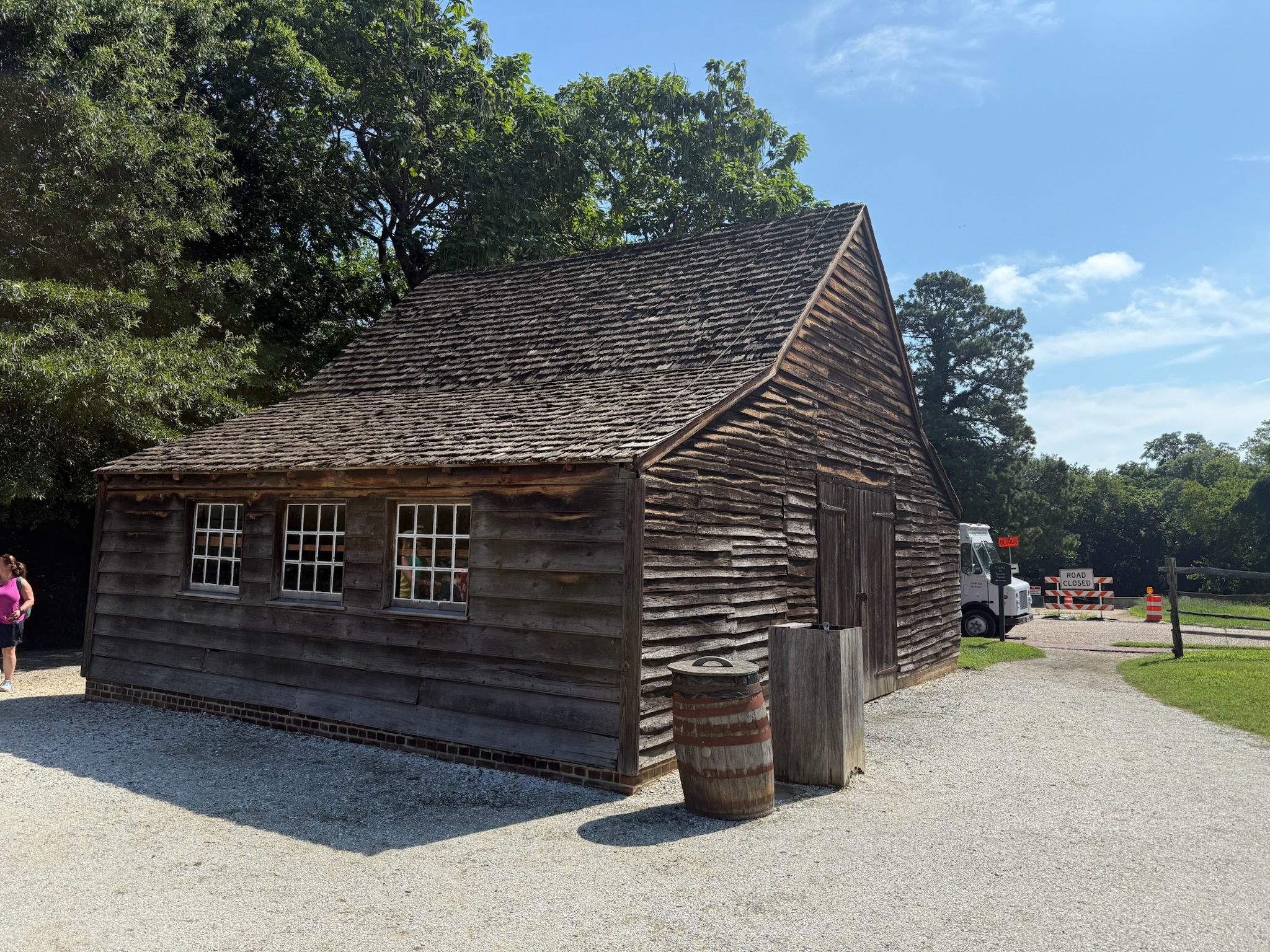
We decided to get off at stop 1, the governor’s palace. From the bus stop at the main road, we followed a small foot path to a smaller paved road. We passed this along the path, but the map didn’t specify what it was and the color indicated that it didn’t belong to the foundation.
Continue reading

Dinner at The Blue Talon Bistro in Colonial Williamsburg, Virginia

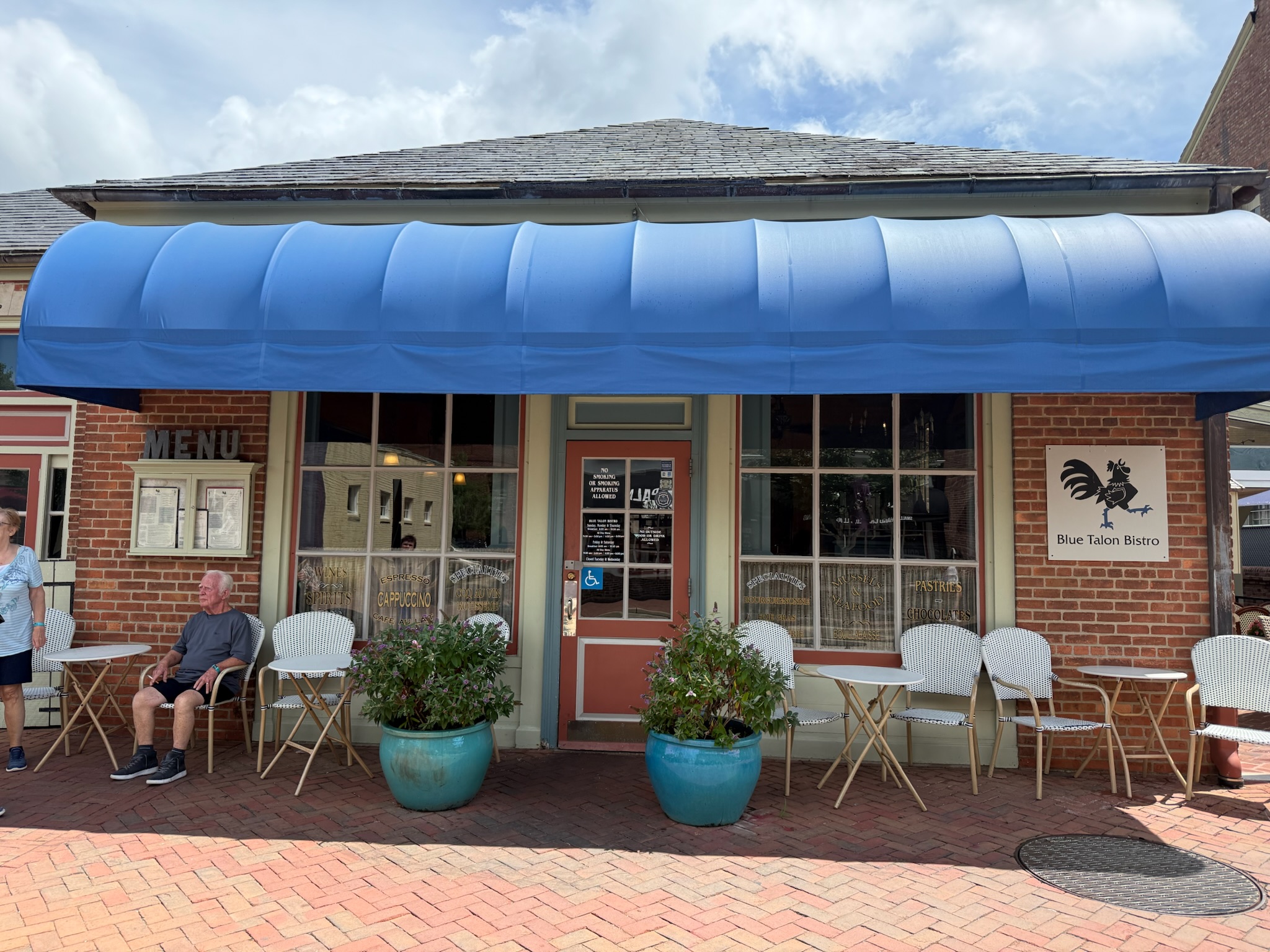
Monday, July 7, continued… As we stated earlier, we were confused about Colonial Williamsburg. It was apparently still an active town with restaurants and shops and other amenities… but apparently you needed to buy a ticket to go into the town? It looked like there was a small section of it called Merchant Square where people could see the historical buildings without buying a ticket. We decided to go there for an early dinner and try to get clarification on what exactly the sightseeing activities in Colonial Williamsburg entailed.

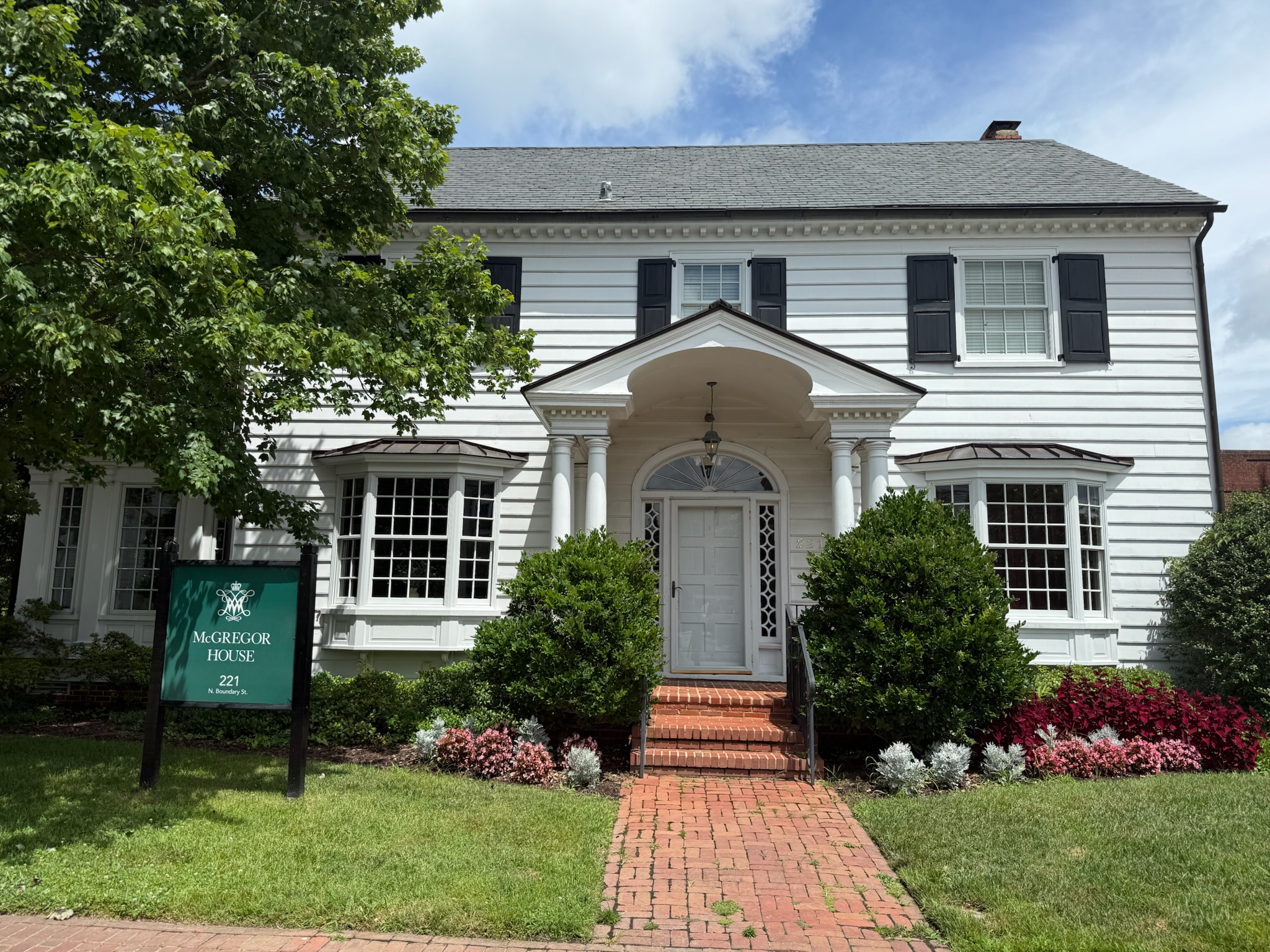
It was about a 10-mile scenic drive from Jamestown. As we neared the town, we drove through William and Mary College, which was founded in 1693. The old buildings were charming. We parked on Boundary Street, the street that separated the college from the edge of town. It was hot and we’d already done a lot of walking, so we didn’t do much exploring by foot. We picked the first open restaurant that looked good, a French restaurant called The Blue Talon Bistro which was around the corner on Prince George Street.

As short as our walk was, it was still pretty with all the mature trees and beautiful old buildings.

Continue reading

Jamestown Settlement, Williamsburg, Virginia – Part 3

continued... Once tobacco exports were established, the tobacco farmers quickly grew wealthy. They used their money to buy even more land, taking all of the prime locations. As the society evolved, these large plantation owners dominated Virginia’s economy and government. In 1670, laws were changed so that property ownership and payment of taxes was required to vote or hold public office (both white and black), giving the plantation owners even more power over everyone else.

There had already been growing tensions amongst the freed indentured servants. The plantations primarily utilized slaves, so there were no jobs for these freed men to go to after their time in service ended. While they could start their own farms, they’d have to go to the edges of the settled areas, where there would inevitably be conflicts with the indigenous over the land. While the Powhatan (and tribes under the Powhatan umbrella) had made an agreement with the colonists, the colonists were now expanding beyond the Powhatan lands into areas with no such agreements. The government of Virginia did little to help protect these outlying farms from attack.

In 1674, Nathaniel Bacon arrived in Virginia. Bacon was arrogant, bold, active, moody and taken to alarming outbursts. He was also charismatic and an eloquent speaker. He was cajoled into leading a rebellion of disgruntled colonists. Some of the elite who were concerned about government corruption and mismanagement joined the rebellion, too. In 1676, Bacon formed his own militia whose goal was to remove all indigenous from the lands. They attacked and killed some Pamunkey, who were a friendly indigenous tribe under the Powhatan umbrella. The indigenous retaliated. The governor was furious that Bacon’s militia had disrupted peace with the Pamunkey as they’d had a lucrative fur trade relationship with them. In September 1676, there was a battle between the Virginia Militia and Bacon’s Militia in Jamestown. Bacon’s militia set fire to the town. Soon after, Bacon died of illness and the rebellion fizzled. The Queen of the Pamunkey signed a peace treaty with the colonists on behalf of her own tribe and several others that lasted almost 100 years

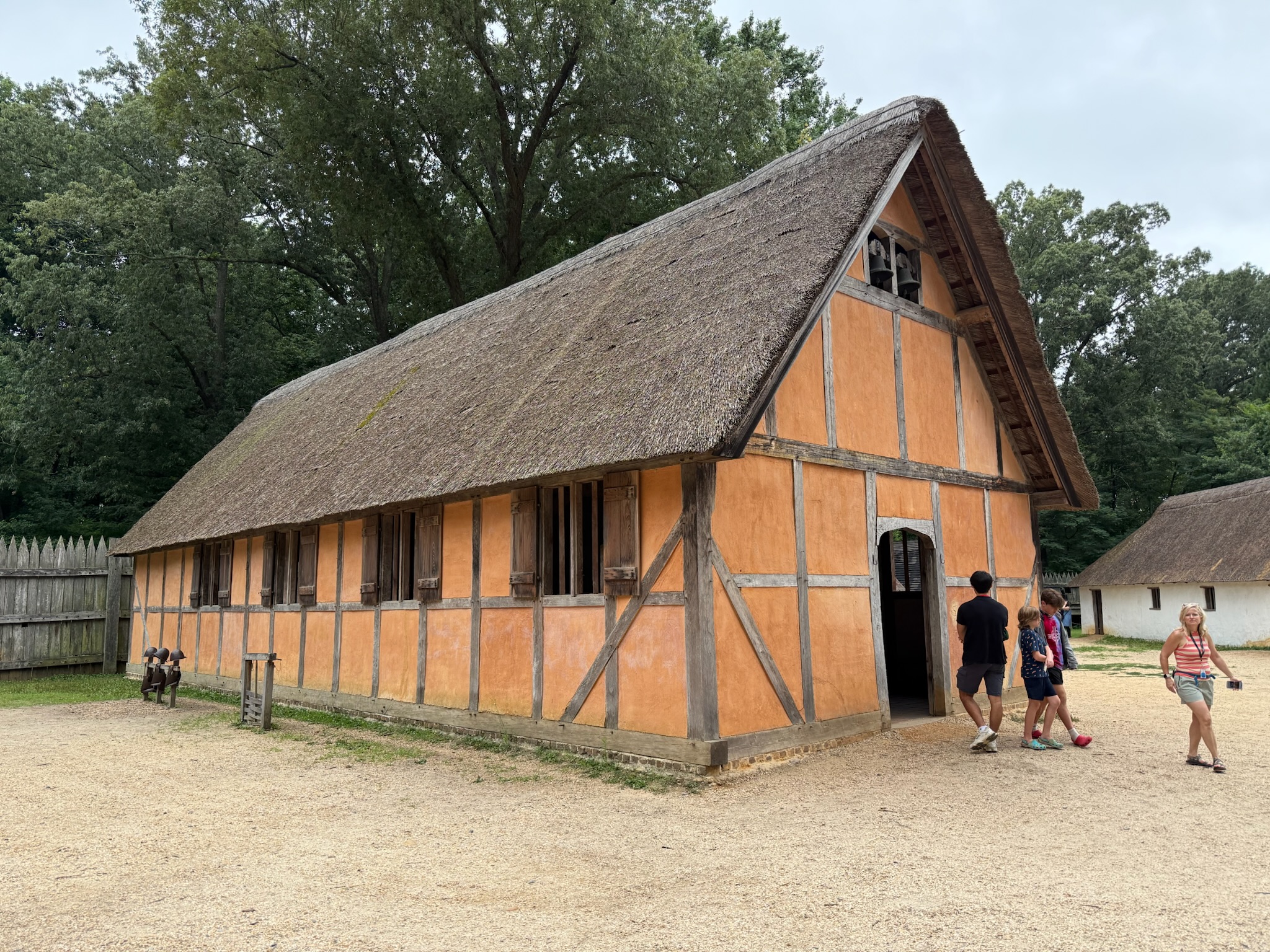
The capital of Virginia was moved to Williamsburg, ten miles away, in 1699. By that time, Virginia had grown from 104 colonists in Jamestown in 1607 to 60,000+ people spread all over the Virginia territory. Only about 600 Powhatan still remained in the English controlled areas. Blacks made up 10% of the population. Most people worked on plantations. After the capital moved, Jamestown declined rapidly. By 1716, all that was left was a church, a court house and three of four houses. Eventually, those buildings were cleared for agriculture. Once we’d finished in the museum, we headed back out to explore the fort some more.

Anglican Church in Jamestown
Continue reading

Jamestown Settlement, Williamsburg, Virginia – Part 2

continued… There was a presentation on muskets at noon outside the entrance to James fort, so at 1150, we headed back to the fort and found seats for the presentation. All in all, it was only about 7-minutes, but it was fascinating to hear about why the musket was the weapon of choice, how it was (dangerously) operated, and the military strategies the colonists used. Here was a clip of him firing the musket.

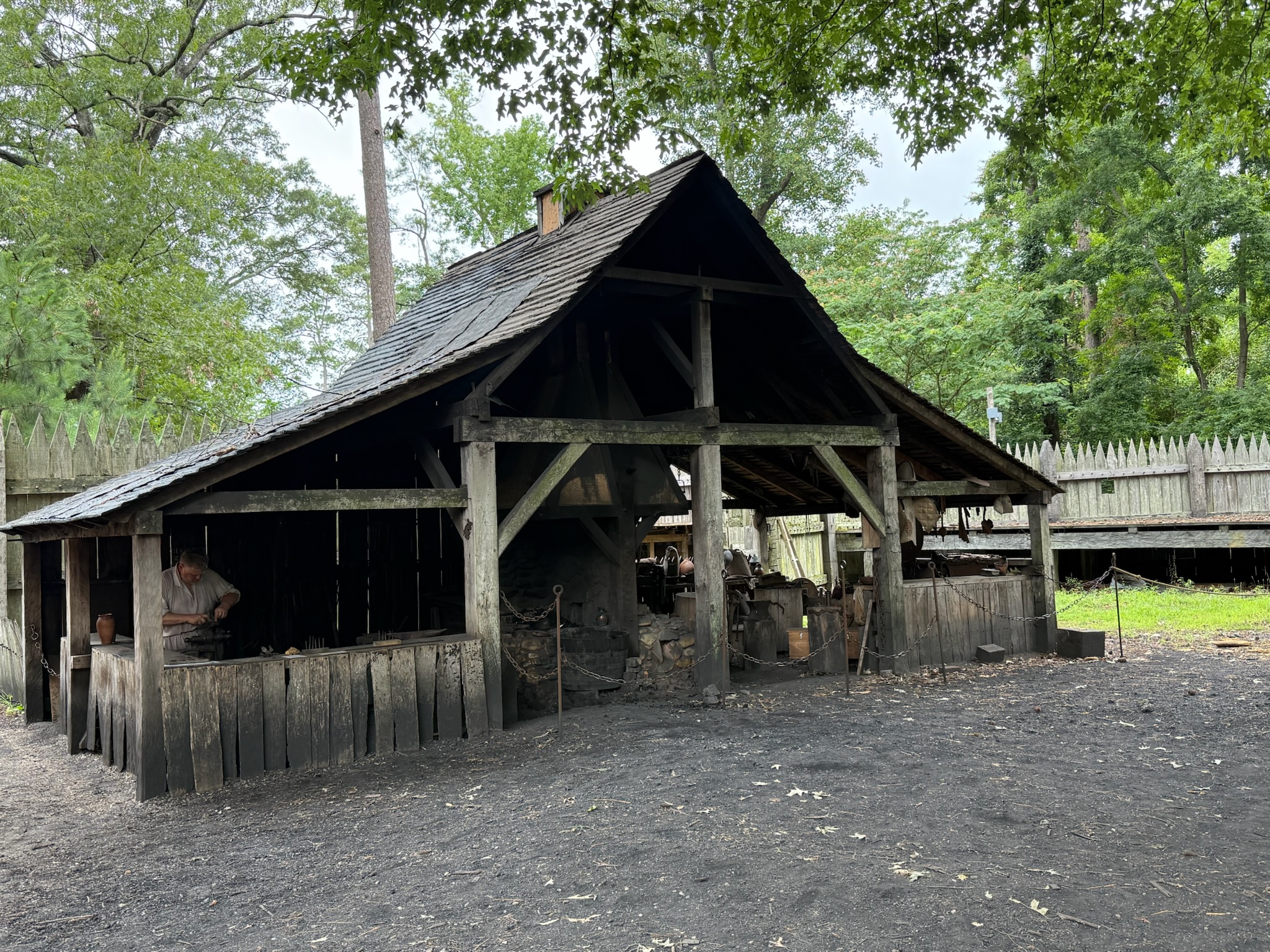
We headed inside the fort and went to a demonstration at the blacksmith shop. He made a nail for us.

Continue reading

Jamestown Settlement, Williamsburg, Virginia – Part 1

On Monday, July 7, we took the tunnel north under the James River, went past Ft. Monroe, and continued north to a city called Williamsburg (which was not far south of Deltaville). We’ve been confused about Williamsburg because it has several historic places: Historic Jamestown, Jamestown Settlement, Yorktown Living History Area, Yorktown Battlefield, Historic Yorktown, Colonial Williamsburg, Colonial Williamsburg Merchant Square, and William and Mary College.

Jamestown was the first British colony in the US that prospered and was considered the birthplace of America, so we decided to start there. After doing some research, we determined that Historic Jamestown was the archeological site of the colony, and it sounded like excavations were still underway. Jamestown Settlement was about a mile away and was a recreation of what Jamestown had looked like in its hey-day, complete with actors playing characters from that era. We opted for Jamestown Settlement. 

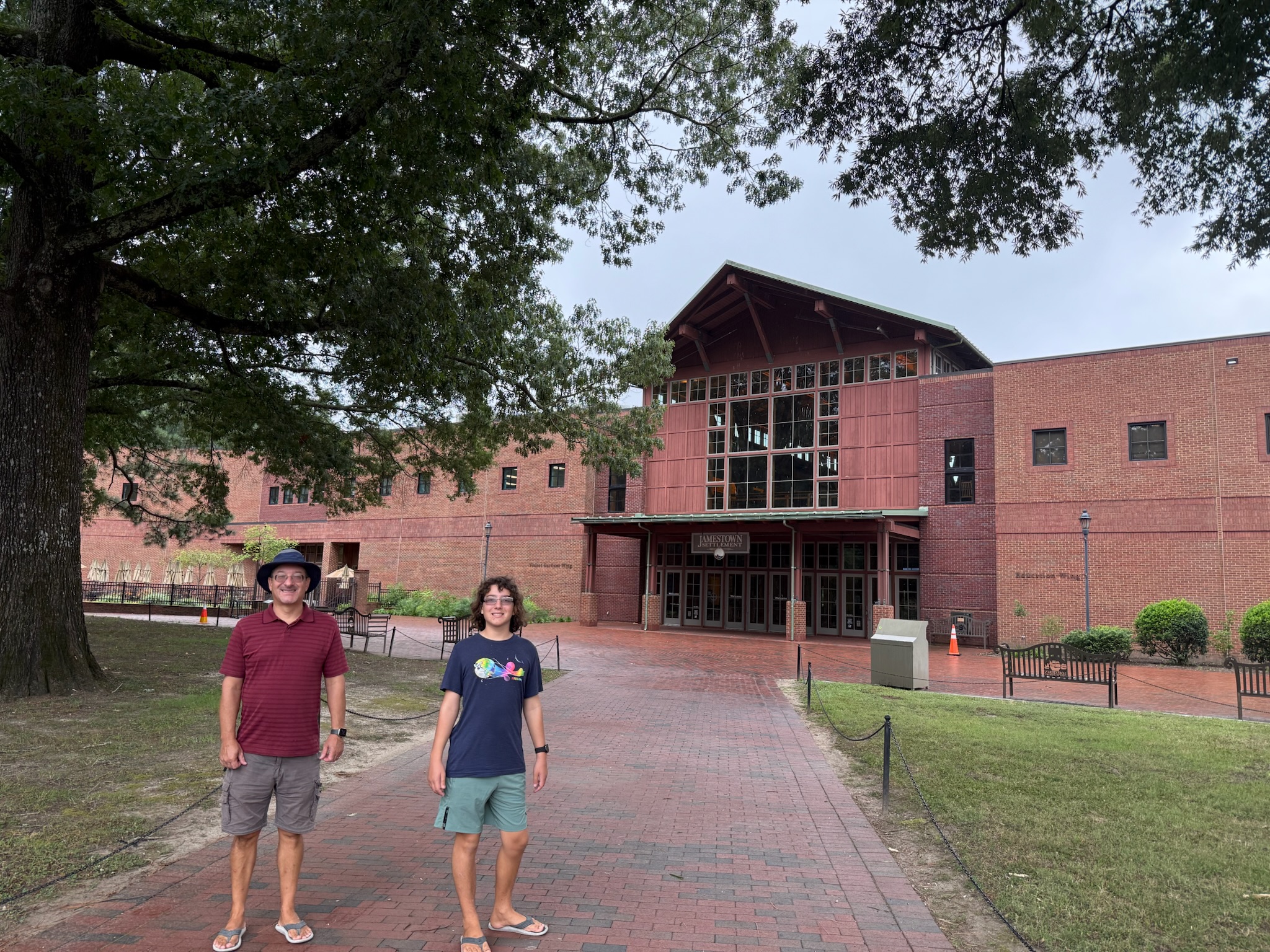
The Settlement opened at 0900, but we got off to a late start and hit some traffic, so we didn’t pull into the parking lot until 0950. There were hardly any other cars in the parking lot, and we guessed it was because of the on-again, off-again drizzle. Parking was free. The building was huge.

Tickets were $20 per person for 13+. According to the placard, there was a special talk on indigenous bone tools at 1000 in the Paspahegh village, who were the indigenous people of that area. We made a beeline for village. We had to walk the length of the museum to get to the “living exhibits” outside.

Continue reading