continued… But we had a great view of the Saturn V from our table in the cafe. Looking towards the bottom of the rocket.
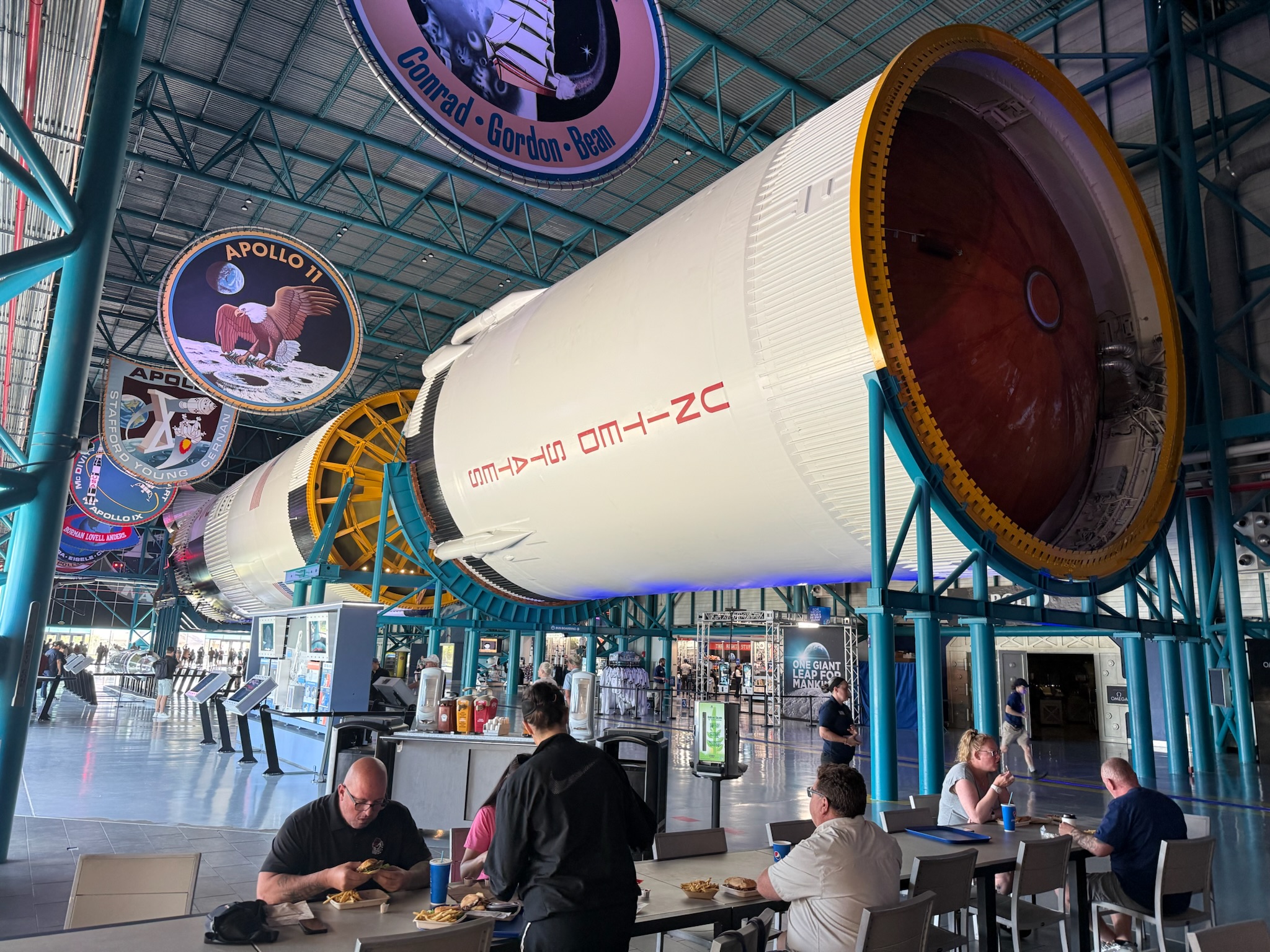
Basically above our heads.
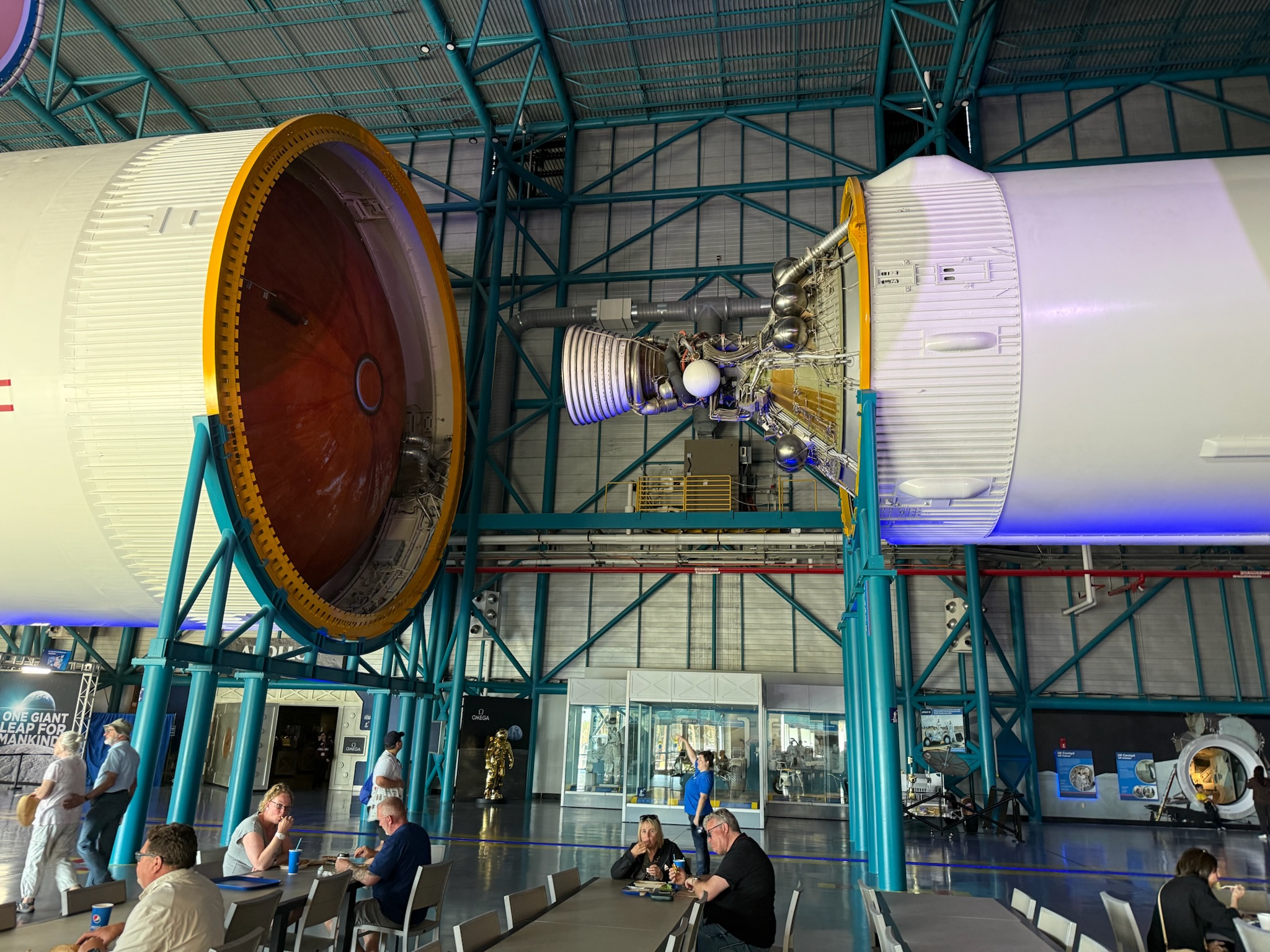
Looking towards the top of the rocket.
Continue reading
continued… But we had a great view of the Saturn V from our table in the cafe. Looking towards the bottom of the rocket.
Basically above our heads.
Looking towards the top of the rocket.
Continue readingcontinued... We followed the path to another building entrance. The first thing we saw when we opened the door was the bottom of the Saturn V rocket, which was diagonally mounted to the ceiling. A sign said the engines we were looking at were each 19 feet long, 12 feet and 3 inches wide at the widest point, weighed 18,500 lbs, and were fueled with a form of kerosene called RP-1 an liquid oxygen.
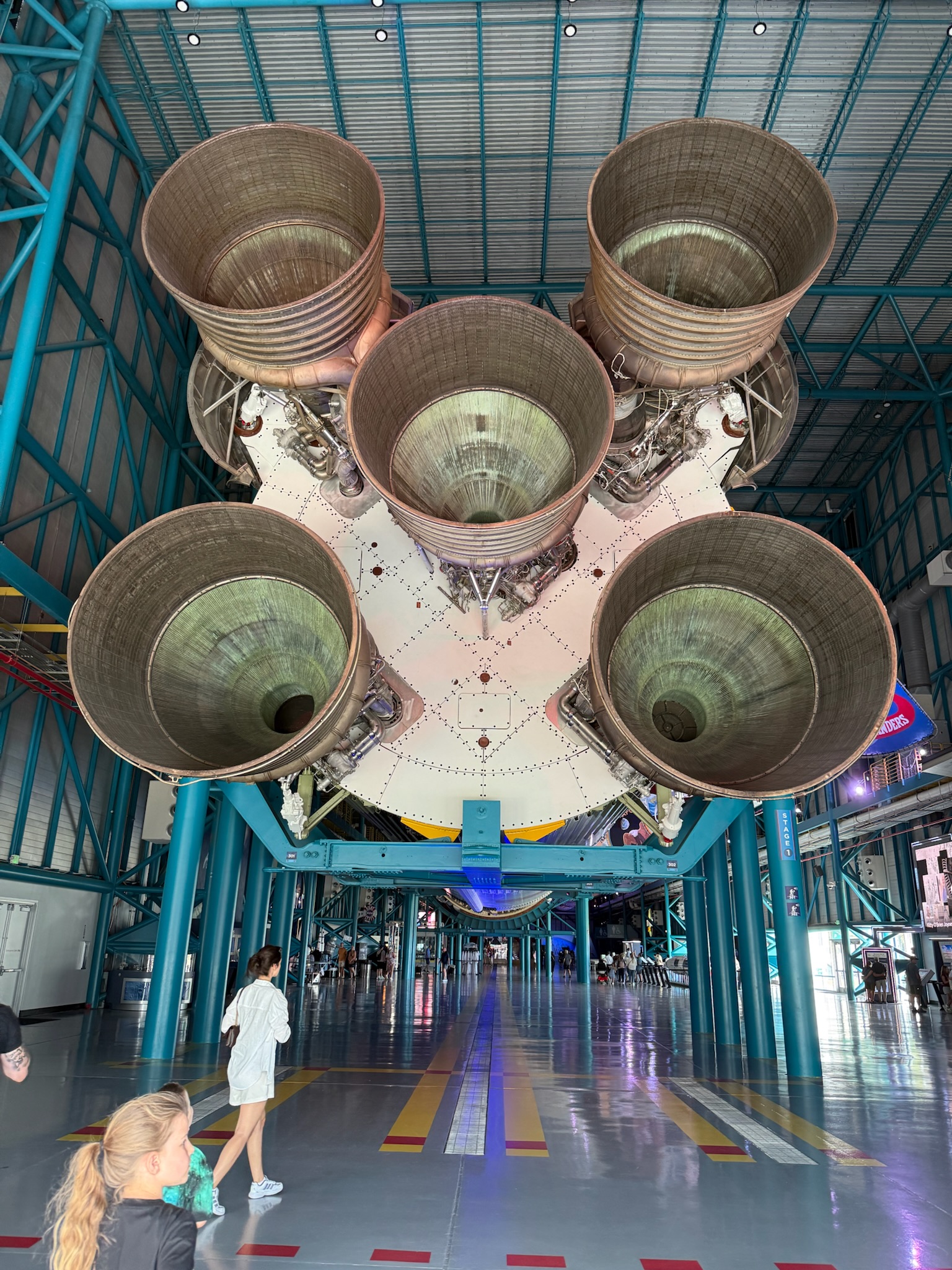
To the left of the photo was a large double-door that Christi remembered exiting from after the introductory movie on our last visit. The doors were shut, confirming in her mind that they’d changed how they’d routed guests. There were a few exhibits on the wall to the right of this photo.
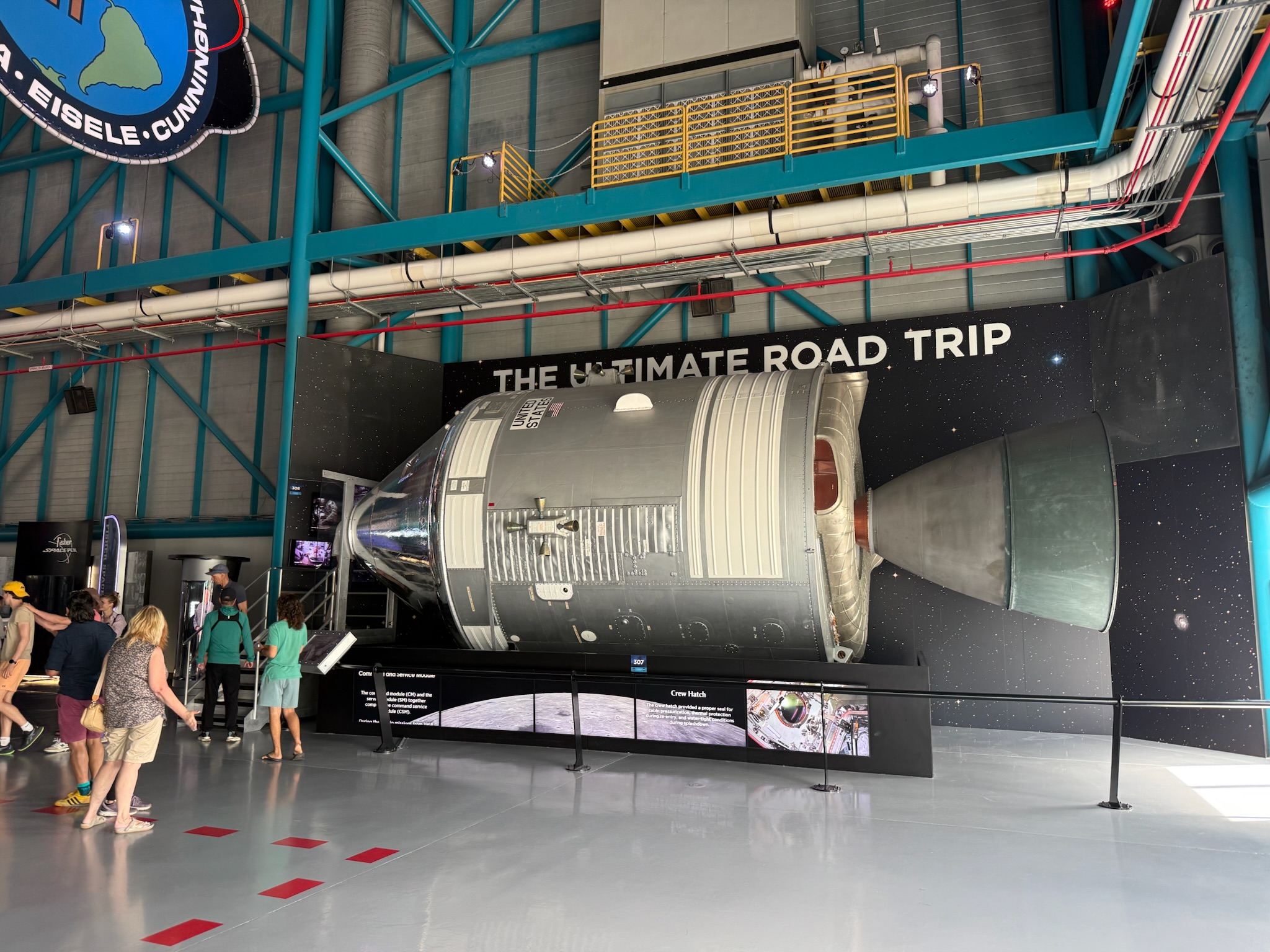
continued… From there, we went out to the platform. We climbed the stairs to the top floor. The top floor was enclosed. There was an exterior walkway around three sides with nice views. This was looking northwest.
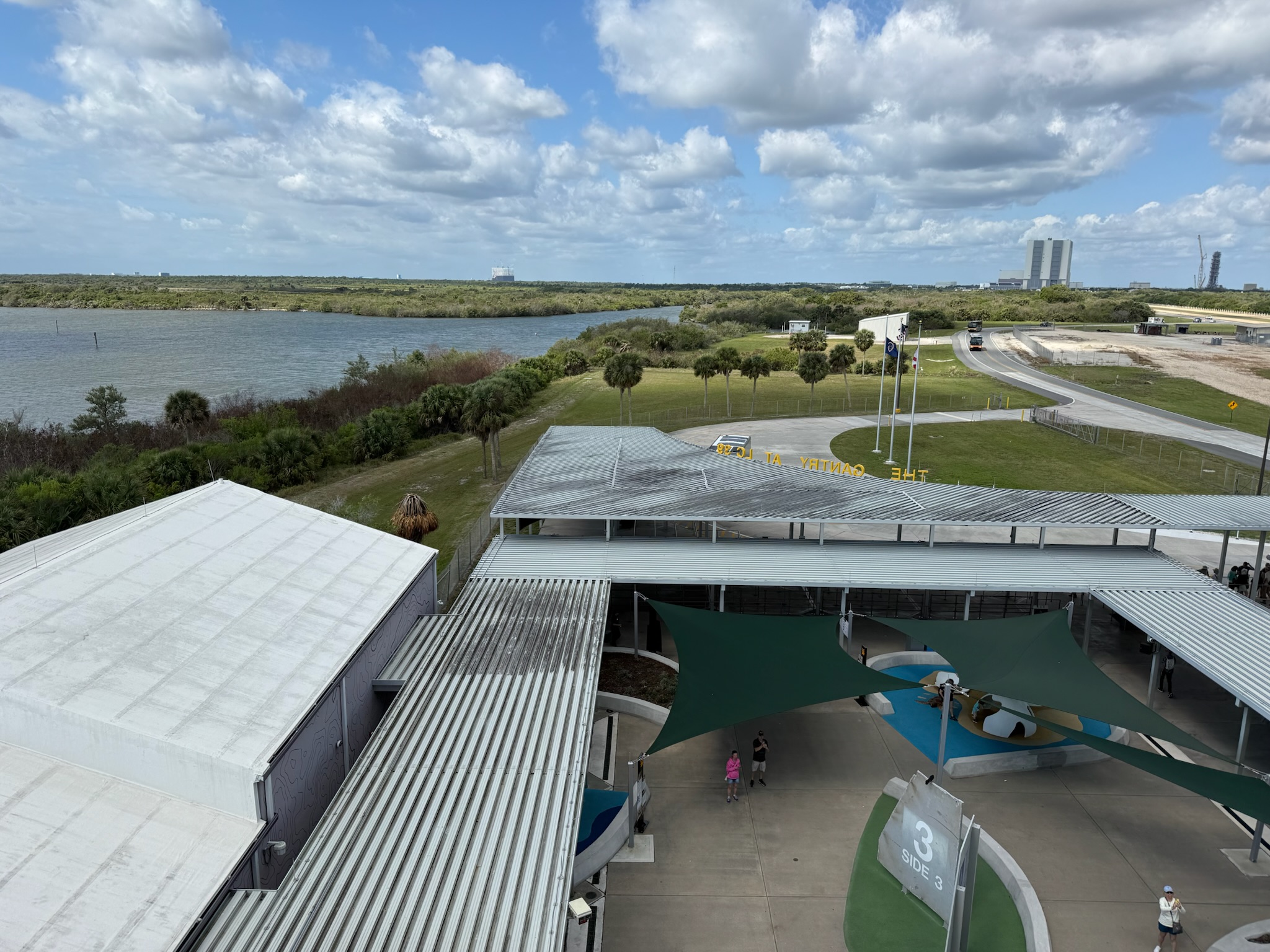
Looking southeast, towards Cape Canaveral (the strip of land along the Atlantic shore where the launches were done).
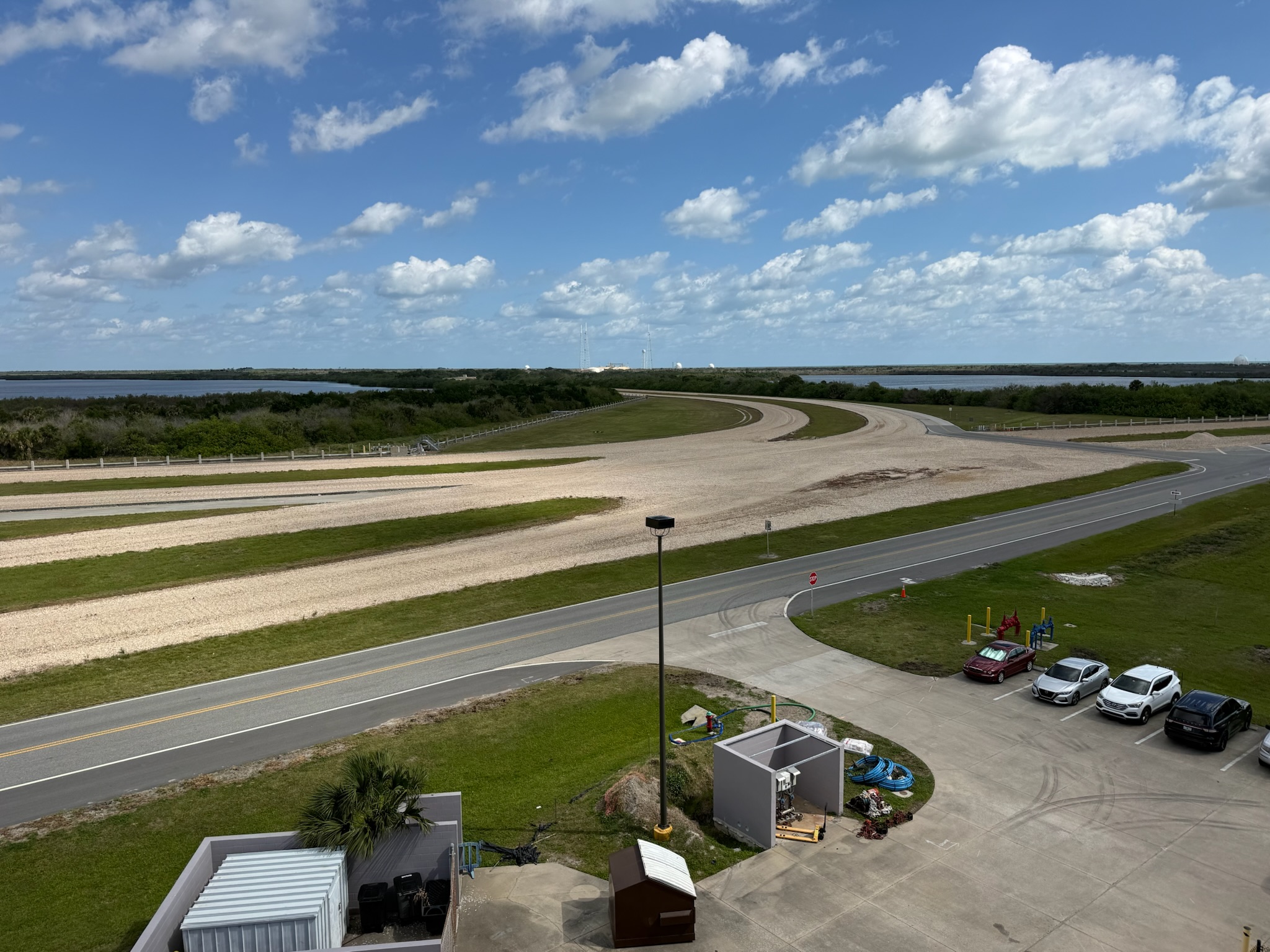
There was a SpaceX facility just to the west of the above photo. Here was a zoom in of it.
Continue readingMonday, May 4, 2026 — In the early morning, Eric took a ride share to a rental car facility and rented a car. Then he went to Kosmos, picked up Christi and Keith, and we all set out for the Kennedy Space Center. It was located in the Merritt Island National Wildlife Refuge and was a 20-minute drive. We headed west on a bridge that took us over the Banana River, then north to the Space Center.
We’d been once before, four years ago. Like Colonial Williamsburg, it was only open from 9 – 5 and there was more to see/do than could physically be done in one day; it was recommended to get a 2-day pass to see/do everything. Last time, we’d only had four hours, so we didn’t get to see much. Eric and Christi wanted to see the rest of it. Keith didn’t remembered much, so it was almost like his first visit.
As we drove in, we were astounded by the size of the Blue Origin complex. We remembered being astounded last time, too. This is just a tiny bit of the complex.
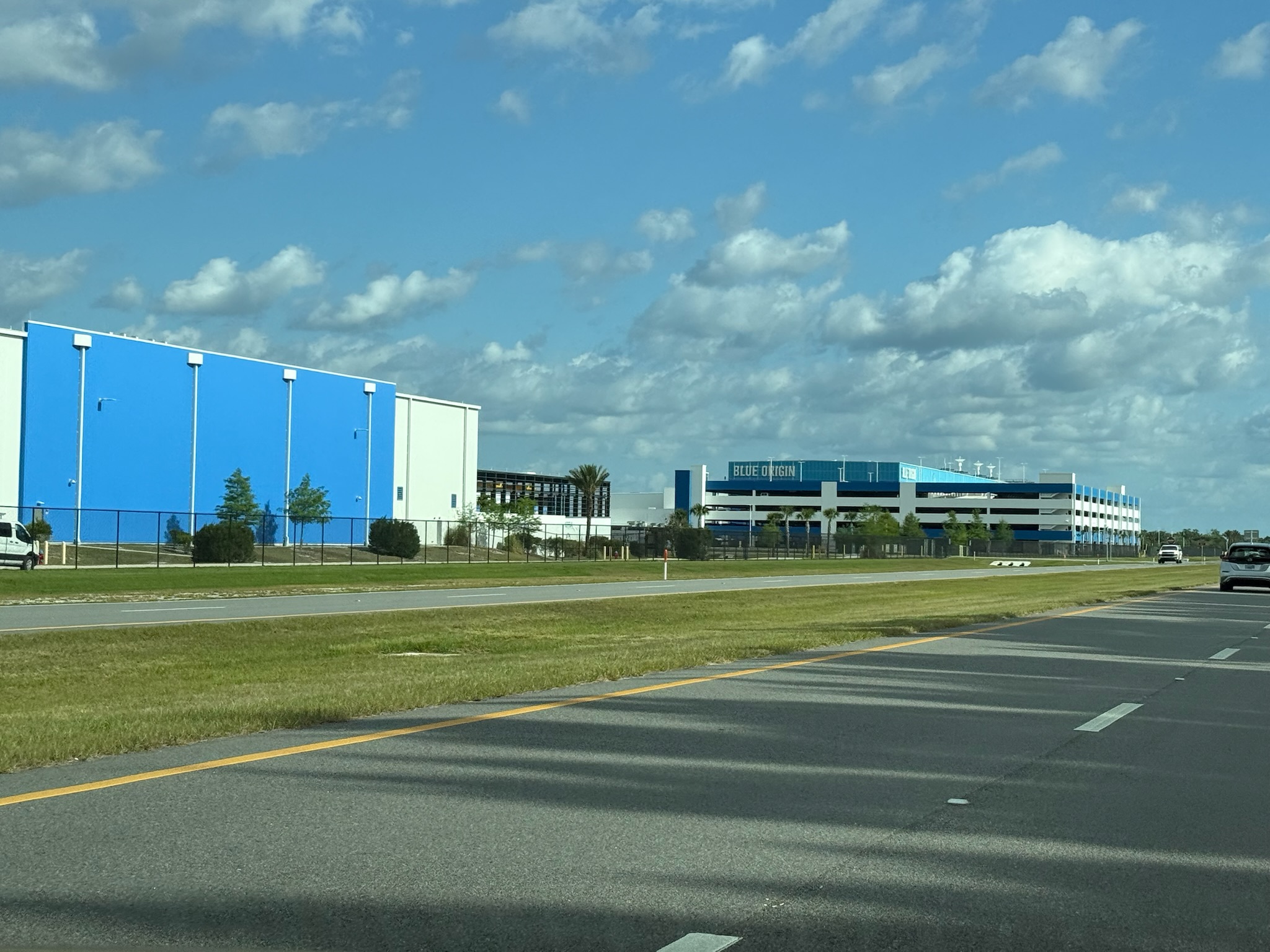
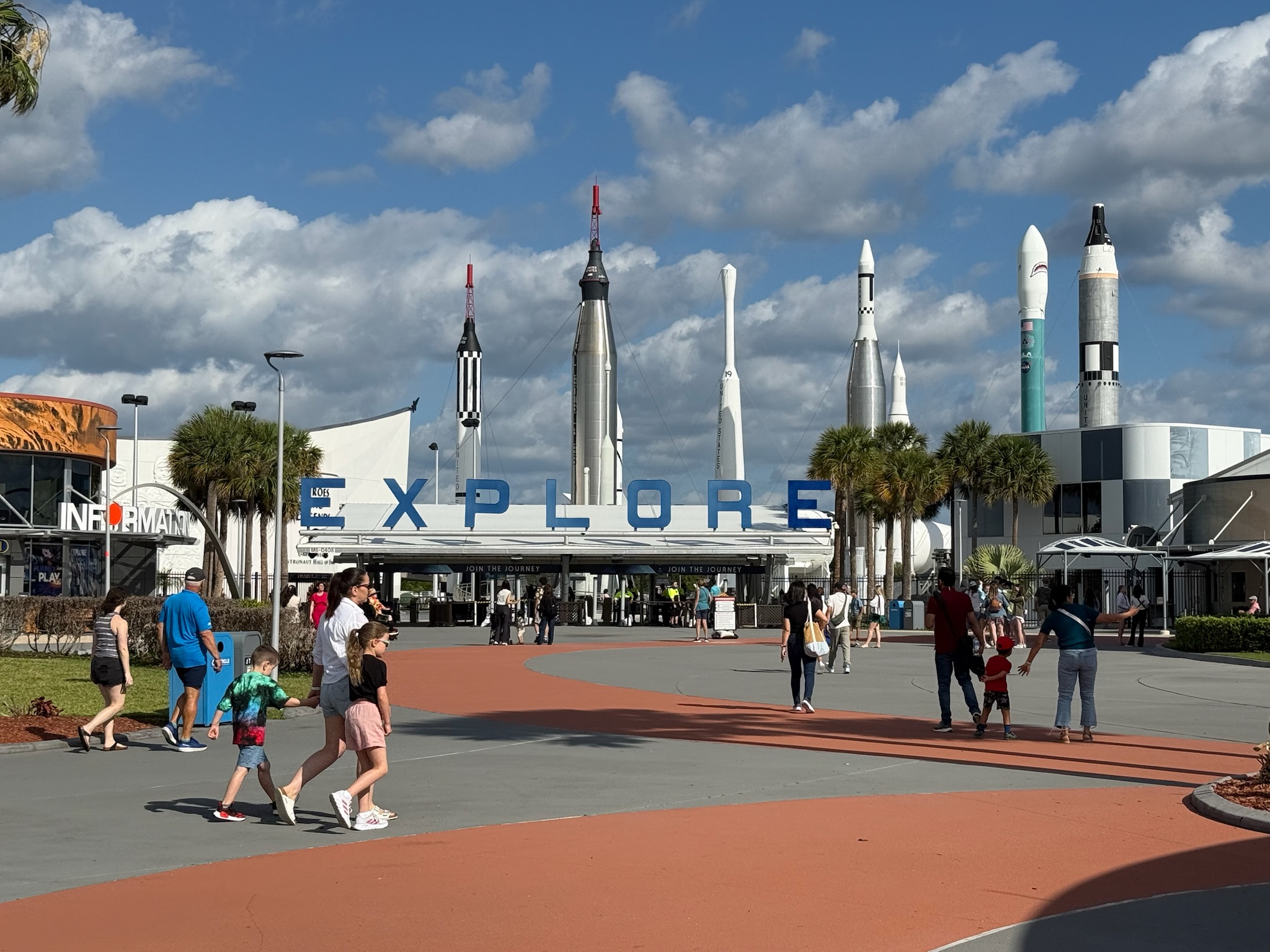
The Kennedy Space Center parking lot entrance was just beyond the Blue Origin complex. We arrived at 0920. Parking was $15. The line to buy tickets was short. Tickets were $77 for 12+ for one day and $91 for 2 days. With sales tax, the grand total for three 1-day passes was $217.17. This was the entrance. You can see part of the Rocket Garden in the distance.
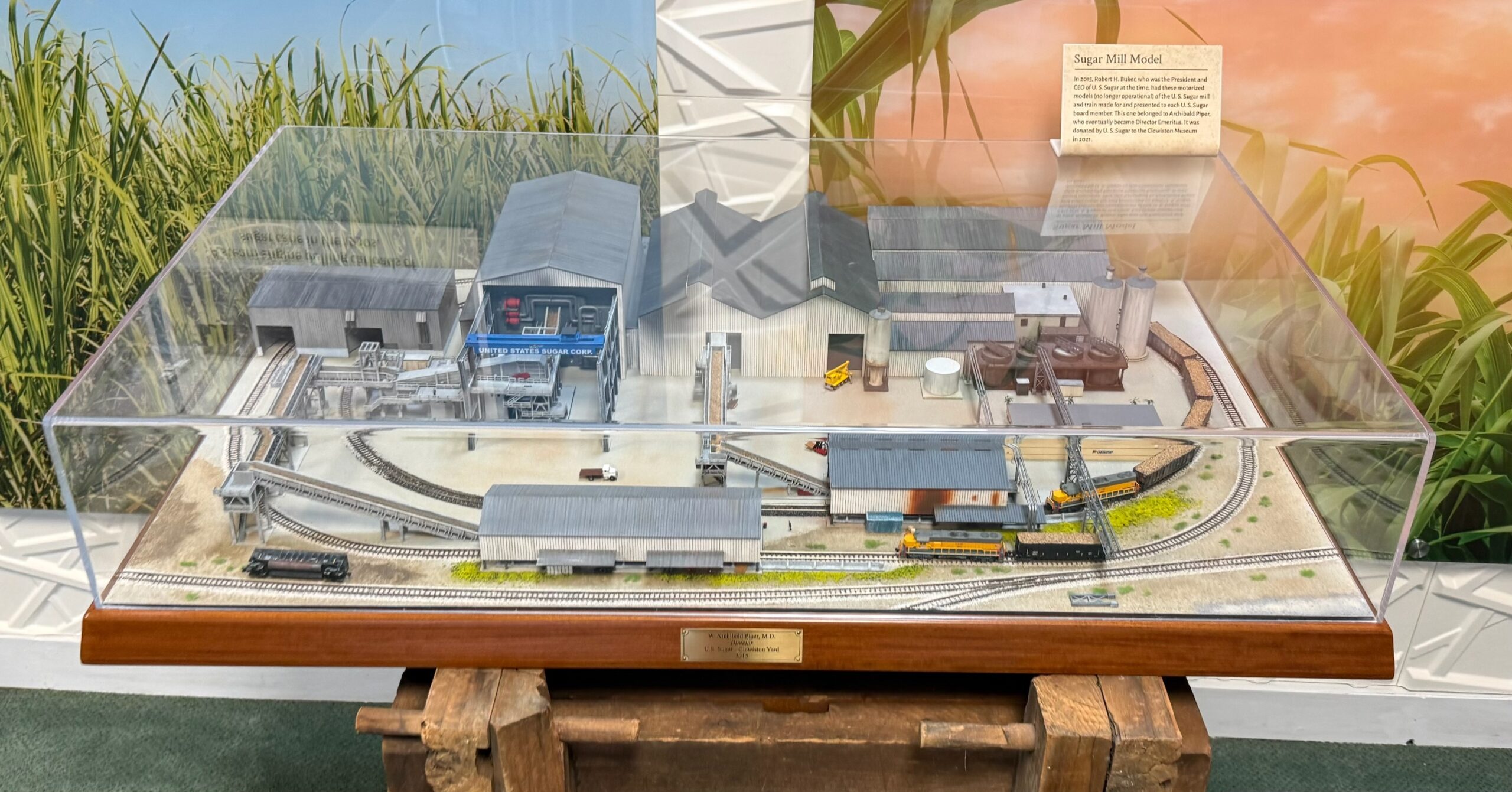
continued… There was a large exhibit on the agriculture industry. Clewiston was dubbed “America’s Sweetest Town” because it is home to The United States Sugar Company, Florida’s largest producer. Here was a model of the plant.
In 1925, a group of investors bought a giant tract of land to create a sugarcane plantation. Interestingly enough, the principal investor also owned a company that produced Celotex boards, which were made from the fibrous remains of sugarcane after the sugar was processed out. Sugarcane became the predominant crop in the Clewiston area and Southern Sugar Company was the largest employer and property owner. One of their biggest early challenges was drainage. They dug canals to help the water go away and planted trees to help absorb the water that stayed. They bought a defunct sugar mill from another part of Florida and moved it to Clewiston. The mill opened in January 1929. Nine months later, the stock market crashed and the Great Depression set in. In 1930, they went bankrupt and were planning to halt production. One of the creditors and major shareholders, Charles Stewart Mott, stepped in to save the operation. He formed US Sugar and bought out Southern Sugar a few months later.
Continue reading