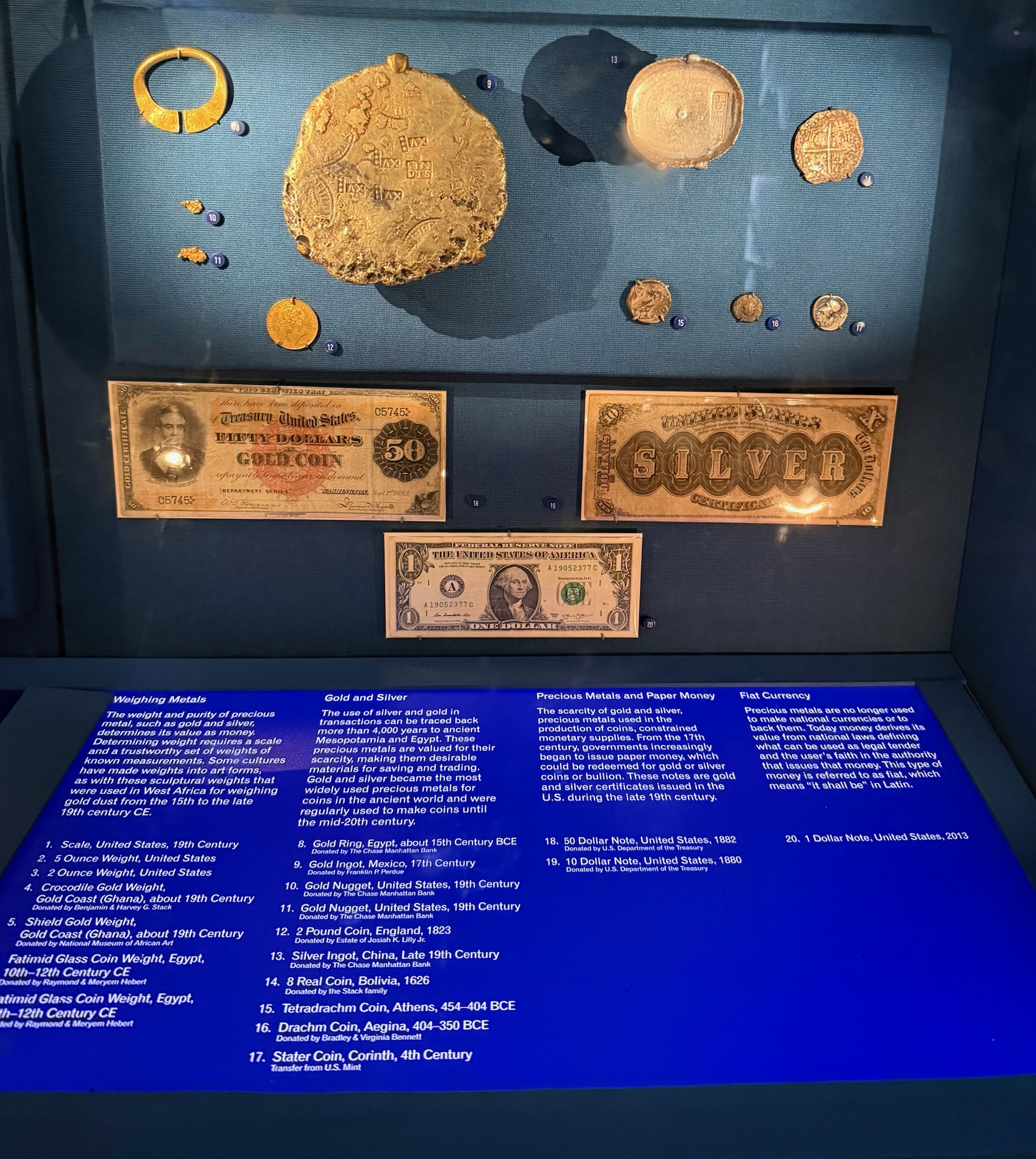
continued… Metal coins were first made in the 7th century BC, originating independently in two different parts of the world: Lydia (now Turkey) and China. In the 5th century BC, India also started making metal coins. The coins from Lydia and India were small and round, the ones from China were shaped like farming tools. Metal became a popular choice for currency because the metal in and of itself had a functional value — the coins could be melted and used for other purposes, if needed. All sorts of metals were used, including copper, iron and tin, but the most popular were gold and silver. The value of a coin was determined by the type of metal it was made from and the weight of the coin. Gold and silver stayed the most popular metals for coins for thousands of years — until the mid-20th century. The photo below has some ancient coins.
The word money evolved because in Ancient Rome, coins were minted in the temple to goddess Juno Moneta. At first, Moneta referred to where coins were made, but eventually came to mean the coins themselves. All throughout the exhibit, the signs talked about how the images and words chosen to be put on money reflected the country’s identity, history, heritage, leadership and values. For example, Egypt has pyramids and hieroglyphs on their money, reflecting their roots in ancient history. Many countries have images of important leaders and/or religious words/images inscribed on their money, indicating their culture values these people and/or religious beliefs. The language the money is inscribed in indicates who the intended users are, so some countries have multiple languages on their coins. For examples, many languages are spoken in India, so India has several languages on their money.
Continue reading