The National Museum of American History in Washington DC – Part 2: The Gallery of Numismatics

continued… Metal coins were first made in the 7th century BC, originating independently in two different parts of the world: Lydia (now Turkey) and China. In the 5th century BC, India also started making metal coins. The coins from Lydia and India were small and round, the ones from China were shaped like farming tools. Metal became a popular choice for currency because the metal in and of itself had a functional value — the coins could be melted and used for other purposes, if needed. All sorts of metals were used, including copper, iron and tin, but the most popular were gold and silver. The value of a coin was determined by the type of metal it was made from and the weight of the coin. Gold and silver stayed the most popular metals for coins for thousands of years — until the mid-20th century. The photo below has some ancient coins.
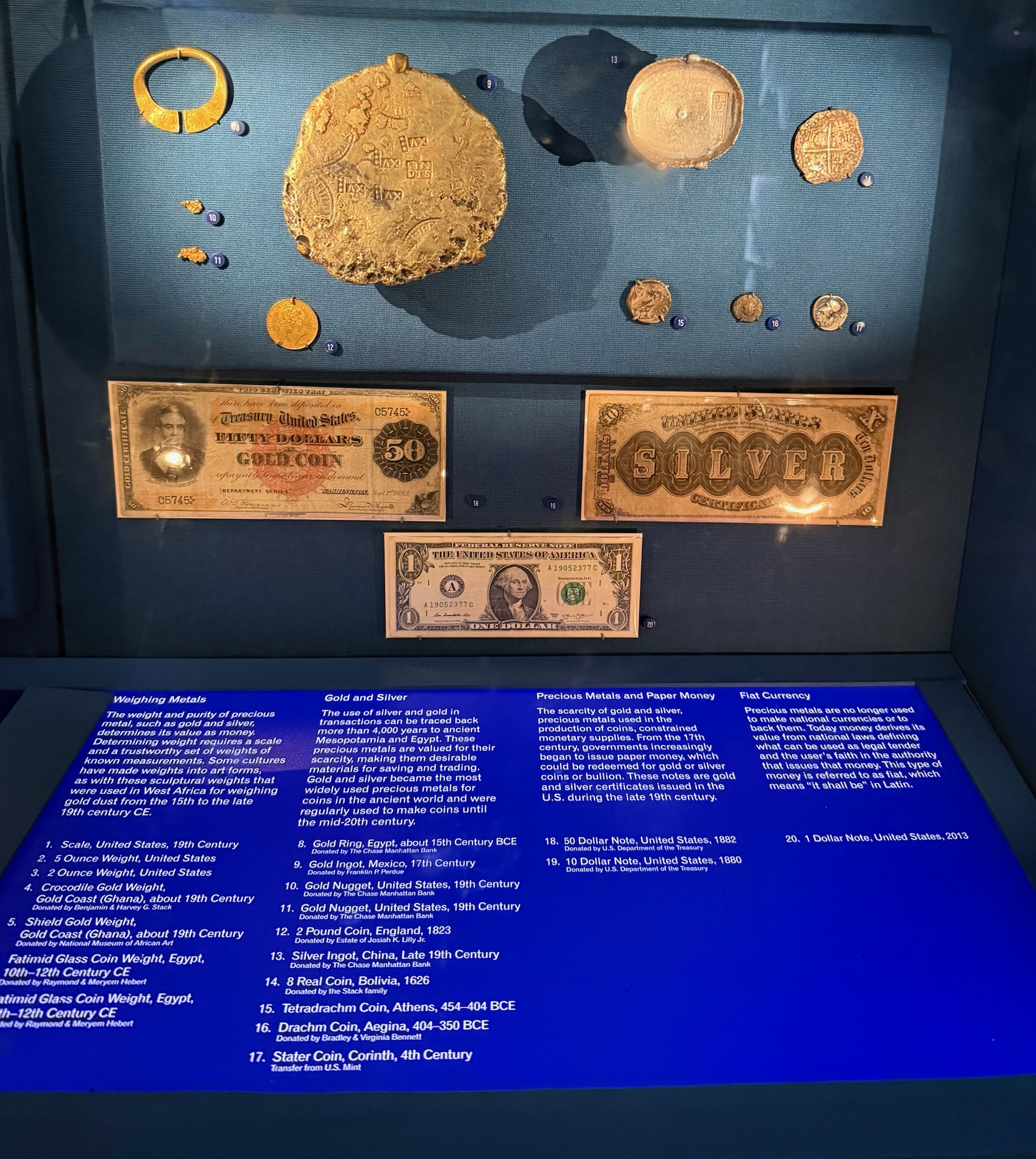
The word money evolved because in Ancient Rome, coins were minted in the temple to goddess Juno Moneta. At first, Moneta referred to where coins were made, but eventually came to mean the coins themselves. All throughout the exhibit, the signs talked about how the images and words chosen to be put on money reflected the country’s identity, history, heritage, leadership and values. For example, Egypt has pyramids and hieroglyphs on their money, reflecting their roots in ancient history. Many countries have images of important leaders and/or religious words/images inscribed on their money, indicating their culture values these people and/or religious beliefs. The language the money is inscribed in indicates who the intended users are, so some countries have multiple languages on their coins. For examples, many languages are spoken in India, so India has several languages on their money.

Continue reading
The National Museum of American History in Washington DC – Part 1

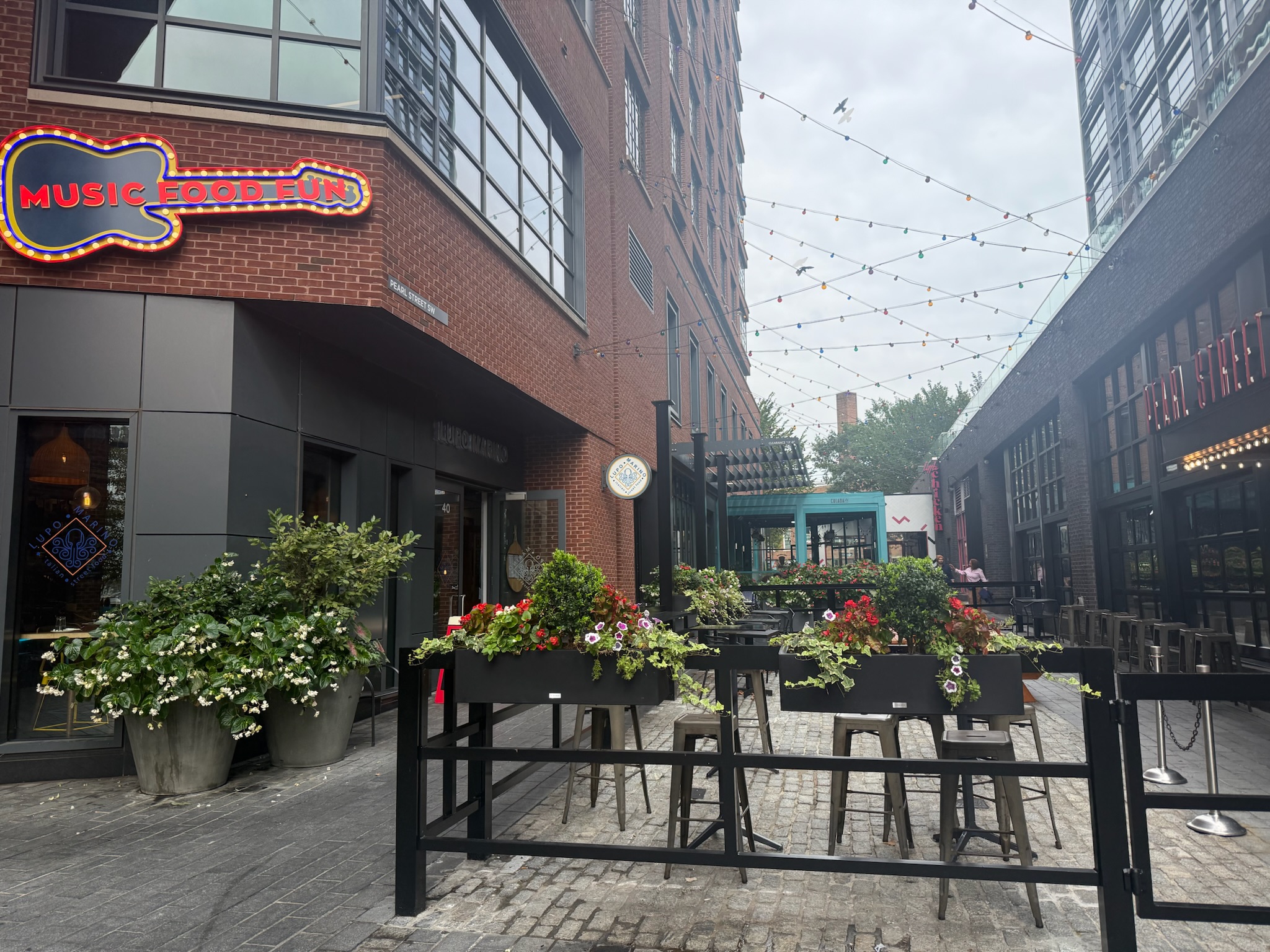
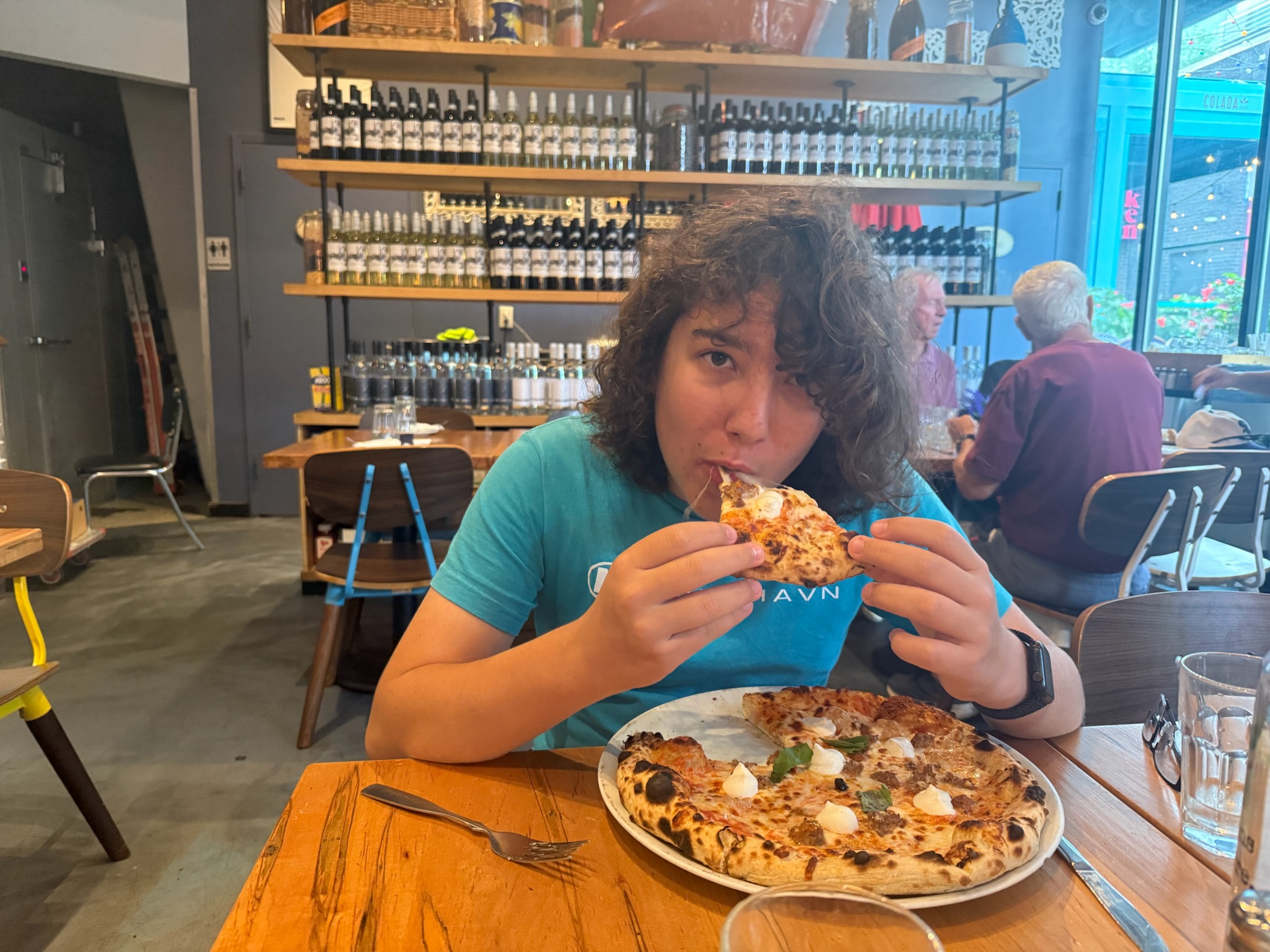
Monday, September 29 — After we finished doing school in the morning, we went to lunch at the pizza restaurant that Eric and Keith had gone to last Tuesday. They’d really liked it and wanted Christi to try it. It was along one of the perpendicular streets that connect the waterfront and Main Avenue SW, but this street was closed on the street side, making it a little cul-de-sac accessible only from the waterfront side.

The restaurant was called Lupo Marino Italian Street Food. The sign was small and discreet, so the restaurant was easy to miss. As promised, the food was great.

After lunch, we went to the American History Museum. Eric picked it because he wanted to see the cryptological exhibit that he remembered as being really good. We caught the free shuttle to the National Mall, then walked northwest to the museum.

Continue reading

Old Ebbitt Grill in Washington DC

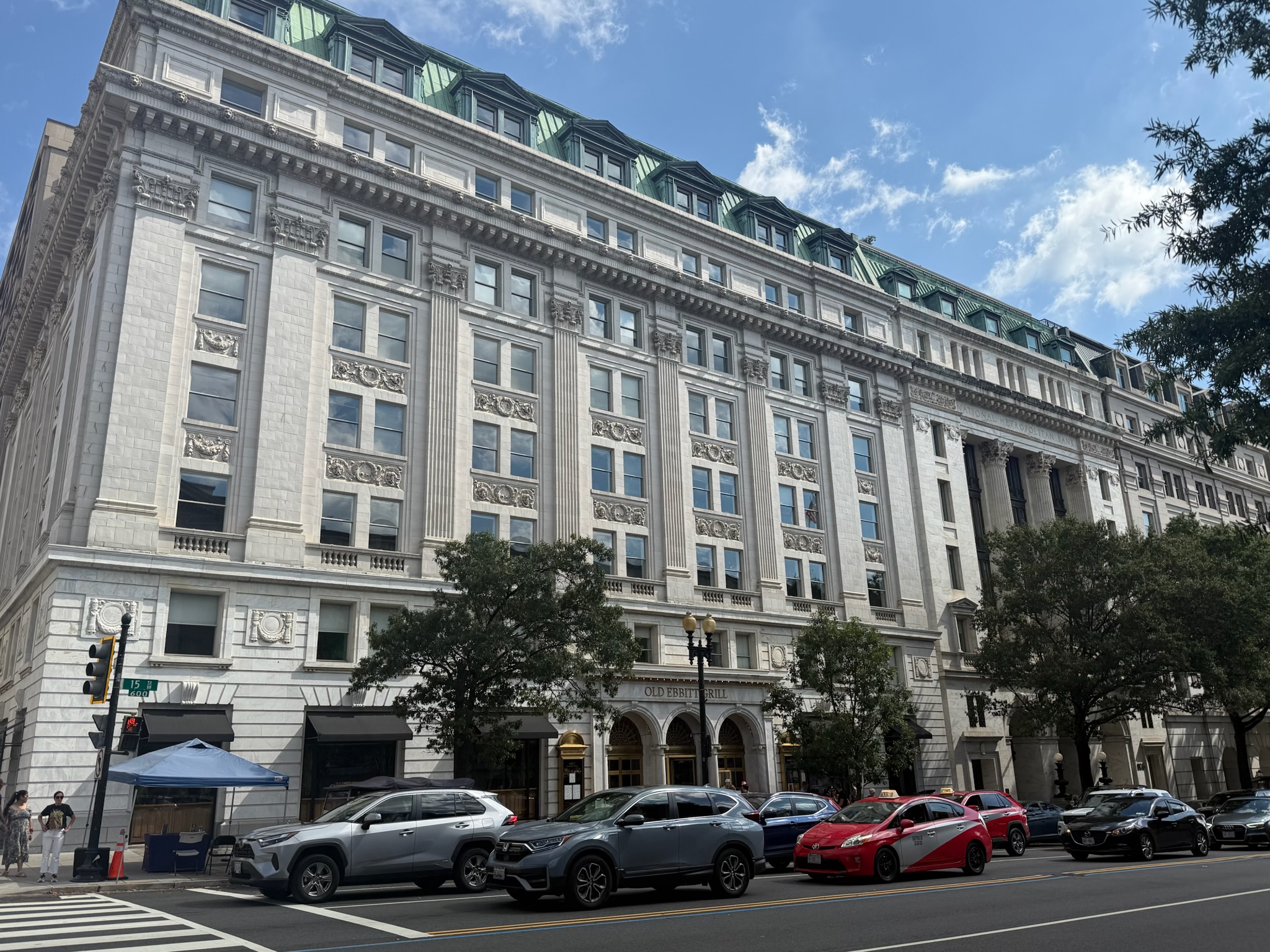
continued… We hailed another ride share to take us to a restaurant called Old Ebbitt Grill, located directly across the street from the US Treasury. Eric was dismayed to see the ride share app showed it would take 20-minutes and cost $28 to take us the two miles. Per the Map app, the bus would take 45-minutes and there was no Metro stop nearby. We debated about walking, but it was 80-degrees and humid, which would make it an uncomfortable walk. And we were hungry… we decided to pay the money.

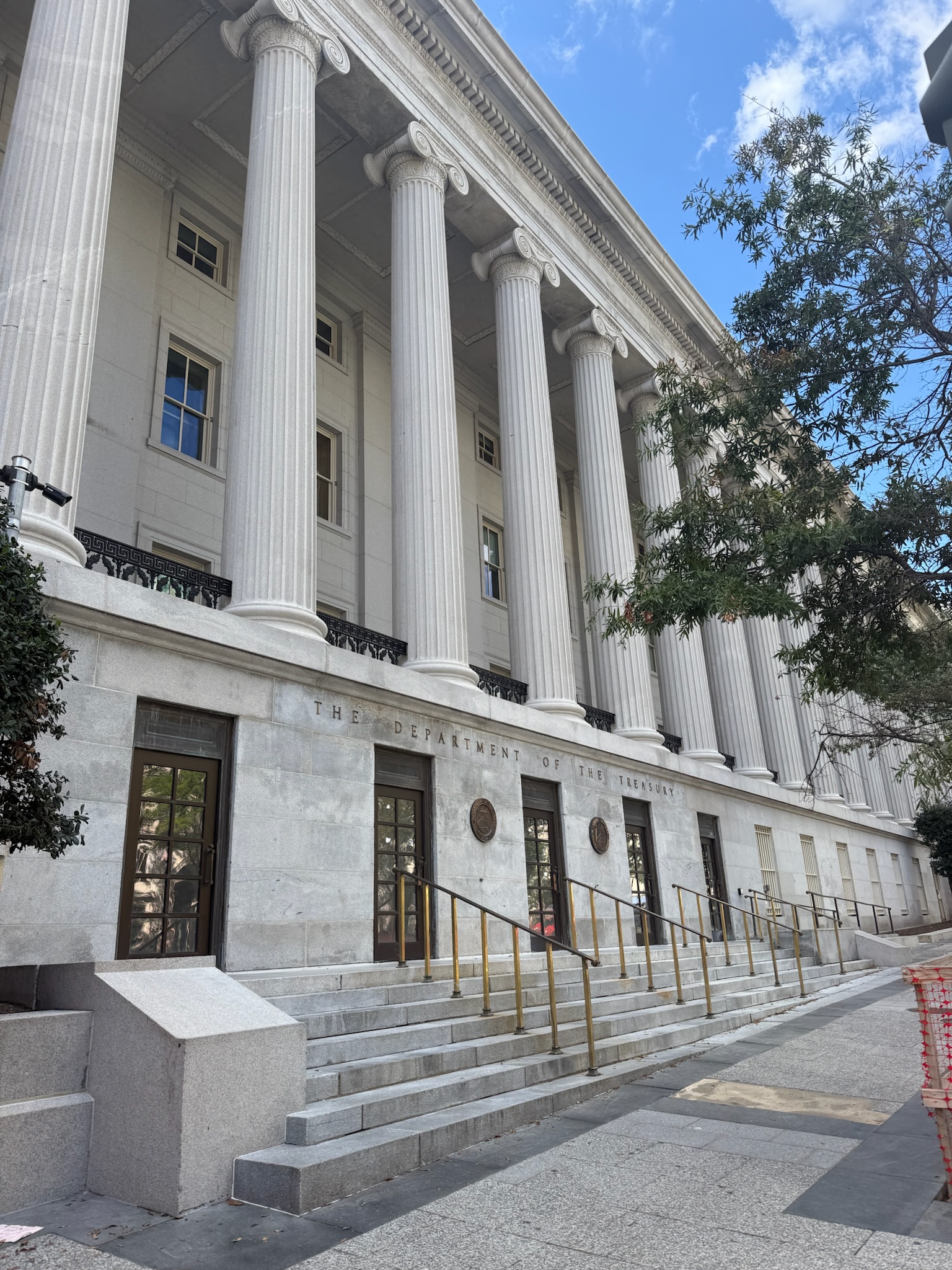
Our ride share driver said that traffic like this was normal on the weekends. The bright side of being stuck in slow moving traffic was that we were able to take in the city. Since there was no place for him to safely pull over near the restaurant, he dropped us off a block away, on the Treasury building side of the street. The Treasury building:

The building that Old Ebbitt was in used to be a theater called B.F. Keith’s. It opened in 1912 and had a six-story-high auditorium with 1,850 red leather seats, walls covered in red silk, and a stage curtain that was ruby red with gold fringe. The lobby walls were marble.It started as a vaudeville theater, and in 1928 started showing motion pictures, too. We’re not sure when the vaudeville acts faded away, but it stayed a movie theater until 1978. Since the building was a national landmark, the exterior was kept intact and the entire inside gutted and renovated.

Continue reading

Beat the Bomb in Washington DC

Sunday, Sept 28 — Keith has not enjoyed the activities that we’ve done over the last few days, so we decided to make it up to him by letting him pick an activity that he thought would be fun. When we’d asked a local for suggestions, one of the things he’d mentioned was an escape room called Beat The Bomb. Keith thought that sounded fun, so we booked a reservation for today at noon. It was meant for groups of 4 – 6 people and cost $50 per person. However, they will allow groups of 3, but it actually cost more for three people than it did for four!

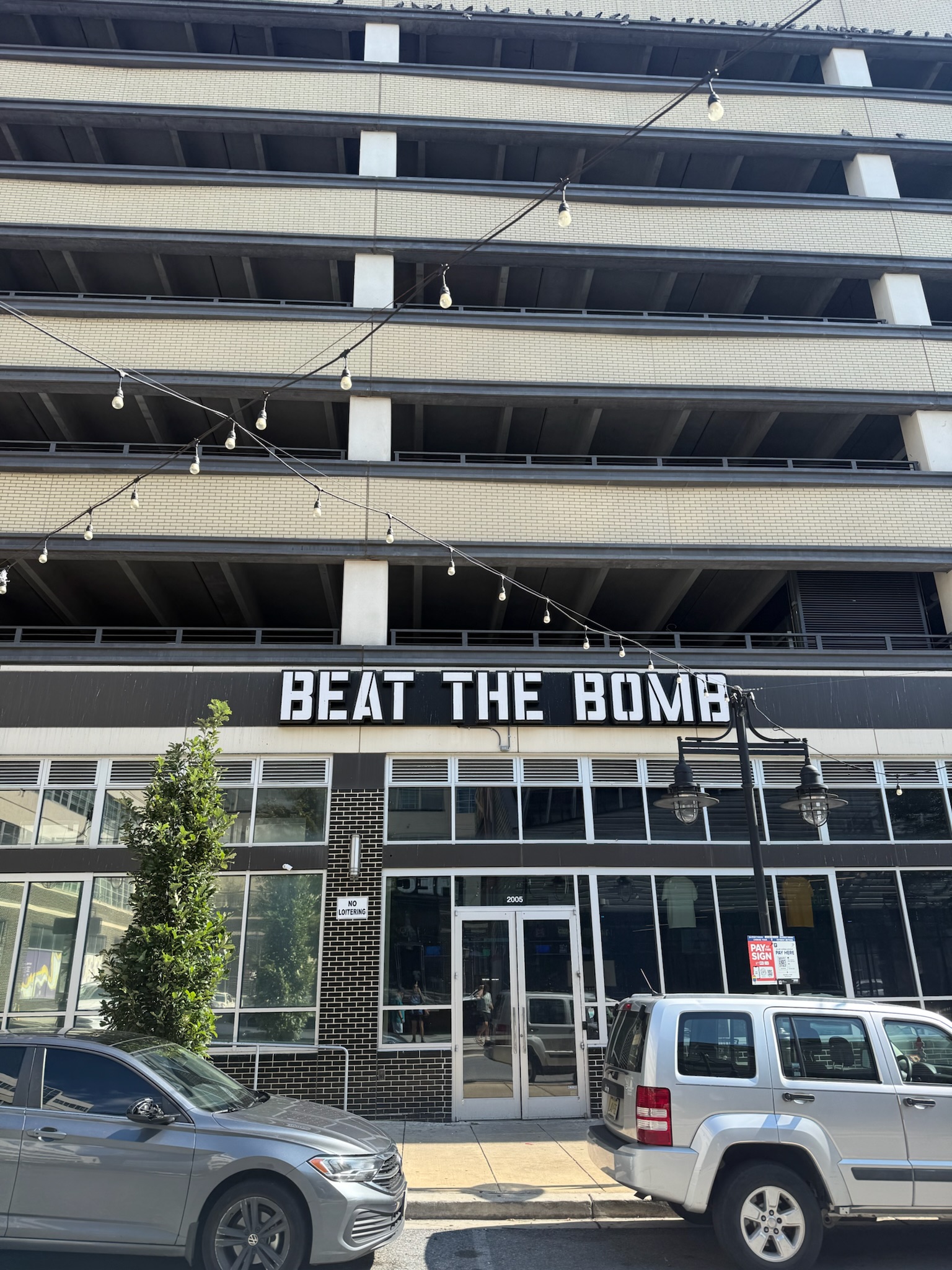
Beat The Bomb was about two miles northwest of the Capitol. From where we were, getting there via public transit would have involved taking the Metro and then transferring to a bus. It was slower and more complicated than we wanted to deal with, so we took a ride share.

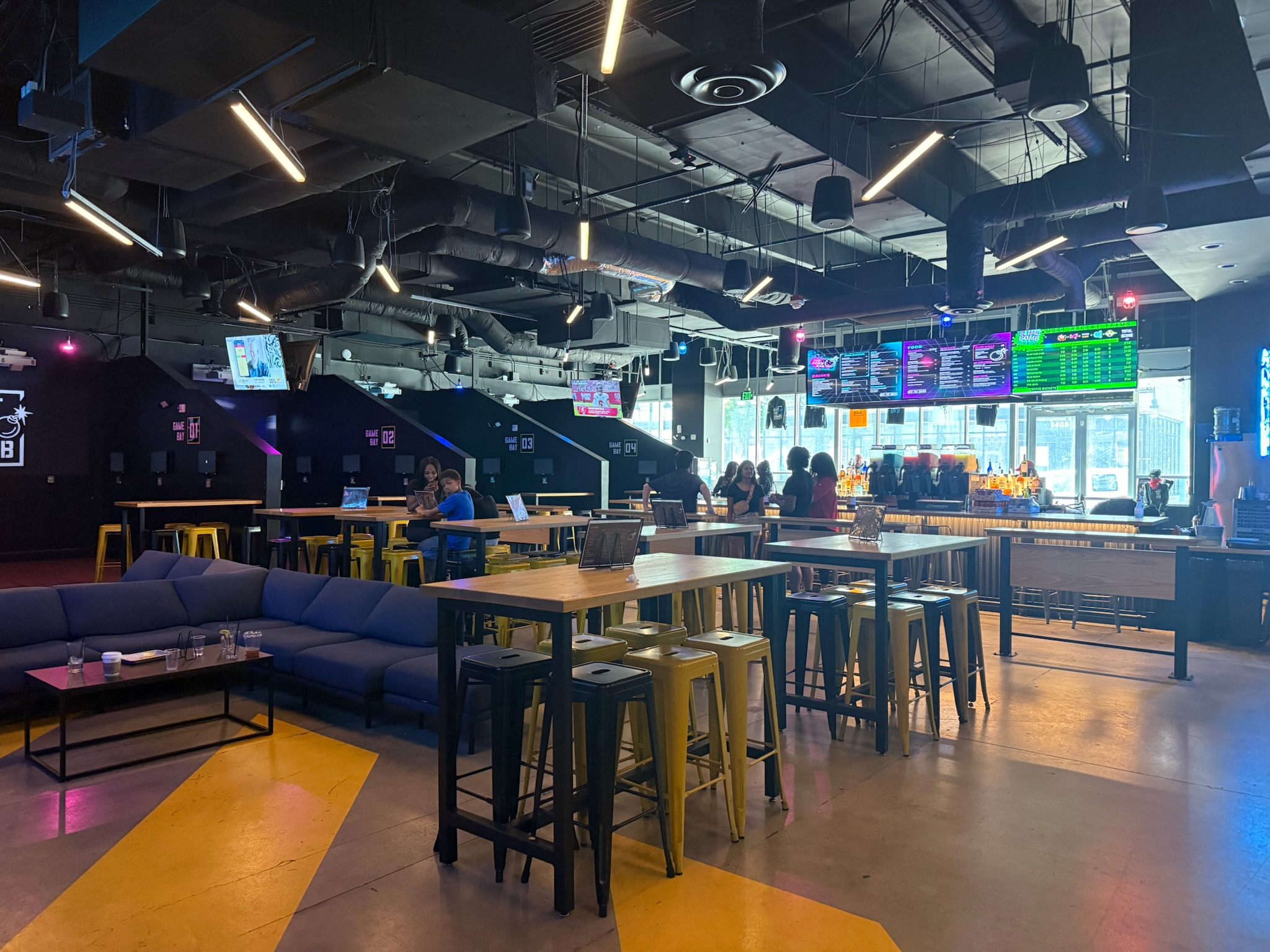
When we walked in, we were directed to some kiosks to check in and sign release forms. Once we’d finished the check-in paperwork, we were told to wait in the lounge until we were called, and encouraged to purchase drinks and food from the bar.

The black partitions off to the side looked like virtual game areas. A television screen was playing a live feed of the groups that were currently in the escape rooms. The rooms were solid black and they were moving in strange ways. They looked pretty darn silly.

Continue reading

The National Cryptologic Museum in Annapolis, Maryland – Part 2

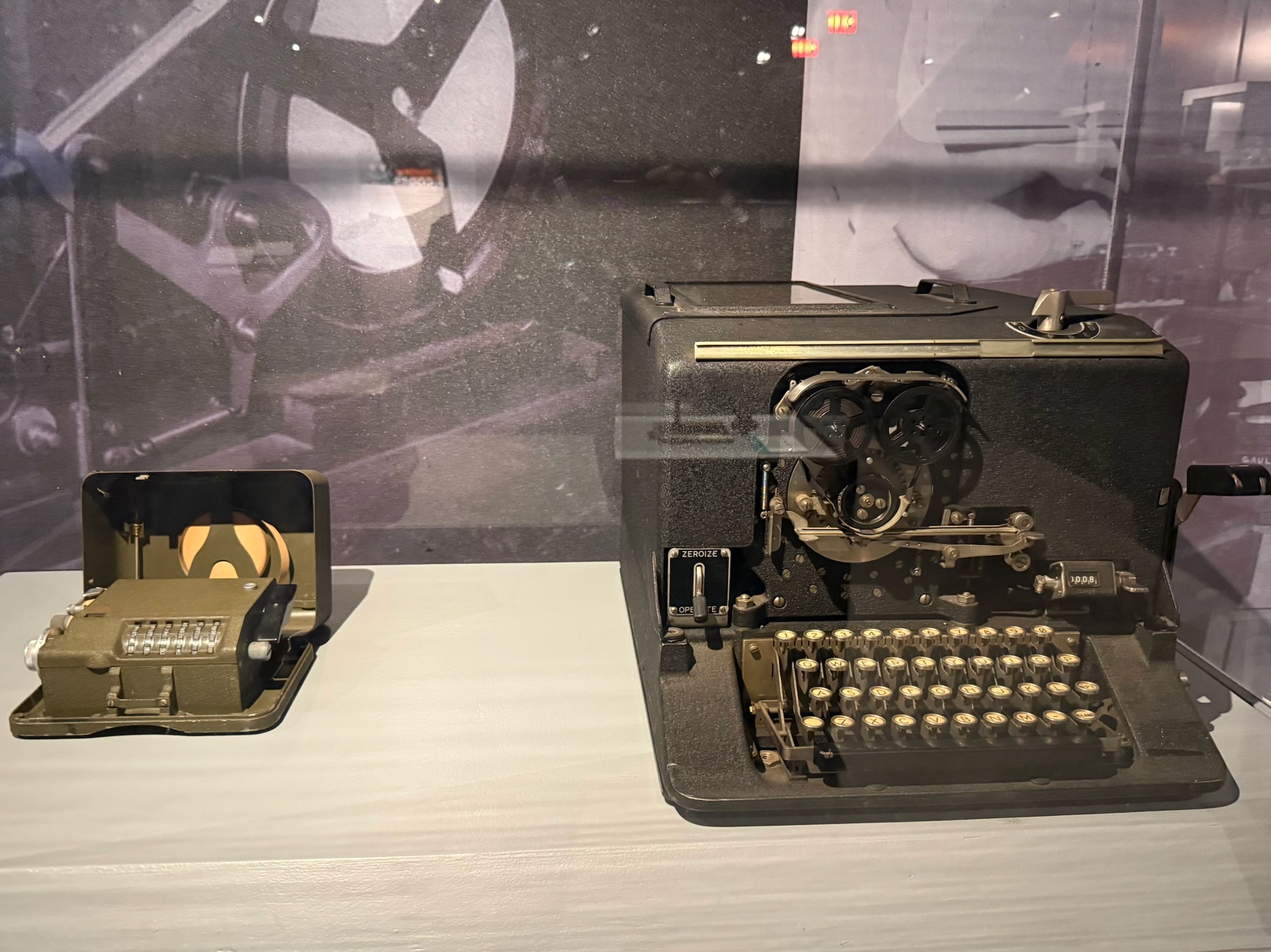
continued... Here were some American machines used in World War II. The little machine on the left was a portable unit. 140,000 were built during WWII. They were also utilized in the Korean and Vietnam Wars, as well. The bigger one to the right was the first production model of an Electric Cipher Machine. The Navy called it CSP-889 (later renamed to ECM Mark II) and the Army called it SIGABA.

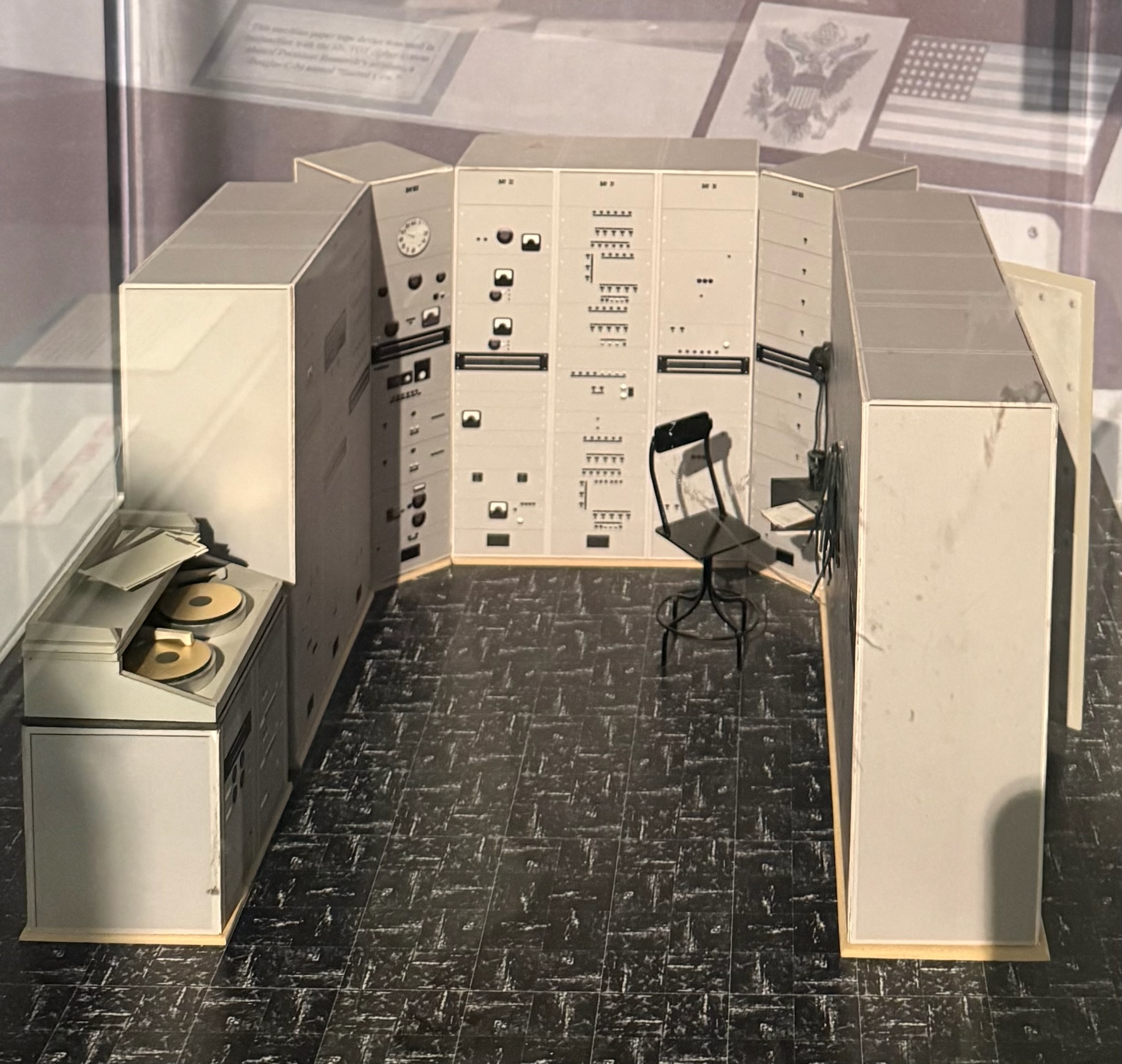
They also could do voice encryption. We believe this was a model of a SIGSALY machine that produced encoded records. There were two turntables that synchronized the sending and receiving ends. When played on a regular record player, they just sounded like random noise. A matching record at the receiving end could unscramble them. They held about 12-minutes of content. They were in service from 1943 to 1946.

Continue reading