The National Air & Space Museum in Washington, DC – Part 5: Exploring The Planets & Nation of Speed

continued… When Pluto was discovered in 1930, the scientific community agreed it was a planet. In 1987, another very large object was found in the Kuiper Belt. Since then, over a thousand more objects have been discovered. While Pluto was the largest, one named Eris has more mass and also has a moon. In 2006, the definition of planet was altered to be a celestial body that: a. is in orbit around the sun, b. has enough mass for its gravity that it has (nearly) a round shape and c. has cleared other large objects from the region of its orbit. Pluto did not meet criteria C. A new category was created: dwarf planet, which Pluto met the criteria for. Eris was also categorized as dwarf planets.

New Horizons was the first spacecraft to explore Pluto and its moons. It revealed that Pluto and moon Charon have dramatic landscapes and altered surfaces that were surprisingly young. It has passed Pluto and is currently in the Kuiper Belt.

The last “real” planet in our solar system is Neptune, and before it is Uranus. Uranus was discovered in 1781 by William Herschel, Neptune was discovered in 1846 by Johann Gottfried Galle. Both are icy gas giants, which means they have small rocky cores, but the majority of the planets are made up mostly of gas and ices — so they don’t have solid surfaces. Both are blue/green in color, which comes from high concentrations of methane. Both have faint rings — Uranus’s has thirteen and Neptune has six.
Continue reading

The National Air & Space Museum in Washington, DC – Part 4: Pioneers of Flight and Exploring The Planets

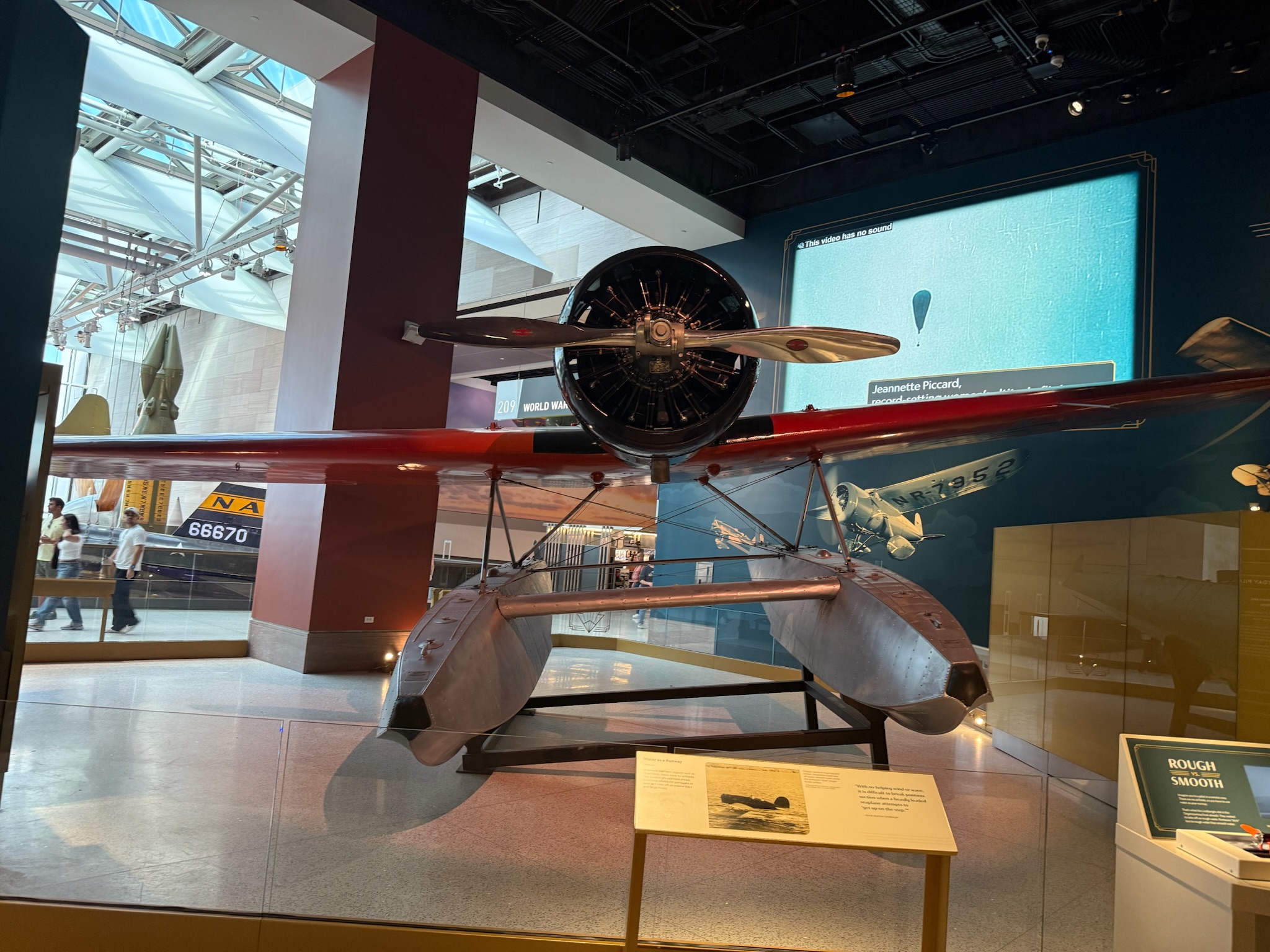
continued... Charles Lindbergh went on to set more records. The one that we found most notable was In 1931 and 1933, he and his wife, Anne, traveled in an airplane to five continents via never-before-flown routes. Ships supplied them with fuel and oil. They carried supplies to maintain and repair the plane and did the work themselves. They tried to plan stops where there was lodging and meals, but they often slept in the plane and ate canned rations. Sometimes, the landings were on a body of water and they’d spend the night anchored. When they knew they would be doing a water landing, they’d switch their wheels for pontoons.

Anne was one of the first women — maybe even the first — to get a glider pilot license in 1929. She earned her pilot’s license in 1931. He operated the radio (in morse code) and took over flying when Charles slept or took sextant sightings. We believe this was the Lindbergh’s plane.

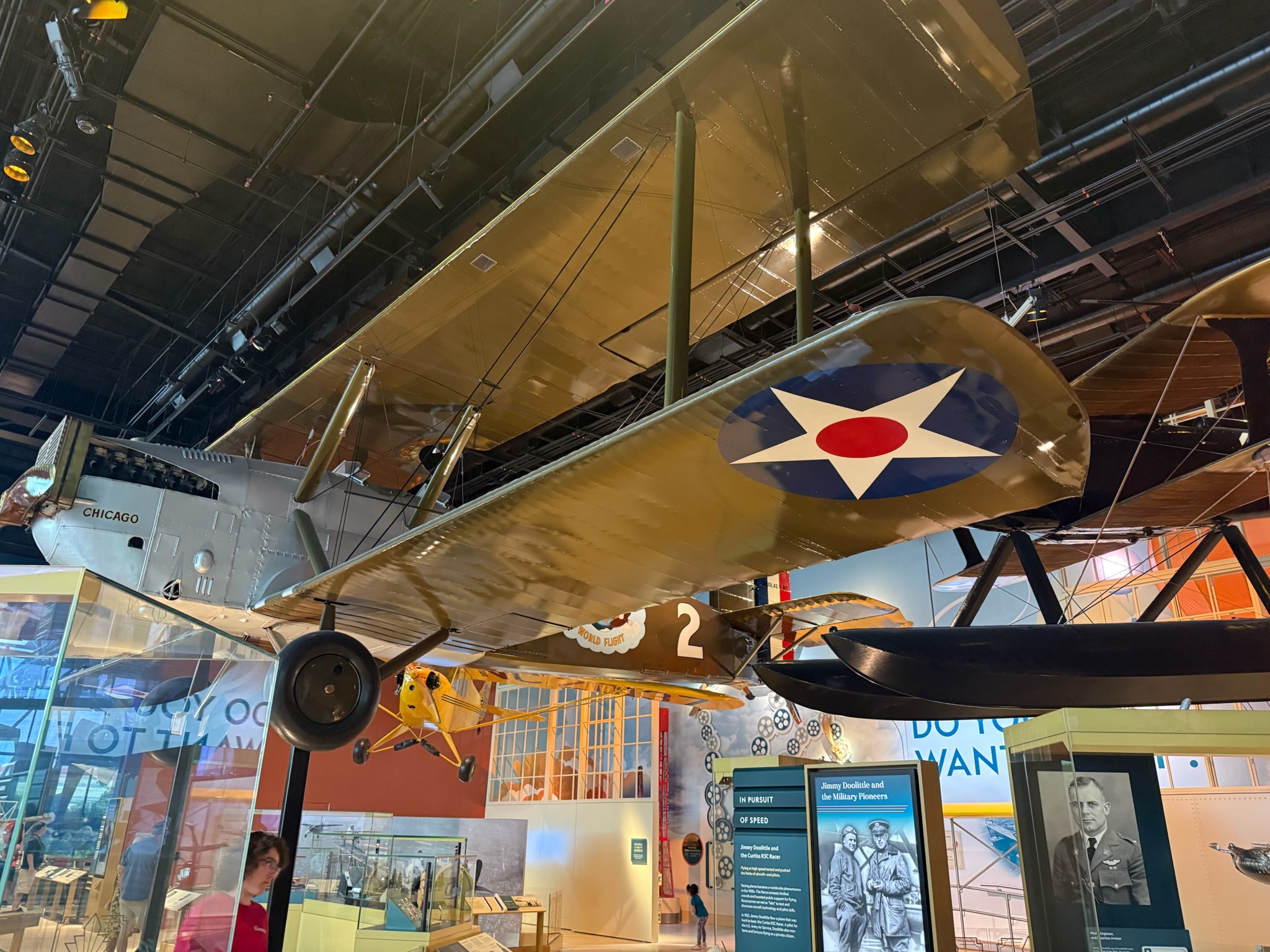
Another large display was about the US Army’s around-the-world trip in Douglas World Cruisers in 1924. The craft had originally been a torpedo bomber that had been modified after World War I. The goal was to prove that an airplane could make it around the entire globe and to show the value of the new US Army’s Air Service. They sent out four of these 2-seat biplanes, each with 2-men crews. Seventy-four landing sites had been pre-selected. US Navy escort ships followed below. At each landing site, the ship’s crews helped with maintenance, repairs, and refueling. The ships carried 35 replacement engines. Like the Lindbergh’s they often had to change back and forth between wheels and pontoons. The signs didn’t say how the Lindbergh’s managed to switch between the two, but for the Douglas World Cruisers, the ships would lift the planes out of the water with a crane. Two planes completed the 27,553-mile journey, which spurred global air travel and trade. We think this was the plane, but again, it was hard to match the planes hanging from the ceiling with the signs on the ground.

Continue reading

The National Air & Space Museum in Washington, DC – Part 3: NASA and World War I

continued… The last Apollo mission was in 1972. The program ended primarily because American public support for the space program had waned due to concerns about the costs amid the expensive and controversial Vietnam War.

Next were some small displays about subsequent missions. There was a hiatus in the moon program until 1994, when it resumed with the launch of a Defense Department robotic craft called Clementine. NASA followed up with flights in 1998 and then again from 2009 – 2013.

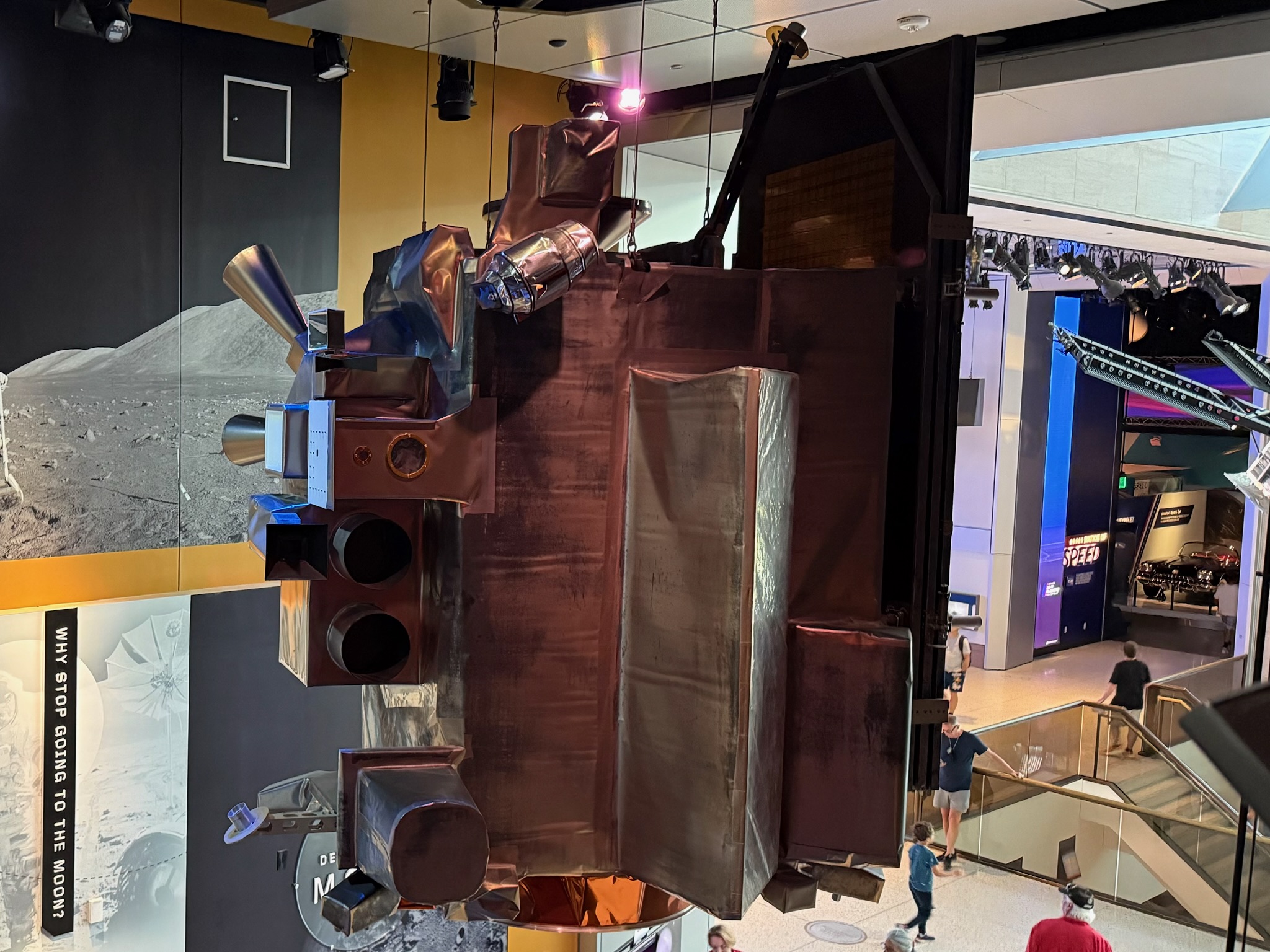
In 2009, NASA launched the Lunar Reconnaissance Orbiter to provide high resolution imagery of the moon. We think this was a replica, but once again, since it was hanging from the ceiling, we’re not 100% sure.

In 2022, NASA, in conjunction with several other countries, launched the Artemis program. They sent an uncrewed mission in 2022. They plan to send a 4-person crew to orbit around the moon in 2026. Artemis III will have a lunar landing. The long term goal is to have a space station in lunar orbit to be the base for further exploration of the moon and mars.

Continue reading

The National Air & Space Museum in Washington, DC – Part 2: Destination Moon

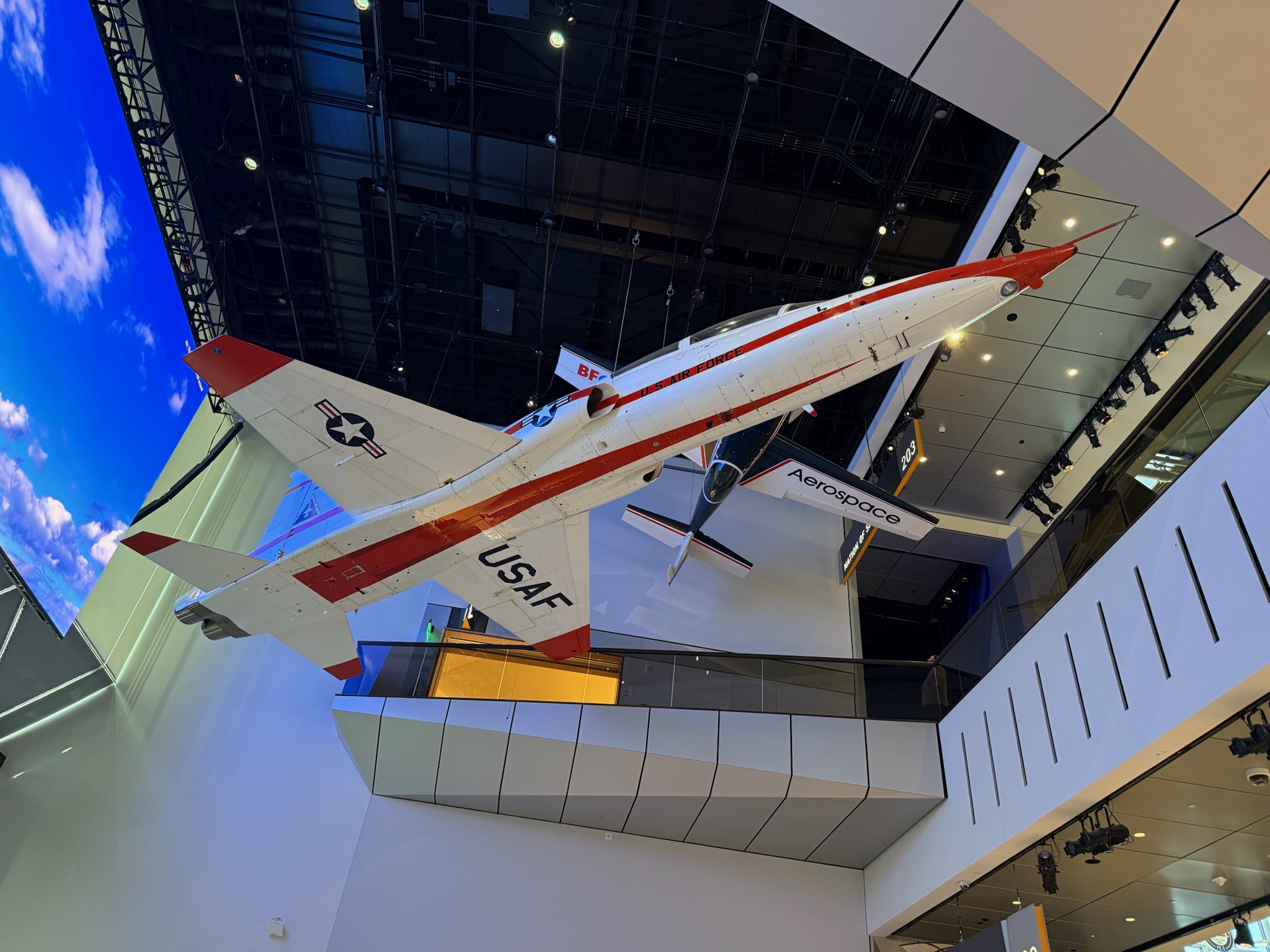
continued… we were already starting to feel like our brains were full. Realizing we couldn’t see the whole museum today, we headed upstairs to the rooms that we wanted to see the most. This Northrop T-38 was hanging over the stairwell. Jacqueline Cochran set eight world records in this jet. At the time of her death in 1980, she had broken more speed, altitude and distance records than any other pilot — than 200, including breaking the sound barrier. Fun fact – she emphasized her femininity and had a line of cosmetics called Wings to Beauty!

Upstairs, the first room that we went into was called Destination Moon. In October 1957, the Soviet Union launched the world’s first satellite, called Sputnik. In 1958, the US responded by creating a new government agency called the National Aeronautics and Space Aviation (NASA), whose goal was to put a man into orbit. The space race was on!

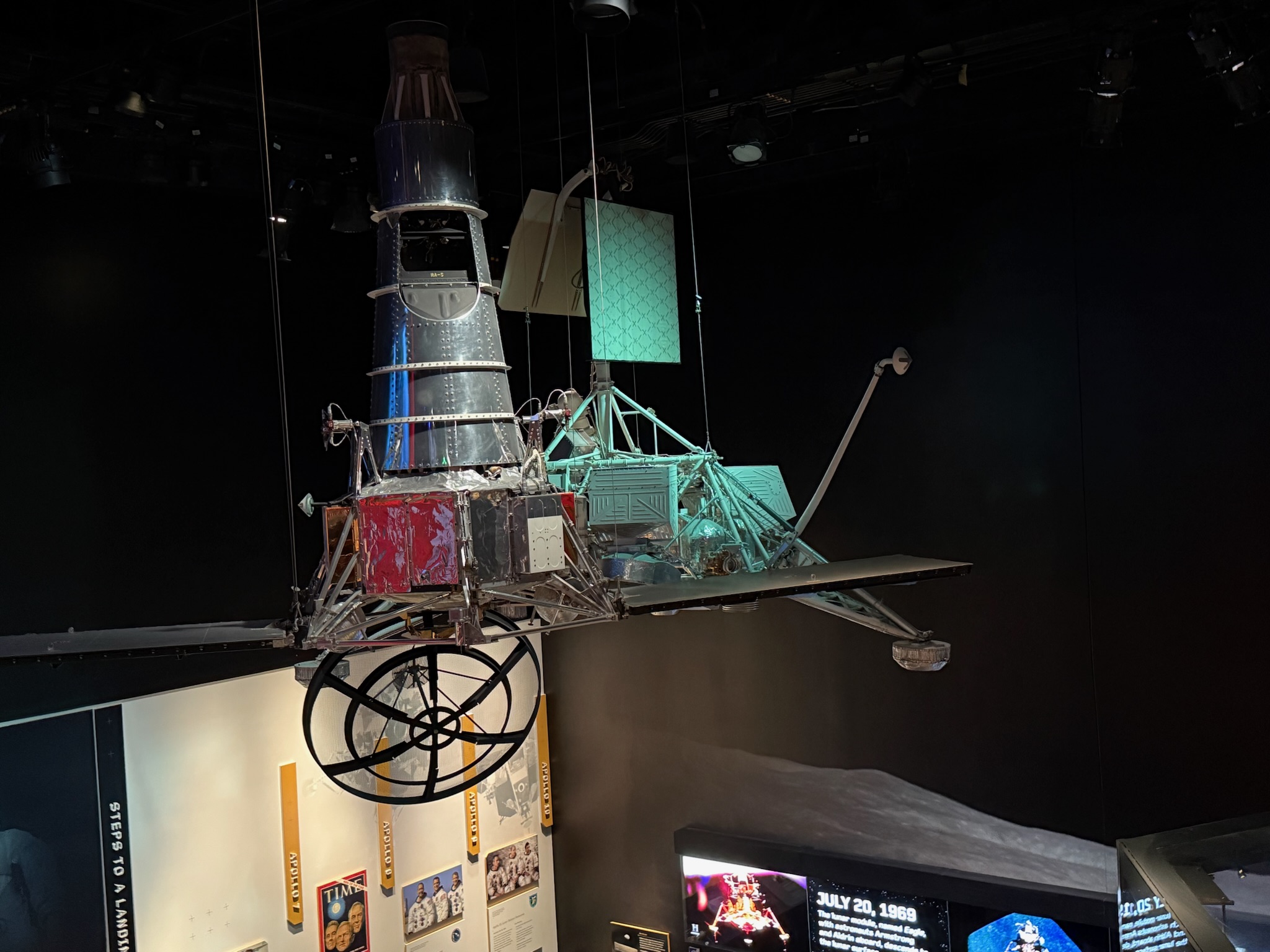
In January 1959, the Soviet Union’s robotic spacecraft, Luna One, left Earth’s orbit and got within 3,700 miles of the moon. In March 1959, the US launched a spacecraft, called Pioneer IV, that successfully left Earth’s Orbit. We think this is a replica of Pioneer, but we’re not sure. It can be hard to match the signs on the ground with the objects hanging from the ceiling.

Continue reading

The National Air & Space Museum in Washington, DC – Part 1: The First Floor

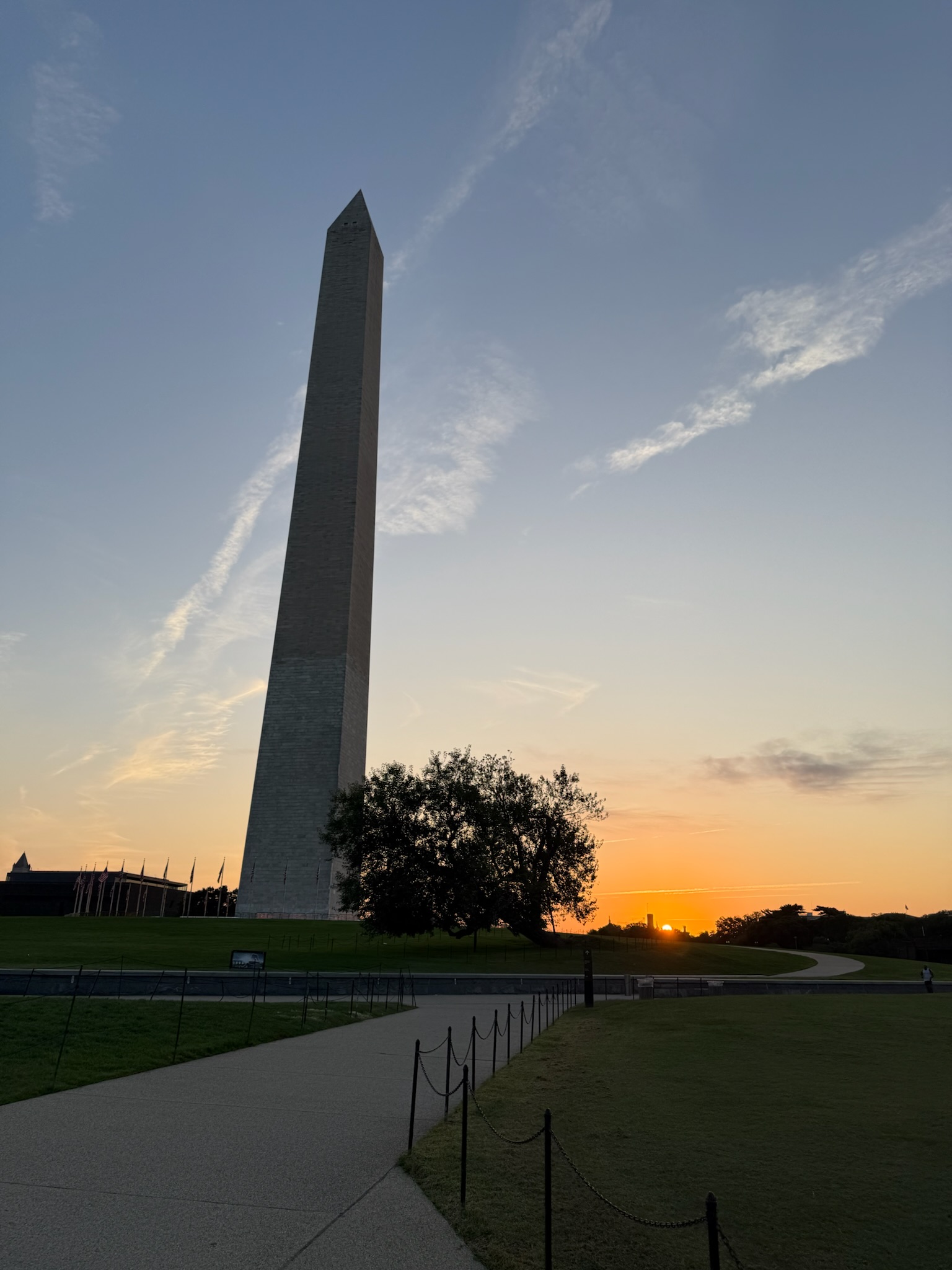
Monday, September 22 — Eric went for a run this morning to the Lincoln Memorial. He saw the sunrise behind the Washington Memorial.

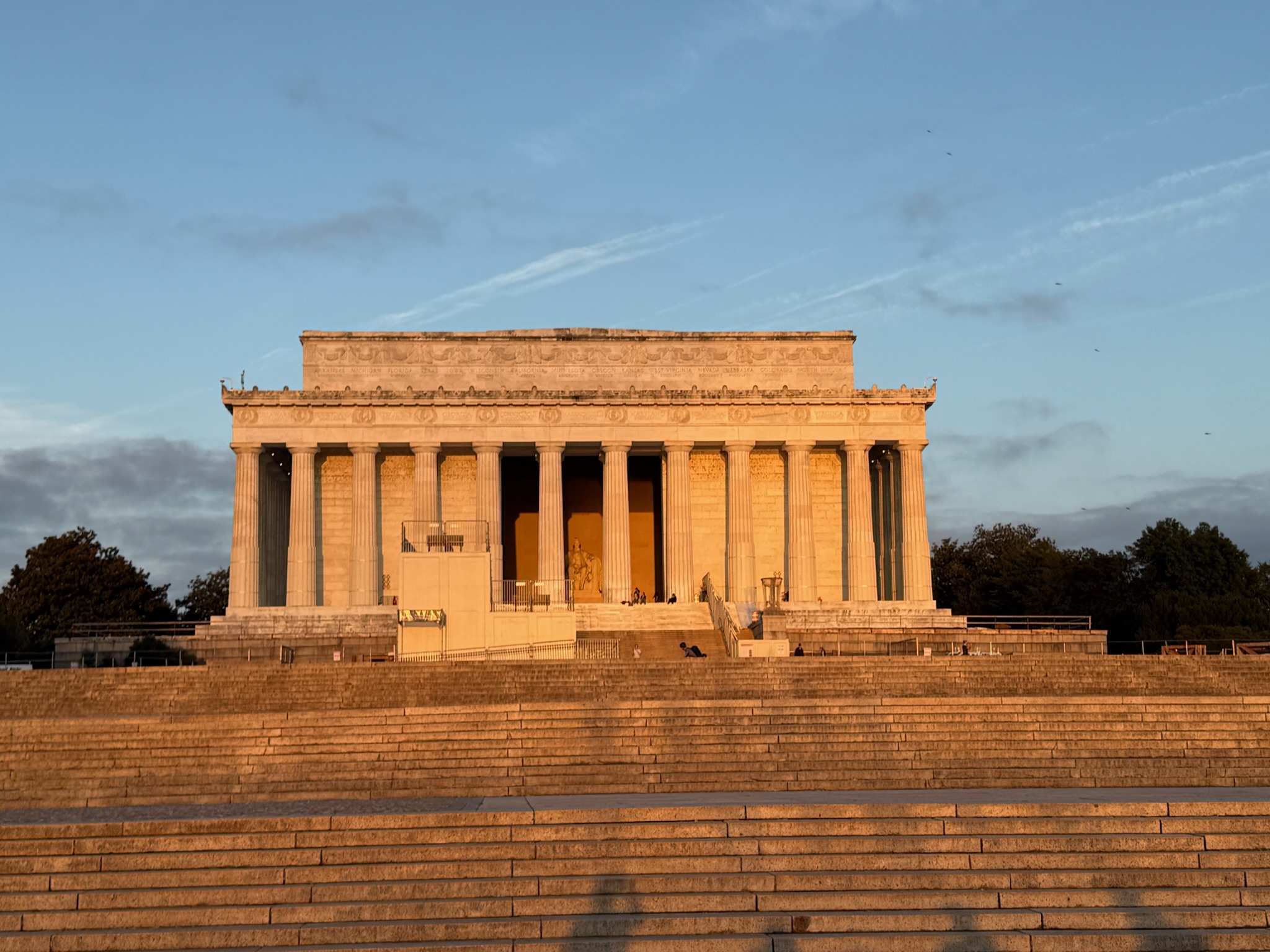
The Lincoln Memorial glowed in the early morning sun.

He went inside and said hi to Abe.

Continue reading