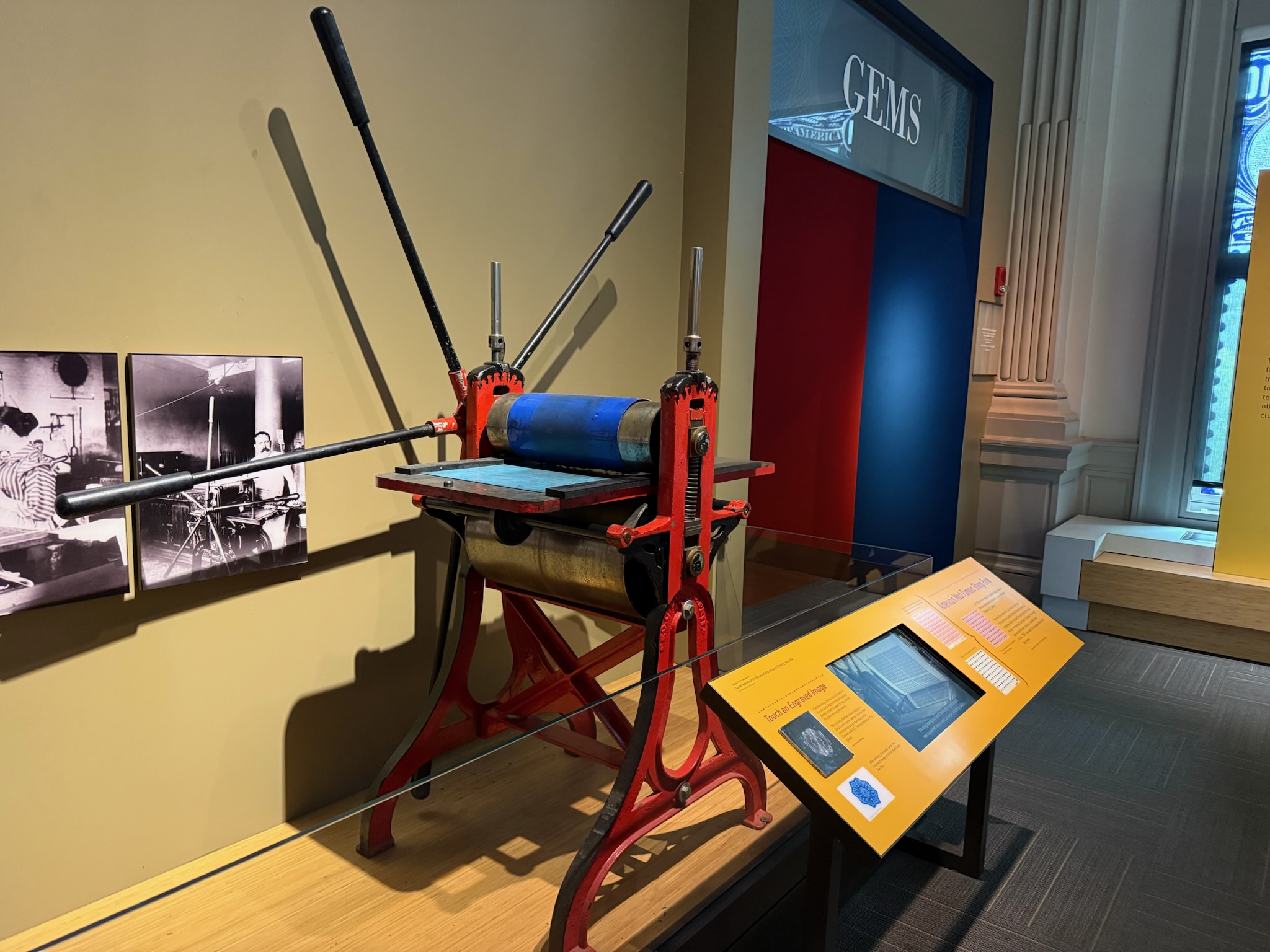
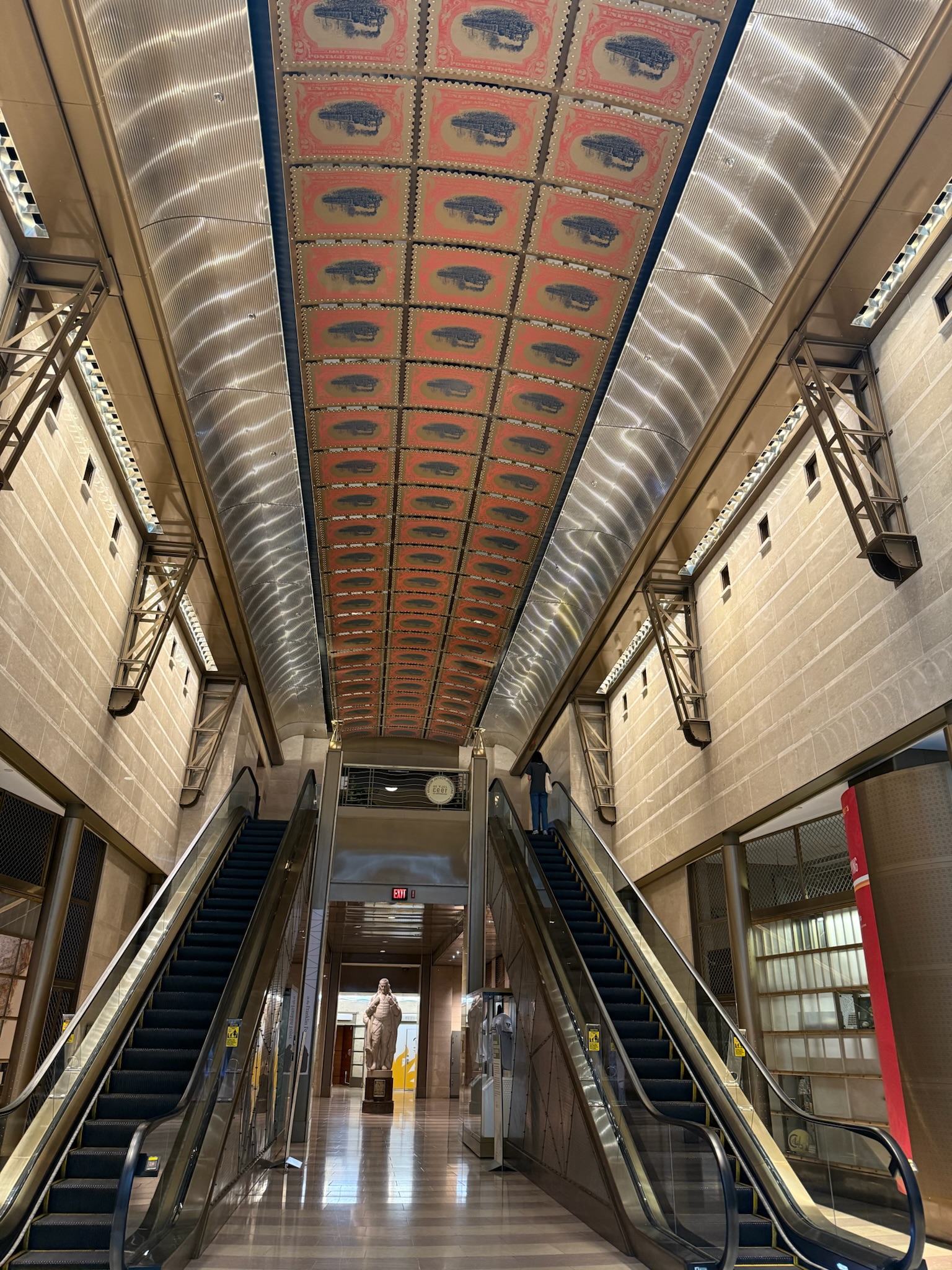
continued... Prior to the early 1900s, stamps were printed on small hand presses called a Spider Press.
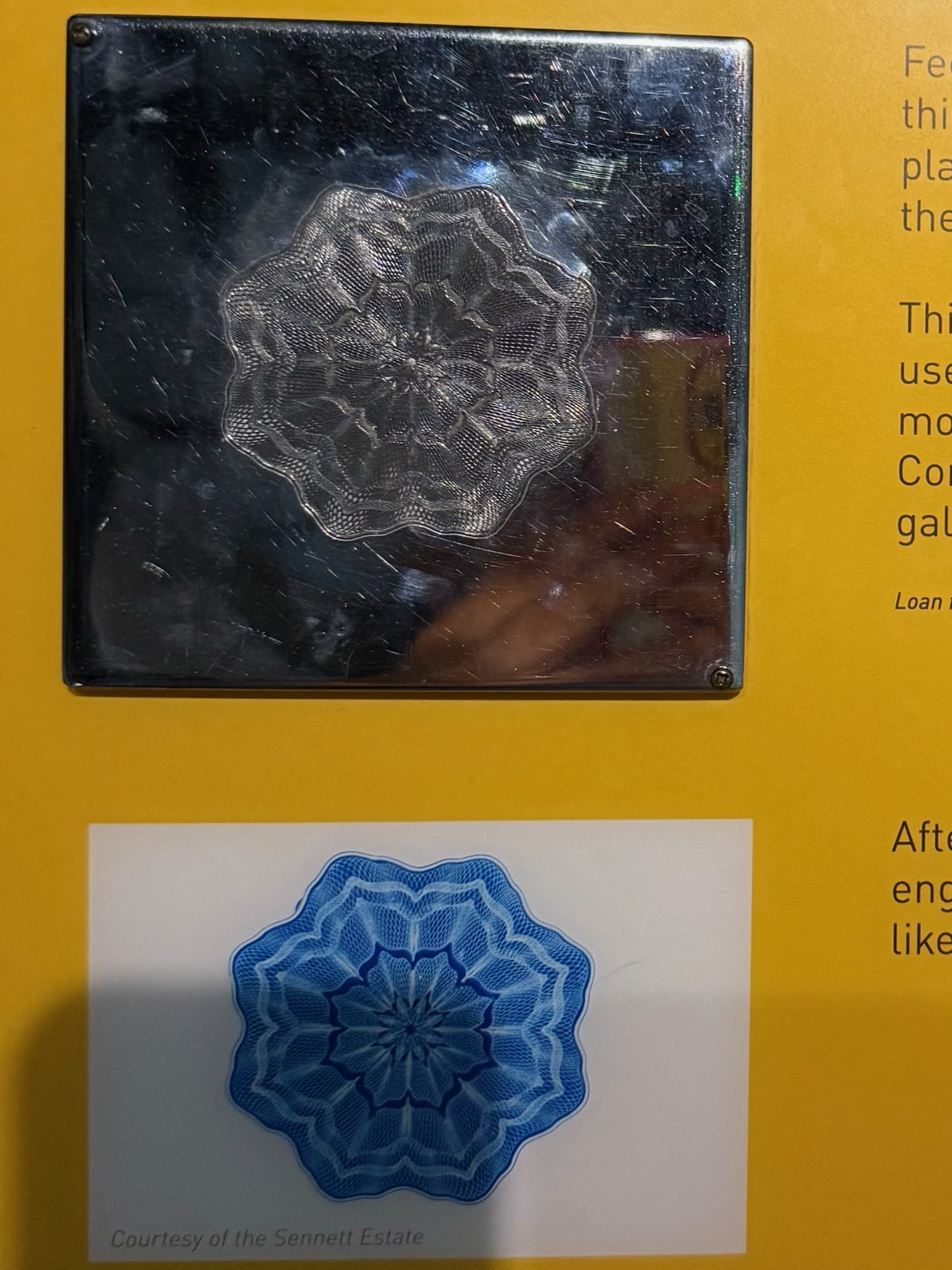
They utilized flat plate presses with recessed engraving to create a sharp image. They usually had fancy frames and were 1 – 2 colors. They could only utilize one color at a time, so the multicolored stamps had to be impressed separately with each color. This led to considerable variation among stamps and some errors. These early stamps with errors were some of the most valuable to stamp collectors.
continued… Once we finished in the Postal Inspector room, we went across the hall to a room about the partnership between the Post Office and the department of Defense for mail services to remote military personnel. Mail service has always been incredibly important for them. Life responsibilities were — and often still are — conducted through the mail, such as receiving and paying bills or voting via an absentee ballots. Personal correspondence was just as important. For a long time, mail was the only way for servicemen to communicate with their loved ones, so mail service was critical for the morale of the troops. Even as more methods of communication have been implemented over the decades, ensuring timely mail continues to be an important facet of military operations — especially during war times. The Department of Defense provides large subsidies to reduce the cost of mail going to/from military personnel stationed abroad, especially in combat zones — some types of mail are free.
Up until World War I, postal employees handled military mail. When the US first joined the war, some postal employees went to Europe to process the mail, but soon the military created the Military Postal Express Service staffed by soldiers to replace the civilians in the war zone. The Post Office handles service for bases within the US; the military operates the overseas military post offices. There is a military post office at every duty station. We remembered seeing one on the USS Wisconsin. The military has a separate address system that adapts as troops change locations. Delivering mail to the front lines can be challenging and dangerous. Like the Star Route contractors, the military has tried an assortment of creative and innovative delivery strategies. One time, in 1959, they tried shooting a Regulus 1 missile full of mail from a submarine to Florida. The sign did not say what the results were, but we’re assuming not good since they never attempted it again.
There was a display about a special Christmas operation in 1918. World War I had ended in November, but the majority of troops were still stationed overseas at Christmas time. The military, Red Cross and Post Office teamed up to organize a letter writing and holiday care package campaign to lift the spirits of as many overseas soldiers as possible. 46-million letters and 15-million parcels and print matter were delivered to soldiers in Europe. Meanwhile, the overseas soldiers sent 40-million letters to the US. The displays explained what an incredible logistics feat this was, given the limitations of that time.
There were signs detailing other ways that civilians have used the mail to help the military personnel. For example, people would go to hospitals and write letters on behalf of soldiers who were unable to write themselves (due to injury, illiteracy, etc). It mentioned a lot of organizations that have also done letter writing/package campaigns and organized pen-pals for the soldiers. And it mentioned some companies that some companies donate equipment that facilitates correspondence through the mail. For example, back in the day when it was rare and expensive, companies shipped equipment so that the soldiers could record themselves speaking, then mail the record/audio tape home.
The display had quite a few touching old letters from service personnel with their original envelopes. There were also some voice recordings that had been sent through the mail that we could listen to. Also of note, there was a sign acknowledging that during war times, censors checked all mail going to/from military personnel and to/from civilians in foreign countries to make sure that no sensitive information that could jeopardize national security was in them. The censors were trained to look for codes and secret inks.
Yesterday, the marina had told us another boat was coming in on Friday that needed our end-tie, and that we needed to move prior to their arrival. Since it was such a calm morning, the first thing we did was move to another slip. All went smoothly with that, and interestingly enough, the power worked fine and we didn’t need the isolation transformer.
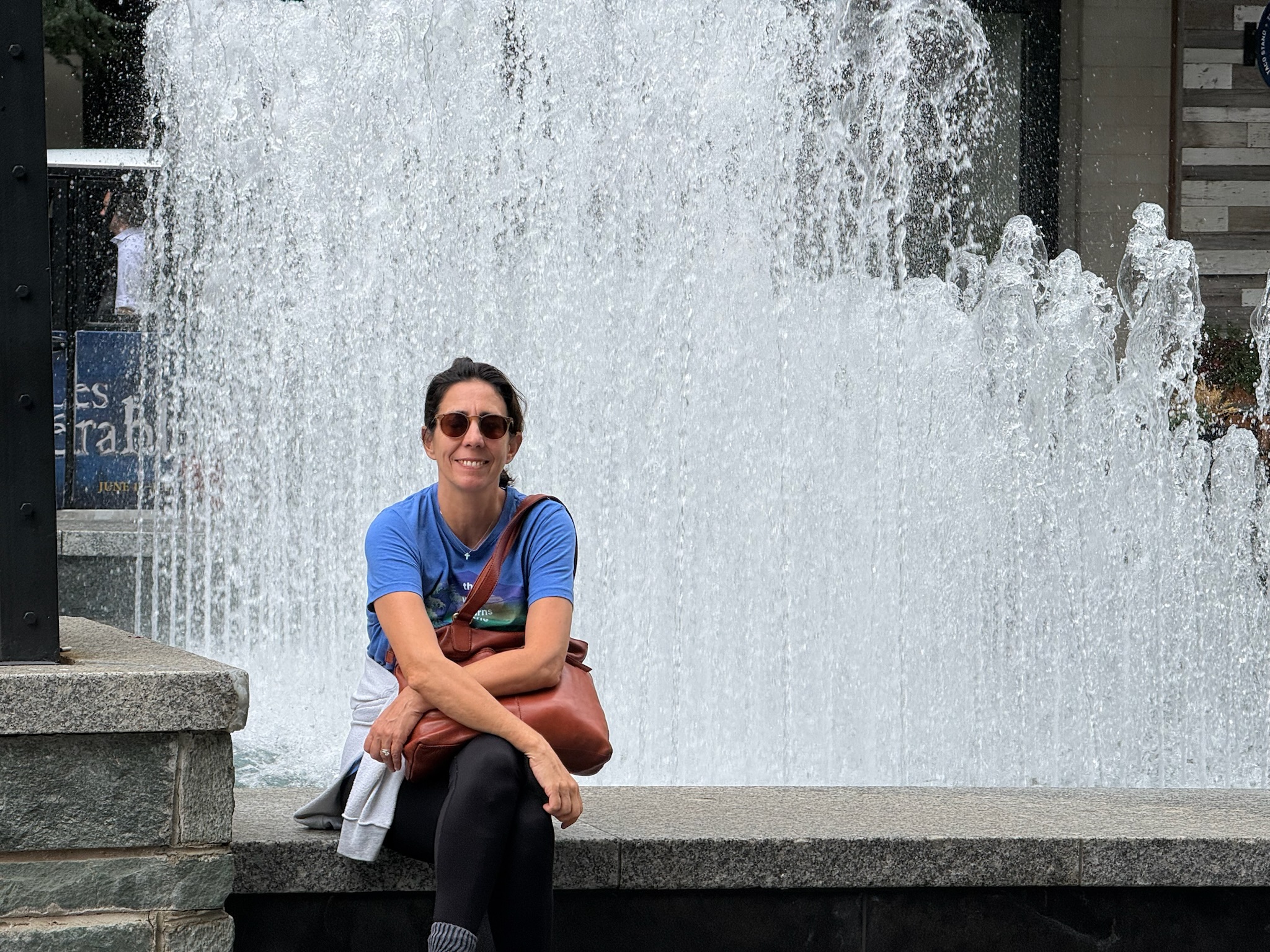
Our big outing of the day was the National Postal Museum. It was 2.3 miles away, located a little bit north of the Capital building. According to Apple Maps, if we took the Metro, it would cost $6.75 each way for the three of us, we’d need to change lines, and the total transit was estimated to take 35-minutes. Eric checked the ride-share app and found that it would cost $9.00 and take 20-minutes to be delivered door to door. We opted for the ride-share. We waited for the driver at the fountain by Surfside taco, which had a traffic light and a small U shaped road that made it an easy location for the driver to pick us up.
While in the car, the driver suggested that after we finished at the museum, we should go across the street to Union Station. He said that even if we took another ride share back to the marina instead of the Metro, that the station was an “experience worth seeing.” He dropped us off at the Massachusetts Ave. East entrance, which was the south side of the building.
Continued… The Southwest Gallery had an exhibit called something along the lines of The Two Georges that compared and contrasted US President George Washington and British King George III.
As we’d learned in Yorktown, when the colonies had been established, the Monarchy had been pretty hands-off. When King George III came to power in 1760, he pursued stricter policies of control over the colonies. Long story short, the American Revolution was basically the colonies saying no to this control, viewing the king as a tyrannical ruler who could not be reasoned with. King George III stayed in power until 1811, when he became too sick to rule. Rather than abdicating the throne, King George III had his son rule on his behalf as the Prince Regent. The king died in 1820.
George Washington was a wealthy farmer from Virginia. He became the commander-in-chief of the military during the Revolutionary War. The two Georges were literally fighting one another over control of the colonies. Washington resigned from the military when the war ended in 1783, but remained active in the politics of the new nation. He became the US’s first president in 1789 and was in power until 1797, when he chose to retire despite being encouraged to run for a third term. The exhibit made a point of stating that Washington voluntarily relinquished power while King George clung to power to the very end, even when he was too sick to rule. Washington died unexpectedly in 1799 from an infection, only three-years after leaving office.
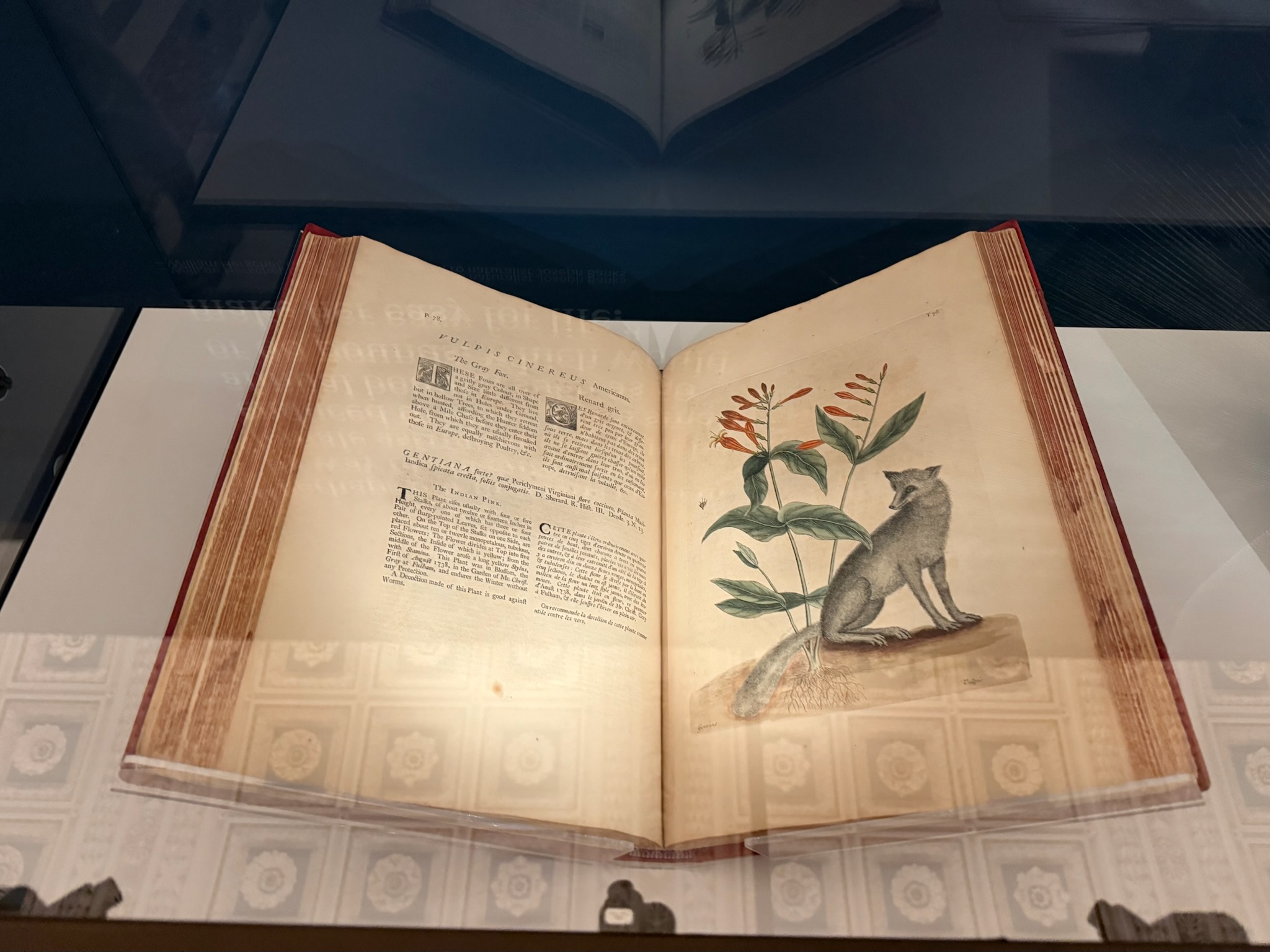
Both Georges were Enlightenment men who were into science and agricultural advancements. George III was an important patron of scientists and explorers, funding people such as Captain James Cook, naturalist Joseph Banks and astronomer William Herschel. Washington had wanted to establish a university in the Capital, believing that “flourishing the state of the arts and sciences” would lead to “national prosperity and reputation.” Both Georges owned this book on botany/horticulture.
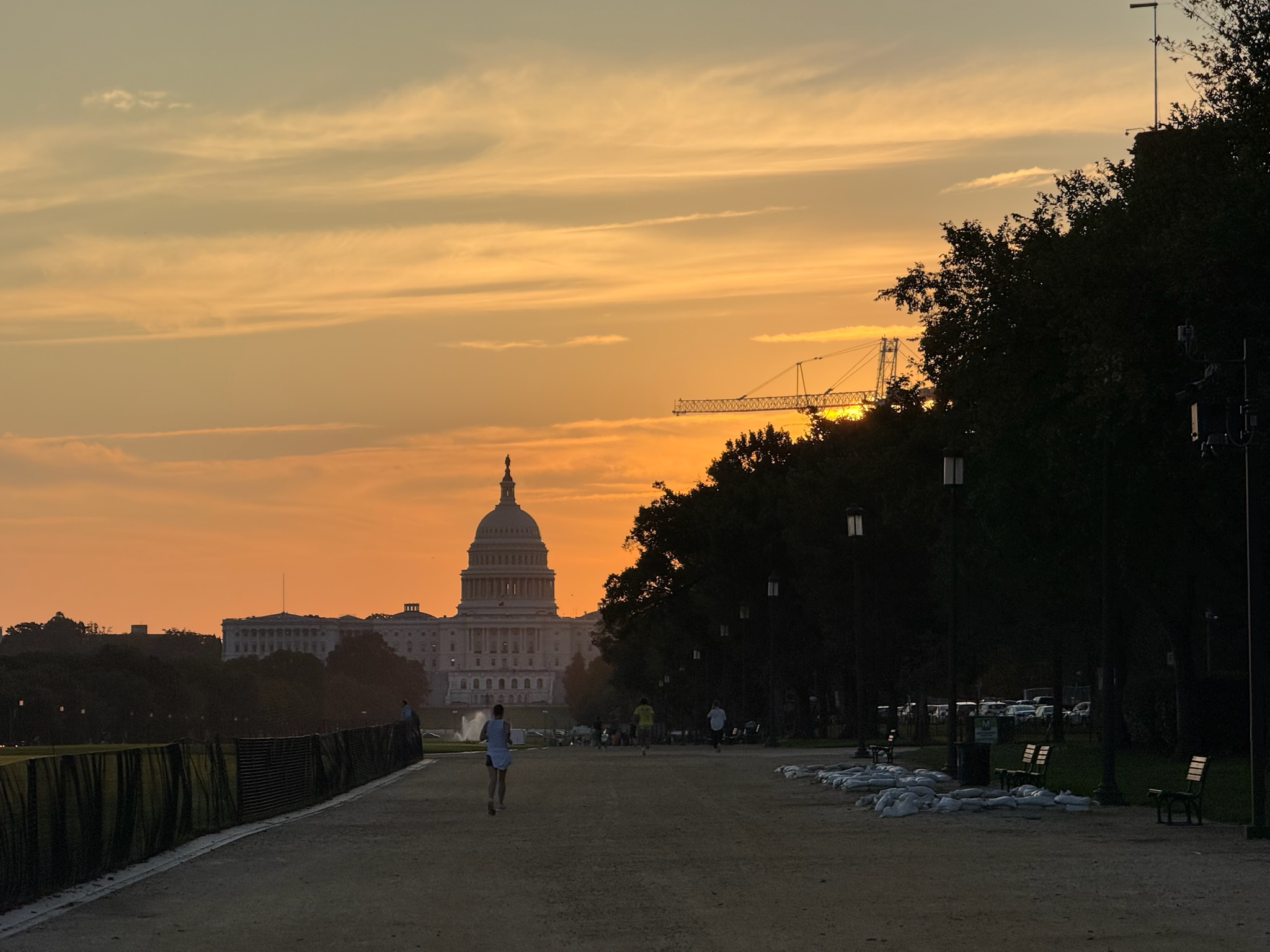
Eric went for another run at dawn on Tuesday, September 23. Here was the Capital in the early morning glow.
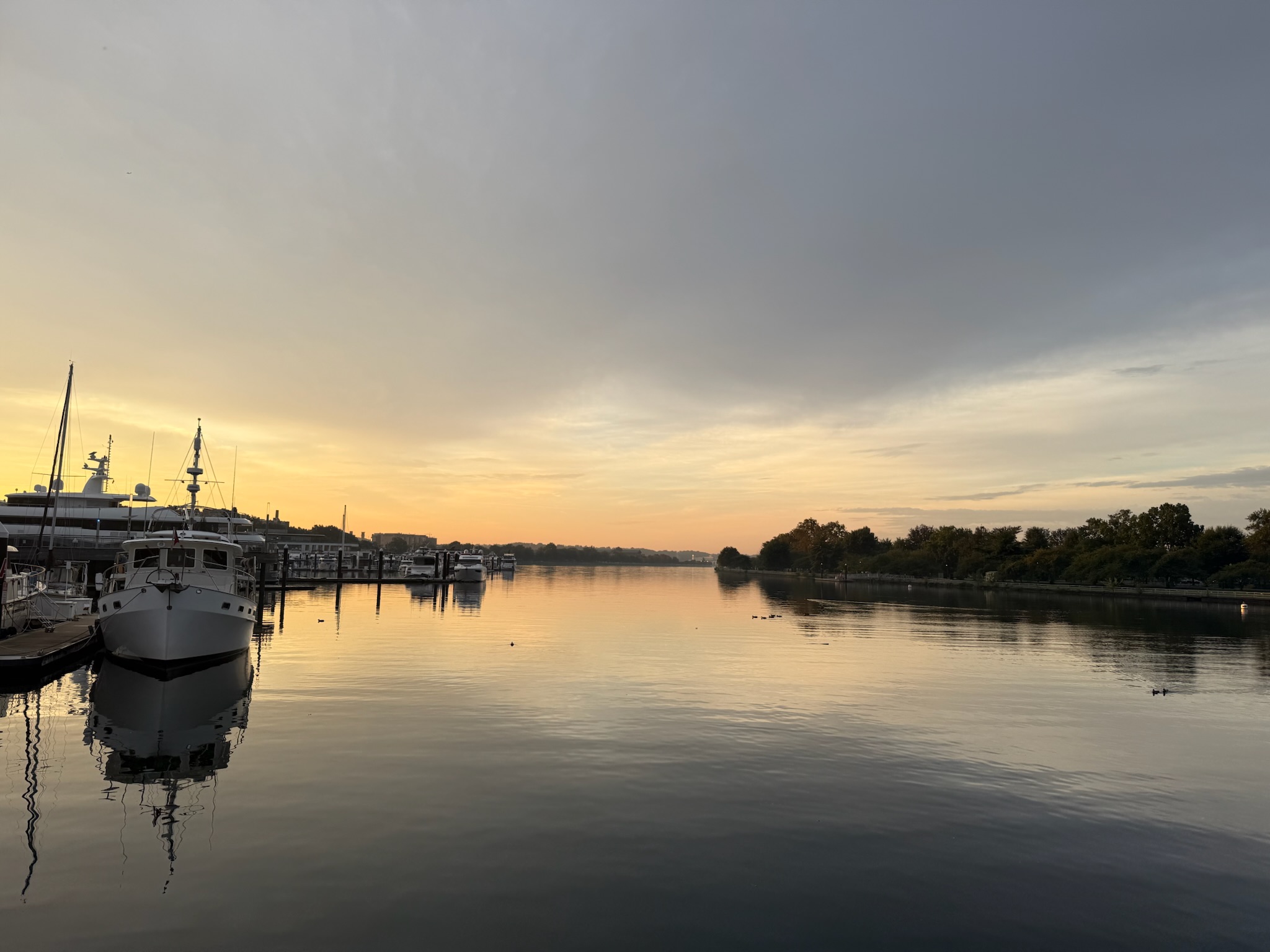
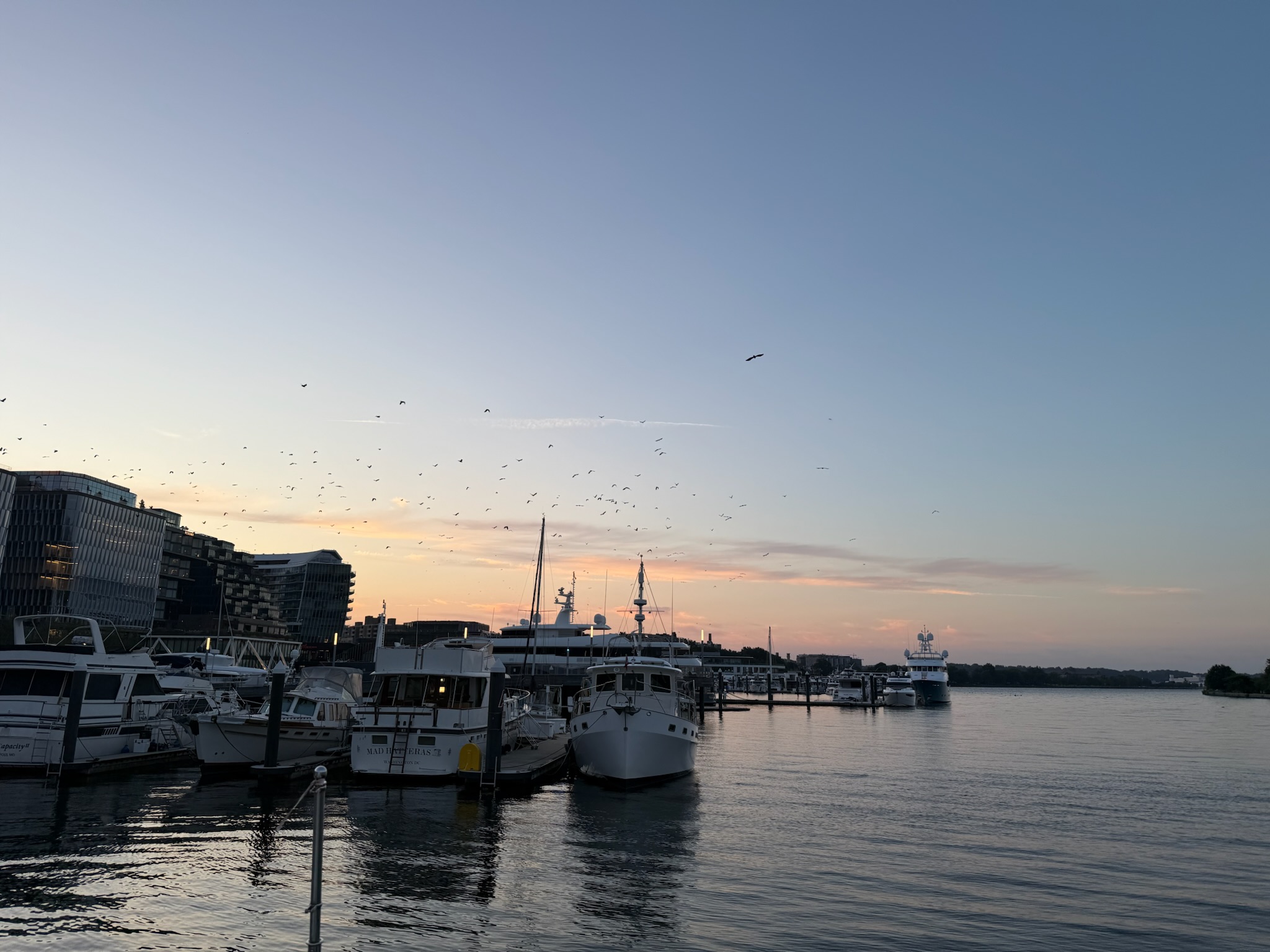
Meanwhile, this was the dawn back at the boat
Two months ago, we’d contacted our congressperson to ask for tickets to visit The White House, The Library of Congress, and Congress. We called their office and were told to fill out a form online. After waiting a week, Christi called to follow up. They said The White House hadn’t released dates they’d be open for tours yet, so they couldn’t submit our request. A few days later, we saw a press release that the White House was undergoing renovations and would be closed for tours indefinitely. Christi called again to follow up. The Congress woman’s office emailed her a link allowing her to sign up online for tickets to the other two venues. Tickets were free, but due to security reasons, they wanted personal information. Several days after that, Christi got emails from each venue saying we’d been approved for tickets, with a link to order them online.