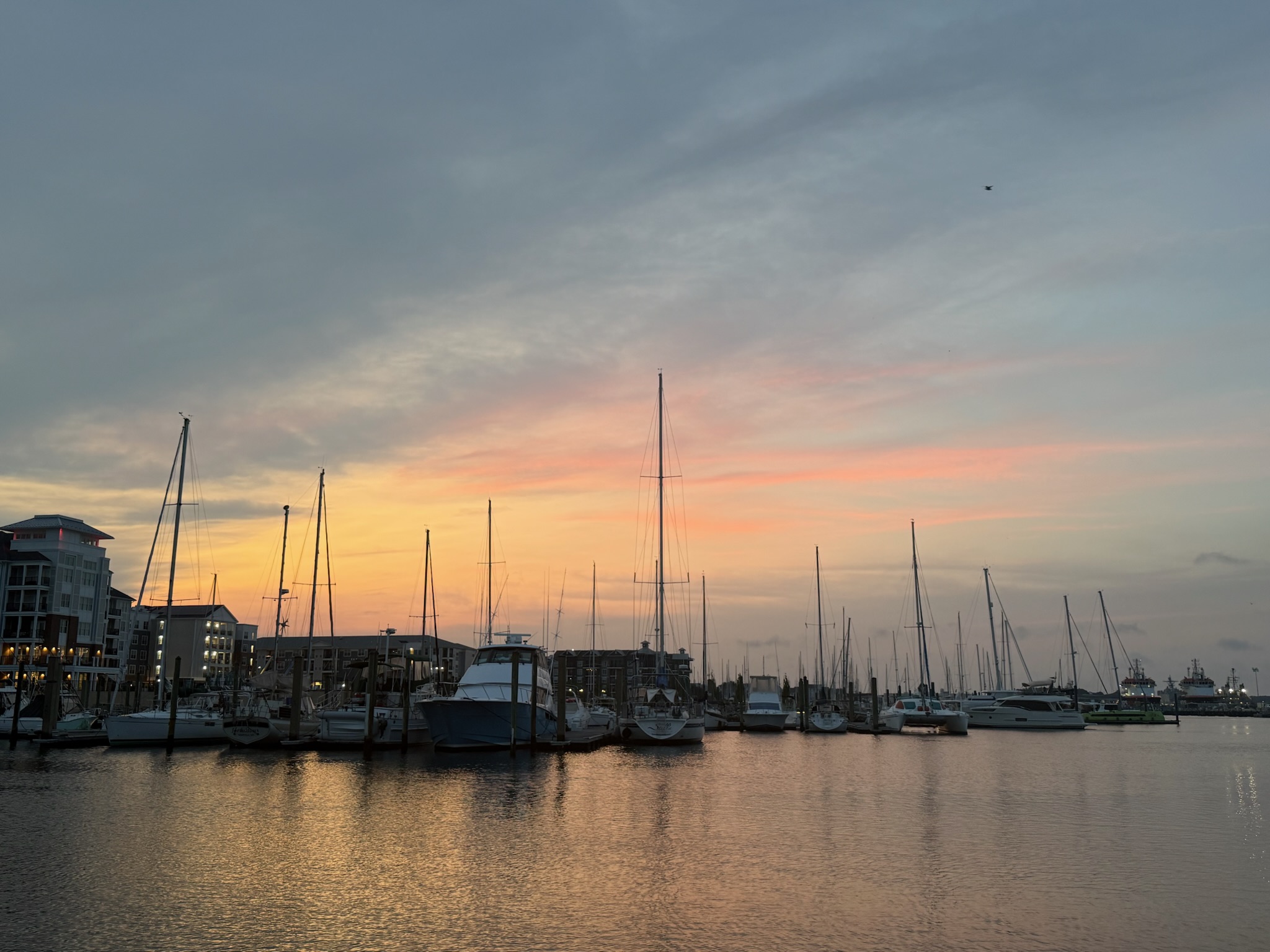
Friday, July 11 was a mellow day. In the morning, Eric changed seagull water filter. It was the filter attached to the kitchen sink that filtered our drinking water. Eric has been buying the same filter since Kosmos was new, and it has become one of his metrics for tracking inflation. The cost of the filters goes up a little bit every time he buys one, and they’ve doubled in price in over the 19 years.
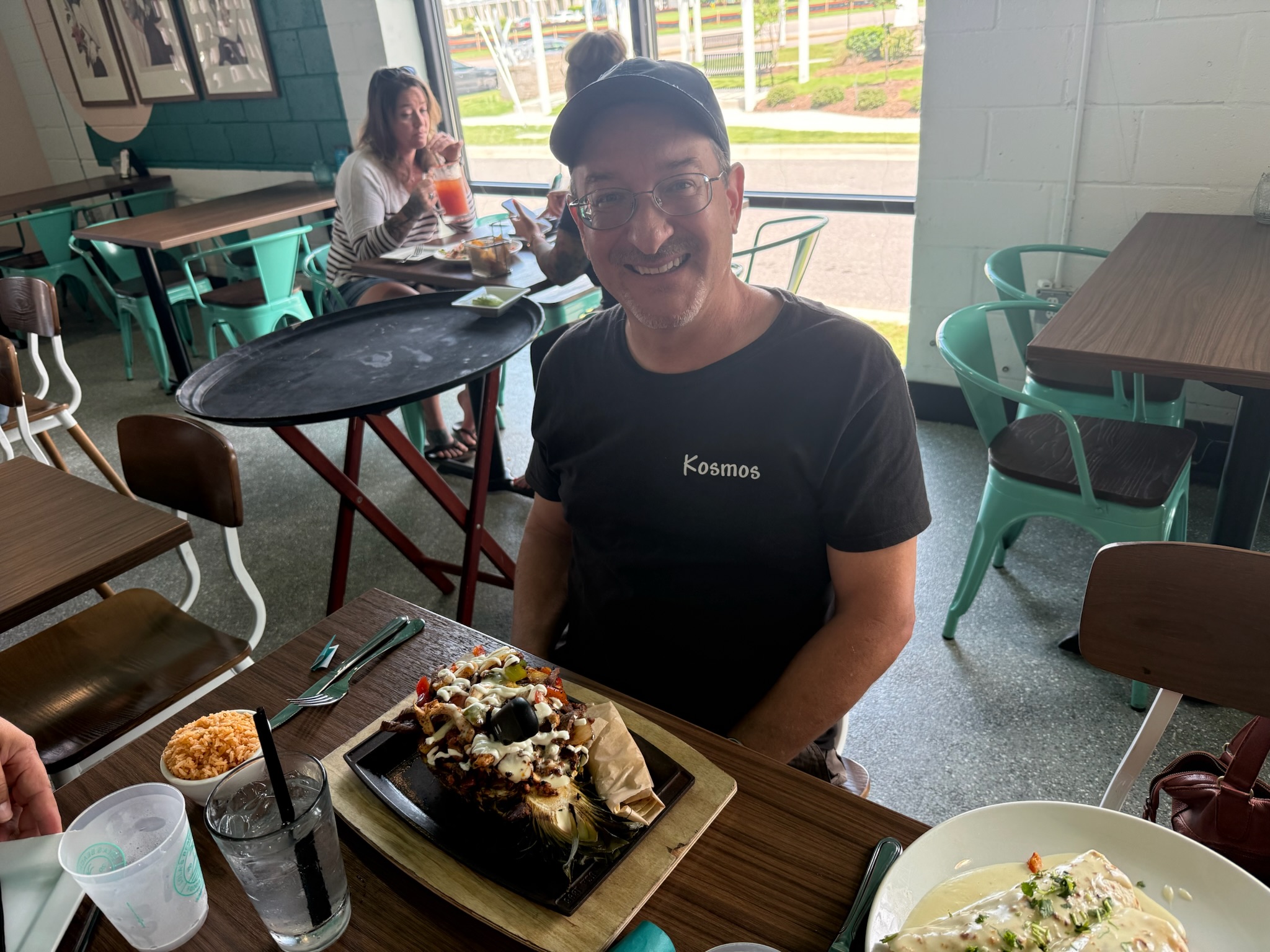
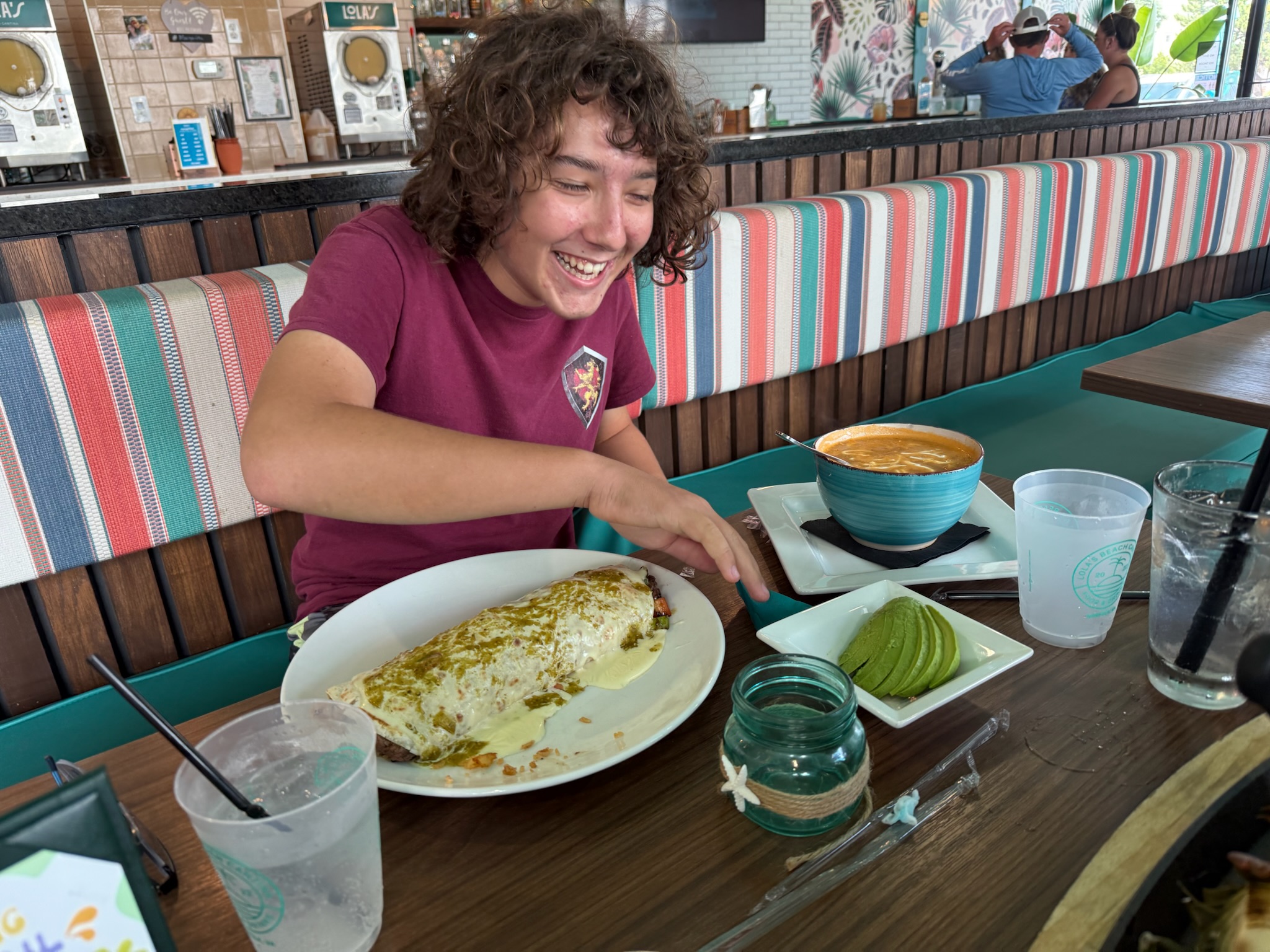
Our big outing was to a Mexican restaurant called Lola’s, which was in one of the new complexes just northeast of the marina. Even though it was within walking distance, we drove since it was so ungodly hot out. Lola’s had a cheerful, beach themed decor and the menu had lots of non-Mexican choices.
Eric ordered a pina relleno, which was a half pineapple stuffed with grilled chicken, steak, pineapple, peppers and onions topped with melted cheese, chorizo, shrimp and sour cream. This version had a lot more ingredients in it than the versions we’d gotten in Hualtulco and Chiapas.
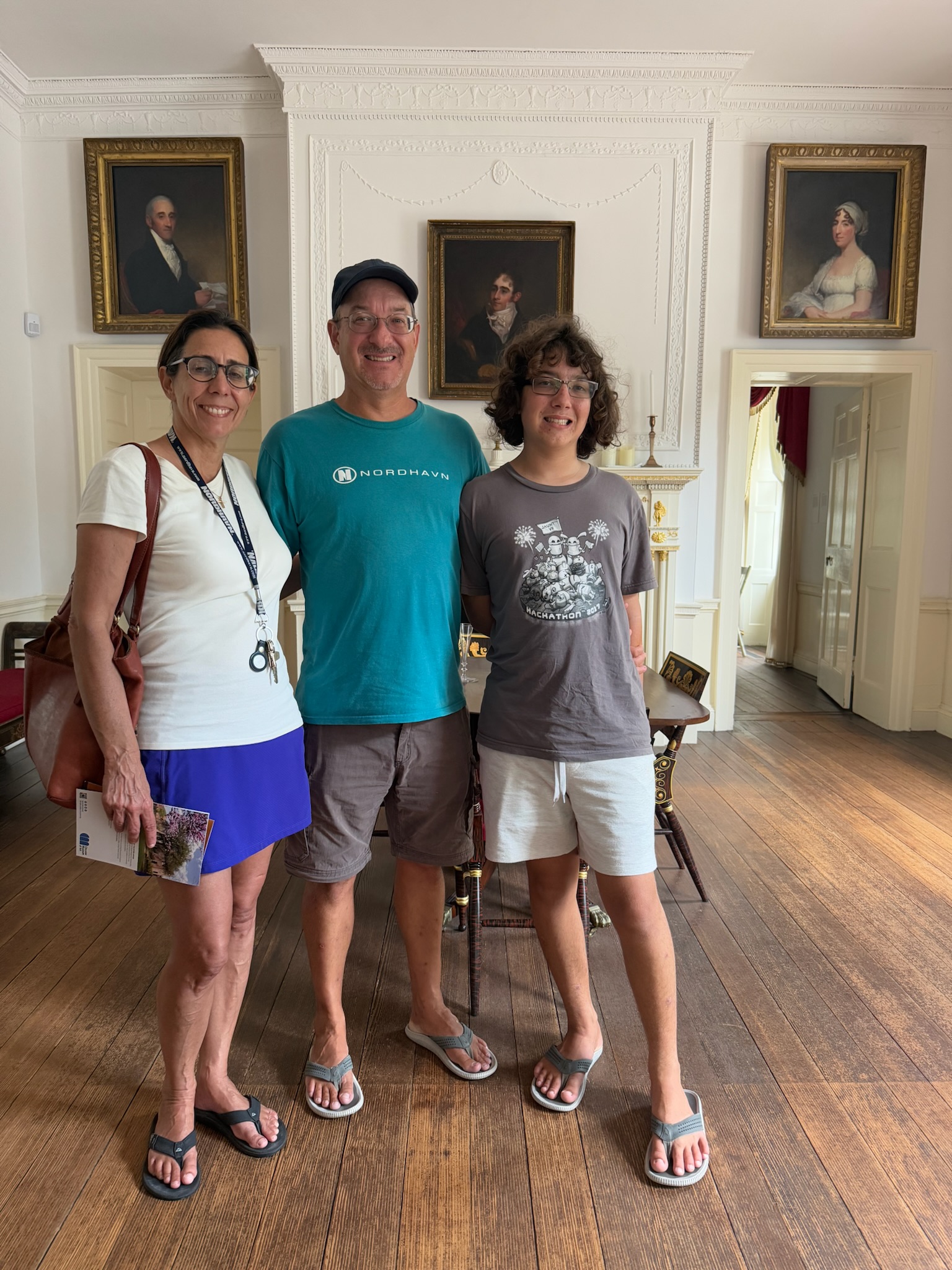
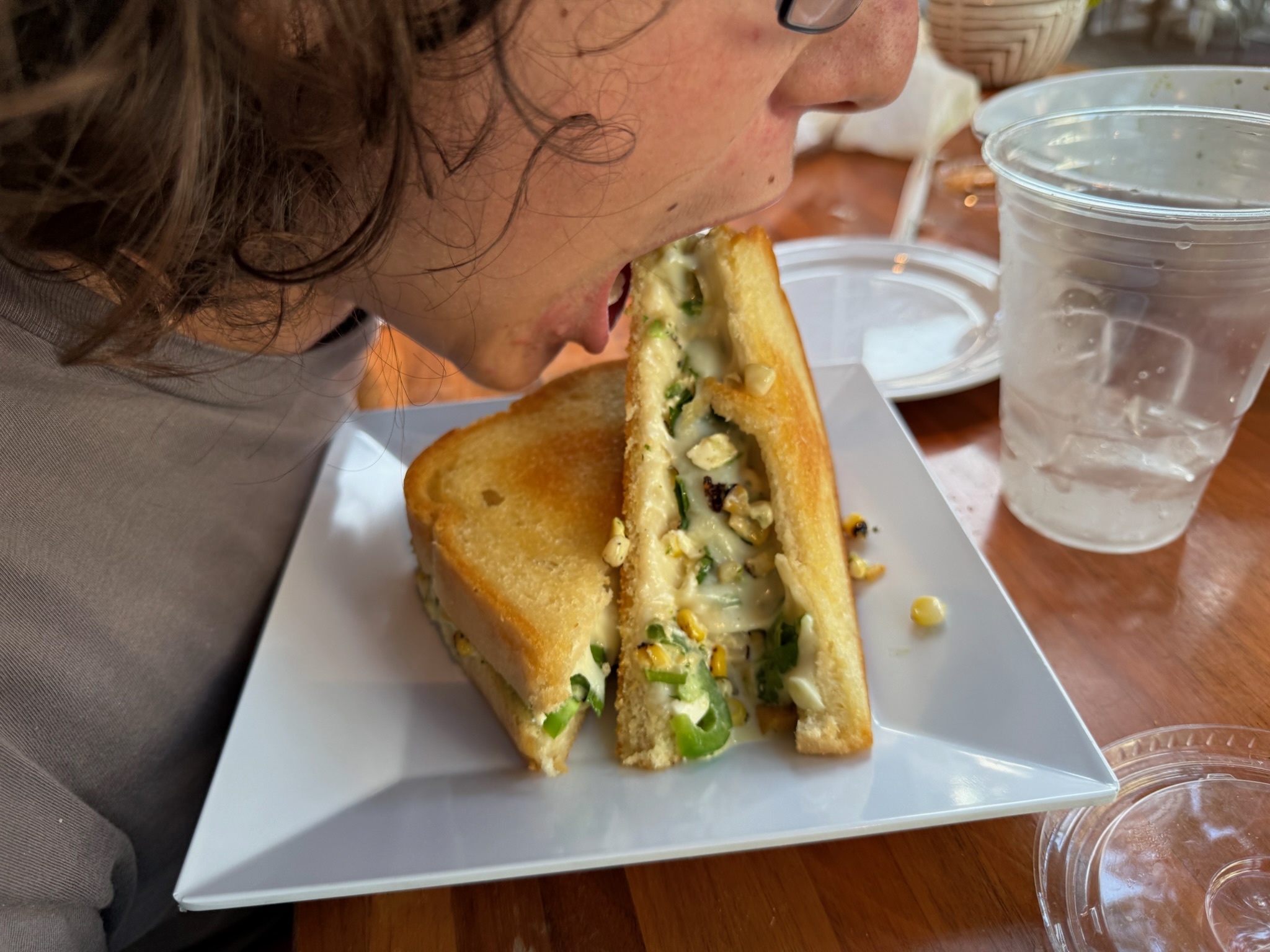
On Saturday, Dad went to a marina event, then we went sightseeing around Old Town Norfolk. We came upon this museum called The Meyers House. It had a bunch of information, and I learned that a presidential candidate named Decatur was killed in a duel. If he hadn’t been killed, then Andrew Jackson wouldn’t have won, and America would likely be very different. For dinner we went to a gourmet grilled cheese restaurant. It was soooooo good, and all the ingredients were top notch. The fries in particular were very good.
Moses Meyers House, Norfolk, VA
Samedi, Papa est allé à un évènement de la Marina, puis nous sommes allés découvrir la vielle ville de Norfolk. On a vu a musée qui s’appelle la Maison de Meyers. Il y avait beacoup d’informations, et j’ai appris que le candidate à la présidentielle qui s’appellait Decatur a été tué dans un duel. Si il n’avait pas été tué, Andrew Jackson n’aurait pas gagné, et Les Etats Unis seraient très différents. Pour le dîner on a mangé à un restaurant de Grilled Cheese raffinés. C’était trop bon, et tous les ingredients etaient de très bonne qualité. Les frites étaient très bonnes.
On Sunday, we went to a nautical museum where they had an actual battleship that you could tour. We went to the battleship and looked around one of the decks. I got super claustrophobic and hot, so we didn’t tour the entire thing. There are some crazy things in a battleship. There was a dentist, a post office and even a donut factory! After the battleship, we looked at the museum, which was pretty interesting. I learned that the mascot for the naval training academy is a goat!
Eric’s morning chore was to grease the windlass. We’d replaced our windlass last year before we left San Diego with an updated version of the same model. Eric was pleased to find that the updated model was easier to service than the last one. It was easy to take apart — just one screw and 2-bolts. This model also doesn’t need the oil changed; our old one did.
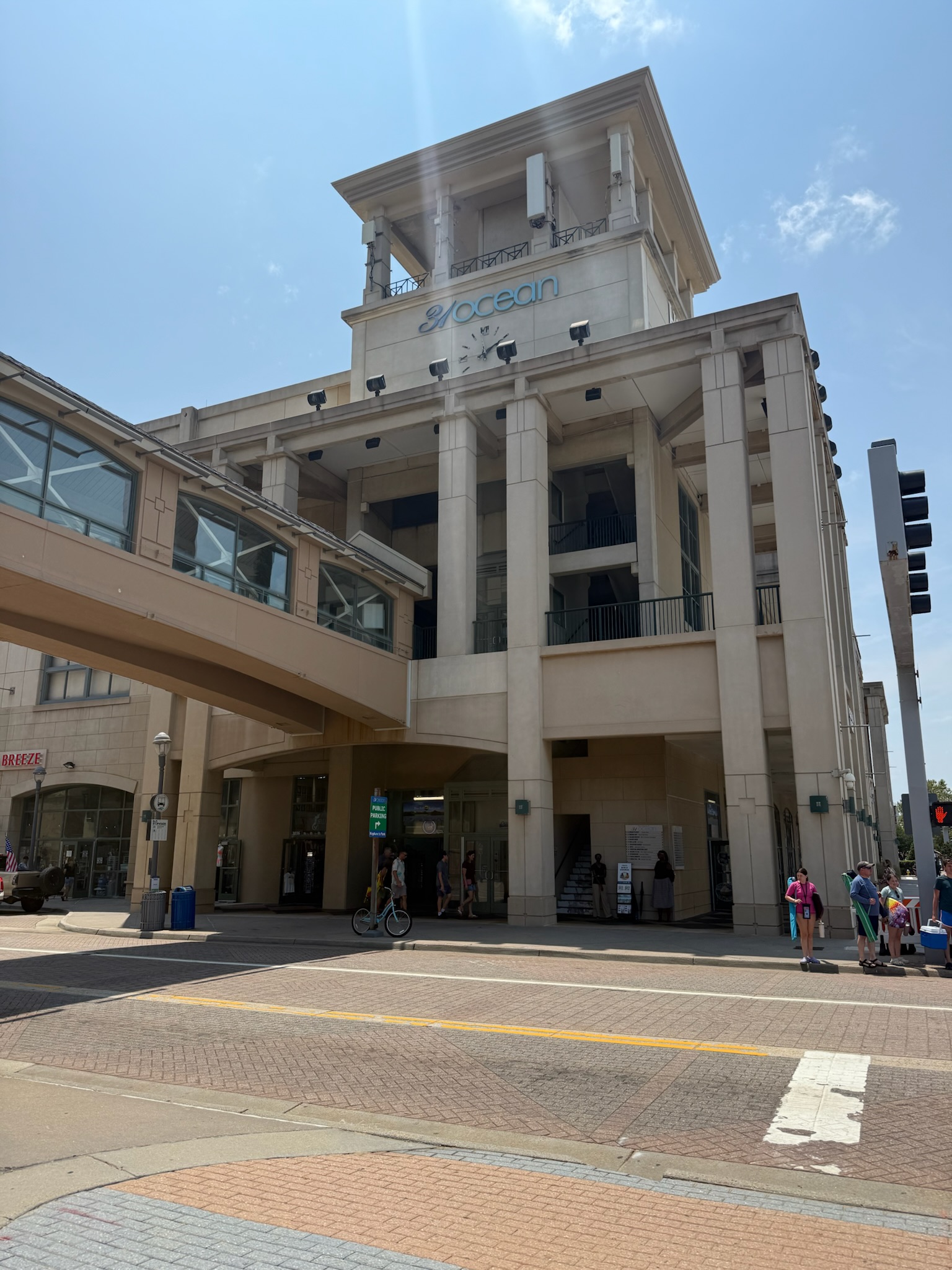
In the afternoon, we went to Virginia Beach to visit Miss Roxy. On the way, we stopped at West Marine to pick up some more parts. West Marine didn’t take as long as we’d anticipated, so we had some extra time to kill. We decided to visit the famous Oceanfront boardwalk. We parked at a public parking garage that Karen had told us was the cheapest parking garage/lot in the area.
Monday, July 7, continued… As we stated earlier, we were confused about Colonial Williamsburg. It was apparently still an active town with restaurants and shops and other amenities… but apparently you needed to buy a ticket to go into the town? It looked like there was a small section of it called Merchant Square where people could see the historical buildings without buying a ticket. We decided to go there for an early dinner and try to get clarification on what exactly the sightseeing activities in Colonial Williamsburg entailed.
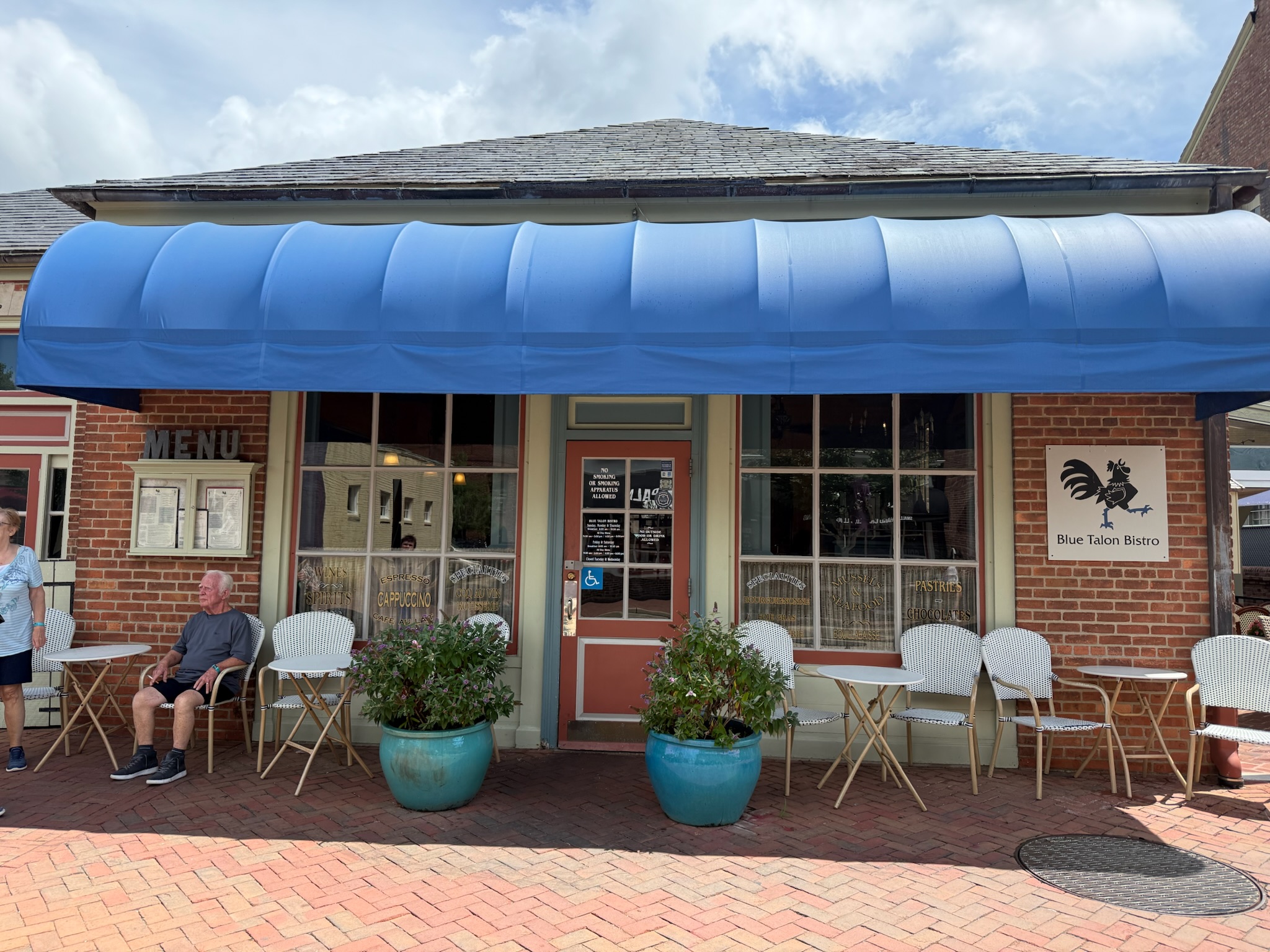
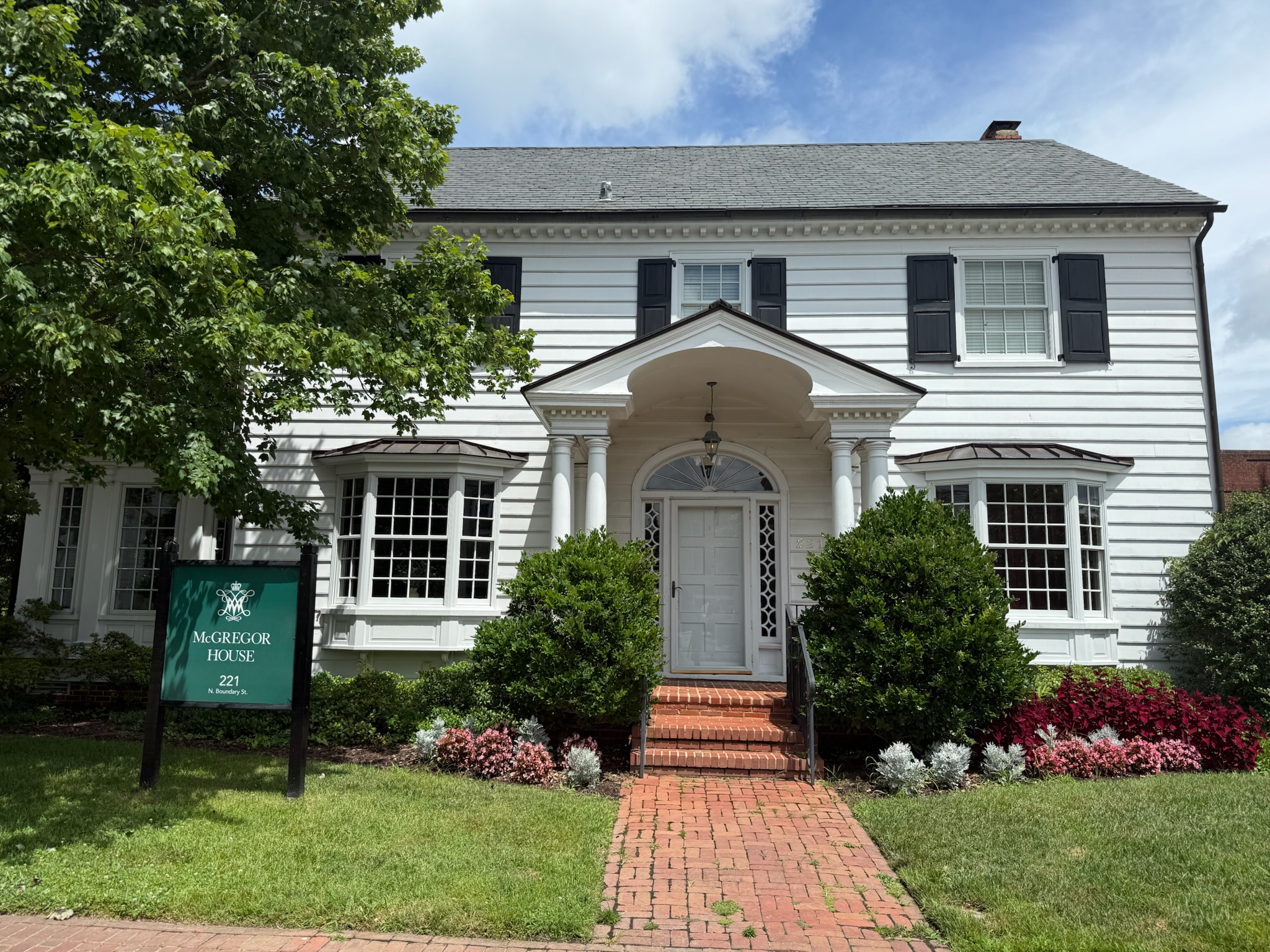
It was about a 10-mile scenic drive from Jamestown. As we neared the town, we drove through William and Mary College, which was founded in 1693. The old buildings were charming. We parked on Boundary Street, the street that separated the college from the edge of town. It was hot and we’d already done a lot of walking, so we didn’t do much exploring by foot. We picked the first open restaurant that looked good, a French restaurant called The Blue Talon Bistro which was around the corner on Prince George Street.
As short as our walk was, it was still pretty with all the mature trees and beautiful old buildings.
continued... Once tobacco exports were established, the tobacco farmers quickly grew wealthy. They used their money to buy even more land, taking all of the prime locations. As the society evolved, these large plantation owners dominated Virginia’s economy and government. In 1670, laws were changed so that property ownership and payment of taxes was required to vote or hold public office (both white and black), giving the plantation owners even more power over everyone else.
There had already been growing tensions amongst the freed indentured servants. The plantations primarily utilized slaves, so there were no jobs for these freed men to go to after their time in service ended. While they could start their own farms, they’d have to go to the edges of the settled areas, where there would inevitably be conflicts with the indigenous over the land. While the Powhatan (and tribes under the Powhatan umbrella) had made an agreement with the colonists, the colonists were now expanding beyond the Powhatan lands into areas with no such agreements. The government of Virginia did little to help protect these outlying farms from attack.
In 1674, Nathaniel Bacon arrived in Virginia. Bacon was arrogant, bold, active, moody and taken to alarming outbursts. He was also charismatic and an eloquent speaker. He was cajoled into leading a rebellion of disgruntled colonists. Some of the elite who were concerned about government corruption and mismanagement joined the rebellion, too. In 1676, Bacon formed his own militia whose goal was to remove all indigenous from the lands. They attacked and killed some Pamunkey, who were a friendly indigenous tribe under the Powhatan umbrella. The indigenous retaliated. The governor was furious that Bacon’s militia had disrupted peace with the Pamunkey as they’d had a lucrative fur trade relationship with them. In September 1676, there was a battle between the Virginia Militia and Bacon’s Militia in Jamestown. Bacon’s militia set fire to the town. Soon after, Bacon died of illness and the rebellion fizzled. The Queen of the Pamunkey signed a peace treaty with the colonists on behalf of her own tribe and several others that lasted almost 100 years
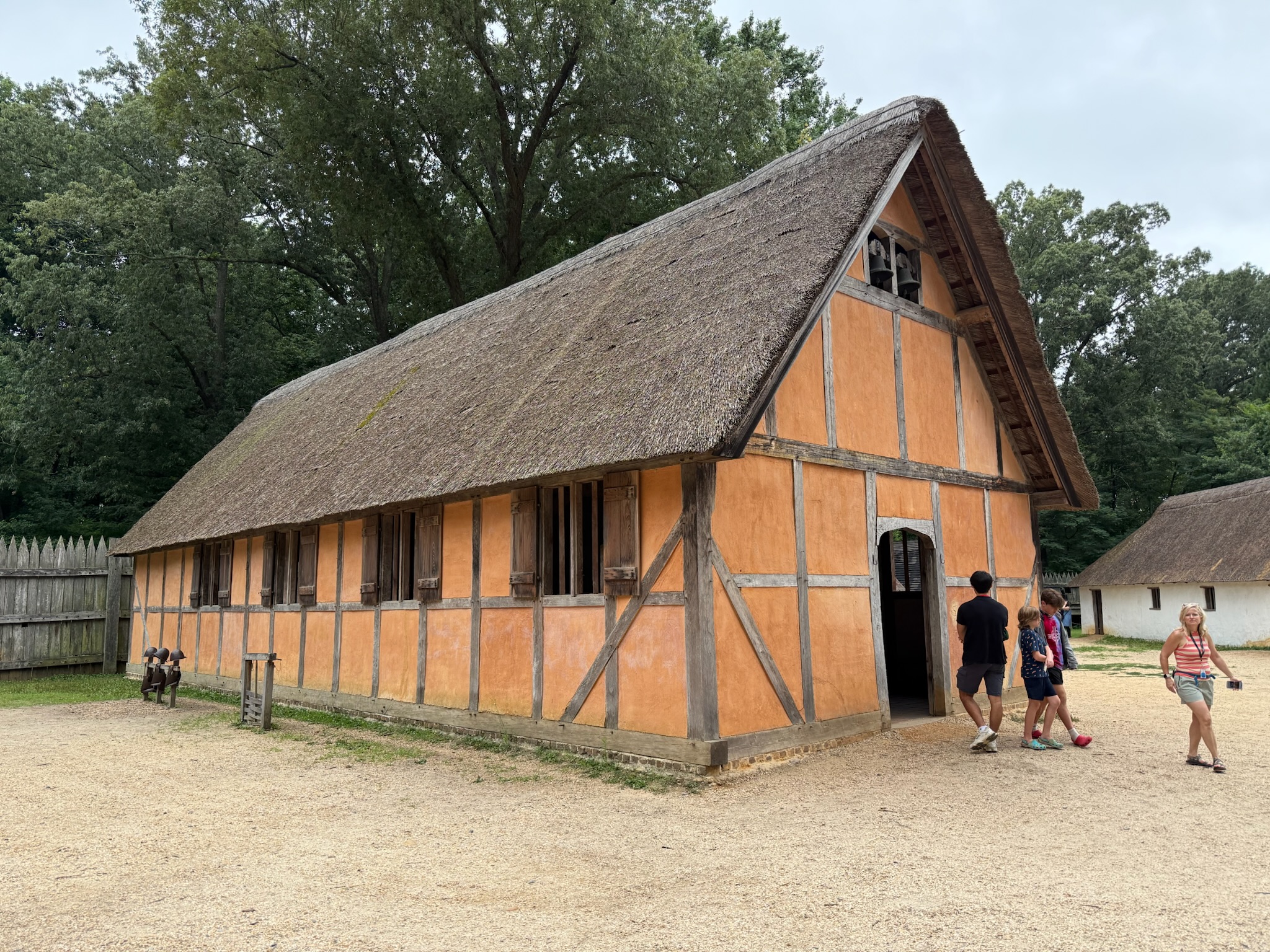
The capital of Virginia was moved to Williamsburg, ten miles away, in 1699. By that time, Virginia had grown from 104 colonists in Jamestown in 1607 to 60,000+ people spread all over the Virginia territory. Only about 600 Powhatan still remained in the English controlled areas. Blacks made up 10% of the population. Most people worked on plantations. After the capital moved, Jamestown declined rapidly. By 1716, all that was left was a church, a court house and three of four houses. Eventually, those buildings were cleared for agriculture. Once we’d finished in the museum, we headed back out to explore the fort some more.