continued… There was a presentation on muskets at noon outside the entrance to James fort, so at 1150, we headed back to the fort and found seats for the presentation. All in all, it was only about 7-minutes, but it was fascinating to hear about why the musket was the weapon of choice, how it was (dangerously) operated, and the military strategies the colonists used. Here was a clip of him firing the musket.
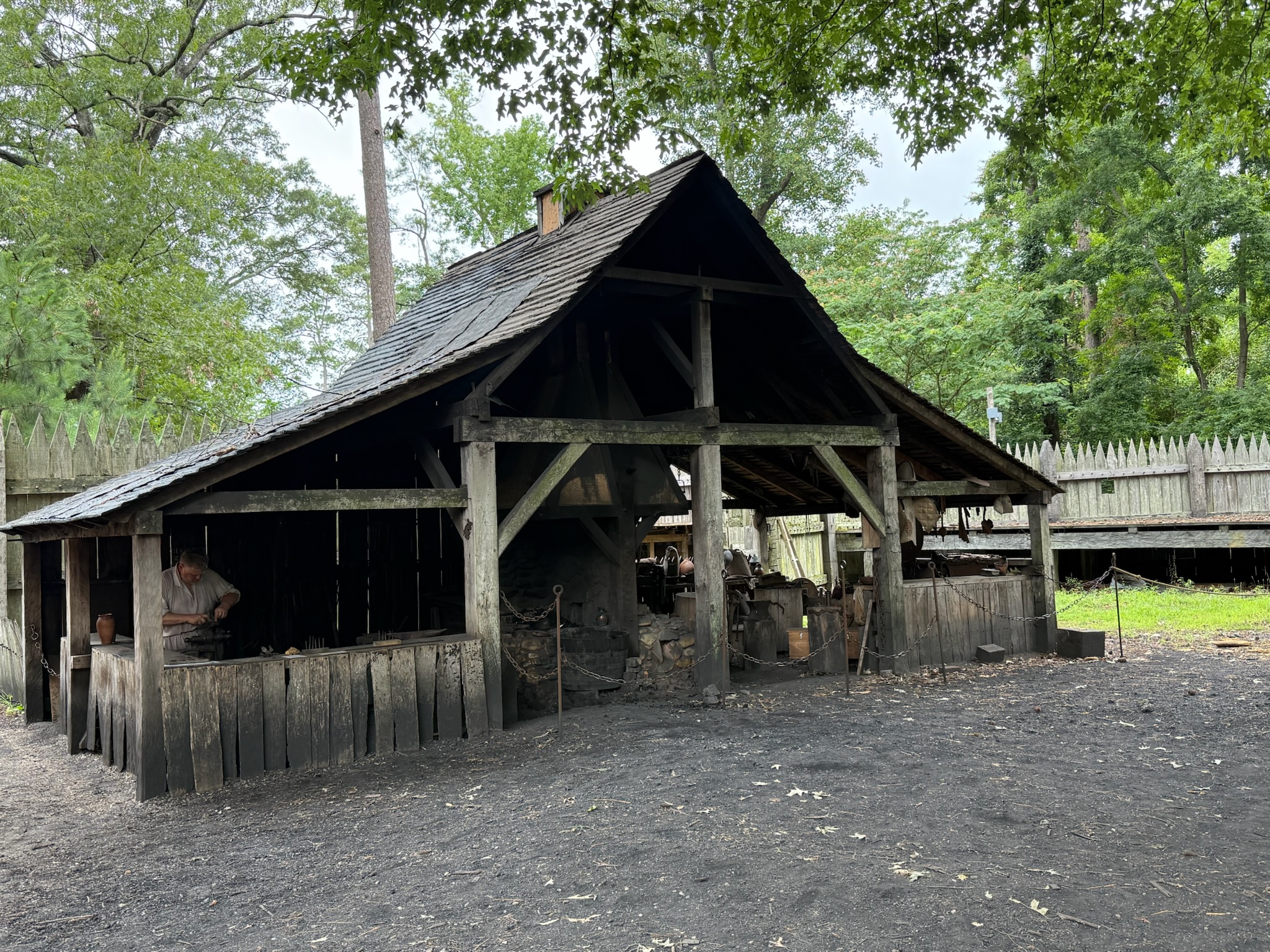
We headed inside the fort and went to a demonstration at the blacksmith shop. He made a nail for us.
On Monday, July 7, we took the tunnel north under the James River, went past Ft. Monroe, and continued north to a city called Williamsburg (which was not far south of Deltaville). We’ve been confused about Williamsburg because it has several historic places: Historic Jamestown, Jamestown Settlement, Yorktown Living History Area, Yorktown Battlefield, Historic Yorktown, Colonial Williamsburg, Colonial Williamsburg Merchant Square, and William and Mary College.
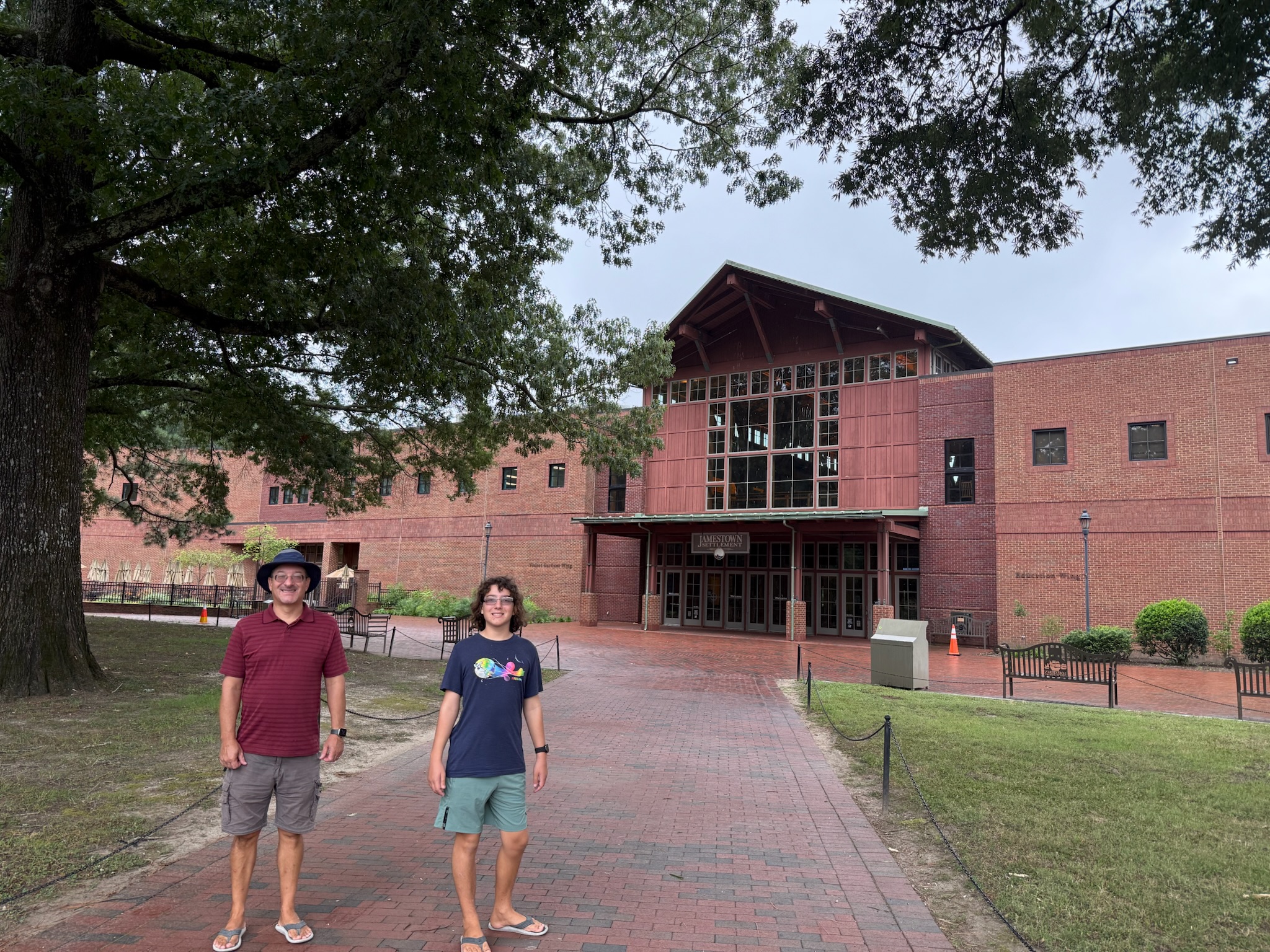
Jamestown was the first British colony in the US that prospered and was considered the birthplace of America, so we decided to start there. After doing some research, we determined that Historic Jamestown was the archeological site of the colony, and it sounded like excavations were still underway. Jamestown Settlement was about a mile away and was a recreation of what Jamestown had looked like in its hey-day, complete with actors playing characters from that era. We opted for Jamestown Settlement.
The Settlement opened at 0900, but we got off to a late start and hit some traffic, so we didn’t pull into the parking lot until 0950. There were hardly any other cars in the parking lot, and we guessed it was because of the on-again, off-again drizzle. Parking was free. The building was huge.
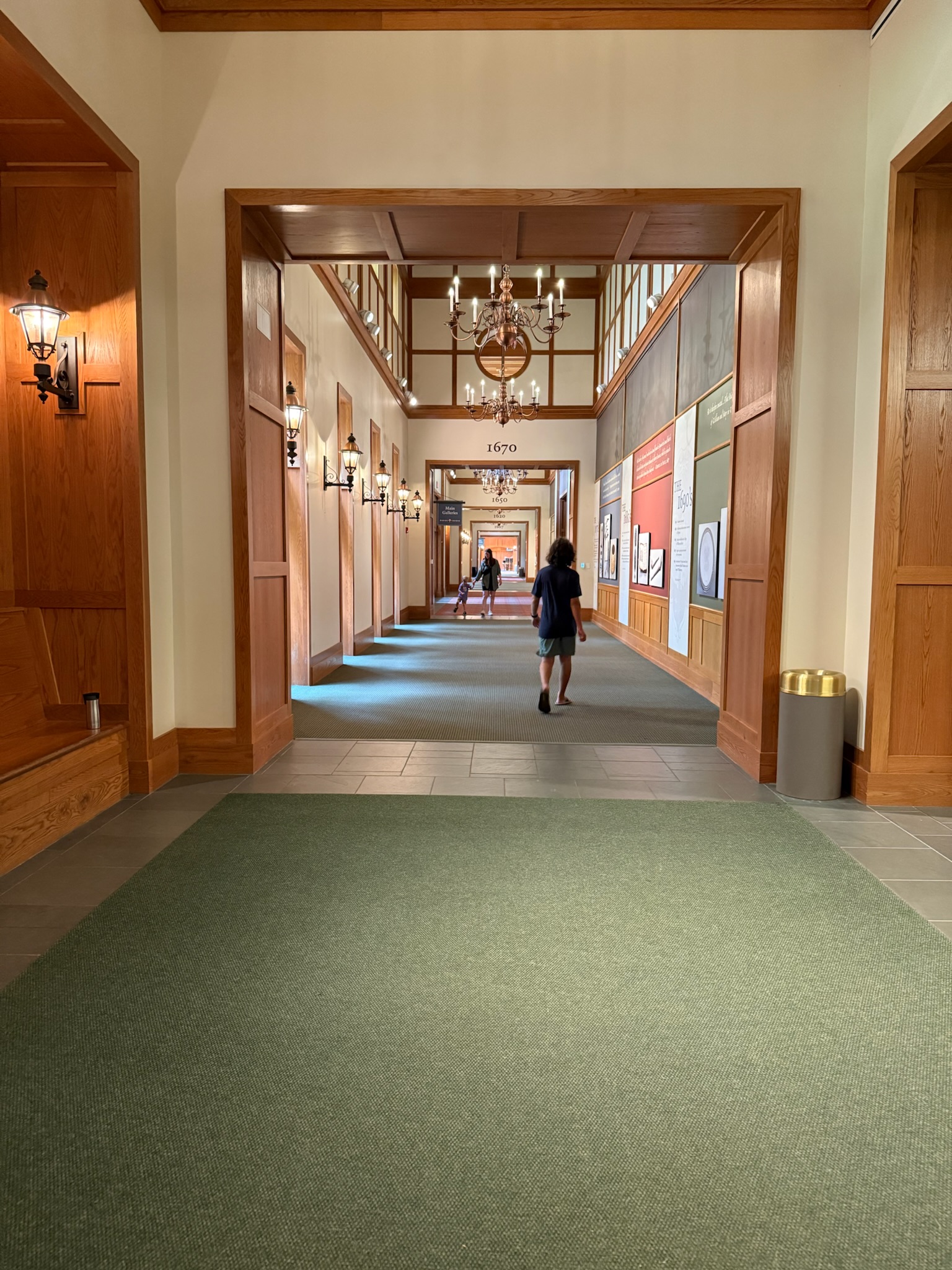
Tickets were $20 per person for 13+. According to the placard, there was a special talk on indigenous bone tools at 1000 in the Paspahegh village, who were the indigenous people of that area. We made a beeline for village. We had to walk the length of the museum to get to the “living exhibits” outside.
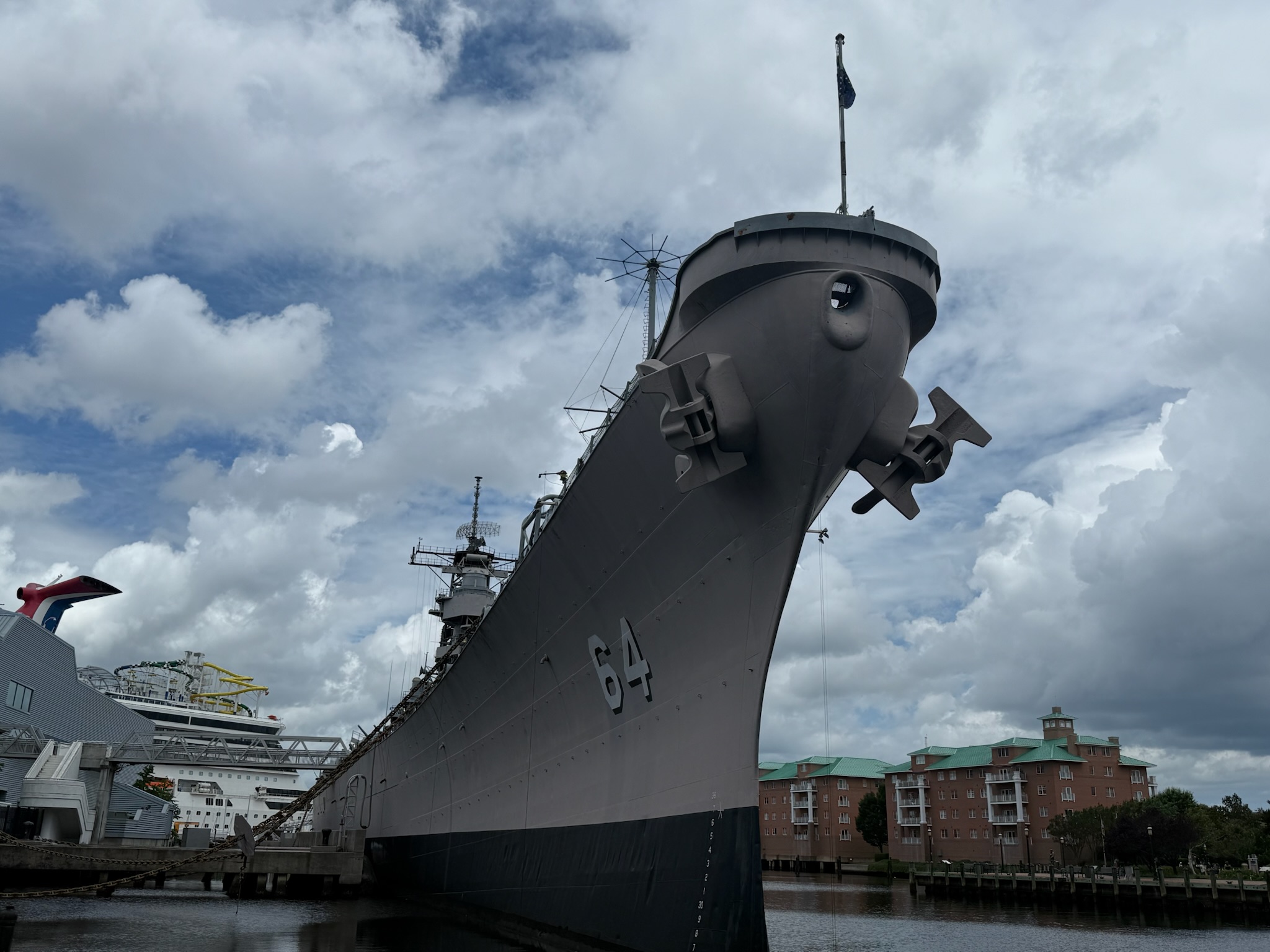
Continued… We headed inside the museum. There was a big exhibit on the Wisconsin, as well as two different films about her in two different theaters. Our big take away was that the US spent ridiculous amounts of money on her and barely used her.
In 1940, President Franklin Roosevelt ordered the battleship in preparation for entering World War II. Construction on the Wisconsin began in January 1941 and was completed in a record breaking 39-months. She was commissioned in April 1944 and sent to the Pacific in September 1944 to join the “greatest armada ever assembled int the Pacific ocean.” Even though the Wisconsin was designed to accommodate less than 2,000 crew, she had nearly 3,000 crew onboard. That explained why the beds were in such weird places…
The Wisconsin engaged in combat in Okinawa in March 1945 and “played a vital role in every major Pacific naval operation…” She was decommissioned in 1948. She was recommissioned in 1951 and sent to Korea, where she destroyed strategic bridges, tunnels, railroads and supply stations with her 16-inch guns. In March 1952, an enemy shell hit the deck. Three crew were injured and the deck was damaged, but they were able to quickly repair the damage. It’s the only direct hit the ship has ever taken. She was decommissioned again in 1958.
She was recommissioned yet again by President Ronald Reagan in 1988. This recommissioning was very controversial. She’d been mothballed for decades and was in bad shape. The government spent a lot of money to get her back up to par along with a tremendous amount of more money to modernize her. The restoration/modernization project took two years.
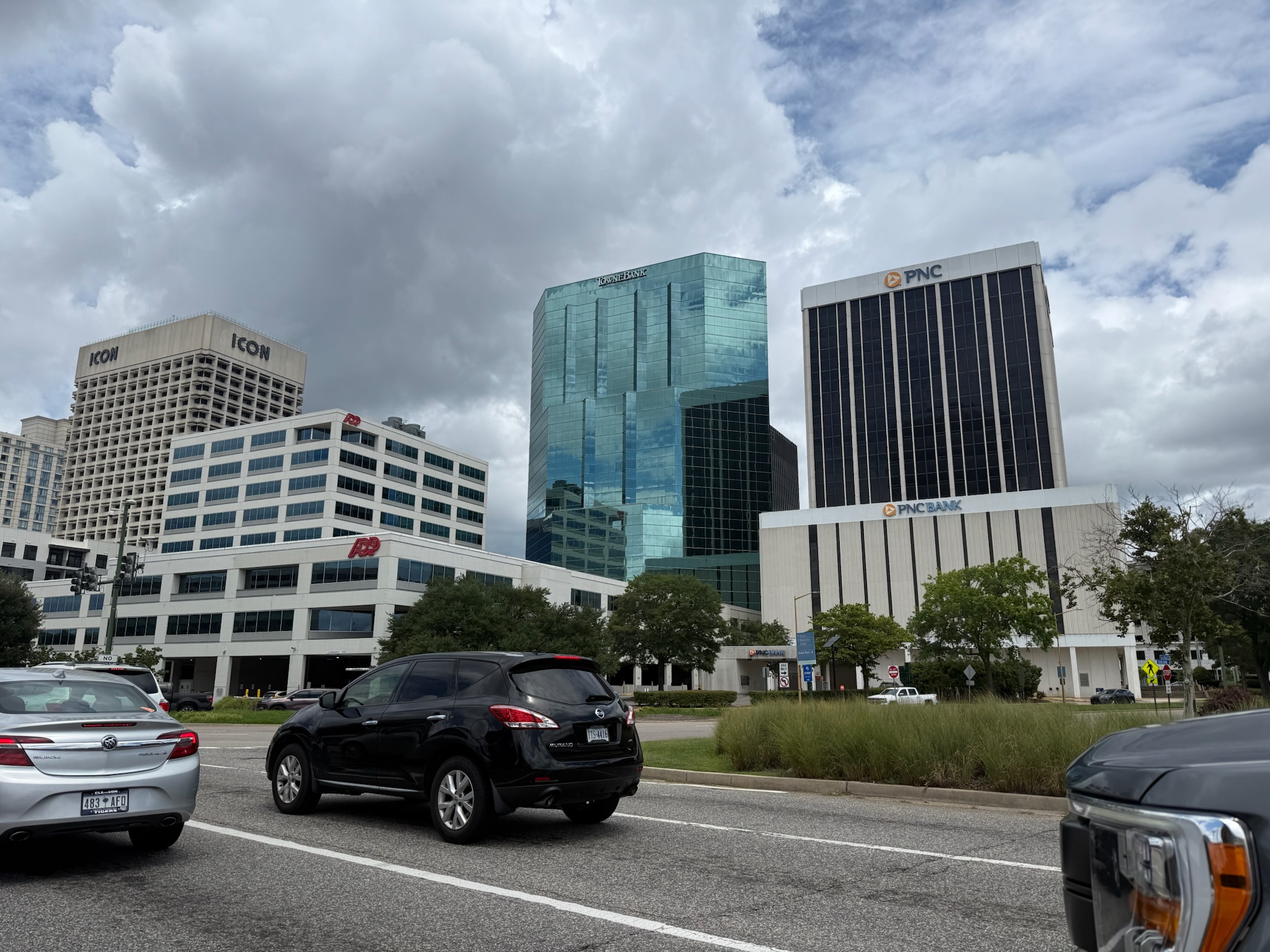
Sunday, July 6 — It was supposed to rain hard in the afternoon, so we decided that an indoor activity was a good idea. We settled on a museum called Nauticus, which had a retired Navy battleship on display. The museum didn’t open until noon, so we left the boat at 1130 and headed to downtown Norfolk. It was close to the historic area we’d visited yesterday. This section of town was built up and modern. Even though the two museums were only blocks apart, it felt like two totally different worlds.
We were sad to see there was a traffic jam around the museum. We also noticed a conga line of people with suitcases walking towards the museum. Eventually, we realized that there was a cruise ship next to the museum that was currently boarding. We found a parking garage directly across the street. Like the other garage, parking was free for the first two hours and inexpensive for more time. As we approached the ship, we were struck by how huge it was.
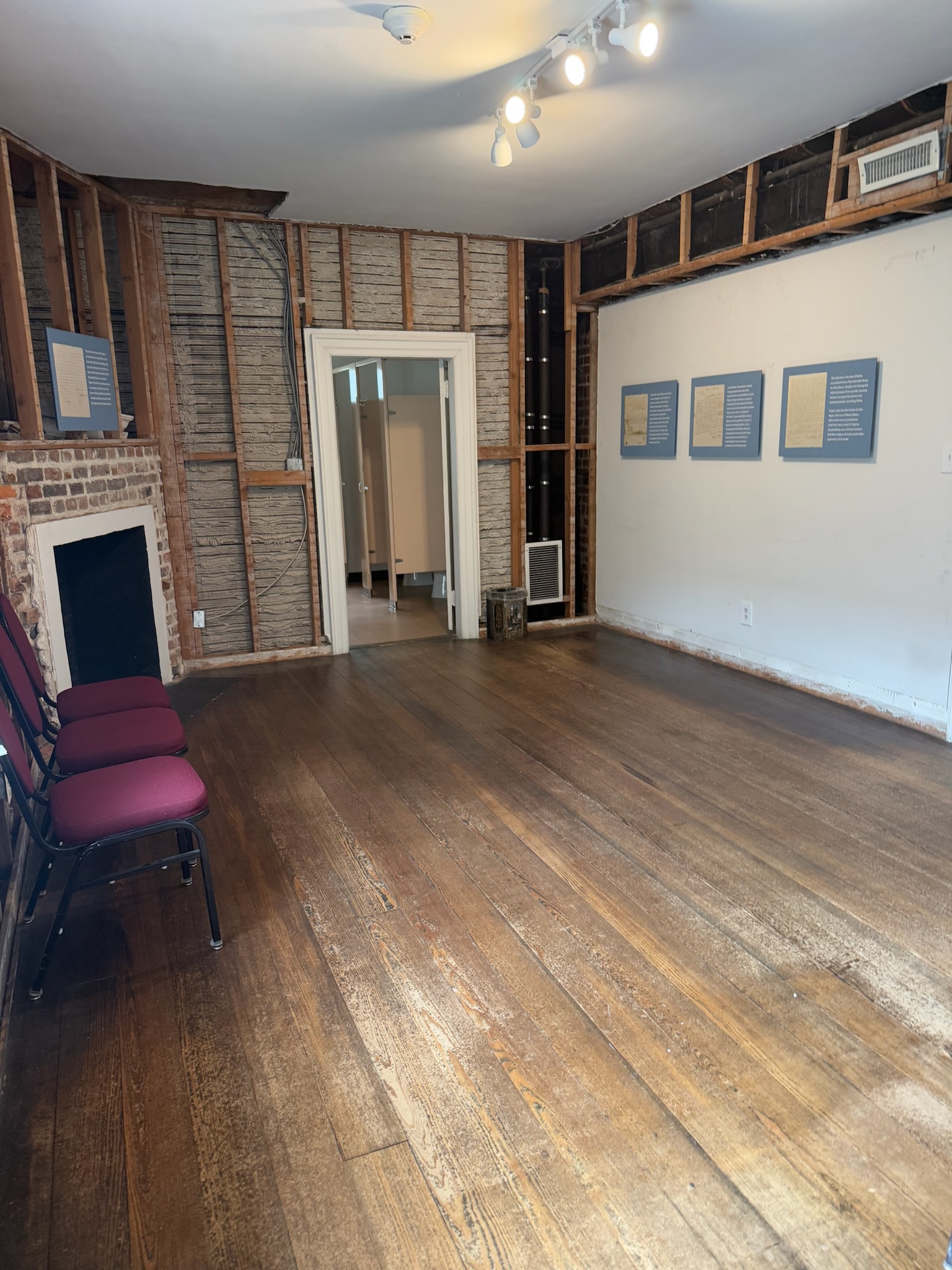
Continued… From Adeline’s room, we moved into the part of the slaves quarters that was above the utility room. The signs said that the Myers had dozens of slaves over the decades, but didn’t say how many slaves the household typically had at any given time. The guides did tell us, but we don’t remember now. But we do remember they always had several, not only one or two. There was a big binder full of information that we didn’t read. Some of the displays on the walls were bills of sale for the various people. One display showed a bill of sale for a mother and daughter. In the bankruptcy inventory, they were identified as “washer and daughter.” John Myers did allow at least one of his slaves to purchase his freedom. We didn’t go into the portion of the slaves quarters over the kitchen.
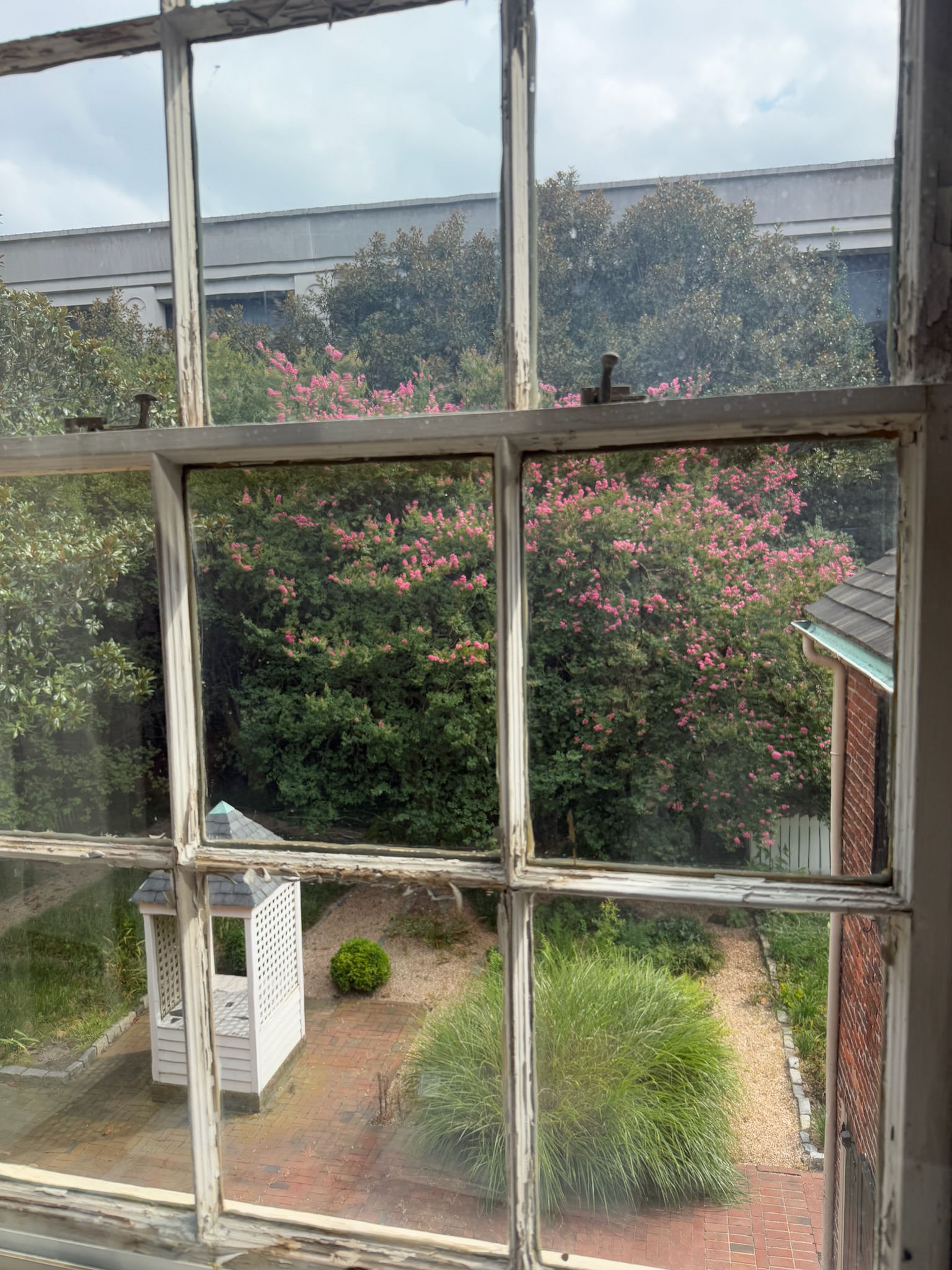
View of the back yard from the slave’s quarters. What is now a parking garage was once a creek.Continue reading →