continued… There was a room on cryptography. Since Eric was a cryptographer, he was especially interested in this one. There was a display about various encryption tools that date back thousands of years — and were commonly used until relatively recently — such as the Cardano Grille. Even invisible ink dated back thousands of years — Pliny the Elder had a recipe for invisible ink that dated back to the 1st century!
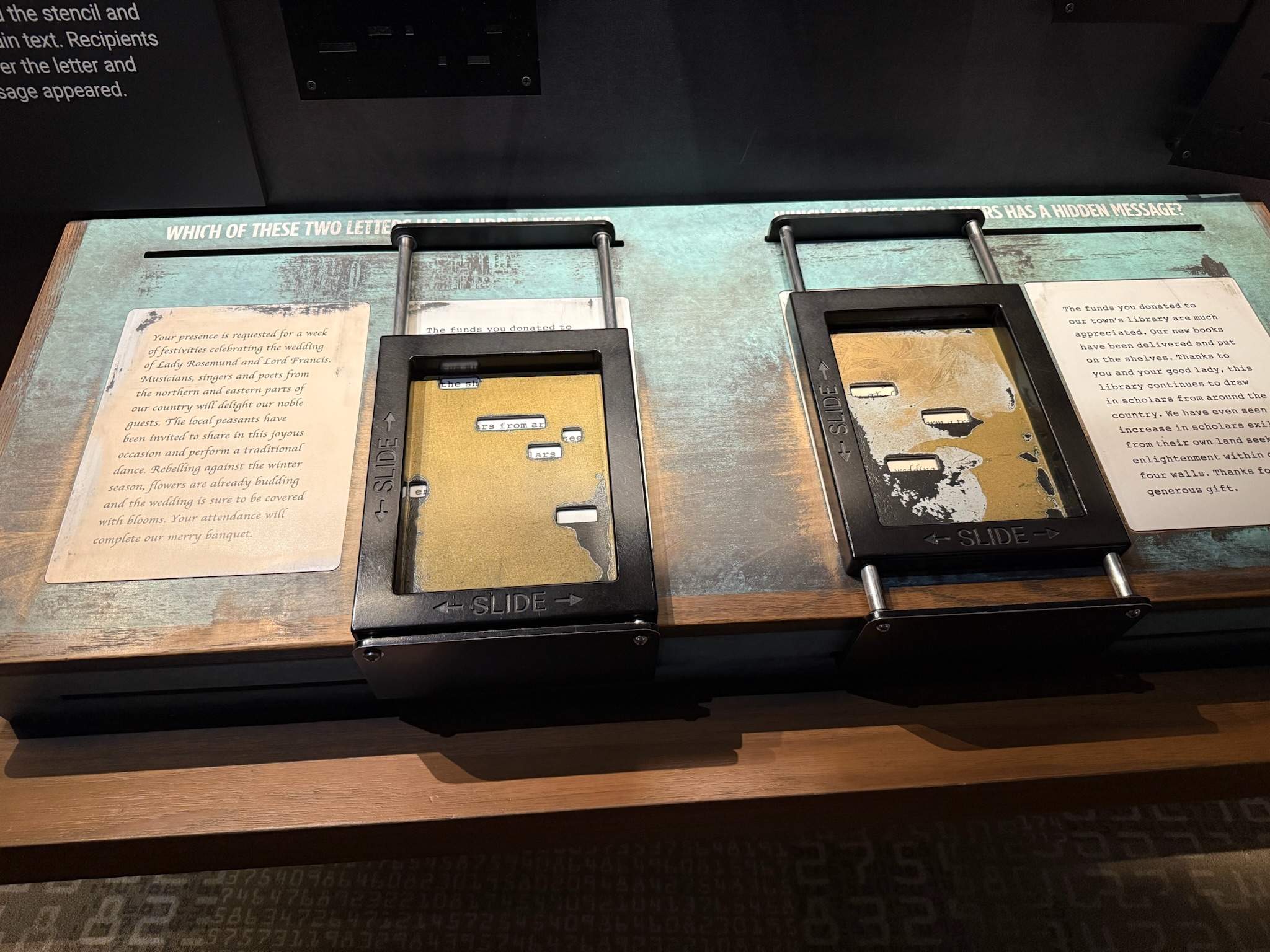
As we’d leaned in Yorktown, during the Revolutionary War, George Washington had a vast spy network. Knowing the British were spying on the Americans, Washington encrypted his messages using a method called Pigpen. Then Thomas Jefferson invented a new encoding method, called the Jefferson Cipher, that was utilized up through World War II.
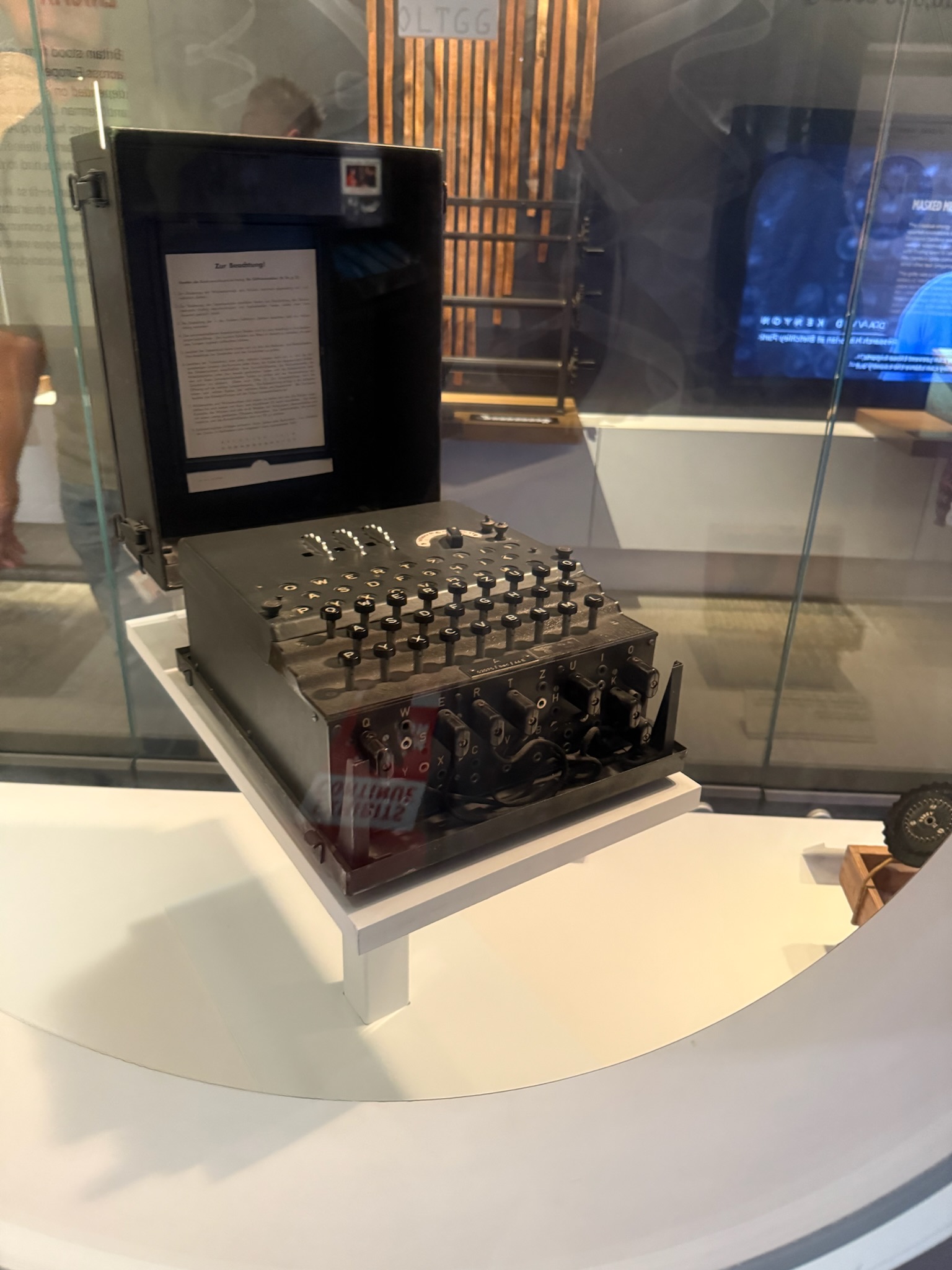
There was a display about a secret group of codebreakers that was assembled in 1939 in England when World War II erupted. It started as a team of 100 and eventually swelled to nearly 10,000, three-quarters of whom were women. They worked around the clock out of a mansion named Bletchley Park, which was a private home in England, trying to decrypt intercepted communications. The Germans had a machine called Enigma that was believed to be uncrackable. The team at Bletchley did crack it, but the Germans kept upgrading the technology, so the team at Bletchley had to re-crack the code with each upgrade. They managed to keep the operation a secret for 30 years.