The Museum of Industry in Baltimore, Maryland — Part 2

continued

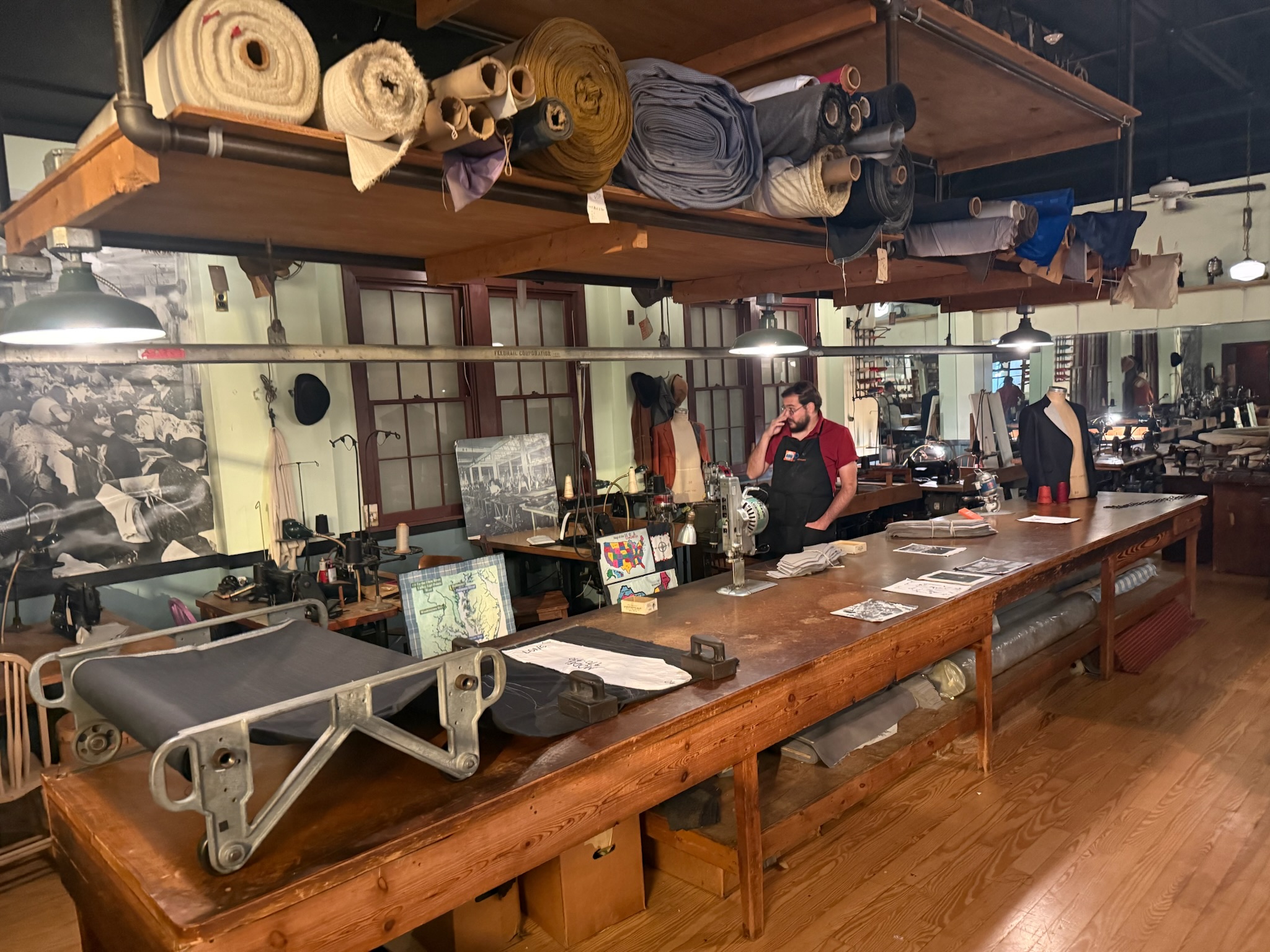
Next we went into another large room that was set up to look like a clothing manufacturing facility. Baltimore was also a hub for clothing manufacturing. Our tour guide showed us the revolutionary technology of the era that made mass-produced clothing possible — a device that simultaneously cut many pieces of cloth stacked together instead of cutting one piece at a time. Coupled with an assembly line sewing process, where each woman on the line sewed a particular piece of the garment and then passed it on to another who would sew her particular piece, ready-to-wear clothes could be quickly produced. The machines were loud and deafness was a problem for the workers.
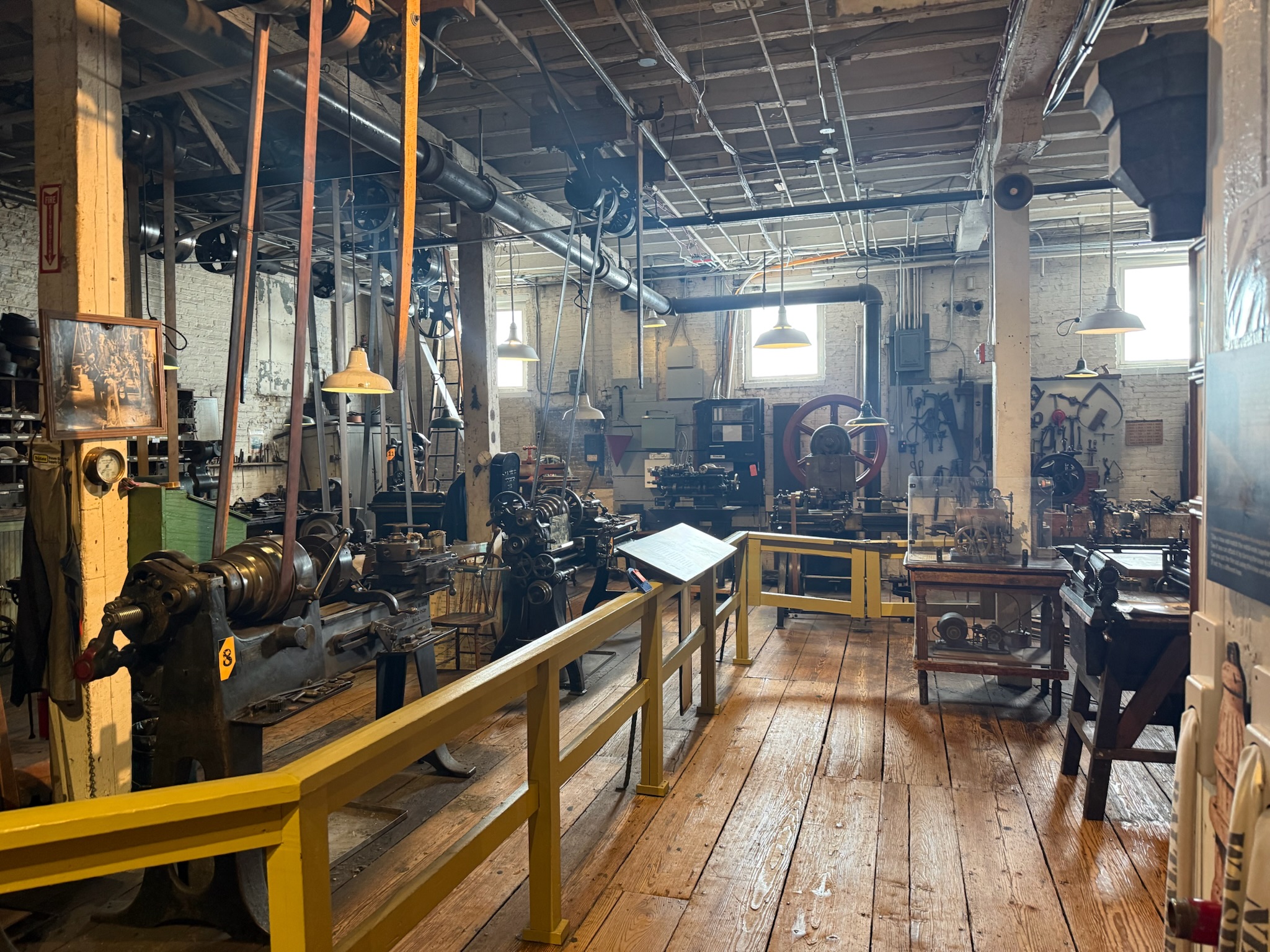
Next we went to a section that was designed to look like a belt-driven machine shop from 1910. Baltimore had also once been a hub for fabricating parts and tools for various industries. Most of the machines were connected via belt to a rod that ran along the ceiling. The rod rotated, moving the belt and powering the machine. The rod was rotated by a steam engine in the corner.

Continue reading
The Museum of Industry in Baltimore, Maryland — Part 1

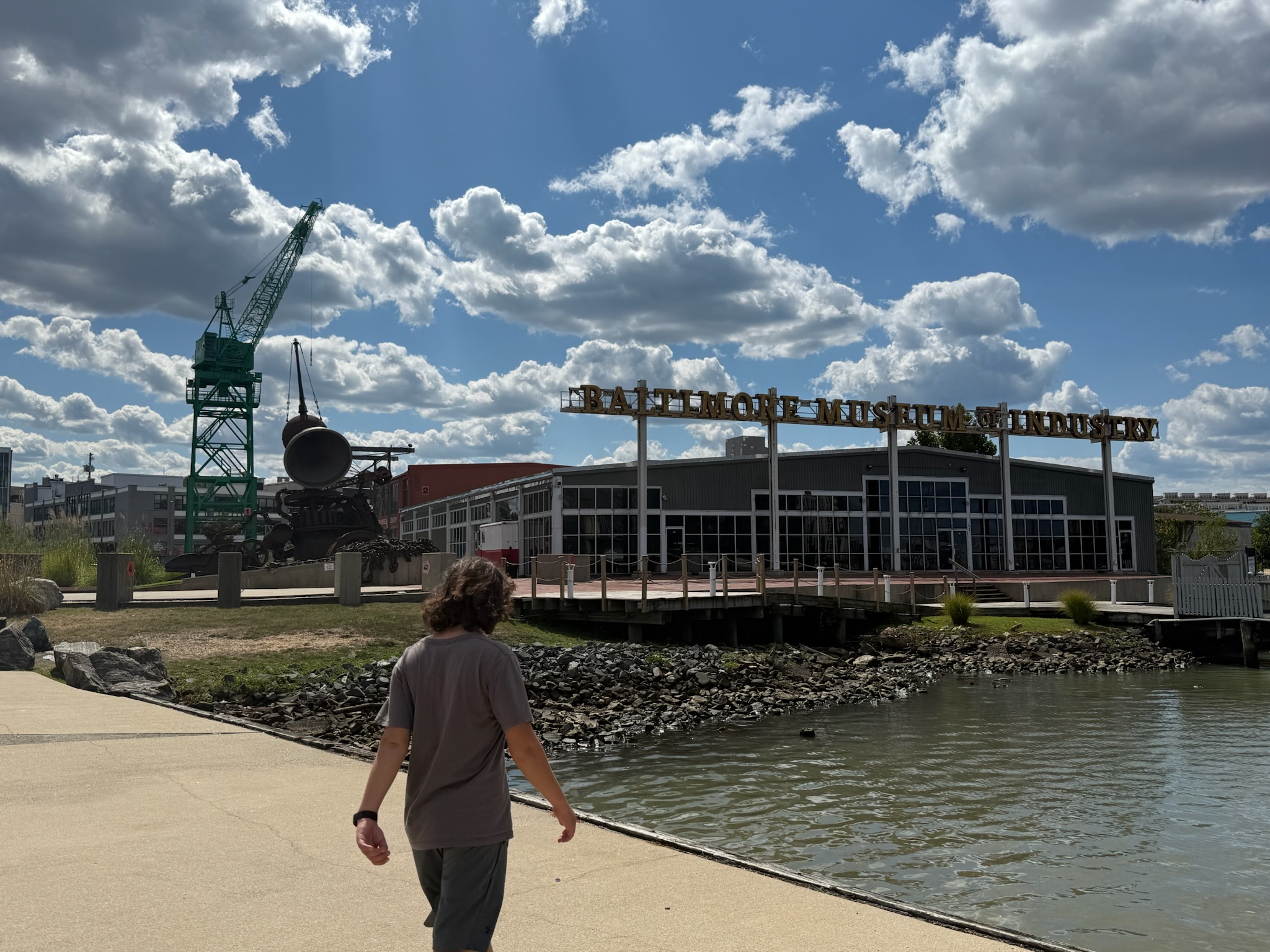
Wednesday, August 26 — We spent the morning getting ready for our trip to San Diego. By the early afternoon, we were feeling like everything was as ready as could be. We decided to go to the Museum of Industry, which focused specifically on the manufacturing industries of Baltimore that “modernized the nation.”

We drove through downtown to the south side of the peninsula that made up the inner harbor. The museum was on the waterfront in a building that was clearly a refurbished old industrial building. Parking was free in the attached lot.

Tickets were $15 for adults and $8 for children 6 – 17. The receptionist told us a free guided tour was about to begin highlighting the black people who were significant in Baltimore’s history. We generally enjoy guided tours, so we signed up.

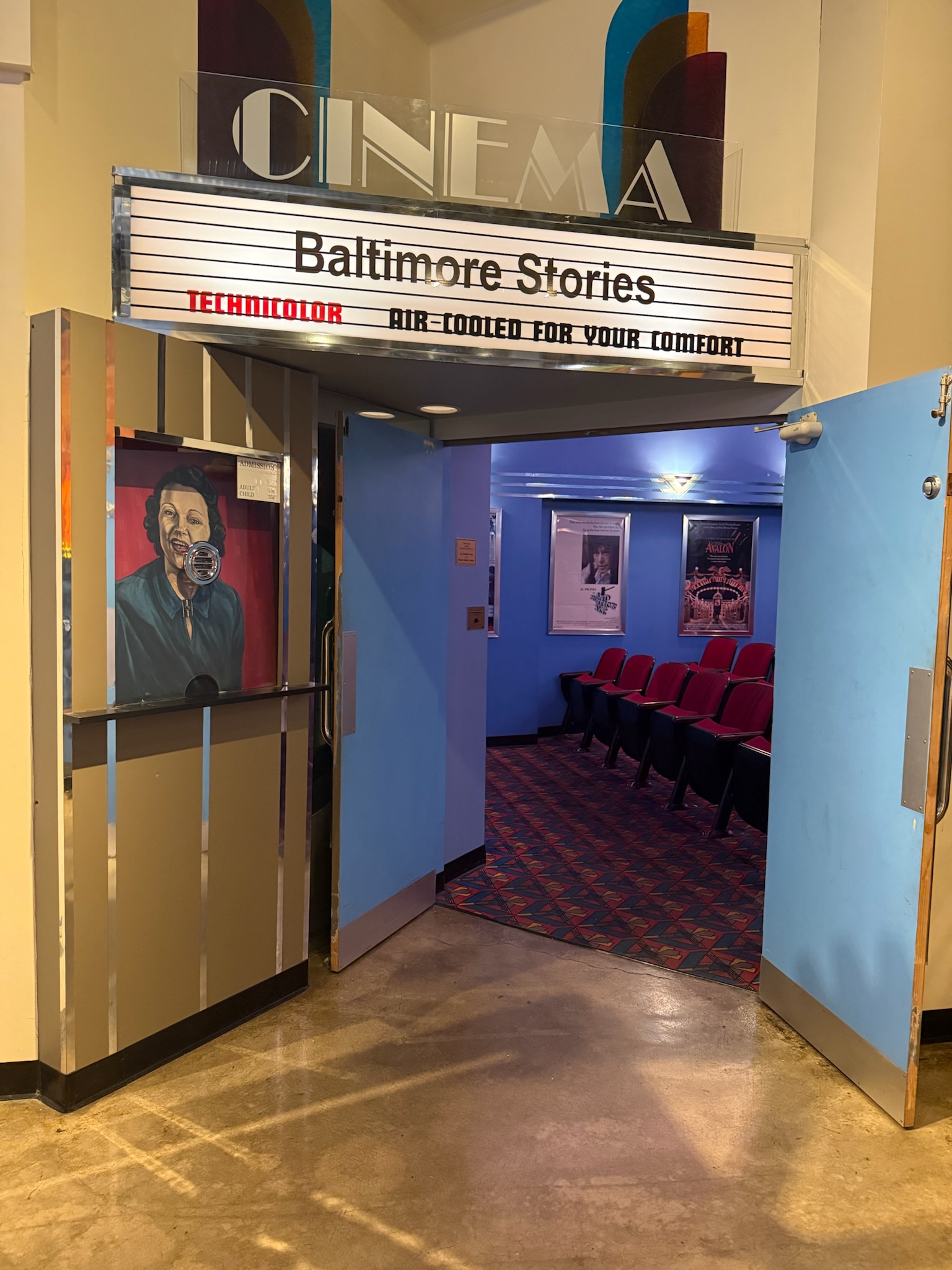
We waited in a small movie theater near the entrance that was showing a film about Linotype machines, which was the most revolutionary change to printing since Gutenberg invented the printing press circa 1440. The machine was invented in Baltimore by a German immigrant between 1882 and 1884. Instead of setting each individual letter by hand, one could type a single line of text and the machine 3-D printed the line from molten lead. The lines were then hand set into the printing press. The discarded lines of tin were reinserted into the machine for melting. The Linotype was rendered obsolete by laser printers.

Continue reading

The Washington Memorial in Baltimore, MD

Tuesday, August 25 — We were heading back to San Diego soon, so we spent the morning and early afternoon doing chores and getting things ready to go. Keith also continued tightening screws around the boat. Eric ran the engines.

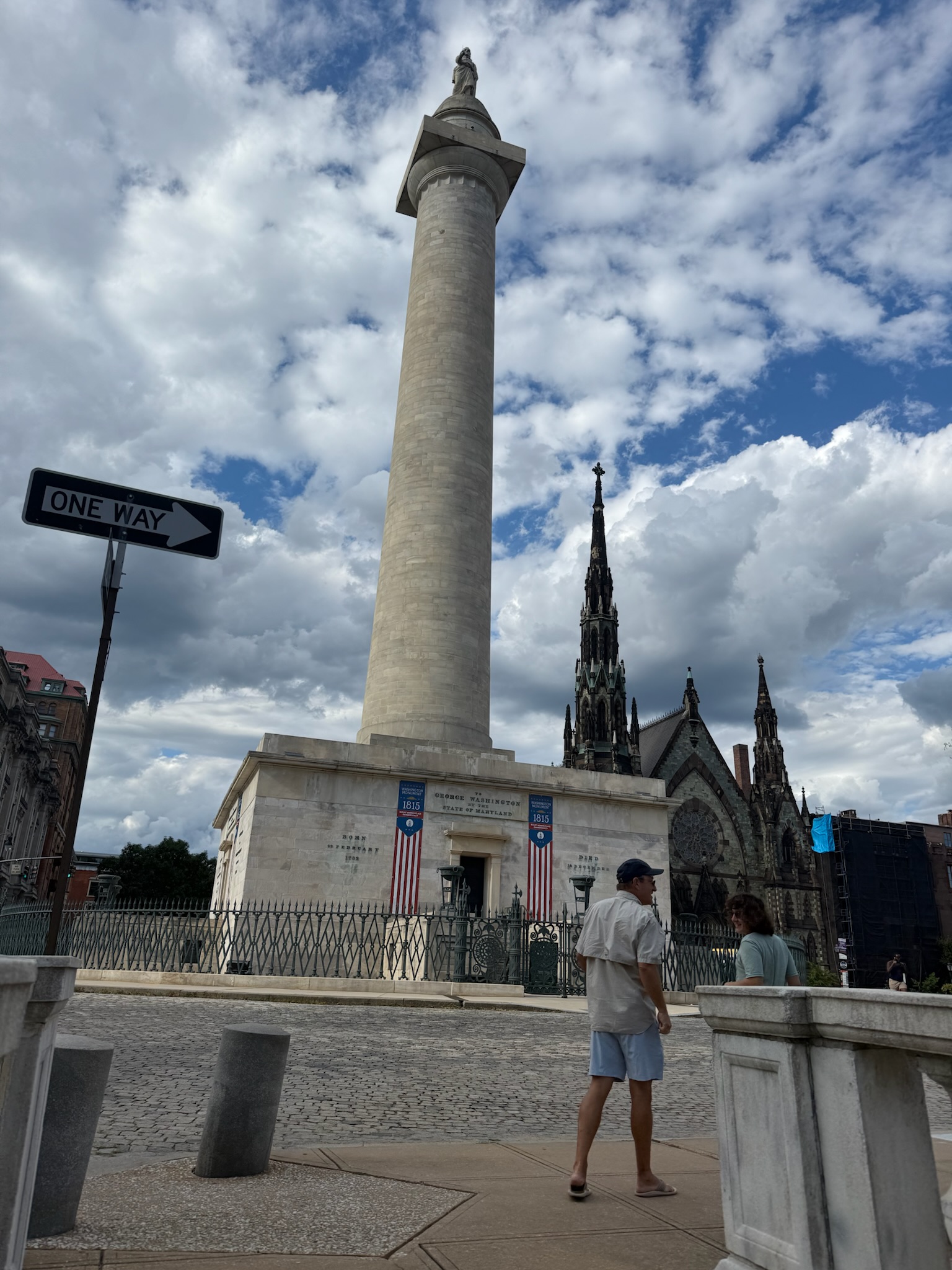
In the mid-afternoon, we wanted to go out, but nothing sounded good. There were still a few museums on the “to do” list, but none of us felt like going to a museum. We finally agreed on the Washington Memorial solely because we wanted to walk around, and we liked the idea of seeing the historic “wealthy” part of town. When we arrived, we were kind of surprised to see the Washington Memorial was in a roundabout in the middle of an intersection.

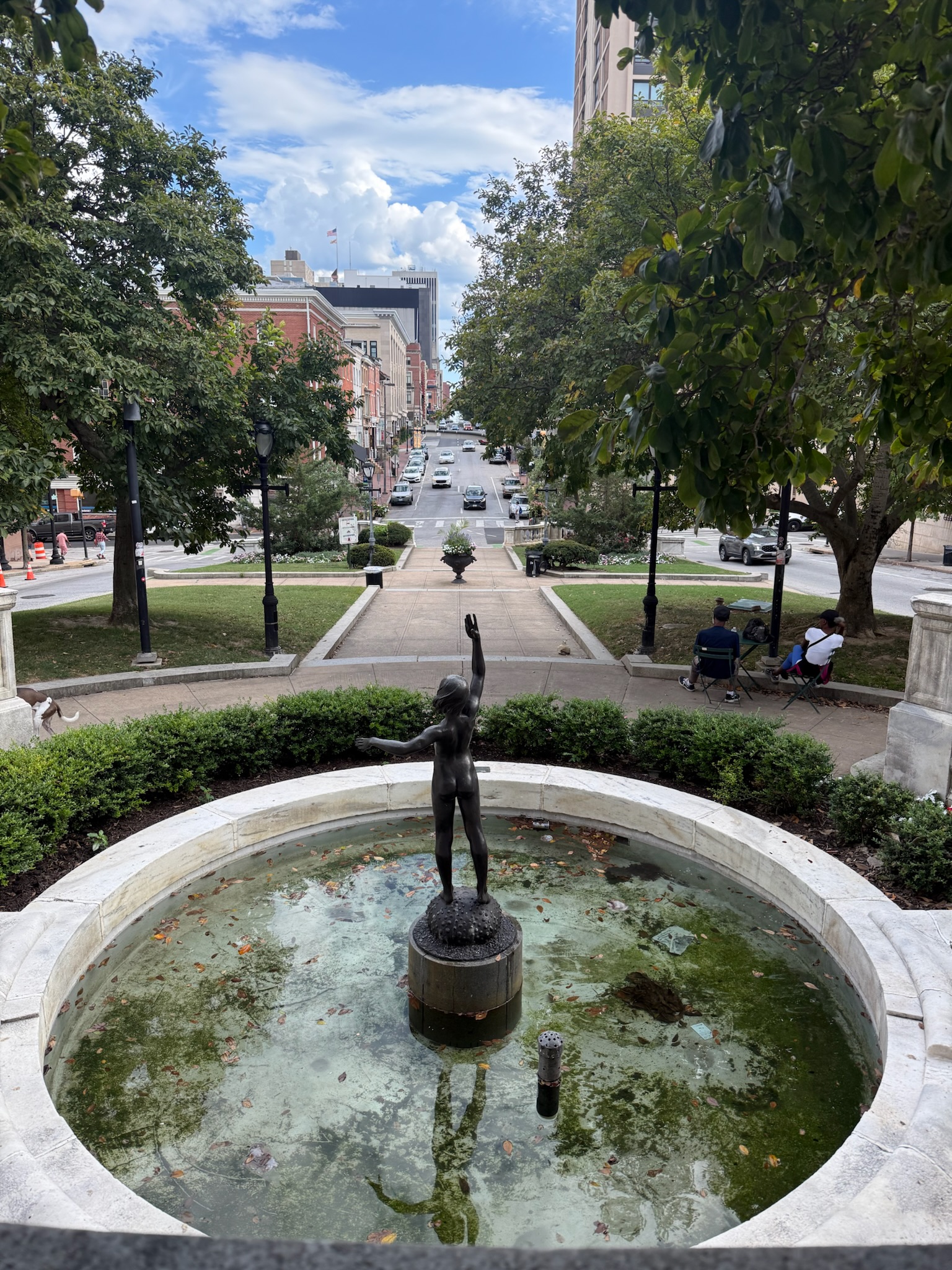
We found street parking easily just south of the monument. Here the meter was only $2.50 per hour, also with a four-hour limit. Each of the four streets feeding into the intersection had a park in their median. The monument plus the four parks together was called Mt. Vernon Place. Here were some shots of the park that we walked through on our approach to the monument.

Continue reading

The Wharf in Washington DC

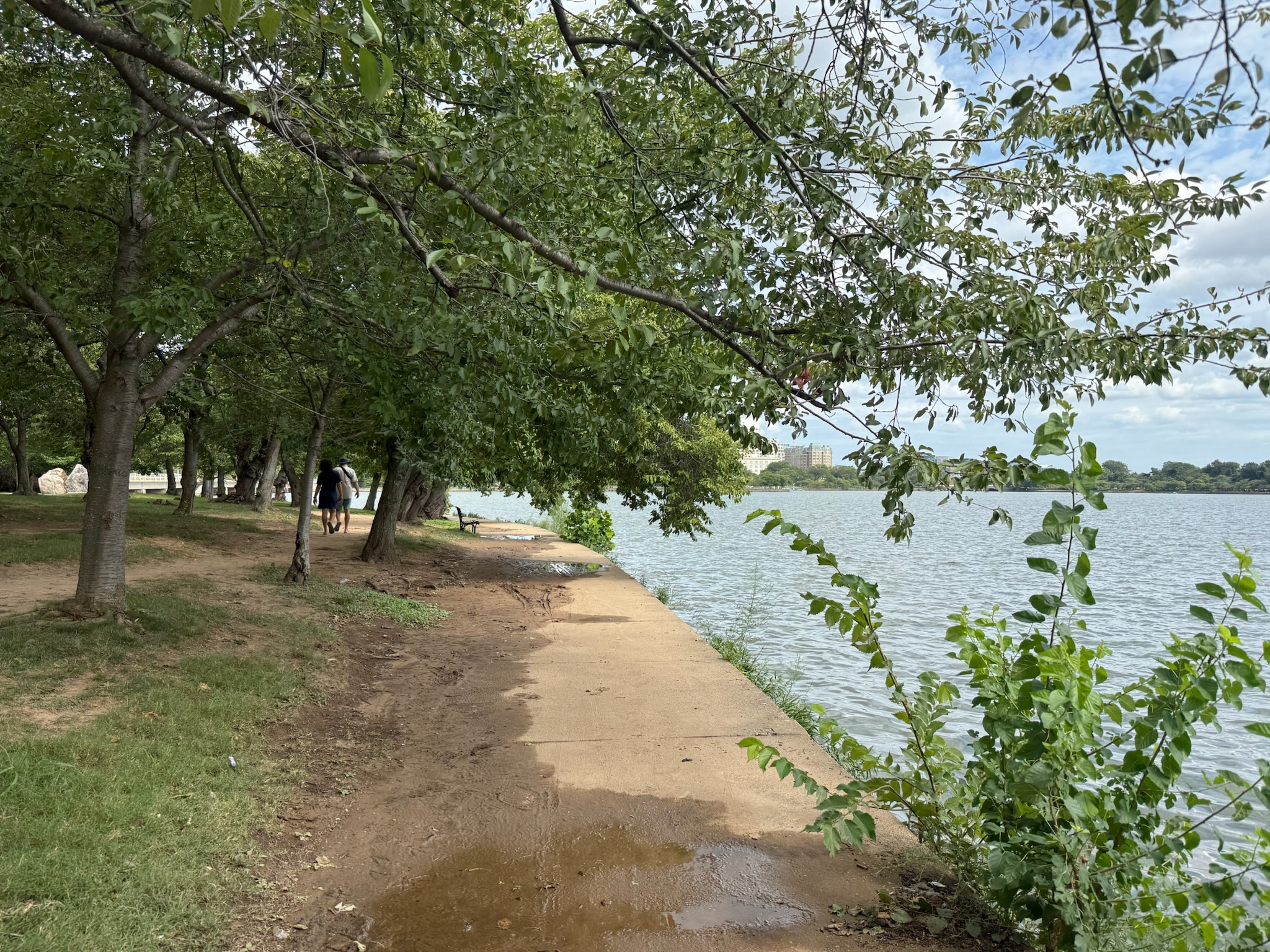
continued… At this point, we were all hungry. Eric checked the map app and saw there was nothing other than snack stands in close walking distance. We continued on the loop, which became muddy and overgrown.

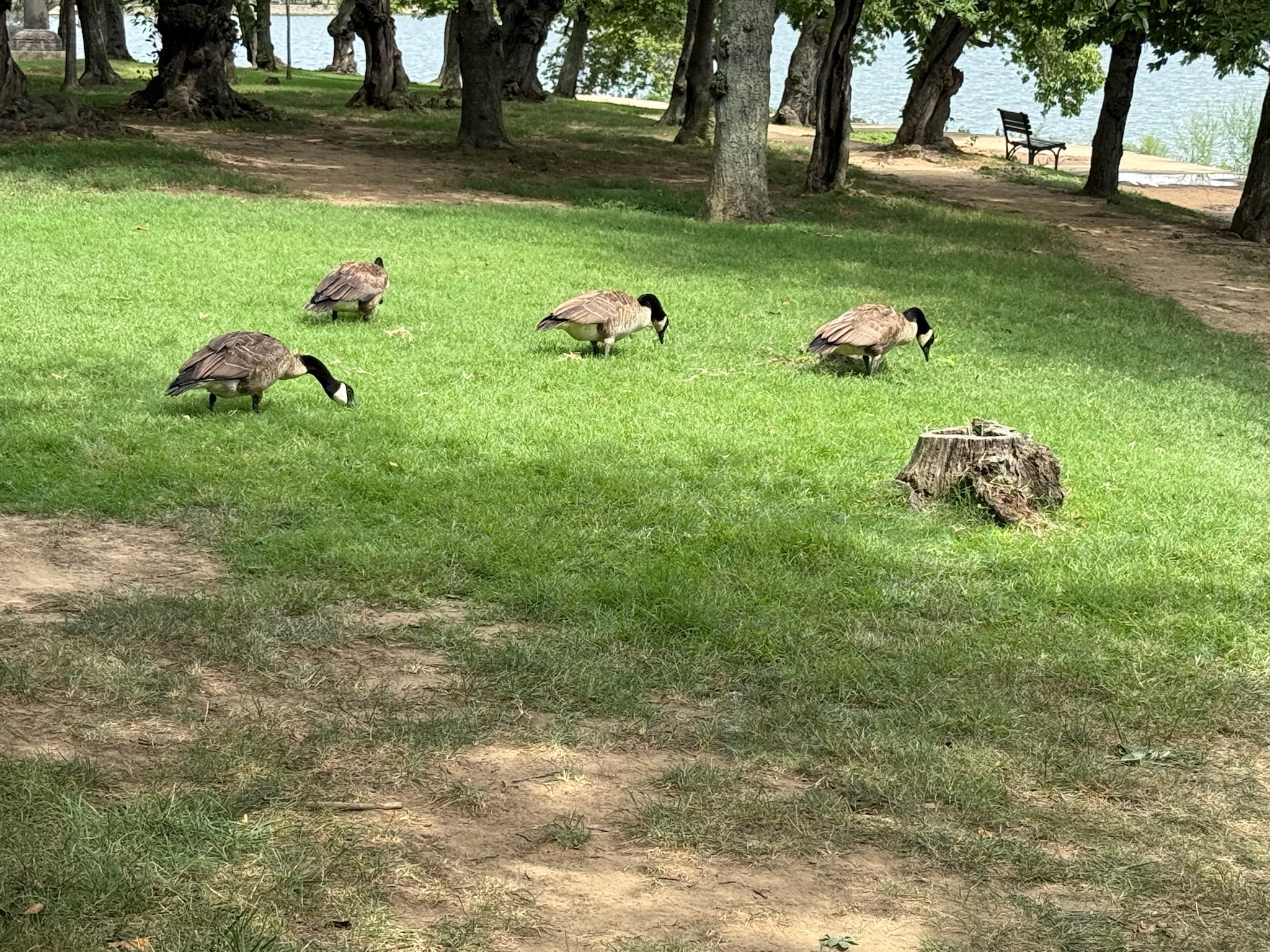
Near where we’d parked, the walking trail had been a little uneven, indicating that the sea wall had settled. Near the George Mason Memorial, the walking trail had actually been fenced off, with construction equipment behind the fence. A sign had said that the Tidal Basin and Potomac parks were created in the 1880s as part of a land reclamation project. The sea wall had deteriorated, and they were in the process of restoring the wall. There were quite a few geese on this side.

Continue reading

The Franklin Delano Roosevelt Memorial in Washington, DC

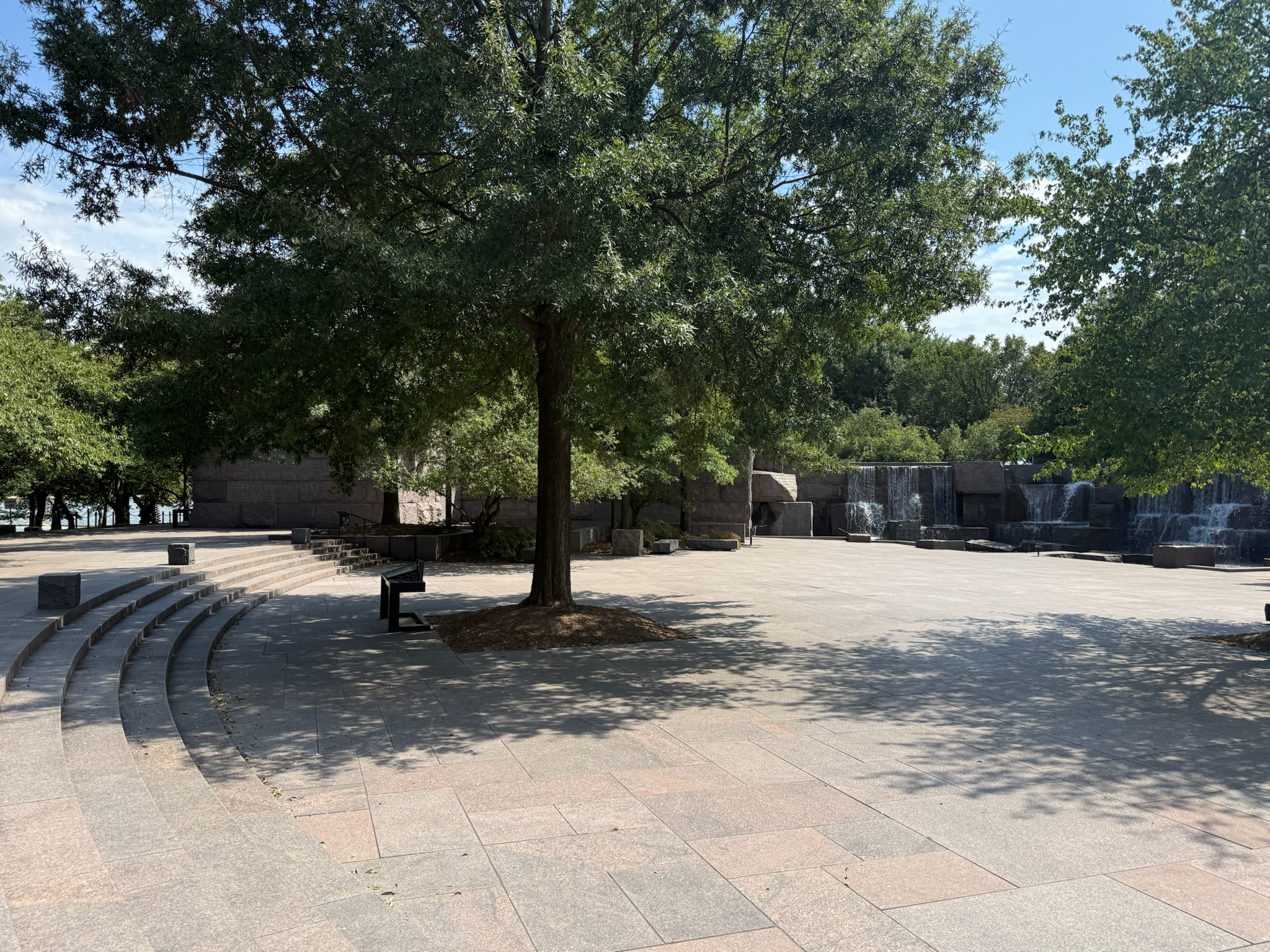
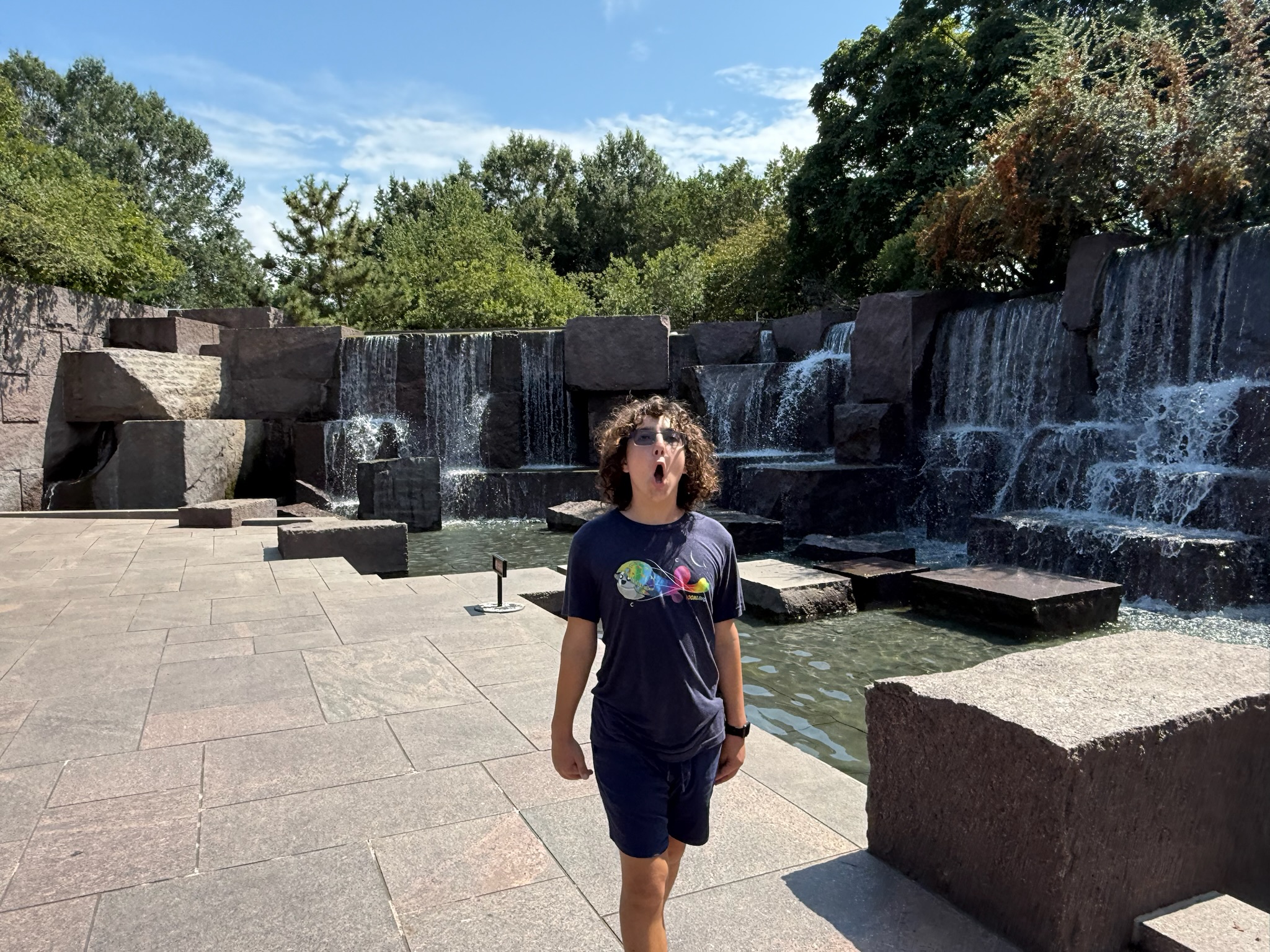
continued… Next, we crossed a footbridge over to the Franklin Delano Roosevelt (FDR) Memorial. We apparently were doing the loop backwards, as we entered through the exit. Eric had been before, but Christi and Keith had not. Christi had been expecting a single structure. She was not prepared for how extensive it was.

The section we entered into was called Room 4 and covered Roosevelt’s fourth term in office. It definitely wasn’t a room in the sense that it was enclosed. The “rooms” were separated by artistic sculptures. The sign said the goal was to create the feeling of a secluded garden with quiet alcoves.

Continue reading