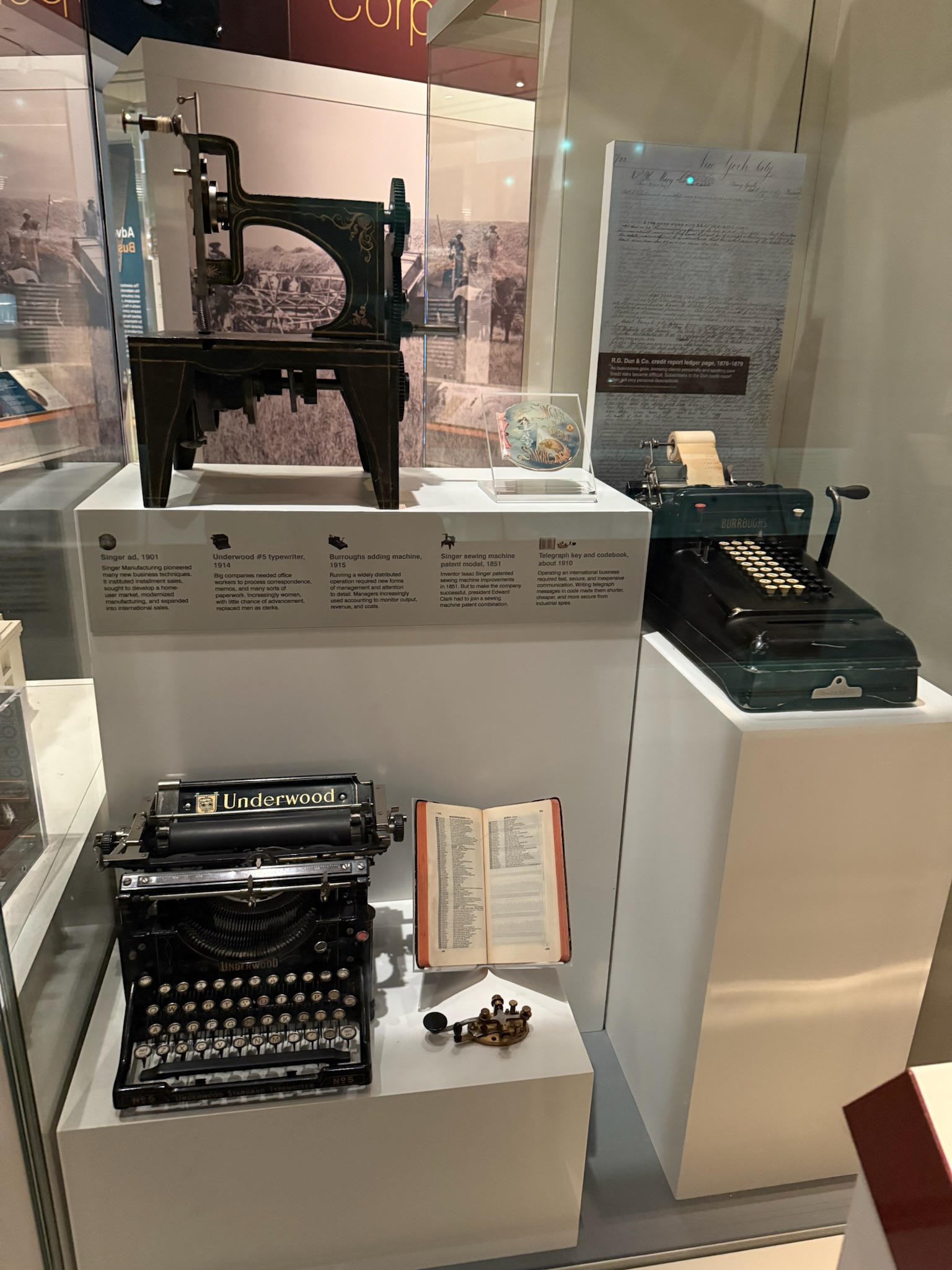
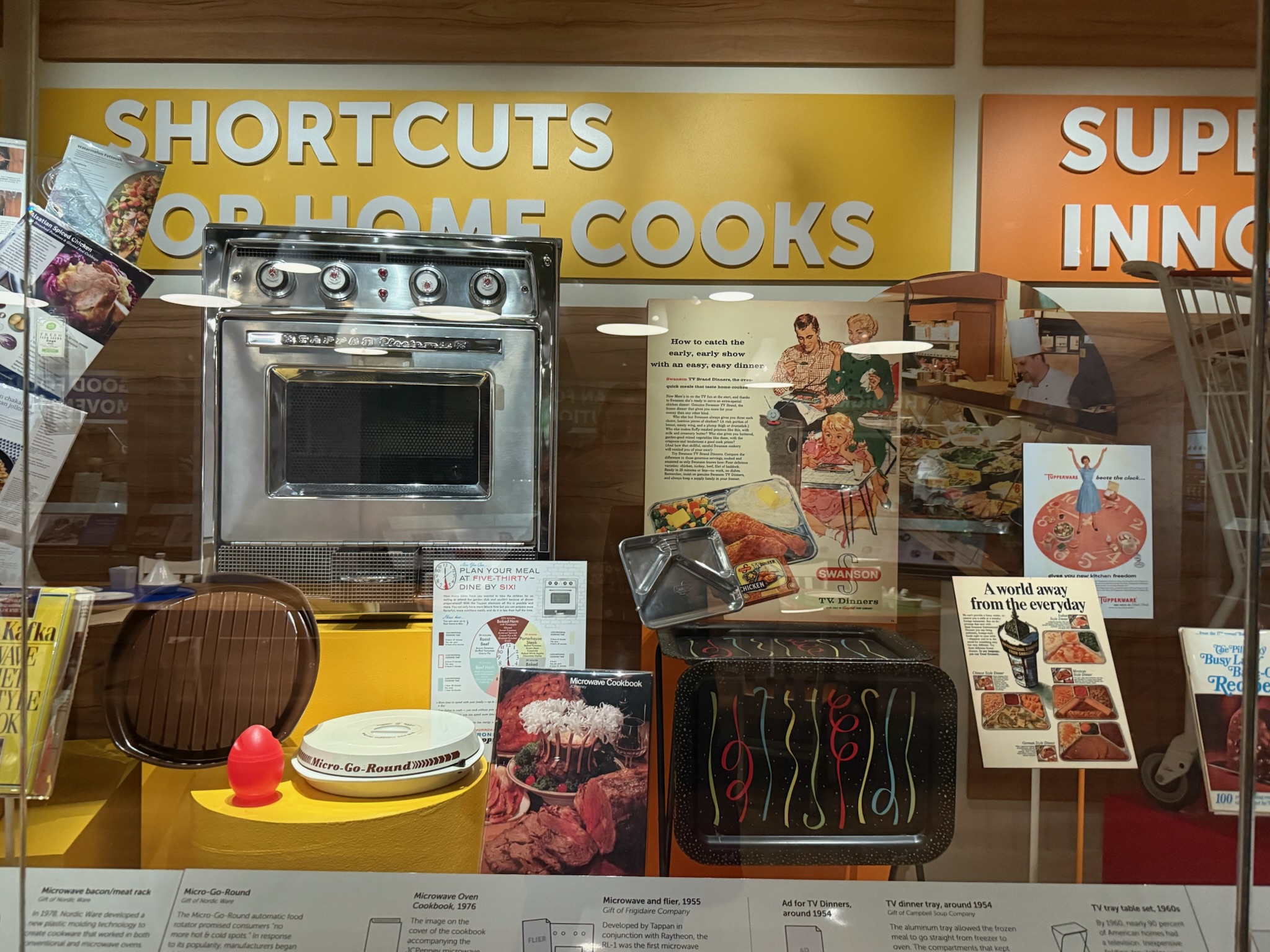
continued... The overarching theme in the exhibit on the changes in the way Americans ate was convenience. At the Museum of Industry, we’d learned that by the 1880s, canning food had become an important industry that continued to grow in the 20th century. We’d also learned that other types of food processing became important industries at about the same time, such as meat processing to make foods like sausages and deli meats, etc. According to this museum, by 1900, ready-to-eat convenience foods had became an important staple in American diets.
These convenience foods were made possible thanks to innovative technologies that allowed for mass production. For example, in 1840, a machine was invented that made 1500 tin cans per day. Prior to that, a can maker could only produce 60 tin cans per day. Had the machine not been invented, canning could never have become a giant industry. As time marched on, more and more of these technologies were created, and there was a steady rise in the types of convenience foods that became available in the marketplace. Some examples this museum gave were automated donut making machines (1950), a tortilla making machine (1950), a machine harvester (1955) and a carrot stick slicer (1959).
Convenience stores, such as 7-11, became popular in the 1940s. Convenience stores were usually small stores that primarily stocked foods and drinks intended to be consumed while on the go, though they also usually carried a few staples such as milk and eggs. Giant supermarkets became popular with the rise of suburbia, where there was space to build giant stores with ample parking lots.
Continue reading