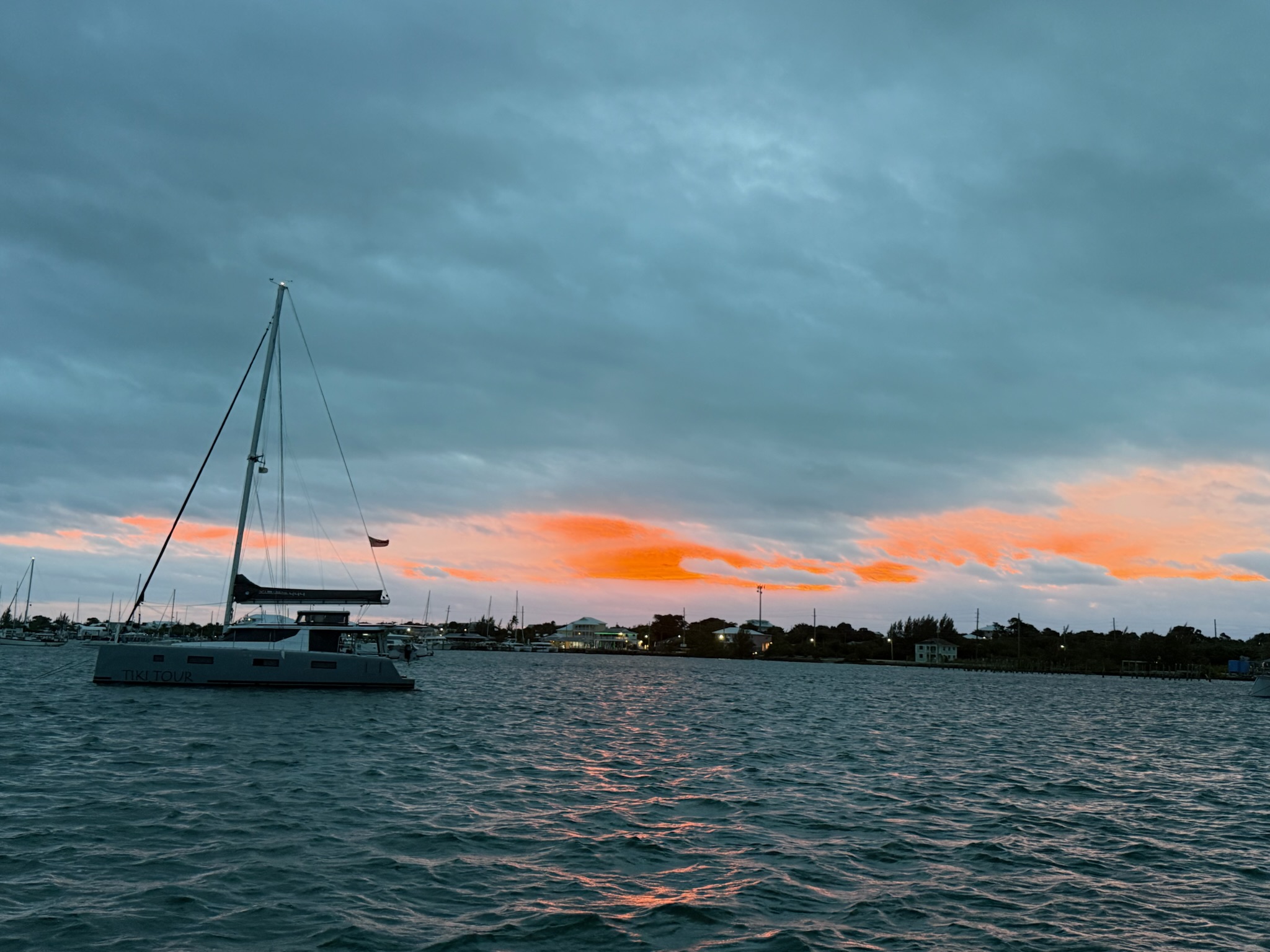
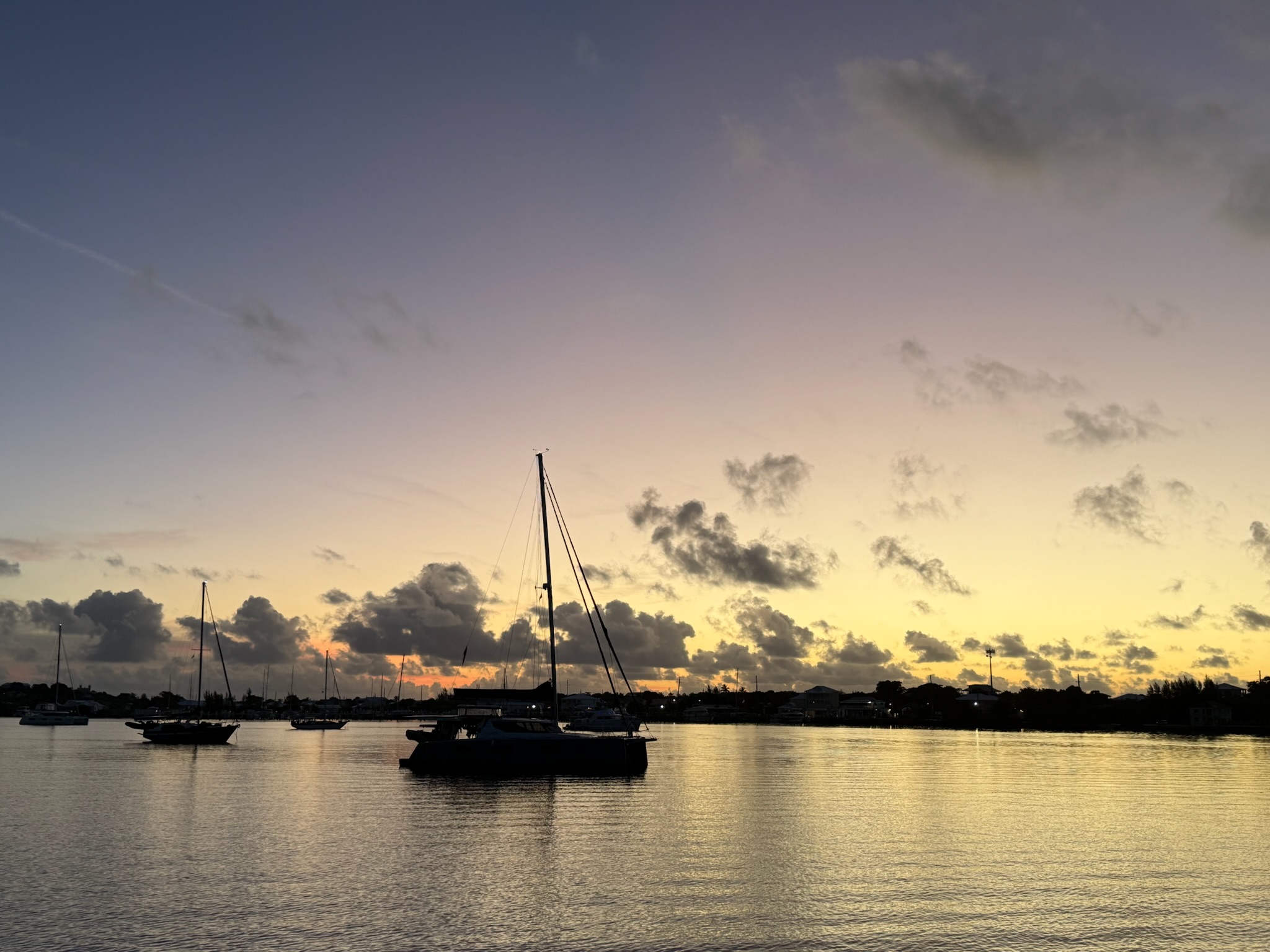
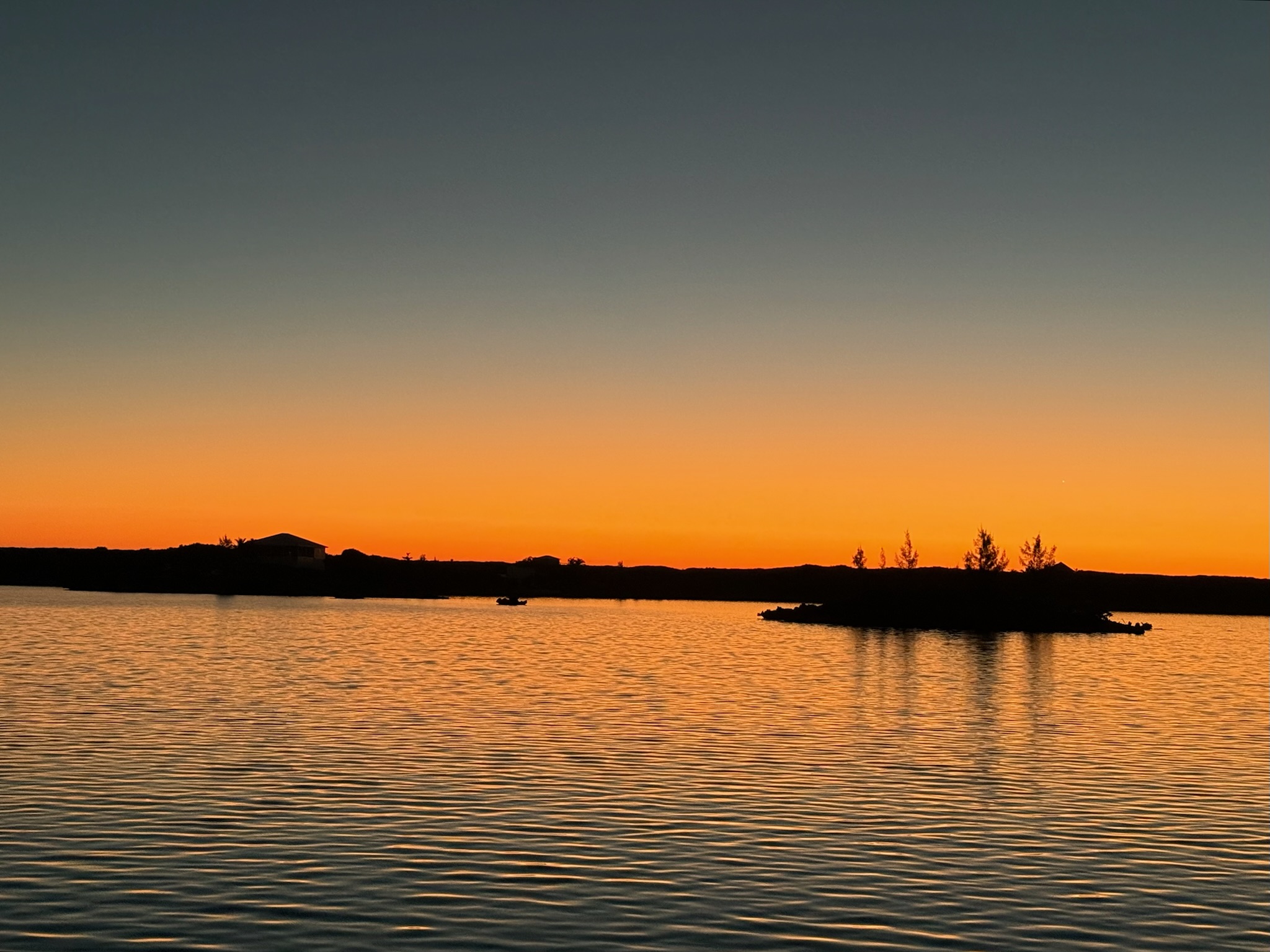
Friday, November 28 — It was an interesting sunrise. The clouds mostly blocked the colors, but wherever there was a gap in the clouds, the colors were vivid.
There had been a little bit of rain overnight. It was a gloomy morning. The wind was at 12 – 15 knots and the anchorage was quite rocky. It never failed to surprise us at how little fetch it took for wind waves to form. Unlike Thursday, there wasn’t much boat traffic. It seemed most boaters had hunkered down for the windstorm. The temperature was warm enough for shorts in the morning, but as the day progressed, it cooled down. By the late afternoon, we were wearing sweaters. Due to the thick cloud cover, the solar panels only produced 1/3 of the electricity that they normally generated.
November 21 – 28, 2025 — This week has been fun. On Saturday, we went to a cool coffee house for breakfast then went to another anchorage called Tilloo. When we anchored, Dad moved the boat backwards to make sure the anchor was dug in all the way, and it was because I flew backward when he went in reverse.
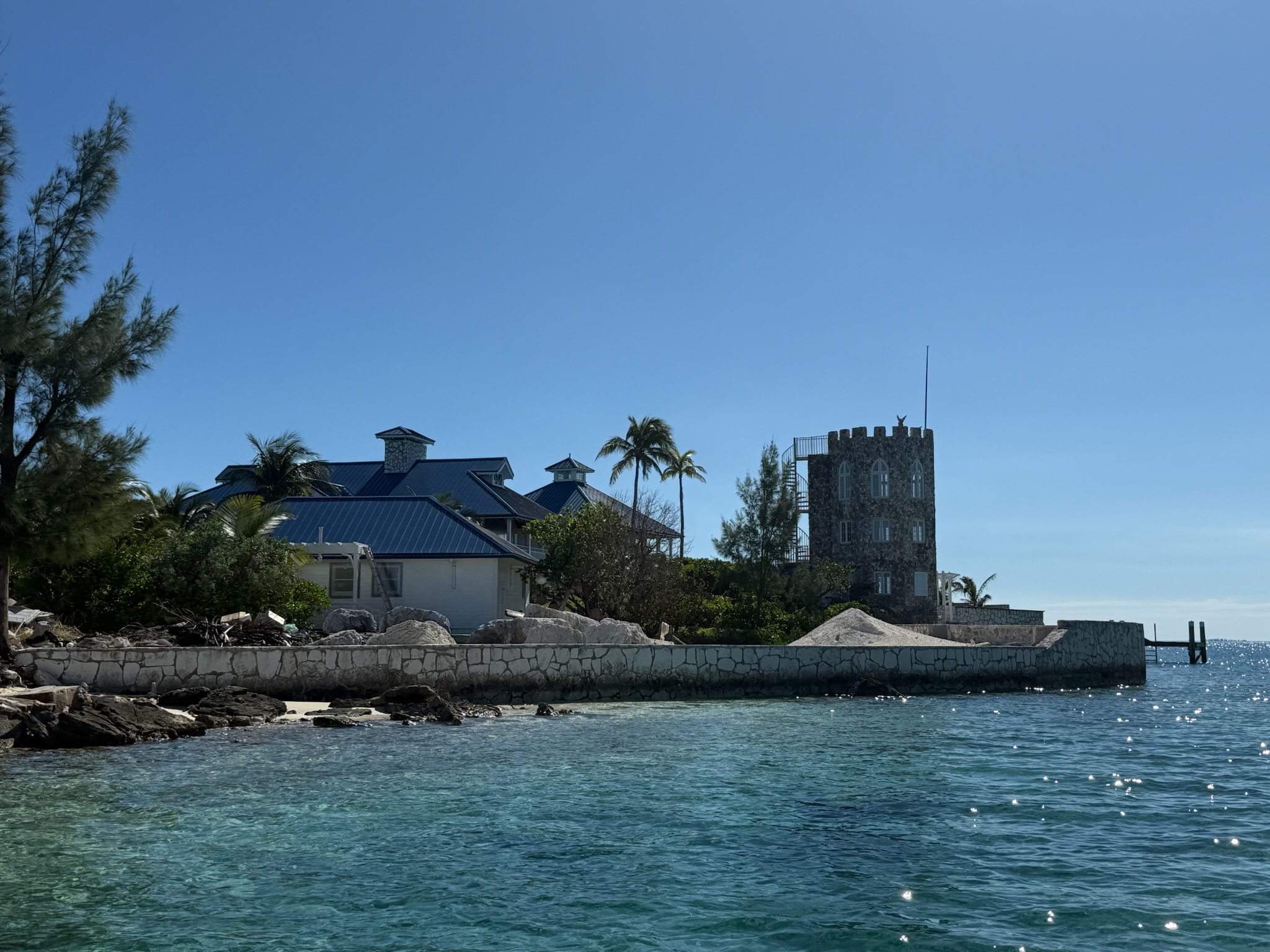
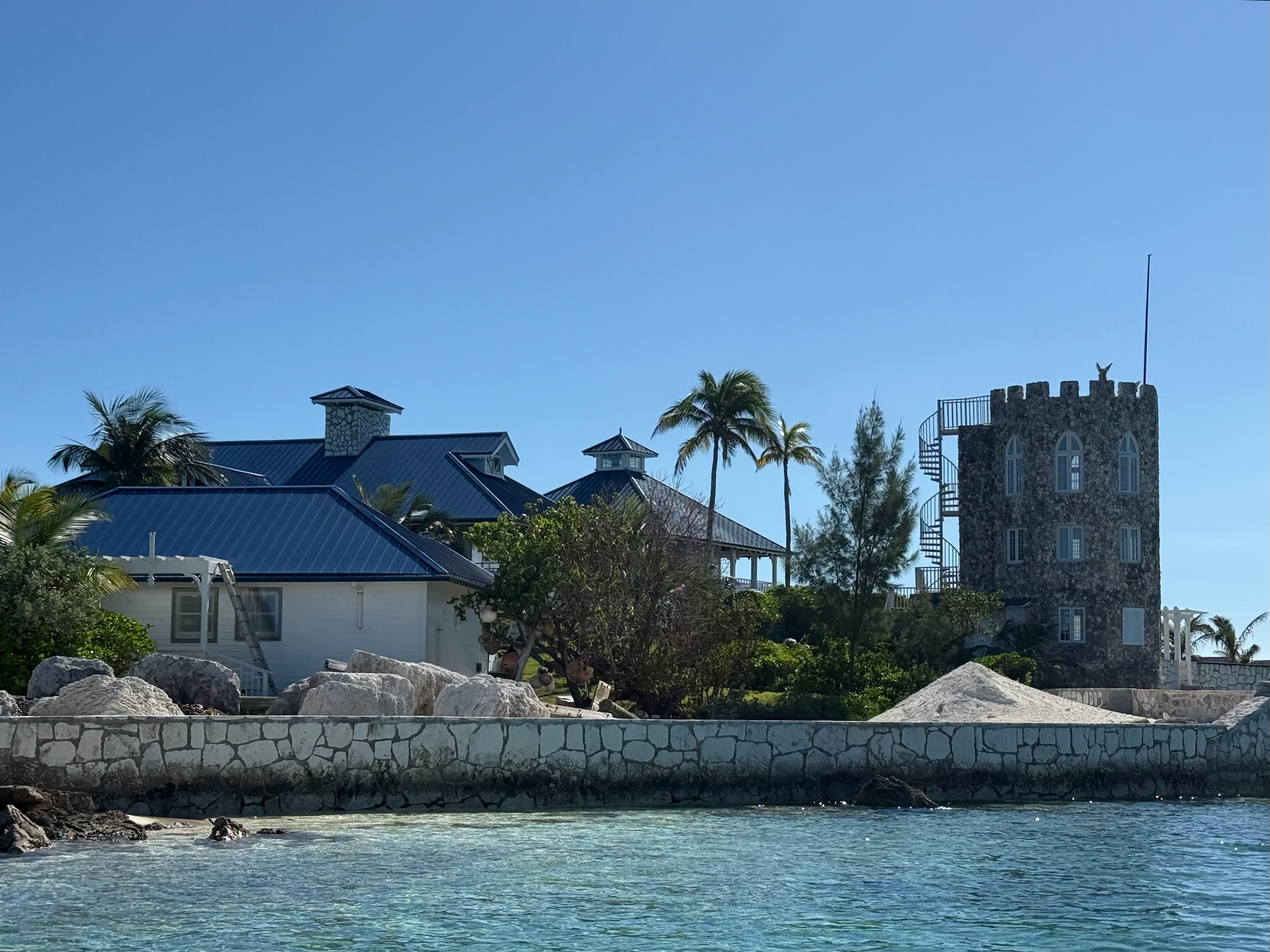
Castle at the Tiloo anchorage
Cette semaine était amusante. Samedi, nous avons mangé le petit déjeuner à un cafe, puis nous sommes allés à un autre ancrage qui s’appelle Tilloo. Quand nous nous sommes ancrés, papa a reculé le bateau pour s’assurer que l’ancre était enfoncée dans le sable, et c’était bien enfoncé parce que ça m’a fait tomber à la renverse.
When we’d wandered around town during our last stint in Marsh Harbour, we got the sense that the Bahamians didn’t celebrate Thanksgiving. We never saw Thanksgiving or even autumn-ish decorations. The one and only sign that we’d seen with the word “Thanksgiving” was at a hotel, saying they would be serving a traditional Thanksgiving meal in the restaurant today.
As we did our morning chores and school work, a conga line of boats came into the anchorage. Inclement weather was coming, and the winds were forecast to shift several times. This was one of the few anchorages in the area that had good protection from the several directions that the wind was forecast come from. As we’d already mentioned, some were fast boats, probably just here for the holiday weekend. Some of them were slower cruising boats, many just arriving for the beginning of the season. And some were already in the general area, coming here for the storm. The wind had already begun to shift, and the anchorage was mildly uncomfortable from the combination of wind waves and wakes from all the boat traffic.
Christi didn’t feel like cooking, so we went out for lunch. Now that Eric was feeling better, we wanted to scope out the big grocery store, so we decided to find a restaurant near that store and then we’d go grocery shopping after lunch. Fynn from Tiki Tour joined us. We took the dinghy to the closest public dock and followed a nearby road south for about a mile.
Monday, November 24, 2025 – Just before the sun poked over the horizon
Our feet and legs were completely covered with red welts from all the bug bites. Eric had 32 bites on one of his legs and at least 15 on the other. Christi and Keith were not far behind in the bug bite count. None of us wanted to go to shore today because we did not want to get any more bug bites.
After morning chores and school, Eric and Keith went for a swim around boat. The water was a little bit on the cold side, so they wore wetsuits. They had fun playing in the water. Eric wanted to clean the water line, but Christi forbade him. Eric’s back was slowly getting better each day, but it still wasn’t 100% better and she was worried that he’d strain his back all over again. Christi did not go in as the water was too cold for her, even with a 3/2mm wetsuit. Here was a photo of the bottom, showing how amazingly clear the water was, the sea grass, the lone starfish, and our anchor chain.
As was typical, we did chores in the morning, then headed to shore in the afternoon. Our plan was to get lunch at a restaurant on Lubbers Quarters, but first we wanted to get a closer look at the castle that we could see to the south of Kosmos and to scope out the area to see if it looked promising for snorkeling. The castle was cool looking, but it wasn’t as impressive up close as it was far away. It almost looked like a small apartment building behind a house.