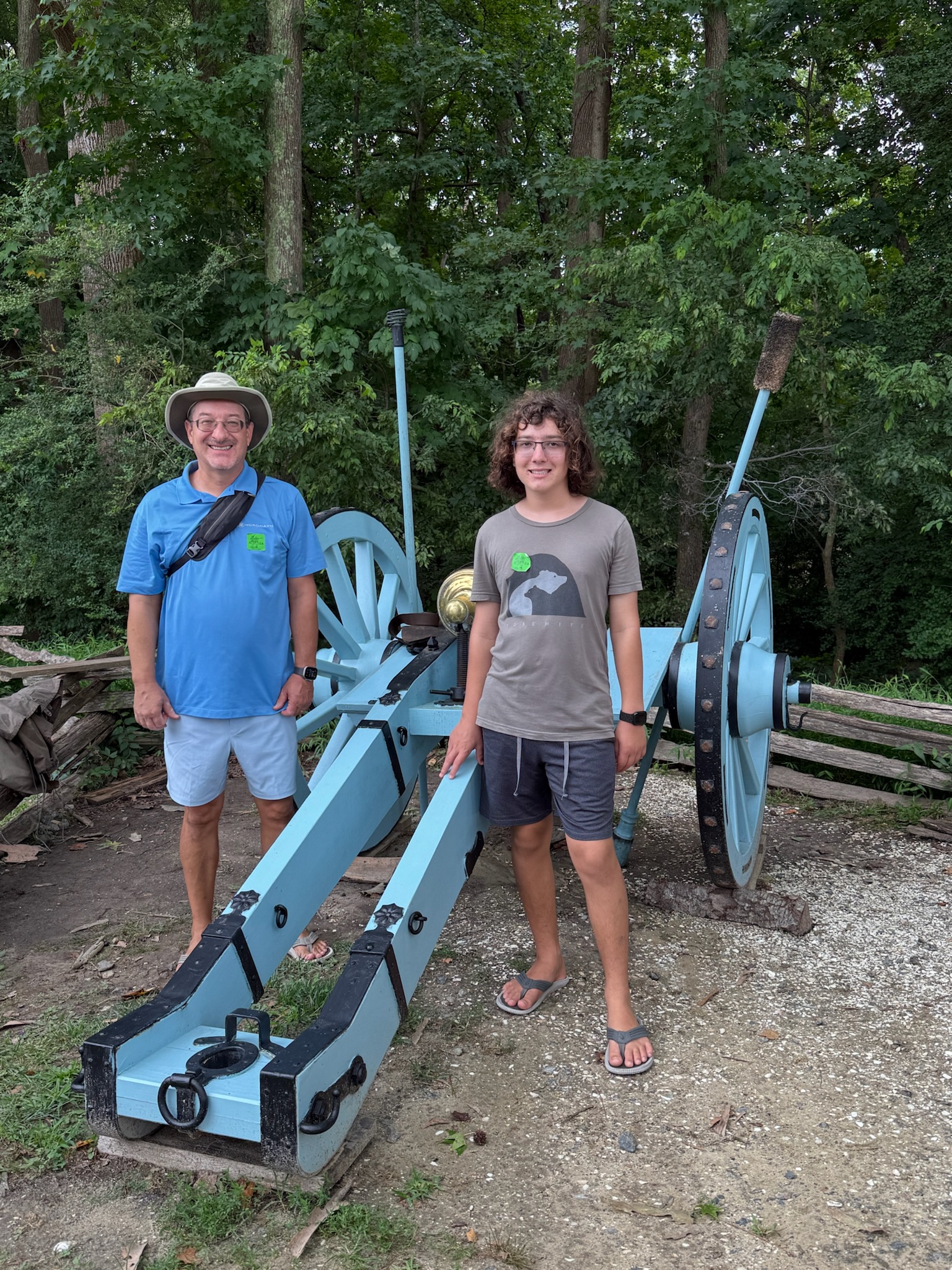
Continued… After we finished at the museum, we went back to the military area for the cannon firing demonstration. The Americans had multiple types and sizes of cannons. The first line of defense was the big canons. The French army had brought heavy siege cannons that fired 16 – 24 lb shot, which did serious damage to the base, but they couldn’t be easily moved. The Americans also had field canons, which were mobile, shot straight and were meant for disrupting lines (columns) of soldiers. The Americans also had 8″ howitzers. The howitzers were also smaller and could be moved around the battlefield where needed. They would shoot up over walls and could hit people behind walls. And they had mortars. The British only had light artillery that fired 3 – 6 lb shot, so the Americans had superior weapons in this battle.
Just as the bayonet on the end of the musket was more important to the troops as a psychological fear tactic than as a weapon, cannons were also more of a psychological fear tactic than a physical danger to the opposing soldiers.
The character talked about the various types of ammunition that was used. Classic cannonballs had explosives inside them, hard shells were solid, and grape shot blew up in the air and sent shrapnel everywhere. mortars,
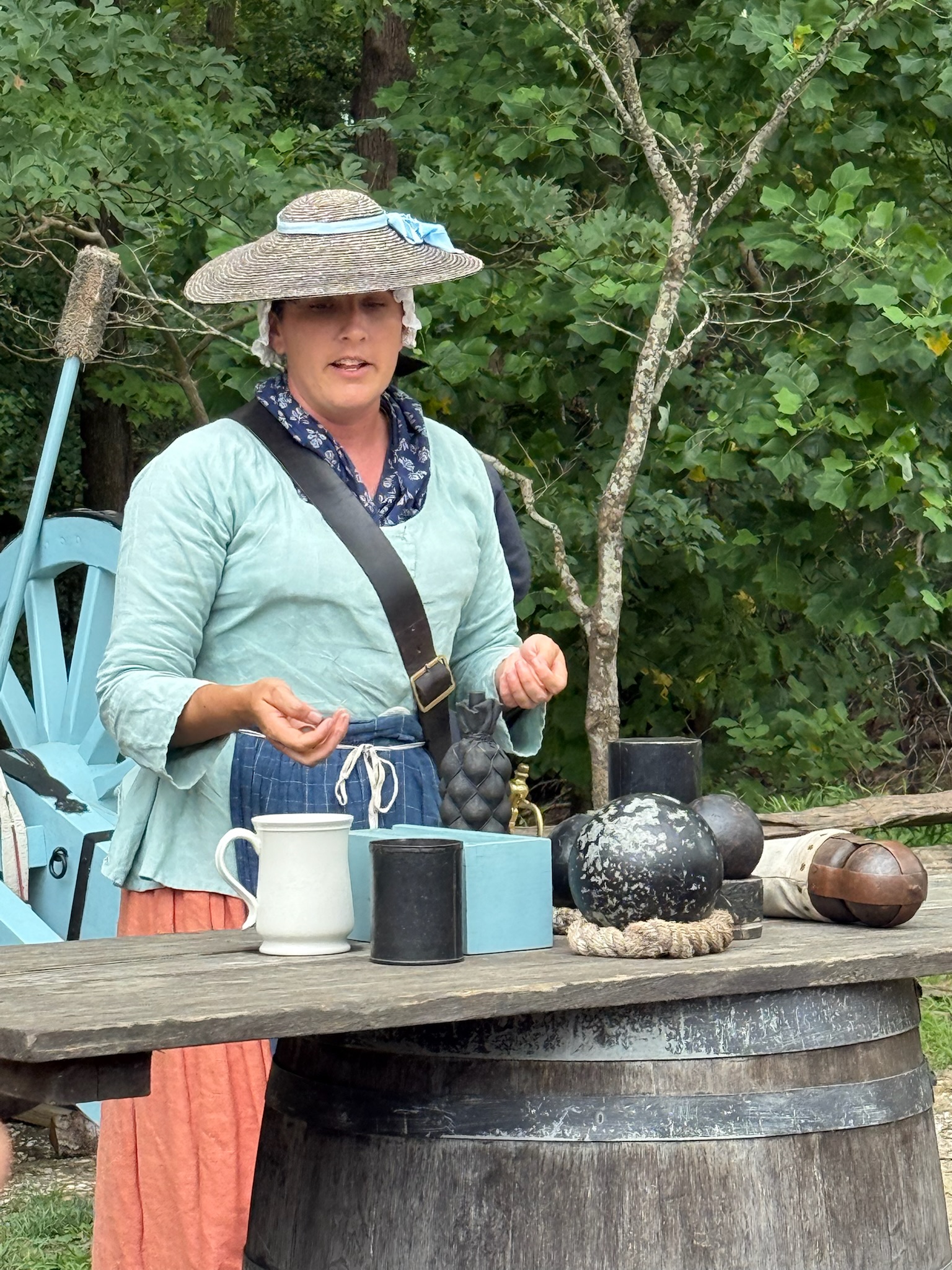
Just as the bayonet on the end of the musket was more important to the troops as a psychological fear tactic than as a weapon, cannons were also more of a psychological fear tactic than a physical danger to the opposing soldiers.
When they did the field demonstration, they went through each step of the process of loading and shooting the canon very slowly, and they had kids from the audience doing the various steps (although they had the kids use imaginary gunpowder and fire). There were quite a few steps involved! Someone’s job was to do the math on the angles and distance to ensure that the targets were hit. One of the things we found interesting was that they had two soldiers standing still next to the canon mouth when it was fired. It was completely safe to be there since the canon jerked backwards. The reason they did this was so that the other soldiers could put the cannon back at the same exact spot for the next shot (or, if they had missed, to ensure that this time it would be put in a better spot to not miss the next time). She mentioned that the soldiers stationed next to the cannons probably lost their hearing very quickly. Then they had the kids back away and showed what it looked like in real time to load and shoot the canon. It was definitely loud and smoky!
At this point, we’d seen the entire site, so we went to the Historic Yorktown Riverfront (where the ships were clustered together in the middle of the map), for dinner. It was a small cluster of adorable buildings about a mile east of the museum. We were pleased to see there was free parking in a parking garage on the south side of the street.
Continue reading