Colonial Williamsburg, Virginia – Part 4: Raleigh Tavern, Book Binder, Leather Maker, and George Wythe House

Continued… Upon arrival at the tavern, we were immediately ushered into a room that was lined with chairs. Fortunately, we’d arrived just as the doors were opening and got seats. Within minutes, it was standing room only. A black woman came in and told us she was one of the slaves who had worked at the tavern. She gave us her personal background. If we recalled correctly, she was sold away from her mother at around 12-ish to the tavern and that the people at the tavern became like surrogate family to her. She gave us the tour through her eyes as a slave.
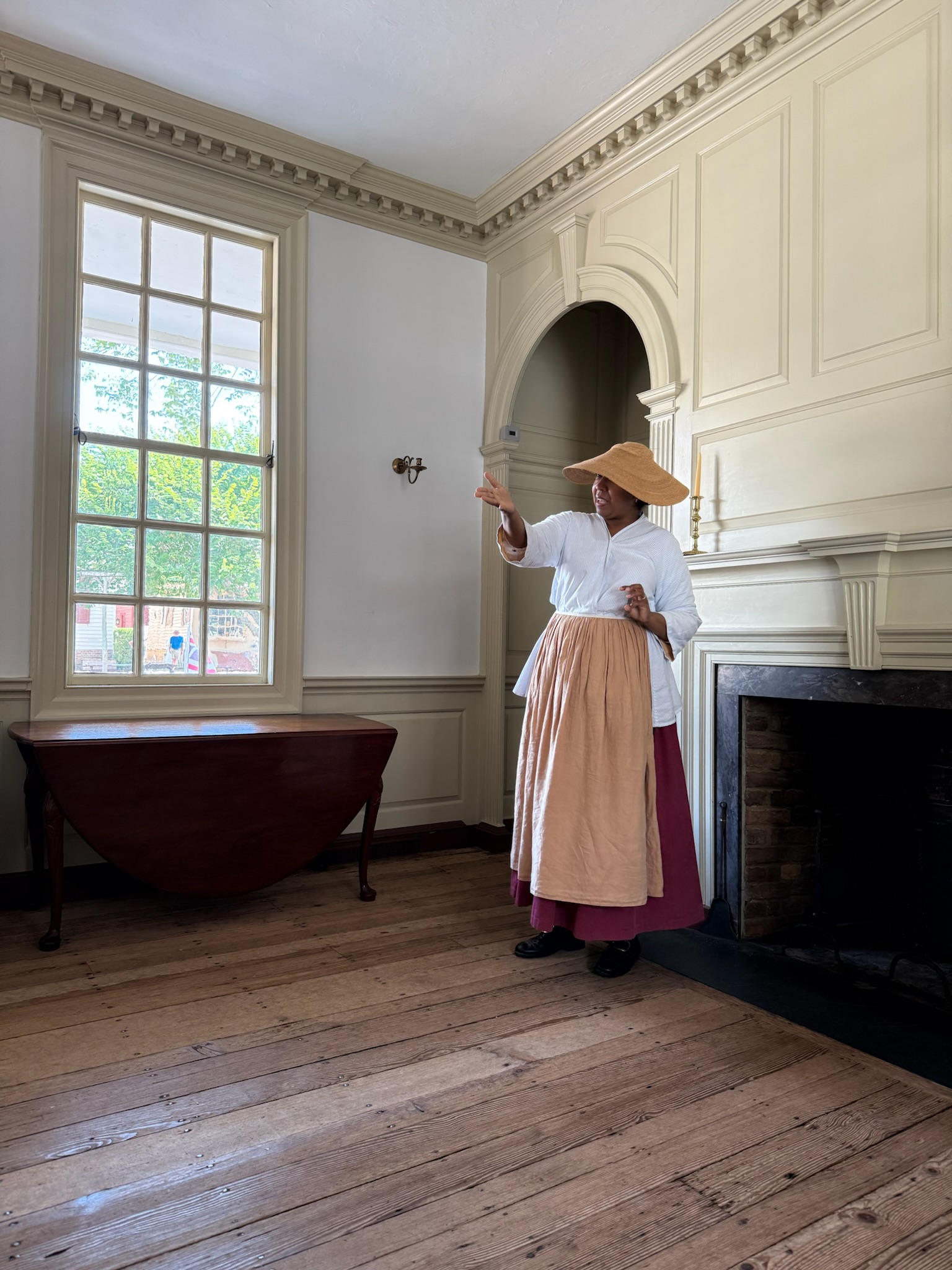
The Raleigh Tavern was established around 1717 and burned down in December 1859, so this building was a reconstruction. They had provided guests with lodging, food, drinks, entertainment, and a stable for their horses. She’d said that not everyone got a private room — rooms were often shared with several others, often strangers. And not everyone got a bed — sometimes people slept on the floor.

She gave us some background on the importance of taverns back in the pre-revolutionary era. Basically, few venues could host big events, so taverns were a popular venue. The Raleigh regularly hosted balls when the court and legislature were in session, making it a high profile networking location.

Taverns became pivotal as the rebellion gathered steam. The patriot rebels certainly couldn’t meet in the Capitol building or Anglican Church as they were controlled by the British. They couldn’t meet in any of the other churches because of the laws about keeping doors and windows open, and they certainly couldn’t meet outdoors where any passer-by would hear their subversive talk. So taverns became critical places for planning. It was in this tavern that the Continental Congress was first proposed.

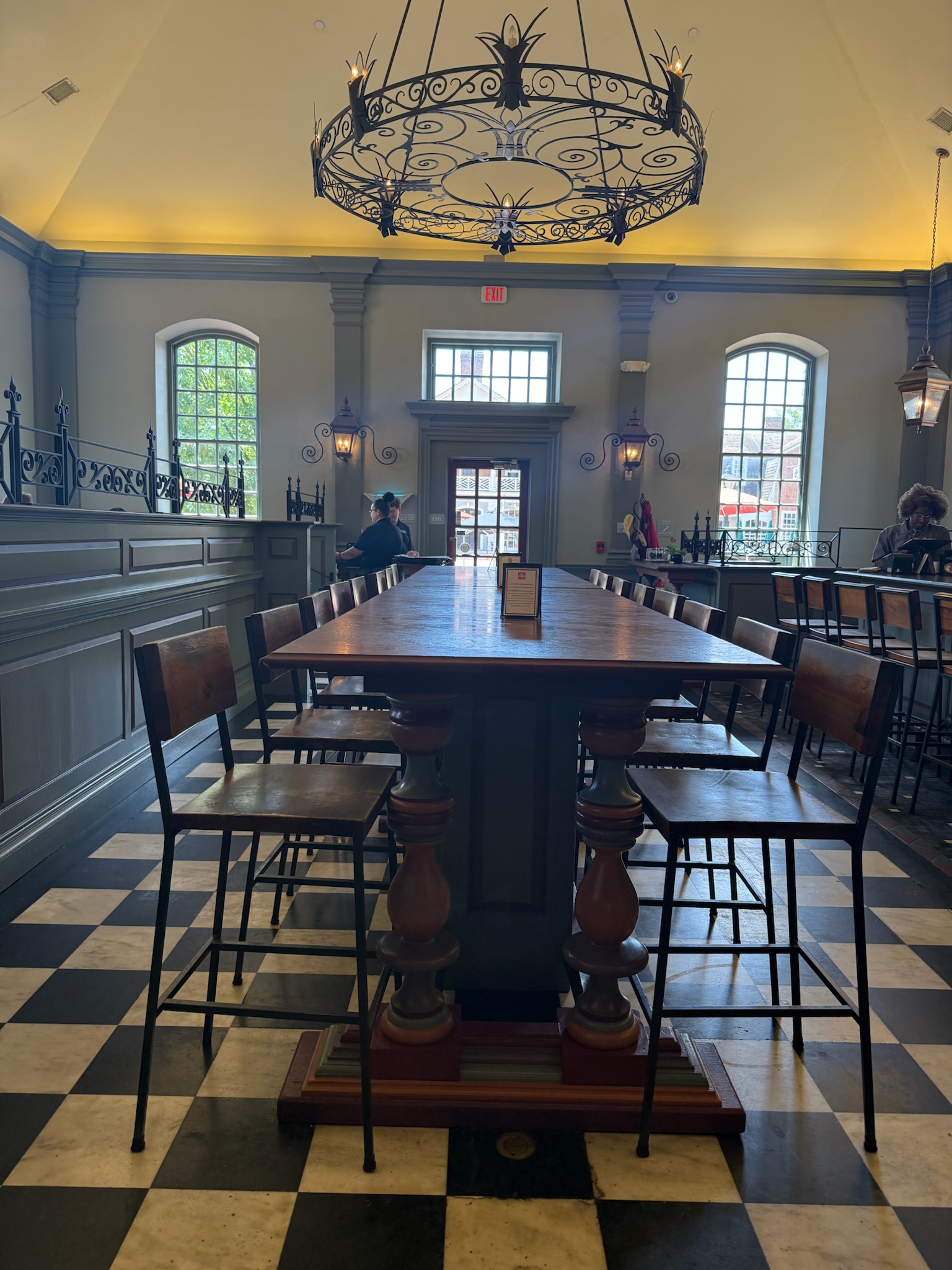
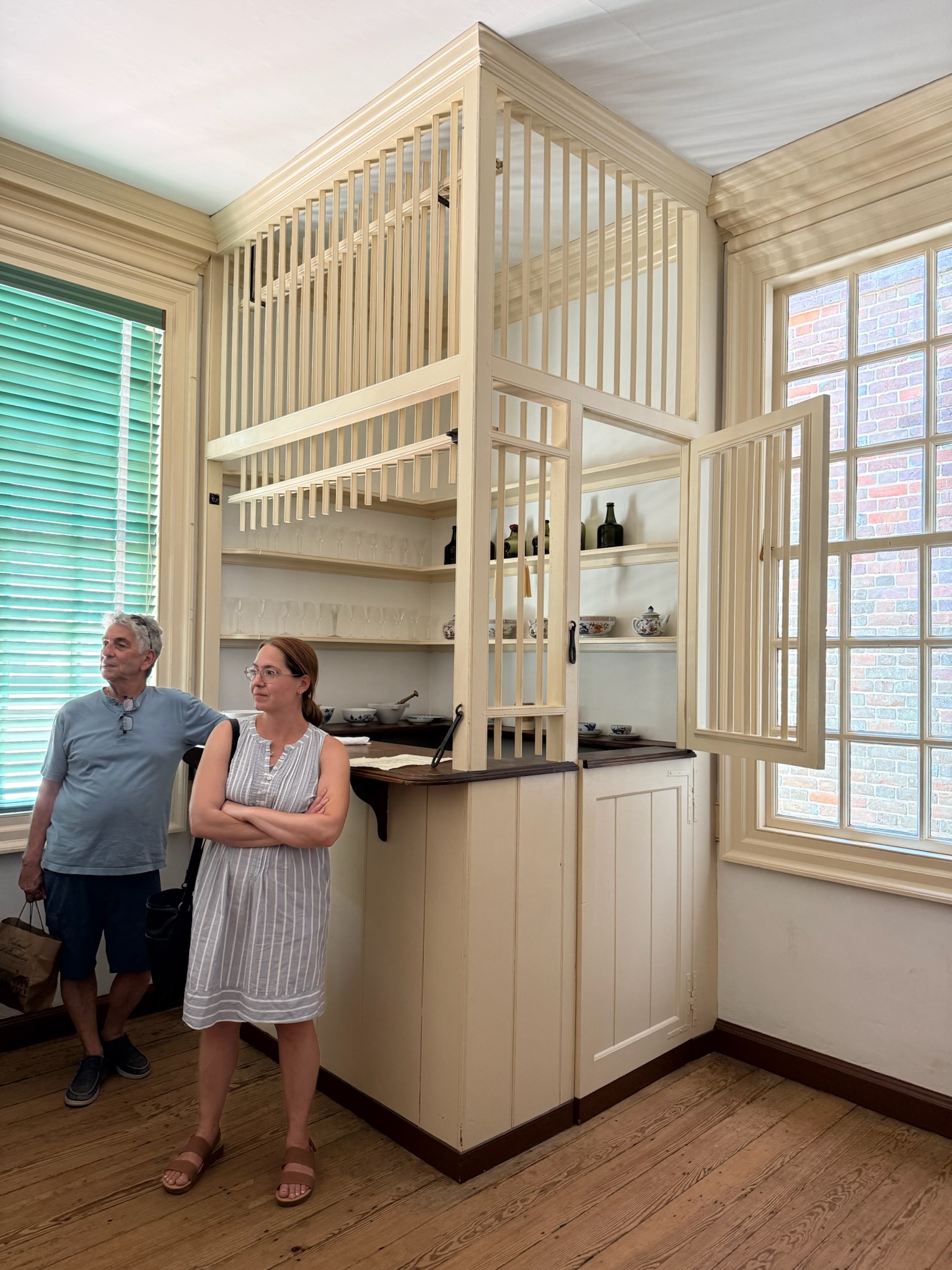
We went into the next room, which looked a lot like the coffeehouse, with a small beverage service area and a table with several chairs. A game, a newspaper and a book were laid out, indicating how the patrons spent their time in here. She gave more information about taverns, such as they sold liquor, beer, wine and ciders, which added to their popularity.
Continue reading

Colonial Williamsburg, Virginia – Part 3: the Capitol Building, Coffee House, Apothecary, Milliner and Silversmith

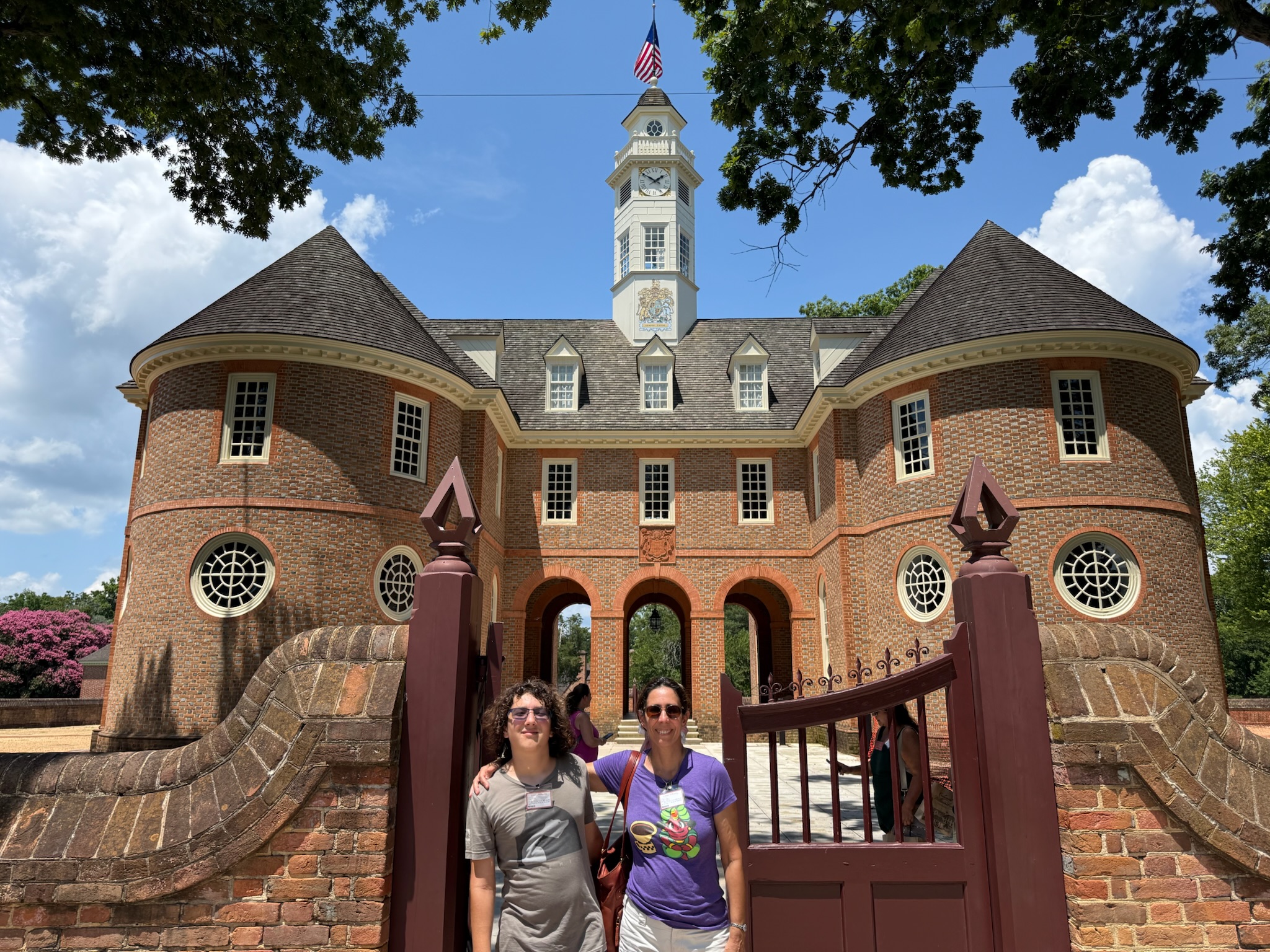
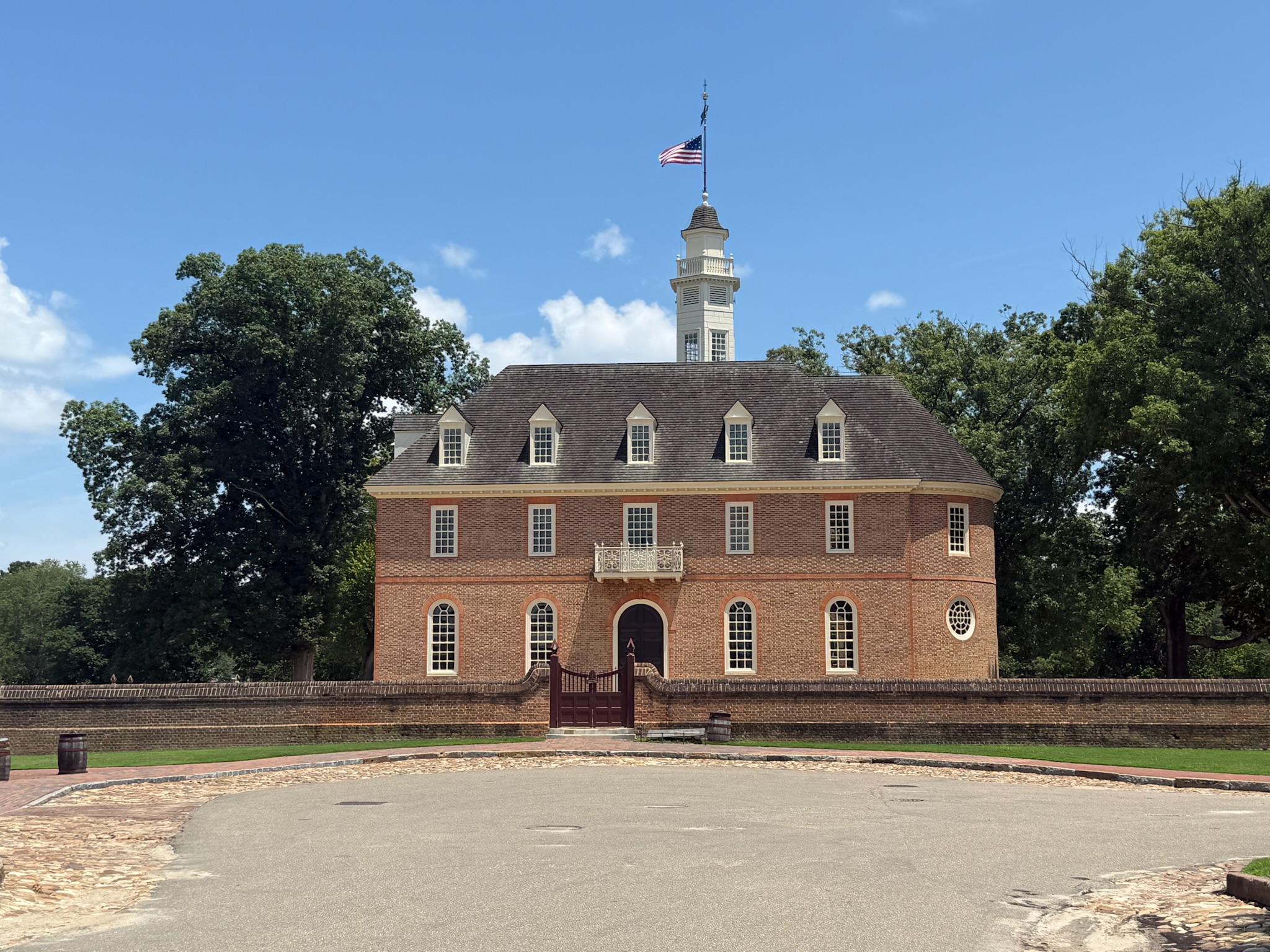
continued… After we left the blacksmith shop, we continued east down Duke of Gloucester Street to the Capitol Building, which was at the end of the street.

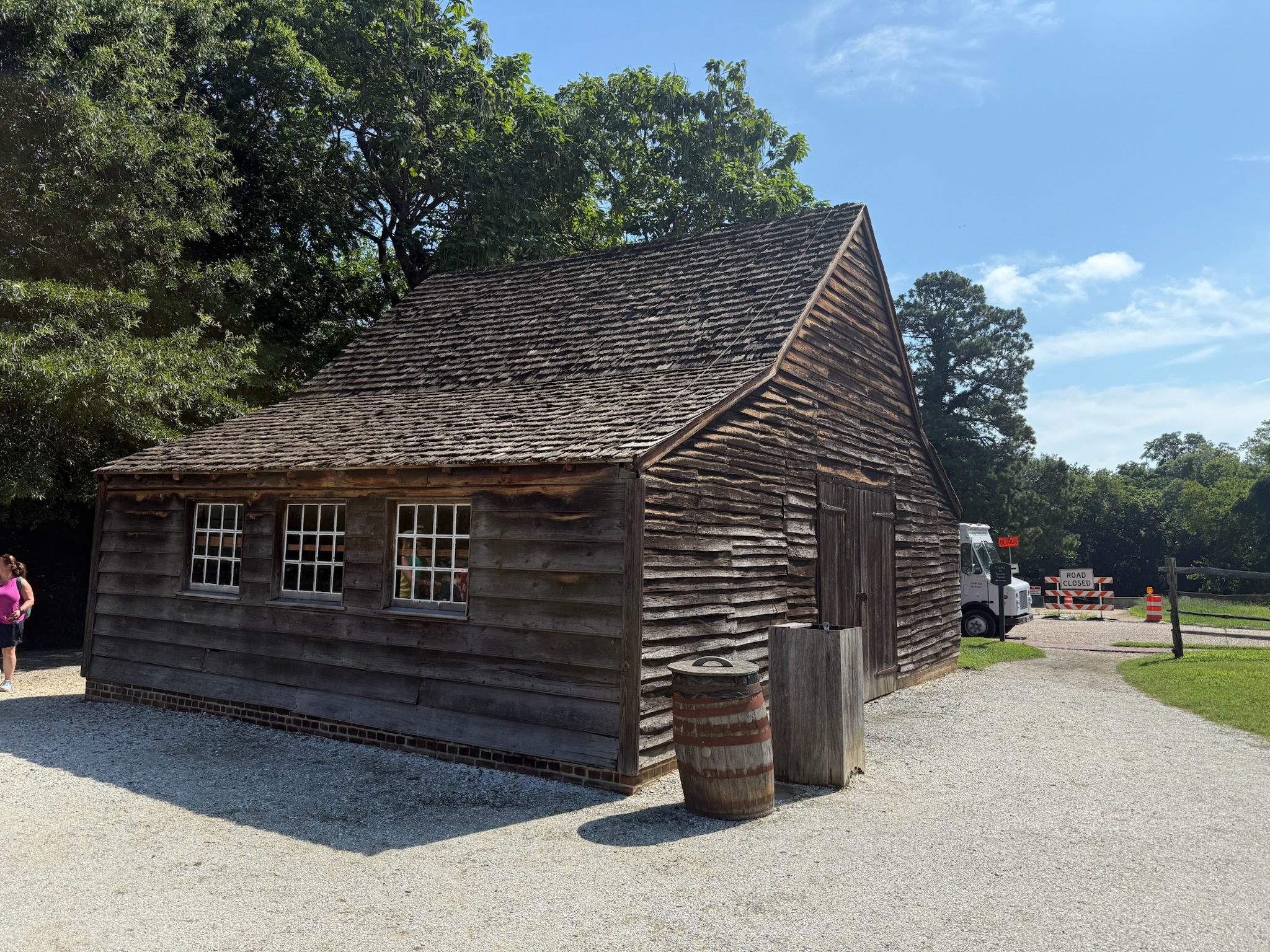
This was the side of the building. We had to make a right turn on Blair street to get to the entrance.

Continue reading

Colonial Williamsburg, Virginia – Part 2: British Food, the Courthouse, the Powder Magazine and the Blacksmith Shop

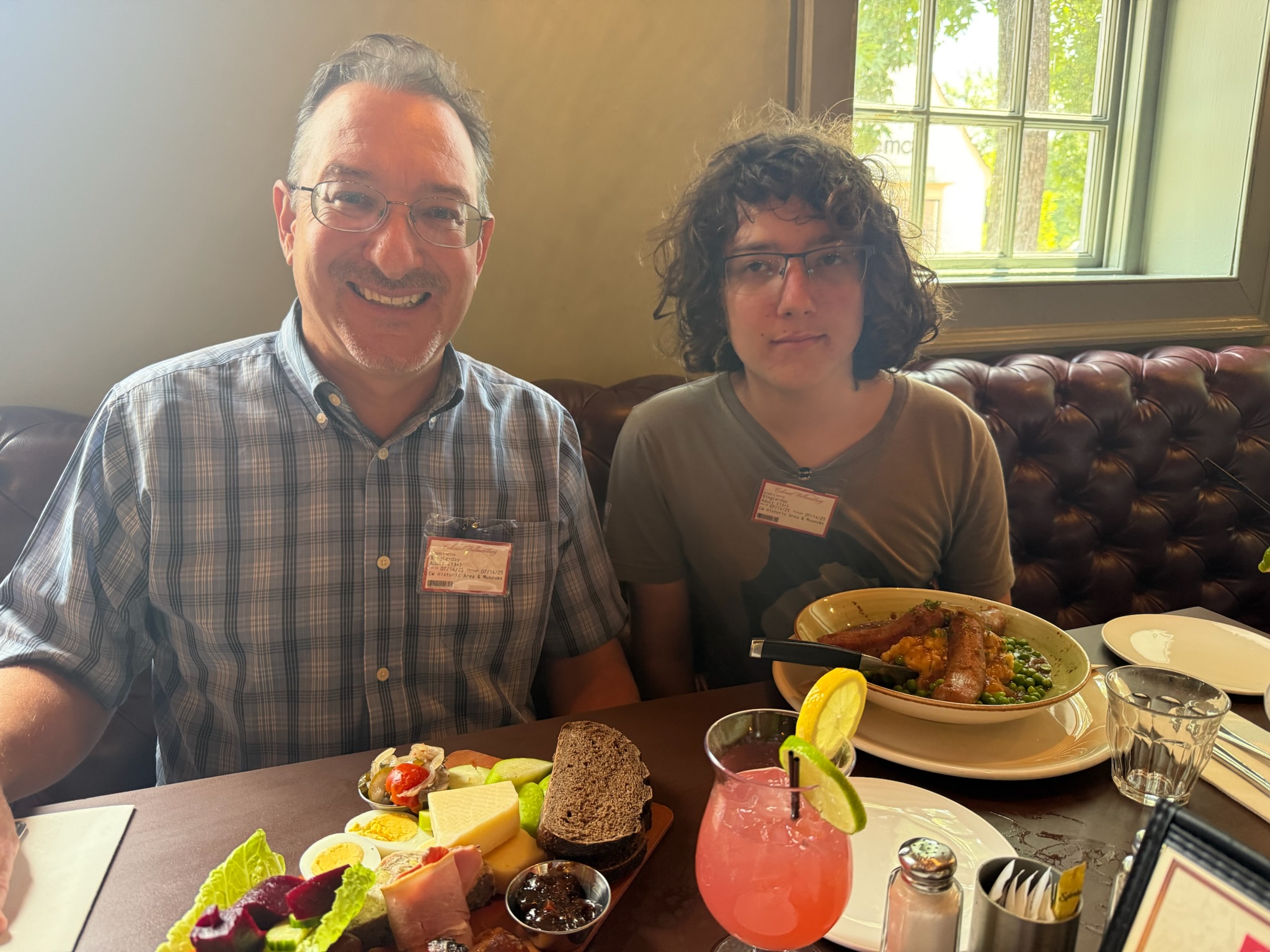
continued... We picked a restaurant called Dog Street Pub, which served traditional British food. It was decorated in the colonial theme and the staff wore period costumes.

Eric ordered a sampler platter, which had ham, cheddar, stilton cheese (which wasn’t crumbly like Trader Joe’s stilton), apples, beets, hard boiled egg, salad greens, chutney and black bread. He loved it. Keith ordered bangers and mash, which was sausage served on a bed of mashed potatoes and peas and smothered in gravy. Keith liked the sausage and the potatoes, but he didn’t like the gravy… and since the gravy covered everything, he didn’t love his meal.

Continue reading

Colonial Williamsburg, Virginia – Part 1: The Governor’s Palace

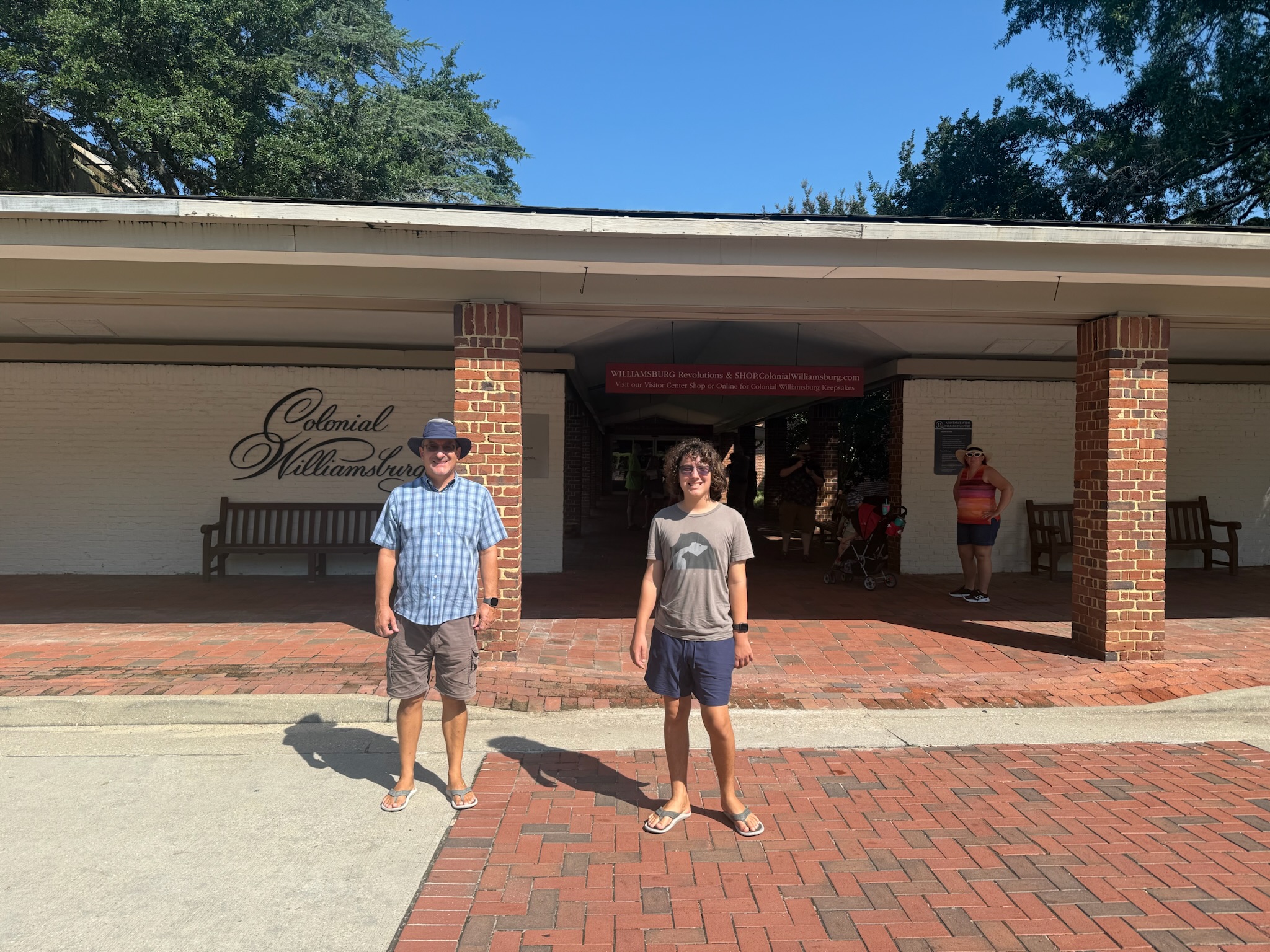
Monday, July 14 — We were still confused about Colonial Williamsburg. According to what we’d read online, we needed to buy tickets to see the historic town at the Regional Visitor’s Center, which was about 3/4 of a mile away from the historic district (by car, not as the bird flies). The visitor’s center opened at 1000. We pulled into the parking lot promptly at 1000, and it was packed. Parking cost $10, and it was a flat fee for the entire day.

Inside the center, there was a fairly long line to purchase tickets, which were $35 per person for 13 and up. The cashier gave us a map and explained that there was more to see and do than could be done in one day and that we needed to decide on what we wanted to see and plan our day in advance. When we asked for clarification of what exactly it was that we were going to see, he explained that the Colonial Williamsburg Foundation owned several of the buildings in the historic downtown. Their buildings had been restored to look as they had in 1775. Inside, there were actors dressed in costumes of the era explaining the history of their particular building, with the focus being on the years between 1699 (when Williamsburg became the capital of Virginia) and 1776 (just as the Revolutionary War began). Anybody could walk around the historic downtown for free and look at the buildings, but only ticket holders could go inside of the foundation’s buildings. All the buildings on the map were color coded to identify which buildings were owned by the foundation. There were several buildings that were not owned by the foundation which were open to the general public, mostly shops and restaurants. Some of those venues had their employees dressed up in period costumes, too. We later found out that not every foundation building was open every day; if it had a flag out front, then visitors knew it was open.

There was no museum in the visitor’s center like there had been at Jamestown, but there was a 70-minute movie. We decided to save the movie for the end of the day. We followed the signs out to the exit, where we could either take a walking trail to the historic area or take a bus. It was blazing hot, so we opted for the bus. We waited about 10-minutes. There was a long line, and we lucked out and got some of the last seats. According to the map, the bus did a loop around the outer edges of the 3/4 mile historic area, with multiple stops along the loop.

We decided to get off at stop 1, the governor’s palace. From the bus stop at the main road, we followed a small foot path to a smaller paved road. We passed this along the path, but the map didn’t specify what it was and the color indicated that it didn’t belong to the foundation.

Continue reading

Go Kart Racing and the FFX Family Show in Virginia Beach, Virginia

Friday, July 11 was a mellow day. In the morning, Eric changed seagull water filter. It was the filter attached to the kitchen sink that filtered our drinking water. Eric has been buying the same filter since Kosmos was new, and it has become one of his metrics for tracking inflation. The cost of the filters goes up a little bit every time he buys one, and they’ve doubled in price in over the 19 years. 

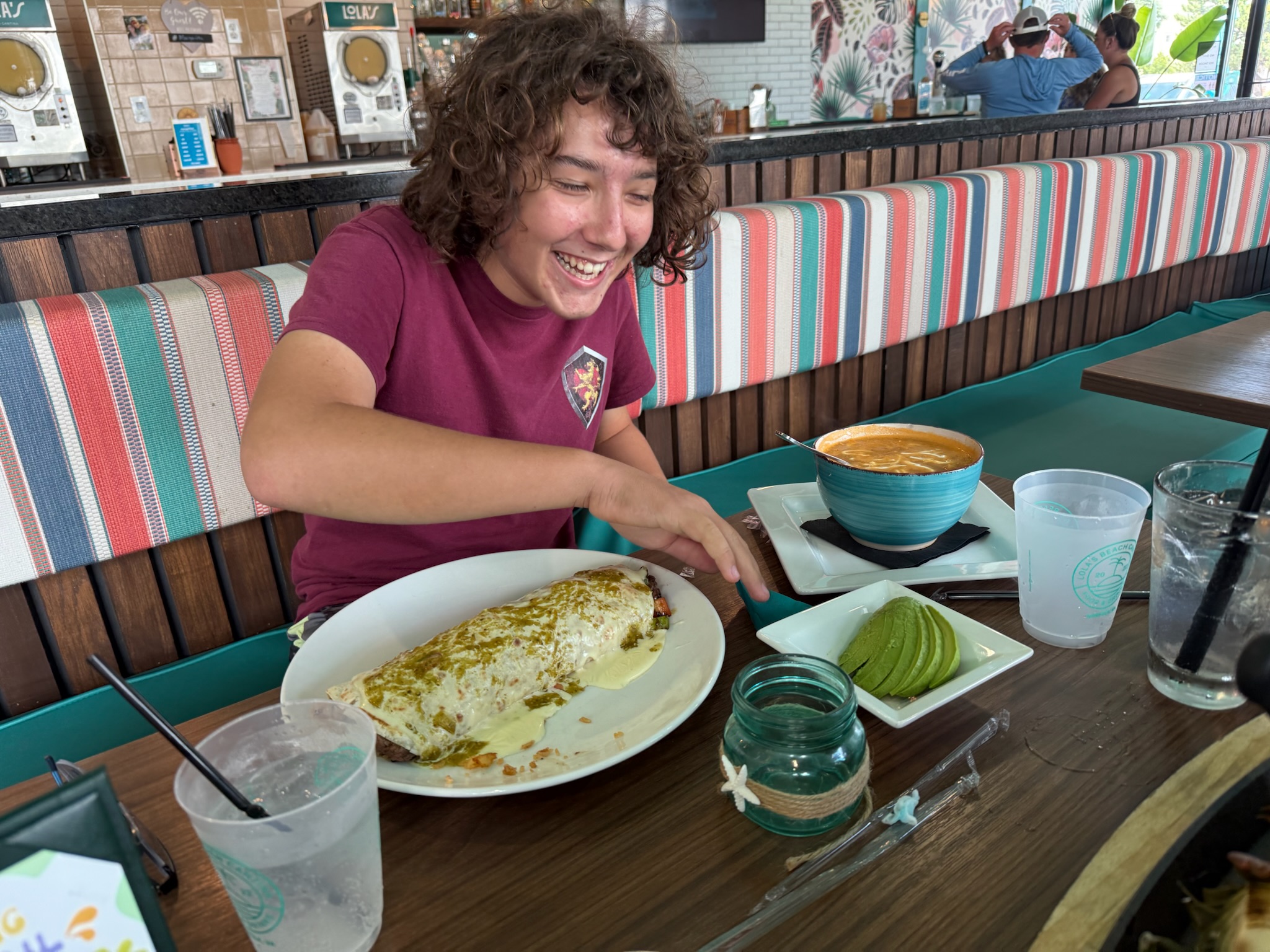
Our big outing was to a Mexican restaurant called Lola’s, which was in one of the new complexes just northeast of the marina. Even though it was within walking distance, we drove since it was so ungodly hot out. Lola’s had a cheerful, beach themed decor and the menu had lots of non-Mexican choices.

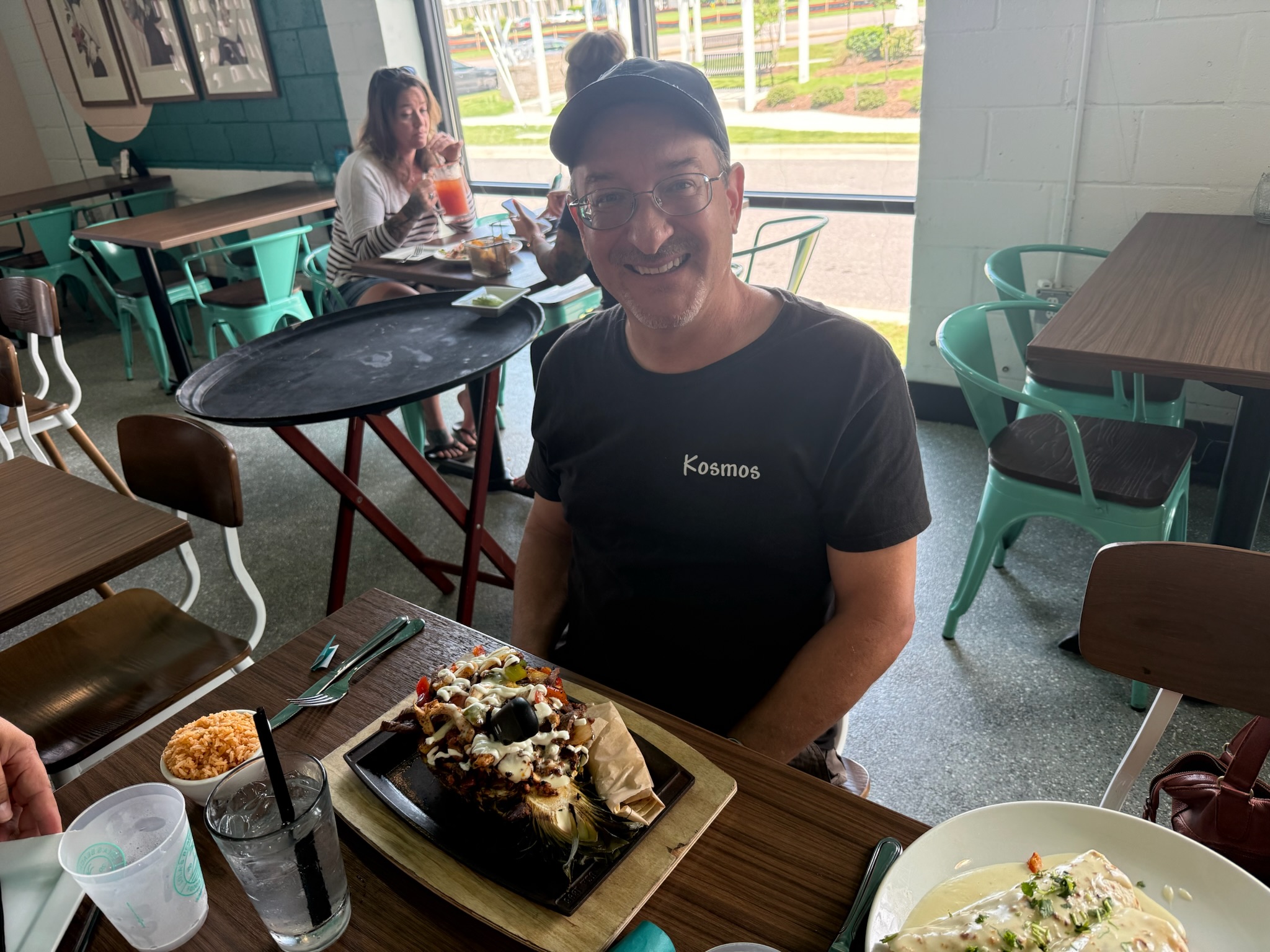
Eric ordered a pina relleno, which was a half pineapple stuffed with grilled chicken, steak, pineapple, peppers and onions topped with melted cheese, chorizo, shrimp and sour cream. This version had a lot more ingredients in it than the versions we’d gotten in Hualtulco and Chiapas.

Continue reading