The National Museum of American History in Washington DC – Part 5: Object Project, Change Your Game and Food Exhibition

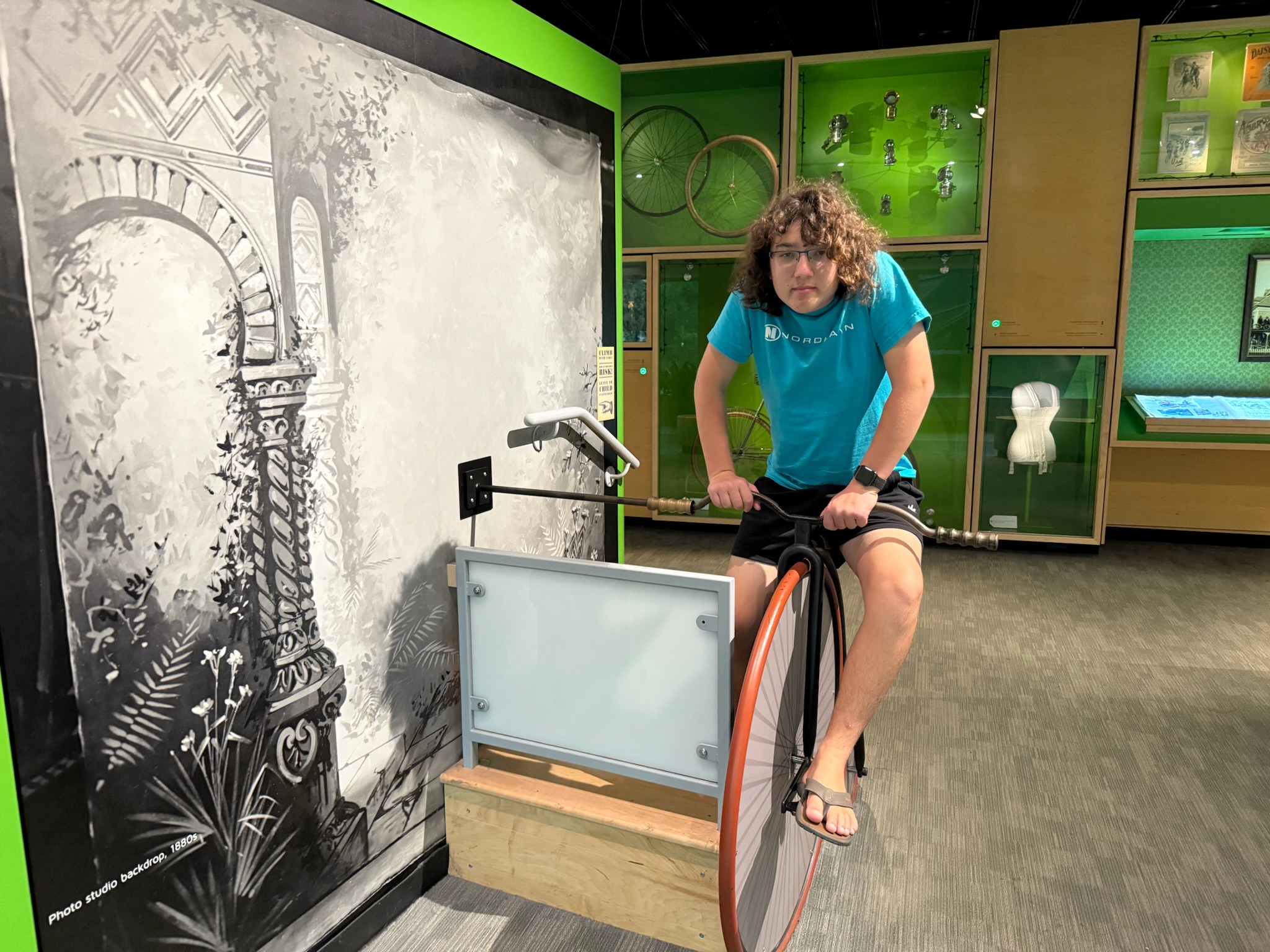
continued… We moved on to the next gallery, called “Object Project.” It appeared to be a small traveling exhibit about innovations that transformed America. It included: the bicycle, off-the-rack clothing, electric lighting, telephones, appliances (examples were microwaves and vacuums) and computers, among other items. Christi thought the most interesting part of the exhibit was the comment that mass produced clothing led to Americans dressing alike.
Next we went to a gallery called “Change Your Game.’ It was about innovations that helped improve sports in one way or another. Most talked about methods to prevent cheating, such as drug testing, and to avoid bad referee calls, such as the “instant replay.”

Some of the items featured were revolutionary products. Most were upgrades to existing products, such as a better photo-finish camera, better tennis racket, better skis, better skateboard wheels, etc. One of the more interesting upgrades was a lightweight, easy-to-maneuver wheelchair that sports could be played in. Interestingly, in the category of transformational upgrades, was a controversial prosthetic called the Flex Foot Chetah. Opponents argued that this prosthetic gave users an unfair mechanical advantage.

Continue reading
The National Museum of American History in Washington DC – Part 4: American Enterprise

continued... The next section was “The Corporate Era: 1860s to 1930s.” The sign said that this was when America made the turn to be a primarily urban nation. Businesses got big; so did scales of production. Working together, the US government and big businesses used military and political power to dominate world trade. They controlled sources of raw materials, secured markets for selling finished goods, controlled intellectual property through patents and regulations, and protected American manufacturing through tariffs.

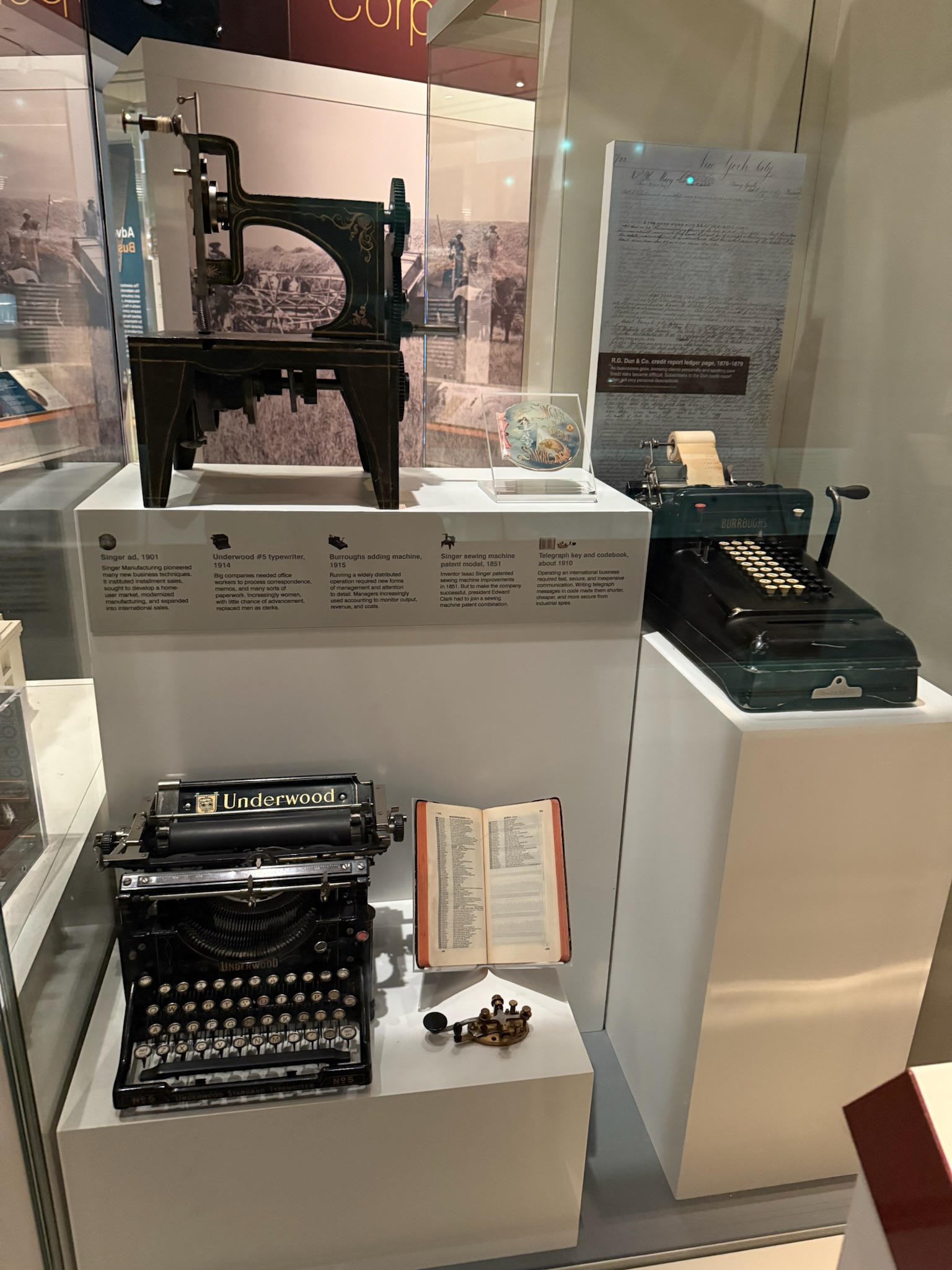
One of the first big businesses was Singer sewing machines. The sewing machine was breakthrough technology. Issac Singer patented improvements to it in 1851. But what made it big was the utilization of the new business models: factories, international distribution networks, sales offices all over the world and clever marketing all came together to make Singer a household name.

Top left is a Singer sewing machine.
Continue reading

The National Museum of American History in Washington DC – Part 3: American Enterprise

continued… We moved on to a room called “American Enterprise.” It focused on how the American economy changed throughout the history of the country. An entire wall of the room was covered with photos and short biographies of key people who were prominent through the eras.

The first section was “The Merchant Era: 1770s to 1850s.” The signs said that this was an era where it was difficult to find financial security, and many people wound up in debtor’s prison, in poor houses, or aided by fraternal orders who helped the poor. At this point in history, there was abundant land (much of it stolen from the Native Americans) and vast natural resources to fuel economic opportunities. The government encouraged agriculture, industry, transportation, and global trade.

At the beginning of this era, most Americans were farmers who labored with simple tools. In the market economy, they sold food products and purchased a wide variety of items, such as nails and textiles. Artisans who made specialty products, such as cloth or shoes, were usually farmers who did the artisan work as a side job. The artisans did their crafts from home or a small shop when they had time.

But entrepreneurs who adopted new manufacturing technologies and systems of production changed the structure of society. People left farming to work full time at manufacturing facilities. Work was centralized, regulated, and supervised. Greater efficiency led to lower costs to consumers. Products became standardized. In one generation, the art of being a cobbler pretty much died since factory made shoes were so inexpensive relative to handmade shoes. The new work mode changed culture — now people no longer set their own hours, worked from home, or worked at their own pace. Rather than one artisan doing an entire project, there was a division of labor. People made the products the way the boss wanted them made, not the way they wanted to make them.

Another thing that was pivotal in transforming the economy was artificial light, which became widely used in the early 1800s. It allowed for more time in the day for work, leisure activities and consumption.

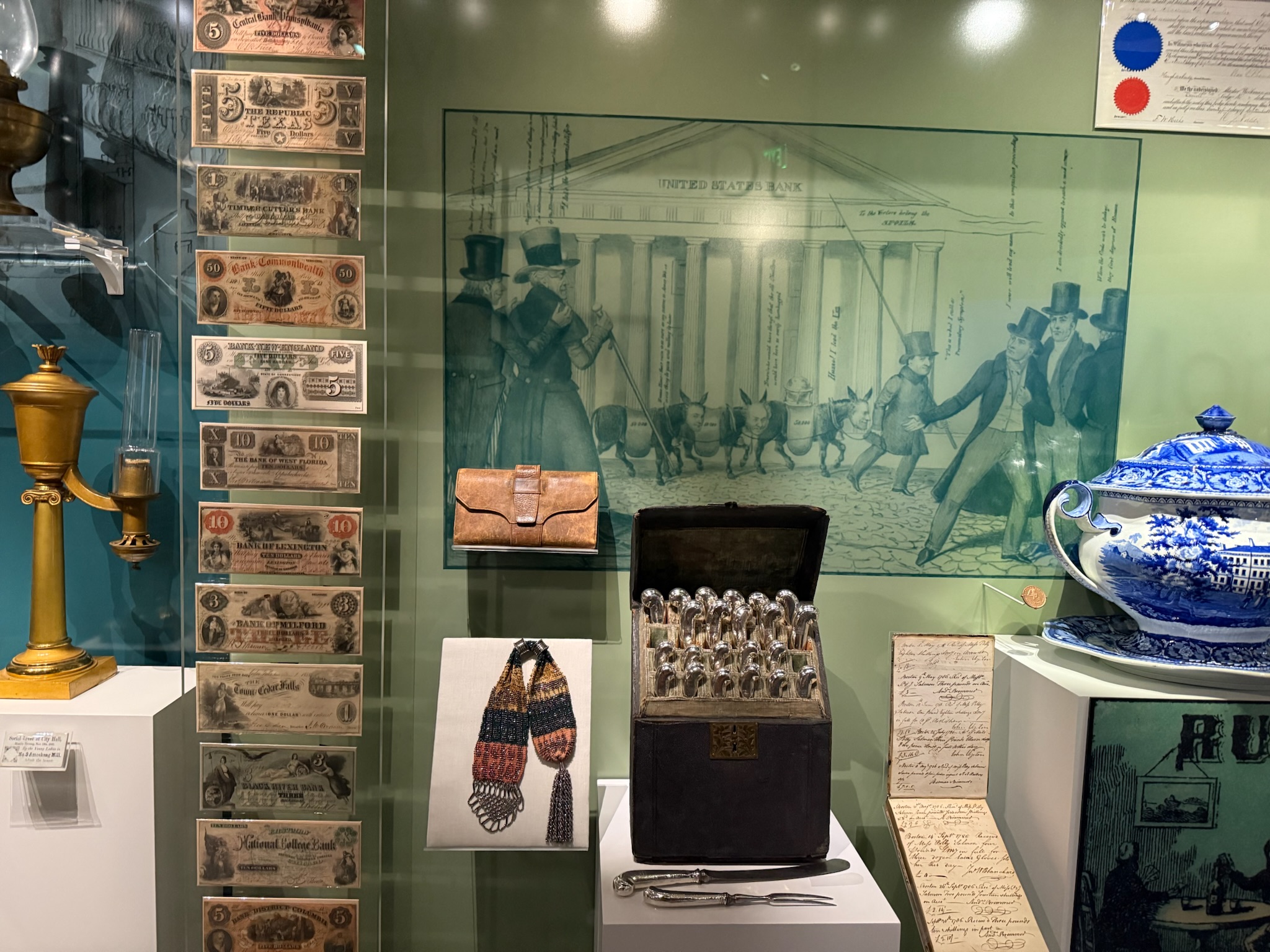
From left to right: a gas lamp, privately issued notes, two types of wallets, silverware (where wealth was often stored), an accounting ledger and a commonly used soup terrine.
Continue reading

The National Museum of American History in Washington DC – Part 2: The Gallery of Numismatics

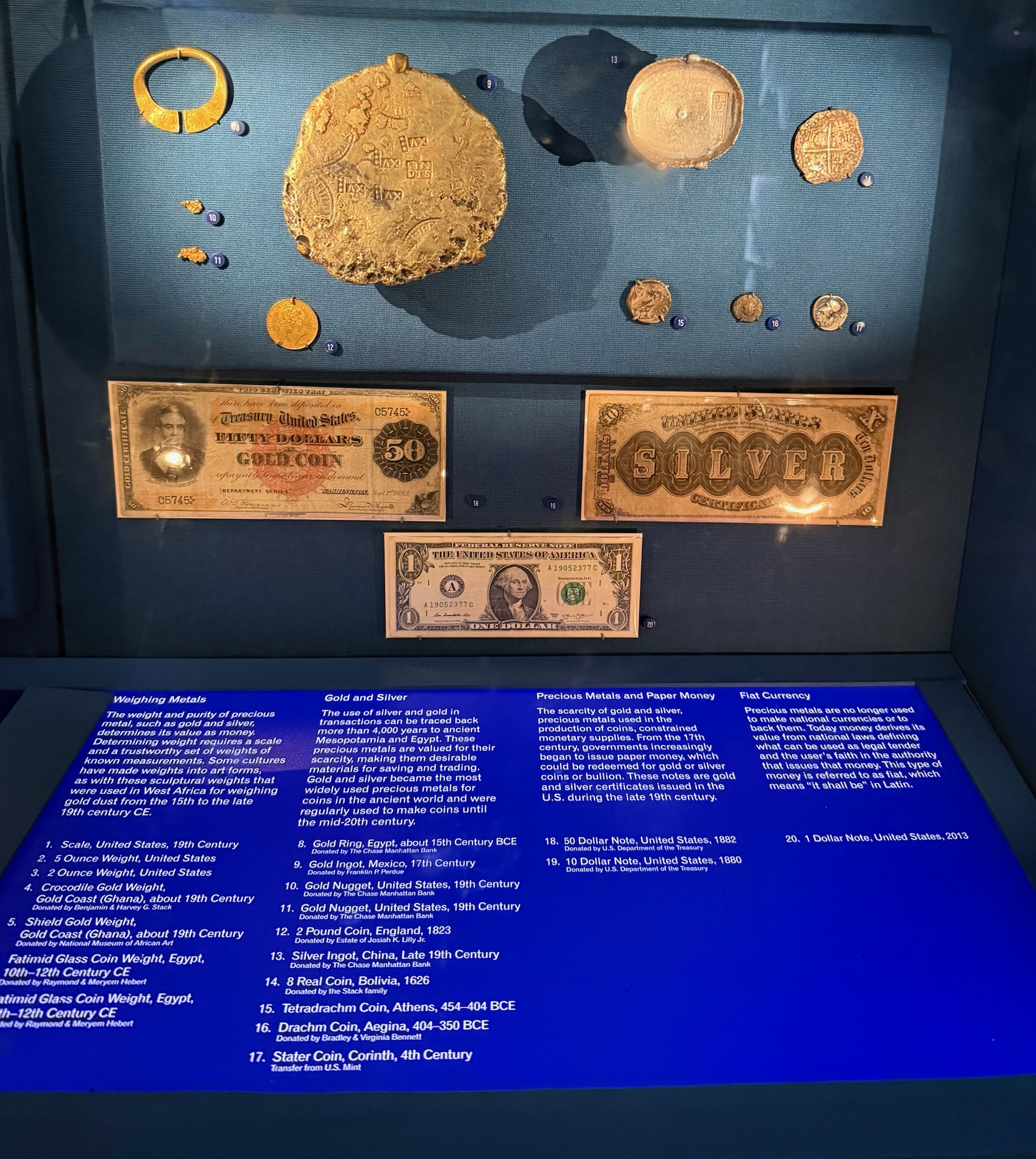
continued… Metal coins were first made in the 7th century BC, originating independently in two different parts of the world: Lydia (now Turkey) and China. In the 5th century BC, India also started making metal coins. The coins from Lydia and India were small and round, the ones from China were shaped like farming tools. Metal became a popular choice for currency because the metal in and of itself had a functional value — the coins could be melted and used for other purposes, if needed. All sorts of metals were used, including copper, iron and tin, but the most popular were gold and silver. The value of a coin was determined by the type of metal it was made from and the weight of the coin. Gold and silver stayed the most popular metals for coins for thousands of years — until the mid-20th century. The photo below has some ancient coins.

The word money evolved because in Ancient Rome, coins were minted in the temple to goddess Juno Moneta. At first, Moneta referred to where coins were made, but eventually came to mean the coins themselves. All throughout the exhibit, the signs talked about how the images and words chosen to be put on money reflected the country’s identity, history, heritage, leadership and values. For example, Egypt has pyramids and hieroglyphs on their money, reflecting their roots in ancient history. Many countries have images of important leaders and/or religious words/images inscribed on their money, indicating their culture values these people and/or religious beliefs. The language the money is inscribed in indicates who the intended users are, so some countries have multiple languages on their coins. For examples, many languages are spoken in India, so India has several languages on their money.

Continue reading

The National Museum of American History in Washington DC – Part 1

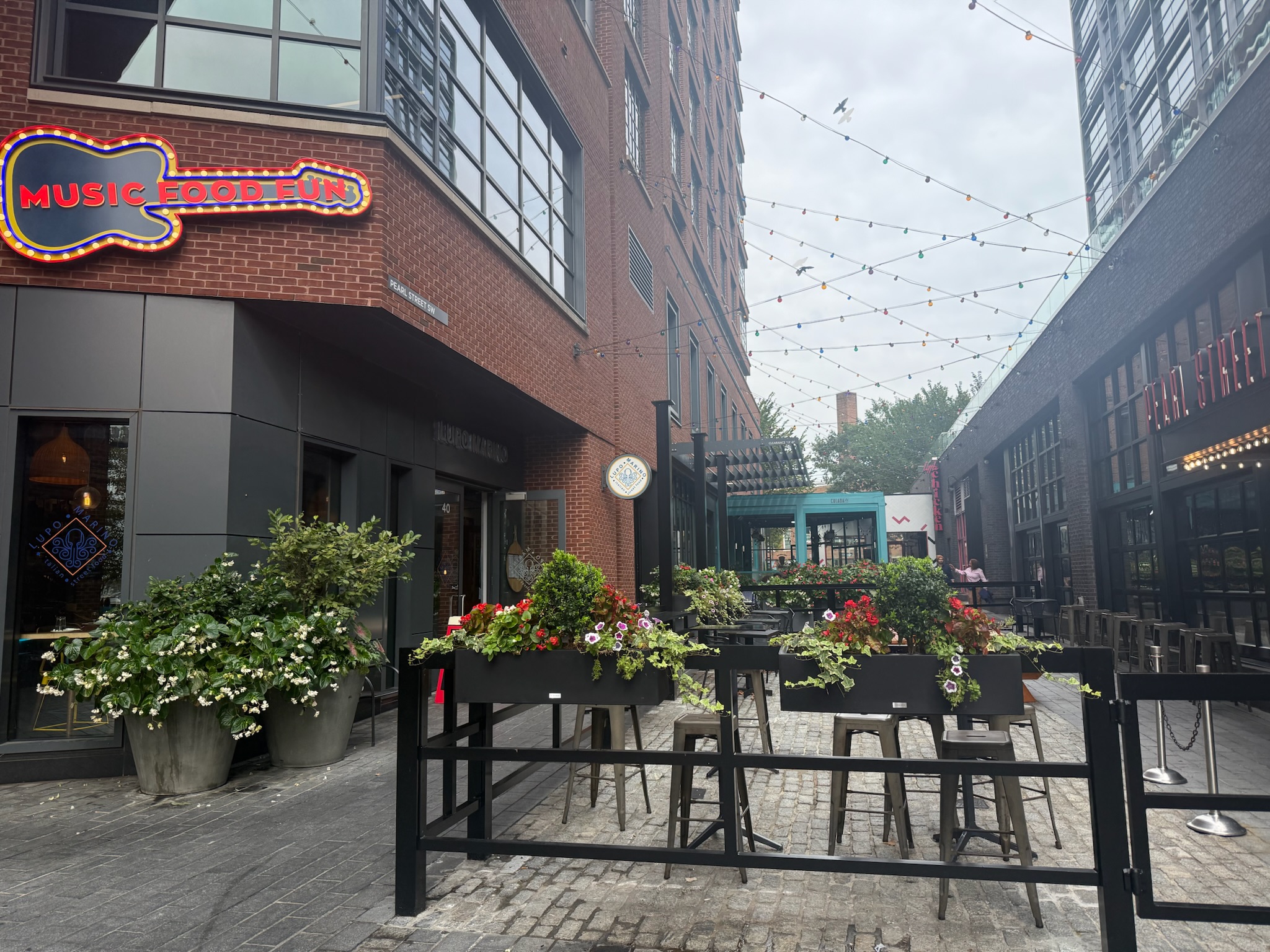
Monday, September 29 — After we finished doing school in the morning, we went to lunch at the pizza restaurant that Eric and Keith had gone to last Tuesday. They’d really liked it and wanted Christi to try it. It was along one of the perpendicular streets that connect the waterfront and Main Avenue SW, but this street was closed on the street side, making it a little cul-de-sac accessible only from the waterfront side.

The restaurant was called Lupo Marino Italian Street Food. The sign was small and discreet, so the restaurant was easy to miss. As promised, the food was great.

After lunch, we went to the American History Museum. Eric picked it because he wanted to see the cryptological exhibit that he remembered as being really good. We caught the free shuttle to the National Mall, then walked northwest to the museum.

Continue reading