Saturday, Sept 27 — First thing this morning, Eric went to move car. His plan was to move the car out of the lot and then park right back in it. However, the lot was closed – cars could only leave, they couldn’t enter. Since it was so early in the morning, he decided to see if he could find street parking along The Wharf. He found a spot, but the tire popped when he bumped into the curb while parallel parking. Then he noticed the sign said 10-minute parking. Argh!
He changed the tire with the donut in the trunk, then went to the car rental agency at the airport to exchange cars. The staff in the office told him they couldn’t help him until after he called into the customer service line. He was very frustrated about being on hold for 7-minutes while the staff at the counter were twiddling their thumbs. Fortunately, the agency exchanged the car with no issues, though they did charge $100 for the tire. And he’d forgotten to fill the tank up before returning the car, and we are still waiting to find out what they’re going to charge us for the gas.
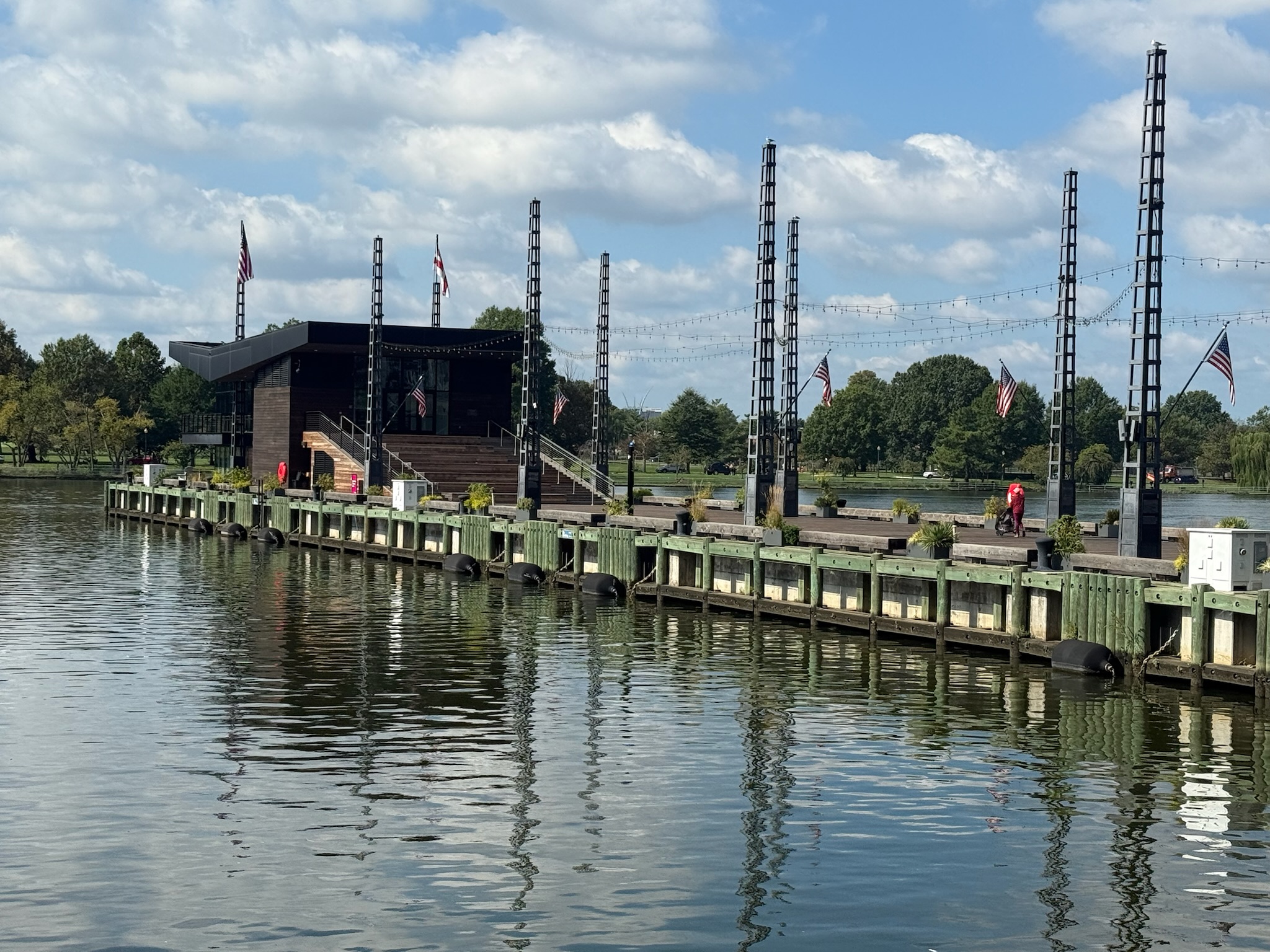
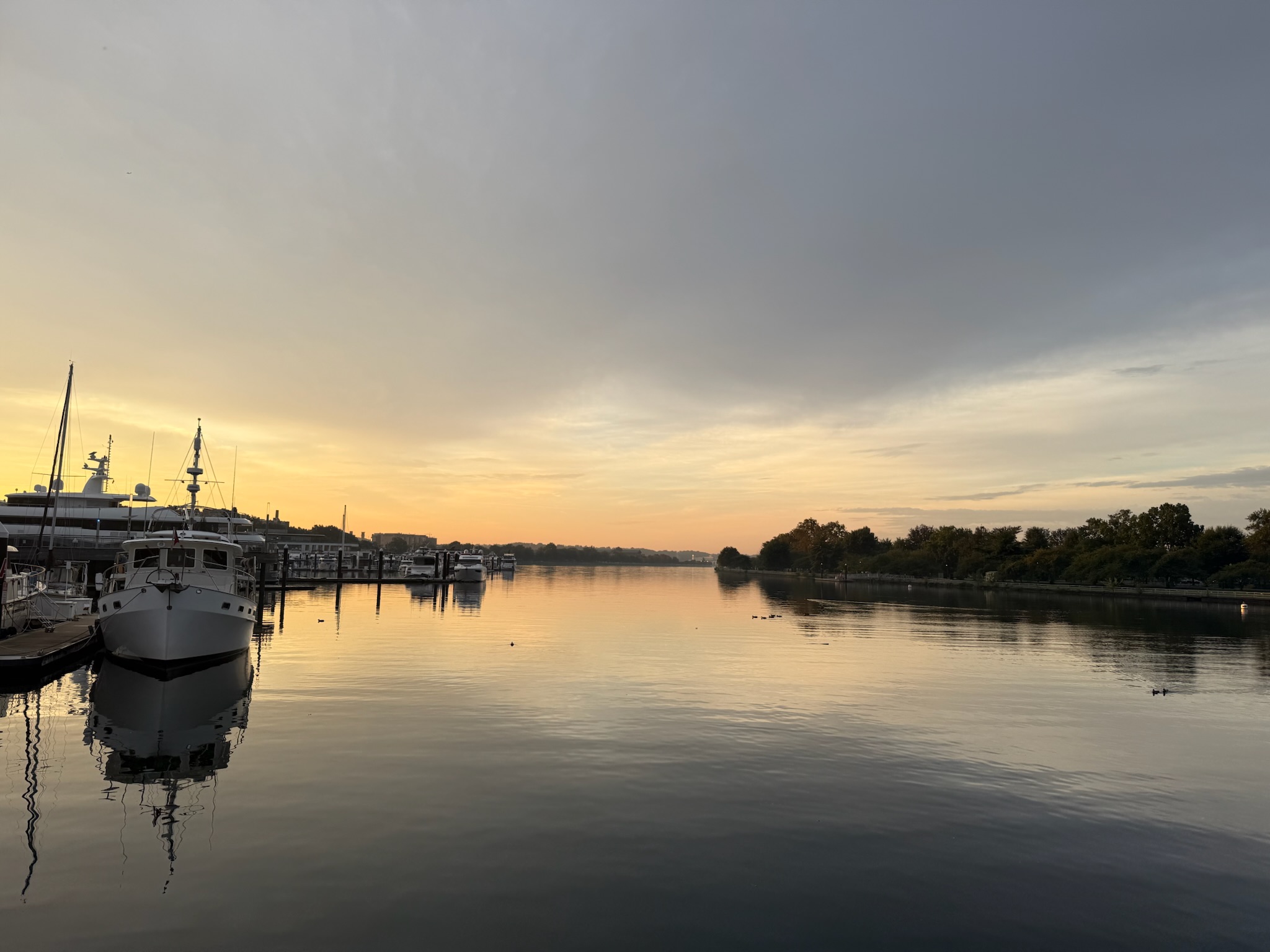
Meanwhile, on The Wharf, there was a big event. Christi and Keith watched a giant crowd of people congregate on the pier to the west of the marina, with loud music playing. The music stopped and the whole crowd moved to the boardwalk and started walking east. They thought it may have been a fundraiser walk, but weren’t sure. Here was a photo of the pier after the crowd cleared out.
Once Eric had the replacement car, he headed back to The Wharf. He drove around for a solid half-hour and couldn’t find a parking spot anywhere. Much to his frustration, many of the lots and garages were closed on the weekends. He gave up and finally parked at the outrageously expensive Wharf parking garage. We tried to hurry, but since we hadn’t realized there would be a rush to leave, none of us had really gotten going on the day yet. By the time each of us showered, ate breakfast and got everything ready to go out for the day, almost two hours had passed. The parking fee was $24.00.
Friday, Sept 26 — When we saw Jeff Merrill, he had invited us to join his panel of cruising experts at the upcoming Trawlerfest in Baltimore. We had already arranged to rent a car at the airport this morning so we could drive to Baltimore. First thing this morning, Eric went to pick it up. He took the free shuttle to the Metro stop, and took the Metro to the airport. Eric was expecting the Metro to be crowded during rush hour on a weekday, but it was pretty quiet. He was a little disconcerted to find that it was quite a long walk from the airport Metro stop to the car rental place.
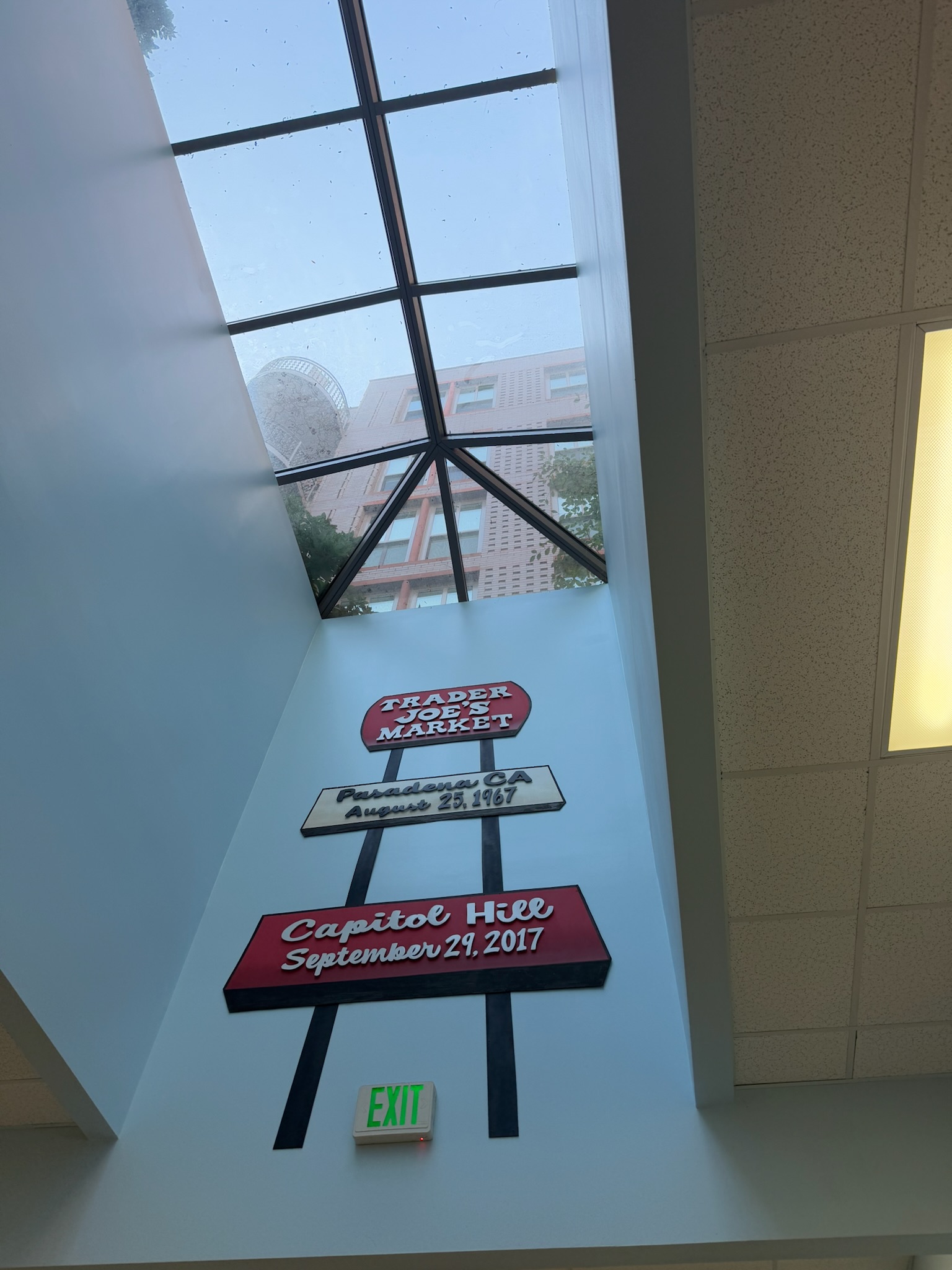
Our panel wasn’t until 1500, so we took advantage of having a car to do a big grocery store stock up. Eric picked up Christi and Keith from The Wharf and we headed to Trader Joe’s, which was our favorite place to get passage foods. The neighborhood that it was in looked a lot like Baltimore, made up primarily of small, tightly packed row homes. The parking lot was under the building, and we had a hard time finding the entrance. Trader Joe’s customers were required to park in designated spots deep down in the garage. Parking was free for the 1st hour with validation and $11.00 after that, so we were careful to finish our shopping before the fee kicked in.
Much to our surprise, the store was underground, on the same level as the designated parking spots.
Yesterday, the marina had told us another boat was coming in on Friday that needed our end-tie, and that we needed to move prior to their arrival. Since it was such a calm morning, the first thing we did was move to another slip. All went smoothly with that, and interestingly enough, the power worked fine and we didn’t need the isolation transformer.
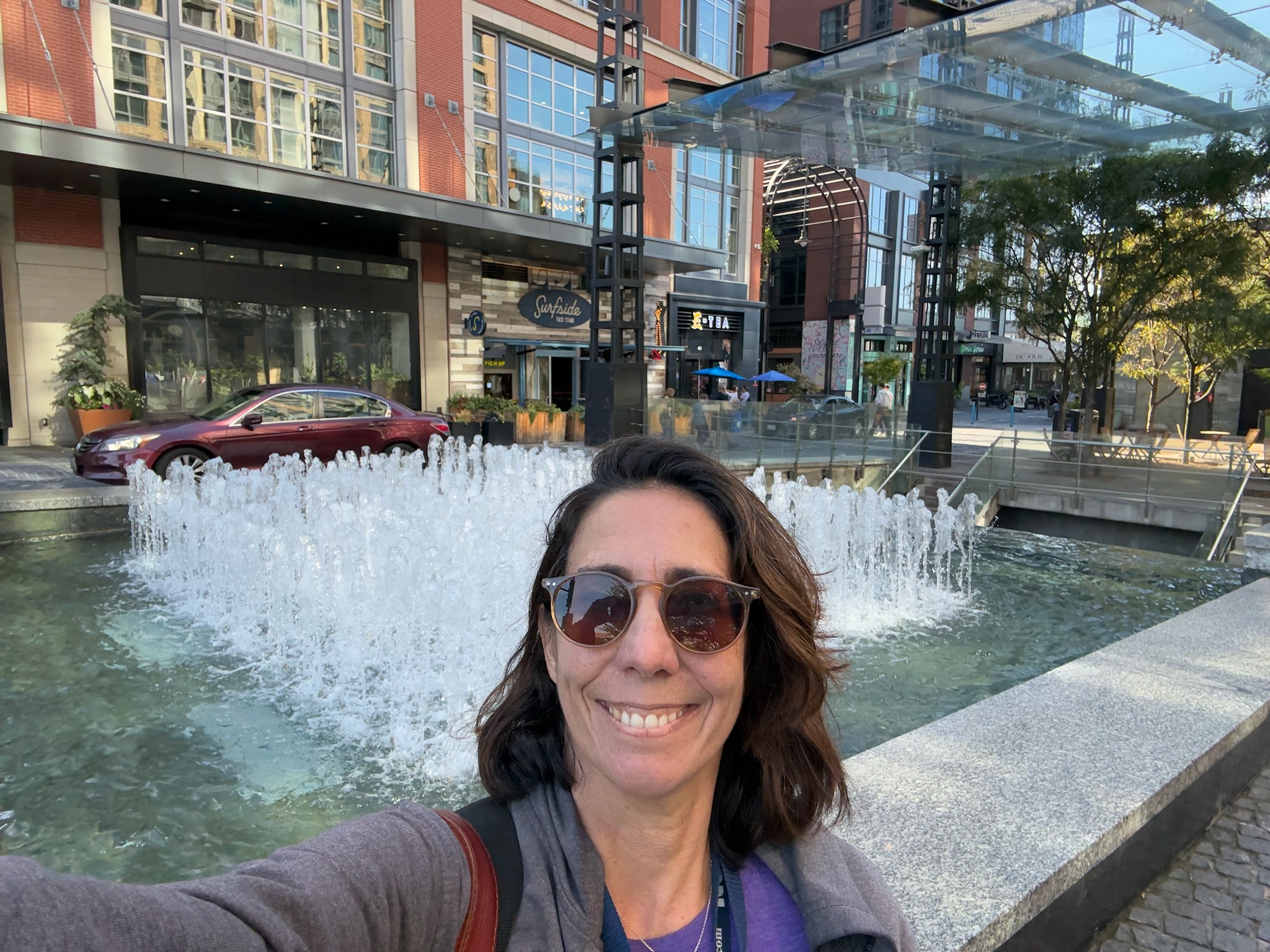
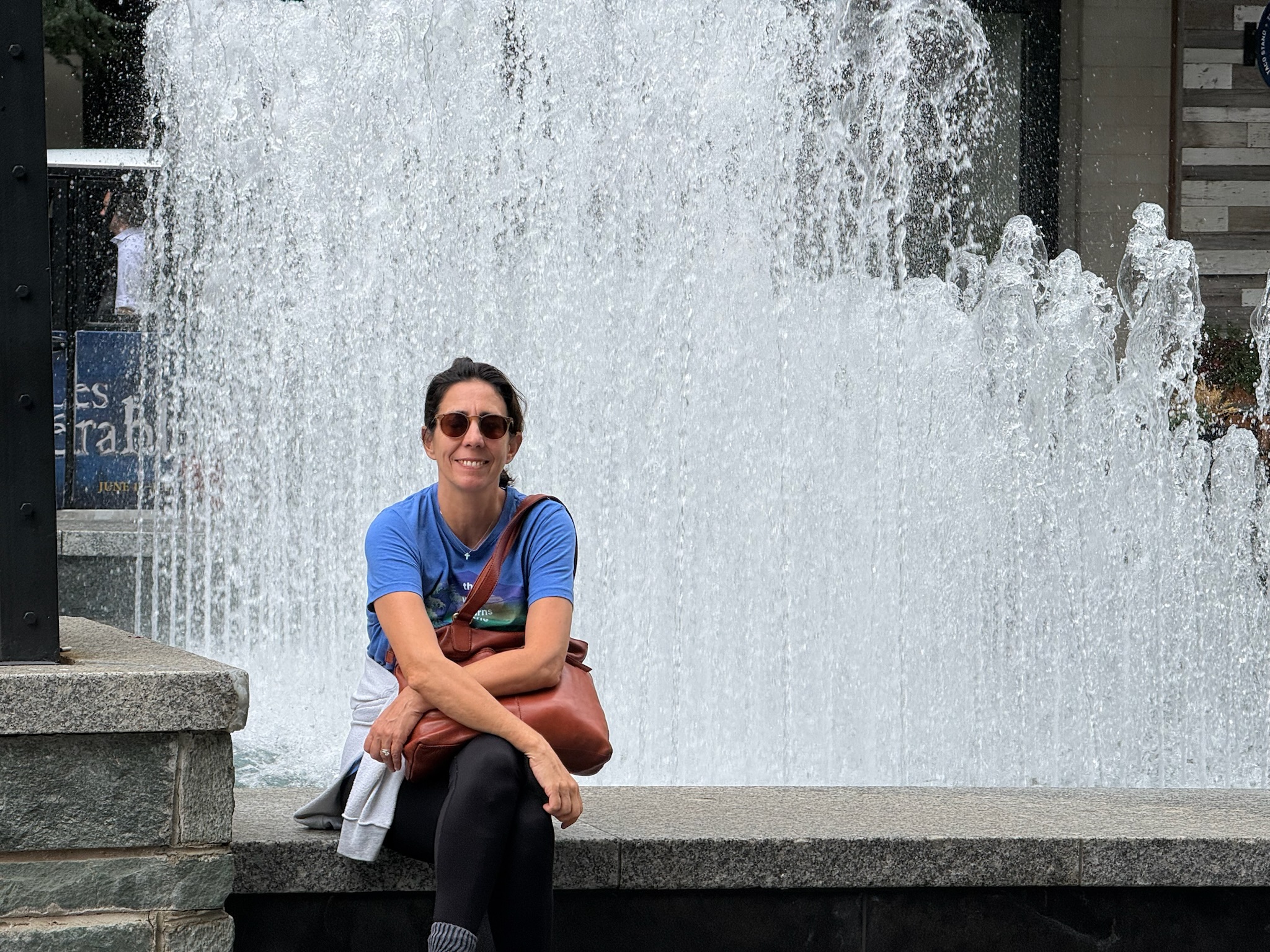
Our big outing of the day was the National Postal Museum. It was 2.3 miles away, located a little bit north of the Capital building. According to Apple Maps, if we took the Metro, it would cost $6.75 each way for the three of us, we’d need to change lines, and the total transit was estimated to take 35-minutes. Eric checked the ride-share app and found that it would cost $9.00 and take 20-minutes to be delivered door to door. We opted for the ride-share. We waited for the driver at the fountain by Surfside taco, which had a traffic light and a small U shaped road that made it an easy location for the driver to pick us up.
While in the car, the driver suggested that after we finished at the museum, we should go across the street to Union Station. He said that even if we took another ride share back to the marina instead of the Metro, that the station was an “experience worth seeing.” He dropped us off at the Massachusetts Ave. East entrance, which was the south side of the building.
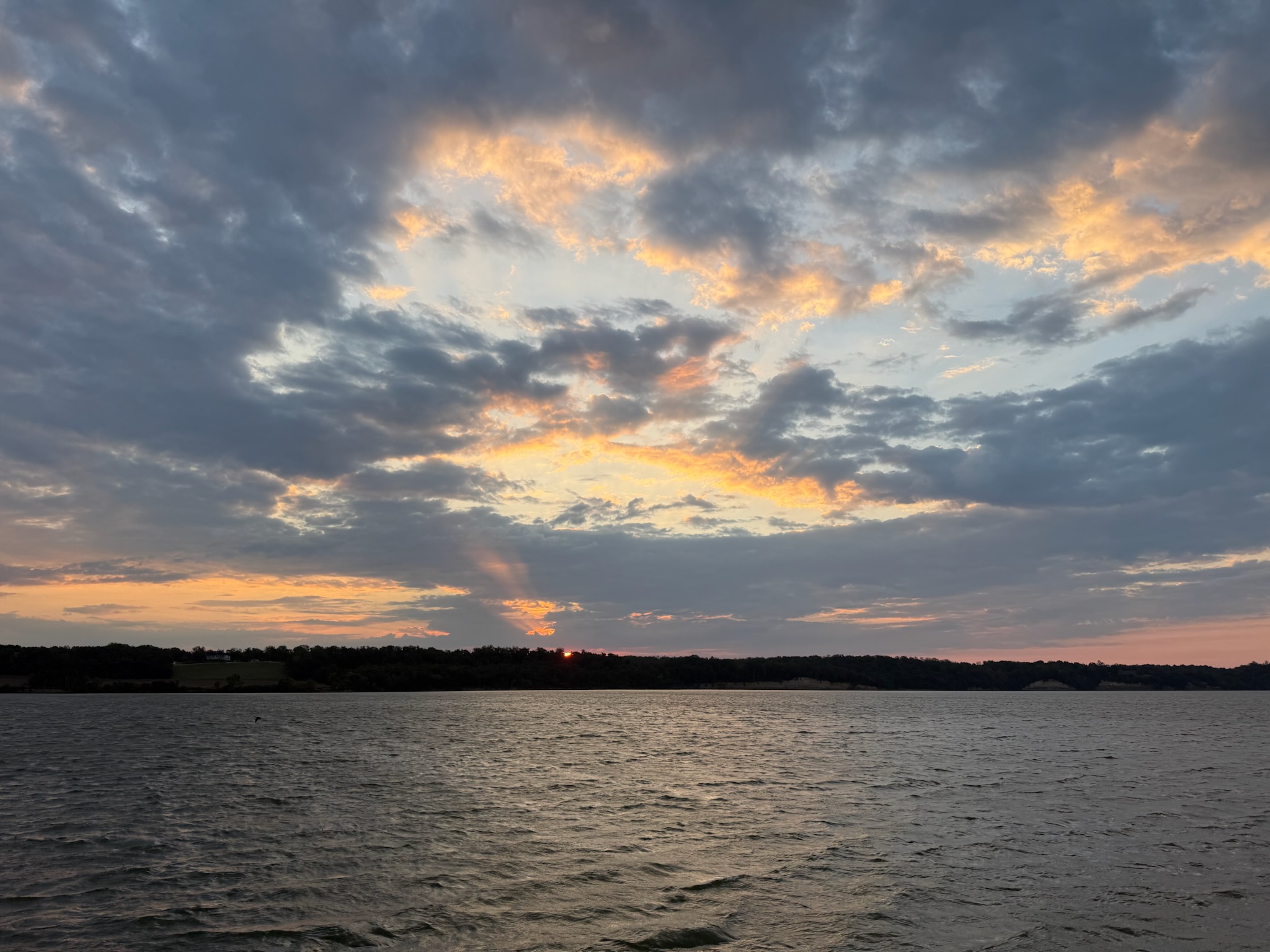
Saturday, Sept 20 — We didn’t have to do as many miles today as we did the previous two days, but still wanted to leave early since the current would worsen as the day progressed. It was an overcast morning and a cloud mostly blocked the sunrise, so we waited to leave until 0650 so that there was enough light to see those very small crab traps. The sun did peek out briefly before being swallowed up by the clouds again.
Like yesterday, the anchor chain was very muddy and needed copious amounts of washing. The little tributary that we were in had a lot of crab traps around. We had to do a lot of swerving to avoid crab traps until we got back to the main channel of the Potomac, which was clear of traps.
All in all the trip was fine. There was 15-knots of wind, so it was ever so slightly bumpy from wind chop, but not bad. The wind was cool, and with the temperatures in the low 70s, it was a little chilly outside in the wind. We had 1.5 knots of current against us, so we were only doing about 5.5 – 6 knots at 1750 RPM. The scenery along the shore was mostly trees. Traffic was light until we got to the suburbs of DC. Then there was a a lot of boat traffic and the ride became more uncomfortable from all the wakes. But not bad, just not exactly good.
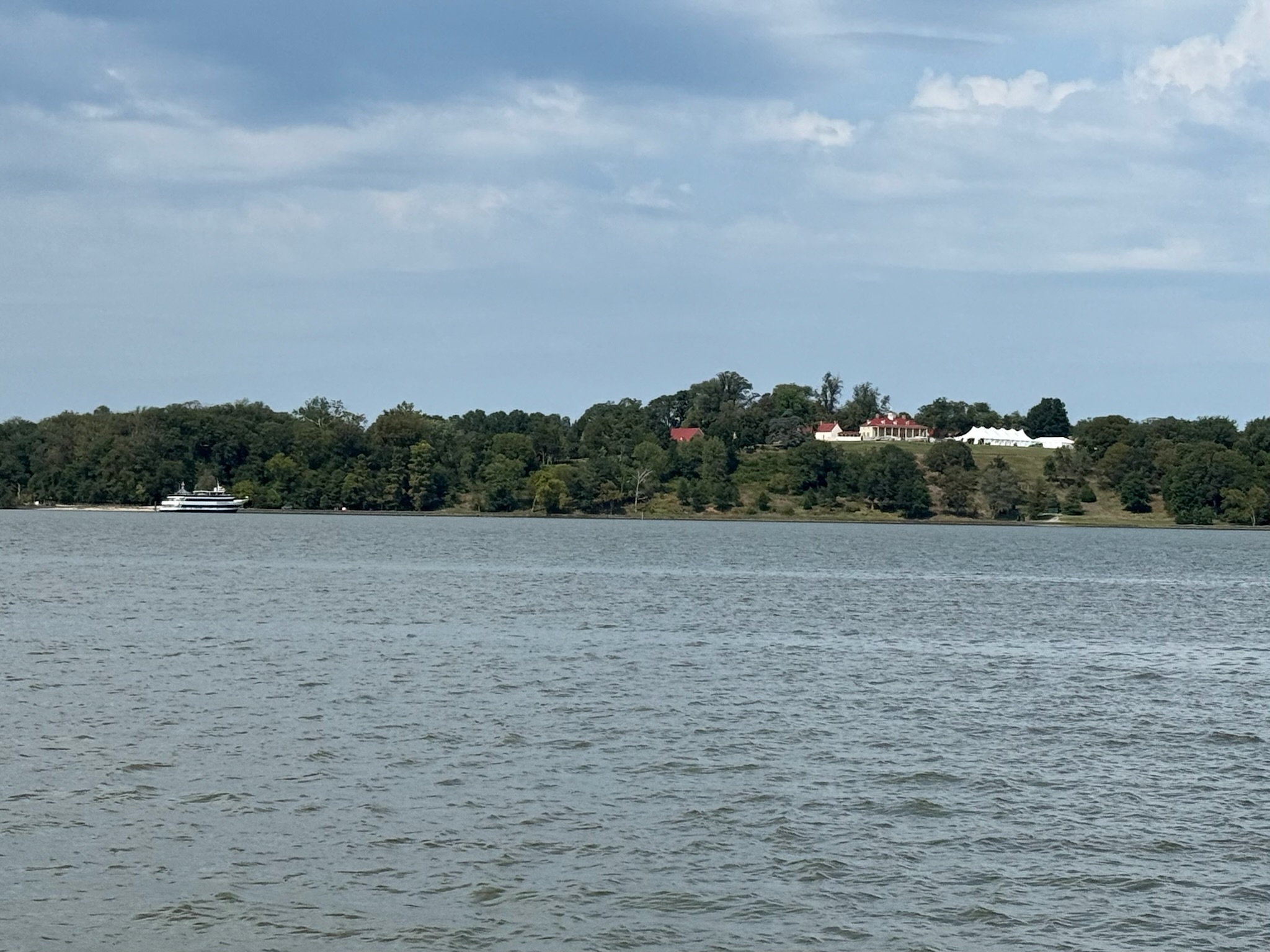
Here were some photos as we neared DC. The first one (we believe) was Mount Vernon, which was George Washington’s home and where he was buried. Mount Vernon had its own dock. We could have anchored nearby and taken the dinghy over there, but we decided it was too much of a hassle to do today. If we really wanted to go, we could take the ferry (pictured below) from DC, take a tour bus, or stop by with Kosmos on our way back south.