Tuesday, February 25, continued… After bypassing the battery protect device, and having Zeus set to 60% max load (~100 amps at cruising RPM), it was time to do some testing. First, Eric ensured switching to emergency power would work. He turned off the house bank via the BMS (simulating what had happened earlier), and then initiated emergency power by paralleling in another battery bank. It worked. Then Eric simulated being on a passage. He turned the main engine on, revved up to 1750 RPMs, and had all underway systems on. He watched the power readings like a hawk. This is where it got a bit weird. Every 400 seconds the Zeus restarted itself. Charging went to zero; but it had restart delay, so it took about 30 seconds to start charging again.
In general, we use about 60 amps underway, and this was actually enough charging for us to do the passage. However, watching the Zeus reset over and over made Eric nervous. He ran the engine for almost two hours, checking and watching. Eric had to made a decision: try to make it to Jamaica with a questionable alternator regulator, or re-check-in to Panama and try to troubleshoot more. Since the weather windows here were few and far between, he did not want to give up this window.
Now that we were certain that emergency power via paralleling another battery bank, we knew we could utilize the generator and the secondary alternator to charge the batteries. If there was a problem with the Zeus again, Eric would switch to emergency power, restart the LiFePo battery system, and run the generator to continue operating Kosmos via the LiFePo battery bank. He wanted to keep the secondary alternator in reserve and the other battery banks in reserve, as well. He also wired the ignition trigger voltage to a breaker in the pilot house, so if things started to go awry with Zeus, he could shut it down easily.
Keith and Christi helped with the testing/rewiring. Once Eric was done, Keith did archery with his friends. We had dinner in the marina restaurant.
On Wednesday, we didn’t need to wake up until 0500 to do the last minute things before going to sea since Kosmos was still mostly ready to go. Eric was feeling confident that that if there was another issue with the Zeus, he could turn it off via the switch that he’d wired up yesterday.
We untied at about 0600. This morning was much gloomier than yesterday, which felt ominous. We passed through the channel from the marina into the bay at low RPM’s, just as we had yesterday. When we were far enough into the bay that we felt like we were safe from any potential obstacles, Eric revved up the engine. All worked fine.
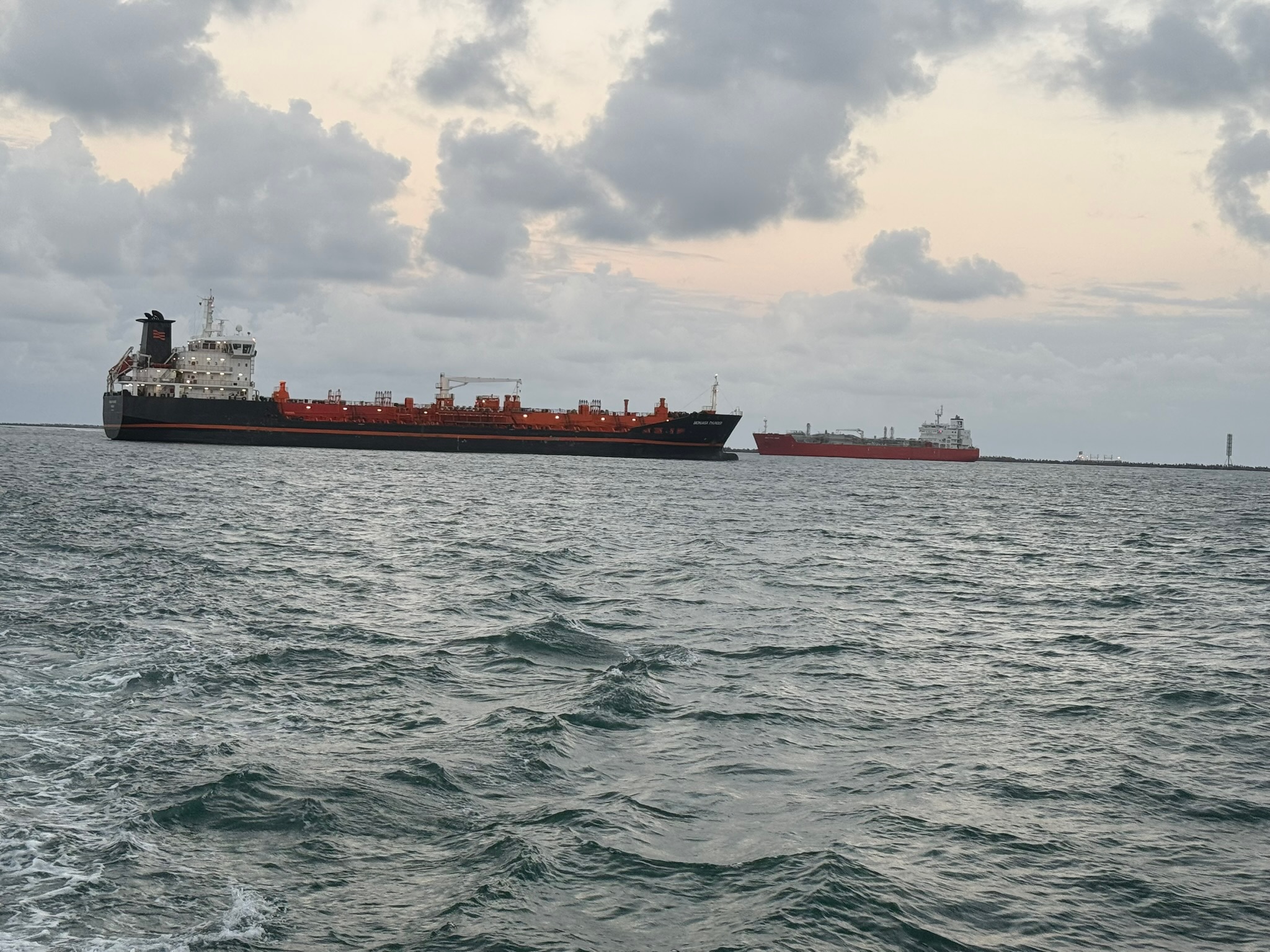
We exited Limon Bay via the east entrance. The big ships only use the west entrance, so we’d anticipated less traffic. Here were two ships passing in the west entrance.