The Museum of Industry in Baltimore, Maryland — Part 1

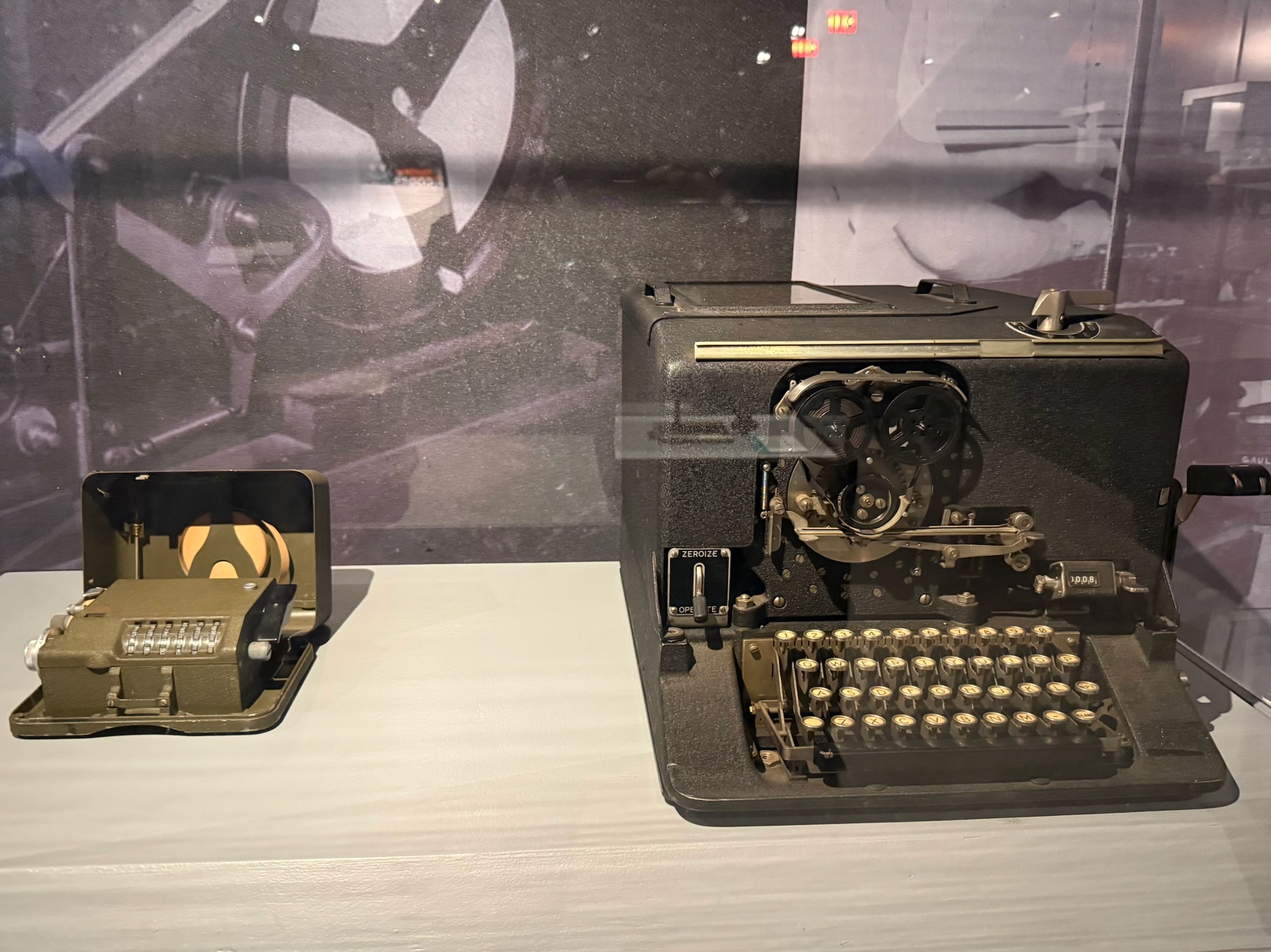
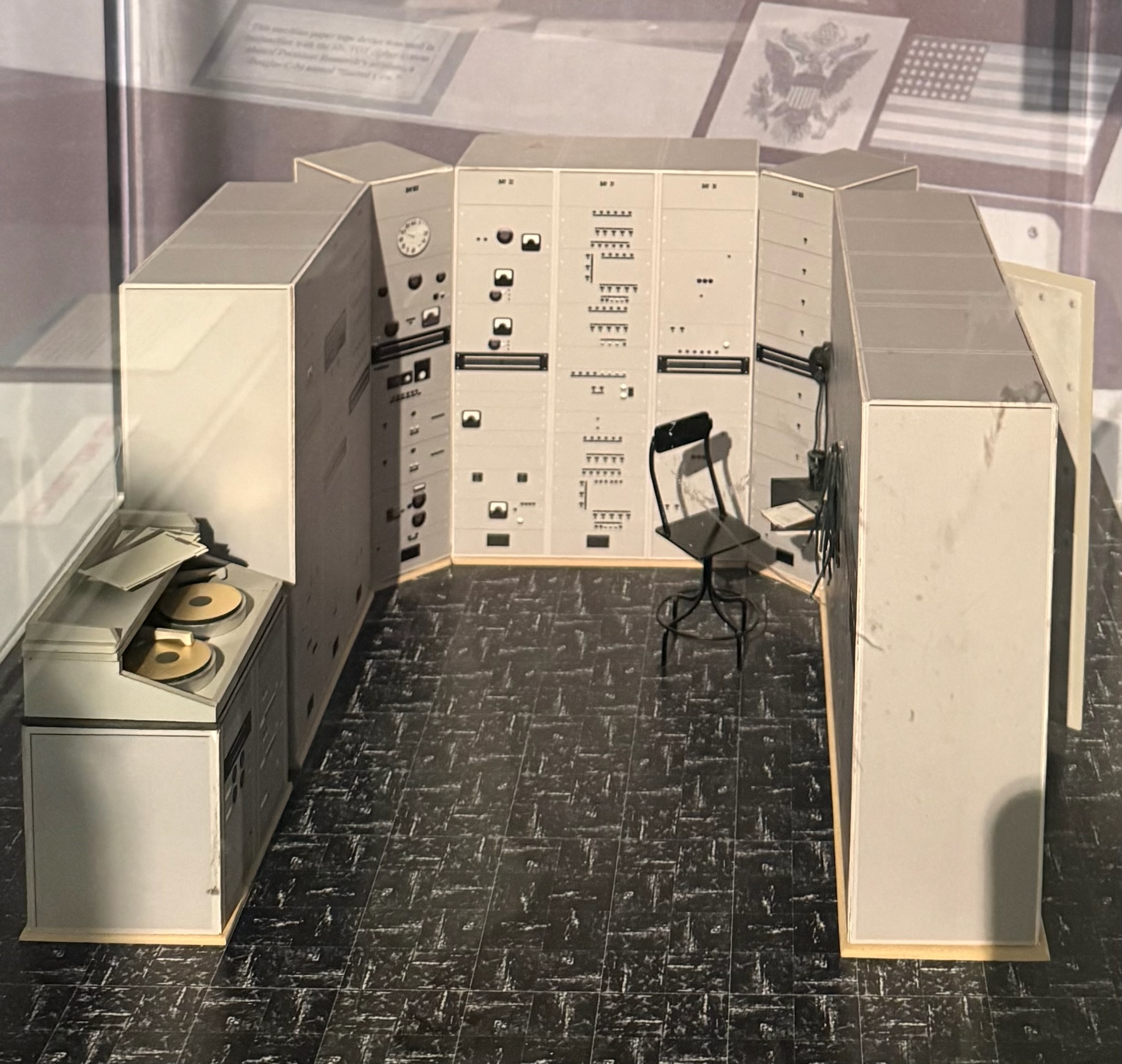
Wednesday, August 26 — We spent the morning getting ready for our trip to San Diego. By the early afternoon, we were feeling like everything was as ready as could be. We decided to go to the Museum of Industry, which focused specifically on the manufacturing industries of Baltimore that “modernized the nation.”

We drove through downtown to the south side of the peninsula that made up the inner harbor. The museum was on the waterfront in a building that was clearly a refurbished old industrial building. Parking was free in the attached lot.

Tickets were $15 for adults and $8 for children 6 – 17. The receptionist told us a free guided tour was about to begin highlighting the black people who were significant in Baltimore’s history. We generally enjoy guided tours, so we signed up.

We waited in a small movie theater near the entrance that was showing a film about Linotype machines, which was the most revolutionary change to printing since Gutenberg invented the printing press circa 1440. The machine was invented in Baltimore by a German immigrant between 1882 and 1884. Instead of setting each individual letter by hand, one could type a single line of text and the machine 3-D printed the line from molten lead. The lines were then hand set into the printing press. The discarded lines of tin were reinserted into the machine for melting. The Linotype was rendered obsolete by laser printers.

Continue reading

Keith’s Perspective on D & D Camp in Virginia Beach, VA/Le point de vue de Keith sur le camp D & D à Virginia Beach, en Virginie

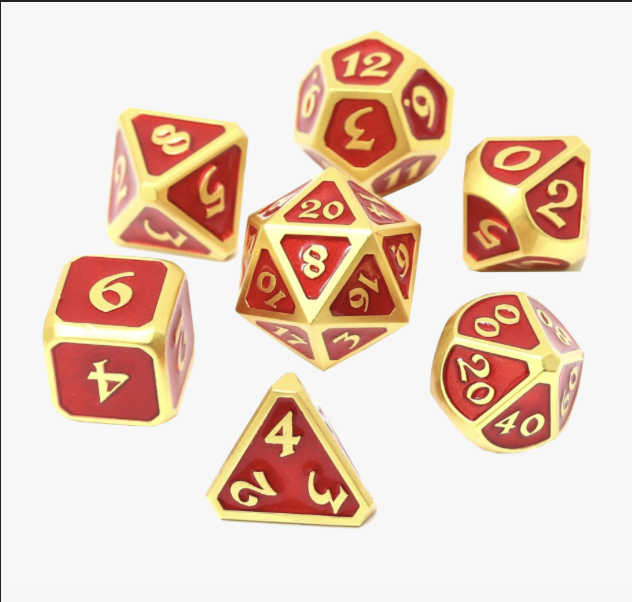
This week has been fun. On Saturday, we went to lunch at a Japanese restaurant, then went to the beach with Blue Heeler. The temperature was amazing, it felt like San Diego. For dinner, we went to a restaurant called Longboard’s, which is just across the river. On Sunday, we went to First Landing National Park with Blue Heeler and went for a three mile walk. We saw some big spider webs and a snake. 

Cette semaine était amusante. Samedi nous sommes allés à un restraurant japonais, puis allés à la plage avec Blue Heeler. Le température était trop bonne, ça ressemblait à San Diego. Pour le dîner nous avons mangé à un restaurant qui s’appelle Longboard’s, qui était de l’autre côté de la rivière. Dimanche nous sommes allés à First Landing National Park avec Blue Heeler et allés faire une promenade de 3 miles. On a vu des grandes toiles d’araignées et un serpent.

Longboard’s
Continue reading

Keith’s Perspective on the Week in San Diego and Virginia/Le point de vue de Keith sur la semaine à San Diego et en Virginie

Dungeon Crawler Carl Cosplayer
Princess Donut Cosplayer

This week has been amazing. On Saturday, we went to Comicon for our last day there. We went to a panel with Matt Diniman and the narrator of Dungeon Crawler Carl, Jeff Hays. After the panel, we went to an event sponsored by Audible. It was at an arcade, and both Matt Diniman and Jeff Hays were there. It had free food and arcade games, as well. We waited in line for two and a half hours before we got in. Matt had to go do something else, but we still got a picture with him as he was leaving. We also got free mugs, and Jeff even signed one of them for me! 

Continue reading

Celebrating Independence Day at Historic Fort Monroe — Part 2

Continued… When the tour concluded, Eric and Keith announced they were hungry. They went to a nearby restaurant called The Deadrise, which was over at the marina.

The food was good and the portions were huge. Keith, who was not a seafood fan, loved the crab dip (even though it wasn’t as good as Haste Away’s).

It looked like the section of the marina closest to the restaurant was closed, as there weren’t any boats in the slips. We were too far away to get a look at the part of the marina that was occupied. There was an anchorage beyond the marina that was deep enough for Kosmos. Given that it was a holiday weekend, we were surprised there weren’t more boats anchored out there.

Christi stayed at the Visitor’s Center and went on the 1500 tour. It began much the same as the 1400 tour had. But instead of stopping at the entrance casement, the group walked on to the four-acre parade ground.

Continue reading

Celebrating Independence Day at Historic Fort Monroe — Part 1

On Friday, July 4, Eric started the day by doing an inventory of spare parts we had onboard. He created a list of spare parts that we need to stock up on.

Karen had told us that Fort Monroe was having special events today. The events started at 0845 and ended with the biggest fireworks show in Virginia at 2115. We figured it was fitting to spend Independence Day at Fort Monroe since it was one of the most important locations in early American history and a pivotal part of winning the War of Independence. As the bird flies, the fort was on the southern tip of a peninsula just a little bit northeast of Morningstar marina, and to get there by car, we went through a tunnel under the James River.

The tip of the peninsula that Fort Monroe sat on was named Old Point Comfort. The king of England had authorized a colony to be established in Virginia, and Old Point Comfort was the first place the new settlers had stopped upon entering the Chesapeake Bay in 1607. They picked the name Poynt Comfort because it was a deepwater port that was safe for ships, and the local indigenous people were kind to the newcomers. The signs didn’t clarify when the “Old” was added to the name.

The settlers wanted to set up their new colony there, but the charter issued by the king had ordered them to go farther inland, so they set up Jamestown farther northeast. Two years later, the colonists realized that since the mouth of the Chesapeake was visible from Poynt Comfort, it was an important lookout point to watch for any Spaniards or Portuguese invaders, so they built a fort at Poynt Comfort.

As soon as we drove into the fort, we were struck by how it didn’t look at all like a modern military base. The bases we were used to seeing had blocky, utilitarian buildings. We passed dozens of charming old brick buildings. Most appeared to be residential buildings, and they looked occupied.

Continue reading