continued... As we learned in Yorktown, after declaring independence back in 1776, the Continental Congress worked on forming a central government as the war raged around them. By November 1777, they had adopted The Articles of Confederation, which was the first constitution of the US. The states were sovereign entities and the national government had extremely limited powers. One of the few powers the new federal government gave itself was to create a central postal system.
By 1787, it was clear the new government wasn’t working out because of the severely limited ability to function. This was when they began drafting the current Constitution and Bill of Rights. The first amendment in the Bill of Rights was as much about protecting mail service from censorship as protecting dissenters, journalists, etc. From what we gathered, it sounded like during the interim years, the Post Office just kept running as it had been since it was created in 1775. In 1792, legislation specific to the Post Office operations was finally passed. Back then, news was most commonly spread through the mail. Congress understood that mail and newspapers were both critical components that made the engine of the Republic run. Congress decided that rates for newspapers would be lower than letters in order to help facilitate the spread of information. Back then, newspapers were often only one letter size page. Because the letters were subsidizing the newspapers, letters were expensive to mail. Congress also forbade Postal workers from opening mail unless it was undeliverable as addressed. While the contents were still considered private, the workers could try to discern from the contents where the letter was supposed to go.
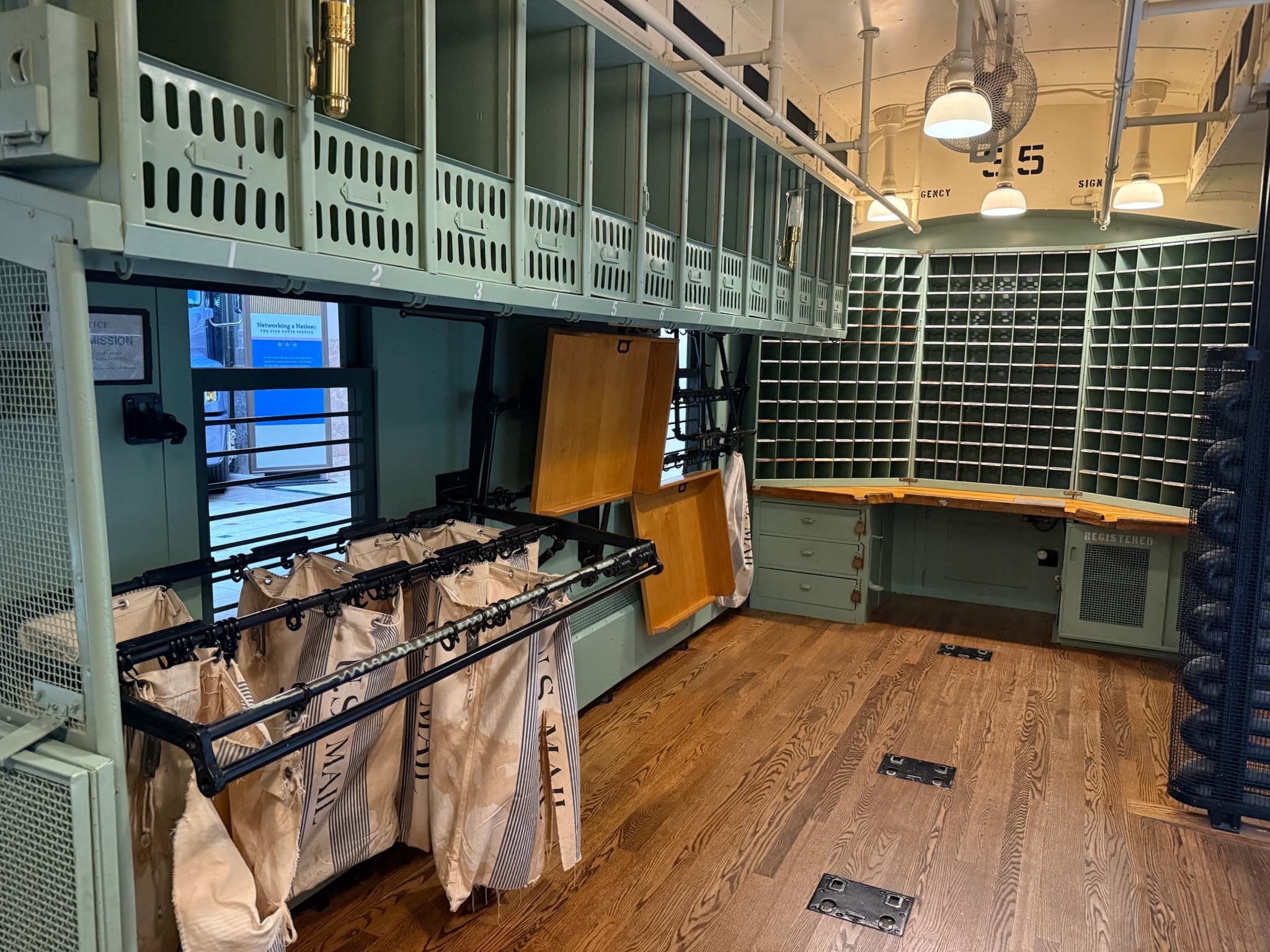
In 1800, the Post Office began using the “hub-and-spoke-system” that is still in use today. Certain post offices were selected as distribution centers, where mail for large areas was processed and sent on.
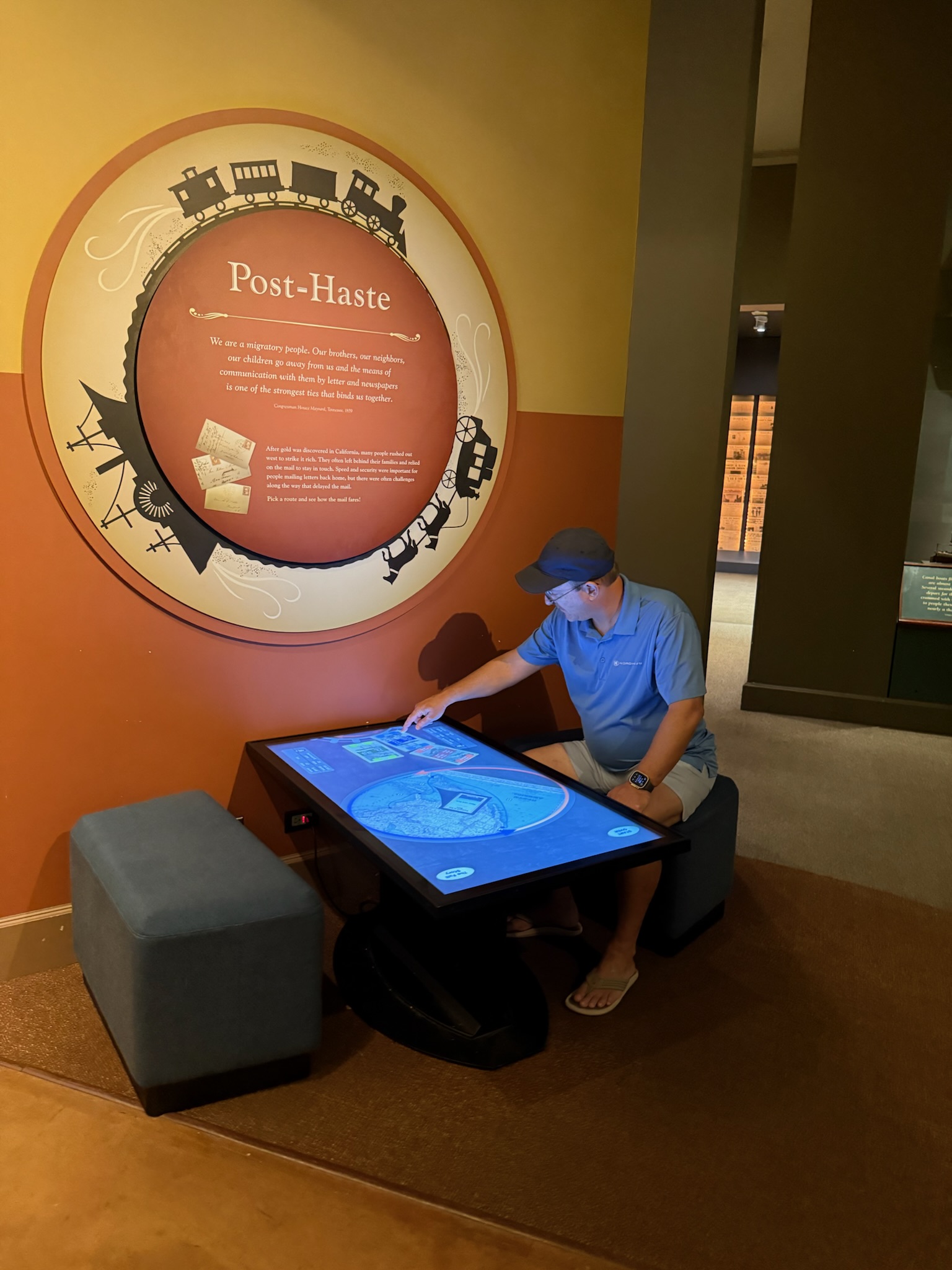
When gold was discovered in California in 1848, getting mail to/from California became a priority. The Post Office contracted with several shipping companies. Some ships went all the way around Cape Horn, but the faster service was by splitting the route up: Ships on the east coast going between the US and Panama/Nicaragua, an intermediary to carry the mail across the isthmus, and ships on the west coat going between Panama/Nicaragua and San Francisco.
By 1851, mail could get all the way across the country via three overland routes, but each route only ran once a month. A twice-weekly single overland route was established in 1857. The Post Office awarded the contractor who worked the route, John Butterfield, a six-year contract at $600,000 per year. When establishing routes out west, Congress was concerned with more than just the mail. Congress understood that civilization would form along the mail routes, so establishing the route was a critical piece of growing the nation. One of the last displays in the room was a game where you could see the challenges that were faced on each of the western routes.