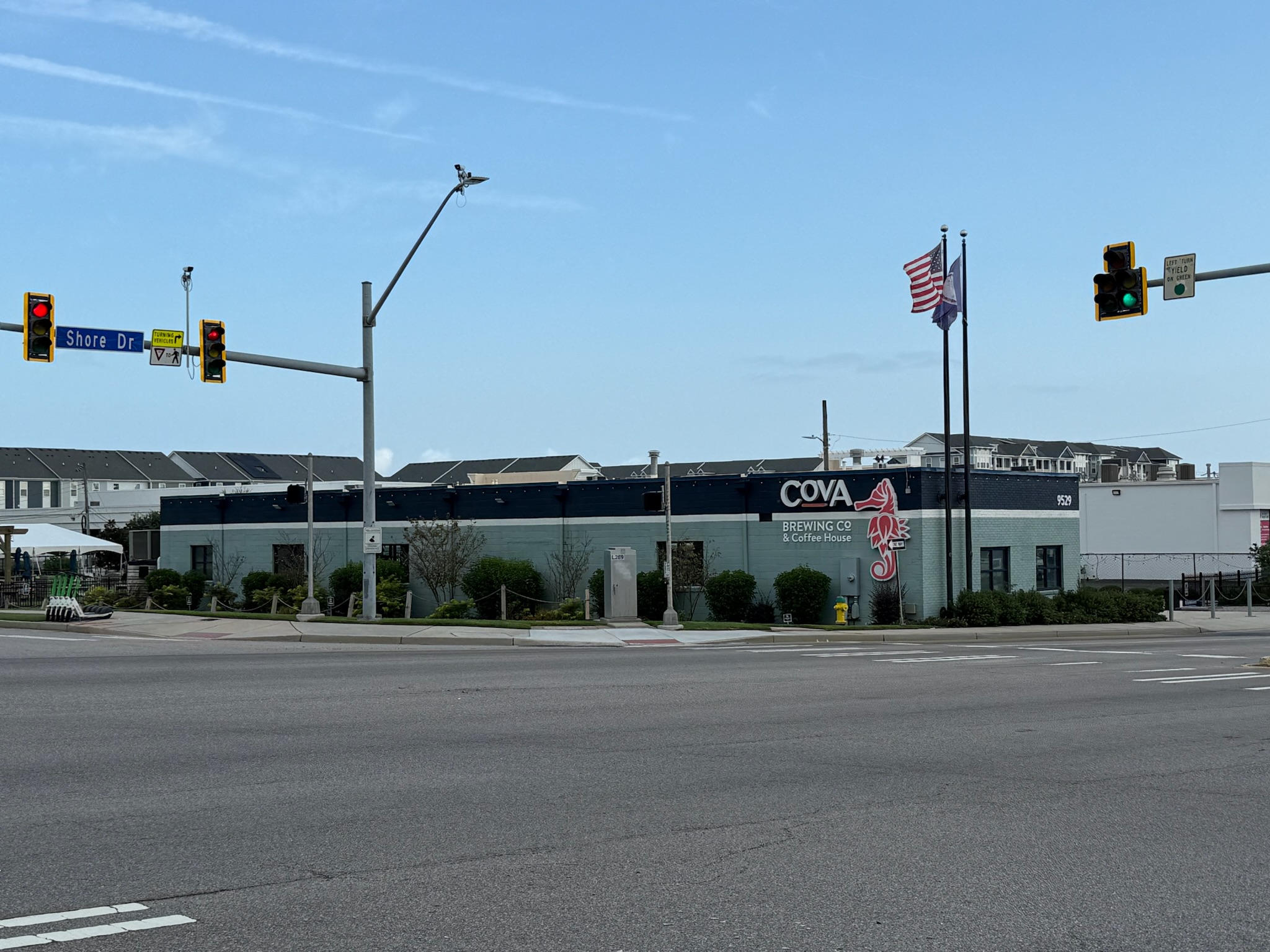
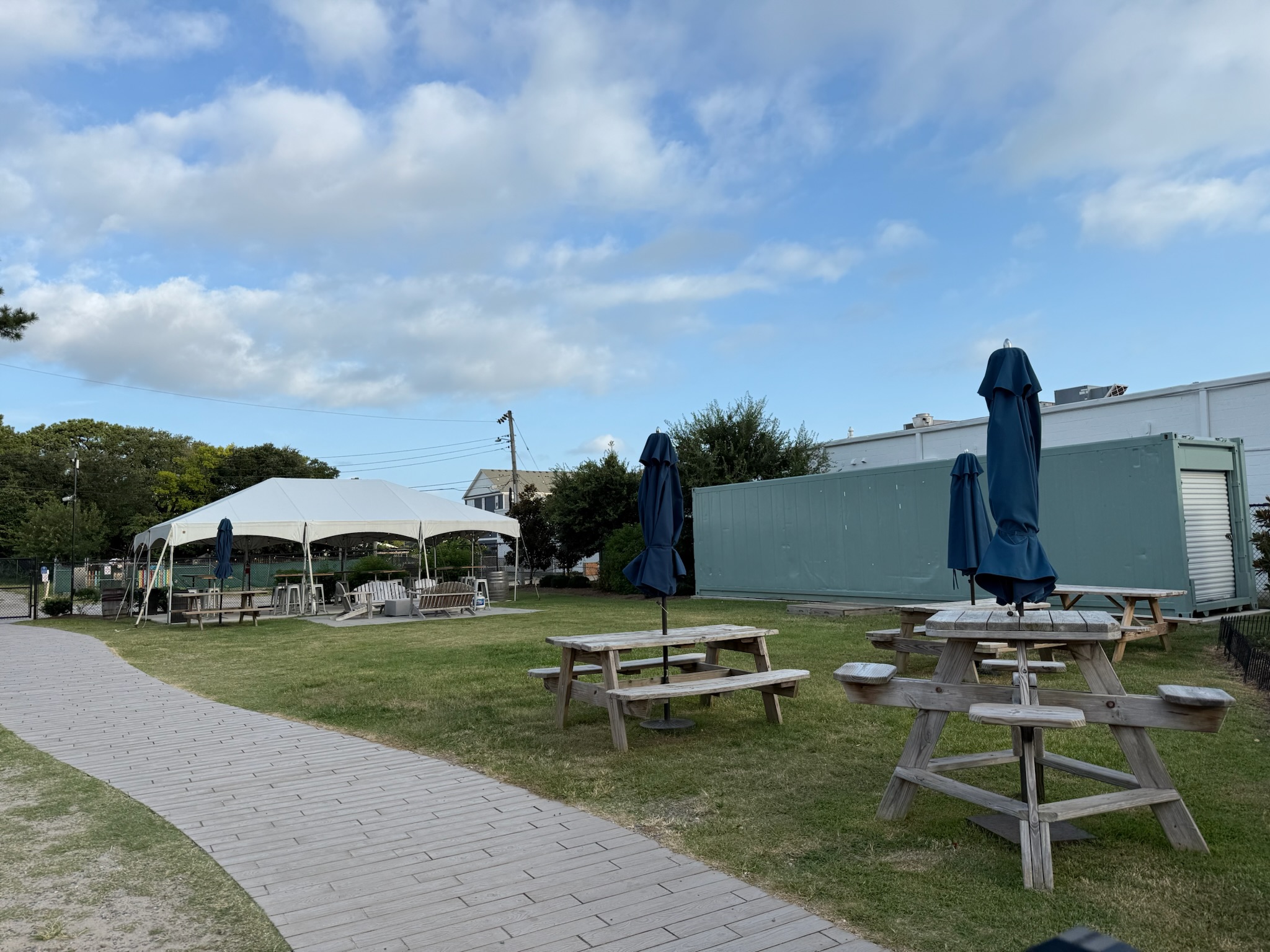
Saturday, August 9 — Directly northeast of us, just across the bridge, was a place called Cova Brewing Co & Coffee House that we’ve been meaning to go to since we arrived. We were told they sold only coffee and beer, though sometimes they’d let a food truck onto the property so people could buy food while they hung out.
Seating was outdoors, with a large grassy area, lots of tables, and even a fire pit. In the evenings, it was packed with families.
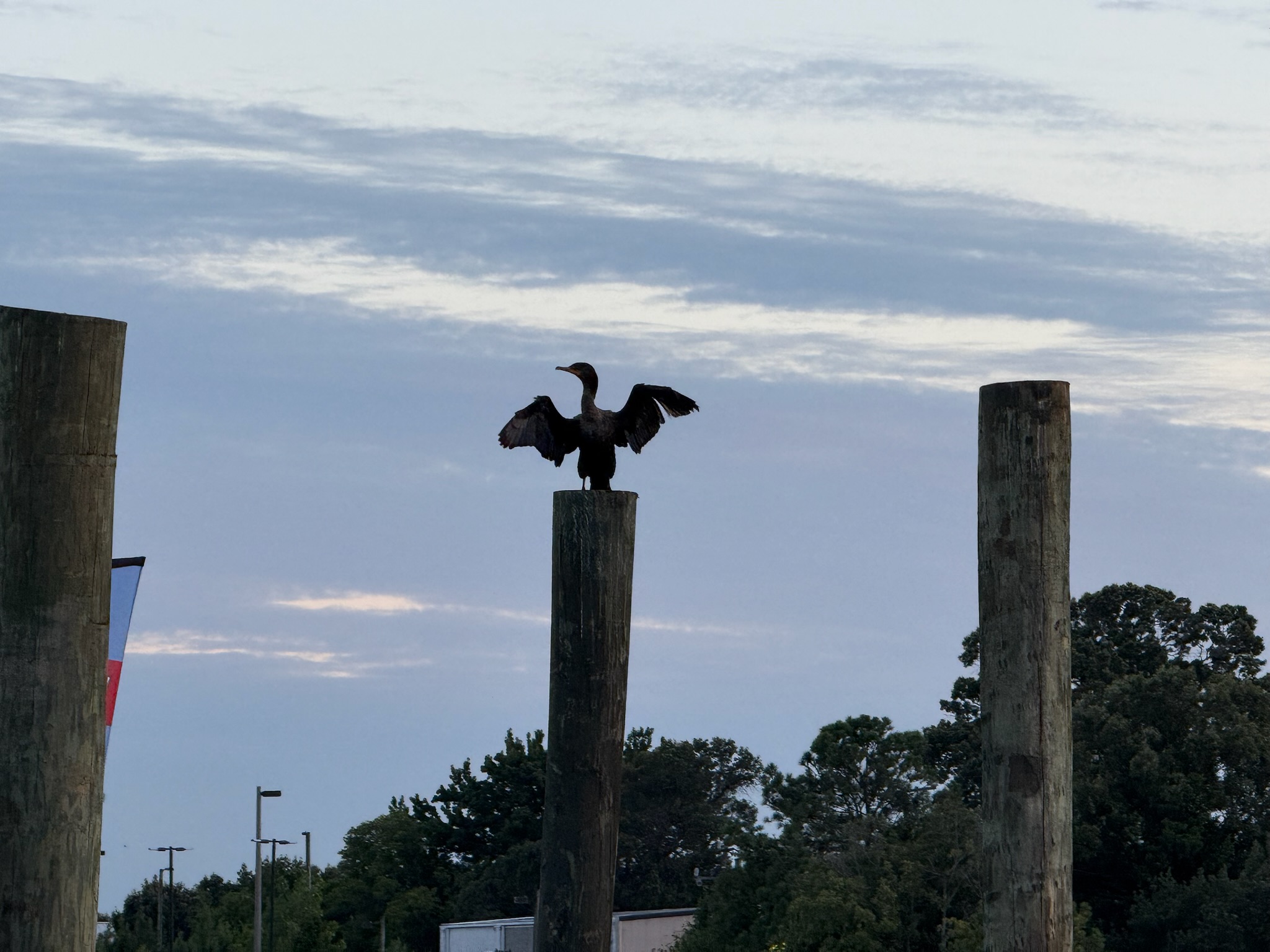
The day that we went to the game store to play Magic the Gathering, we saw a flier for an upcoming Dungeons & Dragons one-week half-day camp at the store. Keith had gone to a D & D camp while we were in San Diego and he’d loved it. He asked if he could go to this upcoming camp, so we registered him for it. Camp started on Monday, August 4 and ran from 1000 – 1400. While Keith was gone, Eric and Christi did chores around the boat, then ran errands after we picked him up. We had dinner onboard, then went over to Blue Heeler for games in evening. The duck was performing for us while we played.
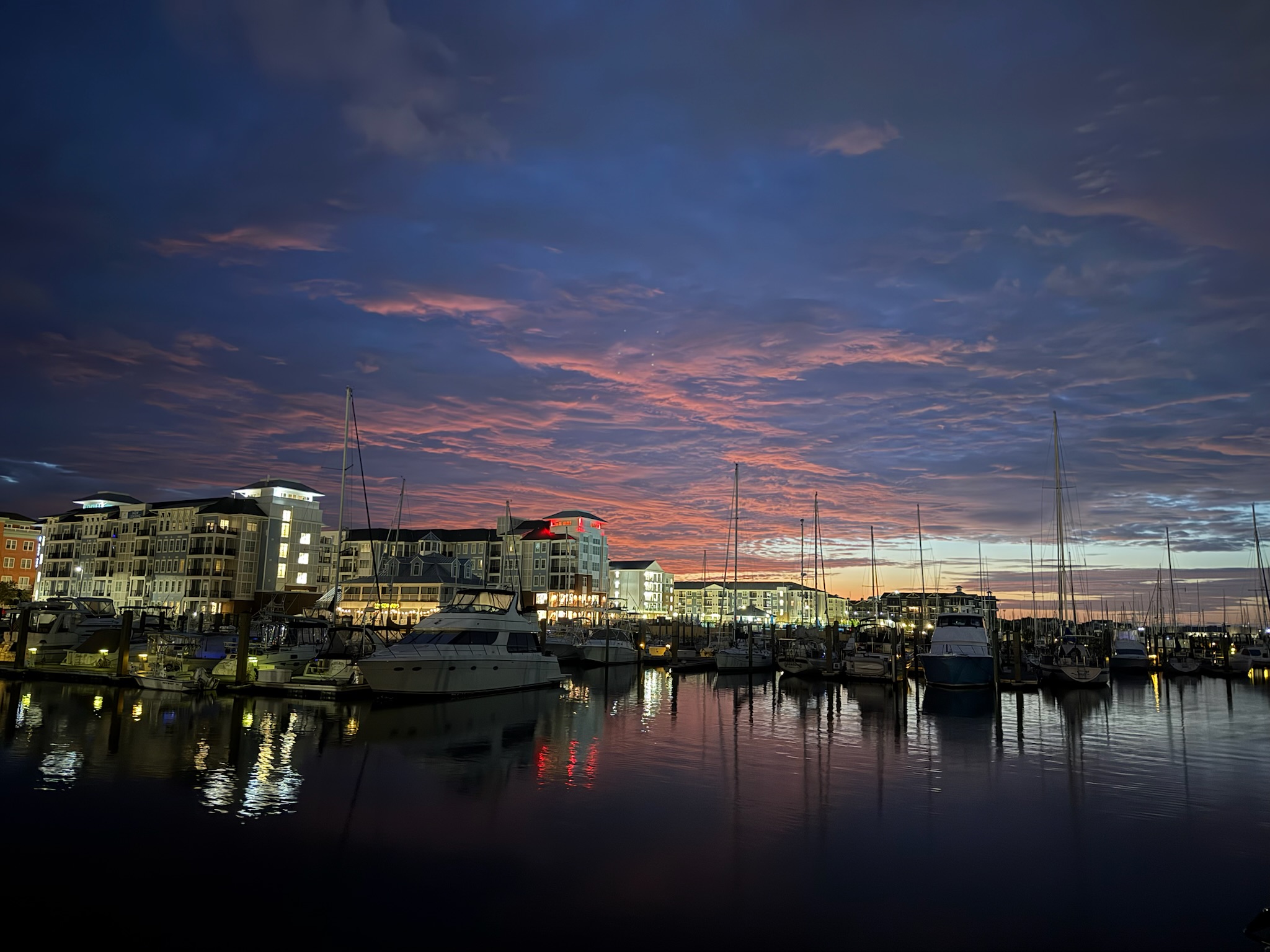
On Tuesday, the sunrise was almost apocalyptic. This was as dawn was beginning to break.
The clouds just kept getting redder and redder, and looked like this as the sun rose above the horizon line.
Sunday, August 3 — The water here in Little Creek was 81 degrees Fahrenheit (27.2 degrees celsius). When water temperatures were this warm, we generally cleaned Kosmos’s bottom once a week. However, we’d just gotten new bottom paint, and with new paint, you were supposed to wait a full two months until it was fully cured before you clean it. We found out the hard way that cleaning it early just takes the paint off and significantly shortens the life of the paint.
The two months were just about up. Kosmos’s bottom was so full of growth that she looked like she had a bushy beard. We couldn’t believe the growth was so bad on brand new paint. Generally speaking, neither Christi nor Eric were willing to do the bottom in a marina, especially this one, which had brackish water from the creek (there was a possibility of electrocution if one of the boats were leaking electricity into the water). Maybe if the water in the Chesapeake were clearer, we might have taken Kosmos to an anchorage and done her bottom ourselves, but since the water was totally murky, neither Christi nor Eric wanted to do it. So we hired a diver. He charged $150 per hour and had estimated it would take 2-hours.
He came this morning. Instead of a wetsuit hood and goggles that divers usually wear, he wore a full head mask so his entire head was covered. He had lights attached to the mask to help him see. As anticipated, he said the bottom was really bad. It took him 4.5 hours to do the whole bottom, but he kindly only charged us for 3.5. And he confirmed there was a big crab living on the bottom. We’ve seen a lot of crabs in the marina around the boats and we’d suspected for a while that the crabs were living under the boats.
Since the diver was working, we turned on the AC, which had been running 24/7 since we’d pulled into this slip. The temperatures were so pleasant today that we left the A/C off even after he’d finished.
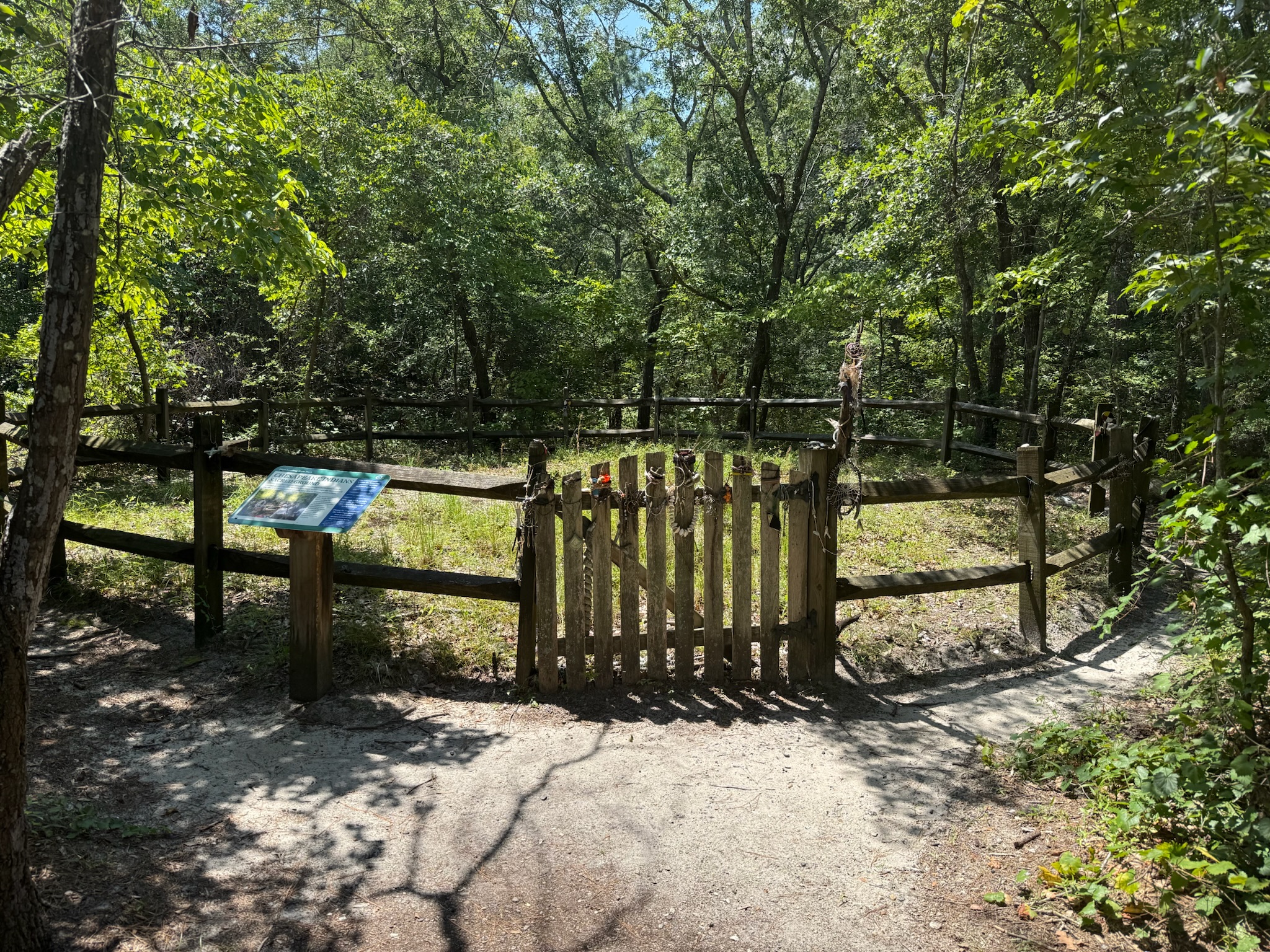
Once he finished, we met Blue Heeler at the Trail Center in First Landing National Park, which was a large state park that encompassed the tip of Cape Henry (where the Chesapeake Bay met the Atlantic Ocean). Karen had pointed it out to us when she’d given us the tour of Virginia Beach, but up until now, it had been way too hot to go hiking in the forest. But the weather was glorious today, so it was the perfect day for a hike. We apparently weren’t the only ones with that bright idea — the lines to enter the park were quite long, especially the beach entrance. The parking fee was $10. We miraculously found a parking spot. Next to where we parked was a Chesapeake burial ground. According to the sign, in 1997, the 64 bodies had been unearthed during excavation for a bridge in the city of Chesapeake, and the bodies had been reinterred here in a traditional ceremony.
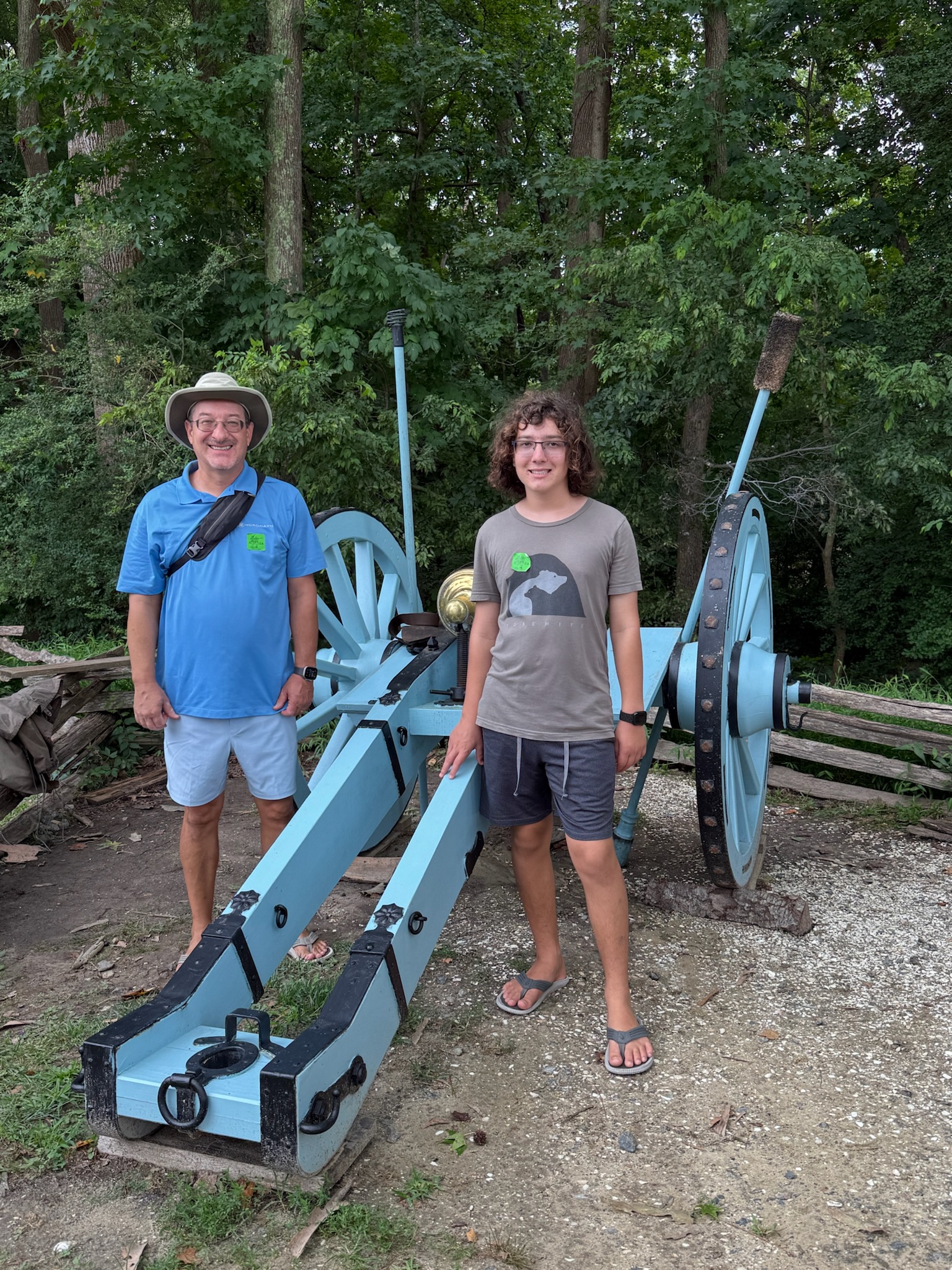
Continued… After we finished at the museum, we went back to the military area for the cannon firing demonstration. The Americans had multiple types and sizes of cannons. The first line of defense was the big canons. The French army had brought heavy siege cannons that fired 16 – 24 lb shot, which did serious damage to the base, but they couldn’t be easily moved. The Americans also had field canons, which were mobile, shot straight and were meant for disrupting lines (columns) of soldiers. The Americans also had 8″ howitzers. The howitzers were also smaller and could be moved around the battlefield where needed. They would shoot up over walls and could hit people behind walls. And they had mortars. The British only had light artillery that fired 3 – 6 lb shot, so the Americans had superior weapons in this battle.
Just as the bayonet on the end of the musket was more important to the troops as a psychological fear tactic than as a weapon, cannons were also more of a psychological fear tactic than a physical danger to the opposing soldiers.
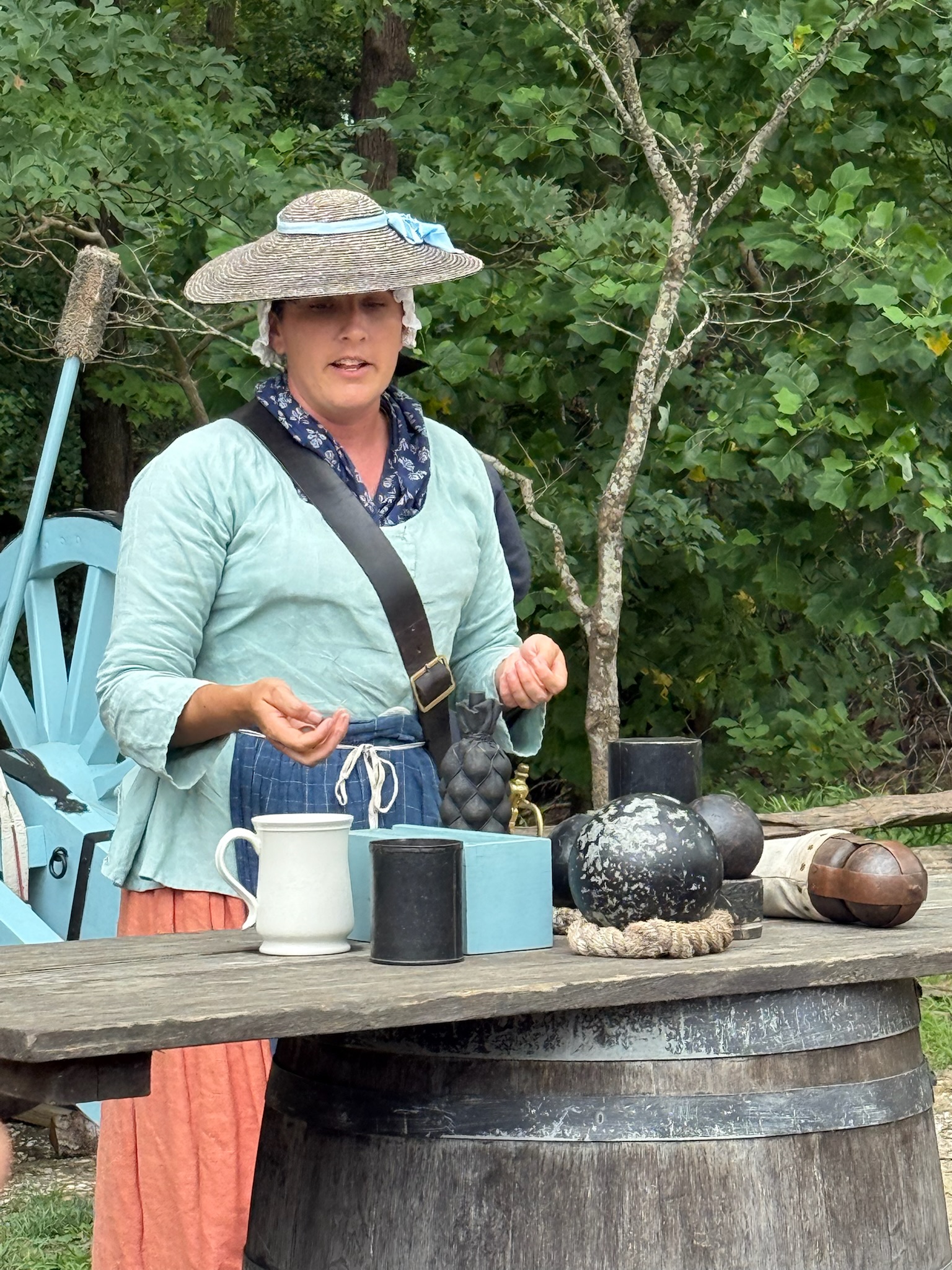
The character talked about the various types of ammunition that was used. Classic cannonballs had explosives inside them, hard shells were solid, and grape shot blew up in the air and sent shrapnel everywhere. mortars,
Just as the bayonet on the end of the musket was more important to the troops as a psychological fear tactic than as a weapon, cannons were also more of a psychological fear tactic than a physical danger to the opposing soldiers.
When they did the field demonstration, they went through each step of the process of loading and shooting the canon very slowly, and they had kids from the audience doing the various steps (although they had the kids use imaginary gunpowder and fire). There were quite a few steps involved! Someone’s job was to do the math on the angles and distance to ensure that the targets were hit. One of the things we found interesting was that they had two soldiers standing still next to the canon mouth when it was fired. It was completely safe to be there since the canon jerked backwards. The reason they did this was so that the other soldiers could put the cannon back at the same exact spot for the next shot (or, if they had missed, to ensure that this time it would be put in a better spot to not miss the next time). She mentioned that the soldiers stationed next to the cannons probably lost their hearing very quickly. Then they had the kids back away and showed what it looked like in real time to load and shoot the canon. It was definitely loud and smoky!
At this point, we’d seen the entire site, so we went to the Historic Yorktown Riverfront (where the ships were clustered together in the middle of the map), for dinner. It was a small cluster of adorable buildings about a mile east of the museum. We were pleased to see there was free parking in a parking garage on the south side of the street.