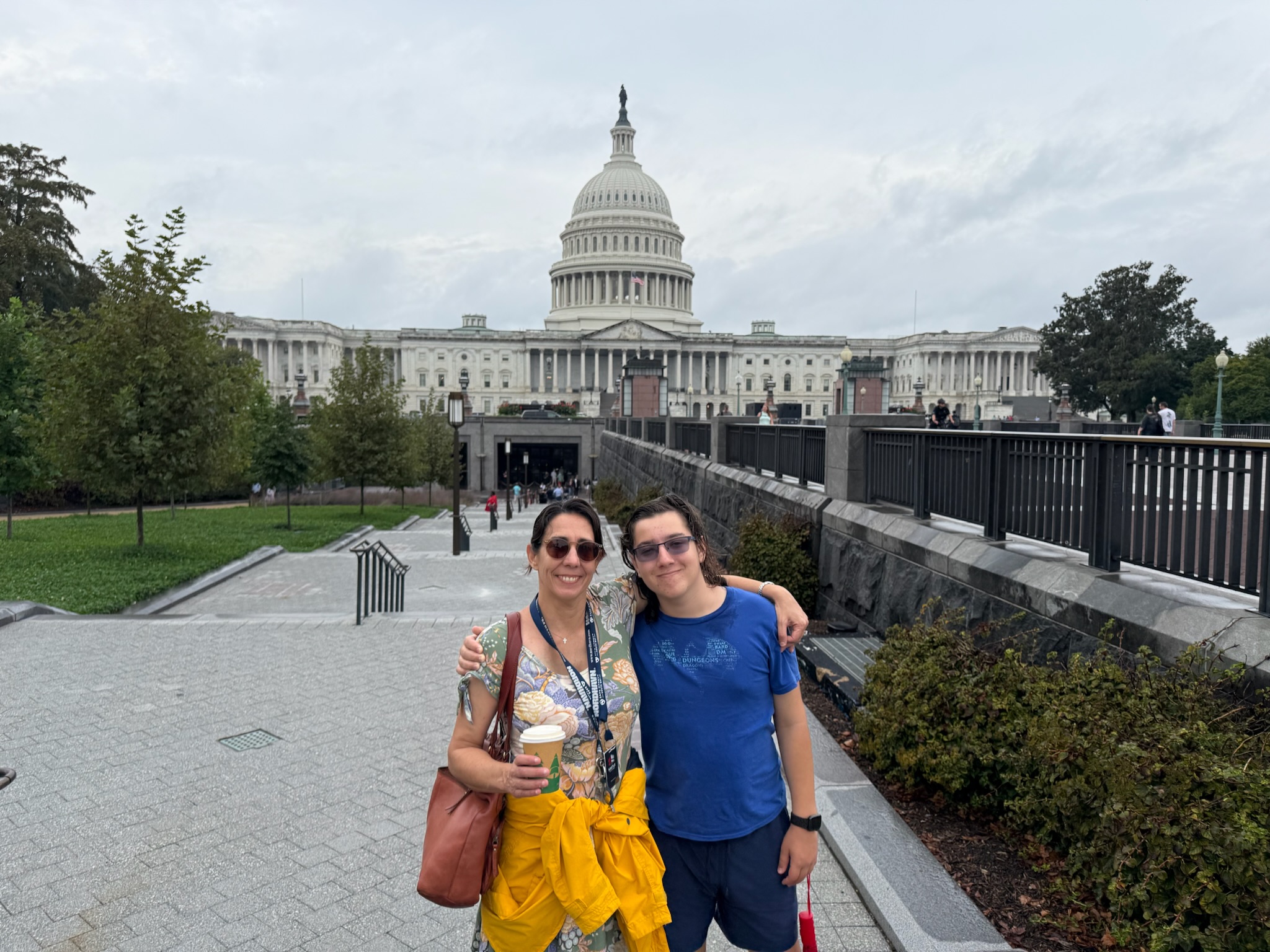
Thursday, Sept 25 — Several weeks ago, we’d booked tickets to take a tour of Congress for today at 1020. The confirmation had said to arrive at least a half-hour early for the security screening. Since ride shares were so much faster and easier than the free shuttle or Metro, we hailed a ride share and were dropped off in the east side of the building near the Visitor’s Center entrance at 0945. Much to our surprise, the entrance was underground.
When we arrived, there were only a few people in the line to enter the building. But within one minute, a large group of high school students arrived, and the line was suddenly very long. Talk about perfect timing! We were through the security check within a few minutes. Once waved through, we had no idea which way to go. Someone asked us if we were there for a tour. When we said yes, he directed us to take an escalator up to the next level.
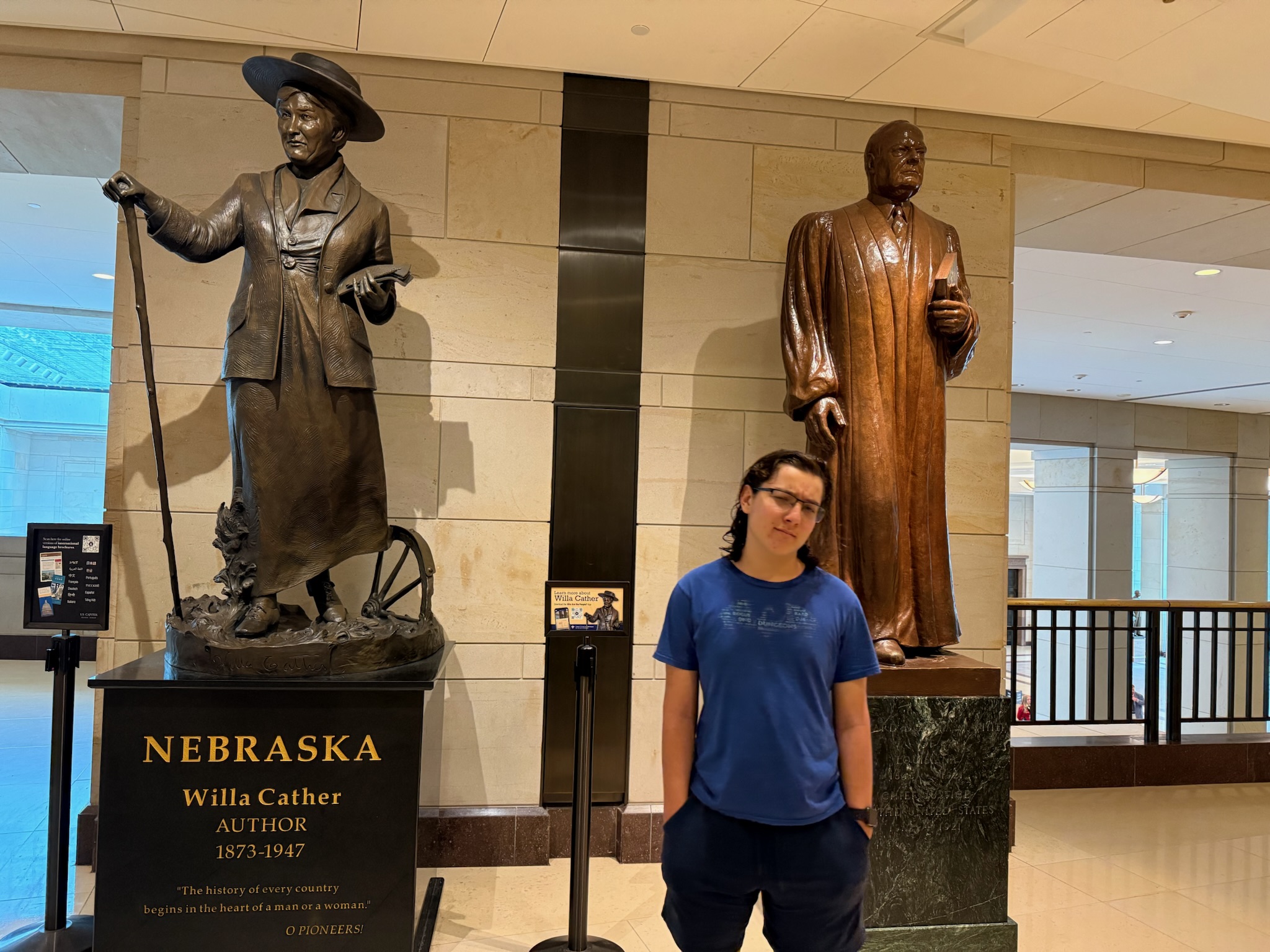
We came to a large room dotted with statues. Each statue had the name of a state on it. We later found out it was called The Emancipation Hall.
The guy to the right was Edward Douglas White of Louisiana, who was a lawyer, state legislator, US Senator and Chief Justice of US Supreme Court. Continue reading →
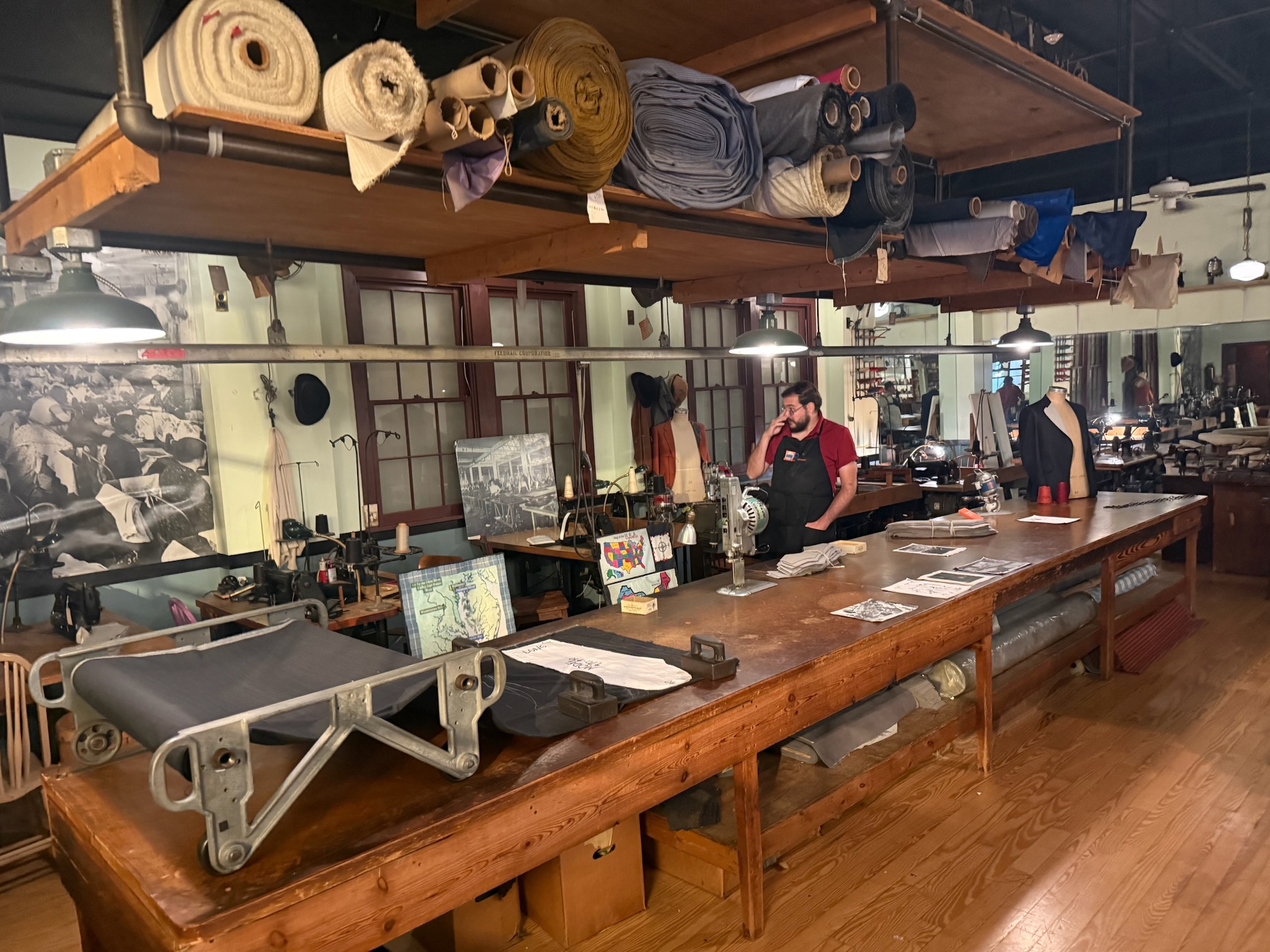
Next we went into another large room that was set up to look like a clothing manufacturing facility. Baltimore was also a hub for clothing manufacturing. Our tour guide showed us the revolutionary technology of the era that made mass-produced clothing possible — a device that simultaneously cut many pieces of cloth stacked together instead of cutting one piece at a time. Coupled with an assembly line sewing process, where each woman on the line sewed a particular piece of the garment and then passed it on to another who would sew her particular piece, ready-to-wear clothes could be quickly produced. The machines were loud and deafness was a problem for the workers.
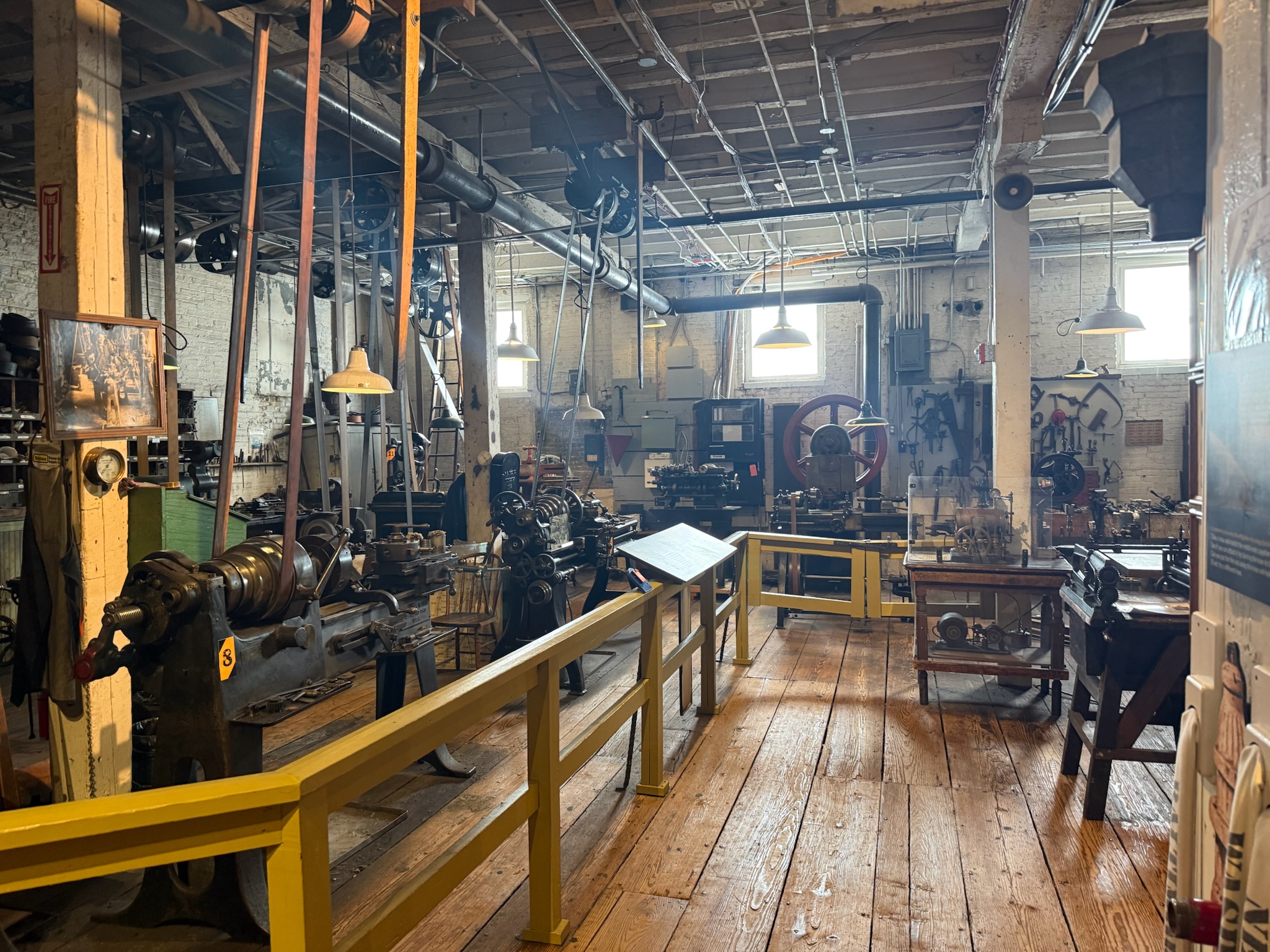
Next we went to a section that was designed to look like a belt-driven machine shop from 1910. Baltimore had also once been a hub for fabricating parts and tools for various industries. Most of the machines were connected via belt to a rod that ran along the ceiling. The rod rotated, moving the belt and powering the machine. The rod was rotated by a steam engine in the corner.
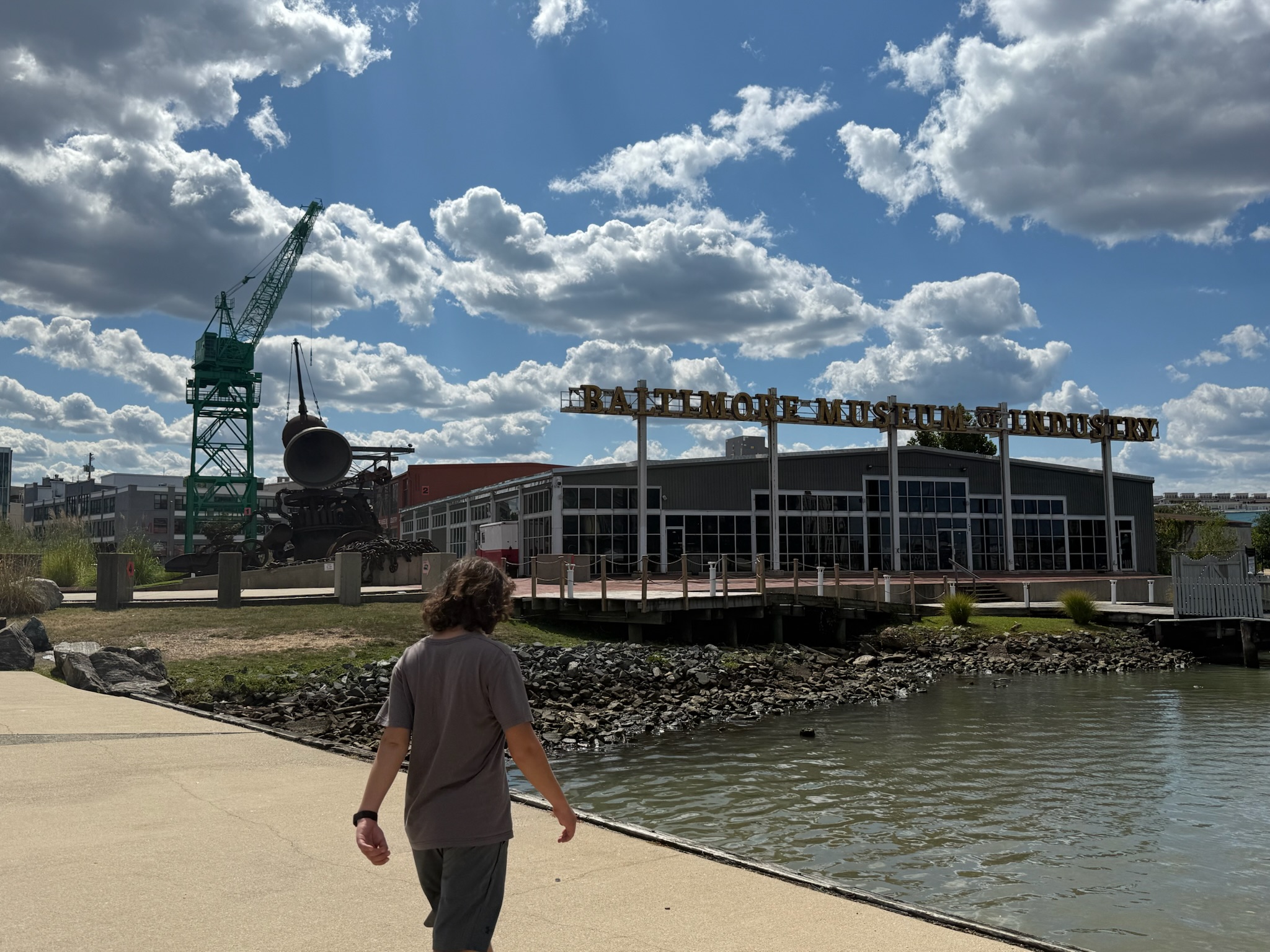
Wednesday, August 26 — We spent the morning getting ready for our trip to San Diego. By the early afternoon, we were feeling like everything was as ready as could be. We decided to go to the Museum of Industry, which focused specifically on the manufacturing industries of Baltimore that “modernized the nation.”
We drove through downtown to the south side of the peninsula that made up the inner harbor. The museum was on the waterfront in a building that was clearly a refurbished old industrial building. Parking was free in the attached lot.
Tickets were $15 for adults and $8 for children 6 – 17. The receptionist told us a free guided tour was about to begin highlighting the black people who were significant in Baltimore’s history. We generally enjoy guided tours, so we signed up.
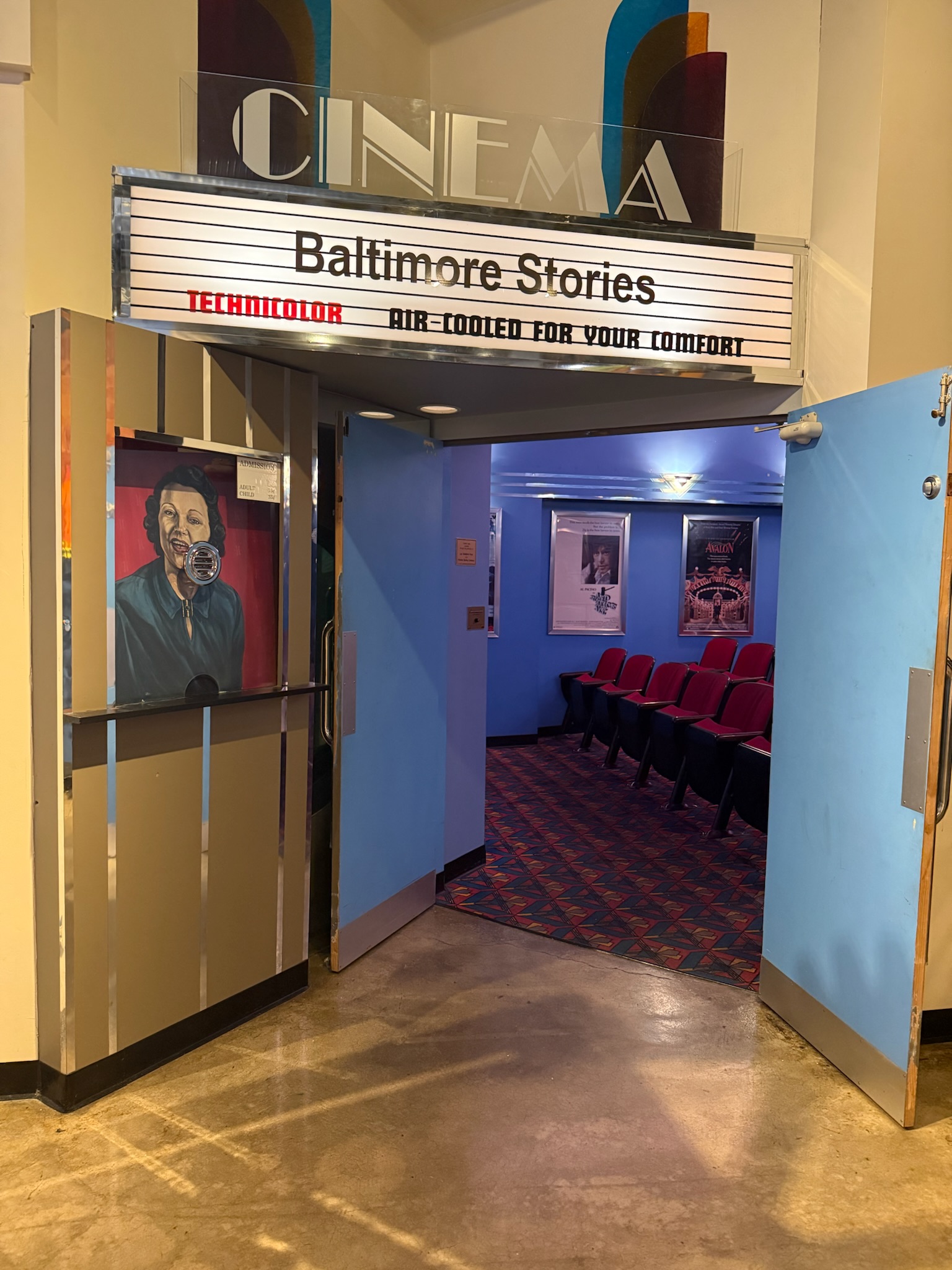
We waited in a small movie theater near the entrance that was showing a film about Linotype machines, which was the most revolutionary change to printing since Gutenberg invented the printing press circa 1440. The machine was invented in Baltimore by a German immigrant between 1882 and 1884. Instead of setting each individual letter by hand, one could type a single line of text and the machine 3-D printed the line from molten lead. The lines were then hand set into the printing press. The discarded lines of tin were reinserted into the machine for melting. The Linotype was rendered obsolete by laser printers.
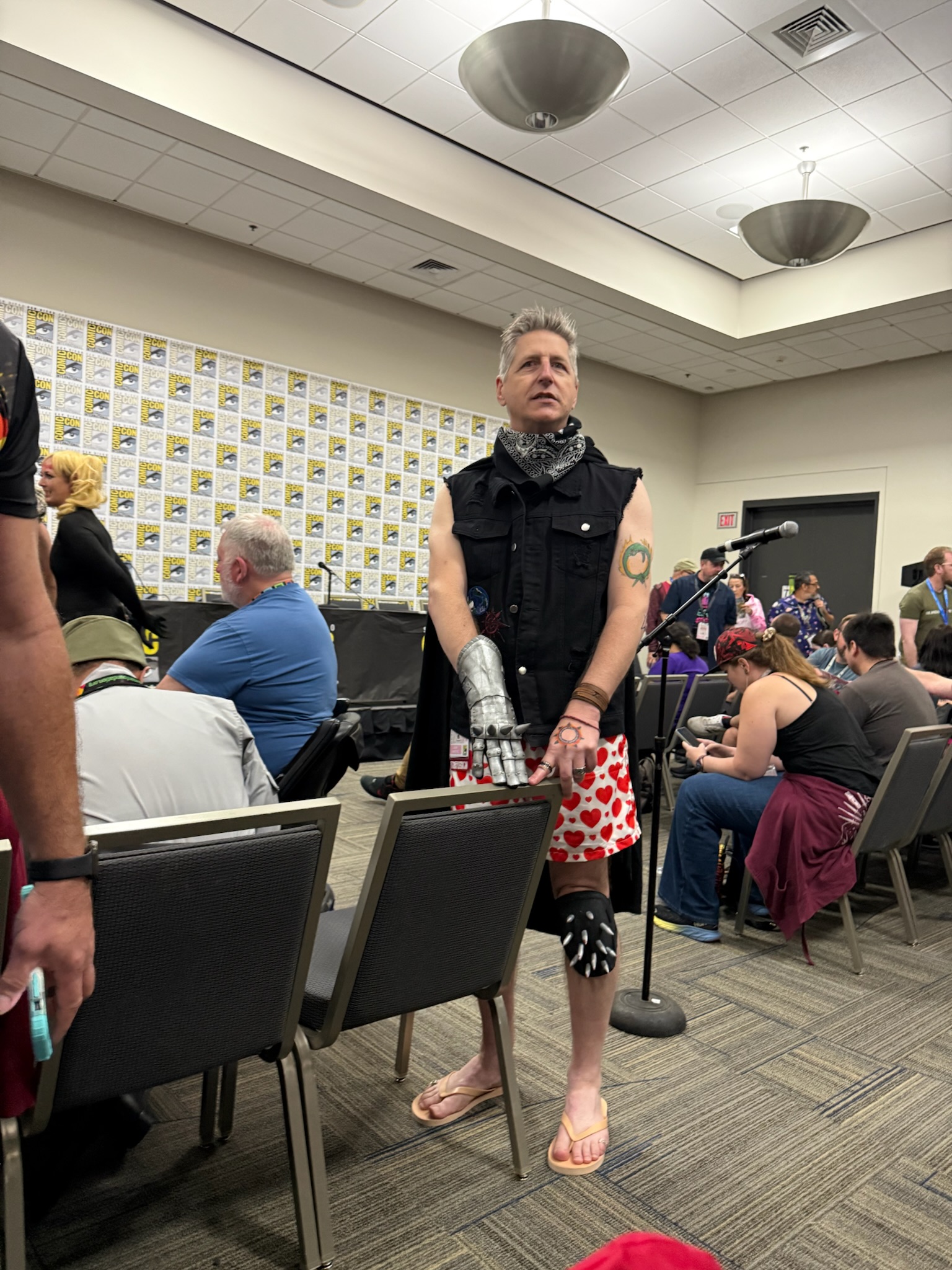
Dungeon Crawler Carl CosplayerPrincess Donut Cosplayer
This week has been amazing. On Saturday, we went to Comicon for our last day there. We went to a panel with Matt Diniman and the narrator of Dungeon Crawler Carl, Jeff Hays. After the panel, we went to an event sponsored by Audible. It was at an arcade, and both Matt Diniman and Jeff Hays were there. It had free food and arcade games, as well. We waited in line for two and a half hours before we got in. Matt had to go do something else, but we still got a picture with him as he was leaving. We also got free mugs, and Jeff even signed one of them for me!
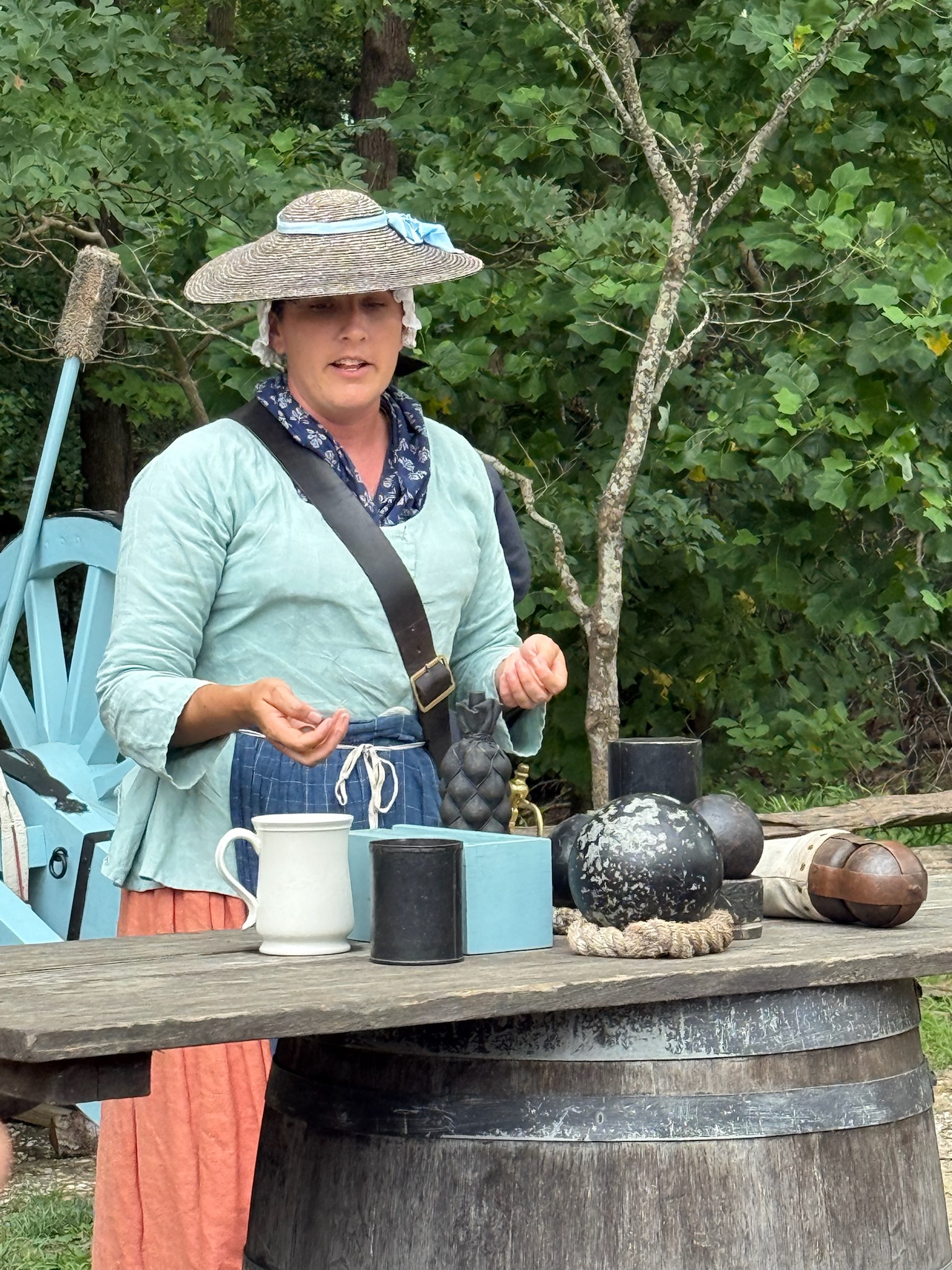
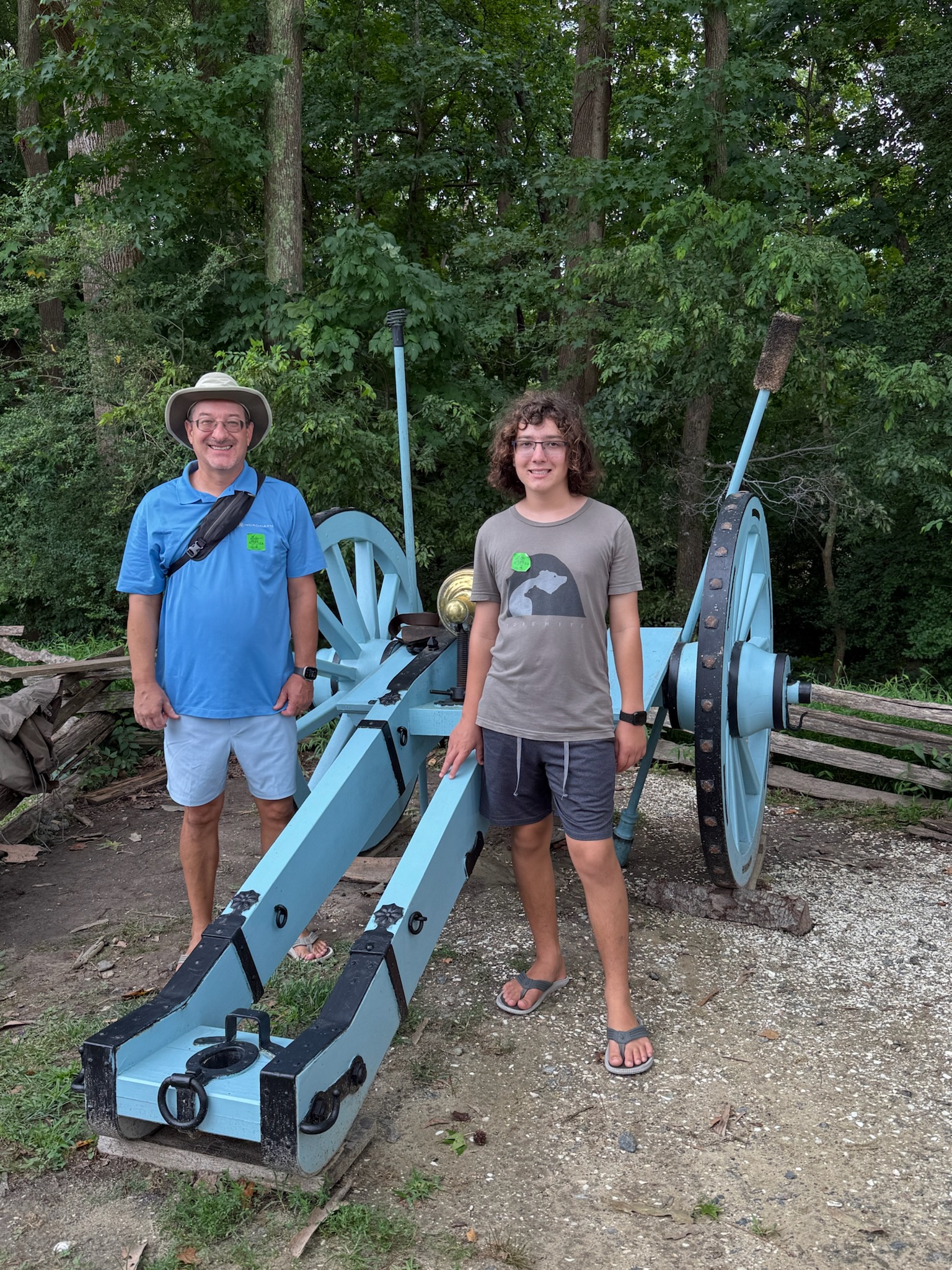
Continued… After we finished at the museum, we went back to the military area for the cannon firing demonstration. The Americans had multiple types and sizes of cannons. The first line of defense was the big canons. The French army had brought heavy siege cannons that fired 16 – 24 lb shot, which did serious damage to the base, but they couldn’t be easily moved. The Americans also had field canons, which were mobile, shot straight and were meant for disrupting lines (columns) of soldiers. The Americans also had 8″ howitzers. The howitzers were also smaller and could be moved around the battlefield where needed. They would shoot up over walls and could hit people behind walls. And they had mortars. The British only had light artillery that fired 3 – 6 lb shot, so the Americans had superior weapons in this battle.
Just as the bayonet on the end of the musket was more important to the troops as a psychological fear tactic than as a weapon, cannons were also more of a psychological fear tactic than a physical danger to the opposing soldiers.
The character talked about the various types of ammunition that was used. Classic cannonballs had explosives inside them, hard shells were solid, and grape shot blew up in the air and sent shrapnel everywhere. mortars,
Just as the bayonet on the end of the musket was more important to the troops as a psychological fear tactic than as a weapon, cannons were also more of a psychological fear tactic than a physical danger to the opposing soldiers.
When they did the field demonstration, they went through each step of the process of loading and shooting the canon very slowly, and they had kids from the audience doing the various steps (although they had the kids use imaginary gunpowder and fire). There were quite a few steps involved! Someone’s job was to do the math on the angles and distance to ensure that the targets were hit. One of the things we found interesting was that they had two soldiers standing still next to the canon mouth when it was fired. It was completely safe to be there since the canon jerked backwards. The reason they did this was so that the other soldiers could put the cannon back at the same exact spot for the next shot (or, if they had missed, to ensure that this time it would be put in a better spot to not miss the next time). She mentioned that the soldiers stationed next to the cannons probably lost their hearing very quickly. Then they had the kids back away and showed what it looked like in real time to load and shoot the canon. It was definitely loud and smoky!
At this point, we’d seen the entire site, so we went to the Historic Yorktown Riverfront (where the ships were clustered together in the middle of the map), for dinner. It was a small cluster of adorable buildings about a mile east of the museum. We were pleased to see there was free parking in a parking garage on the south side of the street.