Bahia Aqua Verde, Day 4

Q: What is the difference between paravanes and flopper-stoppers? You guys seem to use the words interchangeably in your blog posts.

A: Paravanes are a stabilization system designed to be used while the boat is in motion. It involves lowering weights into the water to add more resistance to the motion of the waves. Our “fish” (weights) are 45-lbs on each side. More details can me found here and here. Unlike active-fin stabilizers, the paravane poles/fish can also be deployed at anchor to help dampen the roll in anchorages.

Flopper-stoppers are light-weight (2-lbs) flat, rectangular plates that can be hooked to the end of the paravane polls (instead of the “fish”). They are meant to be used only at anchor. They can be pushed down by a wave pretty easily, but they are resistant to coming back up, which dampens the motion. At anchor, flopper-stoppers work better than the “fish.” Since they only weigh 2-lbs each, flopper-stoppers are significantly easier to deploy and retrieve than the “fish.”

We didn’t buy real flopper stoppers until after the blog went inactive. In our old posts, we did talk about deploying the flopper-stoppers, but we had been mistakenly using the word incorrectly. What we’d meant in those old posts was “utilizing the paravane ‘fish’ while at anchor.” Sorry for the confusion.

In the recent posts from the Sea of Cortez, we’ve been careful to use the two terms accurately. When we first arrived in the Sea of Cortez, we were using flopper-stoppers at anchor. But after two failures (first, second) we’ve given up on flopper-stoppers and are back to using paravanes at anchor.

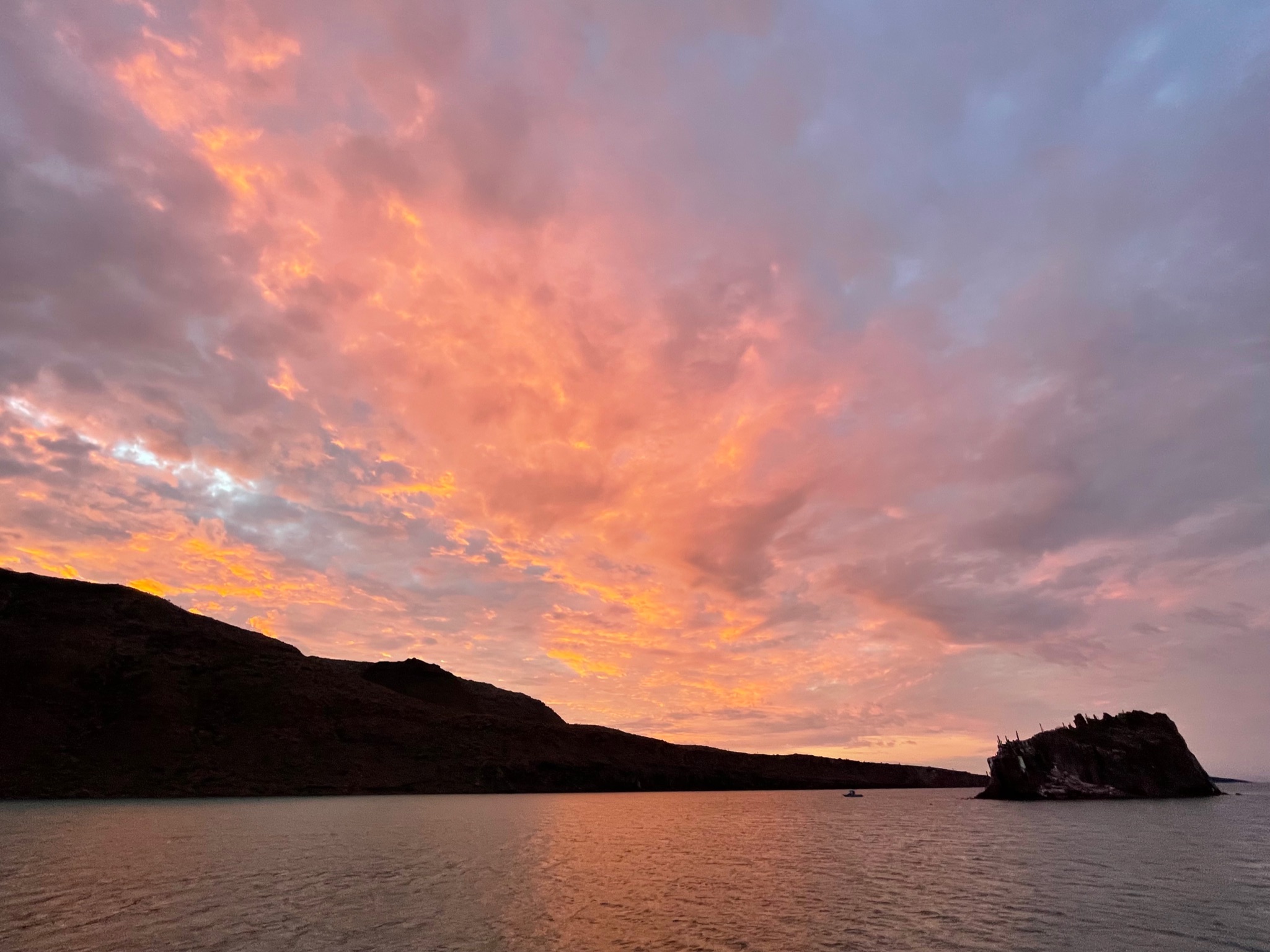
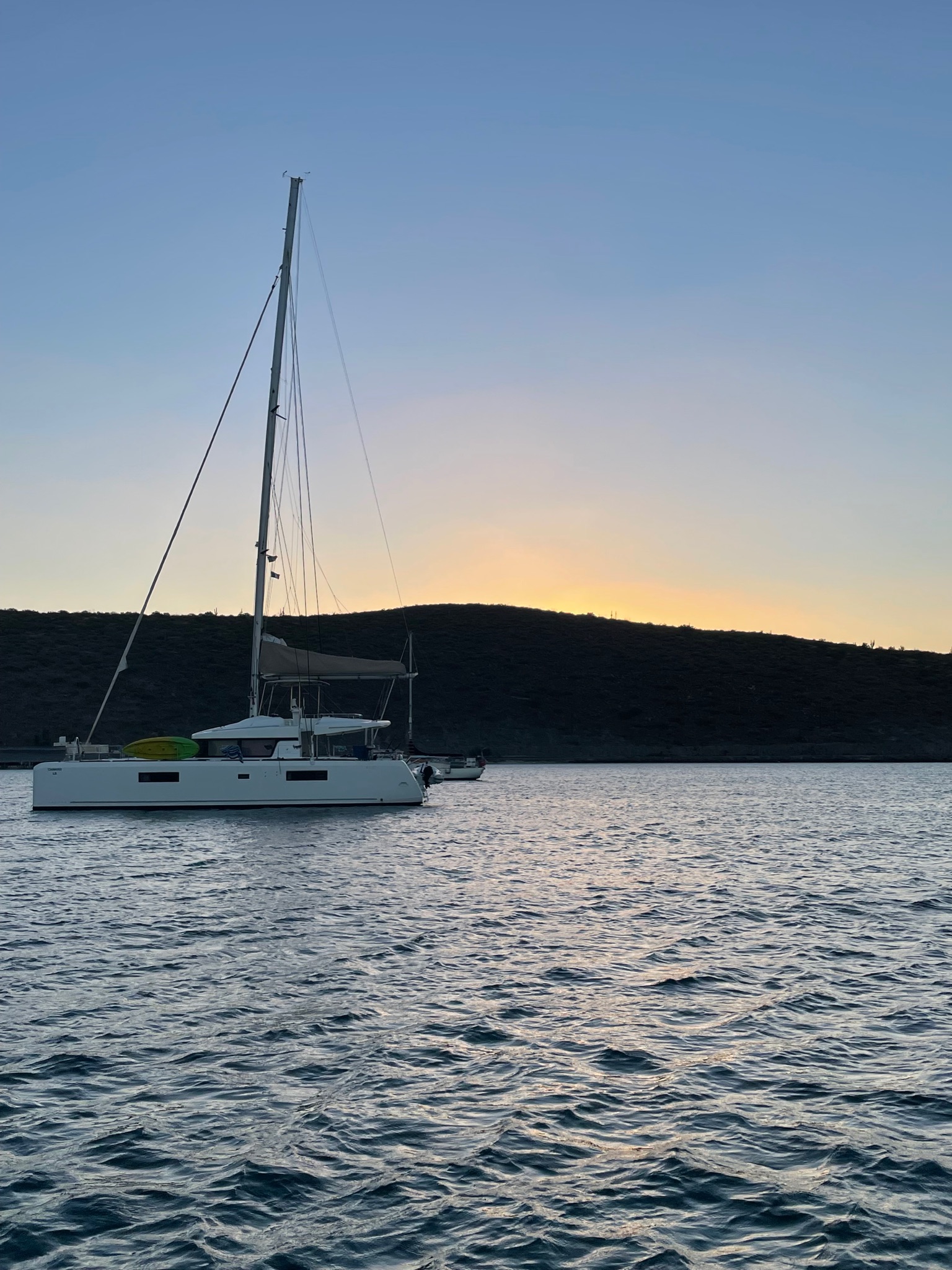
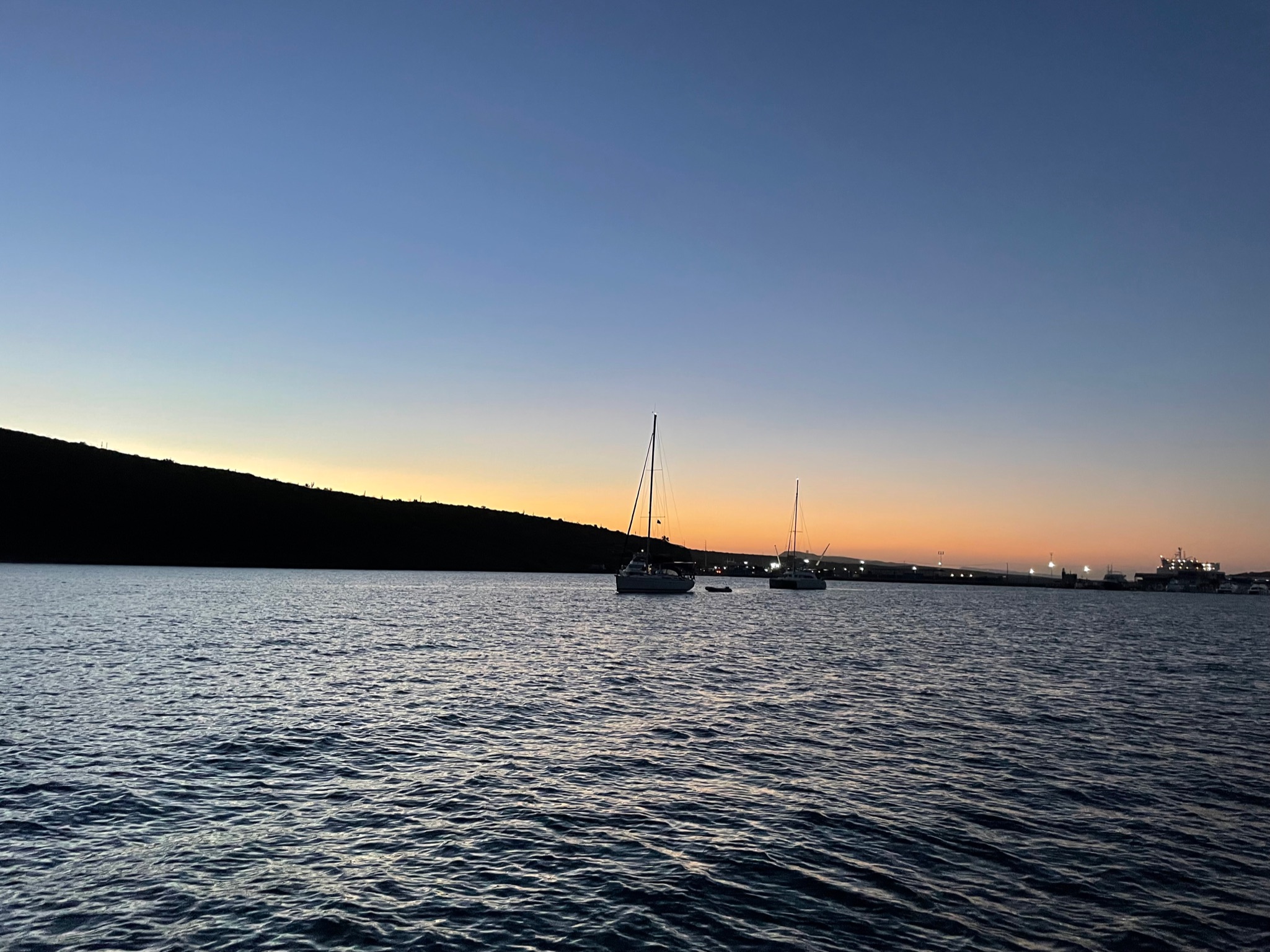
Sunrise on Thursday November 3

After we finished our morning chores, we went snorkeling along the rocks behind the boat again. Eric and Keith also donned wetsuits for extra jellyfish protection. The spot was still nice and we got to enjoy it more fully this time.

Continue reading

Bahia Agua Verde, Day 3

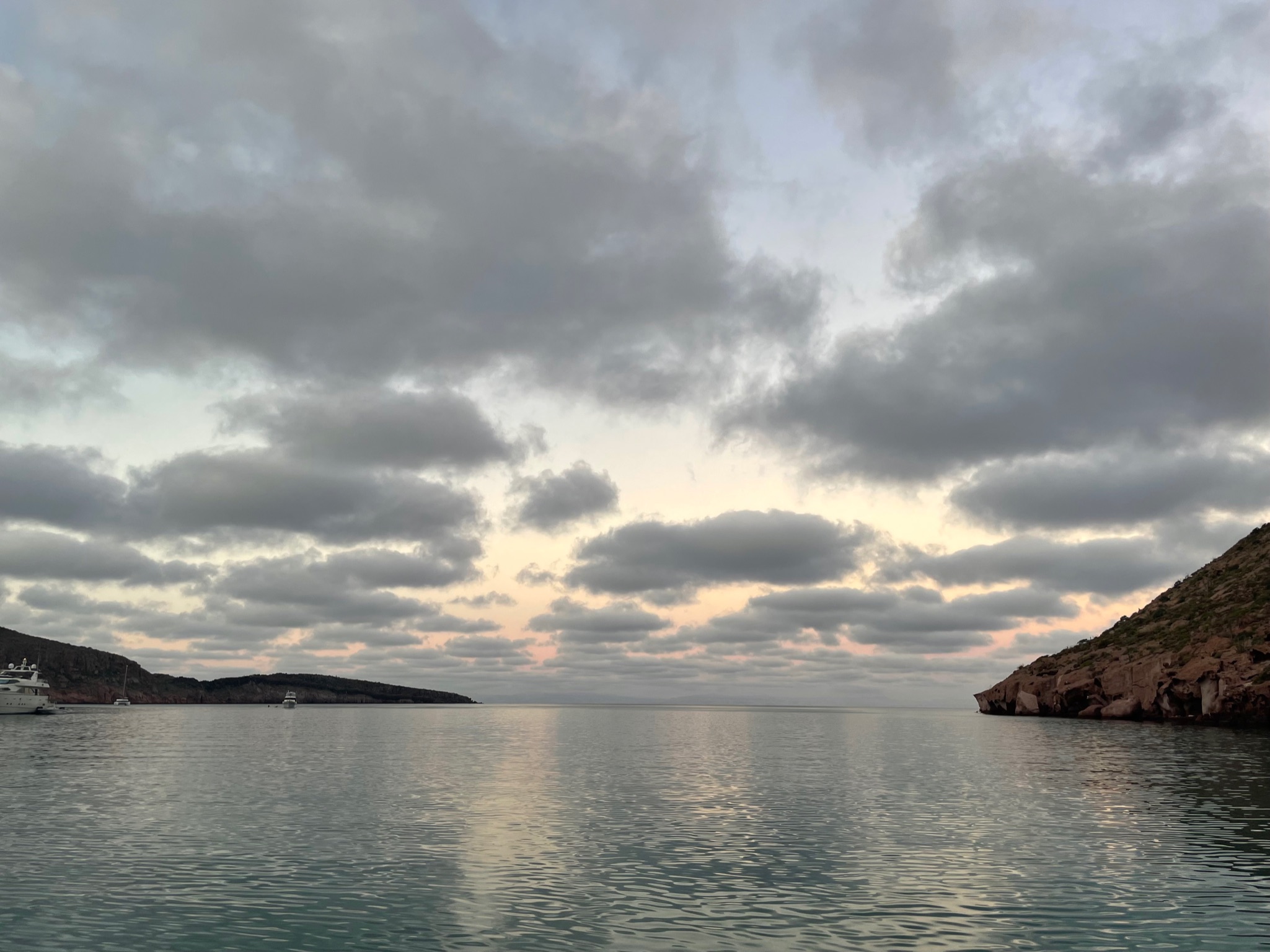
Sunrise on Wednesday November 2. As the sun rose, a massive number of birds flew over to the rocks islets.

Christi was pleased to report that she was feeling better. The day of rest did the trick! After we finished our morning chores/school, we went snorkeling along the rocks directly behind the boat. It’s always nice when we are close enough to good snorkeling/diving that we can go straight off of Kosmos. The water had cooled down; Christi wound up putting on a shortie wetsuit.

Continue reading

Puerto Escondido to Bahia Agua Verde

On Monday (October 31), at about 1030, we left for an anchorage called Bahia Agua Verde. It was a four-hour ride, heading south. Before leaving, Christi and Keith gave Kosmos a quick wash down. Keith was really happy about it.

We’ve mentioned that the charts for the Loreto area are inaccurate more than once. Here is the chart of us in the channel as we were leaving Puerto Escondido. Eric had set the offset a different zoom so things are quite shifted at the zoom level on the picture. Good thing we did that upgrade to amphibious vehicle before we left San Diego! 😉

Continue reading

Third Trip to Puerto Escondido Days 2 – 4

Sandy had offered to take us to Loreto with her on Tuesday (October 25) to run errands. Christi took her up on the offer and spent most of Tuesday shopping. Christi and Sandy had lunch at a Birrieria stand that was packed with people.

Birria is a type of stew that is traditionally made with goat meat, though any type of meat can be used. Someone nearby told us that this stand used beef. It sounds like chili paste makes up the base of the stew, and any vegetables added, such as onions or garlic, are pureed into the base. We’re told that birria is usually served in a as a bowl as a stew, but at this stand, they used the meat to make tacos. Christi found the meat to be bland. The tacos were served with all the usual accoutrements to doll them up. 

Meanwhile, Eric did chores. Eric repaired the smokestack and lubricated the snaps on the window covers. He dropped off our empty propane tank at the marina office. The place that fills propane tanks is a few miles away on Highway 1, and the marina will take the tanks over to have them filled for a $5.00 service fee. 

Continue reading

Caleta San Juanico, Day 3

Sunrise on Friday, October 21. The crescent moon shone brightly even as the sun rose underneath it.  

This morning, one of the neighbors in the anchorage filled our scuba tanks. What a relief that we can do the bottom again!

It was wavier on Friday than it had been on Thursday, and the anchorage was a little less comfortable. In the afternoon, we went snorkeling. We decided it was too wavy to be safe to snorkel in the best spot that we’d scoped out, the north-eastern rock, as it was exposed to the open waves. We opted to go to the northwestern rock. Look at the birds hanging out on the cactus on the rock.

Continue reading