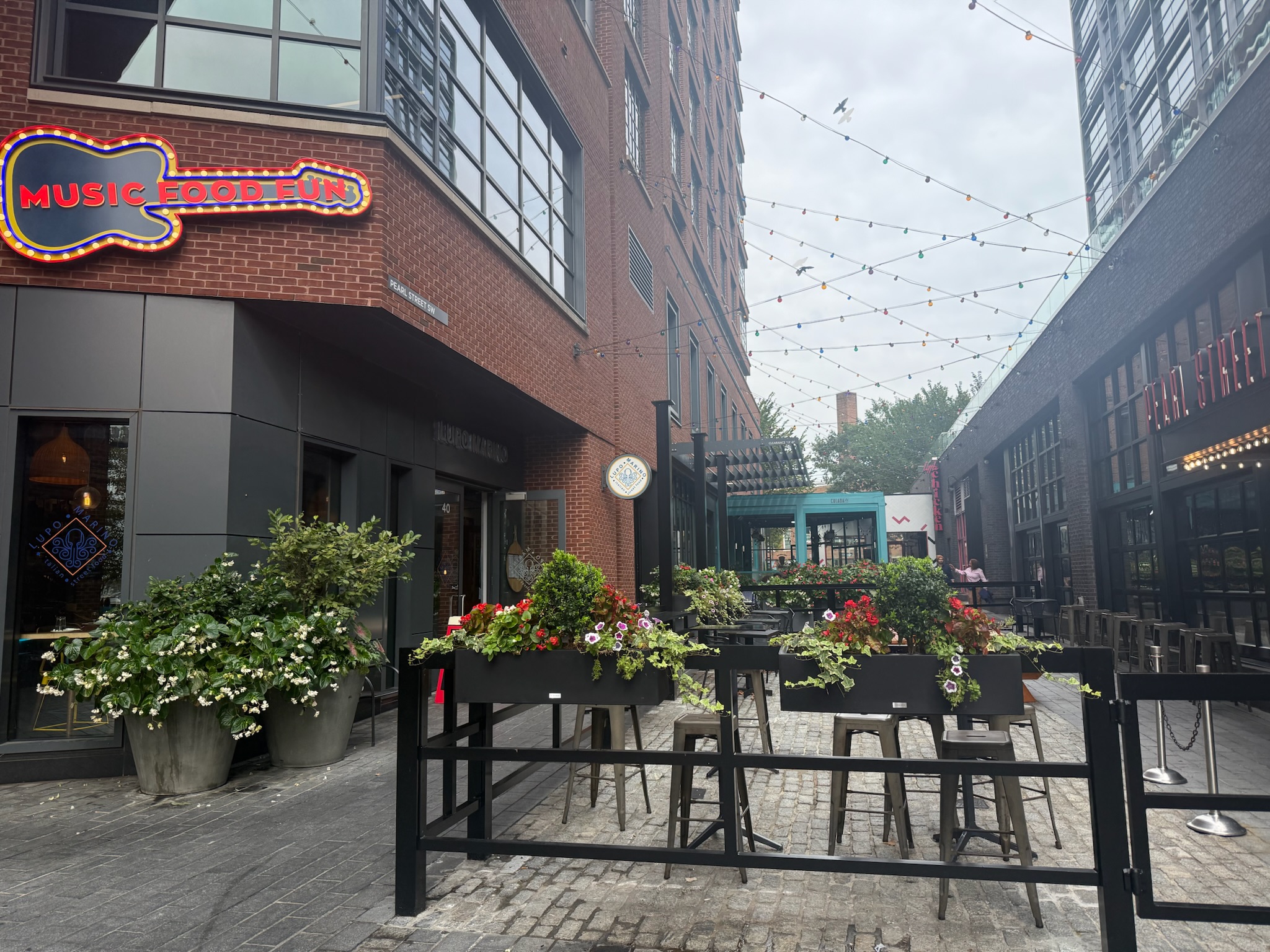
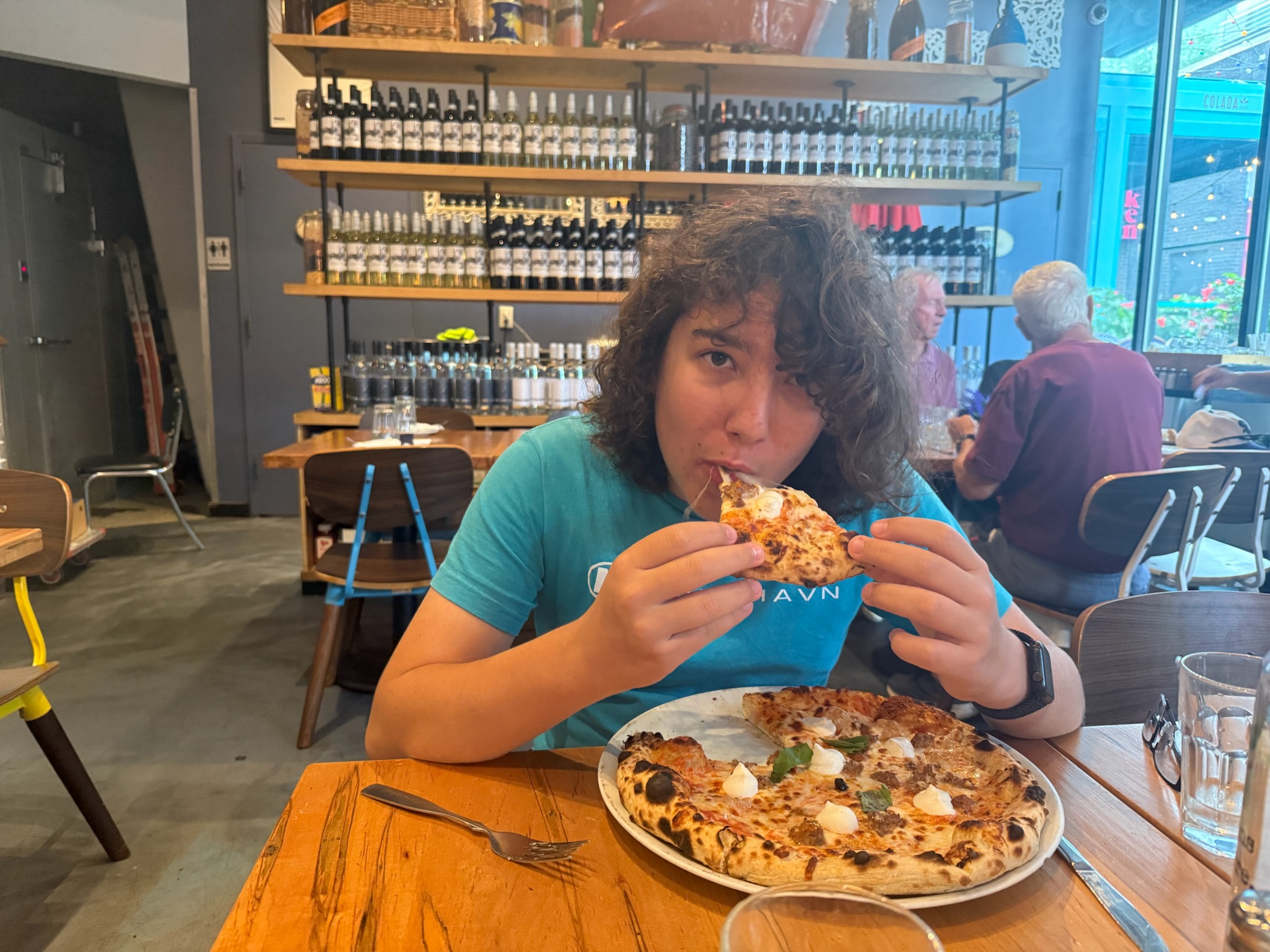
Monday, September 29 — After we finished doing school in the morning, we went to lunch at the pizza restaurant that Eric and Keith had gone to last Tuesday. They’d really liked it and wanted Christi to try it. It was along one of the perpendicular streets that connect the waterfront and Main Avenue SW, but this street was closed on the street side, making it a little cul-de-sac accessible only from the waterfront side.
The restaurant was called Lupo Marino Italian Street Food. The sign was small and discreet, so the restaurant was easy to miss. As promised, the food was great.
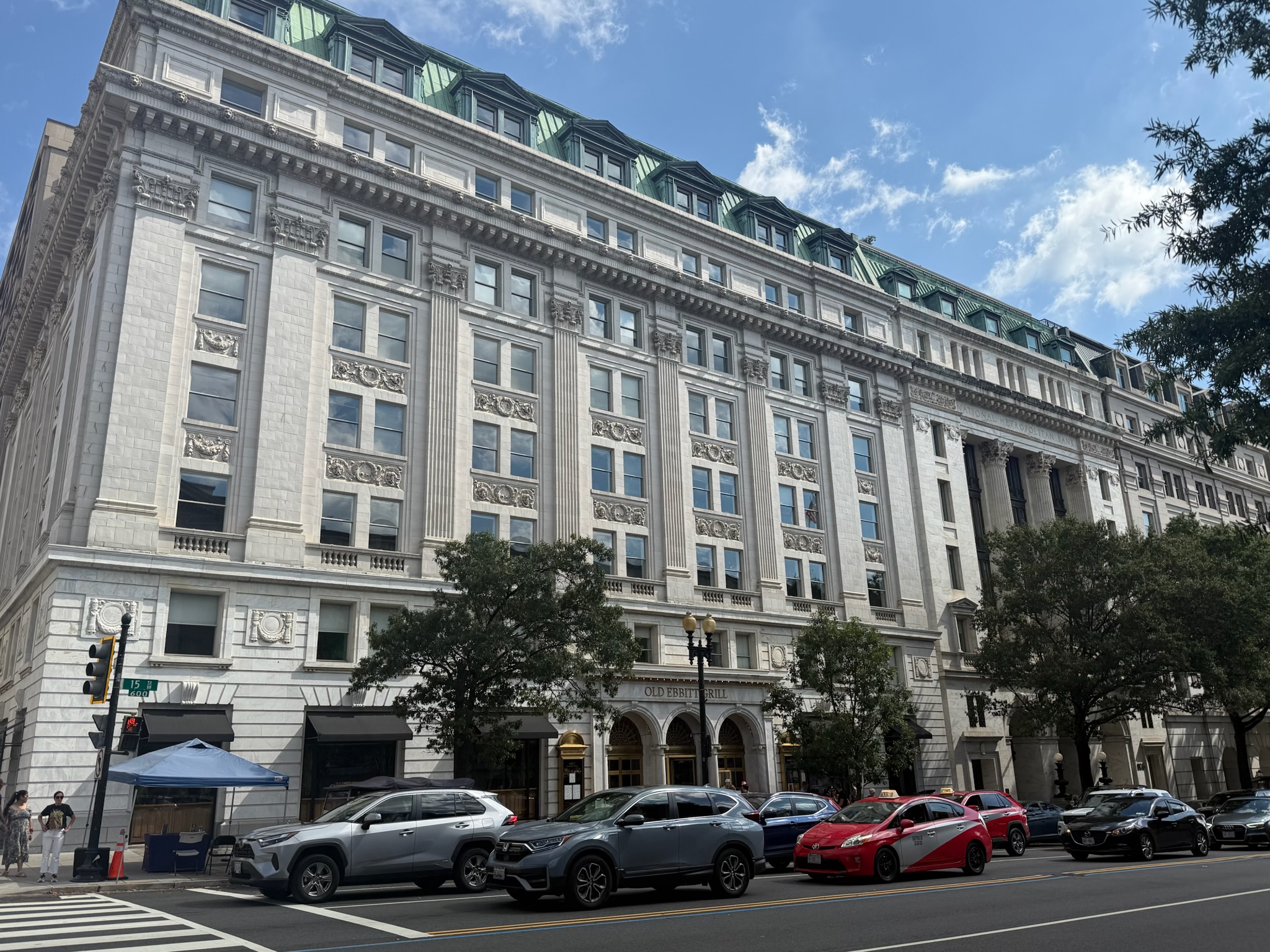
continued… We hailed another ride share to take us to a restaurant called Old Ebbitt Grill, located directly across the street from the US Treasury. Eric was dismayed to see the ride share app showed it would take 20-minutes and cost $28 to take us the two miles. Per the Map app, the bus would take 45-minutes and there was no Metro stop nearby. We debated about walking, but it was 80-degrees and humid, which would make it an uncomfortable walk. And we were hungry… we decided to pay the money.
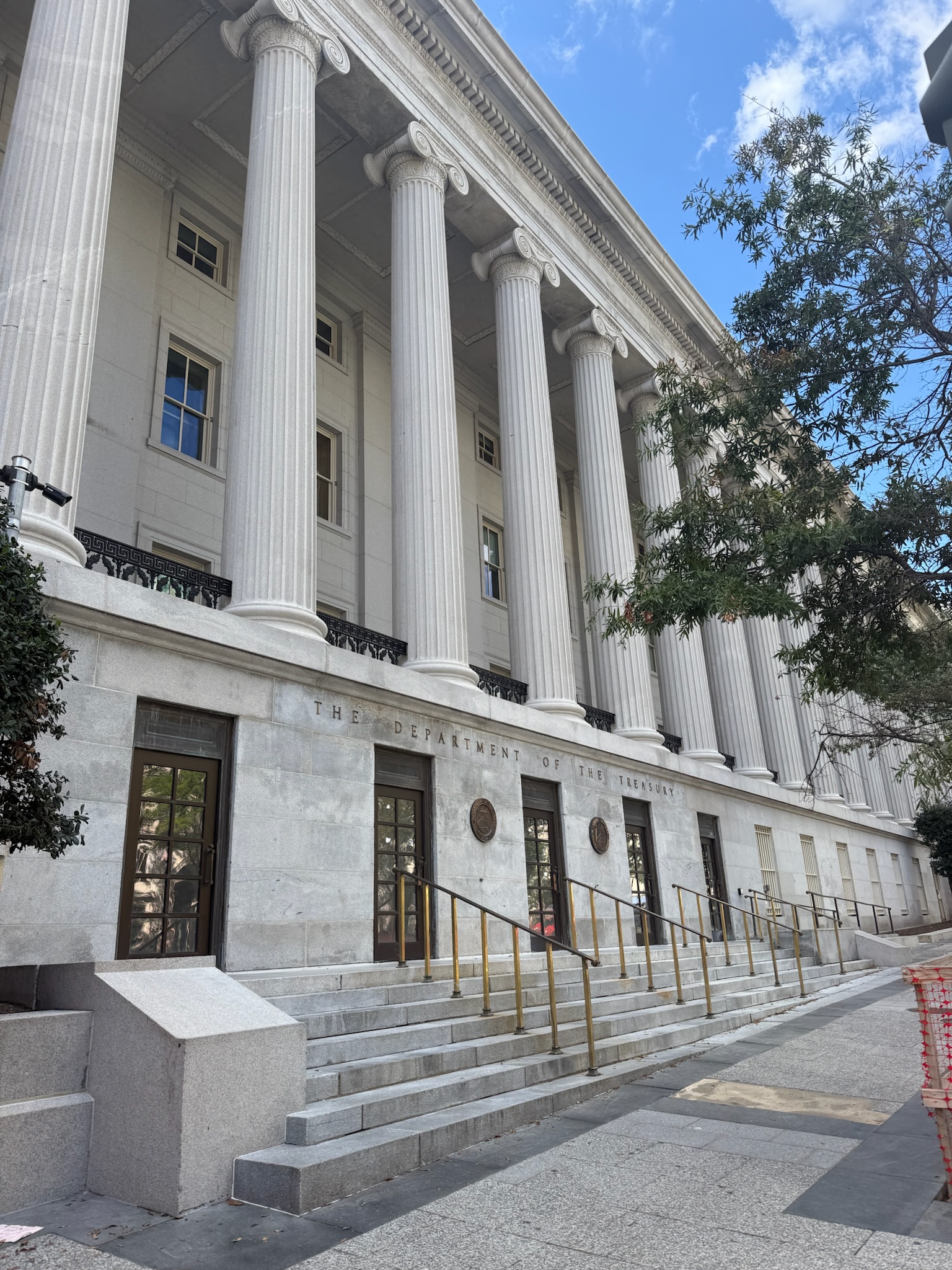
Our ride share driver said that traffic like this was normal on the weekends. The bright side of being stuck in slow moving traffic was that we were able to take in the city. Since there was no place for him to safely pull over near the restaurant, he dropped us off a block away, on the Treasury building side of the street. The Treasury building:
The building that Old Ebbitt was in used to be a theater called B.F. Keith’s. It opened in 1912 and had a six-story-high auditorium with 1,850 red leather seats, walls covered in red silk, and a stage curtain that was ruby red with gold fringe. The lobby walls were marble.It started as a vaudeville theater, and in 1928 started showing motion pictures, too. We’re not sure when the vaudeville acts faded away, but it stayed a movie theater until 1978. Since the building was a national landmark, the exterior was kept intact and the entire inside gutted and renovated.
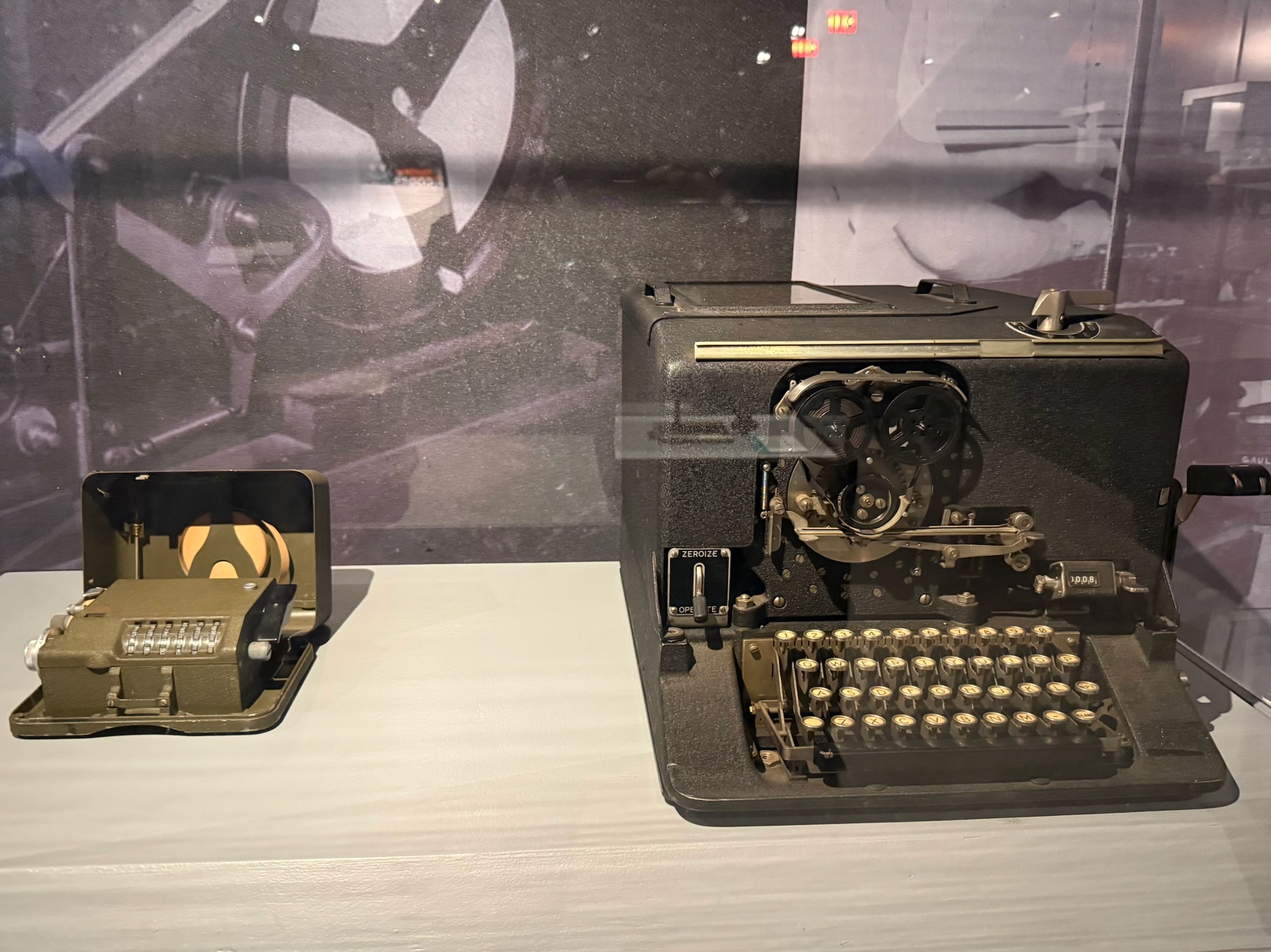
continued... Here were some American machines used in World War II. The little machine on the left was a portable unit. 140,000 were built during WWII. They were also utilized in the Korean and Vietnam Wars, as well. The bigger one to the right was the first production model of an Electric Cipher Machine. The Navy called it CSP-889 (later renamed to ECM Mark II) and the Army called it SIGABA.
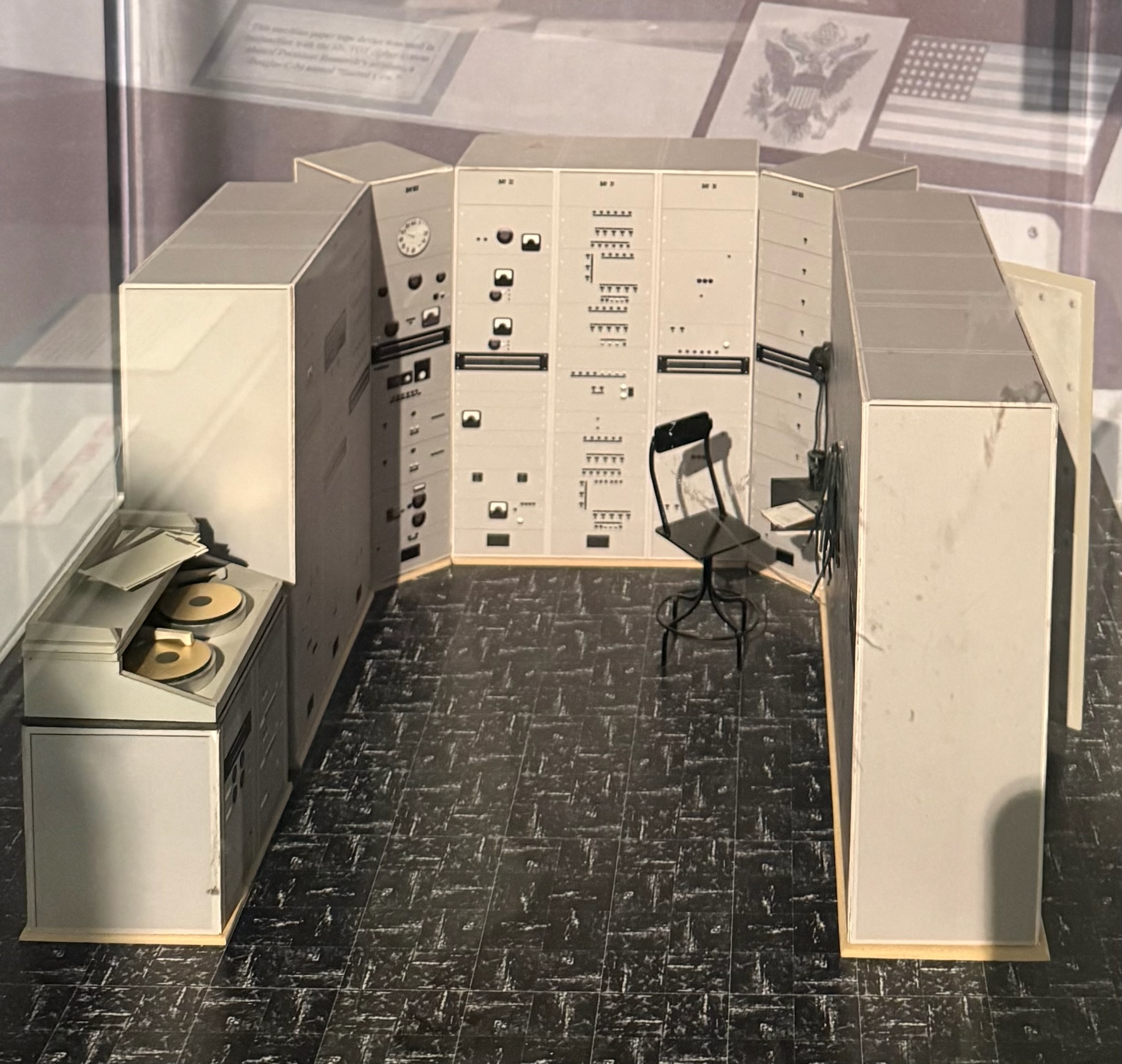
They also could do voice encryption. We believe this was a model of a SIGSALY machine that produced encoded records. There were two turntables that synchronized the sending and receiving ends. When played on a regular record player, they just sounded like random noise. A matching record at the receiving end could unscramble them. They held about 12-minutes of content. They were in service from 1943 to 1946.
Saturday, Sept 27 — First thing this morning, Eric went to move car. His plan was to move the car out of the lot and then park right back in it. However, the lot was closed – cars could only leave, they couldn’t enter. Since it was so early in the morning, he decided to see if he could find street parking along The Wharf. He found a spot, but the tire popped when he bumped into the curb while parallel parking. Then he noticed the sign said 10-minute parking. Argh!
He changed the tire with the donut in the trunk, then went to the car rental agency at the airport to exchange cars. The staff in the office told him they couldn’t help him until after he called into the customer service line. He was very frustrated about being on hold for 7-minutes while the staff at the counter were twiddling their thumbs. Fortunately, the agency exchanged the car with no issues, though they did charge $100 for the tire. And he’d forgotten to fill the tank up before returning the car, and we are still waiting to find out what they’re going to charge us for the gas.
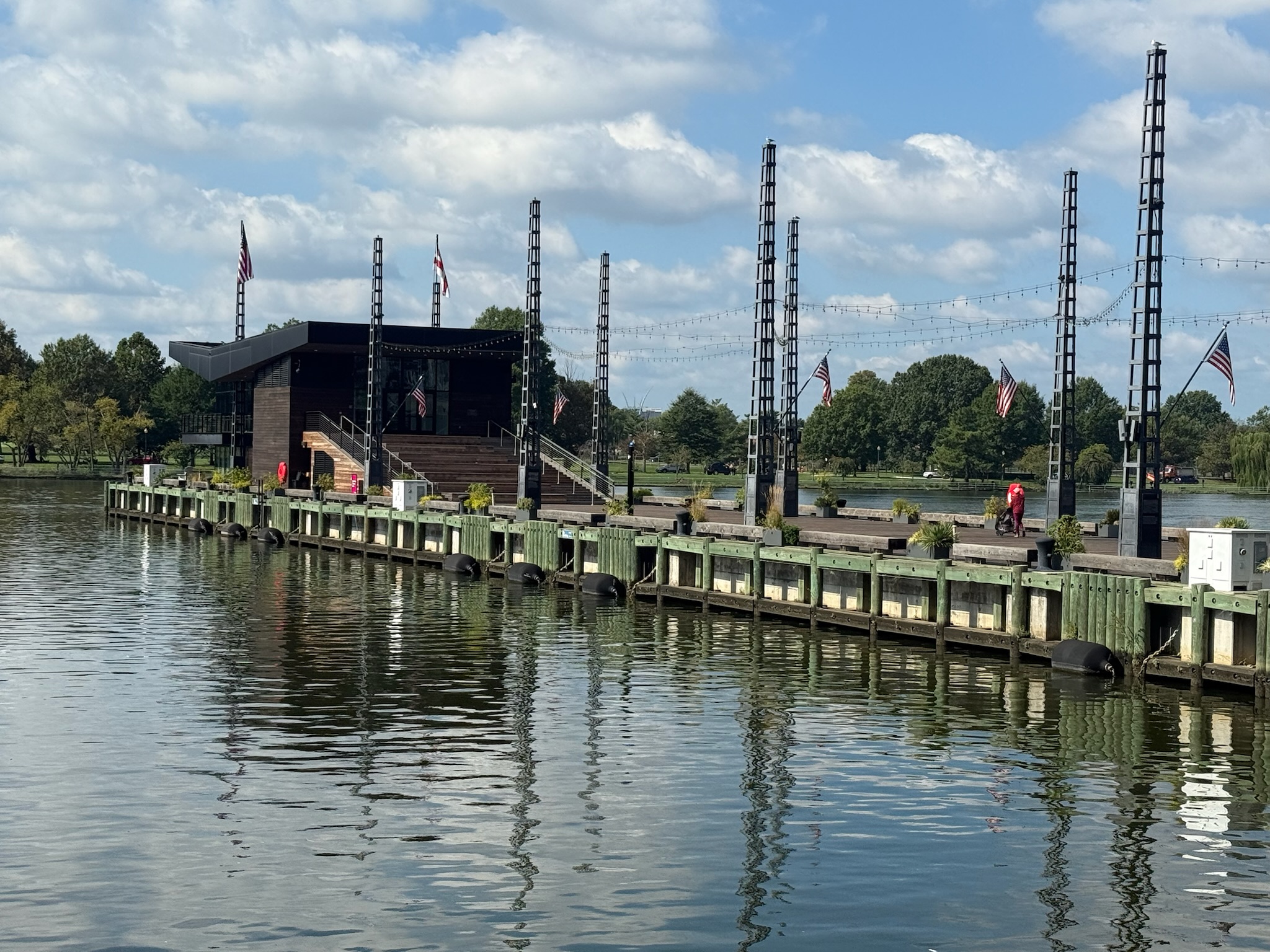
Meanwhile, on The Wharf, there was a big event. Christi and Keith watched a giant crowd of people congregate on the pier to the west of the marina, with loud music playing. The music stopped and the whole crowd moved to the boardwalk and started walking east. They thought it may have been a fundraiser walk, but weren’t sure. Here was a photo of the pier after the crowd cleared out.
Once Eric had the replacement car, he headed back to The Wharf. He drove around for a solid half-hour and couldn’t find a parking spot anywhere. Much to his frustration, many of the lots and garages were closed on the weekends. He gave up and finally parked at the outrageously expensive Wharf parking garage. We tried to hurry, but since we hadn’t realized there would be a rush to leave, none of us had really gotten going on the day yet. By the time each of us showered, ate breakfast and got everything ready to go out for the day, almost two hours had passed. The parking fee was $24.00.
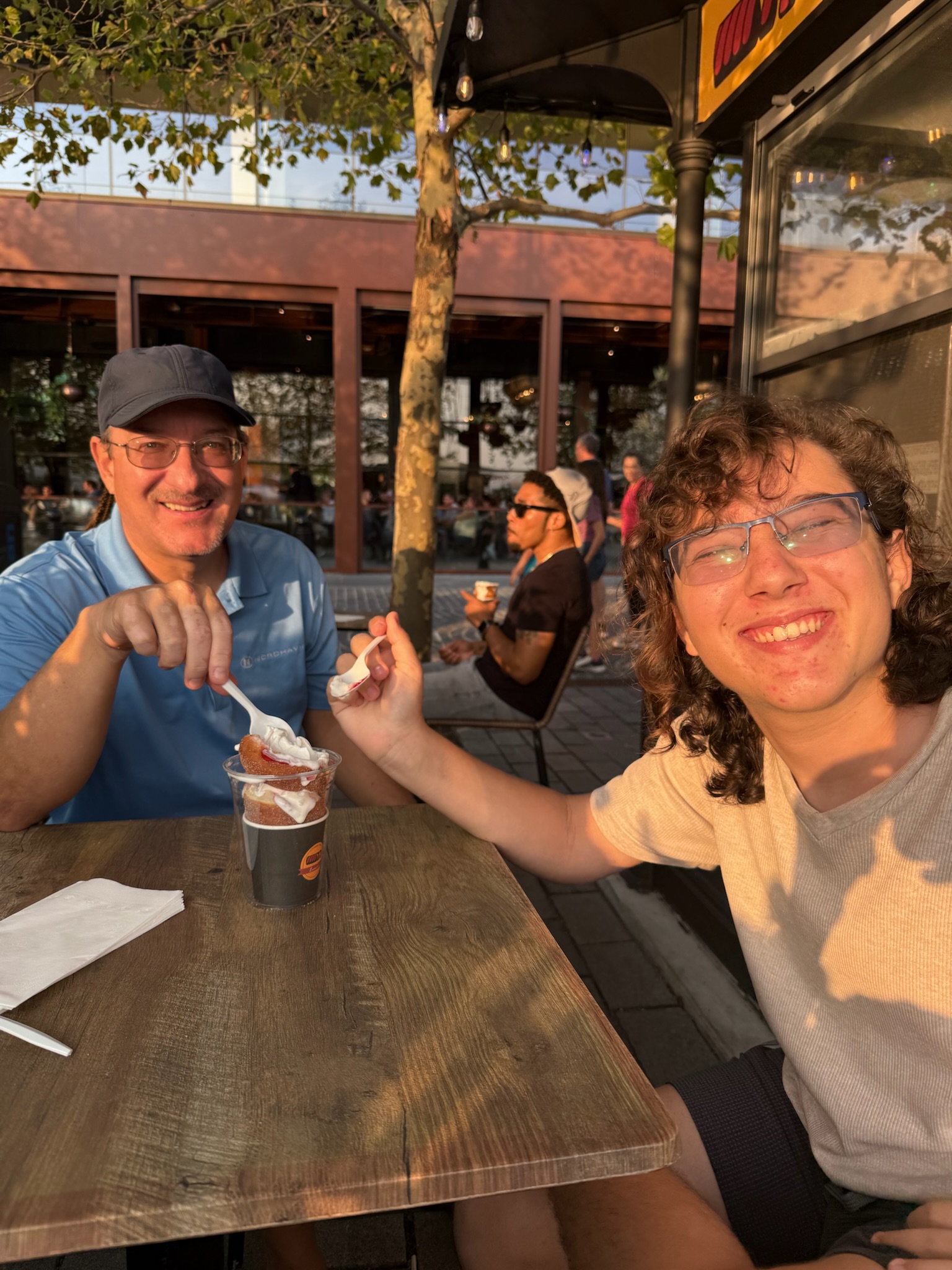
This week has been… well, painful is the wrong word. Maybe… interesting would be the right word, I guess? On Saturday, we arrived in Washington DC. All we did was rest for the whole day except for going out to dinner. We went to a really good Mexican fusion restaurant, then we had these things called “Chimney Cakes” for dessert.
Cette semaine était… douloureuse mais c’est pas le bon mot. Peut être… intéressante c’est le bon mot. Samedi nous sommes arrivés à Washington DC. On s’est reposé pour toute la journée sauf quand on est sorti pour manger le dîner. Nous avons mangé à un restaurant de fusion Mexican, puis nous avons mangé des choses qui s’appellent des “Chimney Cakes” pour le dessert.