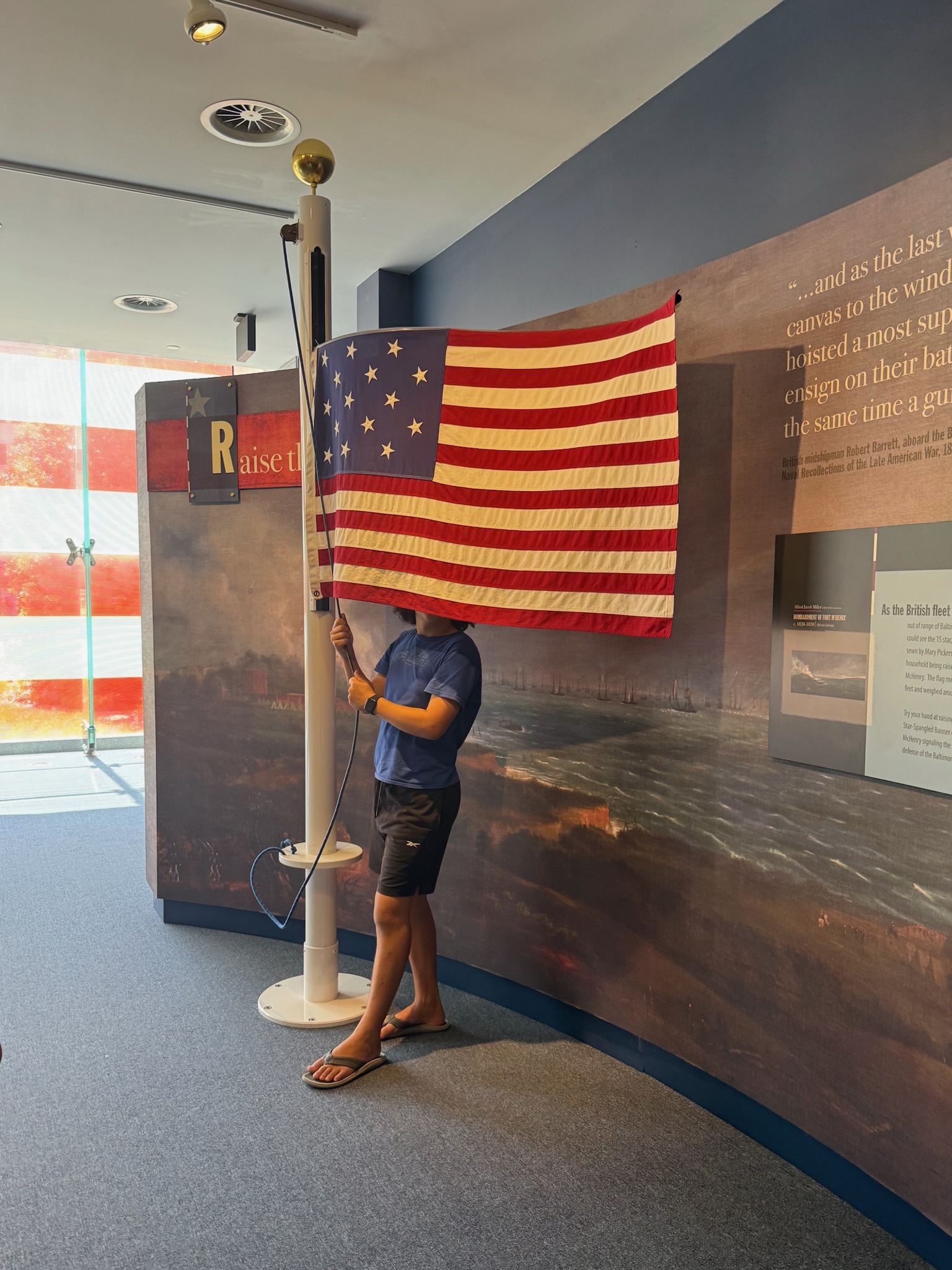
This week has been fun. On Saturday, we went to a tower where they made musket balls during the war with our friends from the Bahamas, Parabola, but it was closed. Instead we went to museum about the American flag. After the museum, we went to lunch at a really weird, but good brunch restaurant. After lunch, they came back to the boat and we played board games.
Cette semaine était amusante. Samedi nous sommes allés voir une tour où il créaient des balles de mousquet pendant le guerre avec nos amis des Bahamas, Parabola, mais c’était fermé. À la place nous sommes allés à un musée sur le drapeau Américain. Après le musée nous avons mangé à un, très étrange, mais très bon restaurant. Après le déjeuner, nous sommes retournés au bateau et avons joué à des jeux.
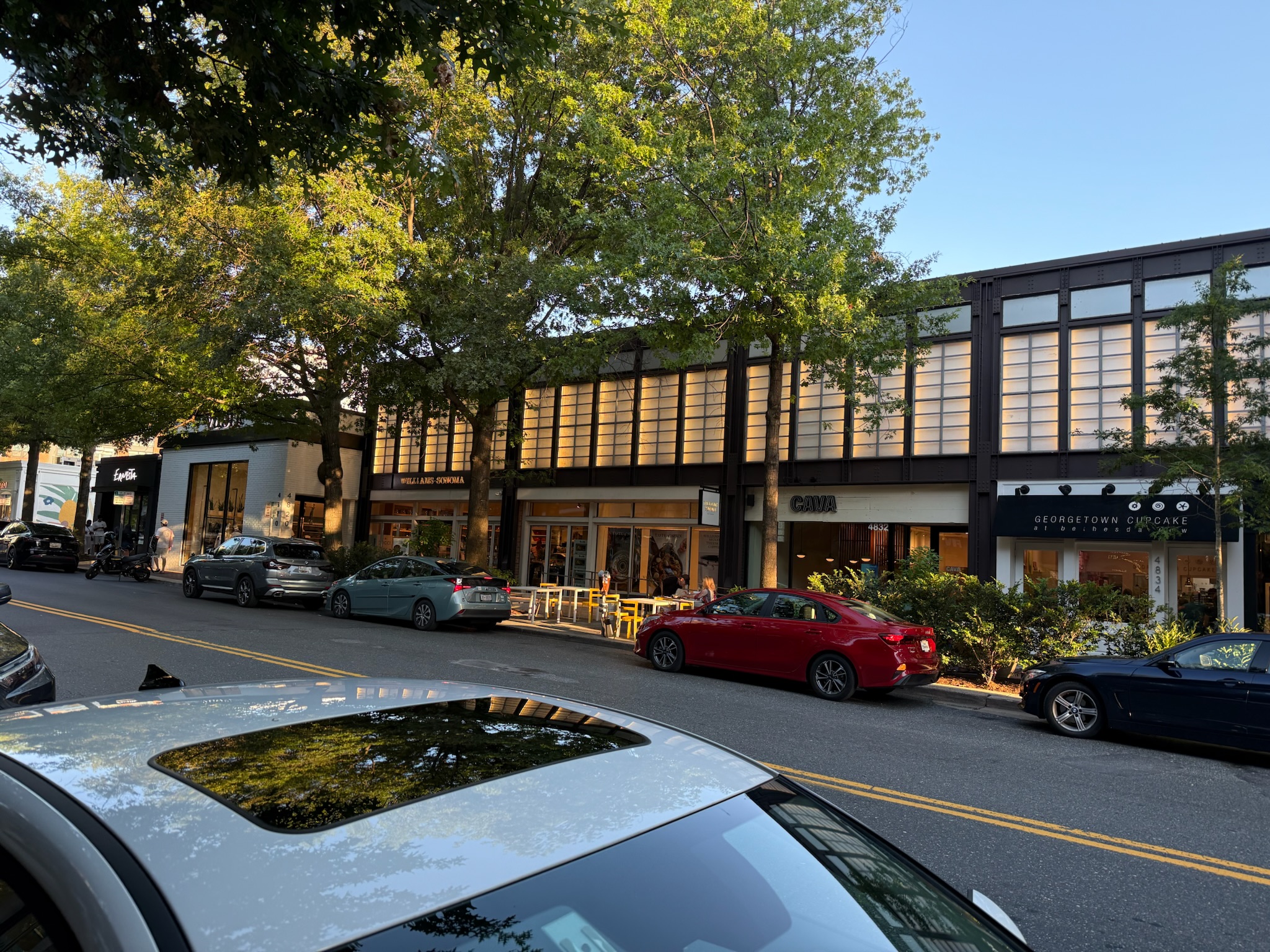
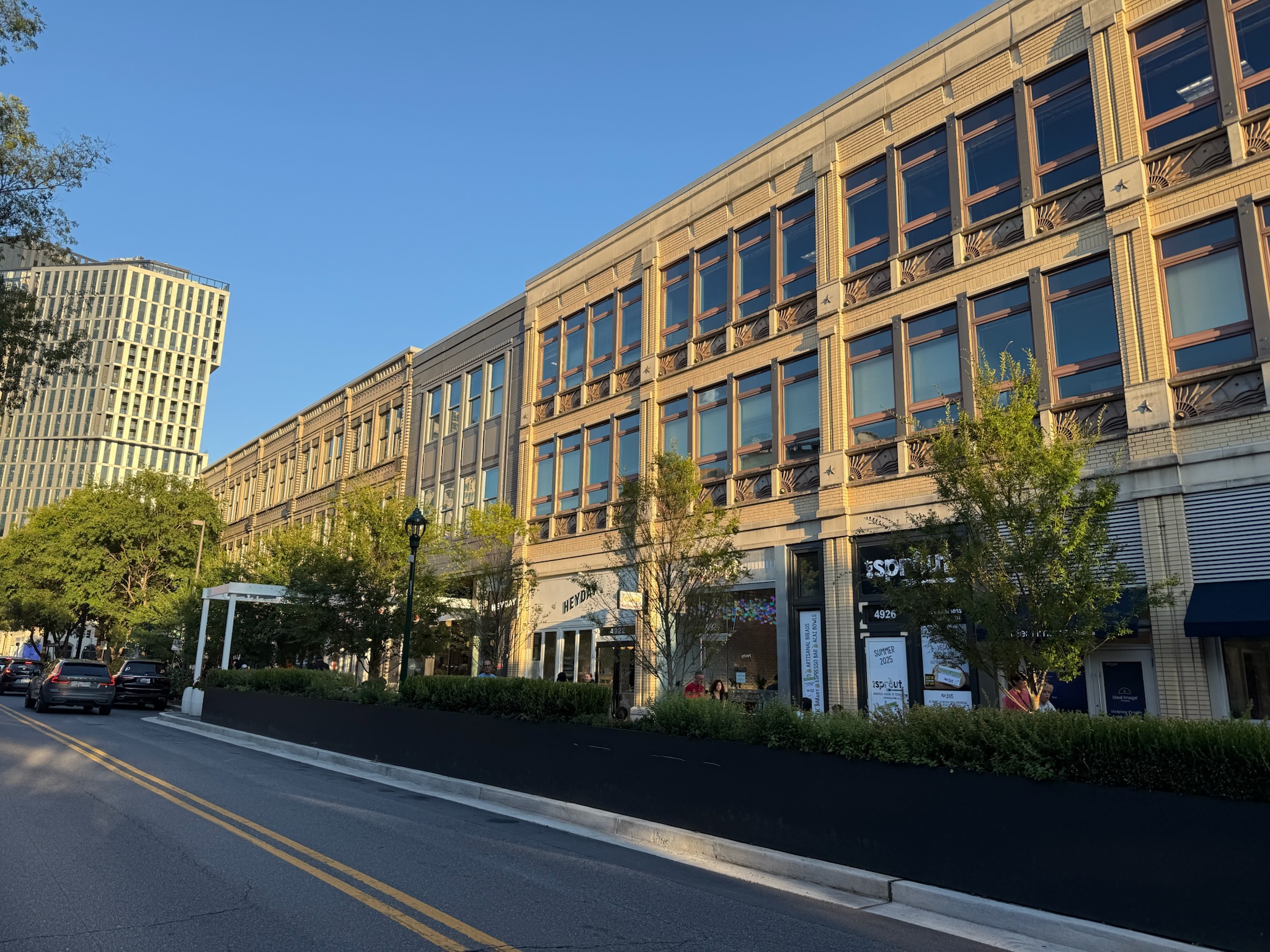
Friday, August 22 continued… Since it was rush hour, we decided to avoid highway traffic and take the scenic route back to Baltimore. The areas we drove through were high-end and beautiful. When we mentioned stopping for dinner, we were not far from downtown Bethesda, Maryland (a suburb of Washington, DC), so we decided to go there for dinner. It seemed like a good idea because the map showed a large concentration of restaurants. But when we arrived, we realized it was “the” place to be on a Friday night and was packed.
We did a lot of driving around before we found a parking spot. We didn’t write down how much the parking was, but if we recall correctly, it was about $2.50 an hour and was limited to one hour. Given the time constraints, we started jogging up and down the streets to find a place where we could get a fast meal that wasn’t fast food. We did see a parking garage and considered moving the car so we had more time for dinner, but we decided that, since it was getting late, it was probably best to just get a quick meal.
We settled on a place called Luke’s Lobster that was inside an interesting mixed use complex. We suspected that they took two blocks of old buildings, joined them, and turned what used to be the street between them into a pedestrian mall.
Friday, August 22 — As predicted, the hurricane passed on Wednesday night/Thursday early morning with little effect on Baltimore. Conditions were more severe in Norfolk, so we were glad we’d moved. Yesterday was another cool day, with 10-knots of sustained wind with occasional gusts in high teens, no rain, and temperatures in the 60s.
Yesterday morning, the alternator belt that Eric had ordered arrived, and he installed it right away. The one he’d ordered was 1/2″ less in diameter than the belts he’d been using, and he was pleased to see that it was a perfect fit! There was just enough room left for adjustment. He also ran main engine and cleaned one of the sea strainers. Surprisingly, it was clean. We were worried they’d be muddy and full of creatures like they’d been in Little Creek.
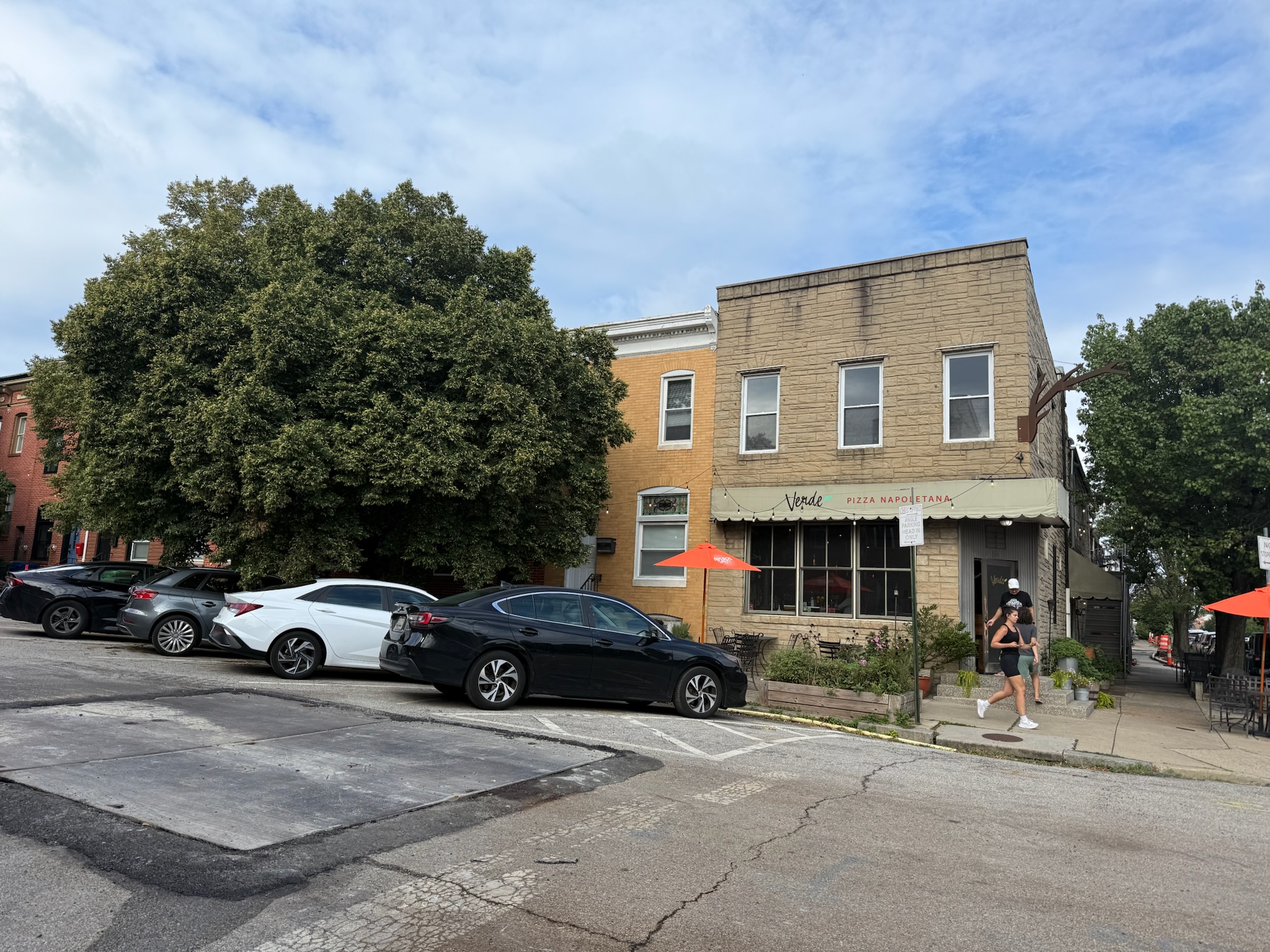
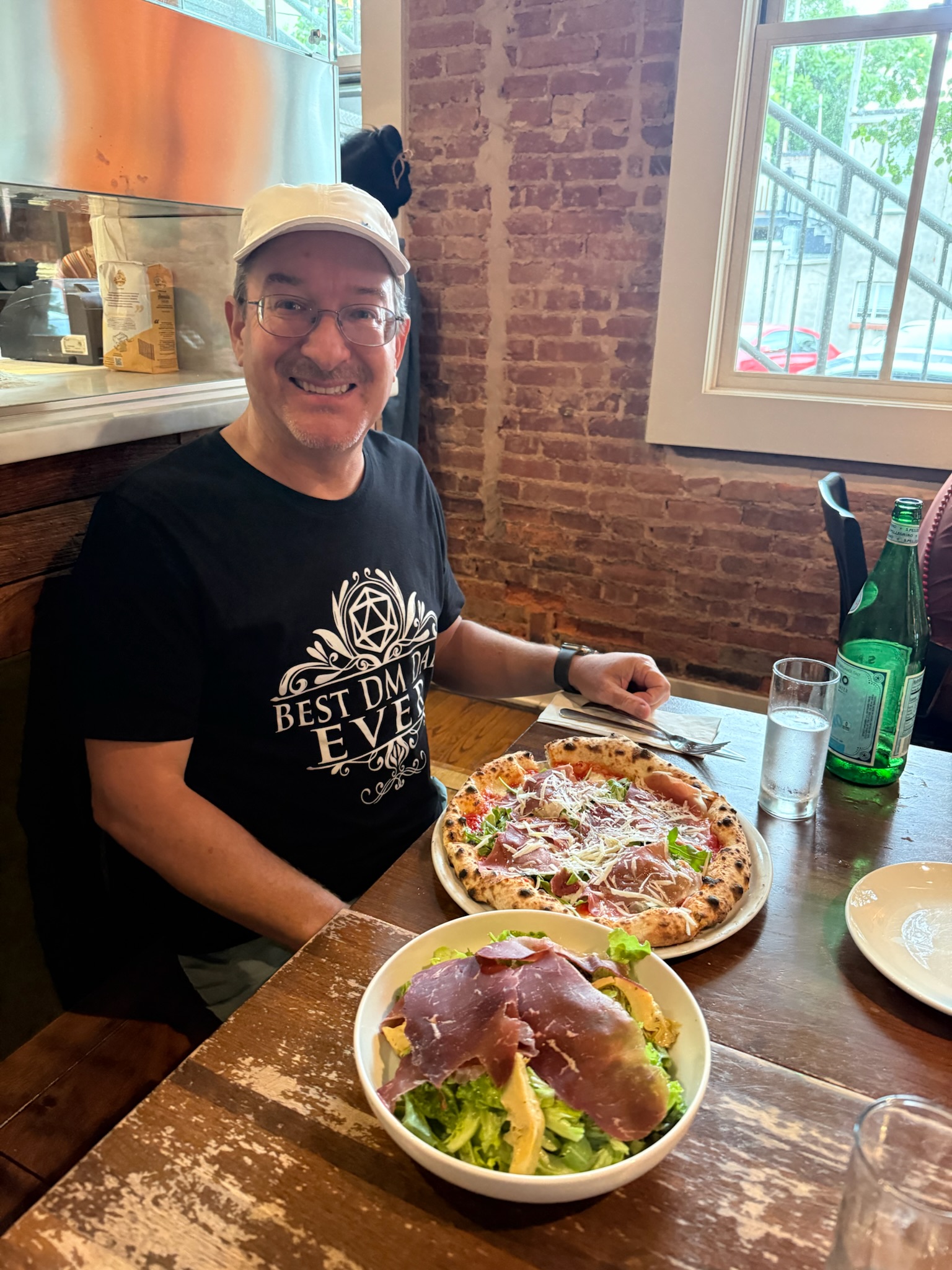
In the early afternoon, we went to Sprouts, which we knew had some particular items we wanted to stock up on, and then to Target for a more general stock up. In the evening, we had dinner an Italian restaurant in the neighborhood called Verde. They had Napolese style pizza, which was our preferred type of pizza. The cheese was made in house, and it was amazing.
This morning, we walked up to a foul odor. There were thousands of small dead fish floating in the bay!
Wednesday, August 20, 2025 — The hurricane was still south of us and was supposed to pass our latitude in the wee hours of the morning. There was also a cold front from the north, which was keeping the hurricane offshore. The two conflicting weather events meant that today’s forecast was drizzle all day, with an all-day chance of occasional short, stronger showers passing through.
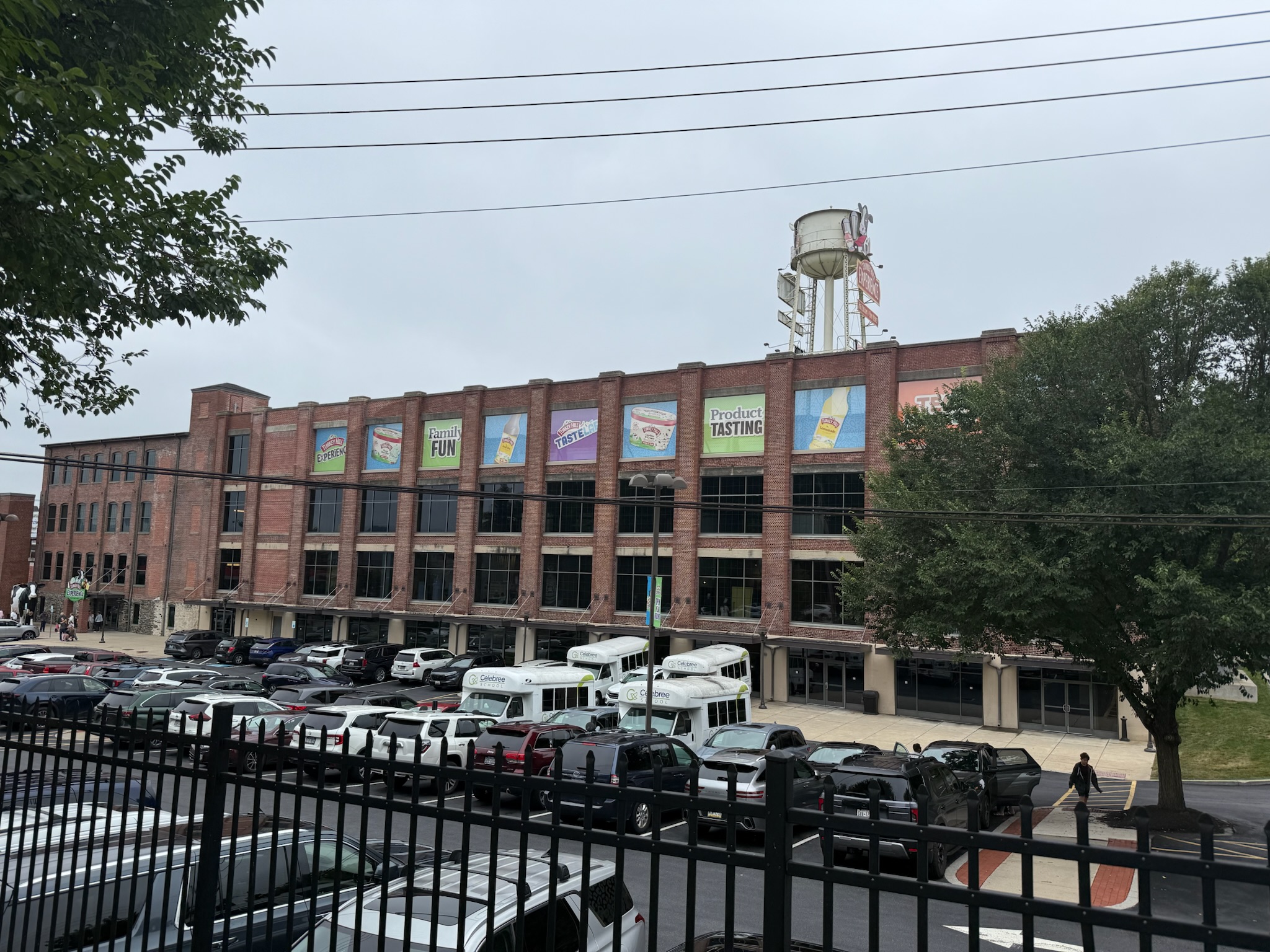
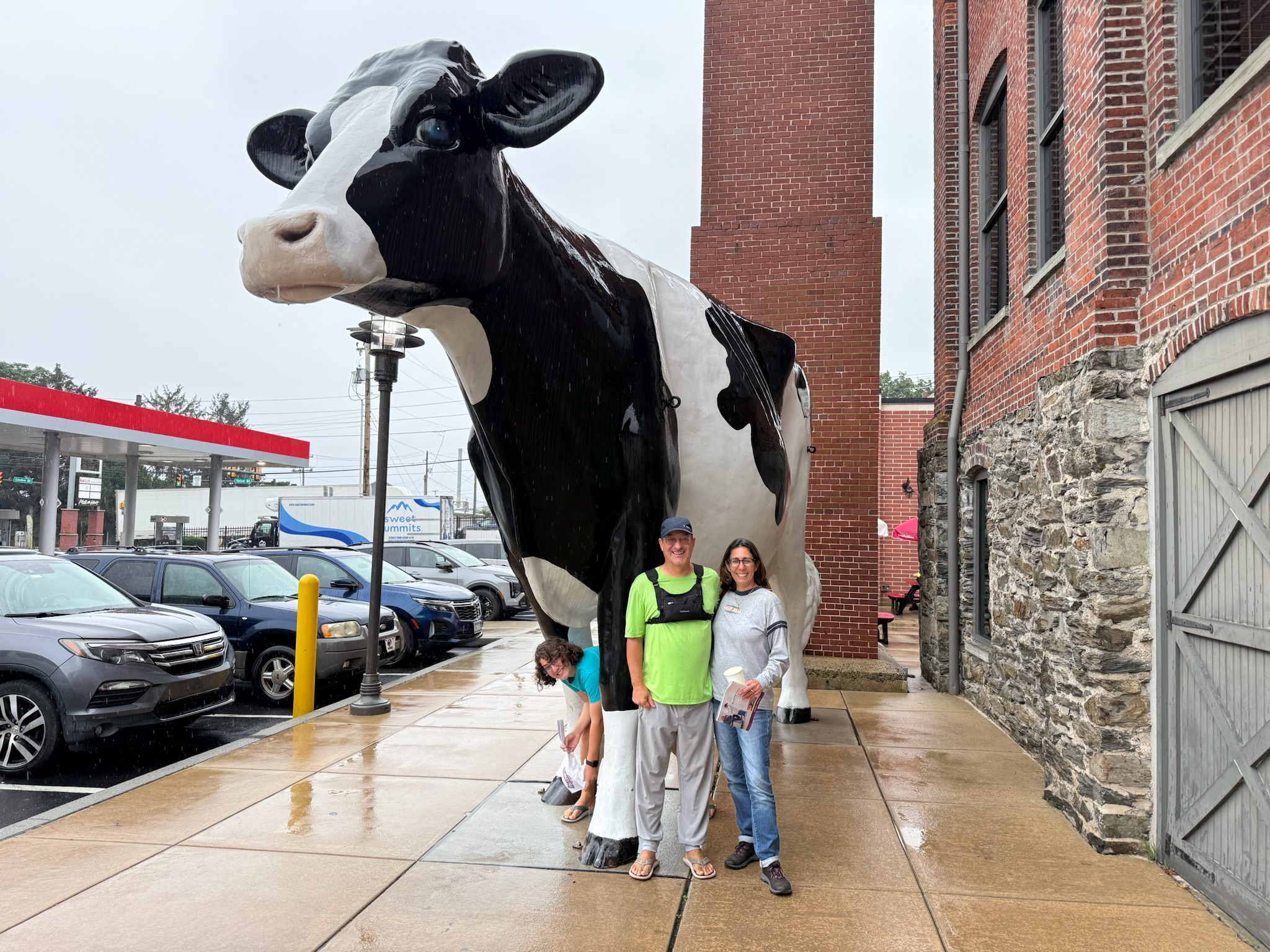
When we’d looked up “fun indoor activities to do with kids,” we found something in Columbia, Pennsylvania called “The Turkey Hill Experience.” It sounded like maybe it was a tour of an ice cream factory. Tickets were $14.45 per adult, and included unlimited ice cream tasting. Since a large ice cream at an ice cream store nowadays was $10, we figured we’d easily get our money’s worth.
The drive up to Columbia took about an hour. The scenery was lush and green. It was probably a gorgeous drive on a sunny day. We arrived a little before noon.
The building the museum was in was built in 1889 and was a silk mill until 1988.
We were surprised to find it wasn’t a factory tour at all — the factory was actually a few miles away. It was a children’s museum focused on all the various aspects involved in ice cream making. The exhibits were educational, but more importantly, they were interactive and fun. Given that it was a rainy day, it was no surprise that the museum was packed with families with small children and a couple of day camp groups. Several of the day camp kids had blue rings around their mouths, so we knew one of the ice cream flavors was blue! We felt sorry for the day camp counselors having to deal with kids super hyped up on sugar!
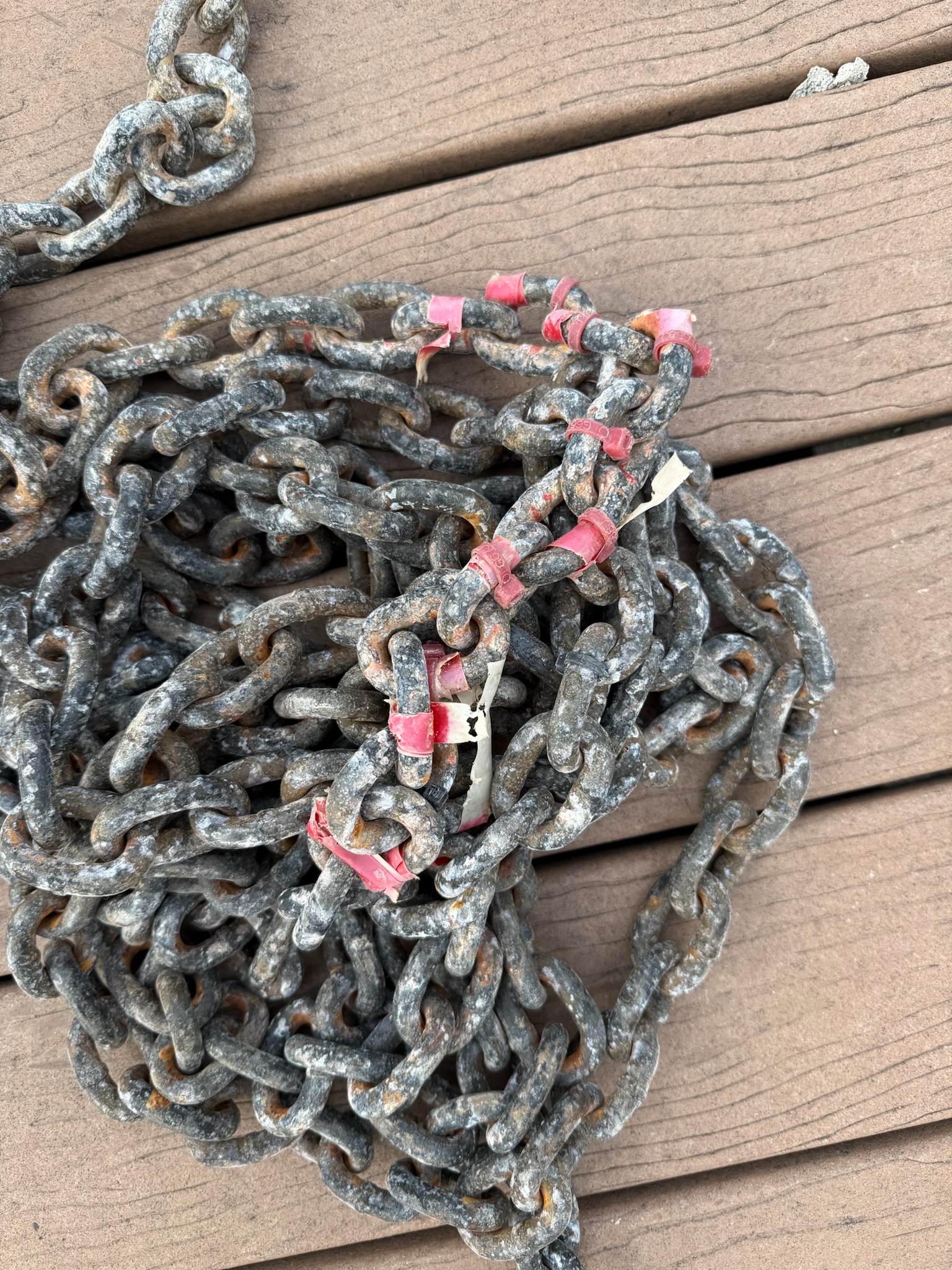
Monday, August 18 — Today there was no rain in forecast, but it was ominous outside. It was 73-degrees Fahrenheit, a strong, cool wind and very grey skies. Eric decided it was a good day to redo the chain markers. Over the years, we’ve tried an assortment of ways to try to mark the chain at every 50-feet so that we knew exactly how much chain was out. We started with paint, which flaked off quickly. We tried plastic inserts next, but they popped out pretty fast. We then tried colored zip ties and colored tapes, but they tended to break and fall off after a while.
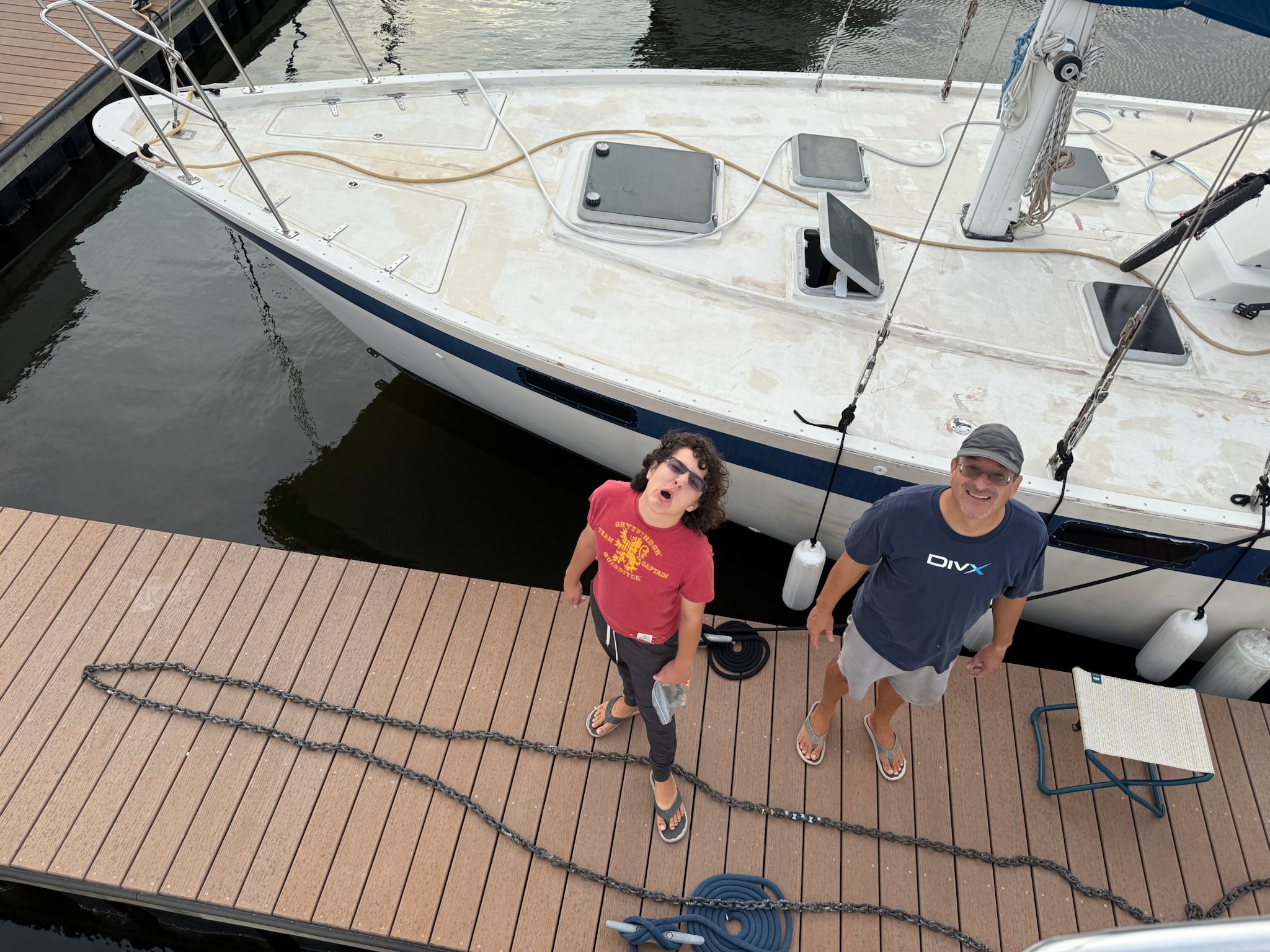
A while ago, Eric had found some plastic inserts that screwed in, and he was hopeful that the screw would mean they would stay in place and not pop out. We hadn’t put them in yet because we needed the right kind of dock – one with a pole at the end that could handle the weight and one long enough to stretch the chain all the way out. This was the spot. We carefully lowered the anchor and placed it on the dock. Then we let out all the chain, winding it up and down the length of the finger.