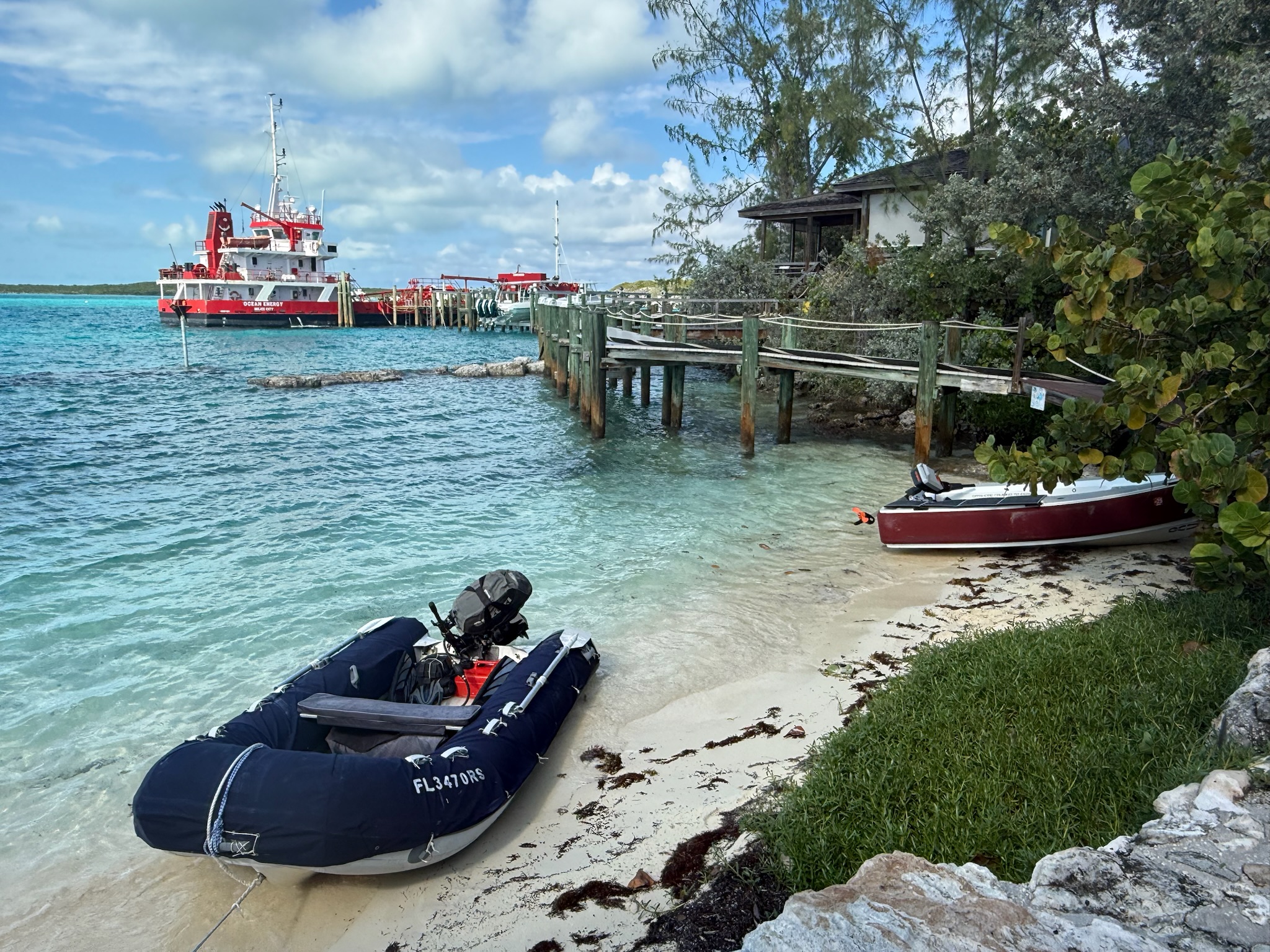
Ocean View Beach, Norfolk, Virginia

Saturday, August 2, 2025 — we had a quiet morning onboard. For lunch, we went to a Japanese restaurant called Fuji Hana Sushi, which was attached to the Magnuson Hotel. It was good value for the money and was run by a nice Japanese family.

Even though we were a short walk from Ocean View beach, we hadn’t gone yet. We’d heard that the beach was popular with families with young children as the waves were usually small. First of all, it was in the bay, so the waves coming in from the ocean weren’t usually as big as the waves on the Virginia Beach oceanfront. And there were breakers, which kept the waves from hitting the shore.

Since we were carrying gear, we drove over to one of the marinas on the north side of Little Creek, where we met up with the family on a boat named Blue Heeler that we’d met at the Latino Music Festival. From their marina, we made the short walk north to the beach.

The marina was behind an assisted living facility
Continue reading

The American Revolution Museum at Yorktown in Williamsburg, Virginia – Part 5: Canons! And Dinner in Historic Yorktown

Continued… After we finished at the museum, we went back to the military area for the cannon firing demonstration. The Americans had multiple types and sizes of cannons. The first line of defense was the big canons. The French army had brought heavy siege cannons that fired 16 – 24 lb shot, which did serious damage to the base, but they couldn’t be easily moved. The Americans also had field canons, which were mobile, shot straight and were meant for disrupting lines (columns) of soldiers. The Americans also had 8″ howitzers. The howitzers were also smaller and could be moved around the battlefield where needed. They would shoot up over walls and could hit people behind walls. And they had mortars. The British only had light artillery that fired 3 – 6 lb shot, so the Americans had superior weapons in this battle.

Just as the bayonet on the end of the musket was more important to the troops as a psychological fear tactic than as a weapon, cannons were also more of a psychological fear tactic than a physical danger to the opposing soldiers.

The character talked about the various types of ammunition that was used. Classic cannonballs had explosives inside them, hard shells were solid, and grape shot blew up in the air and sent shrapnel everywhere. mortars,

Just as the bayonet on the end of the musket was more important to the troops as a psychological fear tactic than as a weapon, cannons were also more of a psychological fear tactic than a physical danger to the opposing soldiers.

When they did the field demonstration, they went through each step of the process of loading and shooting the canon very slowly, and they had kids from the audience doing the various steps (although they had the kids use imaginary gunpowder and fire). There were quite a few steps involved! Someone’s job was to do the math on the angles and distance to ensure that the targets were hit. One of the things we found interesting was that they had two soldiers standing still next to the canon mouth when it was fired. It was completely safe to be there since the canon jerked backwards. The reason they did this was so that the other soldiers could put the cannon back at the same exact spot for the next shot (or, if they had missed, to ensure that this time it would be put in a better spot to not miss the next time). She mentioned that the soldiers stationed next to the cannons probably lost their hearing very quickly. Then they had the kids back away and showed what it looked like in real time to load and shoot the canon. It was definitely loud and smoky!

At this point, we’d seen the entire site, so we went to the Historic Yorktown Riverfront (where the ships were clustered together in the middle of the map), for dinner. It was a small cluster of adorable buildings about a mile east of the museum. We were pleased to see there was free parking in a parking garage on the south side of the street.

Continue reading

Celebrating Independence Day at Historic Fort Monroe — Part 2

Continued… When the tour concluded, Eric and Keith announced they were hungry. They went to a nearby restaurant called The Deadrise, which was over at the marina.

The food was good and the portions were huge. Keith, who was not a seafood fan, loved the crab dip (even though it wasn’t as good as Haste Away’s).

It looked like the section of the marina closest to the restaurant was closed, as there weren’t any boats in the slips. We were too far away to get a look at the part of the marina that was occupied. There was an anchorage beyond the marina that was deep enough for Kosmos. Given that it was a holiday weekend, we were surprised there weren’t more boats anchored out there.

Christi stayed at the Visitor’s Center and went on the 1500 tour. It began much the same as the 1400 tour had. But instead of stopping at the entrance casement, the group walked on to the four-acre parade ground.

Continue reading

Welcome to Norfolk, Virginia, USA

Friday June 27 — As we’d learned the hard way, we needed to leave at a higher tide or else we’d be grounded. We untied at 0550. The day was grey and overcast, and the sun was not visible behind the cloud cover. At first, the sea conditions were surprisingly uncomfortable, with sea spray regularly coming over the bow. It calmed down within an hour or so, though.

For the majority of the trip, we had 2-foot swells and 3-foot wind chop and light wind. There was a fair amount of traffic, and all kinds of boats, including sailboats, trawlers, tiny fishing boats, etc. There were several small craft that AIS identified as “MC experimental” that appeared to be military vessels doing circles. There was a small ship that particularly caught our attention. AIS identified as “High Speed Vessel” that looked like a small research vessel. Later, we found out it was a service vessel for a near-by off-shore wind farm.

Crossing the shipping lane was a little scary. At different points in time, we were on a collision course with 2 different vessels, so we needed to alter course each time to avoid them.

It was hot and humid outside, so Eric ran the generator and the salon and downstairs A/C units the entire 7.5-hour trip.

Continue reading

More Exploring Deltaville, Virginia, USA

Dawn on Wednesday

On the passage, Eric had noticed an issue with the newly fixed radio: it was working fine, but it was complaining about low voltage. He spent Wednesday morning on the phone with the company who’d done the repair to troubleshoot the problem. Eric eventually figured out that there was a knob to adjust voltage on the power supply unit (which was behind the panel), and that knob was in a spot where it could have been easily bumped when the converter box was installed. In the course of the troubleshooting, the “expert” gave Eric some incorrect information, which really bothered Eric.

In between phone calls, Eric changed the generator oil and filter, drained the engine oil, and replaced the O ring in the oil drain hose for the main engine. We also went to the boat yard next door to say goodbye to the family that had been hauled out yesterday. They were a really nice family and we hope to see them again when they return.

Continue reading