During our circumnavigation, Christi used to write histories for all the countries we visited. Given that legacy, we felt it was appropriate to publish Keith’s school assignment on Henry Morgan, as Morgan altered the course of history for both Panama and Jamaica.
Sir Henry Morgan was a Welsh privateer who fought for the English against the Spanish during the 1660s and 1670s. He is remembered as one of the greatest privateers in the world, along with being one of the worst enemies to the Spanish since Sir Francis Drake.
Nobody knows Morgan’s exact date of birth, but people theorize that he was born around 1635 in Monmouth County, Wales. He had two uncles who were both prominent in the English military. Morgan decided early in his life to follow his uncles’ footsteps. He served under General Venables and Admiral Penn in 1654 when they took Jamaica from the Spanish.
After leaving the official military, Morgan took on the life of a privateer, who were mercenaries who were allowed to attack an/or raid enemies in exchange for the majority of the loot they took. Morgan was one of many privateers who had a “license” to raid the Spanish, given that England and Spain were at war.
Morgan was a fearless leader and a clever tactician. He became the leader of the Brethren of the Coast, a group of privateers.
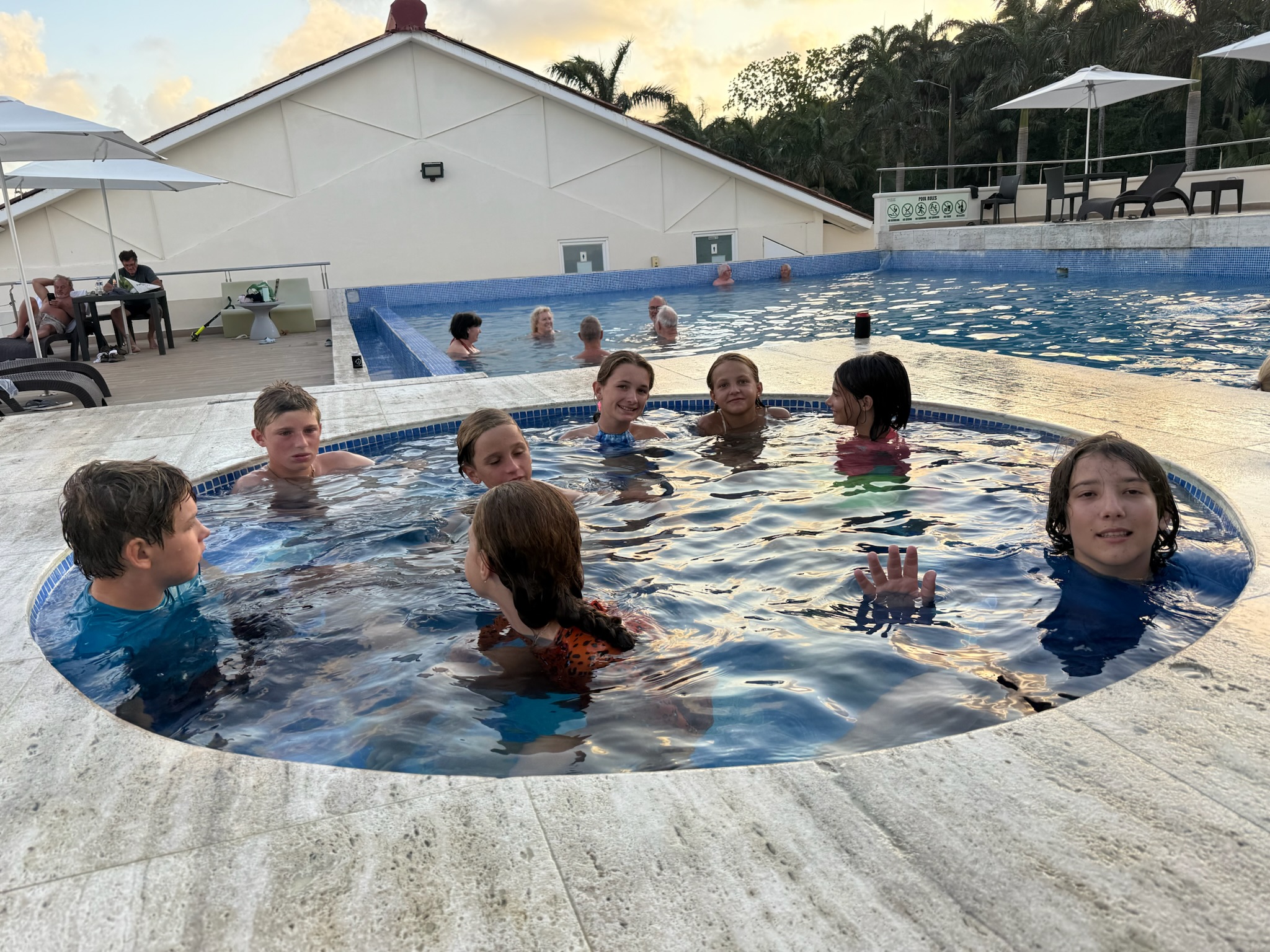
This week hasn’t been super eventful. On Saturday, we did D&D, then me and my friends went to the pool. On Sunday, we did D&D, then my friends did archery i n the jungle, but I was tired so I didn’t go.
Nous n’avons pas fait beaucoup de choses cette semaine. Samedi on a joué à Donjons et Dragons, et après ça mes amis et moi on est allé à la piscine. Dimanche on a joué à donjons et dragons, et mes amis on fait du tir à l’arc dans la jungle, mais j’en ai pas fait parce que j’étais fatigué.
Tuesday, February 25, continued… After bypassing the battery protect device, and having Zeus set to 60% max load (~100 amps at cruising RPM), it was time to do some testing. First, Eric ensured switching to emergency power would work. He turned off the house bank via the BMS (simulating what had happened earlier), and then initiated emergency power by paralleling in another battery bank. It worked. Then Eric simulated being on a passage. He turned the main engine on, revved up to 1750 RPMs, and had all underway systems on. He watched the power readings like a hawk. This is where it got a bit weird. Every 400 seconds the Zeus restarted itself. Charging went to zero; but it had restart delay, so it took about 30 seconds to start charging again.
In general, we use about 60 amps underway, and this was actually enough charging for us to do the passage. However, watching the Zeus reset over and over made Eric nervous. He ran the engine for almost two hours, checking and watching. Eric had to made a decision: try to make it to Jamaica with a questionable alternator regulator, or re-check-in to Panama and try to troubleshoot more. Since the weather windows here were few and far between, he did not want to give up this window.
Now that we were certain that emergency power via paralleling another battery bank, we knew we could utilize the generator and the secondary alternator to charge the batteries. If there was a problem with the Zeus again, Eric would switch to emergency power, restart the LiFePo battery system, and run the generator to continue operating Kosmos via the LiFePo battery bank. He wanted to keep the secondary alternator in reserve and the other battery banks in reserve, as well. He also wired the ignition trigger voltage to a breaker in the pilot house, so if things started to go awry with Zeus, he could shut it down easily.
Keith and Christi helped with the testing/rewiring. Once Eric was done, Keith did archery with his friends. We had dinner in the marina restaurant.
On Wednesday, we didn’t need to wake up until 0500 to do the last minute things before going to sea since Kosmos was still mostly ready to go. Eric was feeling confident that that if there was another issue with the Zeus, he could turn it off via the switch that he’d wired up yesterday.
We untied at about 0600. This morning was much gloomier than yesterday, which felt ominous. We passed through the channel from the marina into the bay at low RPM’s, just as we had yesterday. When we were far enough into the bay that we felt like we were safe from any potential obstacles, Eric revved up the engine. All worked fine.
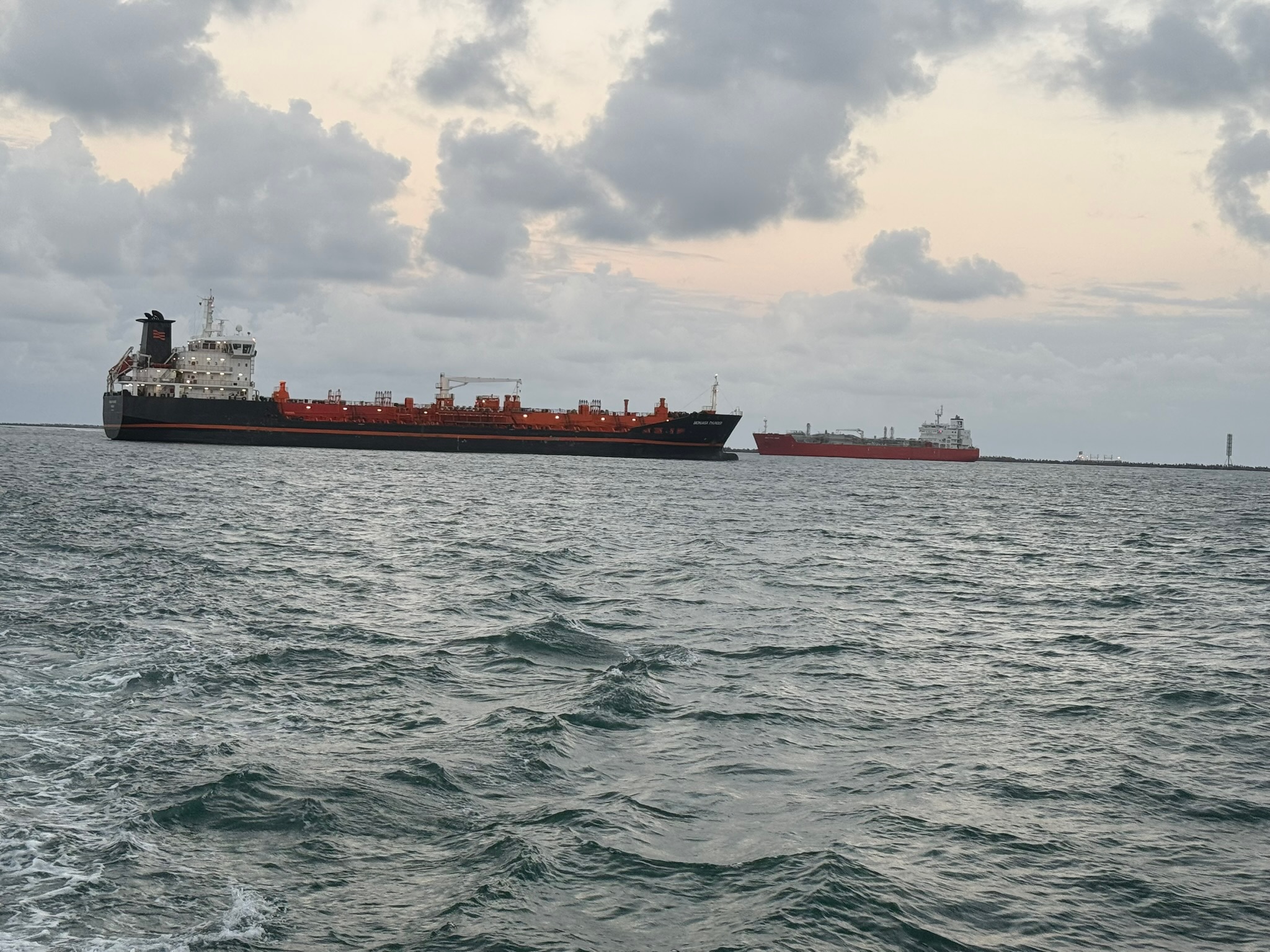
We exited Limon Bay via the east entrance. The big ships only use the west entrance, so we’d anticipated less traffic. Here were two ships passing in the west entrance.
We really would have liked to stay in the San Blas at least two more days to take part in the special events. Today on Carti Suitupo there are festivities for the biggest holiday of the year for the Kuna people, when they won their autonomy from Panama. Mr. G had invited us back for the last day of the puberty party, which is tomorrow, where the girl is unveiled in her newfound glory, with the shaved head, ring in her nose and her body painted. But we were out of time and really needed to get to the canal. We knew from the radio net that between the anticipated festivities and the not so great weather we have been having, not a lot of boats have headed to Colon lately, which means the canal wait is probably short. It sounds like a lot of boats would all be heading out in the next two or three days, when the forecast improves and the holiday is over. We were afraid that if we arrived in the middle of the glut, we’d get caught in a long canal line.
The trip to Colon would take about 13 hours total, an awkward number. Yesterday we had gone back and forth about the best strategy. Strategy one was to Continue reading →
Continued from yesterday”¦ After everyone else was served, we were offered the beer. Suddenly, all eyes were on us, intently watching for our reaction. Visually speaking, we would have mistaken it for molasses. It was black and thick, like syrup. They insisted we do the little dance prior to drinking it. Another local joined in to lead us in the dance, which we think we followed along with pretty well. We went to down our beer. It was absolutely disgusting. Mr. G had lied when he said it was non-alcoholic. In those 8 days, it had definitely fermented. It wasn’t a strong alcohol taste, but it was enough to make a gross beverage even grosser. Christi could barely get a small sip down. Eric took one gulp. Everyone insisted we finish our cups. Eric took another sip and said he could drink no more. Everyone was disappointed we wouldn’t drink it, but simultaneously incredibly amused by our reaction. We sat down and held onto our cups for a while people continued to insist we drink it. When it was evident we would drink no more, two guys drank it for us.
We asked where the girl being honored was. Apparently, a special room with a special layout is built for her somewhere, and she is Continue reading →