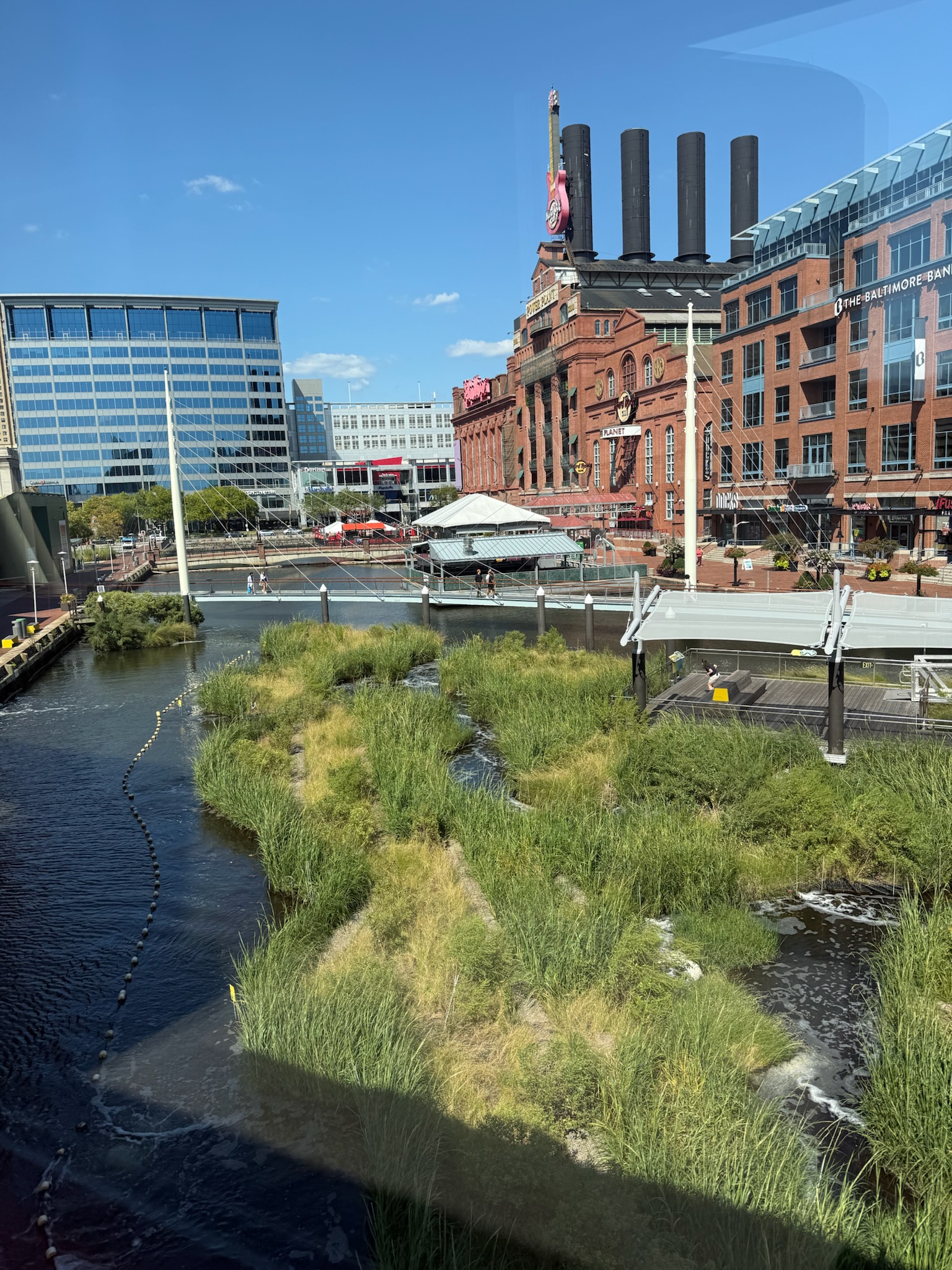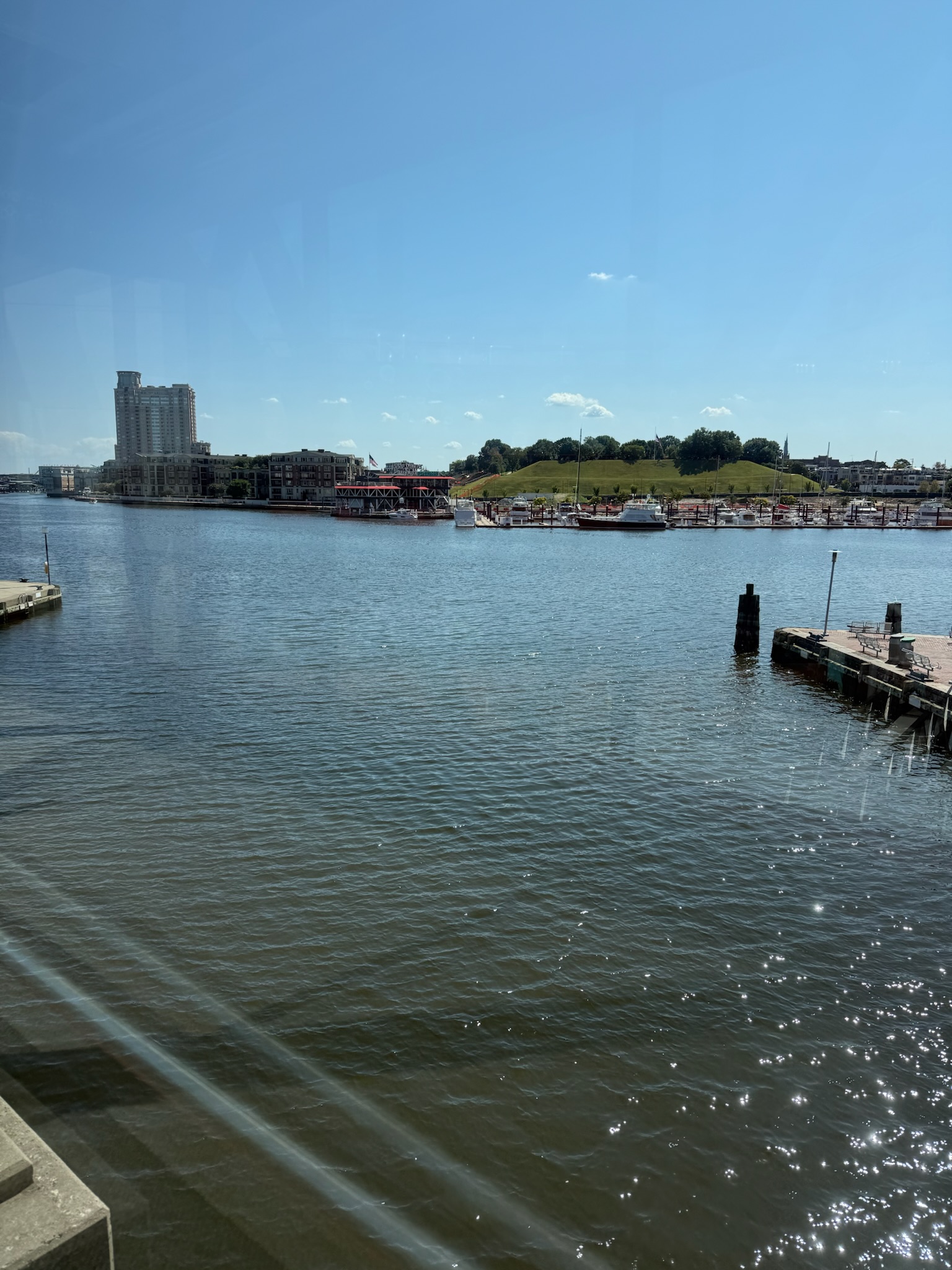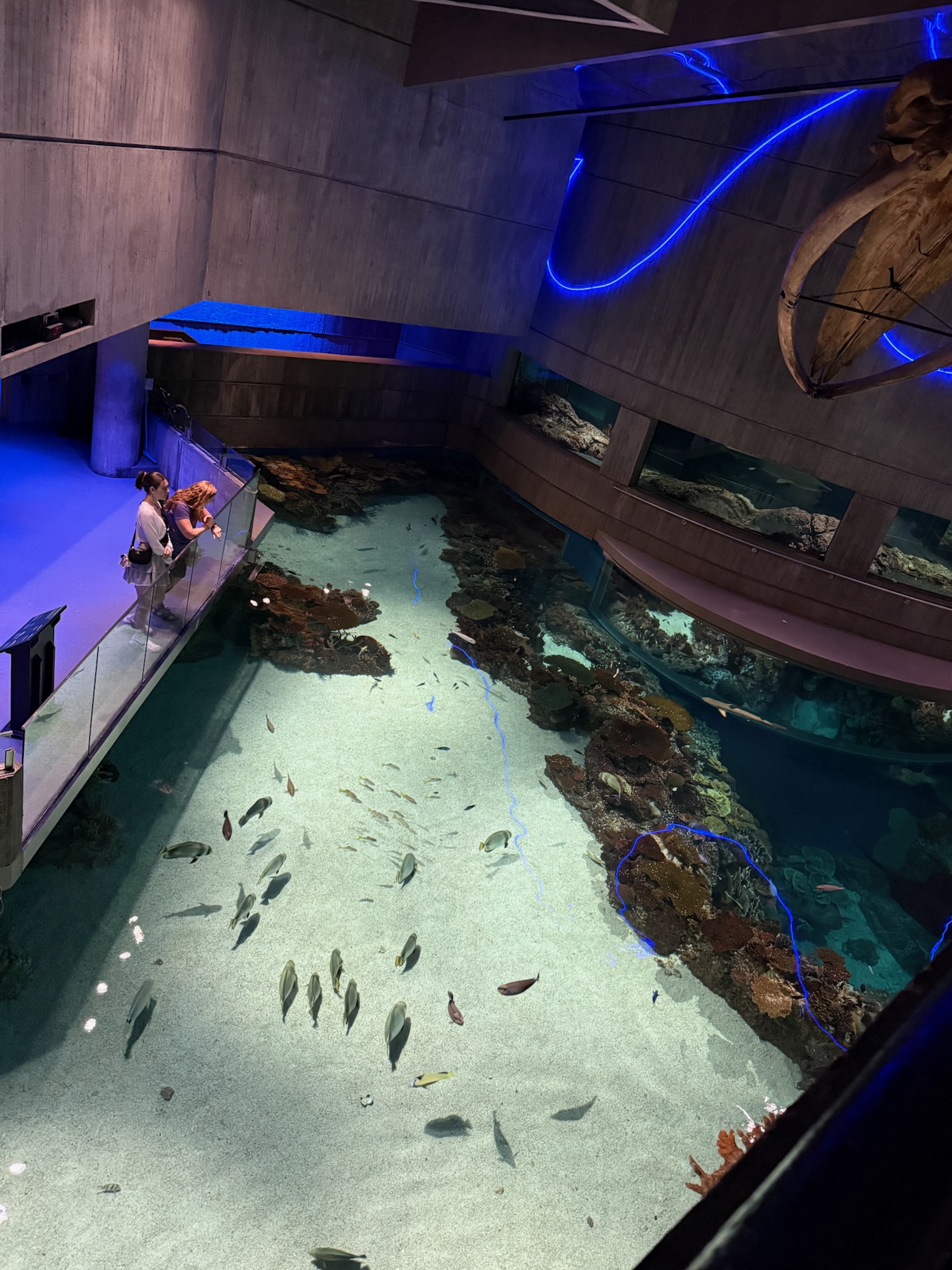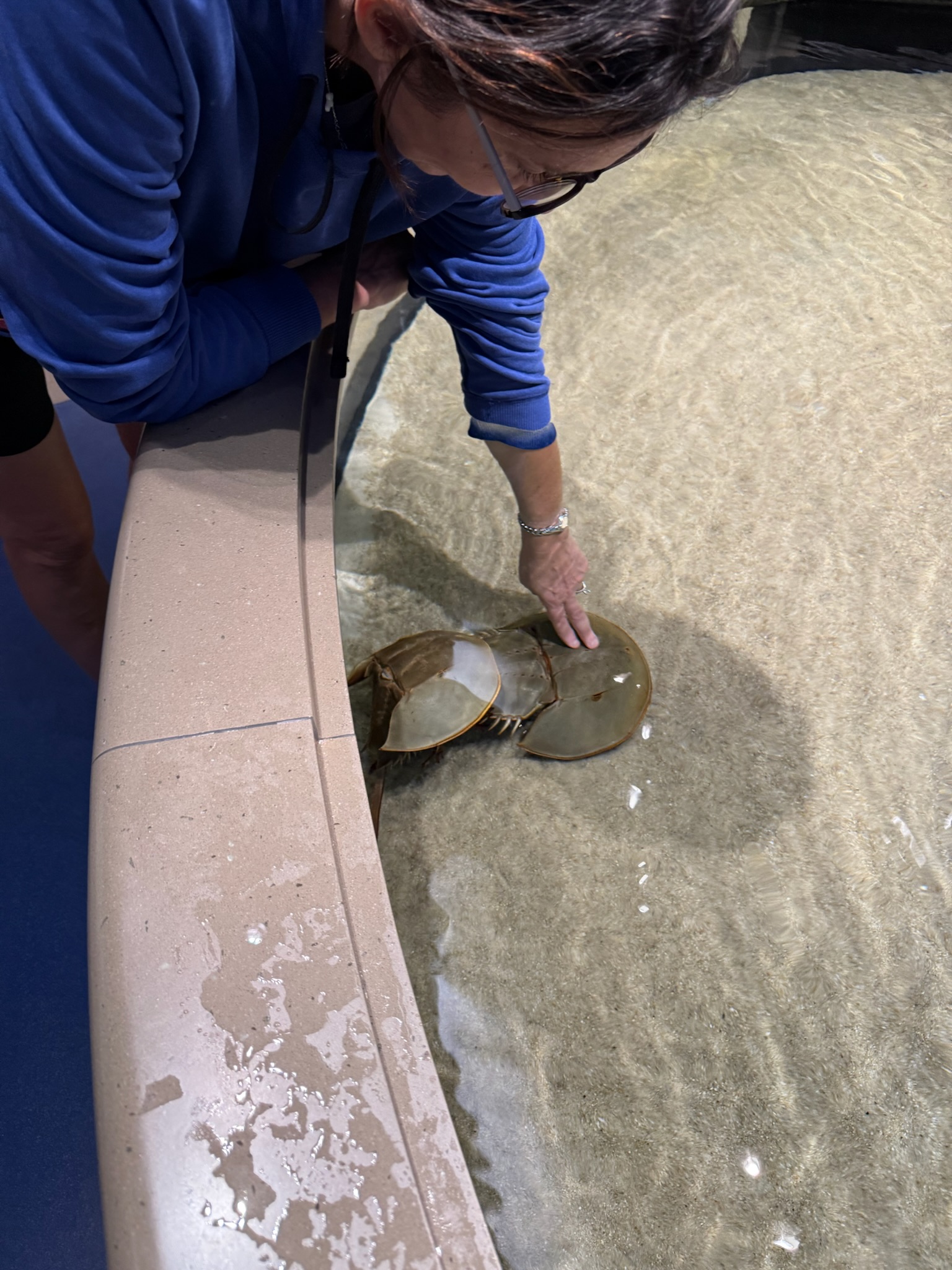
Continued… As we’d noticed the day we’d visited the Historic Ships, the aquarium was housed in two separate buildings attached by a sky bridge. We wandered over to the skybridge to see what was in the other building. Here were the views from the bridge.
looking towards shore. In the Black Shark Reef exhibit, they’d stated that the aquarium had planted this marsh in 2024 as part of an effort to restore Baltimore’s critical marsh habitat Looking at the harbor
The other side had a 4-D movie that was an additional fee and a stadium where it looked like they used to do dolphin shows.
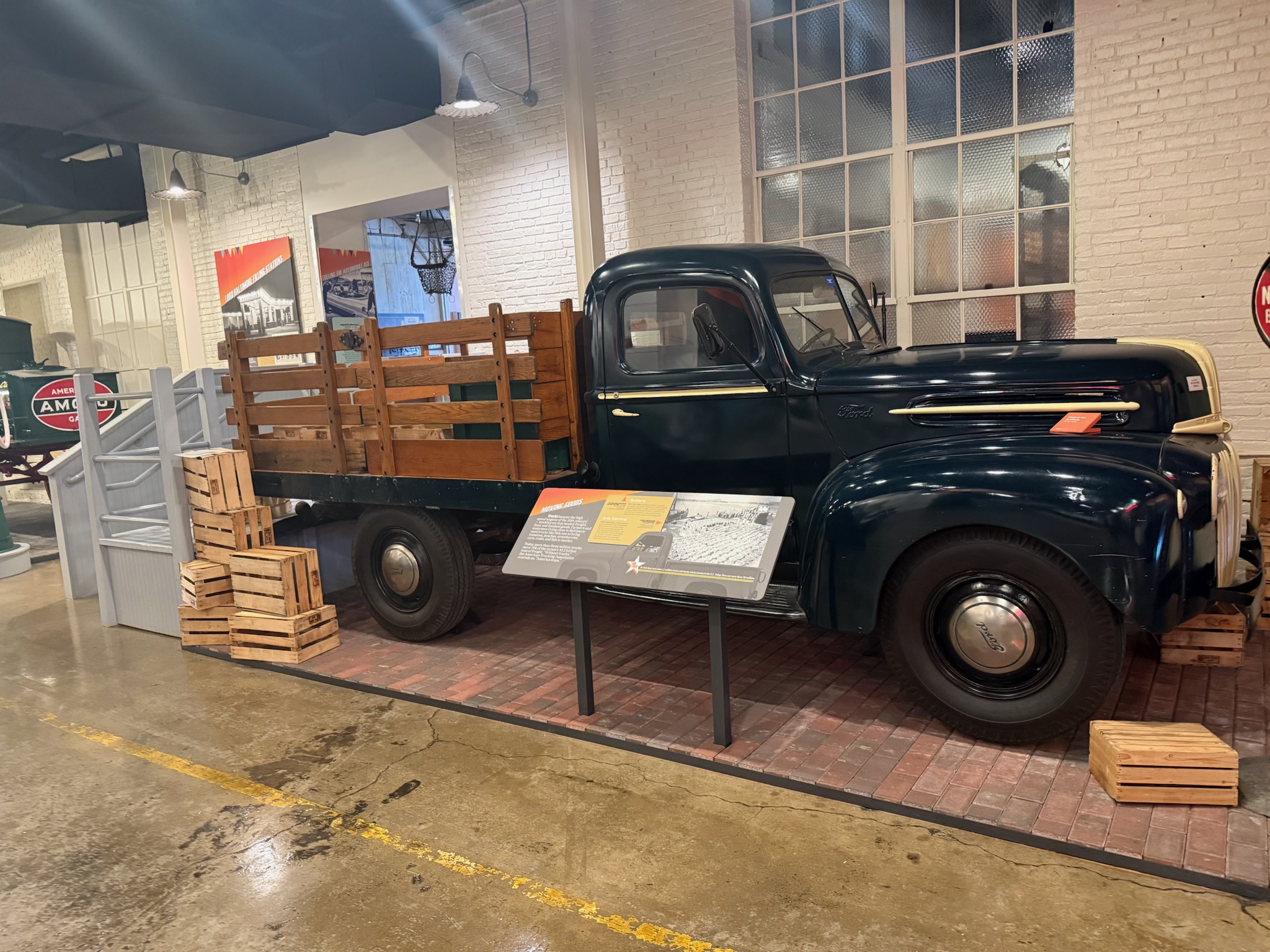
continuing on in the transportation section… in 1935, Chevrolet opened a manufacturing plant south of Baltimore that produced more than 12-million vehicles during its 70+ years of operation. It closed in 2005.
There was a small display on a tire manufacturer. In 1921, Frank Schenuit patented a non-skid, pneumatic rubber tire that he began to manufacture through contractors. In 1925, he opened his own factory in Baltimore, employing 300 people and producing up to 1,000 tires per day. He expanded to airplane tires and niche specialty tires, such as for wheelbarrows. Schenuit sold the company in 1972, and in 1975, the new owner shut the plant down.
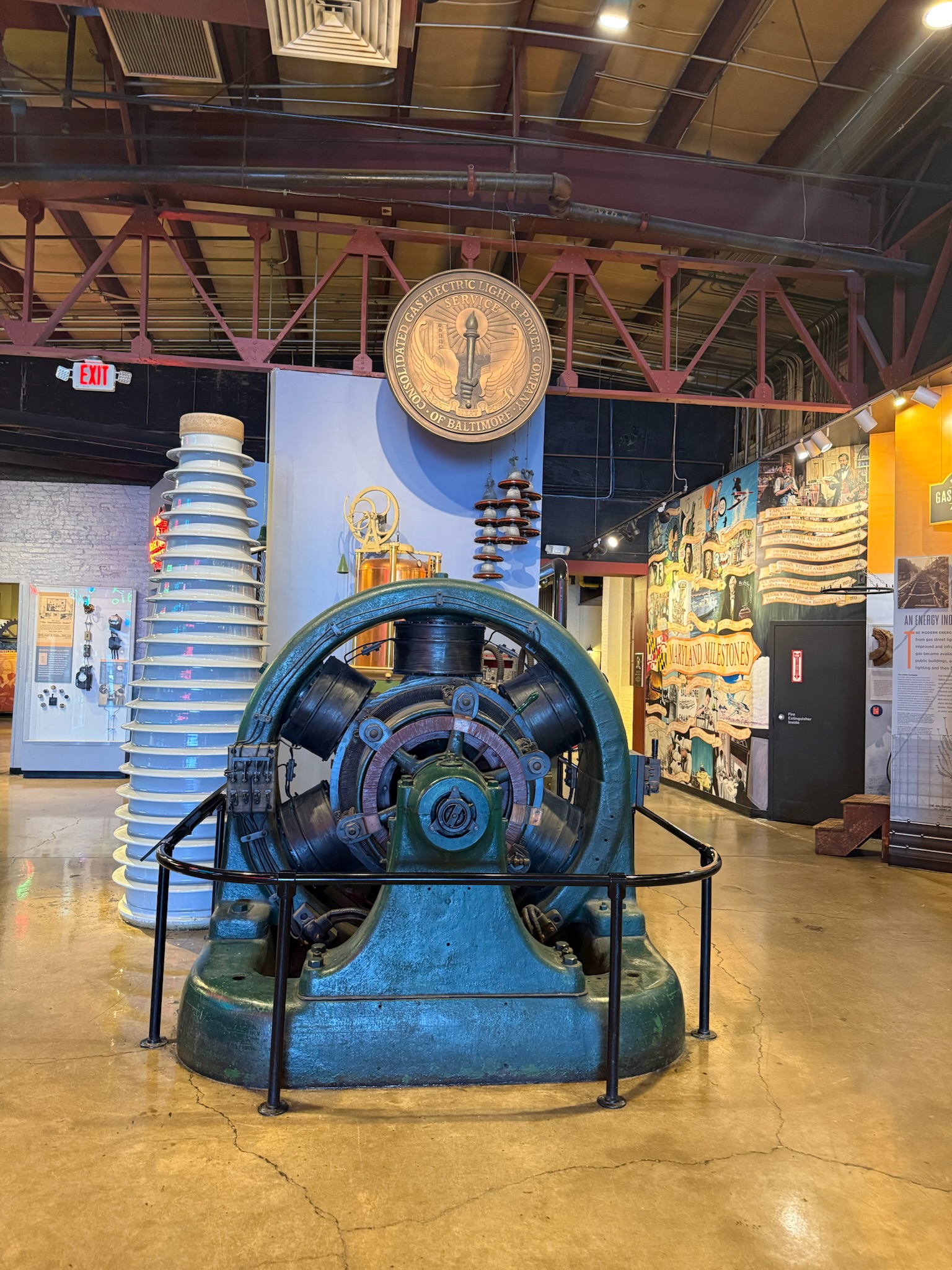
Some of th equipment needed to run power plants and transmit energy back in the early days of gas and electricity. Continue reading →
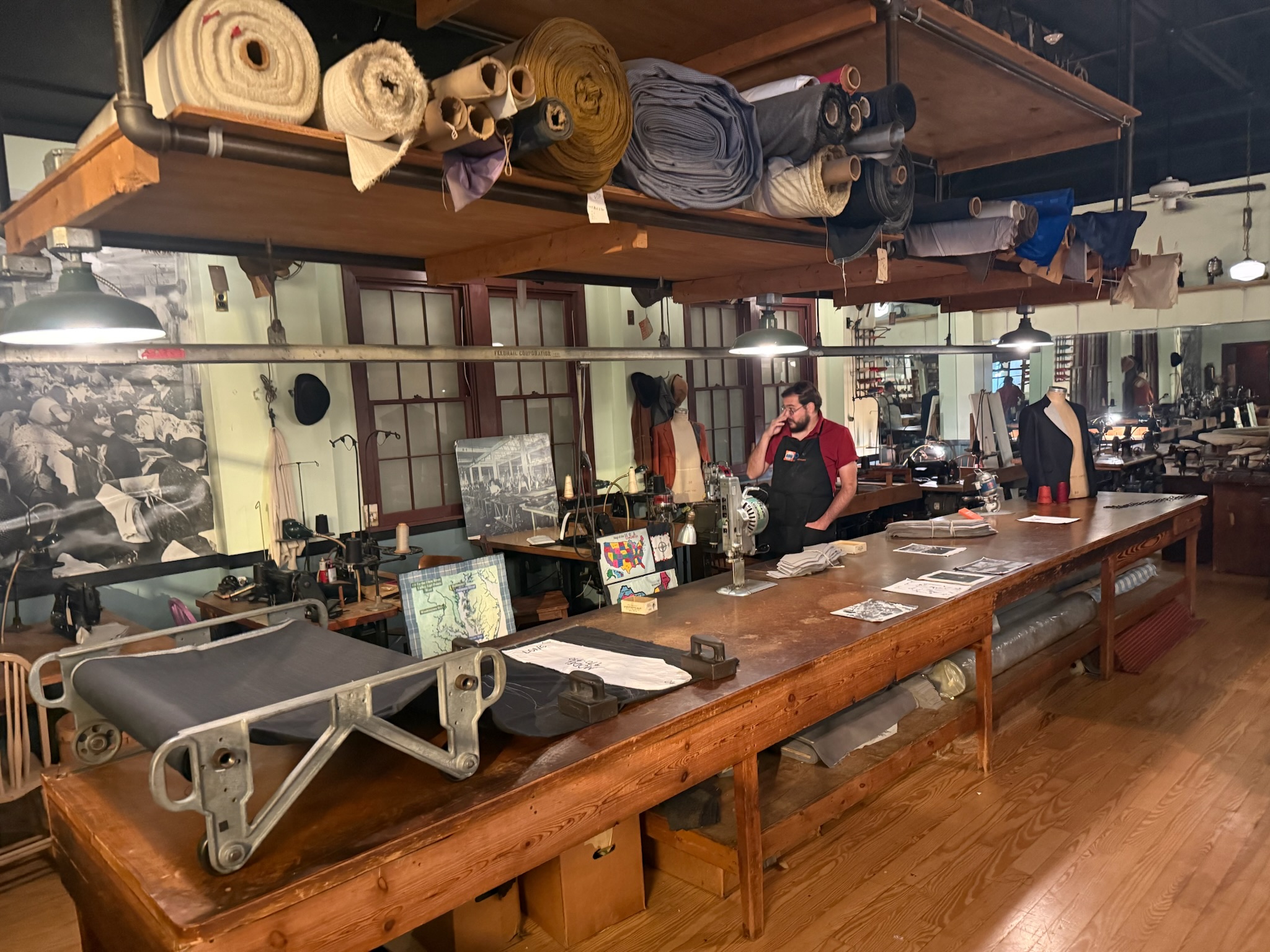
Next we went into another large room that was set up to look like a clothing manufacturing facility. Baltimore was also a hub for clothing manufacturing. Our tour guide showed us the revolutionary technology of the era that made mass-produced clothing possible — a device that simultaneously cut many pieces of cloth stacked together instead of cutting one piece at a time. Coupled with an assembly line sewing process, where each woman on the line sewed a particular piece of the garment and then passed it on to another who would sew her particular piece, ready-to-wear clothes could be quickly produced. The machines were loud and deafness was a problem for the workers.
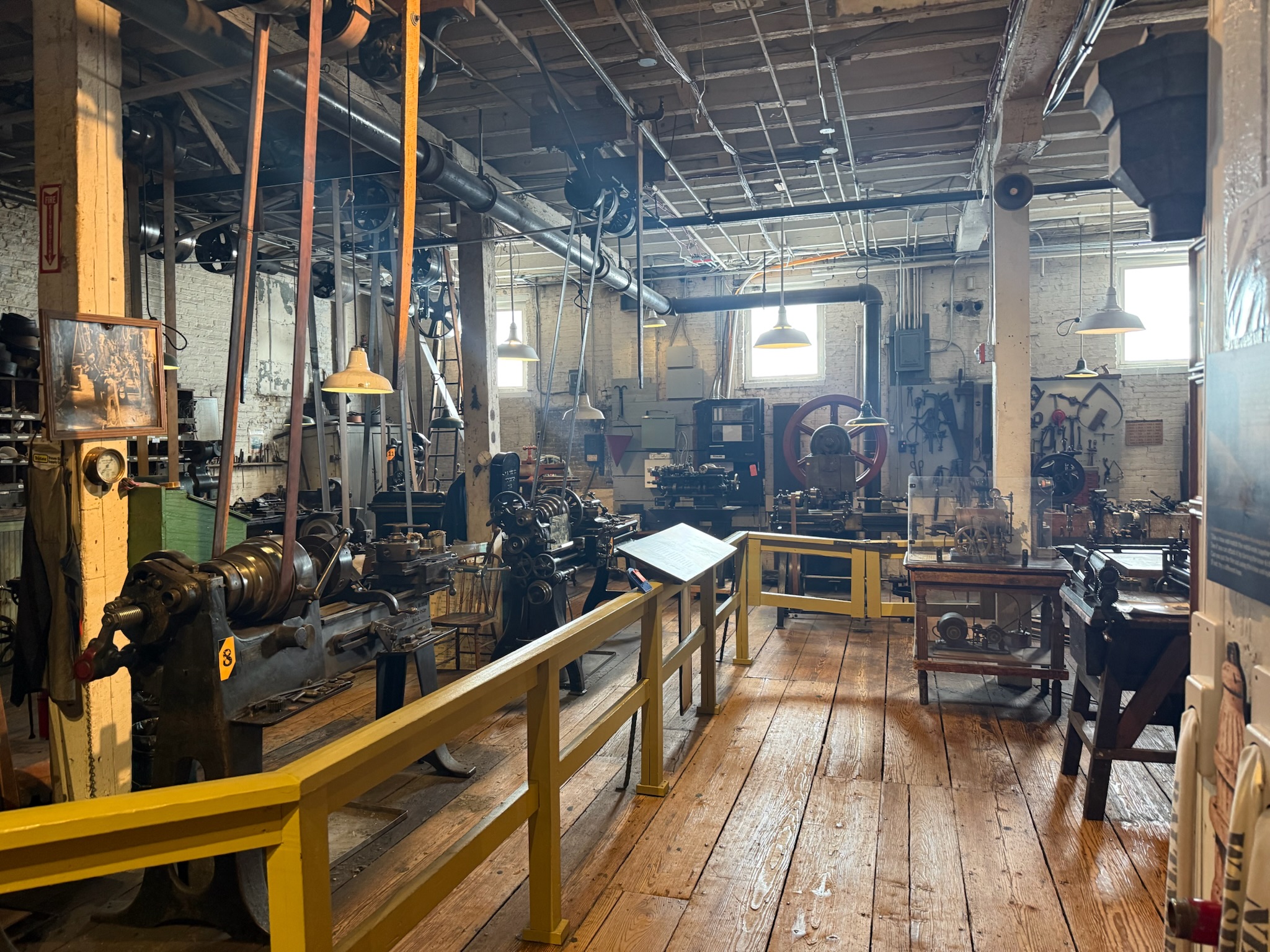
Next we went to a section that was designed to look like a belt-driven machine shop from 1910. Baltimore had also once been a hub for fabricating parts and tools for various industries. Most of the machines were connected via belt to a rod that ran along the ceiling. The rod rotated, moving the belt and powering the machine. The rod was rotated by a steam engine in the corner.
Wednesday, August 26 — We spent the morning getting ready for our trip to San Diego. By the early afternoon, we were feeling like everything was as ready as could be. We decided to go to the Museum of Industry, which focused specifically on the manufacturing industries of Baltimore that “modernized the nation.”
We drove through downtown to the south side of the peninsula that made up the inner harbor. The museum was on the waterfront in a building that was clearly a refurbished old industrial building. Parking was free in the attached lot.
Tickets were $15 for adults and $8 for children 6 – 17. The receptionist told us a free guided tour was about to begin highlighting the black people who were significant in Baltimore’s history. We generally enjoy guided tours, so we signed up.
We waited in a small movie theater near the entrance that was showing a film about Linotype machines, which was the most revolutionary change to printing since Gutenberg invented the printing press circa 1440. The machine was invented in Baltimore by a German immigrant between 1882 and 1884. Instead of setting each individual letter by hand, one could type a single line of text and the machine 3-D printed the line from molten lead. The lines were then hand set into the printing press. The discarded lines of tin were reinserted into the machine for melting. The Linotype was rendered obsolete by laser printers.